
What to Do If Your Keloid Is Itchy, Painful or Growing
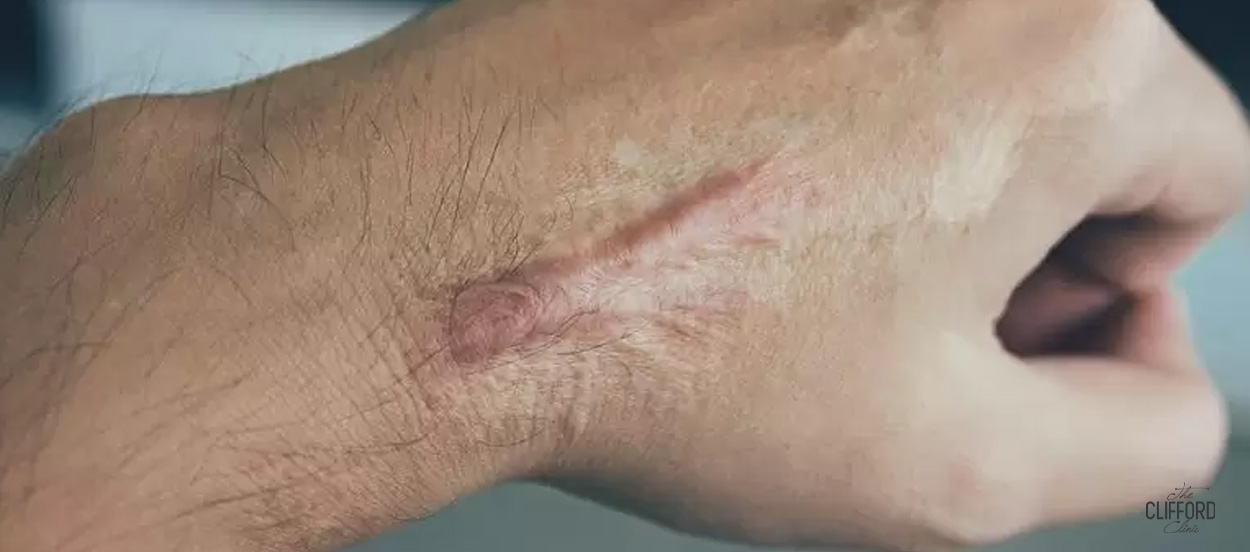
An itchy, painful or enlarging keloid indicates an active scar rather than a settled cosmetic one. These symptoms are among the most common reasons patients present for treatment, and they are also among the most responsive, because inflammation and nerve irritation subside well before the collagen bulk of the scar remodels and flattens. This guide explains what itch, pain and growth indicate and how each is treated. It sits within our wider keloid scar treatment Singapore resource.
Why Keloids Itch, Hurt or Grow
A keloid is metabolically active scar tissue rather than an inert mark, and each of its symptoms has a distinct mechanism.
Itch is the most frequent symptom. Growing keloid tissue is densely populated by small nerve fibres and by inflammatory cells that release histamine and other mediators, and these mediators stimulate the nerve endings directly, which is perceived as itch. Persistent itch is therefore one of the features that distinguishes an active keloid from a mature, settled scar, which is typically asymptomatic.
Pain and tenderness arise where expanding scar tissue compresses or encases sensory nerve endings, compounded by the same inflammatory activity. Keloids at sites of high movement or sustained pressure, such as the chest, the shoulders, or an area rubbed by clothing, are particularly prone to tenderness, because repeated mechanical loading both irritates the entrapped nerves and sustains the inflammatory stimulus that drives the scar.
A burning or tingling quality reported by some patients reflects irritation of the same small sensory nerve fibres, and it carries no different implication for treatment than itch.
Growth, meaning a visible increase in size, indicates that scar tissue is still being laid down beyond the boundary of the original wound. The signalling protein transforming growth factor beta remains switched on in keloid tissue and continues to instruct fibroblasts, the cells that manufacture collagen, to produce it in excess long after the wound has closed [1][2]. Unlike hypertrophic scars, which remain within the wound margin and usually regress over one to two years, keloids do not self-limit, so growth may continue over months or years. Where it is unclear whether a raised scar is truly a keloid, our guide to the difference between a keloid and a hypertrophic scar sets out the distinction.
Why Symptoms Matter for Treatment
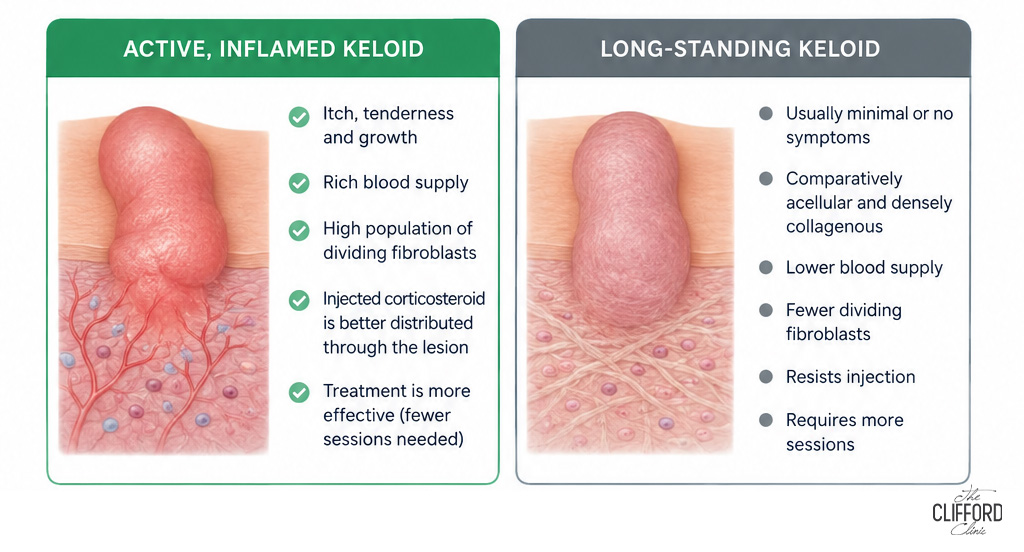
Active symptoms are not merely uncomfortable. Itch, tenderness and growth generally indicate that the keloid remains biologically active, which is the state in which treatment is most effective. An actively inflamed keloid has a rich blood supply and a high population of dividing fibroblasts, so injected corticosteroid is both better distributed through the lesion and acting on cells that are still dividing. A long-standing keloid is comparatively acellular and densely collagenous, which is why it resists injection and requires more sessions. Symptoms are therefore a reason to seek assessment rather than a reason to wait.
When Symptoms Are a Warning Sign
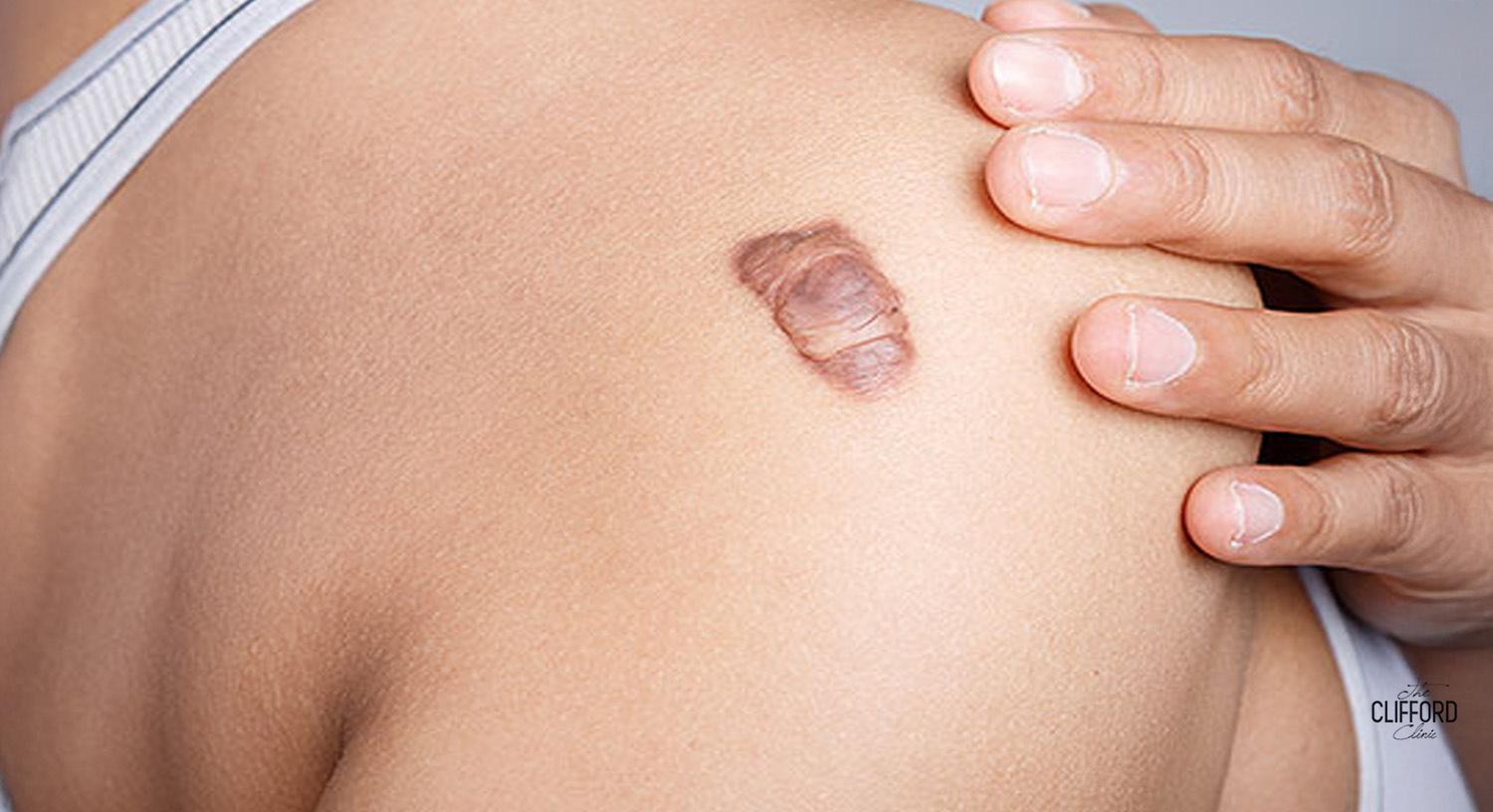
Itch, mild tenderness and slow enlargement reflect ordinary keloid activity and are best addressed by treatment rather than alarm. Certain changes, however, warrant prompt medical review. These comprise rapid enlargement or a sudden change in a keloid that had been stable, bleeding or an open, weeping or ulcerated surface, signs of infection such as spreading redness, warmth, pus or fever, and new or severe pain. Such changes are rarely sinister, as keloids are benign, but any scar that alters rapidly, ulcerates or bleeds should be examined to confirm the diagnosis and to exclude other conditions that can resemble a keloid.
What Not to Do
The impulse to interfere with an itchy or enlarging keloid is strong, and several common responses aggravate it. Scratching and picking introduce repeated micro-trauma, and since a keloid is a disorder of excessive healing, each minor injury provokes further scar formation in the same tissue. Attempts at home removal by squeezing, cutting, tying off or burning risk infection and substantially worse scarring, because the resulting wound heals as a larger keloid than the original. Caustic preparations marketed as keloid removers injure the surrounding skin and carry the same risk. Indefinite waiting is also unhelpful, as keloids do not resolve spontaneously and an established lesion is harder to treat than an early one.
Reasonable interim measures while awaiting review include keeping the area clean, avoiding friction from tight clothing or jewellery, and, where a doctor has already advised it, applying silicone gel, which hydrates the scar surface and reduces itch while contributing to gradual flattening.
How Symptoms Are Treated
Symptomatic relief is the part of keloid treatment best supported by evidence. A 2025 systematic review and meta-analysis of 42 studies of corticosteroid-based treatment graded the certainty of evidence as high for reduction of scar volume and for relief of both pain and itch [5].
Intralesional corticosteroid injection remains the mainstay. Triamcinolone acetonide suppresses the inflammatory activity within the lesion and inhibits collagen synthesis by keloid fibroblasts, and in the meta-analysis above corticosteroid alone produced a large pooled effect on scar outcomes, with a standardised mean difference of 1.28 [5]. The anti-inflammatory action takes effect within days, whereas dissolution of established collagen takes months, which is why itch and tenderness commonly ease after the first or second monthly session, well before the keloid is visibly smaller. Our steroid injections guide sets out the course in detail.
Pulsed dye laser targets the dilated blood vessels that make an active keloid red, and by reducing that vascularity it also reduces the inflammatory mediators delivered to the lesion, which relieves itch. In a randomised comparison of treatments for sternotomy scars, pulsed dye laser improved scar texture more than intralesional injection did, while injection was superior for hardness, which is the basis for combining the two [4]. Silicone gel or sheeting hydrates the scar and reduces itch, and with consistent daily use over several months it also supports flattening, as covered in our silicone gel sheets guide. Botulinum toxin reduces tension in the tissue surrounding the scar and appears to inhibit fibroblast proliferation directly. In a randomised trial of 50 patients it achieved better flattening than 5-fluorouracil and caused less pain and itching [9], and a separate series of 20 patients recorded significant improvement in scar scores after three monthly injections, sustained at six months [8]. 5-Fluorouracil and cryotherapy are further options for resistant lesions. A network meta-analysis of 51 studies and 3,234 participants found that combination regimens outperformed any single agent, with corticosteroid plus 5-fluorouracil roughly 1.6 times as likely to produce a good response as corticosteroid alone [7][6]. Most patients are therefore managed without surgery, as set out in keloid treatment without surgery, with the regimen matched to the symptoms, the size of the keloid and the patient’s skin tone.
What to Expect After Starting Treatment
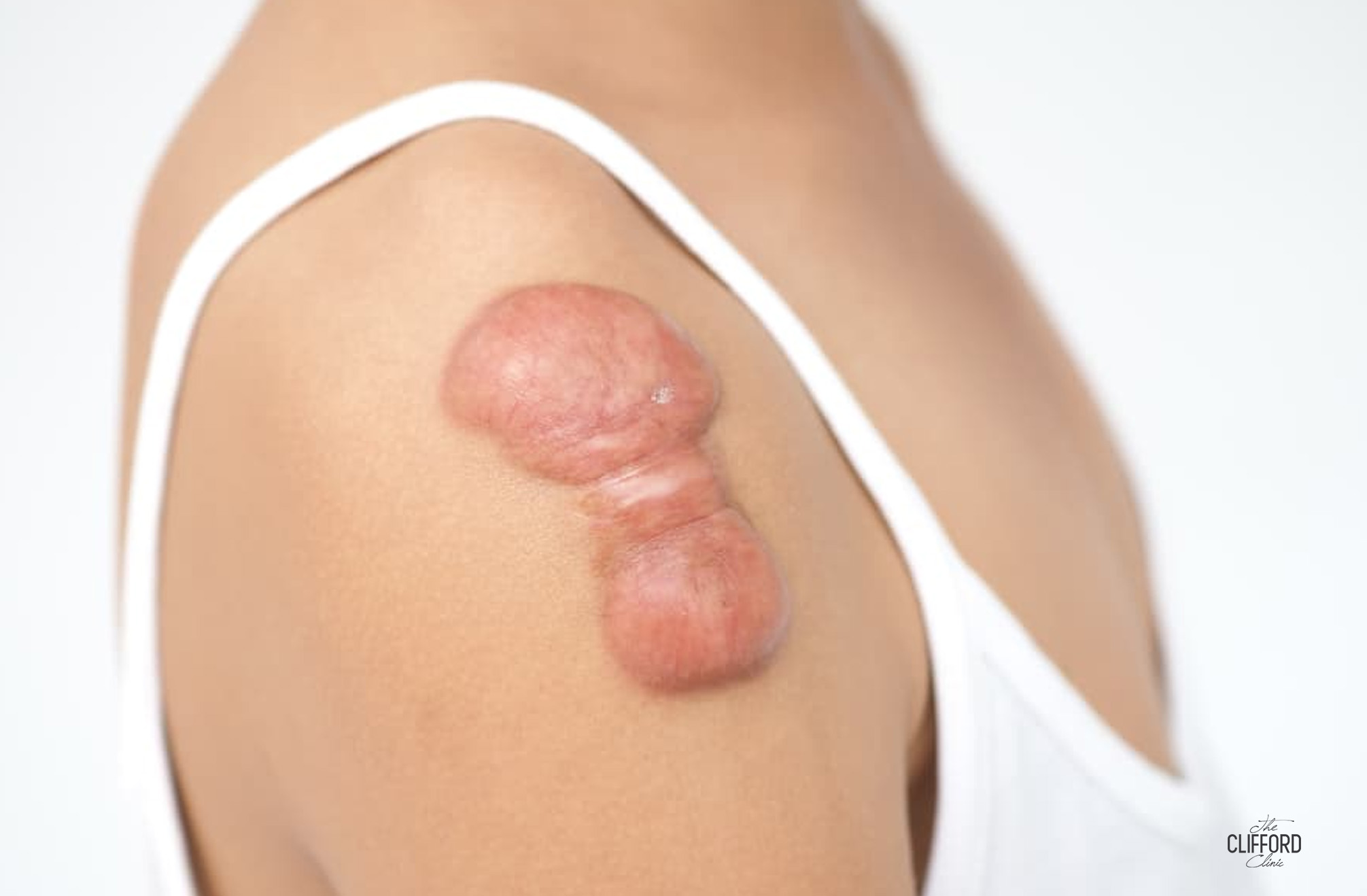
Symptomatic relief and cosmetic improvement follow different timelines. Itch and tenderness usually improve first, within the earliest sessions. Flattening and fading of colour follow more gradually, over a course measured in months and commonly extending beyond a year for a large lesion. Because keloids can recur, review continues after the lesion has improved, and any early return of symptoms is treated promptly, since recurring itch in a previously settled keloid is often the first sign of renewed activity and is more easily controlled at that stage than once regrowth is visible.
Frequently Asked Questions
Why is my keloid itchy?
Itch indicates active scar tissue, in which inflammatory cells release mediators that stimulate the small nerve fibres running through the keloid. Persistent itch generally means the keloid remains active and would benefit from treatment, and relief of itch is among the best-evidenced outcomes of corticosteroid injection [5].
Why does my keloid hurt?
Pain and tenderness arise where the expanding scar compresses or encases sensory nerve endings, and from the inflammation within the lesion. Tenderness is most pronounced at sites of movement or sustained pressure, such as the chest and shoulders. Treatment usually reduces it.
My keloid is getting bigger, what should I do?
Continued growth indicates that the keloid remains active, as keloids do not self-limit in the way hypertrophic scars do. Assessment and treatment should be sought, since an early keloid responds more readily than an established one. Rapid enlargement, or a sudden change in a keloid that had been stable, warrants prompt review.
Is an itchy keloid a sign of something serious?
Usually not, as keloids are benign and itch is a common feature of an active lesion. Bleeding, ulceration, signs of infection or rapid change should nonetheless be examined, to confirm the diagnosis and exclude other conditions that can resemble a keloid.
Can I make my keloid stop itching at home?
Keeping the area clean, avoiding scratching and friction, and applying silicone gel where a doctor has advised it will all reduce itch. Lasting relief, however, requires treatment of the underlying scar activity, most commonly by corticosteroid injection. Caustic preparations sold as keloid removers should be avoided.
The Clifford Clinic Approach

Over more than 16 years of treating keloid scars, The Clifford Clinic has found that keloids treated with corticosteroid injection alone almost always recur. Our signature approach combines V Beam pulsed dye laser, botulinum toxin and steroid injections, supported by silicone, so that the vascular, the tension-related and the inflammatory drivers of the scar are addressed simultaneously rather than in sequence. Very few centres in Singapore offer V Beam for keloids, yet in our experience it is fundamental to preventing recurrence, and it can be performed safely on darker skin tones, so patients across Singapore’s range of skin types can be treated. A keloid is never removed by surgery alone at this clinic, because excision in isolation reliably reproduces the scar. For large or resistant keloids, surgery combined with adjuvant radiotherapy is a highly effective option. Young keloids are treated early rather than observed, and pigment-safe, skin-tone-aware treatment is selected from the outset. You can read more about our clinic at cliffordclinic.com and about Dr Gerard Ee at drgerardee.com.
Medically reviewed content. This article is educational and does not replace a consultation. If a keloid is bleeding, infected, ulcerated or changing rapidly, seek medical review. To treat an itchy, painful or growing keloid in Singapore, contact The Clifford Clinic.
Related Guides
Keloid scar treatment in Singapore, the complete guide
Steroid injections for keloids
Laser treatment for keloid scars
Ear keloid removal in Singapore
Keloid treatment cost in Singapore
Why keloids come back after surgery
Silicone gel sheets for keloids
Chest and shoulder keloid treatment
Keloid treatment without surgery
References
- Laser Therapy of Traumatic and Surgical Scars and an Algorithm for Their Treatment. Lasers in Surgery and Medicine. 2020.
- Management of Keloids and Hypertrophic Scars. American Family Physician. 2024.
- Laser Therapy for Treating Hypertrophic and Keloid Scars. The Cochrane Database of Systematic Reviews. 2022.
- Treatment Response of Keloidal and Hypertrophic Sternotomy Scars: Comparison Among Intralesional Corticosteroid, 5-Fluorouracil, and 585-nm Flashlamp-Pumped Pulsed-Dye Laser Treatments. Archives of Dermatology. 2002.
- Efficacy and Safety of Glucocorticoid-Based Therapies in the Management of Keloids: A Systematic Review and Meta-Analysis of Clinical Outcomes. Frontiers in Medicine. 2025.
- Comparing Combination Triamcinolone Acetonide and 5-Fluorouracil With Monotherapy Triamcinolone Acetonide or 5-Fluorouracil in the Treatment of Hypertrophic Scars: A Systematic Review and Meta-Analysis. Plastic and Reconstructive Surgery. 2024.
- Comparative Efficacy of Intralesional Therapies for Keloid Scars: A Network Meta-Analysis. Annals of Medicine. 2026.
- Assessment of Intralesional Injection of Botulinum Toxin Type A in Hypertrophic Scars and Keloids: Clinical and Pathological Study. Dermatologic Therapy. 2022.
- Botulinum Toxin Type A Versus 5-Fluorouracil in Treatment of Keloid. Archives of Dermatological Research. 2021.
- Dose Effect in Adjuvant Radiation Therapy for the Treatment of Resected Keloids. International Journal of Radiation Oncology, Biology, Physics. 2018.
- A Retrospective Study of Hypofractionated Radiotherapy for Keloids in 100 Cases. Scientific Reports. 2021.
- Hypofractionated High-Energy Electron Beam Radiotherapy for Keloids. Journal of Radiation Research. 2015.

Author Bio
Dr Gerard Ee

Dr Gerard Ee is the Medical Director of The Clifford Clinic in Singapore. He earned his medical degree from St George's University of London and built his surgical experience across the Singapore General Hospital, National University Hospital, and Mount Sinai Hospital in New York. He holds Membership of the Royal College of Surgeons (Edinburgh) and a Postgraduate Diploma in Dermatology (Cardiff), and is fully accredited in aesthetic procedures including botulinum toxin, fillers, lasers, and light therapies. A strong advocate of minimally invasive, natural-looking results, Dr Ee has published in several medical and scientific journals and presented his research in cities including Taipei, Las Vegas, and London.
See all posts by Dr Gerard Ee »