
Nose Fillers in Singapore, Cost, Types, Safety and Clinic Rules
What are nose fillers?
A nose filler is an injection of soft hyaluronic acid gel used to raise a low bridge, soften a small hump or support a drooping tip. No incision is made and it is not surgery. Most treatments take 20 to 30 minutes, the shape changes immediately, and the result usually lasts 8 to 14 months.
Hyaluronic acid can be broken down with hyaluronidase, which means the shape can be adjusted or removed instead of left to fade. That is the main reason it is chosen ahead of the longer-lasting options.
At The Clifford Clinic the fee is $1,200 and covers the product, the procedure and the review appointment, with nothing billed afterwards. Our doctors have treated noses with filler since 2012.
Asian nasal anatomy changes how the treatment is planned, and the sections below set out filler selection, the published complication rates and how to judge a clinic in Singapore.

The Basic Limit, Filler Adds Rather Than Reduces
Nose filler is sometimes presented as an alternative to surgical rhinoplasty, although the two work in different ways. Surgery can remove or reposition bone and cartilage. Filler adds support beneath the skin, so it can raise a low bridge, fill a dent or smooth the line around a small dorsal hump without removing the hump itself.
Filler cannot physically shrink the nose, narrow broad nostrils, reduce a bulbous tip or straighten the internal framework of a deviated septum. Raising the bridge may create a slimmer impression, but that is proportion rather than reduction. Our supporting article explains what filler can and cannot fix, concern by concern.
The Main Filler Categories
Most nasal treatments use hyaluronic acid, which can be broken down with hyaluronidase when reversal is required. Radiesse and Ellanse M are collagen-building fillers that cannot be dissolved. In the nose, the choice is therefore about reversibility as well as longevity. The fuller comparison appears below.
For fee, locations, appointment steps and aftercare, use the main nose filler treatment page. The nose filler FAQ page answers questions about duration, swelling, dissolving and delayed lumps.
Nose Fillers for Asian Noses, Why Anatomy Changes the Plan
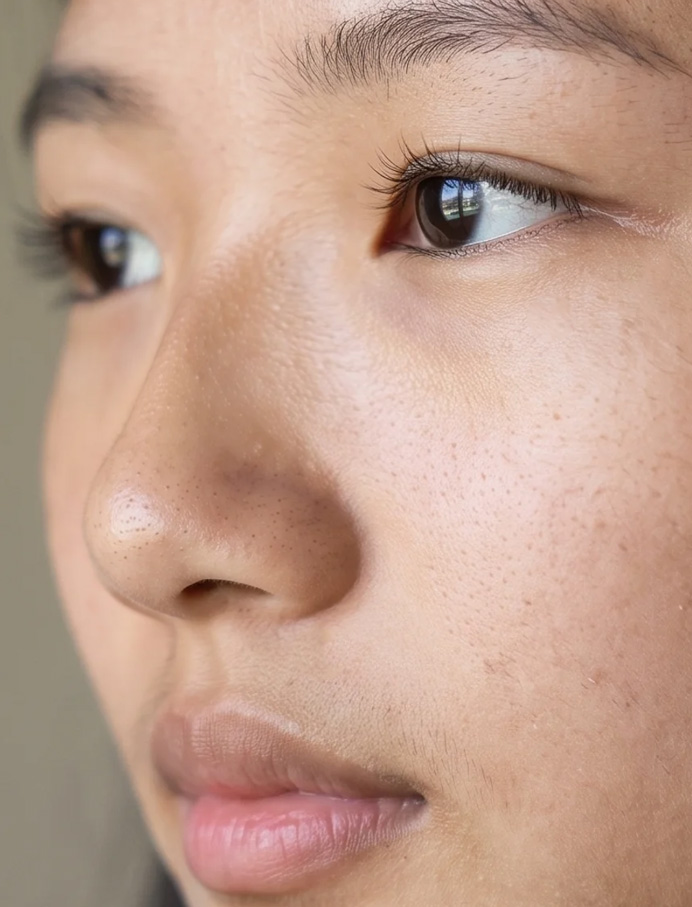
Much of the early published technique was developed for European noses, yet Asian nasal anatomy often calls for a different plan. A lower, flatter dorsum and a radix that sits further back are common, so treatment may begin by defining where the bridge starts rather than simply adding along its length.
Skin over the Asian nose is also often thicker and more sebaceous, especially around the tip and supratip. Thick skin hides small irregularities but may require more product before a change is visible. That is where poor placement can widen the bridge instead of lifting it. The technical challenge is to gain height without losing definition.
Asian consensus guidance highlights two practical points. The filler is generally placed deep, against bone or cartilage at the periosteal or perichondrial level, rather than in the superficial layers where important vessels run. The product also needs enough cohesion and elasticity to hold a defined ridge instead of spreading sideways.
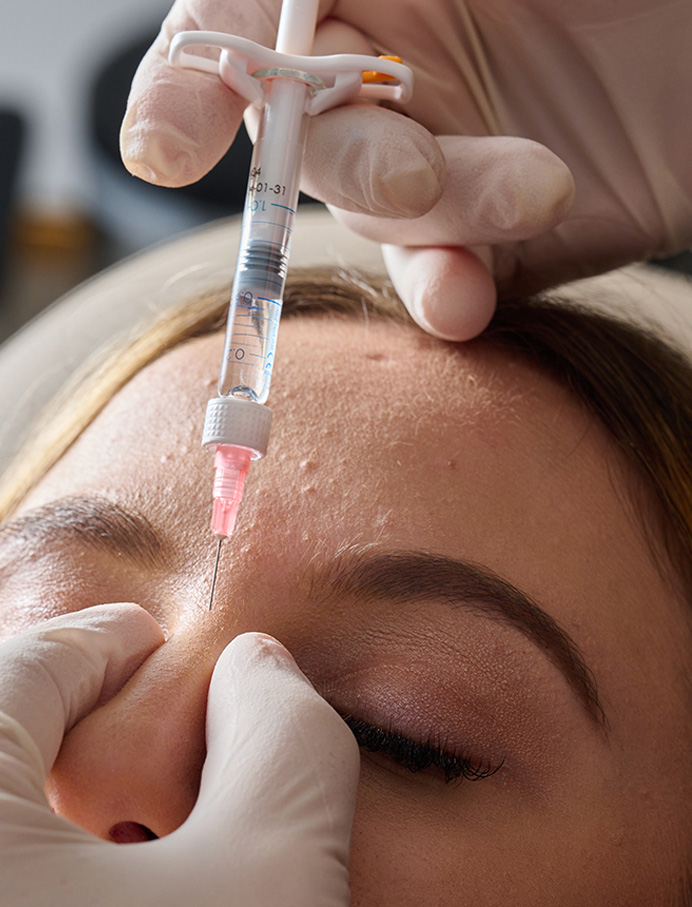
Planning Nose Filler for Asian Nasal Anatomy
Planning begins with the feature driving the concern, how much height can be added without widening the bridge, and whether the correction should be staged. Previous surgery, residual filler and breathing symptoms may alter or rule out the plan.
Assessment is performed with the patient seated because gravity and head position change the way asymmetry reads. The aim is a proportionate contour for that face, not a standardised bridge copied from a photograph.

Placement Principles Used in the Nose
Filler is placed slowly in small amounts at a depth chosen for the region. The endpoint is the agreed contour, not an empty syringe. Deep placement against bone or cartilage is often favoured on the bridge, while the tip requires greater restraint.
Volume affects both definition and risk. Too much can broaden the bridge and increase pressure in a vascular area. The nose filler FAQ explains the amount commonly used, and the service page covers appointment timing and what happens on the day.
Clinical Reasons to Postpone or Decline Treatment
Suitability is not decided by the requested shape alone. Treatment may be postponed or declined for the following reasons.
- The goal requires reduction, major structural correction or treatment of breathing. Those limits are explained in our concern-by-concern guide.
- There is active infection or inflammation at the treatment site, or a known allergy to the proposed product.
- A first-time patient is asking specifically for a filler that cannot be dissolved.
- Previous rhinoplasty has altered the blood supply. It does not automatically rule out filler, but the plan is more conservative and some noses are declined.
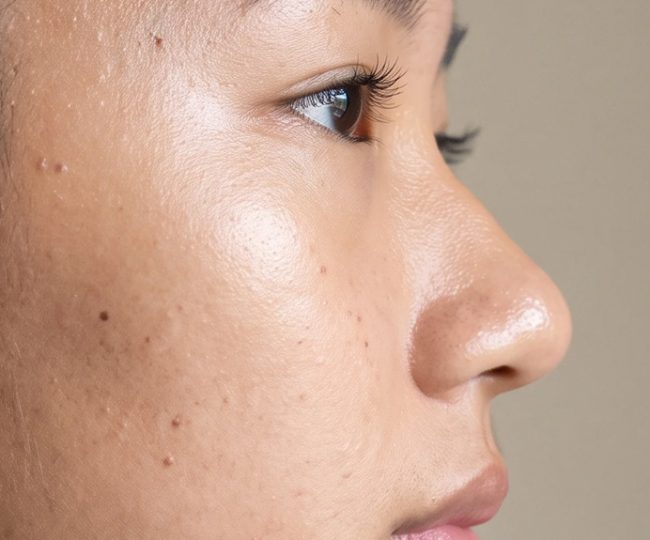
Considering nose fillers? Schedule a personalised consultation to find out if they’re right for you
Hyaluronic Acid, Radiesse and Ellanse M
Hyaluronic acid, the reversible option
Hyaluronic acid is the material used in most published non-surgical rhinoplasty practice and is usually considered first for a new patient. If the contour is unsuitable, it can be dissolved. That same reversibility is important when a vascular complication is suspected.
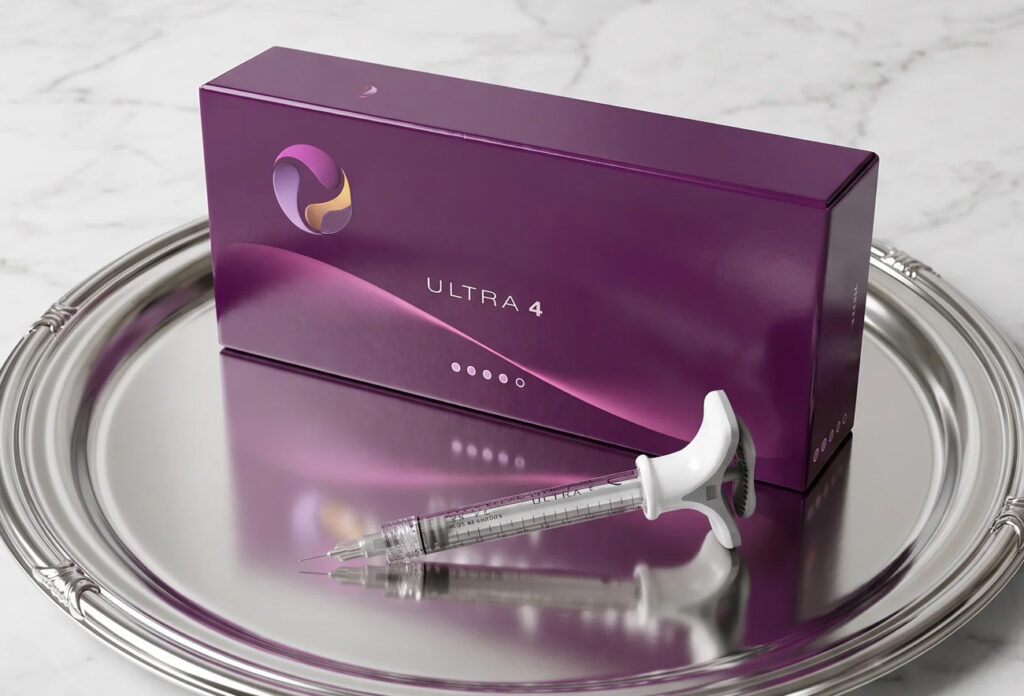
Radiesse, calcium hydroxylapatite
Radiesse is a firmer, collagen-building filler with a history of use on the nasal bridge. It may be considered for someone who already knows the contour they prefer and wants a longer interval between treatments. The limitation is that calcium hydroxylapatite cannot be dissolved.

Ellanse M, polycaprolactone
Ellanse M provides support and stimulates collagen. Its longer-term trial data are strongest for the cheeks, forehead and nasolabial folds rather than for the nose itself. Nasal use therefore depends more on clinical experience, and that evidence gap should be discussed alongside its potential longevity.
How Doctors Choose a Nose Filler
- Area being treated. The bridge lies over bone and may suit a firmer product, whereas the tip is mobile, thin-skinned and more vascular.
- First or repeat treatment. A first treatment is generally kept reversible.
- Skin characteristics. Thin skin shows edges easily and thicker skin conceals them, although this remains a clinical judgement rather than a measured predictor of risk.
- Approach to maintenance. A patient comfortable with yearly review is making a different trade-off from someone who strongly prefers a longer interval.
There is no single best filler for every nose. The choice depends on anatomy, previous treatment and how comfortable the patient is with losing the option of dissolution.
When a Collagen-Building Filler May Be Considered
The clinic usually begins a first-time nose filler patient with hyaluronic acid. Living with a reversible result for a year shows how the skin covers the product, how the contour settles and whether the patient still likes the shape over time.
A longer-lasting filler may be discussed after a successful reversible treatment, particularly when maintenance is the main concern. In selected broader noses, or where the skin envelope appears lax, our doctors may also consider additional tissue support. This reflects clinic practice rather than a published indication, and it does not make the nose narrower.
Changing from Hyaluronic Acid to a Longer-Lasting Filler
The two materials are not injected together during the same session. Hyaluronic acid is usually allowed to fade substantially before a collagen-building filler is introduced, after the patient has had time to test the contour in everyday life.
The earlier hyaluronic acid is not routinely dissolved simply to make room. A gradual transition avoids an unnecessary period in which the nose returns completely to its original shape. This is the clinic’s own approach, not a formal guideline.
Nose Filler Risks, What the Data Show
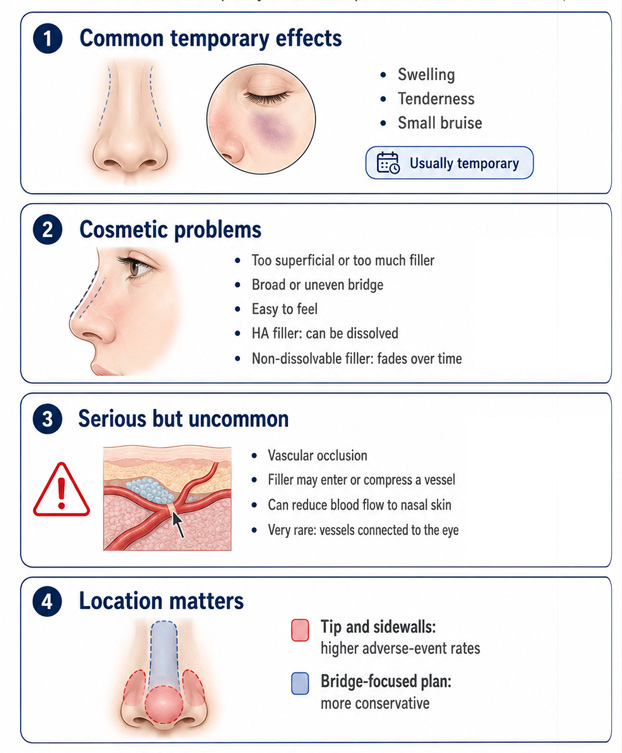
Most adverse effects are temporary, usually swelling, tenderness and a small bruise. Cosmetic problems are more common than serious medical complications. Filler placed too superficially or in excessive amounts can leave the bridge broad, uneven or easy to feel. Hyaluronic acid can usually be dissolved. A non-dissolvable filler must be left to break down over time.
The uncommon serious complication is vascular occlusion. Filler may enter or compress a vessel, interrupting blood flow to the nasal skin and, in very rare cases, affecting vessels connected to the eye. Across more than 8,000 patients in the cited studies, serious complications occurred in about three per 1,000 treatments. The rate is low, but the possible consequences are why nasal filler should not be approached as if it were simply cheek or chin filler in a different location.
Location within the nose also matters. Adverse events are reported more often at the tip and sidewalls than at the bridge, so a bridge-focused plan is usually the more conservative one.
Why the Nose Needs Extra Caution
Nasal arteries communicate with vessels that supply the eye, and in many people those connections cross the midline of the bridge. If material is forced into a vessel under pressure, it can travel beyond the injection point. Among serious filler complications on the face, the nose is involved more often than any other site.
No brand changes that anatomy. Safety depends on diagnosis, knowledge of the vascular planes, appropriate depth and volume, low pressure and the judgement to stop.
How The Clifford Clinic Reduces Risk
There is no single step that makes nasal filler safe. The doctor uses small amounts, injects slowly, selects the tissue plane for each region and chooses the instrument that gives the best control in that particular nose. Across facial filler treatments, cannulas are associated with fewer vascular occlusions than needles, but the advantage is less certain in the nose. Neither removes the risk.
Hyaluronidase is kept at the clinic rather than ordered only after a problem develops. A blocked vessel is time-sensitive, so immediate access is more useful than any promise that complications never occur. The nose filler FAQ page explains the warning signs and the reported recovery data.
Can Nose Filler Improve Breathing or a Deviated Septum?
Filler does not move the septum, bone or cartilage, and it is not a treatment for a blocked airway. A structural deviation is corrected surgically.
There is one limited area of uncertainty. Studies of mildly deviated noses have reported better airflow after bridge augmentation, possibly because the nasal valve angle changed. Poorly placed or excessive filler may narrow the same space and worsen breathing. For anyone primarily concerned about airflow, a functional assessment should come before cosmetic treatment.
Nose Filler Price in Singapore
A hyaluronic acid nose filler at The Clifford Clinic costs $1,200, including the product, injection and review appointment. There are no additional treatment charges. Radiesse and Ellanse M are quoted after assessment because the amount required varies more.
Headline prices can be difficult to compare. Singapore clinics cannot advertise discounts or treatment packages for medical procedures, and figures of about $688 to $999 are commonly quoted per syringe rather than as the final treatment fee. Ask what the total payable amount will be on the day.
Why This Page Does Not Show Before-and-After Photographs
Singapore rules do not allow clinics to publish before-and-after photographs of aesthetic treatments in advertising, even with a disclaimer. Examples may be shown during an in-person consultation. An online before-and-after gallery from a Singapore clinic is therefore not a sign of better transparency. It is advertising that does not comply with the rule.
Nose Filler, Nose Thread Lift or Surgery?
These options do different jobs rather than competing as versions of the same procedure. Filler adds contour. A nose thread lift uses fine dissolving threads to support and elevate tissue, producing a mechanical effect filler cannot. Surgery can remove and reposition structure, which neither injectable can do.
Filler is best suited to raising a low bridge, camouflaging a small hump, correcting mild asymmetry or filling a limited dent after surgery. It can also let someone try a contour before considering a permanent change. Surgery is the clearer option for reduction, a large hump, a bulbous tip, broad nostrils or a breathing problem. Threads and filler may be combined in selected cases, but two different fillers are not placed in the same nose during one session.
Our separate comparison explains how nose thread lift and nose filler differ. The Ultra V Hiko nose thread lift page covers the thread procedure in more detail.
How to Choose a Nose Filler Clinic in Singapore
Choosing on syringe price alone is a false comparison. Nose filler is not just a product. The result depends on a series of clinical decisions about diagnosis, depth, volume, filler choice and when to stop. The same syringe can produce very different outcomes in different hands.
Four questions are worth asking before booking. Which product will be used, by brand name, and can it be dissolved? Who will perform the injection, and how often do they treat noses? Is hyaluronidase physically available in the clinic that day? If the result is unsuitable, what happens next and what would correction cost?

Where to Find Procedure and Aftercare Information
Most patients return to work the same afternoon. The main nose filler treatment page covers appointment steps, aftercare and booking. The FAQ page covers swelling, delayed lumps and how long the result may last.
For an in-person assessment, use the nose filler treatment page to see the fee, locations and booking details. If surgery is more appropriate, that should be made clear before any injection is considered.
Our Certified Doctors

Dr. Gerard Ee
Dr. Gerard Ee is the founder and medical director of The Clifford Clinic. He is fully accredited in cosmetic treatments including fillers, Botox, light therapies, and more. Driven by his passion for sharing his expertise across the medical community, Dr. Ee has accumulated his surgical experiences internationally from working in the Mount Sinai Hospital in New York, National University Hospital (NUH), and Singapore General Hospital (SGH).
Dr. Chow Yuen Ho
Dr. Chow Yuen Ho is the founder and medical director of The Clifford Clinic. With over 10 years of clinical practice experience, the reputable aesthetic doctor specializes in non-invasive aesthetic and acne treatments. Dr. Chow has accomplished so much in this field. He served as the founding Director of Medical Informatics at SGH and then as the Managing Director of the Asian division of Alert Life Sciences Computing.

FAQ
How long does the procedure take?
The procedure typically takes around 20 to 40 minutes
Is the procedure painful?
The doctor will usually apply numbing cream before the injection to reduce discomfort, so the procedure should be relatively painless.
Is there any downtime?
There is typically no downtime for a nose filler procedure. There may be some mild bruising and soreness at the injection site, but these will usually subside in a few days.
What should I take note of before the procedure?
Be sure to convey your expectations clearly to the doctor during the consultation session in order to him to perform the procedure accurately and produce the best results.
What should I take note of after the procedure?
You should avoid wearing any sunglasses and replace corrective glasses with contact lenses for several days after the procedure to allow the nose fillers to settle and prevent distortion.
Similarly, avoid putting excessive force/weight on your nose (such as blowing your nose too hard) for several days.
I do not want to use nose fillers/I have done nose fillers before and are dissatisfied with the results. Are there any alternatives to augment/improve the appearance of my nose?
For a similar non-invasive procedure, you can consider the Ultra V Hiko Nose Thread Lift. This is another non-surgical procedure to sculpt the nose which works differently compared to nose fillers. The main differences are as follows:
| Nose fillers | Nose Thread Lift | |
|---|---|---|
| Pros |
|
|
| Cons |
|
|
|
You can come down for a consultation session with our experienced doctors in Singapore. They will assess your condition and expectations to recommend the most suitable procedure for you. Alternatively, if you do not mind going under the knife, you may consider Surgical Rhinoplasty for more pronounced and permanent results. |
||
Williams LC and others. Nonsurgical rhinoplasty, a systematic review. Plastic and Reconstructive Surgery, 2020. https://doi.org/10.1097/PRS.0000000000006892.
DeVictor S and others. Complications of nonsurgical rhinoplasty, a meta-analysis of 8,604 patients. Otolaryngology Head and Neck Surgery, 2021. https://doi.org/10.1177/0194599820987827.
Ma Y and others. Hyaluronic acid nasal injection techniques and complications, a systematic review. Aesthetic Plastic Surgery, 2025. https://doi.org/10.1007/s00266-025-05194-z.
Rivkin A. Nonsurgical rhinoplasty using injectable fillers, a safety review of 2,488 procedures. Facial Plastic Surgery and Aesthetic Medicine, 2021. https://doi.org/10.1089/fpsam.2020.0291.
Zhang YL and others. Vascular complications caused by hyaluronic acid injection, a retrospective study. Aesthetic Plastic Surgery, 2023. https://doi.org/10.1007/s00266-023-03522-9.
Cai B and others. Deployment of the ophthalmic and facial angiosomes in the upper nose. Aesthetic Surgery Journal, 2021. https://doi.org/10.1093/asj/sjab003.
Taylor GI and others. Functional anatomy of the ophthalmic angiosome and blindness after facial filler. Plastic and Reconstructive Surgery, 2020. https://doi.org/10.1097/PRS.0000000000007155.
Alam M and others. Rates of vascular occlusion with needles versus cannulas for filler injection. JAMA Dermatology, 2021. https://doi.org/10.1001/jamadermatol.2020.5102.
Alhusain AM and others. Hyaluronidase in filler related vascular complications, a meta-analysis. Aesthetic Plastic Surgery, 2026. https://doi.org/10.1007/s00266-025-05431-5.
Trevidic P and others. Consensus recommendations on hyaluronic acid fillers for nasal augmentation in Asian patients. Plastic and Reconstructive Surgery, 2022. https://doi.org/10.1097/PRS.0000000000008722.
Hong GW, Yi KH. Anatomy guided injection techniques for nasal augmentation in Asians. Journal of Craniofacial Surgery, 2025. https://doi.org/10.1097/SCS.0000000000011110.
Moon HJ. Use of fillers in rhinoplasty. Clinics in Plastic Surgery, 2016. https://doi.org/10.1016/j.cps.2015.08.003.
Germani M and others. Standardised non-surgical rhinoplasty across injectors of varying experience. Aesthetic Plastic Surgery, 2026. https://doi.org/10.1007/s00266-026-05723-4.
Robati RM and others. Skin necrosis after hyaluronic acid filler in patients with previous rhinoplasty. Aesthetic Surgery Journal, 2018. https://doi.org/10.1093/asj/sjy005.
Aguilera SB and others. Calcium hydroxylapatite as a regenerative aesthetic treatment, a narrative review. Aesthetic Surgery Journal, 2023. https://doi.org/10.1093/asj/sjad173.
Siclovan HR, Jomah JA. Injectable calcium hydroxylapatite for nasal bridge deformities. Aesthetic Plastic Surgery, 2009. https://doi.org/10.1007/s00266-008-9281-0.
Moers-Carpi M and others. Long-term safety and efficacy of a polycaprolactone based filler. Dermatologic Surgery, 2021. https://doi.org/10.1097/DSS.0000000000002978.
Calvani F and others. Functional rhinofiller, improvement of nasal airflow. Aesthetic Plastic Surgery, 2024. https://doi.org/10.1007/s00266-024-03941-2.
De Castro Costa M and others. Clinical durability of hyaluronic acid fillers, a systematic review. Aesthetic Plastic Surgery, 2026. https://doi.org/10.1007/s00266-025-05435-1.
Written by Dr Gerard Ee, founder and medical director of The Clifford Clinic. He qualified in medicine at St George’s University of London, is a Member of the Royal College of Surgeons of Edinburgh, and holds a postgraduate diploma in dermatology from Cardiff. He trained at Singapore General Hospital, the National University Hospital and Mount Sinai Hospital in New York. He has been treating noses with filler since 2012 and holds the Aesthetic Dermatology Educational Group certificate for nose fillers, which the Singapore Medical Council accredits as a Certificate of Competence. Reviewed August 2026.