
PDLLA Collagen Regenerating Booster For Lasting Skin Rejuvenation In Singapore

Intense hydration with support for natural collagen production
Formulated to restore skin volume, improve hydration and stimulate the skin’s natural collagen response, a PDLLA collagen regenerating skin booster is a non-surgical injectable treatment for skin rejuvenation. It supports gradual skin structural remodelling and may be considered for concerns such as acne scars, fine lines and wrinkles, sagging or lax-looking skin, stretch marks, enlarged pores and dull skin.
The treatment combines an immediately hydrating component with a collagen-stimulating component. This allows early plumping and hydration to be followed by more gradual changes in skin firmness, texture and structural support.
What is a PDLLA Collagen Regenerating Skin Booster?
A PDLLA collagen regenerating skin booster is an injectable hybrid formulation containing poly-D,L-lactic acid, commonly abbreviated as PDLLA, and hyaluronic acid, or HA. The combination allows it to function as both a collagen biostimulator and a hydrating, volumising skin booster.
PDLLA is a form of polylactic acid and is chemically distinct from poly-L-lactic acid, or PLLA. Regulatory approval or clearance applies to a particular finished product and its intended indication, rather than to the polymer as a universal category.

How does a PDLLA Collagen Regenerating Skin Booster rejuvenate the skin?
Designed for use on areas such as the full face, neck and neckline or décolletage, the treatment addresses visible signs of ageing through a combination of immediate hydration and gradual tissue remodelling.
Depending on the treatment plan, it may help by:
- Supporting collagen renewal and restoring skin structure and integrity
- Restoring or increasing skin volume
- Increasing skin hydration
- Improving skin texture and overall appearance
- Making dull or tired-looking skin appear brighter and more refreshed
The treatment plan should be based on the patient’s anatomy, skin quality and primary concern. A protocol intended for fine lines or enlarged pores may differ from one designed for atrophic acne scars or more noticeable volume loss.

Immediate filling effect of HA
Immediately after injection, the HA component and treatment fluid can add visible volume and plumpness to the skin. This early change may make mild skin laxity, fine lines and surface irregularities appear less prominent.
HA also binds water within the treated tissue. This can improve hydration, suppleness and the appearance of skin texture, helping to soften fine lines and wrinkles on areas such as the face and neck.
The immediate appearance is not the same as the final collagen-stimulating result. Some early fullness may be related to the injected fluid or temporary swelling and may settle during the first few days.
PDLLA is a collagen biostimulator
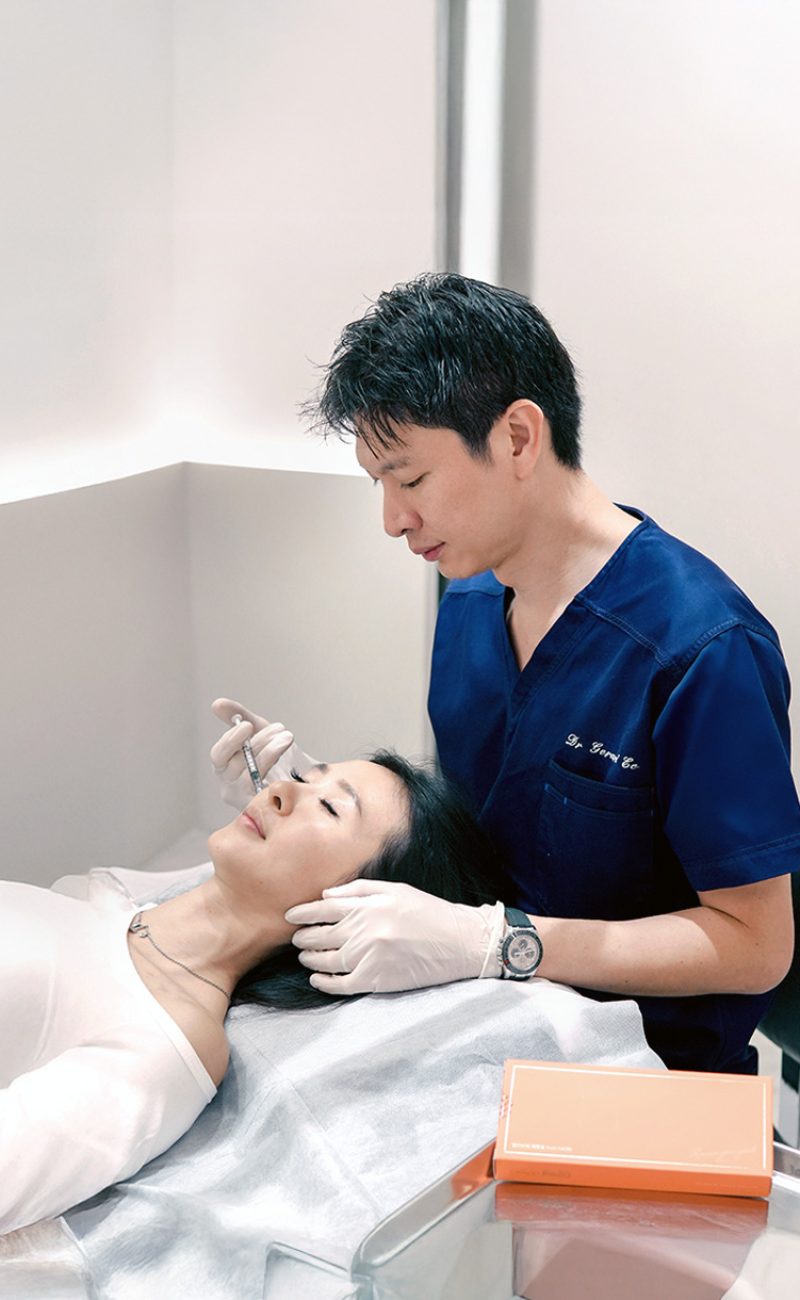
Unlike many conventional HA-only skin boosters, a PDLLA and HA hybrid combines an immediate hydrating and filling effect with a slower collagen-stimulating response. The initial visual change is mainly associated with HA and the treatment fluid, while collagen remodelling develops more gradually over the following weeks and months.
PDLLA produces a controlled local inflammatory response after it is placed within the appropriate tissue plane. This activates macrophages, fibroblasts and other cells involved in tissue repair, leading to the formation of new collagen and extracellular matrix.
As remodelling progresses, patients may notice improvements in skin firmness, thickness and elasticity. Pores may also appear less prominent as the surrounding dermal support improves, although injectable treatment does not physically close or remove pores.
Some treatment protocols describe improvements that may persist for one to two years. The actual duration varies according to the formulation, treatment area, amount used, number of sessions, injection technique, individual collagen response and subsequent ageing. The human studies discussed below generally followed patients for three to six months, so they should not be interpreted as direct proof of a two-year result for every patient or treatment protocol.
The ability of PDLLA to support gradual skin structural remodelling may make it useful for concerns associated with reduced dermal support or irregular collagen organisation. These include atrophic acne scars, stretch marks, enlarged pores, fine lines and areas of mild volume loss.
What does the published clinical evidence show?
Published clinical evidence for PDLLA and HA hybrid injectables is developing, although the current studies use different formulations, concentrations, anatomical areas and delivery methods. Their findings are therefore informative but should not be treated as interchangeable evidence for every PDLLA skin-booster protocol.
A 2026 Level IV study followed 40 patients who underwent five facial treatments using a needle-free microjet system. Clinical scores, patient satisfaction and three-dimensional measurements improved progressively over 24 weeks. Because the formulation was delivered using a particular microjet device, the findings should not automatically be applied to conventional needle or cannula injection techniques.3
A separate 2026 prospective case series evaluated 20 patients with moderate-to-severe nasolabial folds. Patients underwent three intradermal treatment sessions at one-month intervals. Three months after the final session, 85 per cent were rated as improved or much improved and 90 per cent reported high satisfaction. Temporary swelling and bruising were reported, while no nodules, granulomas or delayed adverse events were observed during the study period. The absence of a control group and the relatively short follow-up remain important limitations.4
A 2025 case report examined treatment of the tear trough in one 24-year-old patient using clinical assessment, ultrasound, CT and MRI. The report described improvements in under-eye texture and hollowness by day 18, with no abnormal changes identified on the imaging performed. As this was a single-patient report with short follow-up, it cannot establish general safety, effectiveness or durability.2
For atrophic acne scars, a 2026 pilot case series treated five patients using a combination of carbon dioxide gas subcision and PDLLA. Short-term qualitative improvement in scar depth and contour was reported at four weeks, with no serious adverse events during the follow-up period. Because both gas subcision and PDLLA were used together, and because there was no untreated or comparison group, the contribution of each component cannot be separated.1
A further 2026 prospective single-arm series examined cannula-delivered PDLLA for clavicular augmentation in 44 women. At six months, the mean increase in clavicular projection was 1.6 millimetres and 90.3 per cent of participants reported being satisfied or very satisfied. Temporary swelling and bruising were recorded, with no major complications reported during the six-month study. This study involved a different anatomical area, formulation and injection protocol, so it demonstrates the broader structural potential of PDLLA rather than directly establishing outcomes for facial skin-booster treatment.5
Taken together, these publications provide early clinical support for the use of PDLLA in collagen stimulation, facial rejuvenation, selected volume concerns and scar-related treatment. The evidence is still dominated by case reports and relatively small, non-randomised clinical series. Larger controlled studies with longer follow-up are needed to define the most effective protocols, comparative benefits, treatment durability and frequency of uncommon or delayed complications.
A good alternative for patients who are not suitable for laser treatments
Dermal lasers are often used to promote skin remodelling or to treat acne scarring, but not all skin types are suitable for laser treatment; patients with more melanin in their skin may more at risk of hyperpigmentation or laser burns. PDLLA Collagen Regenerating Booster is a safe alternative for patients with darker skin tones who are seeking to treat acne scars and/or rejuvenate their skin.
Why choose The Clifford Clinic for a PDLLA Collagen Regenerating Skin Booster?
Experienced doctors in collagen stimulation
Our aesthetic doctors are experienced in the use of PDLLA injectables to support the skin’s natural collagen response. Treatment is planned with the aim of improving firmness, structural support and skin quality without surgery.
Results develop gradually and vary between patients. The amount used, injection plane and treatment schedule are selected according to the patient’s anatomy and clinical objectives rather than applying the same protocol to everyone.
Clinically studied PDLLA formulations
We use high-quality PDLLA formulations selected according to clinical suitability and local regulatory requirements. Published studies have examined PDLLA for facial rejuvenation, nasolabial folds, tear trough concerns, atrophic acne scars and structural augmentation, although the strength of evidence differs between indications.
The intended treatment is discussed during consultation so that patients understand which component provides immediate hydration, which effects develop gradually and where the clinical evidence remains limited.
Personalised injection techniques
Treatment at The Clifford Clinic is customised using facial assessment, anatomical mapping and precise injection methods. The injection depth, distribution pattern and amount used are adjusted according to the treatment area and the patient’s facial structure.
This approach is intended to produce balanced, natural-looking changes while reducing avoidable risks and unnecessary product placement. Patients are also advised about expected swelling, bruising, recovery and when to return for review.
Comprehensive anti-ageing protocols
PDLLA may be combined with complementary treatments such as other skin boosters, radiofrequency procedures or laser therapy when clinically appropriate. Different treatments address different layers and causes of skin ageing, so combination treatment is considered only when it offers a clear purpose.
The sequence and interval between treatments are planned around the patient’s skin condition, recovery and long-term aesthetic goals. More treatment is not automatically better, and some patients may benefit from PDLLA treatment alone.
Our Certified Medical Doctors

Dr. Gerard Ee
Dr. Gerard Ee is the founder and medical director of The Clifford Clinic. He is fully accredited in cosmetic treatments including fillers, Botox, light therapies, and more. Driven by his passion for sharing his expertise across the medical community, Dr. Ee has accumulated his surgical experiences internationally from working in the Mount Sinai Hospital in New York, National University Hospital (NUH), and Singapore General Hospital (SGH).
Dr. Chow Yuen Ho
Dr. Chow Yuen Ho is the founder and medical director of The Clifford Clinic. With over 10 years of clinical practice experience, the reputable aesthetic doctor specializes in non-invasive aesthetic and acne treatments. Dr. Chow has accomplished so much in this field. He served as the founding Director of Medical Informatics at SGH and then as the Managing Director of the Asian division of Alert Life Sciences Computing.


Dr. Law Zhi Wei
Dr. Law is a highly experienced medical professional specializing in acne treatments and aesthetic medicine. A graduate from the National University of Singapore and a member of the Royal College of Surgeons (Edinburgh), he has comprehensive clinical experience from renowned institutions such as KKH, SGH, and CGH. Passionate about the transformative power of effective acne care, Dr. Law is fully accredited in advanced treatments including lasers, radiofrequency, ultrasound therapies, Botox, and fillers. Holding a Postgraduate Diploma in Practical Dermatology from Cardiff University, he continuously updates his expertise to provide personalised, effective acne solutions, enhancing patients’ confidence and overall well-being.
FAQ
An increase in skin volume or plumpness may be visible immediately after treatment because of the HA component and the injected treatment fluid. Some of this early fullness may settle as temporary swelling subsides.
Changes associated with collagen production may begin to become noticeable after approximately two to four weeks. Improvement can continue gradually over the following months as tissue remodelling develops.
A PDLLA collagen regenerating skin booster is intended to produce longer-lasting changes than a purely hydrating skin booster. Depending on the formulation, treatment regimen, area treated and individual response, improvements may persist for approximately one to two years.
Duration cannot be guaranteed. The published human studies cited on this page generally followed patients for three to six months, and longer-term outcomes may differ between formulations and treatment protocols. Patients may notice improvements in skin texture, firmness, facial contours and overall freshness, but the degree and duration of change vary.
A PDLLA collagen regenerating skin-booster session usually takes around 30 minutes to complete. Additional time may be required for consultation, photography, facial mapping, cleansing and the application of topical anaesthetic cream.
The total appointment duration will depend on the number of areas being treated and whether the procedure is being combined with another treatment.
A commonly used initial treatment plan consists of three to four sessions performed at intervals of approximately four to six weeks. This is a general protocol rather than a fixed requirement for every patient.
For maintenance, one or two sessions a year may be considered. The appropriate number and timing of sessions depend on the formulation used, treatment area, response to previous sessions and the patient’s long-term goals.
Topical aesthetic cream will be applied to numb the treatment area prior to the procedure to minimise any pain or discomfort felt during the injection.
Call us today at (65) 6532 2400, Whatsapp us at (65) 8318 6332 or email us at thecliffordclinic@gmail.com to book an appointment or enquire on any of our cosmetic services and treatments.
Clinical references
- Yi KH, Rosellini I, Lee S, Lee HE. Gas subcision with PDLLA (Juvelook): Evaluating a hybrid mechanical-biologic approach for atrophic acne scars. JPRAS Open. 2026;51:129–133. doi:10.1016/j.jpra.2026.05.001.
- Ravera K. Ultrasound and Radiological Patterns in Assessing the Efficacy of Juvelook for Collagen Stimulation and Tear Trough Enhancement: A Case Report. Cureus. 2025;17(4):e82668. doi:10.7759/cureus.82668.
- Seo SB, Wan J, Yoon SE, et al. The Effective Delivery of Poly(D,L-lactic Acid) (Juvelook) via Needle-Free Injection (CUREJET) for Facial Rejuvenation. Aesthetic Plastic Surgery. 2026;50:3382–3388. doi:10.1007/s00266-025-05434-2.
- Yi KH, Rosellini I, Lim JJM, Kim HS. A Clinical Study on the Efficacy and Safety of Injectable PDLLA for Nasolabial Fold Correction: Juvelook treatment for Nasolabial fold. Journal of Craniofacial Surgery. Published online July 17, 2026. doi:10.1097/SCS.0000000000012819. PMID: 42479568.
- Yi KH, Wan J, Rosellini I, Song JK, et al. Clavicular Augmentation With Poly-d,l-lactic Acid (Juvelook GLAM) using Cannula. Plastic and Reconstructive Surgery – Global Open. 2026;14:e7957. doi:10.1097/GOX.0000000000007957.