
Botulinum Toxin for Eye Wrinkles

Botulinum Toxin for Eye Wrinkles in Singapore
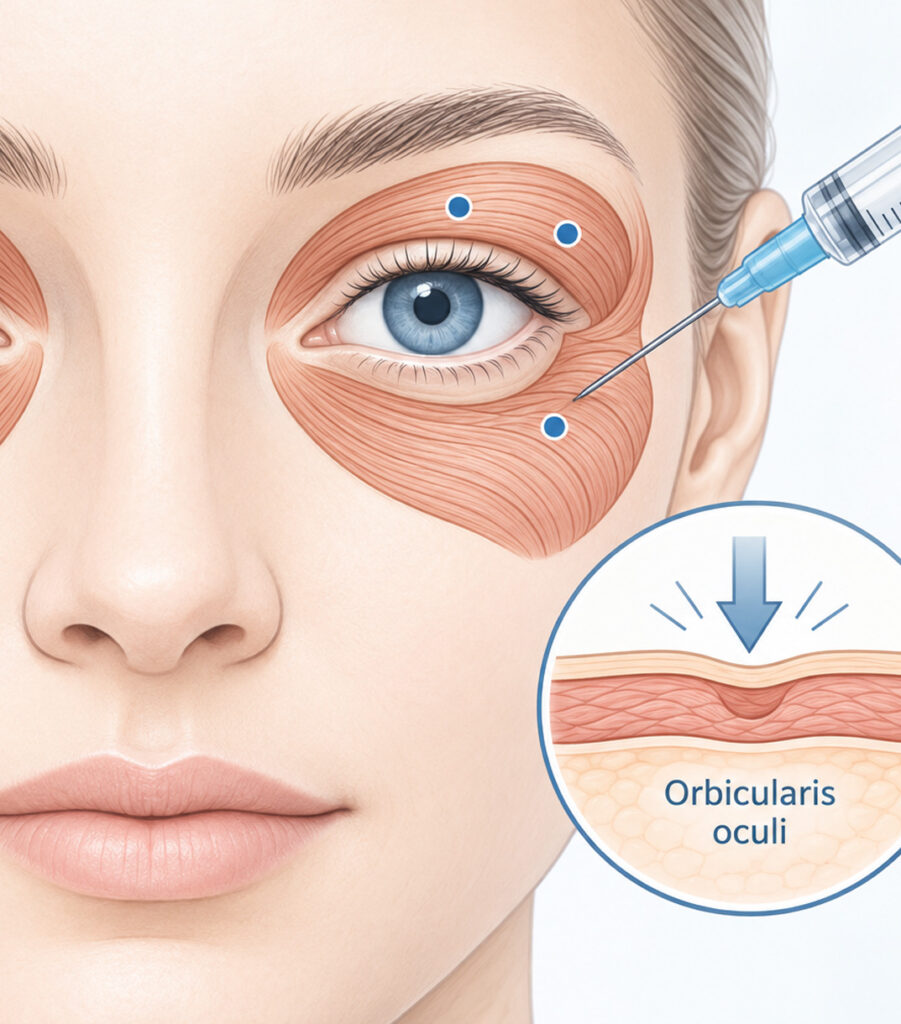
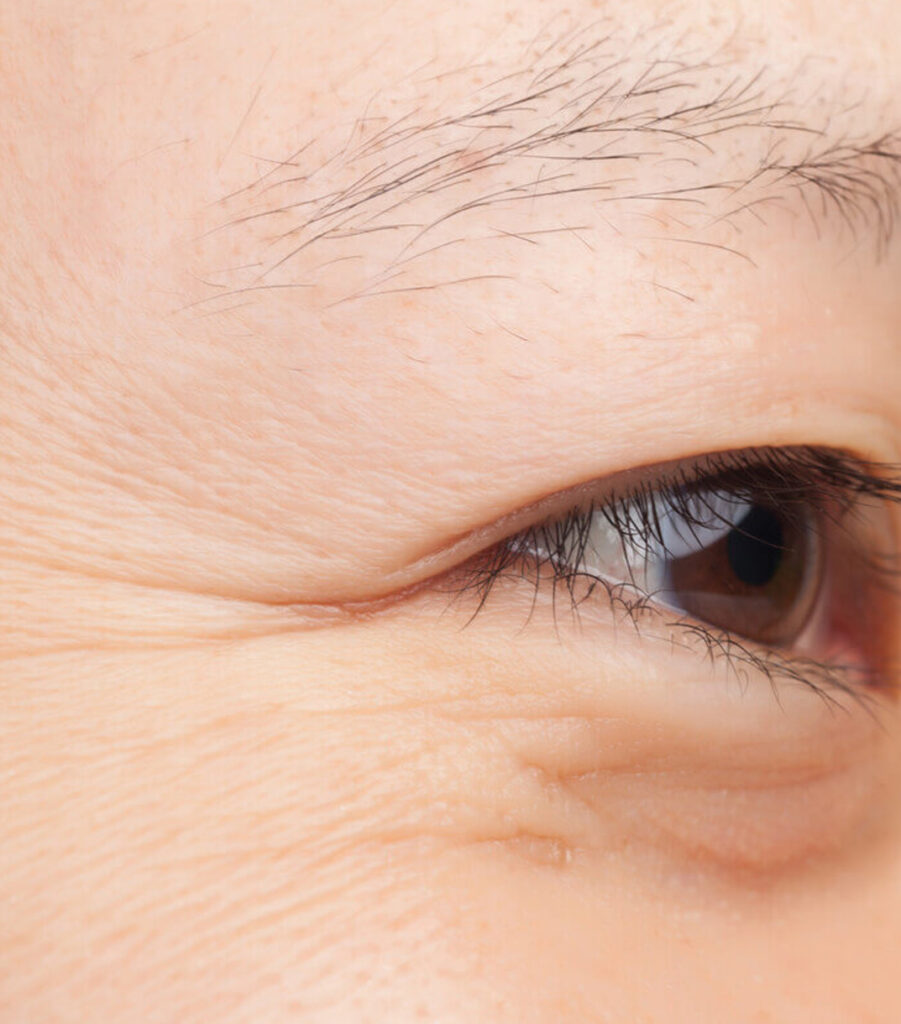
Fine lines around the outer corners of the eyes often become more visible when smiling, laughing or squinting. These lines are commonly called crow’s feet or lateral canthal lines. They are partly created by repeated contraction of the orbicularis oculi, the circular muscle surrounding the eye.
Carefully placed botulinum toxin type A injections can temporarily reduce selected muscle activity and soften dynamic eye wrinkles. The treatment plan should preserve natural facial expression rather than remove all movement around the eyes. Lateral canthal lines associated with orbicularis oculi activity are a recognised aesthetic treatment indication for certain registered botulinum toxin type A preparations in Singapore.
At The Clifford Clinic, the eye area is assessed both at rest and during facial movement. This helps the doctor determine whether the concern comes primarily from muscle activity, skin quality, pigmentation, volume loss, eye bags or a combination of these factors.
Call us today at (65) 6532 2400 to book an appointment on any of our cosmetic services and treatments.
What are crow’s feet and periorbital wrinkles?
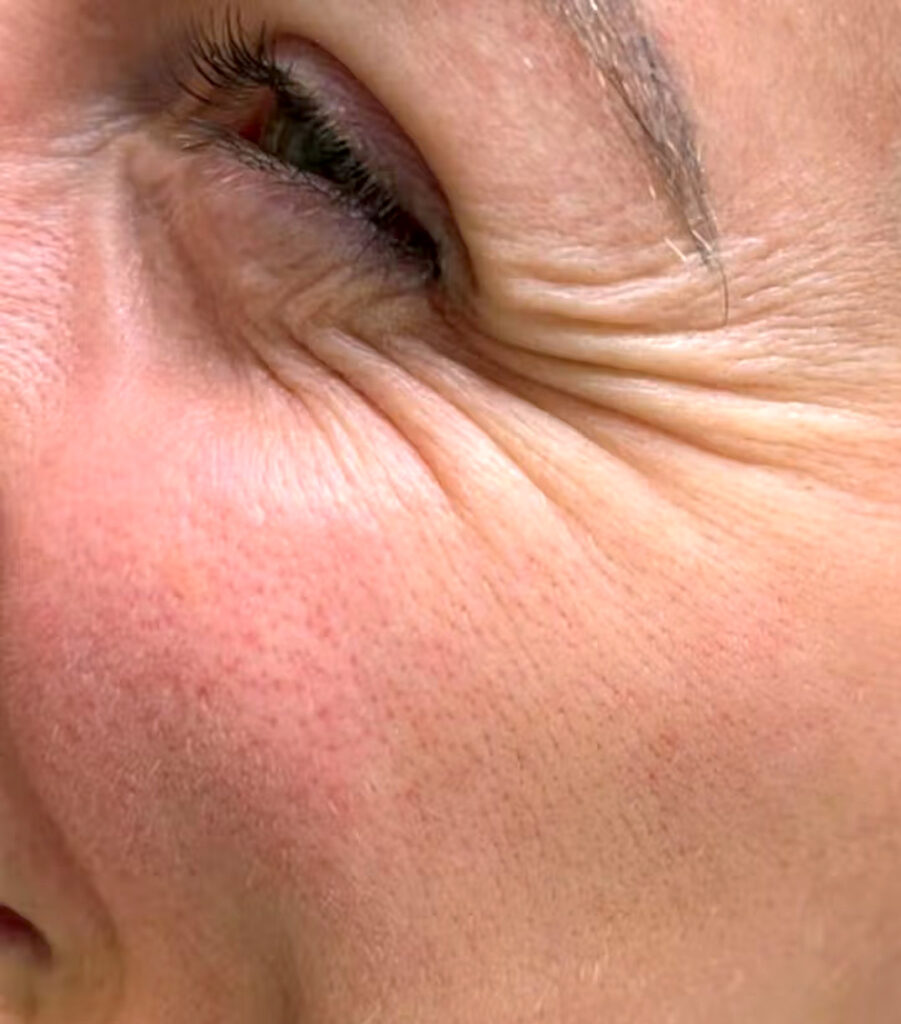
Crow’s feet are the fine lines that extend from the outer corner of the eye towards the temple. They usually begin as dynamic wrinkles that appear during smiling or squinting. With repeated facial movement and changes in the skin over time, some lines may eventually remain visible at rest.
Dynamic eye wrinkles are generally more responsive to botulinum toxin because muscle contraction is an important part of their formation. Lines that are deeply visible at rest may still soften, although treatments directed at skin texture, hydration or laxity may also be considered.
Botulinum toxin type A reduces the release of acetylcholine from selected nerve endings. This temporarily decreases contraction in the treated portion of the muscle.6,7
How does botulinum toxin work around the eyes?
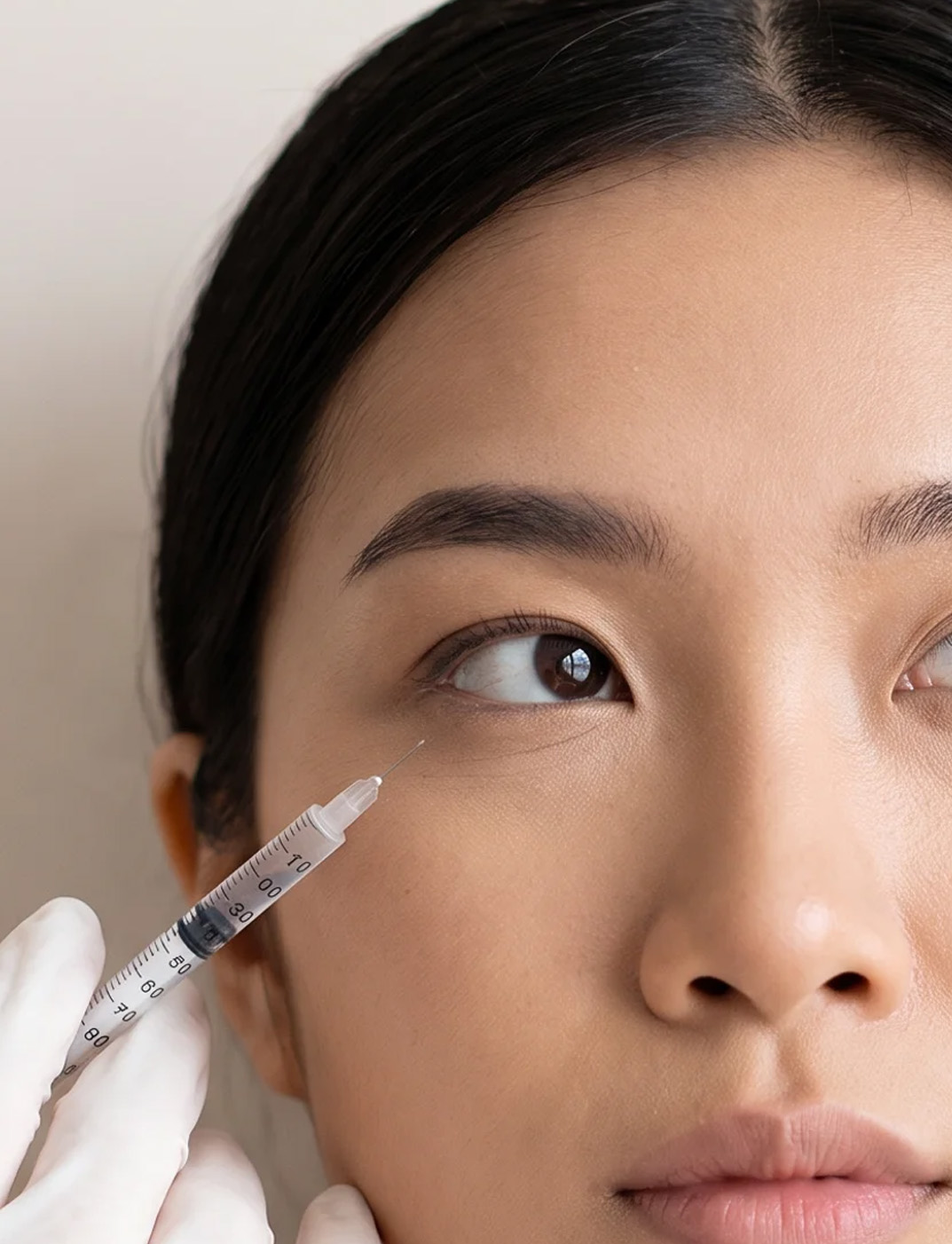
For crow’s feet, small amounts are usually placed into selected areas of the lateral orbicularis oculi. The position and amount used depend on the distribution of the lines, muscle strength, brow position, eyelid support and the patient’s usual facial expression.
The treatment does not need to eliminate every smile line. A measured approach can soften excessive creasing while retaining normal movement and expression.
Botulinum Toxin for Eye Wrinkles: Treatment Suitability
| Concern | Potential Role of Botulinum Toxin |
|---|---|
| Crow’s Feet | May soften lines extending from the outer corner of the eye |
| Dynamic Eye Wrinkles | Most suitable when the lines become prominent during smiling or squinting |
| Fine Lines Extending Towards the Temple | May improve when they are primarily caused by orbicularis oculi contraction |
| Mild Asymmetry During Smiling | Treatment may be adjusted when the difference is related to muscle activity |
| Selected Lower Eyelid Lines | May be considered after careful assessment of lower eyelid support and muscle activity |
| Deep Lines Visible at Rest | May soften, although skin-focused treatments may also be required |
What botulinum toxin does not treat
Botulinum toxin acts on muscle activity. It does not directly remove pigmentation, visible blood vessels, protruding eye bag fat, a tear trough hollow or significant loose skin.
Patients whose main concern is brown, blue or shadowed under-eye discolouration may require a separate assessment for dark eye circles. Prominent lower eyelid fat or eye bags may be better evaluated under eye bag treatment.
Crepey skin and laxity may require skin directed or energy based treatment, such as a laser eye lift, depending on the cause and severity. A consultation helps separate these concerns before a treatment plan is recommended.
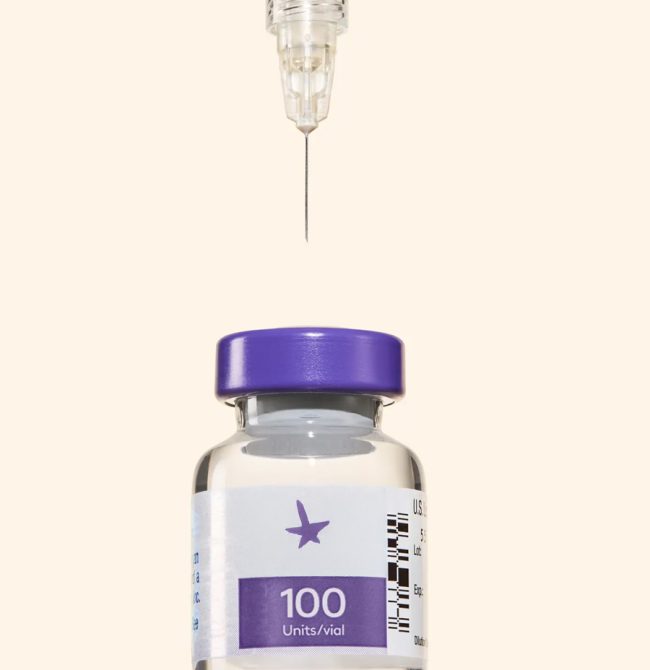
Who may be suitable for eye wrinkle treatment?
Treatment may be considered for adults whose crow’s feet or lateral eye wrinkles become prominent during facial expression. Suitable patients should understand that the result is temporary and that the aim is improvement rather than complete removal of every line.
Tell the doctor about previous eyelid or brow surgery, existing eyelid drooping, dry eye symptoms, difficulty closing the eyes, facial weakness, neuromuscular conditions, previous reactions to botulinum toxin and all current medications. Pregnancy, breastfeeding, infection near the planned injection sites and relevant medical conditions should also be discussed before treatment.
Patients with marked skin laxity, deep static wrinkles, prominent eye bags or substantial volume loss may obtain a more appropriate result from another treatment or a combination plan.
Our treatment is a safe and simple procedure without the risks and disadvantages associated with surgery.
01
01. Eye and facial assessment
The doctor examines the eye area at rest and while you smile, squint and raise your eyebrows. Brow height, eyelid position, facial asymmetry, muscle strength and the distribution of the wrinkles are considered together.
This step is important because crow’s feet do not appear in exactly the same pattern in every person. A fixed injection pattern may not suit every eye shape or pattern of facial movement.
02
02. Treatment planning
The planned injection sites are selected according to the muscles contributing to the wrinkles. Treatment is generally focused on the lateral eye area, while the forehead, frown lines and lower eyelids are assessed separately.
Different botulinum toxin type A preparations have product-specific units and protocols. The doctor therefore determines the treatment according to the exact formulation being used rather than applying a universal number of units.
03
03. Injection
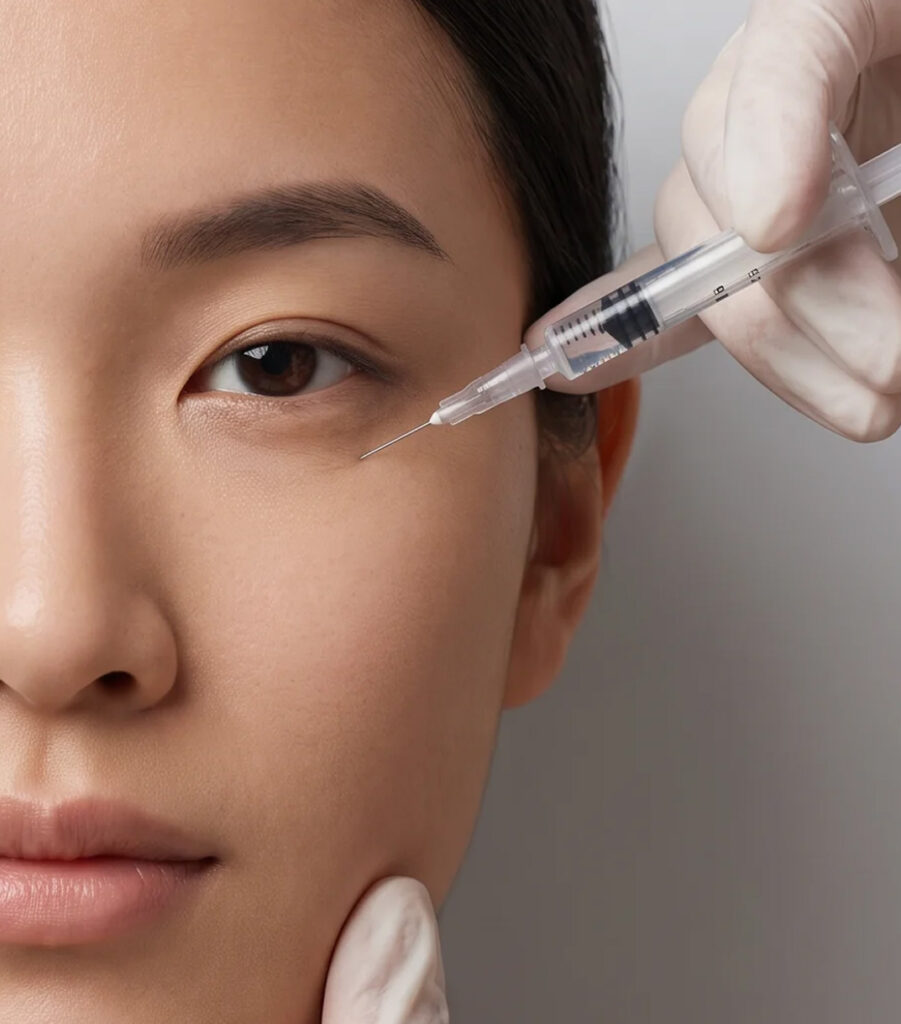
The skin is cleansed before small injections are placed into the selected areas. Patients generally describe a brief pinching or stinging sensation at each injection point.
The appointment itself is usually brief. Anaesthetic cream is often unnecessary, although comfort measures may be discussed for patients who are particularly sensitive to injections.
04
04. Immediate recovery
Small raised bumps, redness or mild tenderness may be visible immediately after treatment. These usually settle, although bruising can occasionally occur.
Most patients can return to their normal routine. The treated area should not be firmly rubbed or pressed immediately after the procedure, and the doctor’s individual aftercare instructions should be followed.
When do results appear?
The effect develops gradually rather than immediately. Changes commonly begin during the first several days and become clearer as the treatment settles over the following one to two weeks.
The result is temporary and gradually diminishes as muscle activity returns. Duration varies according to the formulation, amount used, muscle strength, metabolism and individual response. Product information for established aesthetic formulations describes an effect lasting approximately three to four months, although individual results differ.
A review may be arranged after the treatment has settled. Further treatment should be considered according to the return of muscle activity and clinical assessment rather than an automatic fixed schedule.
Can botulinum toxin be combined with a skin booster?
Crow’s feet may be influenced by both muscle movement and the condition of the overlying skin. Botulinum toxin addresses the movement component, while an injectable hyaluronic acid treatment may be considered for hydration and fine skin texture in selected patients.
A 2025 randomised, controlled, double-blind split-face study included 25 women with moderate to severe dynamic canthal lines. Both sides received botulinum toxin type A, while one side also received an intradermal hyaluronic acid treatment and the other side received a simulated injection. The combination-treated side had lower canthal wrinkle severity at three months at rest and at three and six months during facial contraction. Patient satisfaction was also higher at three and six months, while electromyography measurements did not differ significantly between the two protocols.1
The study was small and involved a selected group of women. It suggests that combination treatment may have a role for some patients, but it does not establish that every patient with crow’s feet requires both treatments. Patients concerned about hydration or fine skin texture can read more about skin boosters.
Side effects and risks
Temporary injection-site effects may include discomfort, redness, swelling, small bumps and bruising. Headache, temporary asymmetry or an effect that feels stronger or weaker than expected can also occur.
Treatment around the eyes may occasionally weaken a nearby muscle unintentionally. Possible effects include brow heaviness, eyelid drooping, altered eyelid closure, dry or watery eyes and a change in the smile. The likelihood depends partly on the injection position, dose, individual anatomy and existing eyelid function.
A 2024 case report described a 24-year-old woman who developed full eyelid ptosis four days after treatment involving the forehead, glabellar and crow’s-feet areas. She subsequently recovered after further medical management.2 A single case report confirms that the complication can occur, but it cannot establish how frequently it occurs.
Rare systemic or distant effects have been described after botulinum toxin treatment in other anatomical areas. A 2019 case report described generalised botulism-like symptoms following treatment of axillary hyperhidrosis.3 A separate study reported rare bilateral vocal-fold abductor paralysis after injections into laryngeal muscles for adductor spasmodic dysphonia.5 These reports do not estimate the risk following cosmetic eye treatment, since the treatment areas, doses and medical indications were different.
Unexpected eyelid drooping, visual disturbance or difficulty closing the eye should be assessed promptly. Generalised weakness or difficulty speaking, swallowing or breathing requires urgent medical attention.
Why evidence from other treatment areas cannot be applied directly to the eyes
Published botulinum toxin research covers a broad range of anatomical areas and conditions. This includes an emerging aesthetic trend involving the trapezius muscles,4 treatment of laryngeal dystonia,5 non-cosmetic head and neck disorders,6,7 lower urinary tract disease,8 temporomandibular disorders9 and childhood achalasia.10
These studies involve different formulations, doses, injection sites, tissues and clinical outcomes. They should not be used as direct evidence that a treatment will improve eye wrinkles. For cosmetic periorbital treatment, the most relevant evidence in this reference set is the randomised canthal-line study,1 while the eyelid-ptosis case report provides direct information about a possible eye-area complication.2
Just Ten Minutes, and No Down Time
The procedure is non invasive and just requires ten minutes to complete. There is also little to no downtime required, and you will be able to resume your normal activities straight away.
Doctors with over 10 years of experience
The Doctors at the Clifford clinic has over 10 years of experience in aesthetic surgery procedures. Rest assured that you are in safe hands. We have hundreds of patients just like you who came to us, all leaving satisfied and happy with their results.
One Appointment Away From Beauty
A consultation can determine whether your concern is caused mainly by dynamic muscle movement or by skin texture, pigmentation, hollowing, eye bags or laxity. The treatment plan can then be matched to the actual cause rather than applying the same procedure to every eye concern.

to schedule your consultation today.
Botulinum toxin does not remove protruding lower eyelid fat. Eye bags are a structural concern and require a separate assessment of the lower eyelid, fat compartments, skin laxity and lid-cheek contour.
It does not directly remove pigment, visible blood vessels or structural shadowing. Dark eye circles have several possible causes, so treatment should be selected according to whether the main component is pigmentation, vascular visibility, thin skin, hollowing or an eye bag.
Selected lower eyelid lines or a prominent pretarsal muscle may sometimes be treated. This area requires conservative assessment because weakening the lower orbicularis oculi may affect eyelid support, smile dynamics or the appearance of existing eye bags.
The intended result is softer creasing while retaining normal expression. The outcome depends on the injection pattern and amount used, which should be adjusted to the patient’s anatomy and preferred degree of movement.
Most patients return to their usual activities after treatment. Small bumps and redness normally settle, although bruising or mild swelling may occasionally be visible for longer.
The result is temporary and generally lasts for several months. Muscle strength, formulation, amount used and individual metabolism all influence duration.
References
- Neves MLBB, Thome C, da Silva Junior SV, et al.
Efficacy and Durability of the Association of Botox and Skinvive in the Treatment of Moderate/Severe Wrinkles in the Periorbital Region: A Randomized, Controlled, Double-Blind, Split-Face Clinical Study.
Journal of Cosmetic Dermatology. 2025;24(8):e70403.
doi:10.1111/jocd.70403. - Musharbash IJ, Chakra RJ.
Treatment of Full Eyelid Ptosis Following Botox Injection: A Case Report.
Cureus. 2024;16(3):e55970.
doi:10.7759/cureus.55970. - Rouientan A, Alizadeh Otaghvar H, Mahmoudvand H, Tizmaghz A.
Rare Complication of Botox Injection: A Case Report.
World Journal of Plastic Surgery. 2019;8(1):116–119.
doi:10.29252/wjps.8.1.116. - Diaddigo SE, LaValley MN, Asadourian PA, Rohde CH.
“Barbie botox”: The systematic review of a popular trend.
Journal of Plastic, Reconstructive & Aesthetic Surgery.
2024;88:45–46.
doi:10.1016/j.bjps.2023.10.136. - Venkatesan NN, Johns MM, Hapner ER, DelGaudio JM.
Abductor paralysis after botox injection for adductor spasmodic dysphonia.
Laryngoscope. 2010;120(6):1177–1180.
doi:10.1002/lary.20855. - Persaud R, Garas G, Silva S, Stamatoglou C, Chatrath P, Patel K.
An evidence-based review of botulinum toxin (Botox) applications in non-cosmetic head and neck conditions.
JRSM Short Reports. 2013;4(2):10.
doi:10.1177/2042533312472115. - Awan KH.
The therapeutic usage of botulinum toxin (Botox) in non-cosmetic head and neck conditions: An evidence based review.
Saudi Pharmaceutical Journal. 2017;25(1):18–24.
doi:10.1016/j.jsps.2016.04.024. - Mangera A, Andersson KE, Apostolidis A, et al.
Contemporary management of lower urinary tract disease with botulinum toxin A: A systematic review of botox (onabotulinumtoxinA) and dysport (abobotulinumtoxinA).
European Urology. 2011;60(4):784–795.
doi:10.1016/j.eururo.2011.07.001. - İşisağ Ö, Atasoy H, Yıldız S.
Comparison of the effects of occlusal splint and Botox injections on the amount of mouth opening and chronic pain in individuals with temporomandibular disorders: A systematic review and meta-analysis.
Australian Dental Journal. 2025;70(2):132–140.
doi:10.1111/adj.13059. - Dara N, Aghaei M, Hosseini A, et al.
Efficacy of esophageal balloon dilatation with Botox injection in children with achalasia referred to a tertiary care center.
Scientific Reports. 2025;15:31228.
doi:10.1038/s41598-024-81781-5.