
5-FU for Keloid Scars: How It Works, Steroid Combinations and Risks
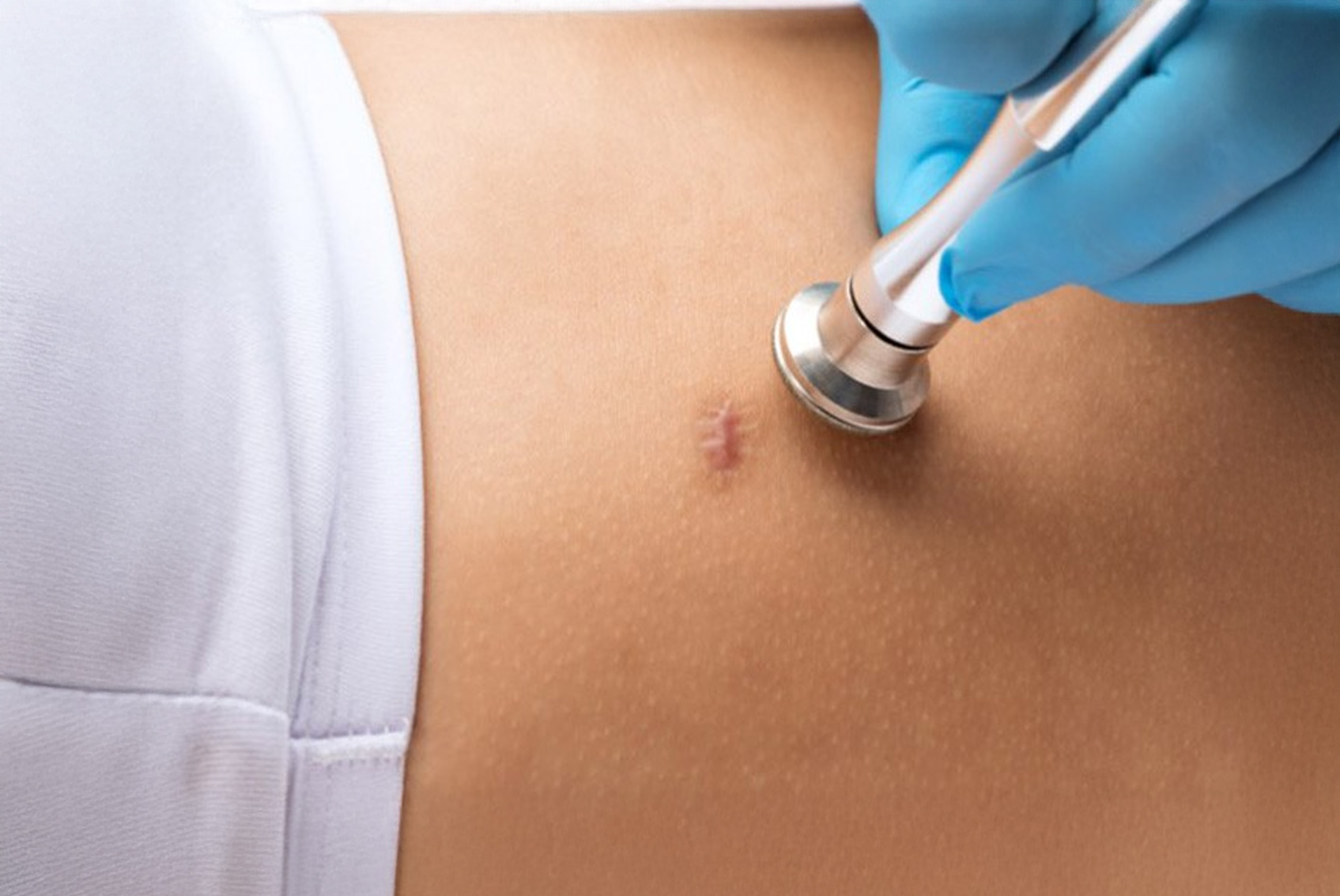
5-Fluorouracil, commonly called 5-FU, is a medicine that can be injected into raised scar tissue. Doctors sometimes combine it with the corticosteroid triamcinolone, and clinical trials have found improvements in scar measurements and patient assessments with this approach5.
This article focuses on the evidence for 5-FU injections and the questions that matter before treatment. For an overview of other approaches, see our guide to keloid scar treatment in Singapore.
What does 5-FU do in scar tissue?
A keloid contains excessive collagen produced by scar-forming cells called fibroblasts. Laboratory research in human fibroblasts shows that 5-FU can interfere with signalling that promotes type I collagen production, helping explain why it has been investigated for raised scars7.
The laboratory findings explain a possible mechanism rather than prove a particular clinical result. Studies in patients are needed to establish whether a treatment improves the height, firmness, appearance or symptoms of a scar7.
When might a doctor consider 5-FU?
5-FU has been studied for established keloids and difficult raised scars, including as part of combination treatment. A discussion may be appropriate when a scar remains troublesome or improvement with previous treatment has been incomplete1.
Assessment includes the diagnosis, previous treatment, the condition of the skin and the patient’s medical history. A persistent raised scar should be reviewed before deciding whether to continue injections, change the regimen or consider another approach1.
Why combine 5-FU with a steroid?
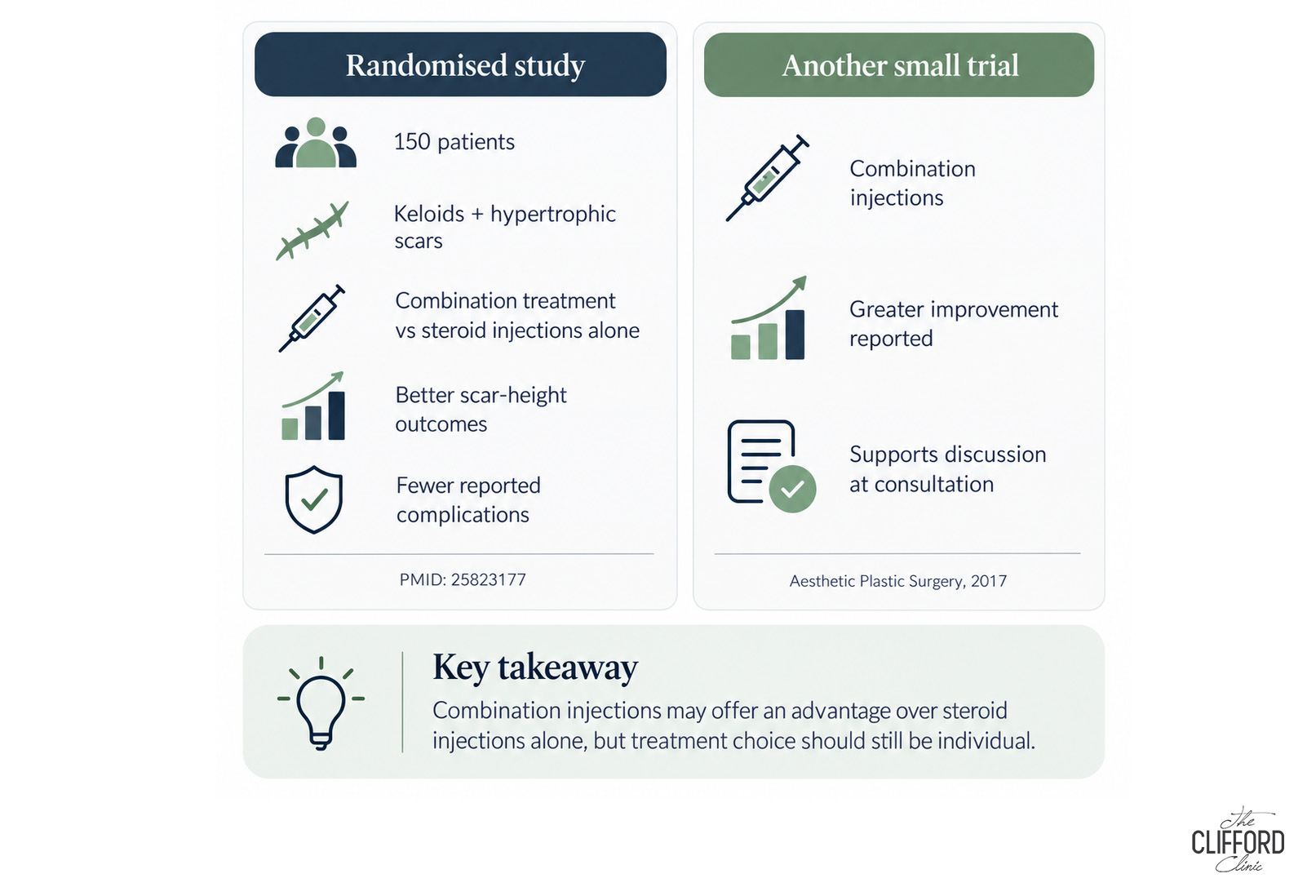
Research has compared the combination with steroid injections alone rather than assuming that adding another medicine must help. In a randomised study of 150 patients with keloids or hypertrophic scars, the combination produced better scar-height outcomes and fewer reported complications under the studied regimen6.
Another small trial also reported greater improvement with combination injections. These findings make the combination a reasonable subject for consultation, while the actual treatment choice remains individual8.
What do the clinical studies show?
A 2024 randomised, double-blinded study enrolled 66 patients with keloids or hypertrophic scars. At 12 weeks, triamcinolone with 5-FU produced greater improvements in scar height and scar-assessment scores than triamcinolone alone. The study was conducted at one centre and did not establish long-term recurrence outcomes2.
A 2018 trial involving 60 patients with keloids compared triamcinolone, 5-FU and their combination. All three groups improved, although the speed of improvement and the adverse effects differed between groups3.
An earlier study of ten patients with raised sternotomy scars found improvement with several treatments, without a significant overall difference between treatment methods. This illustrates why 5-FU should be discussed as one option rather than universally better than every alternative4.
How is a course of injections planned?
The studies used a series of injections, with assessment between visits rather than a single treatment for every scar. For example, the 2009 trial used weekly injections over eight weeks, while other studies used different intervals5,4.
A published schedule is not automatically the right schedule for an individual patient. The doctor should explain the proposed course, how progress will be assessed and when the plan would be reconsidered. The expected number of visits can be reviewed as the scar responds5,8.
What improvement should patients look for?
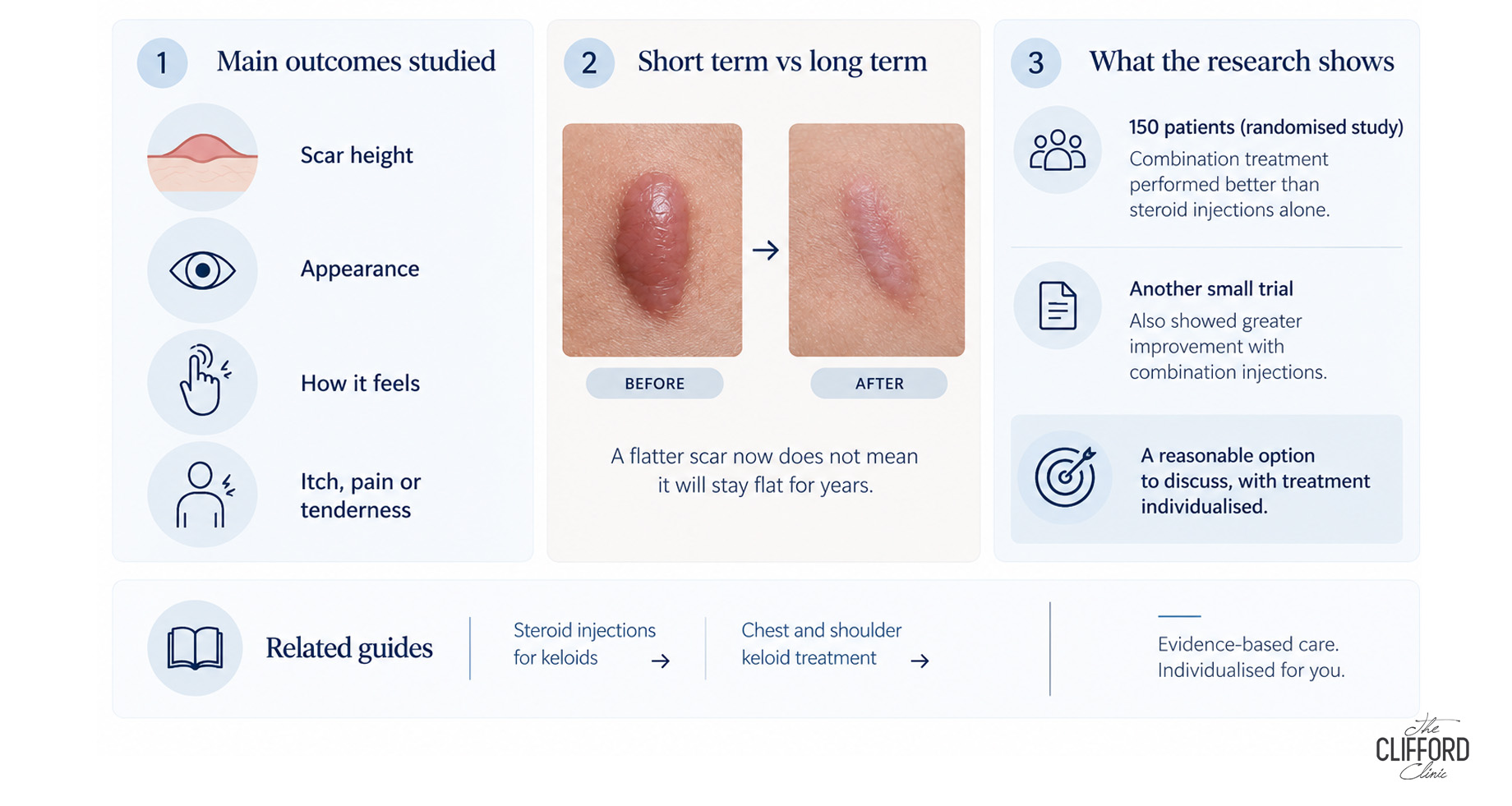
The main outcomes studied include a reduction in scar height and changes in how the scar feels and looks. Some trials also assessed symptoms such as itch, pain or tenderness, so success should be discussed in terms of the patient’s own concerns as well as photographs8.
A flatter scar and a scar that stays flat for years are different outcomes. Short follow-up after a course of injections cannot establish permanent removal, and published recurrence findings need to be read alongside the study’s follow-up period8.
The practical considerations for steroid treatment are covered separately in our guide to steroid injections for keloids. Our chest and shoulder keloid guide discusses raised scars at those sites.
What are the possible side effects?
Possible local effects include injection discomfort, changes in pigmentation and ulceration. In the 2018 trial, skin thinning and visible small blood vessels were more prominent with steroid alone, while ulceration was more prominent with 5-FU alone. Combination treatment still requires monitoring3.
Before treatment, patients should discuss their health conditions, medicines and previous reactions with the treating doctor. Pregnancy, breastfeeding, infection and immunosuppression are important considerations; the published review advises avoiding 5-FU in these circumstances1.
A plan should include instructions for looking after the treated area and for reporting a new sore or worsening local symptoms. The doctor should review an adverse reaction before deciding whether further injections are appropriate3.
Frequently asked questions
Is 5-FU a steroid?
5-FU is a different medicine from triamcinolone, which is a corticosteroid. Studies have investigated them separately and together, so the terms should not be used interchangeably6.
Why is a medicine used in cancer treatment discussed for a scar?
Medicines can be investigated for more than one biological effect. Alongside its use in cancer treatment, 5-FU has been studied for its effect on collagen-related activity in fibroblasts. Its use in scar research does not mean that the scar is being treated as cancer7.
Can 5-FU cream replace an injection into a keloid?
The clinical trials discussed here evaluated injections into scar tissue, not ordinary application of a cream to its surface. Their results therefore do not establish that 5-FU cream can substitute for the injection regimens studied5,6.
Can 5-FU be used without a steroid?
5-FU alone has also been studied. Its results and adverse effects differ from combination treatment, so the choice should be made after medical assessment3.
Does improvement mean that the keloid will never return?
A reduction in scar height at the end of treatment does not demonstrate a permanent cure. Continuing review is a separate part of the plan, particularly when a scar becomes raised or troublesome again4,8.
Related reading
For the wider treatment discussion, return to keloid scar treatment in Singapore. The separate guides to steroid injections and chest and shoulder keloids provide further context.
This article provides general information and does not replace an individual consultation. Treatment suitability and prescribing decisions require assessment by a qualified doctor.
References
- Shah VV, Aldahan AS, Mlacker S, et al. 5-Fluorouracil in the Treatment of Keloids and Hypertrophic Scars: A Comprehensive Review of the Literature.Dermatol Ther (Heidelb). 2016;6:169-183. doi:10.1007/s13555-016-0118-5.
- Acharya R, Agrawal S, Khadka DK, Pant AR. Efficacy and safety of intralesional triamcinolone acetonide alone and its combination with 5-fluorouracil in keloids and hypertrophic scars: Randomized, parallel group, and double blinded trial.Skin Health Dis. 2024;4(5):e450. doi:10.1002/ski2.450.
- Srivastava S, Patil A, Prakash C, Kumari H. Comparison of Intralesional Triamcinolone Acetonide, 5-Fluorouracil, and Their Combination in Treatment of Keloids.World J Plast Surg. 2018;7(2):212-219. PMID:30083505.
- Manuskiatti W, Fitzpatrick RE. Treatment Response of Keloidal and Hypertrophic Sternotomy Scars: Comparison Among Intralesional Corticosteroid, 5-Fluorouracil, and 585-nm Flashlamp-Pumped Pulsed-Dye Laser Treatments.Arch Dermatol. 2002;138(9):1149-1155. doi:10.1001/archderm.138.9.1149.
- Darougheh A, Asilian A, Shariati F. Intralesional triamcinolone alone or in combination with 5-fluorouracil for the treatment of keloid and hypertrophic scars.Clin Exp Dermatol. 2009;34(2):219-223. doi:10.1111/j.1365-2230.2007.02631.x.
- Khan MA, Bashir MM, Khan FA. Intralesional triamcinolone alone and in combination with 5-fluorouracil for the treatment of keloid and hypertrophic scars.J Pak Med Assoc. 2014;64(9):1003-1007. PMID:25823177.
- Wendling J, Marchand A, Mauviel A, Verrecchia F. 5-Fluorouracil blocks transforming growth factor-beta-induced alpha 2 type I collagen gene (COL1A2) expression in human fibroblasts via c-Jun NH2-terminal kinase/activator protein-1 activation.Mol Pharmacol. 2003;64(3):707-713. doi:10.1124/mol.64.3.707.
- Paul A, Kumar N, Moirangthem T, et al. Comparative study of intralesional triamcinolone alone and in combination with 5-flurourouracil for the treatment of keloid and hypertrophic scars.Hellenic J Surg. 2017;89:13-17. doi:10.1007/s13126-017-0371-9.