
ECM Skinbooster in Singapore
Extracellular matrix booster that focuses on supporting the skin’s structural environment rather than only surface glow.
If your skin feels “tired” despite good skincare, dullness, enlarged pores, fine lines, rough texture, or early laxity, a skinbooster can help by improving hydration and skin quality from within.
At The Clifford Clinic, ECM skinbooster is offered as a doctor-led injectable protocol to improve overall skin texture, radiance and resilience, with treatment plans tailored to your skin needs and downtime tolerance.
Re20 Skinbooster is an injectable biorevitalizer designed to deeply hydrate the skin and improve elasticity by delivering a high concentration of hyaluronic acid directly into the dermis.

What is ECM Skinbooster?
ECM Skin booster uses micronized human acellular dermal matrix (hADM) in powder form, made up of genuine extracellular matrix (ECM) components derived from human skin.
“Acellular” means the material is processed so that cells and fat layers are removed, leaving a scaffold-like matrix of skin-supporting components.
A 2026 randomised, split-face, double-blinded clinical trial evaluated injectable particulated human acellular dermal matrix, or phADM, in 20 adults with moderate cheek roughness. A phADM-containing formulation was administered to one side of the face, while a hyaluronic acid skin booster was used as the control on the opposite side. Skin changes were assessed over 20 weeks using objective imaging and biophysical measurements.1

Technology behind ECM Skinbooster
1) hADM-based ECM support
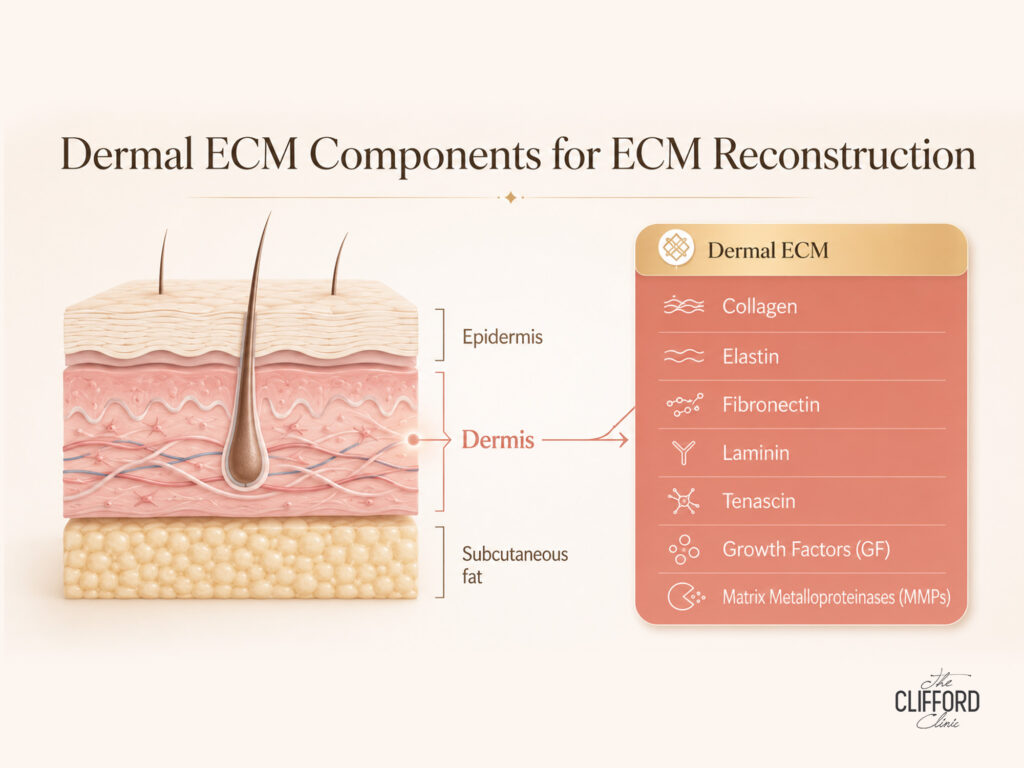
ECM (extracellular matrix) is the supportive environment in the skin that helps maintain tissue structure and supports skin cells. ECM is “a collection of dermal components that supports skin cells and maintains tissue structure.” ECM skin booster aims to supplement these matrix components directly.
A 2026 randomised, split-face, double-blinded clinical trial evaluated injectable particulated human acellular dermal matrix, or phADM, in 20 adults with moderate cheek roughness. A phADM-containing formulation was administered to one side of the face, while a hyaluronic acid skin booster was used as the control on the opposite side. Skin changes were assessed over 20 weeks using objective imaging and biophysical measurements.1
2) AlloClean™ processing
ECM Skin booster uses AlloClean™ Technology, where the product “minimizes DNA residues while preserving the native ECM structure,” with the goal of smoother integration and support for new ECM formation.
The same publication included complementary laboratory, ex vivo human-skin and animal experiments to investigate how the matrix may interact with dermal tissue. The researchers observed homogeneous dermal distribution and preservation of extracellular matrix architecture in ex vivo skin, while animal studies showed fibroblast infiltration and localised new collagen formation within the implanted matrix.1
In vitro experiments also found increased fibroblast proliferation, extracellular matrix synthesis and hyaluronan production.1 These are preclinical findings, so they help explain a possible biological mechanism but do not guarantee that every patient will experience the same degree of collagen formation or visible improvement.
What can ECM Skinbooster treat?
ECM is primarily used for skin quality concerns. Rather than changing facial shape or giving “volume” like a traditional filler, it supports the skin’s structural environment and overall function so the skin looks healthier and behaves more resiliently over time. Dehydrated, dull, tired-looking skin When skin lacks deep hydration, it tends to look flat and uneven and makeup may sit poorly or cling to dry patches. ECM Skin booster improves deep hydration and radiance, which clinically translates to skin that reflects light more evenly and looks fresher without looking “shiny.” Rough texture and visible pores Texture and pores are among the most common “skin quality” complaints, particularly around the cheeks and T-zone where pores can appear larger and the surface can look uneven. ECM booster is associated with improvements in skin texture, reductions in roughness and pore size reduction. Fine lines from early skin thinning and dehydration Improvement in fine lines and support for skin elasticity and regeneration, which aligns with a skin-quality approach where the goal is a smoother, less crepey surface over time. Early laxity and loss of bounce Supports elasticity and regeneration when the skin is beginning to lose spring and resilience. Uneven tone and blemish-type discolouration Skin tone issues often sit on a spectrum, from mild unevenness and post-acne marks to more stubborn pigmentation patterns. ECM Skin booster helps skin look clearer and more even. Redness-prone, easily irritated skin and barrier weakness A stronger barrier can mean skin that tolerates everyday triggers better and recovers more smoothly as part of a long-term maintenance plan. ECM Booster is presented as direct supplementation of dermal matrix components by supporting the extracellular environment that helps maintain tissue structure. It is often positioned as a foundational step for patients who prefer gradual, natural improvements rather than dramatic changes. Depending on your skin concerns, your doctor may sequence ECM skin booster with treatments such as laser, RF microneedling, pico, or other injectables to address pores, texture, redness, pigmentation and early laxity more comprehensively.The Re20 Skinbooster treatment stands out for its ability to provide long-lasting tissue remodeling and intense moisture, leaving the skin looking visibly firmer and more refreshed.
In the human split-face trial, the phADM-treated side showed greater improvements than the hyaluronic acid control in measured skin density, skin volume, elasticity, wrinkle depth, pore area, hydration and barrier-related parameters at multiple follow-up points.1 These findings are most directly relevant to facial skin quality in adults with moderate cheek roughness, which was the population studied.
The study involved only 20 participants and followed them for 20 weeks. It therefore provides early comparative evidence but does not establish that the same results will occur in every treatment area, skin condition or patient group.1
Side effects of ECM Skinbooster
Most side effects are similar to other doctor-performed injectables and depend on technique, needle/cannula choice and individual sensitivity. Common and expected effects may include:- Temporary redness, swelling, tenderness, or itchiness at injection points
- Bruising (especially around thin-skin areas)
- Small bumps or unevenness that typically settles as the product integrates and swelling reduces
- Short-term dryness or tightness in the first few days for some skin types
No serious adverse events were observed among the 20 participants during the 20-week clinical study.1 This provides preliminary safety information for the treatment protocol examined. However, a study of this size and duration cannot determine the frequency of uncommon reactions or exclude delayed complications that may appear beyond the follow-up period.
Safety also depends on factors such as the material injected, preparation method, injection depth, amount placed at each site, treatment area and the patient’s medical history. The absence of serious events in this early study should therefore be considered alongside the standard risks and contraindications of injectable procedures.

Who is suitable for ECM Skinbooster?
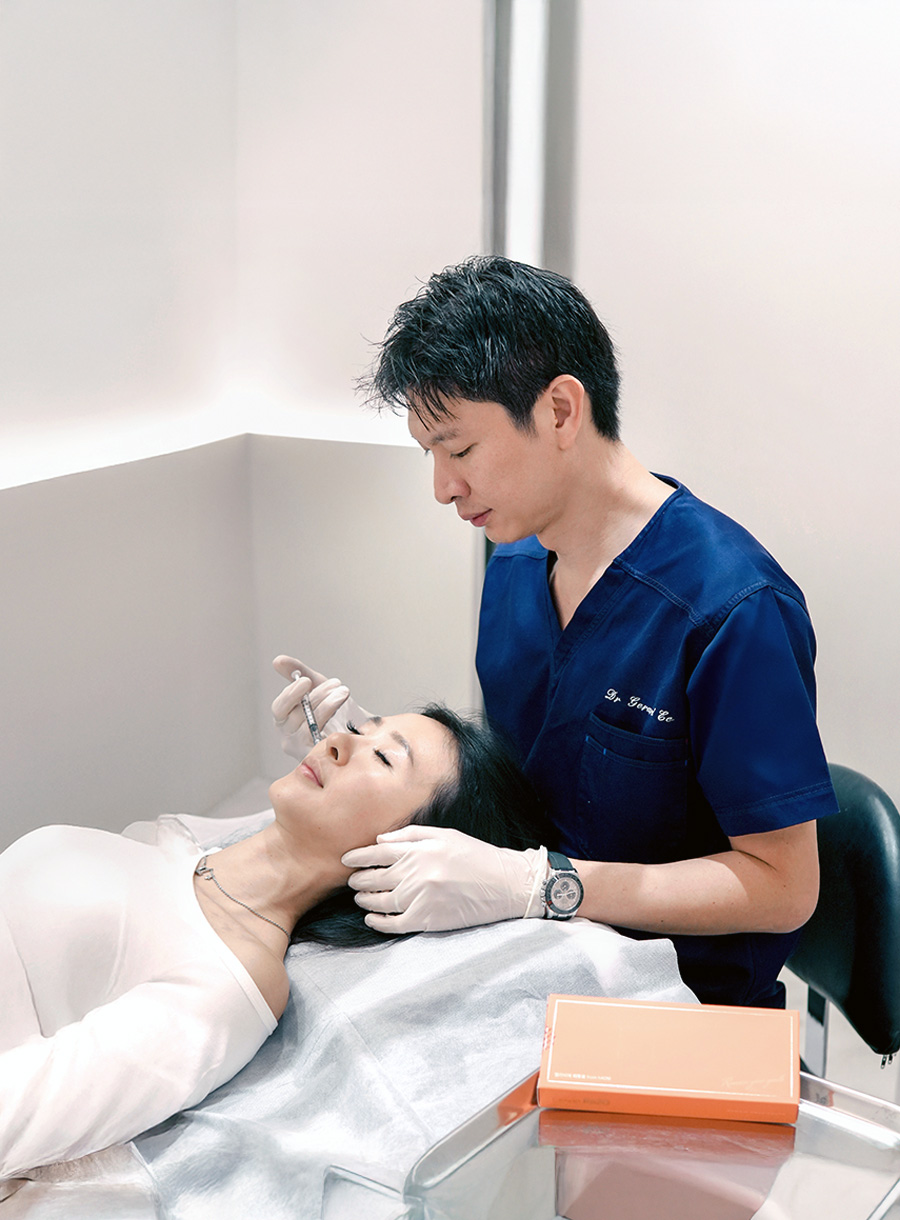
ECM Skin booster is generally considered for patients who want skin quality improvements rather than volume change.
You may be suitable if you have:
- Dullness, rough texture, dehydration lines, or uneven skin feel
- Enlarged pores and early loss of elasticity
- Post-acne “skin quality” concerns
- Redness-prone or barrier-compromised skin
- Pregnant or breastfeeding
- Experiencing active skin infection/inflammation in the area (e.g., active acne flare, eczema flare, herpes outbreak)
- Immunocompromised or on certain medications (case-by-case assessment)
The preclinical component of the study also found reduced production of selected pro-inflammatory mediators in activated macrophages and downregulation of melanogenesis-related genes in melanoma cells.1 These were laboratory observations rather than clinical outcomes in patients. They should therefore not be interpreted as evidence that the injectable directly treats rosacea, active inflammatory skin disease or a diagnosed pigmentation disorder.
Key ingredients of ECM Skinbooster
ECM Skin Booster isn’t described as a “cocktail” of small-molecule actives like vitamins or peptides. It is positioned as a micronized human acellular dermal matrix (hADM) so the “active ingredients” are the extracellular matrix (ECM) components that make up skin structure.
The key components are:
- Collagen (about 89%)
- Elastin (about 3%)
- GAGs (about 0.4%), including hyaluronic acid
Other ECM components (about 7.6%)
In short, ECM Skin booster’s “actives” are structural ECM proteins and matrix molecules (collagen + elastin + GAG/HA + other ECM fractions), presented in an acellular dermal matrix format rather than a traditional HA-only skinbooster.

What to expect during your ECM Skinbooster appointment at The Clifford Clinic
Step 1: Doctor’s Consultation
Step 2: The procedure itself
- Cleansing and skin preparation
- Numbing cream application
- Clear aftercare instructions
Step 4: Aftercare and maintenance
You will receive a simple plan covering:
- What to avoid for the next 24 to 72 hours
- When to restart actives like retinoids or acids
Book a doctor-led consultation at The Clifford Clinic, so you can understand your diagnosis, the most suitable options and what results are realistic for your skin.
Why choose The Clifford Clinic for ECM Skin Booster Singapore
We focus on three things: the right diagnosis, a plan they can follow and a protocol that is appropriate for Asian skin in Singapore.
At The Clifford Clinic:
- Doctor-led decision-making guides whether ECM skinbooster is appropriate and how it should be delivered
- We emphasise pigment diagnosis and trigger control, because melasma and PIH relapse when triggers are ignored
- We build a realistic plan that integrates procedures and home maintenance, rather than selling a single session expectation
- You receive clear instructions for sunscreen, barrier repair and maintenance so results can be sustained
Frequently Asked Questions
Not exactly. Traditional HA skinboosters focus mainly on hydration and skin glow. ECM booster is derived from hADM, containing matrix components like collagen and elastin, plus GAGs (including hyaluronic acid).
The distinction was examined directly in the 2026 split-face study, in which a phADM-containing formulation was evaluated on one side of the face and hyaluronic acid was used as the control on the other.1 Greater changes were reported on the phADM-treated side for several measurements of skin structure, elasticity, wrinkles, pores, hydration and barrier function. This does not mean that one category is suitable for every concern, as hyaluronic acid and ECM-based treatments have different compositions and treatment aims.
This depends on your baseline skin quality and goals. Many patients do a short “starter series” followed by maintenance. Our doctor will advise a plan after assessing pores, texture, hydration, and sensitivity.
Some people notice earlier improvements in hydration and glow, while texture and firmness changes typically build gradually. Timing varies based on skin condition and whether you combine treatments.
In the published clinical trial, participants were monitored for 20 weeks and differences between the treatment and control sides were detected at multiple assessment points.1 The study therefore shows that measurable changes were present during the observation period. It does not establish how long the results persist beyond week 20 or support one universal maintenance schedule for every patient.
Most patients return to normal activities the same day or next day. Expect mild redness or swelling for a short period, and occasional bruising.
Yes, ECM Skin booster is safe when coupled with different treatments as advised by our doctor.
Reference
- Lee YI, Chau NH, Nguyen NH, Ham S, Baek Y, Kim J, Lee JH.
Injectable Particulated Human Acellular Dermal Matrix Booster for Skin Restoration: An Integrated Randomized, Split-Face, Double-Blinded Clinical Trial and Preclinical Study.
International Journal of Molecular Sciences.
2026;27(5):2193.
doi:10.3390/ijms27052193.
PMID: 41828422.
PMCID: PMC12985180.