
AGNES vs Morpheus8 vs NILER. Which Non-Surgical Eye Bag Treatments in Singapore Reduce the Fat
By Dr Gerard Ee MBBS MRCS DP Dermatology, Medical Director, The Clifford Clinic.
Quick answer
Of the non-surgical devices marketed for eye bags in Singapore, only AGNES with Secret RF and NILER reduce the lower-eyelid fat that creates the bulge. Morpheus8, Thermage, Ultherapy, HIFU and Fotona multi-D act on the skin above it. AGNES with Secret RF costs $2,500 for the first session and $1,800 for subsequent sessions, and results typically last three to five years. Only mild Grade 1 to 2 bags with firm skin are suitable for any of these devices.
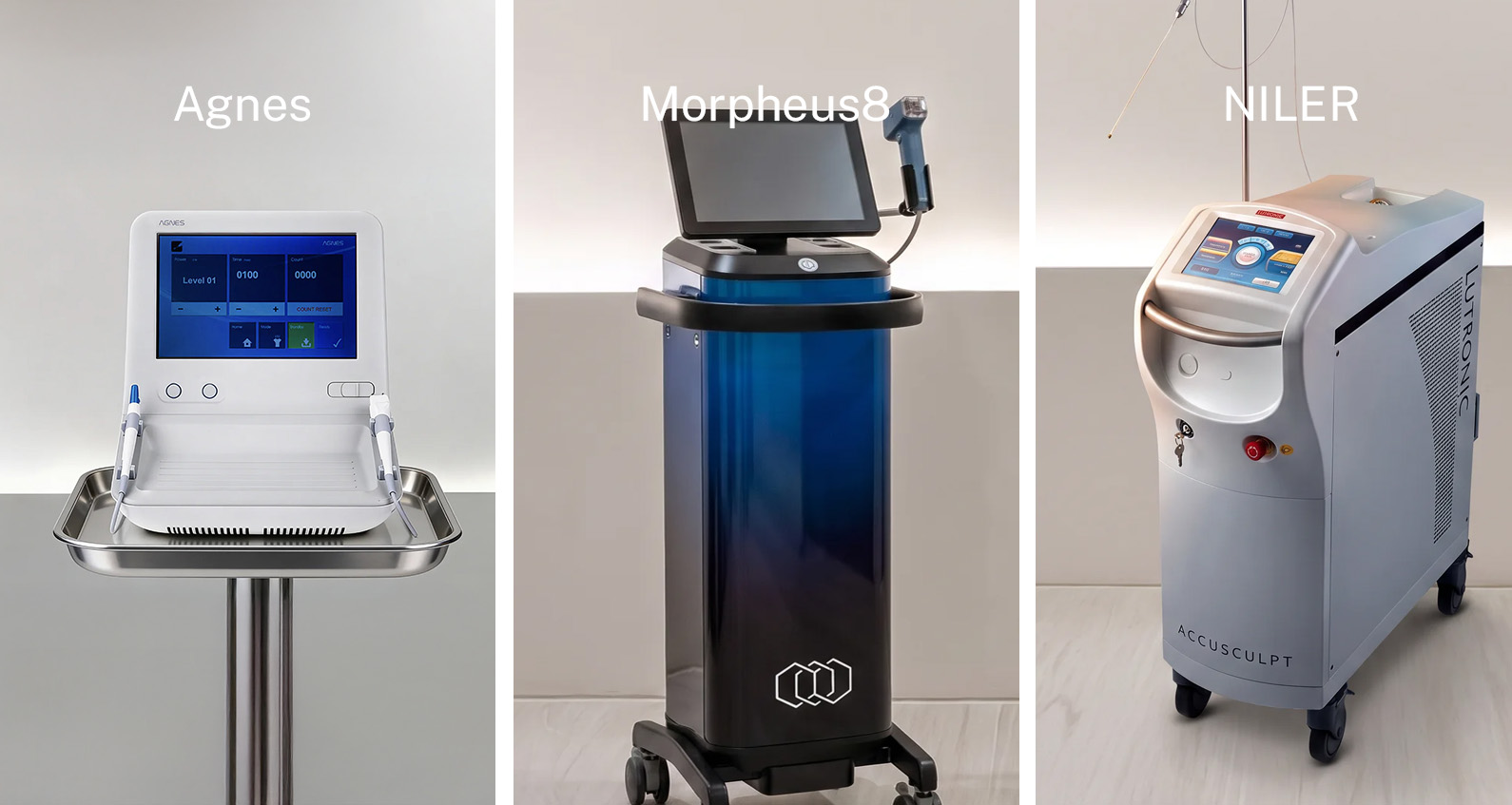
Patients researching non-surgical eye-bag removal in Singapore usually arrive with a shortlist of devices. One clinic recommends Morpheus8, another NILER, and others Thermage, Ultherapy or HIFU. At The Clifford Clinic, we use AGNES with Secret RF. The marketing claims are close to interchangeable, yet these devices deposit energy in different tissues at different depths, and only two of the technologies compared here act on fat at all.
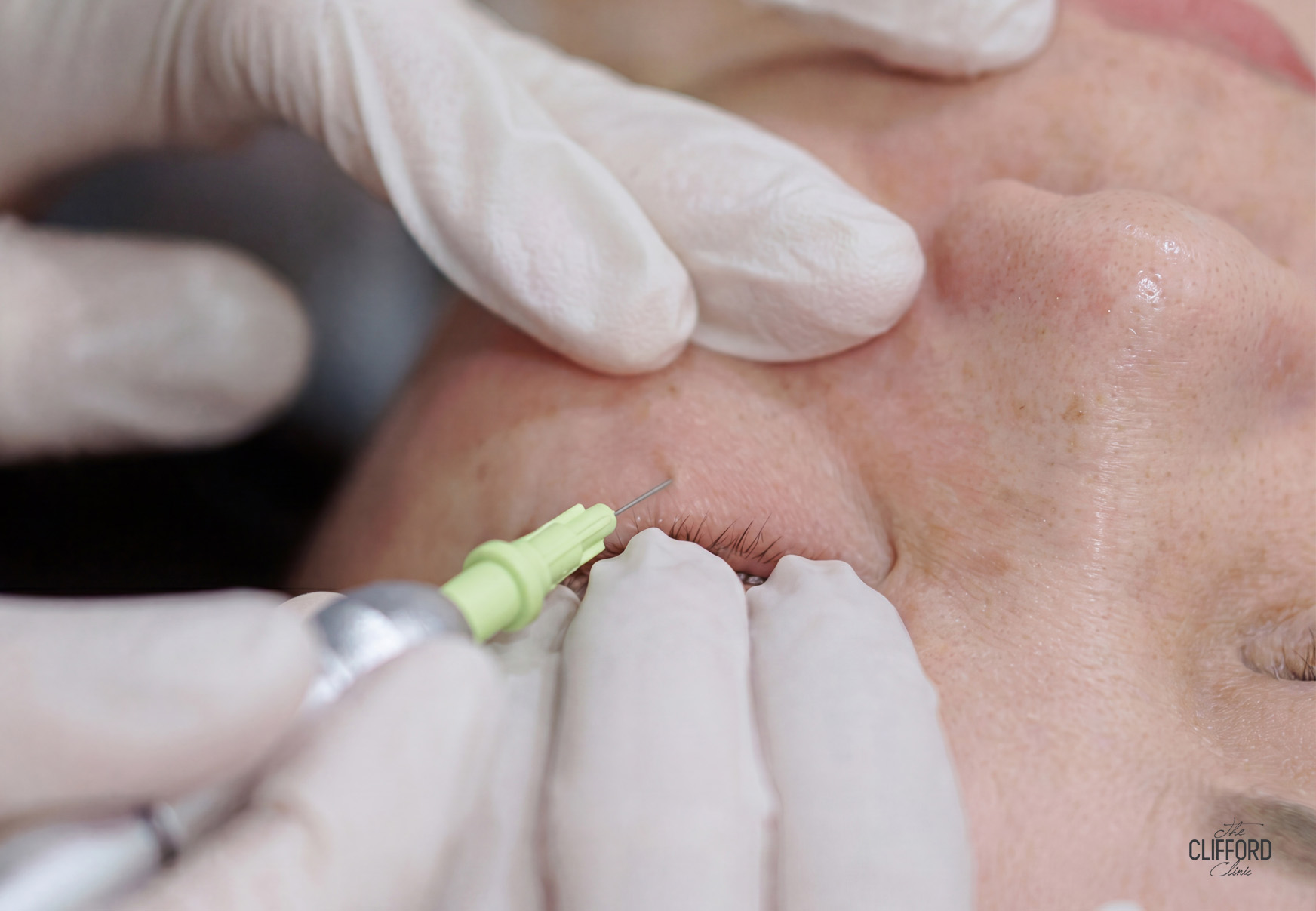
After treating more than 500 eye-bag cases over 10 years, I assess every technology against a single question. Does it reduce the protruding fat? This article covers non-surgical devices only, whereas the surgical options that a Grade 3 or 4 bag usually requires are set out in my wider review of the best eye bag treatment in Singapore. The Clifford Clinic performs AGNES with Secret RF and does not operate an AccuSculpt laser, so my direct experience of the two technologies is not equal. No head-to-head trial of these devices in the lower eyelid has been published, so the verdicts below rest on the mechanism each device uses and on clinical experience rather than on comparative trial data.
A true eye bag forms when lower-eyelid fat herniates forwards through a weakened orbital septum, the thin fibrous sheet that normally holds the three fat pads back against the orbital rim. The bulge is therefore structural and permanent, unlike the temporary morning puffiness caused by overnight fluid, which settles during the day. Whether a device delivers heat, needles, laser or ultrasound, it cannot remove a true eye bag unless it reduces the volume of that fat. Improvement in fine lines or skin texture can occur with no change in the bag itself, and that distinction is what separates a persuasive photograph from an anatomical result. Of the technologies compared here, two reduce the fat. The remainder act only on the skin above it. The Clifford Clinic and The Clifford Surgery together are the only centre among the clinics commonly compared for eye bags that offers both non-surgical and surgical treatment, including scarless eye-bag removal and pinch blepharoplasty, so the recommendation can follow the grade of the bag and the condition of the skin rather than the equipment available.
Morpheus8 for eye bags. A skin device that does not reach the fat
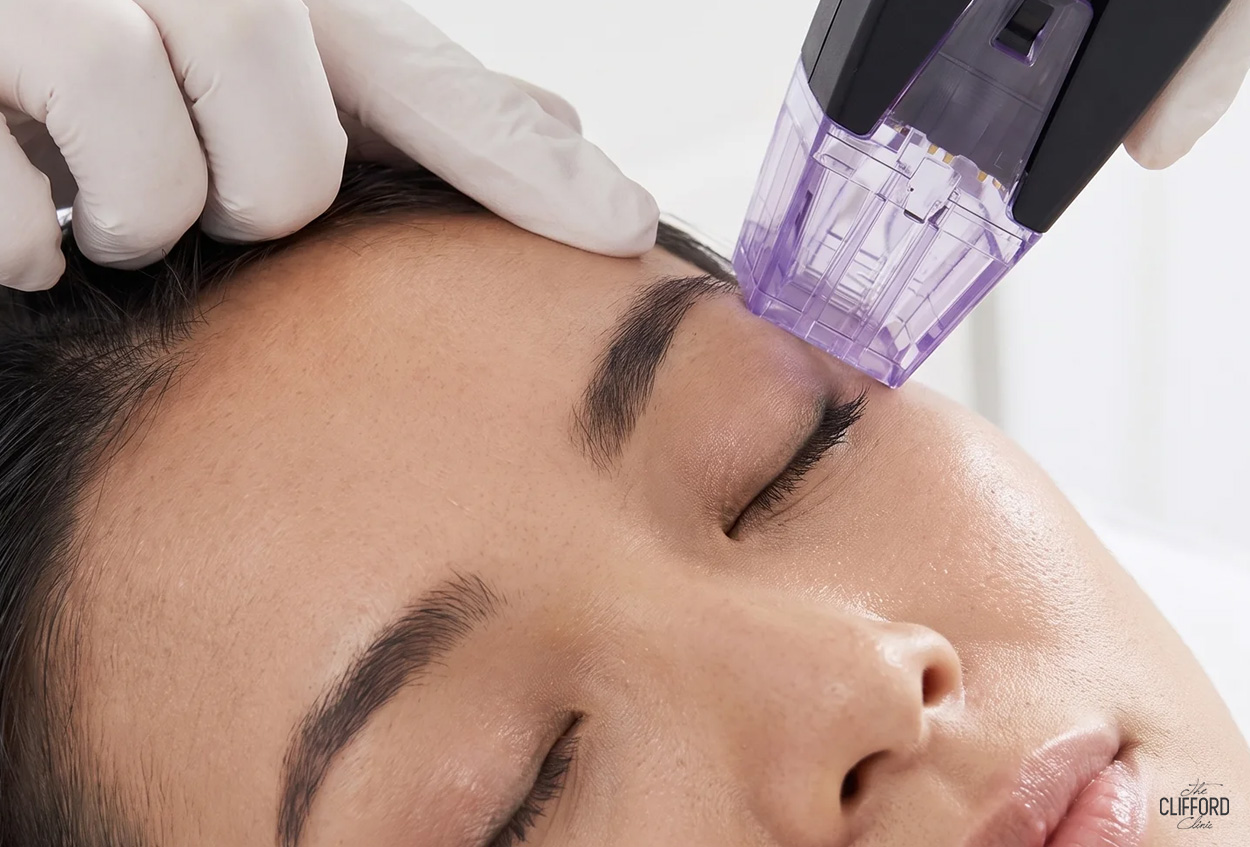
Morpheus8 is a fractional radiofrequency microneedling device. An array of fine needles penetrates the skin and releases radiofrequency energy into the dermis, where controlled heating denatures existing collagen and stimulates fibroblasts to deposit new collagen over the following months. As a treatment for skin quality it is effective.
Morpheus8 does not remove, dissolve or reposition orbital fat. Its needle array is set for the skin and the superficial subdermal plane, whereas the fat pads that produce the bulge lie behind the orbital septum, deeper than those needles are designed to reach. Where the overlying skin is lax, tightening it improves the appearance of the lower lid while the volume of the bulge is unchanged. A favourable before and after photograph can therefore show better skin and an unchanged eye bag.
The appropriate role of Morpheus8 around the eye is skin quality rather than volume, and it is most useful once the fat has already been reduced and residual laxity or fine lines remain. A patient treated with Morpheus8 alone for a Grade 2 bag will usually report smoother lower-lid skin and a bulge of unchanged size. In my experience assessing patients who have had Morpheus8 elsewhere for eye bags, I have found the lower-lid skin improved in texture and the bulge unchanged in size, which is what the depth of the needle array predicts.
Morpheus8 therefore fails the fat test. It treats the layer above the bag, which makes it a reasonable adjunct and not an eye-bag treatment in its own right. Patients sometimes request Morpheus8 by name for eye bags after seeing it marketed for the lower lid, and where the bulge is fat rather than lax skin it is not the clinically appropriate choice, whatever the device achieves elsewhere on the face.
NILER with AccuSculpt. A fat-directed laser that passes the fat test
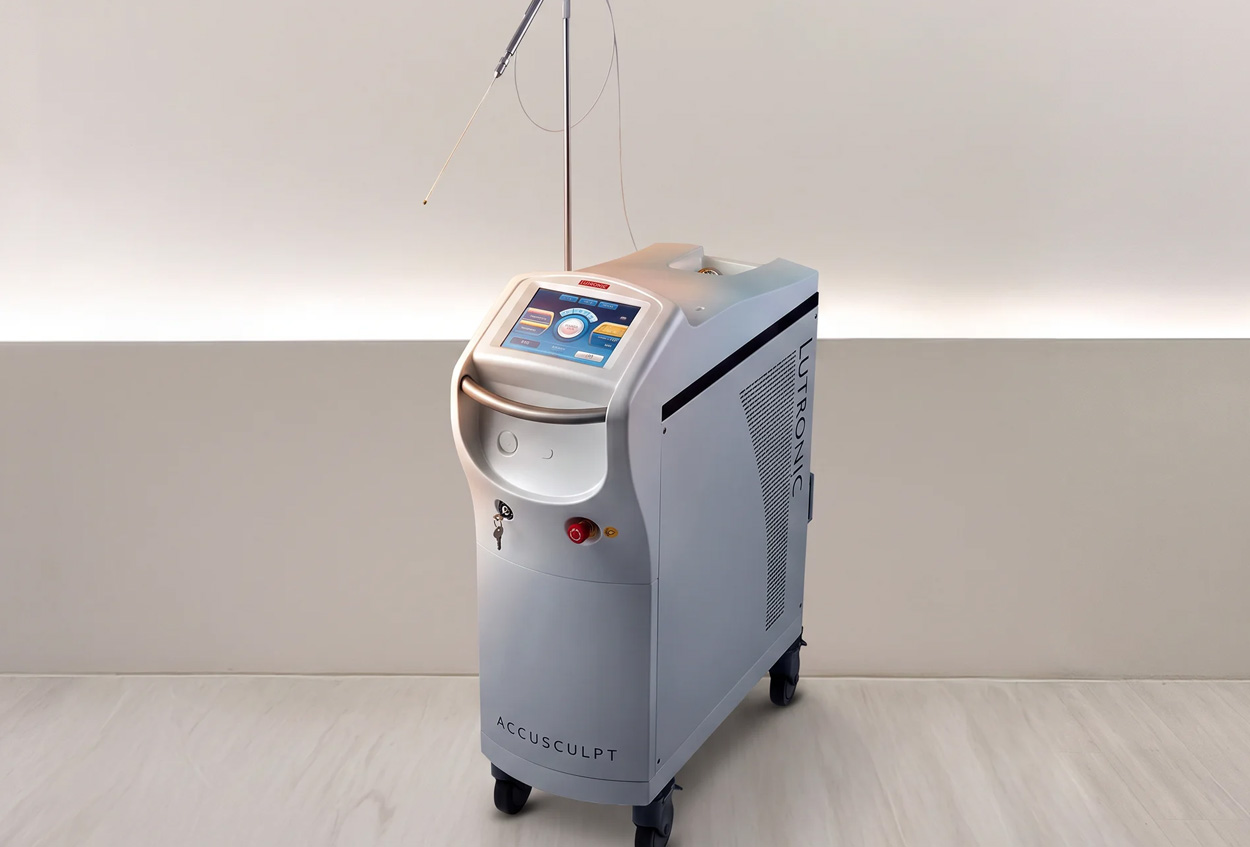
NILER, short for Non-Incisional Laser Eyebag Removal, passes a fine optical fibre into the lower-eyelid fat pads and delivers 1444 nm AccuSculpt laser energy directly into them. At 1444 nm the absorption of light by lipid is high relative to the surrounding water-rich tissue, so energy is deposited inside the fat itself and the fat is liquefied rather than merely warmed. Procedure times are short and visible improvement is generally reported at one to two months.
Laser lipolysis acts on fat rather than on the skin covering it. NILER therefore addresses the structural cause of a true eye bag, which places it in a different category from every skin-tightening device in this comparison and makes it the one non-surgical alternative to AGNES that I regard as genuine. It also carries advantages that AGNES does not. A single fibre pass treats the whole pad in one movement, the procedure is brief, and no repeated needle placement across the lid is required.
My preference for AGNES rests on three differences. First, a moving laser fibre deposits heat along the whole of its path. AGNES uses micro-insulated needles that release radiofrequency energy only at the exposed tip, at a depth the operator fixes within the selected fat compartment. Energy is therefore confined to the volume the needle occupies rather than spread along a track, which is the control that matters in tissue this close to the globe. Second, eye bags are commonly asymmetric, because one of the three lower-eyelid fat pads protrudes more than the other two. One side frequently requires a more conservative endpoint than the other. Insulated needles allow each compartment to be treated to its own endpoint rather than the lower lid being approached as a single uniform pad. Third, NILER reduces the fat but includes no dedicated step for the skin above it. Skin quality determines the final result, because a fat pad that has been stretching the lid skin for years can leave that skin visibly lax once its volume is reduced. Our protocol therefore pairs AGNES with Secret RF, a single direct insulated cannula that ablates the fat at a greater depth than the AGNES needles reach, while the heat conducted to the overlying skin helps it contract over the reduced fat pad. Each of these is a difference in the control of energy delivery rather than a demonstration that AGNES reduces more fat than NILER.
NILER passes the fat test and is a genuine fat-directed alternative rather than a skin treatment presented as one. I prefer the compartment-level control of AGNES combined with a dedicated skin step, although the choice between the two follows from examination of the individual lid rather than from the technology. A patient with firm skin and one dominant fat pad may be treated appropriately with either, and where a clinic is practised with NILER that operator experience can count for more than the mechanism argument above. In my experience of comparison consultations, I have found that the patients who name a device before they have been examined are most often the ones whose anatomy makes that device the wrong choice, because a Grade 3 bag with loose skin is not corrected by energy delivered through the lid at all, whether from a laser fibre or from a needle.
Thermage, Ultherapy and HIFU. Tightening devices that leave the fat pad intact
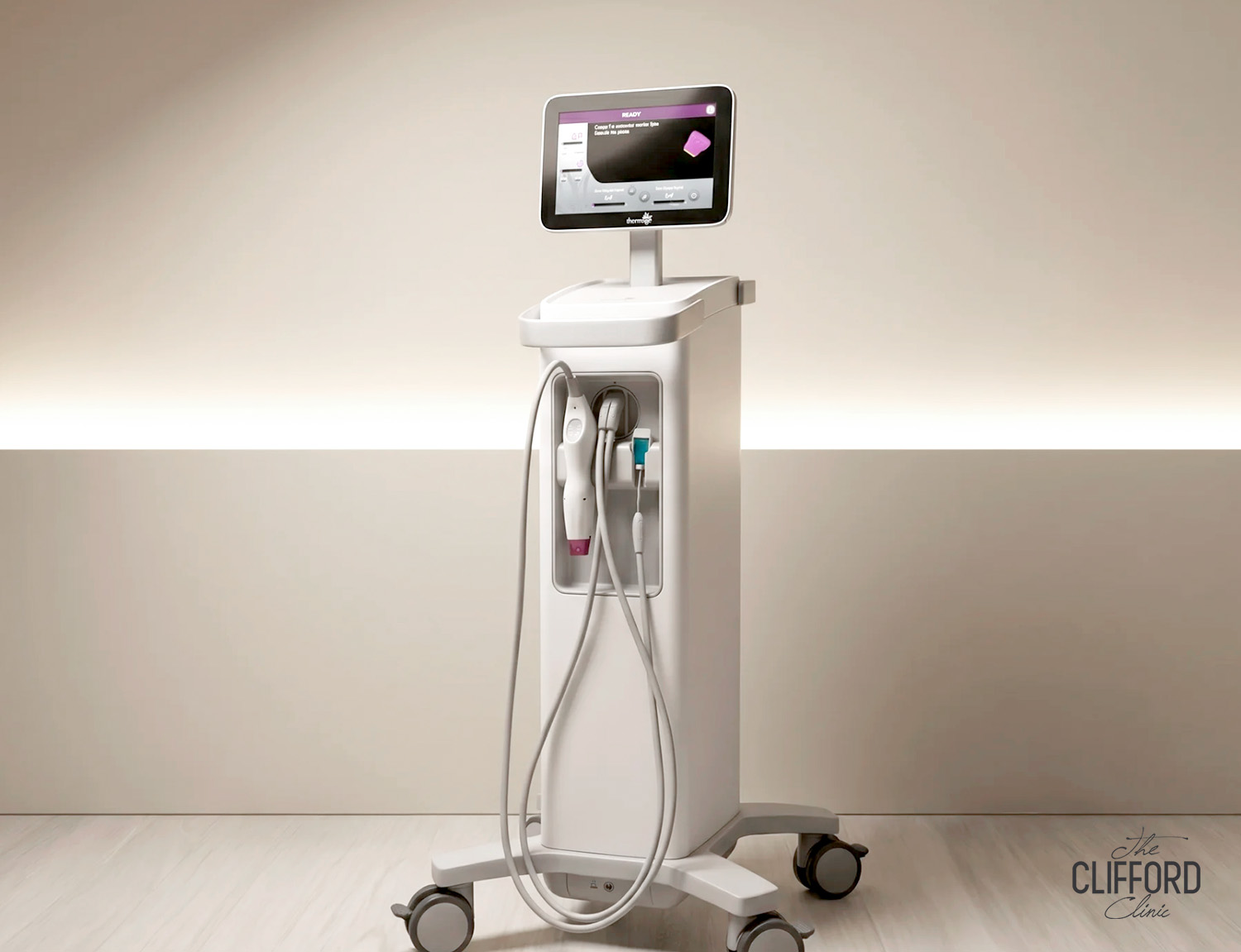
Thermage, Ultherapy and HIFU all raise tissue temperature to the point at which collagen contracts and fibroblasts are provoked into producing more of it. Thermage does this with monopolar radiofrequency applied from the skin surface, whereas Ultherapy and HIFU use ultrasound focused at fixed depths beneath it.
None of the three reduces orbital fat. Focused ultrasound deposits its energy at fixed focal depths measured in millimetres, and lower-eyelid skin is among the thinnest on the body, so the focal zone cannot be placed within a structure of that thickness without depositing energy where it is not wanted. That is a mismatch between mechanism and anatomy rather than a deficiency in the technologies themselves. HIFU in particular is unsuitable for use close to the eye. All three retain a role in facial skin laxity away from the orbit, and none acts on the layer that produces a protruding lower-eyelid fat pad.
All three fail the fat test. They tighten skin, and nothing in their mechanism reduces the volume of a fat pad. In my experience reviewing patients who have completed a course of tightening treatment for eye bags, I have found the lower-lid skin firmer and the fat pad unchanged in size, and the disappointment usually follows from what the treatment was said to do rather than from how it was performed.
Fotona multi-D eye protocols. Long-pulse Nd-YAG heating that does not remove fat
Fotona multi-D protocols are marketed widely for eye bags. The principal step directs long-pulse Nd-YAG energy at the conjunctiva, the inner surface of the eyelid, so that the lid is heated from within rather than through the skin.
The wavelength decides what the energy does. Long-pulse Nd-YAG is absorbed principally by water, which is present throughout the lid, so its energy heats whatever tissue the beam passes through instead of acting selectively on fat. NILER, by contrast, uses 1444 nm precisely because lipid rather than water is the dominant absorber at that wavelength. Heating the lid from within may alter tissue quality, and a change in tissue quality is not a reduction in the volume of the fat pad. The question to put to any clinic offering these protocols is which step reduces the fat and how that reduction is measured. In my clinical assessment, Fotona multi-D protocols do not treat the structural cause of a true eye bag and cannot remove one.
Fotona multi-D therefore fails the fat test. Nothing in the protocol reduces the volume of the herniated fat, and that reduction is the only change that removes a true eye bag. The protocol may still improve the quality of the lid skin, and a patient who wants that change can reasonably choose it, provided it is not described as removal of the bag.
AGNES with Secret RF. Why the fat and the skin need separate devices
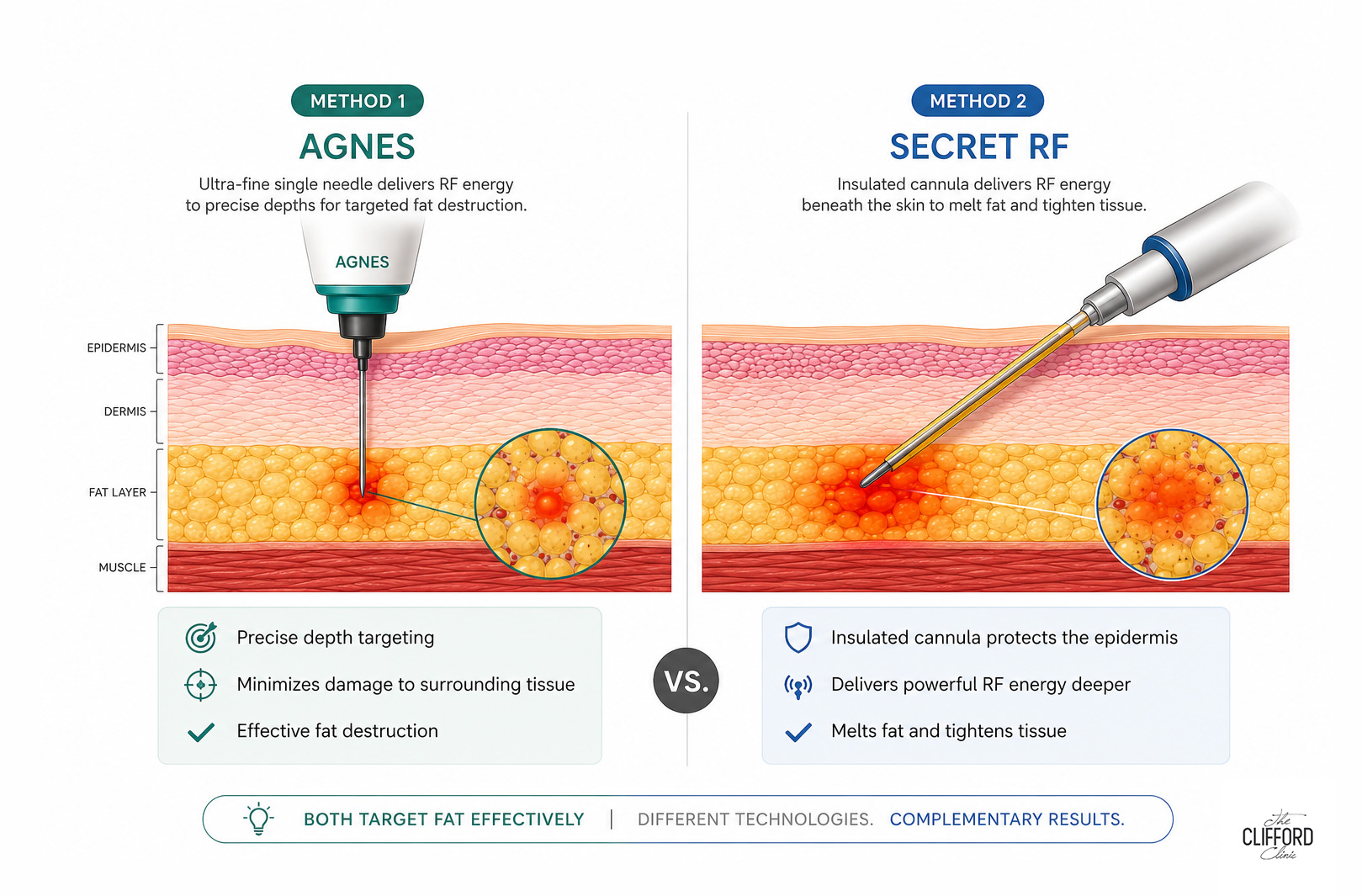
Our AGNES with Secret RF protocol treats the fat first. Micro-insulated needles are placed at a controlled depth inside the selected fat compartment and deliver radiofrequency energy that melts the fat from the outside in, compartment by compartment. The insulation confines the energy to the exposed tip, so the tissue along the needle shaft and the skin it passed through are spared, and the treated fat is cleared by the body over the following weeks. Secret RF then follows as the second step. It is not a fractional microneedling device but a single direct insulated cannula, which delivers radiofrequency energy for accurate deeper ablation of the eye bag fat at a depth the AGNES needles do not reach, while the heat conducted to the overlying skin helps it contract smoothly over the reduced fat pad.
The protocol assigns a separate device to the fat and to the skin because no single device reaches both. Treatment takes approximately 20 minutes after numbing. Mild bruising and swelling usually last four to five days, transient dryness of the eyes settles within one to two days, and the change is visible at about two weeks and complete at one to two months as the treated fat clears and collagen remodelling continues. Results typically last three to five years, although the face continues to age and outcomes vary between patients. The price is $2,500 for the first session and $1,800 for subsequent sessions. Suitability is limited to mild Grade 1 to 2 eye bags with firm skin. A patient with marked fat protrusion, substantial loose skin or expectations that no device can meet is not a candidate for non-surgical treatment, and saying so at the consultation is more useful than a procedure that cannot deliver what was promised. Grade 3 to 4 bags and loose skin usually require surgery, most often scarless eye-bag removal or pinch blepharoplasty, and pinch blepharoplasty is the more common choice in older patients whose skin has lost elasticity.
AGNES with Secret RF reduces the fat pad and does not excise it, so a bulge that is large at the outset may become smaller rather than absent. It removes no skin, which is why a lid carrying substantial laxity is referred for surgery instead. It does not correct a tear trough hollow or pigmented dark circles, which are separate problems that commonly sit alongside an eye bag and are frequently mistaken for one. It does not arrest the ageing that will eventually re-form a bulge, which is why the durable range is quoted as three to five years rather than as permanence. Some patients require a further session, which is the reason a subsequent session price exists at all. In my experience the commonest reason for dissatisfaction after non-surgical treatment is a bag graded too optimistically at the consultation rather than a device that underperformed, and I have found it better to decline treatment than to explain a shortfall afterwards.
Every technology measured against the fat test
| Technology | Addresses the Fat | Addresses the Skin | Mechanism | Our Verdict |
|---|---|---|---|---|
| AGNES with Secret RF | Yes, targeted per compartment | Yes, dedicated second step | Insulated needle RF plus insulated cannula RF | Recommended for mild Grade 1 to 2 bags with firm skin |
| NILER with AccuSculpt | Yes, laser lipolysis | No dedicated step | 1444 nm laser lipolysis through a fibre | Genuine fat-directed alternative, no dedicated skin step |
| Morpheus8 | No | Yes | Fractional RF microneedling | Fails the fat test, skin quality only |
| Thermage | No | Yes, through bulk heating | Monopolar RF | Fails the fat test, wrong layer for a fat pad |
| Ultherapy and HIFU | No | Partial, with a depth mismatch at the lower lid | Focused ultrasound | Fails the fat test, unsuitable close to the eye |
| Fotona Multi-D Protocols | No | Heating only | Long-pulse Nd-YAG heating via the conjunctiva | Fails the fat test, heats tissue without reducing fat |
What to ask at any clinic offering a device for eye bags
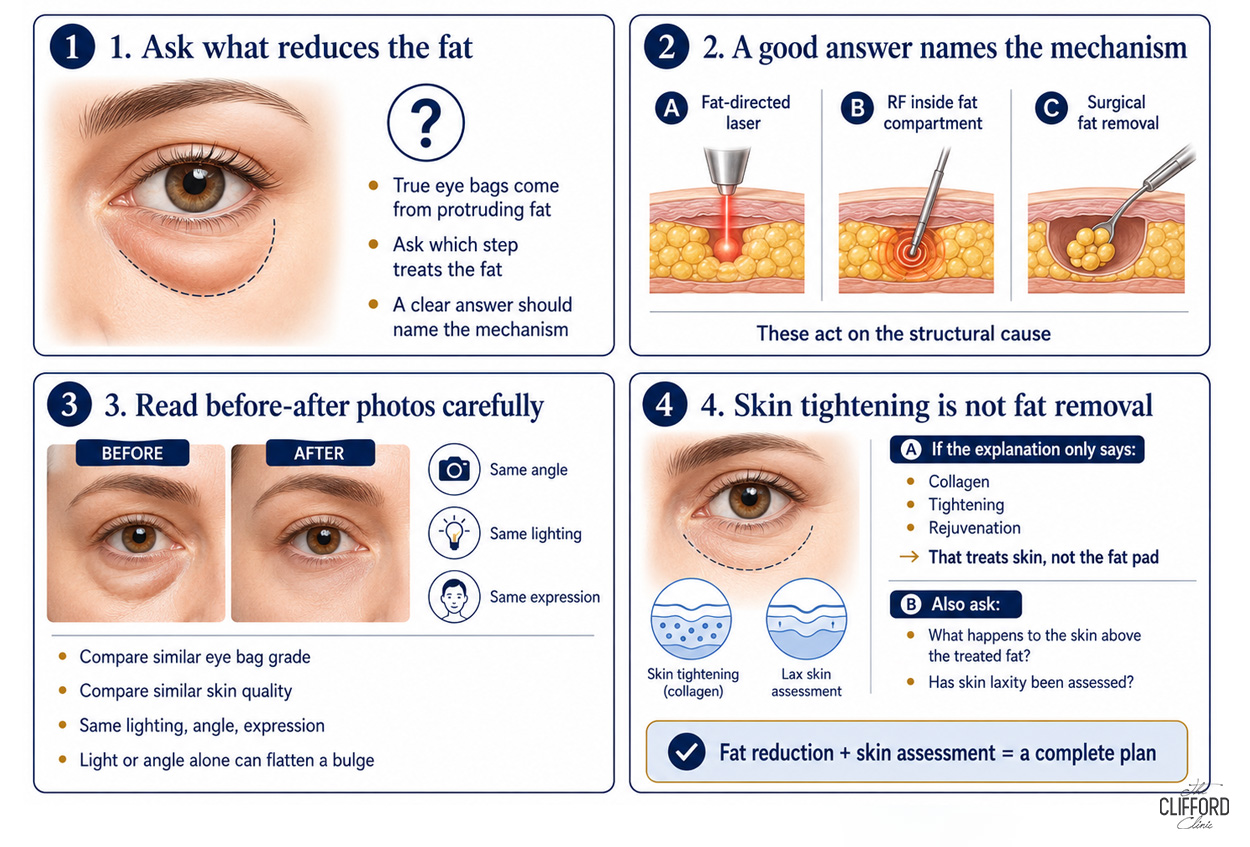
Where a clinic recommends a device for eye bags, the question that settles it is which part of the treatment reduces the fat. A clear answer names a mechanism, such as fat-directed laser, radiofrequency delivered inside the fat compartment, or surgical removal of the pad, each of which acts on the structural cause. Photographs are informative only when they show patients of a similar eye bag grade and similar skin quality, taken under comparable lighting and with the same facial expression, since a change of angle or of light alone can flatten a bulge convincingly. An explanation that refers only to collagen, tightening or rejuvenation identifies a treatment directed at the skin. Such a treatment can be worthwhile in itself, although describing it as removal of the fat pad is inaccurate. In my experience of second opinions, I have found that a clinic unable to name the step that reduces the fat is usually treating the skin and describing the result in terms the anatomy does not support.
The second question concerns the skin above the treated fat. A protocol that reduces the fat without assessing the skin that covered it has treated half of the problem, and in a patient whose skin is already lax that half is the more visible one.
Frequently asked questions
Is Morpheus8 effective for eye bags?
Morpheus8 tightens the skin of the lower lid and does not reduce orbital fat, so it cannot flatten a true eye bag on its own. Its value in the lower lid is as an adjunct to a treatment that has already addressed the fat.
What is the difference between AGNES and Morpheus8?
Both deliver radiofrequency through needles, and they are aimed at different tissue. AGNES places micro-insulated needles inside selected lower-eyelid fat compartments and releases energy only at the exposed tip, which melts the fat at a controlled depth. Morpheus8 is a fractional device whose needle array acts on the skin and the superficial layer beneath it. In our protocol AGNES is followed by Secret RF, which is not a fractional device but a single direct insulated cannula that ablates the deeper fat while its heat supports the overlying skin.
Is NILER or AGNES better for eye-bag removal?
Both act on fat. They differ in the way the energy reaches it. AGNES delivers radiofrequency from insulated needles at a depth fixed inside a chosen compartment, whereas NILER delivers 1444 nm laser energy along the path of a moving fibre. AGNES also forms part of a two-step protocol in which Secret RF ablates the fat at a greater depth while its conducted heat supports skin contraction, and NILER includes no comparable step for the skin. Neither has been shown superior to the other in a published comparison, and where the skin is firm and needs no separate step either may be appropriate. The choice between them follows from examination of the lid rather than from the technology.
Does Thermage or Ultherapy remove eye bags?
Neither removes an eye bag. Both raise tissue temperature to contract collagen, and neither reduces the volume of orbital fat, so the protruding pad remains after the skin has tightened. Their role is facial skin laxity away from the orbit.
Why does Clifford use two devices instead of one?
A true eye bag consists of protruding fat and the skin stretched over it, and no single device treats both. AGNES melts the protruding fat compartment by compartment, and Secret RF then ablates the fat at a greater depth while the heat conducted to the surface helps the skin contract over the smaller pad. Using one device alone leaves either the bulge or the loose skin untreated.
How much does AGNES with Secret RF cost compared with alternatives?
The first session costs $2,500 and subsequent sessions cost $1,800. Most mild cases require only one session. Several alternatives are sold as multi-session packages, so a comparison is meaningful only against the expected total cost of a course rather than the price of a single session. Where the grade of the bag makes any non-surgical device inappropriate, price is not the deciding factor and the cost of surgery is the relevant comparison instead.
Why the examination, not the device name, decides the treatment

A device name establishes nothing about which treatment suits an individual lower lid. At an assessment at The Clifford Clinic the fat protrusion is graded and the skin is examined for laxity, and the choice between non-surgical treatment and surgery follows from those two findings rather than from the equipment a clinic happens to own.

This article reflects the clinical opinion of Dr Gerard Ee MBBS MRCS DP Dermatology and is general information rather than a substitute for medical consultation. The verdicts in the table above rest on device mechanism and on clinical experience rather than on head-to-head trial data, which has not been published for these devices in the lower eyelid. The comparisons concern the treatment of true eye bags caused by orbital fat protrusion and not the general clinical value of each device. The Clifford Clinic and The Clifford Surgery offer non-surgical and surgical eye-bag treatment, including scarless eye-bag removal and pinch blepharoplasty. Prices are correct at the time of publication.

Author Bio
Dr Gerard Ee

Dr Gerard Ee is the Medical Director of The Clifford Clinic in Singapore. He earned his medical degree from St George's University of London and built his surgical experience across the Singapore General Hospital, National University Hospital, and Mount Sinai Hospital in New York. He holds Membership of the Royal College of Surgeons (Edinburgh) and a Postgraduate Diploma in Dermatology (Cardiff), and is fully accredited in aesthetic procedures including botulinum toxin, fillers, lasers, and light therapies. A strong advocate of minimally invasive, natural-looking results, Dr Ee has published in several medical and scientific journals and presented his research in cities including Taipei, Las Vegas, and London.
See all posts by Dr Gerard Ee »