
HBOT in Singapore: The Evidence-Based Guide to Hyperbaric Oxygen Therapy
| Medically reviewed by The Clifford Clinic clinical team
Reviewer: Dr Gerard Ee, MBBS Practising at The Clifford Clinic, Raffles Place, Singapore Last reviewed: June 2026 How we review: Articles in this hyperbaric oxygen library are written for The Clifford Clinic and reviewed by medical professionals Reviewers check medical accuracy and ensure claims align with current MOH, UHMS and peer-reviewed guidance. |
Hyperbaric oxygen therapy (HBOT) in Singapore sits at the centre of a fast-growing set of medical, recovery and longevity conversations. Some of what is said about HBOT in Singapore is well supported by clinical evidence. Some claims are supported by clinical evidence, others are promising but still under study, and some are marketing. This guide separates the three.
It covers what hyperbaric oxygen therapy is, what it treats, what a course costs in Singapore, when MediSave or MediShield Life may help, what the safety profile looks like, and how to choose a credible provider. It is the cornerstone of our 35-article HBOT library and links out to every supporting deep-dive, including our HBOT evidence grading guide, our HBOT cost in Singapore guide, and our HBOT MediSave and MediShield Life guide.
What HBOT Is and How It Works
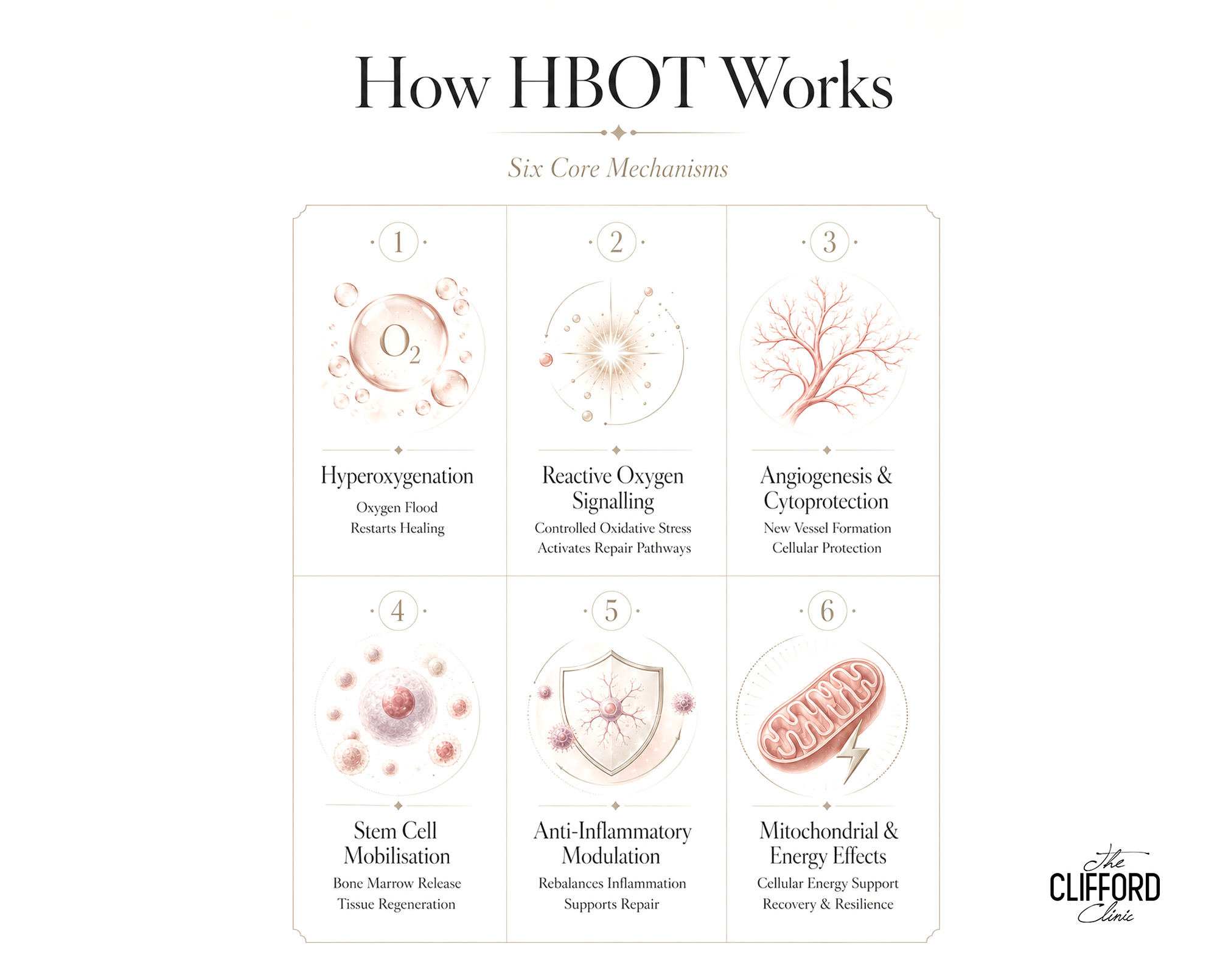
Hyperbaric oxygen therapy is a medical treatment in which a patient breathes 100% oxygen inside a pressurised chamber, at pressures above normal sea-level atmospheric pressure. The 2019 Missouri Medicine review by Kirby and colleagues cites a minimum clinically meaningful pressure of 1.4 atmospheres absolute (ATA), and most clinical protocols use pressures between 1.9 and 3.0 ATA. The Undersea and Hyperbaric Medical Society (UHMS) describes this pressure range as the one that supports scientifically validated hyperbaric outcomes.
At sea level, oxygen dissolved in blood plasma is only about 0.3 mL per decilitre, per Tibbles and Edelsberg (NEJM, 1996). Breathing 100% oxygen at three atmospheres raises that to approximately 6 mL per decilitre, enough to meet resting tissue oxygen demand without haemoglobin. That dissolved oxygen reaches tissue that red blood cells cannot, including swollen, injured or poorly perfused areas.
This combination of pressure plus pure oxygen is what makes HBOT a defined medical treatment rather than a wellness experience. For the cellular biology in depth, see our guide to how hyperbaric oxygen therapy works. For the distinction between hard-shell clinical chambers and soft-shell mild chambers, see our hard-shell vs soft-shell hyperbaric oxygen chamber comparison.
What HBOT Treats: Established, Supported, Emerging and Wellness Uses
HBOT in Singapore is used across a spectrum of indications, but not all carry the same level of evidence. We separate them into four tiers throughout this library. Established uses have decades of clinical evidence. Supported uses are recognised by hyperbaric medicine bodies in selected cases. Emerging research shows interesting signals but evidence is still developing. Wellness claims are where marketing has outpaced research. Our HBOT evidence grading guide sets this out in full.
The table below condenses the most-asked uses of HBOT in Singapore against that framework. Green marks established uses, yellow marks supported uses in selected cases, orange marks emerging research, and lilac marks wellness or anecdotal claims.
HBOT Uses and Evidence Tiers
| Use or Claim | Evidence Tier | How We Talk About It |
|---|---|---|
| Severe Carbon Monoxide Poisoning | Established | MOH-approved indication; emergency hospital care. |
| Decompression Illness / Arterial Gas Embolism | Established | MOH-approved indication; hospital hyperbaric care. |
| Gas Gangrene / Necrotising Soft Tissue Infection | Established | MOH-approved indication; adjunct to surgery and antibiotics. |
| Selected Non-Healing Diabetic Foot Ulcer | Supported | MOH-approved for non-healing wounds; adjunct to standard care. |
| Compromised Skin Graft / Myocutaneous Flap | Supported | MOH-approved; recognised post-reconstructive adjunct. |
| Osteoradionecrosis / Delayed Radiation Injury | Supported | MOH-approved; common after cancer treatment. |
| Chronic Refractory Osteomyelitis | Supported | MOH-approved; adjunct in resistant cases. |
| Sudden Sensorineural Hearing Loss, Early | Supported | Adjunct to steroid therapy in the early window; not on MOH financing list. |
| Soft Tissue Sports Injury Recovery | Emerging | Adjunct in selected injuries; sleep and recovery feedback consistent. |
| Post-Elective-Surgical Recovery | Emerging | Reasonable off-label adjunct; integrate with surgical team. |
| Long COVID with Fatigue / Cognitive Symptoms | Emerging | Early supportive studies; not established. |
| Vasculogenic Erectile Dysfunction | Emerging | Encouraging research in selected cases; coordinate with urology. |
| Cellular Ageing Markers | Emerging | Single notable study; promising but not established. |
| Improved Deep Sleep During a Course | Emerging | Most consistent patient-reported observation. |
| Generic “Instant Energy” Boost | Wellness | Not supported; marketing rather than evidence. |
| Anti-Ageing as a Standalone Aesthetic Claim | Wellness | Not supported; established aesthetic tools drive visible change. |
| Cancer Treatment Itself | Wellness | HBOT does NOT treat cancer; supportive role in radiation injury only. |
| Autism as a Treatment Indication | Wellness | Not supported by evidence; not offered at The Clifford Clinic. |
Deep-Dive Guides by Indication
For an honest read on specific indications, see our guides on HBOT for wounds and diabetic foot ulcers, HBOT for radiation injury after cancer treatment, HBOT for sudden sensorineural hearing loss, HBOT for carbon monoxide poisoning and decompression sickness, HBOT for sports recovery, HBOT for fatigue, sleep and brain fog, HBOT for skin rejuvenation and anti-ageing, HBOT for post-surgery recovery, HBOT for stroke, TBI and cognitive recovery, HBOT for cancer care, HBOT for paediatric patients, HBOT for diabetes complications beyond foot ulcers, HBOT for erectile dysfunction, HBOT research update 2026.
HBOT Cost in Singapore
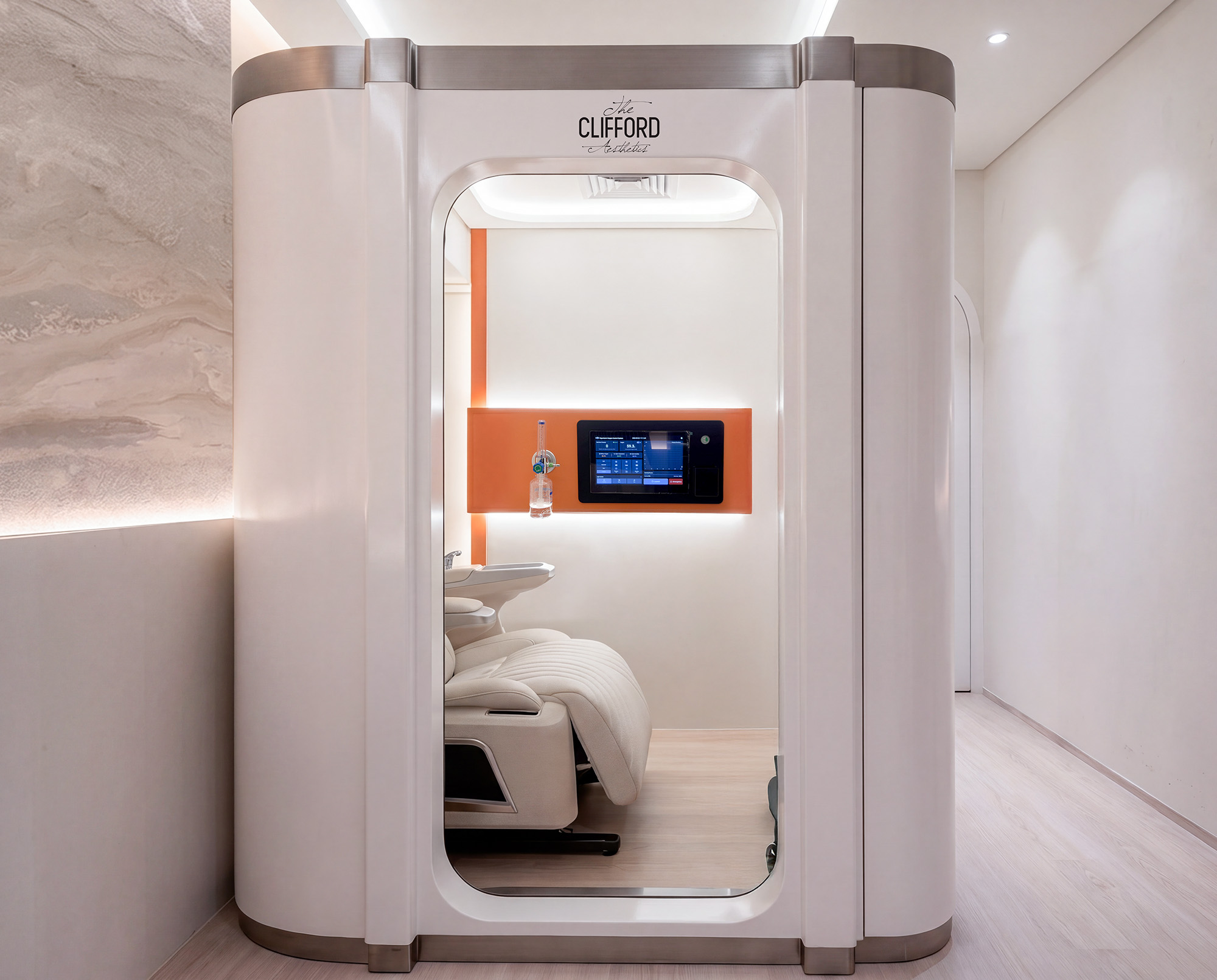
HBOT pricing in Singapore varies widely, and the variation is not arbitrary. Hard-shell clinical chambers running at therapeutic 2.0 ATA cost more to acquire, maintain and supervise than soft-shell mild chambers. Doctor-led screening adds to cost, but also adds the safety floor that makes a session a treatment rather than an experience. Single sessions cost more per visit than packaged courses, because the published evidence supports HBOT as a course rather than a one-off.
Our complete hyperbaric oxygen cost in Singapore guide lists The Clifford Clinic’s published pricing for single sessions and packaged 5-session, 10-session and 20-session courses, and explains what each price point actually buys. The short version is that a cheaper soft-shell session that cannot reach a therapeutic dose is not a saving. The honest comparison is cost-per-completed-course at a clinically meaningful pressure.
For broader context on chamber types and why pressure matters, see our HBOT chamber types guide and the hard-shell vs soft-shell comparison.
MediSave and MediShield Life: Two Separate Schemes
MediSave and MediShield Life are two separate Singapore healthcare schemes with two different claim amounts. They operate independently and each has its own rules. For qualifying HBOT cases, both may apply.
| MediSave and MediShield Life at a glance
MediSave (the patient’s CPF medical savings account): up to S$100 per treatment session, or the total balance in the MediSave account, whichever is lower. MediShield Life (national health insurance, separate scheme): claim limit up to S$780 per treatment session. Both apply only when the case meets MOH’s clinical criteria for one of 13 approved HBOT indications: air or gas embolism; carbon monoxide poisoning; chronic refractory osteomyelitis; compromised skin grafts and myocutaneous flaps; crush injury, compartment syndrome and other acute ischaemias; decompression illness; exceptional blood loss; gas gangrene; intracranial abscess; necrotising soft tissue infections; non-healing wounds; osteoradionecrosis and delayed radiation injuries; and thermal burns. |
When Public Schemes Apply, and When They Do Not
Wellness goals (fatigue, brain fog, sports recovery, anti-ageing, longevity) do not meet MOH’s clinical criteria and are paid out of pocket, regardless of provider. For the eligibility framework and full conditions list, see our HBOT MediSave and MediShield Life guide.
Safety, Risks and Contraindications
Hyperbaric oxygen therapy is among the safest medical treatments when properly delivered. The most common side effect is mild ear pressure during pressurisation, managed routinely through equalisation techniques. Less common issues include temporary sinus pressure, transient visual changes, and rarely oxygen-related seizures, all screened for in advance by a doctor.
Specific contraindications include untreated pneumothorax, certain lung infections and conditions, and a history of barotrauma from previous pressure exposure. Pregnancy needs a case-by-case assessment. Some chemotherapy regimens are also contraindicated. The clinical screening is what makes HBOT safe, not the chamber alone.
For the full safety profile and a detailed look at contraindications, see our HBOT side effects and safety guide. For chamber protocol (no metal items, electronics or synthetic fabrics, with cotton clothing recommended), see the same guide.
What to Expect in an HBOT Session
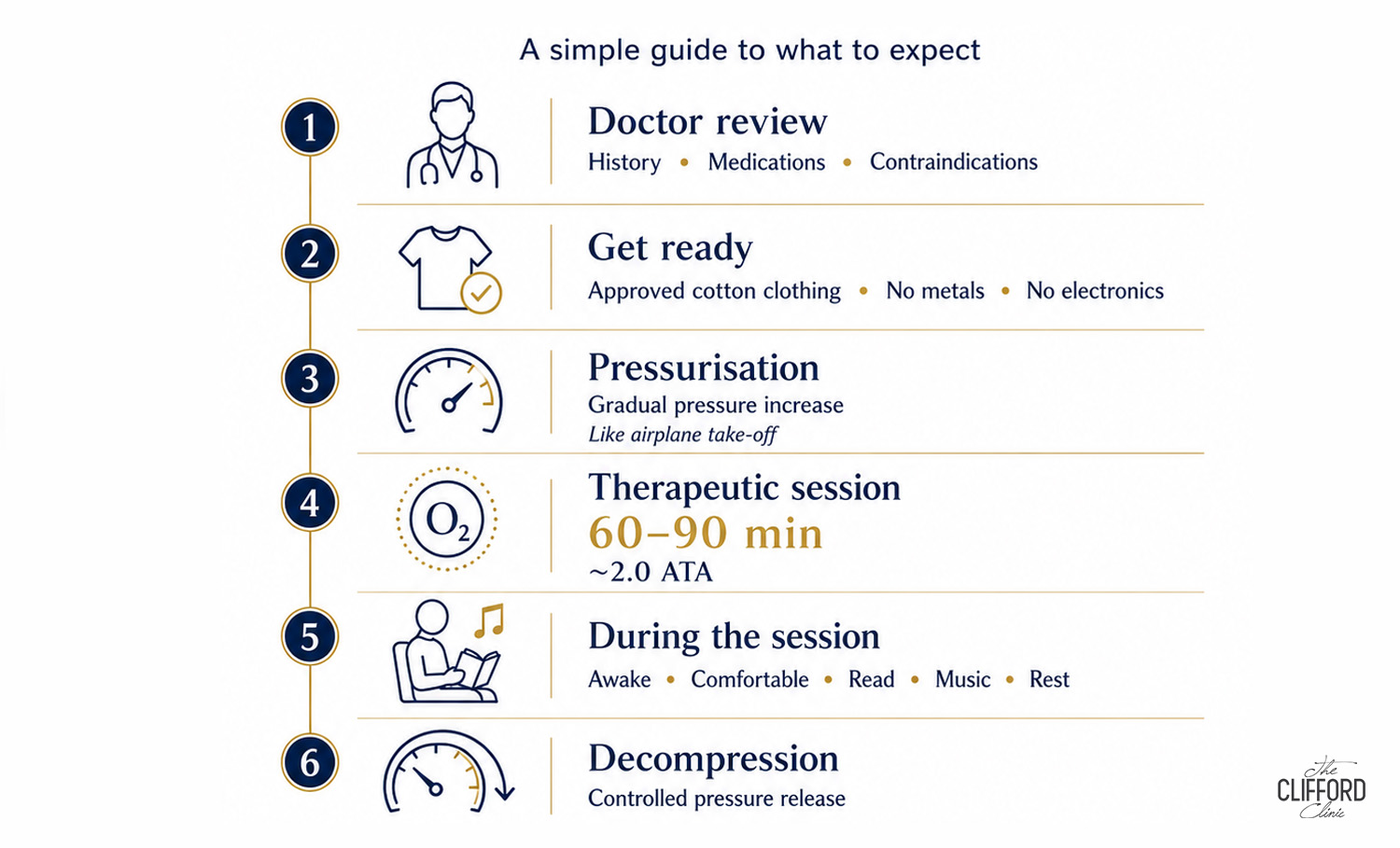
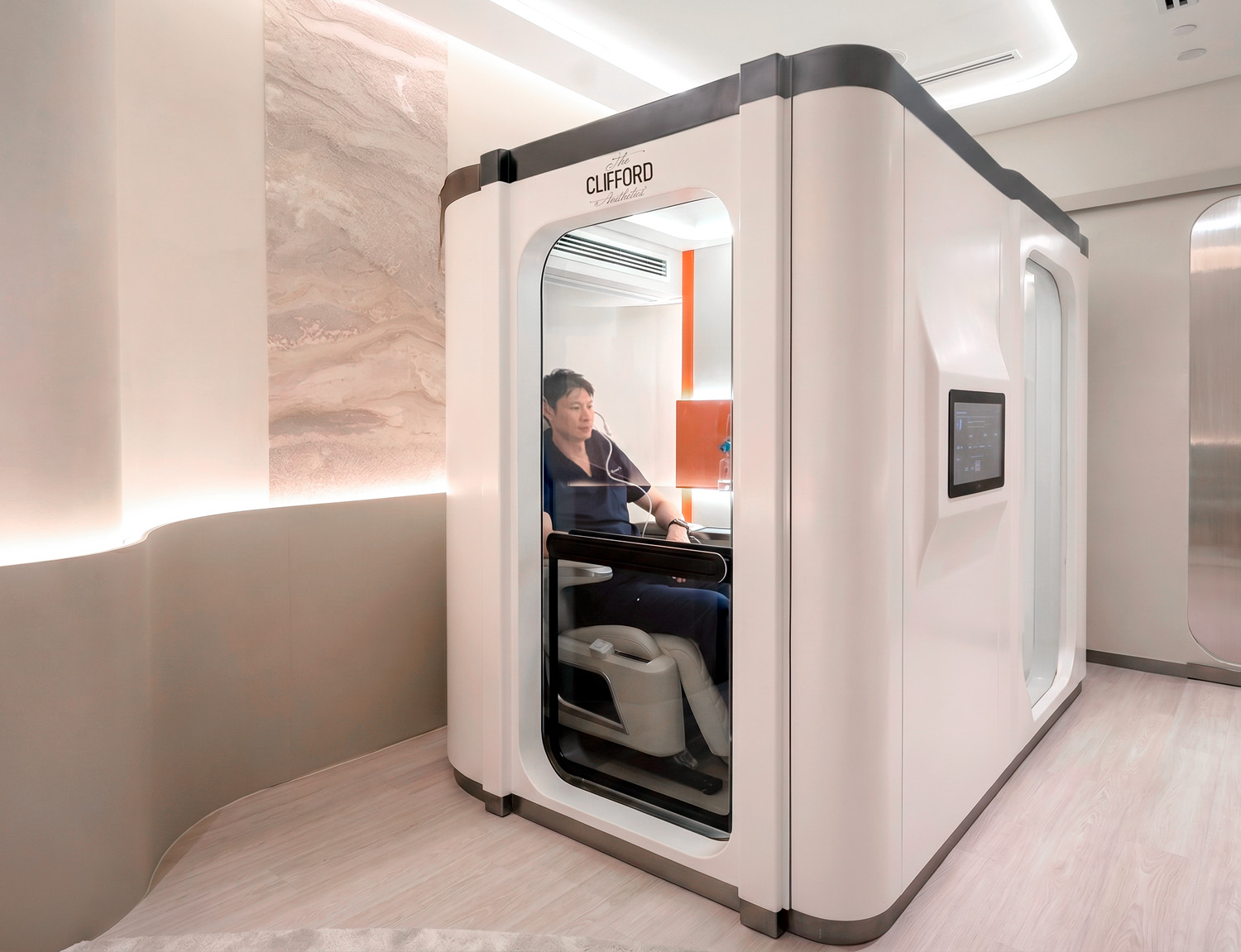
A first HBOT session typically begins with a doctor’s review of medical history, current medications and contraindication screening. Once cleared, the patient changes into approved clothing (cotton, no metals or electronics), enters the chamber, and is gradually pressurised over several minutes. The sensation is similar to cabin pressure change as an aircraft takes off. The chamber is well-lit, climate-controlled and large enough to settle comfortably for the session length. Our HBOT treatment course guide walks through what a full course of sessions actually looks like.
Sessions usually run 60 to 90 minutes at therapeutic pressure (around 2.0 ATA at The Clifford Clinic), followed by a controlled decompression. Patients are conscious and comfortable throughout. Mild ear pressure during pressurisation and decompression is the most common sensation. Equalisation techniques are taught before the first session. Most patients read, listen to music or doze. Some feel slightly tired after the first session. The most consistent ongoing feedback is improved deep sleep that night and over subsequent nights.
How to Choose an HBOT Provider in Singapore
Singapore’s HBOT market spans four provider categories, and they are not equivalent. Hospital-based services (such as Singapore General Hospital’s Hyperbaric and Diving Medicine Centre), doctor-led private clinics, wellness centres and luxury ‘oxygen cocoon’ studios each serve a different patient profile. Our HBOT provider category comparison sets out what each does well and which patient fits which category. Our HBOT Singapore decision guide gives a practical pre-booking checklist.
For broader location-based guidance on hyperbaric oxygen therapy in Singapore, see our HBOT near me guide.
HBOT and Longevity Care in Singapore
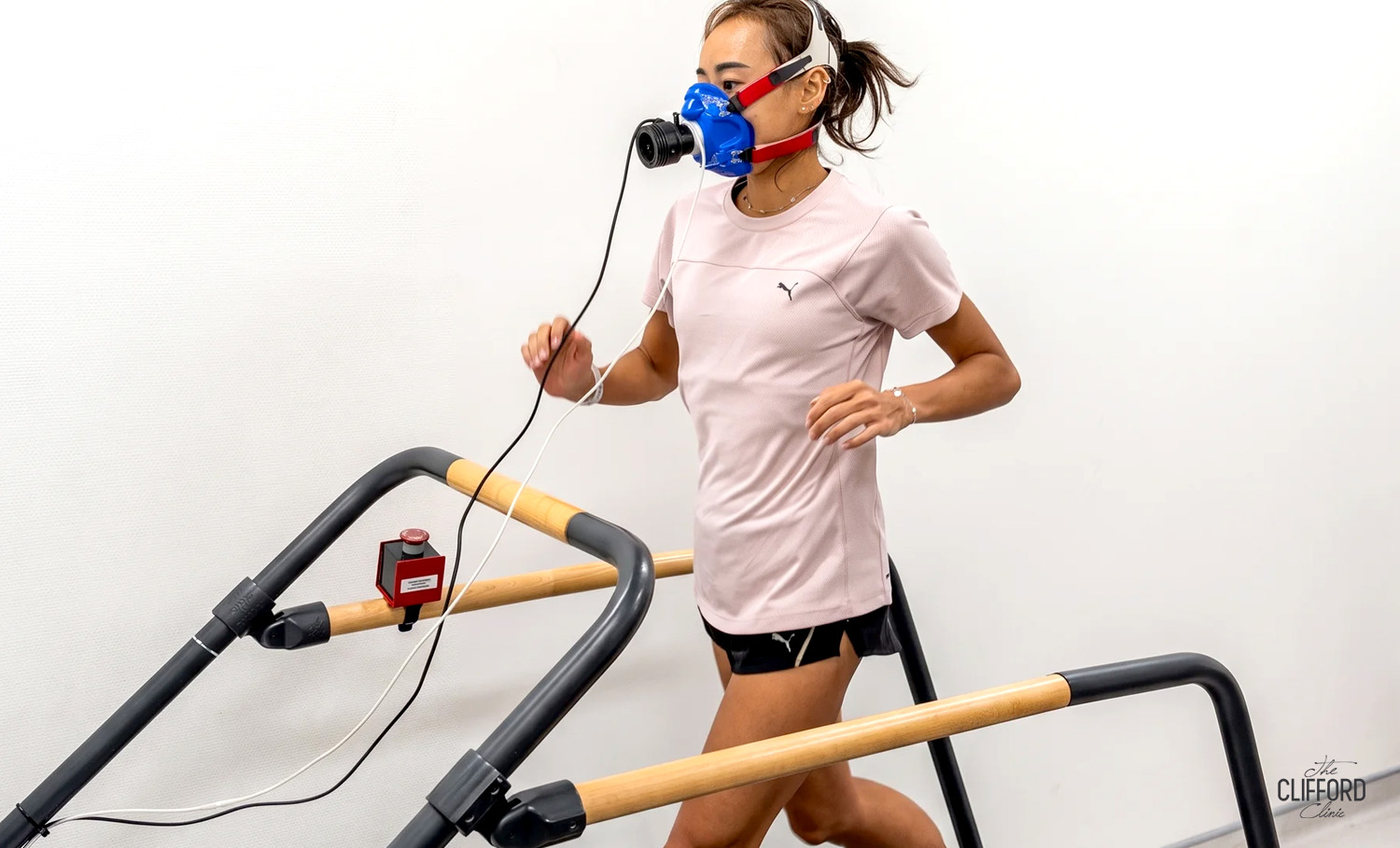
Longevity is one of the fastest-growing reasons patients seek HBOT in Singapore. It is a long-term goal best tracked with objective markers, not how a patient feels on the day. The Clifford Clinic’s longevity programme pairs HBOT with telomere length testing, gut microbiome analysis, APOE gene testing, PT217 plasma tau blood test, VO2 max and lactate threshold testing, multi-cancer early detection (MCED) screening and bone ultrasound for osteoporosis, so the effect of any intervention can be measured rather than guessed. Our Clifford Clinic longevity stack guide sets this out in detail.
The Clifford Clinic Perspective
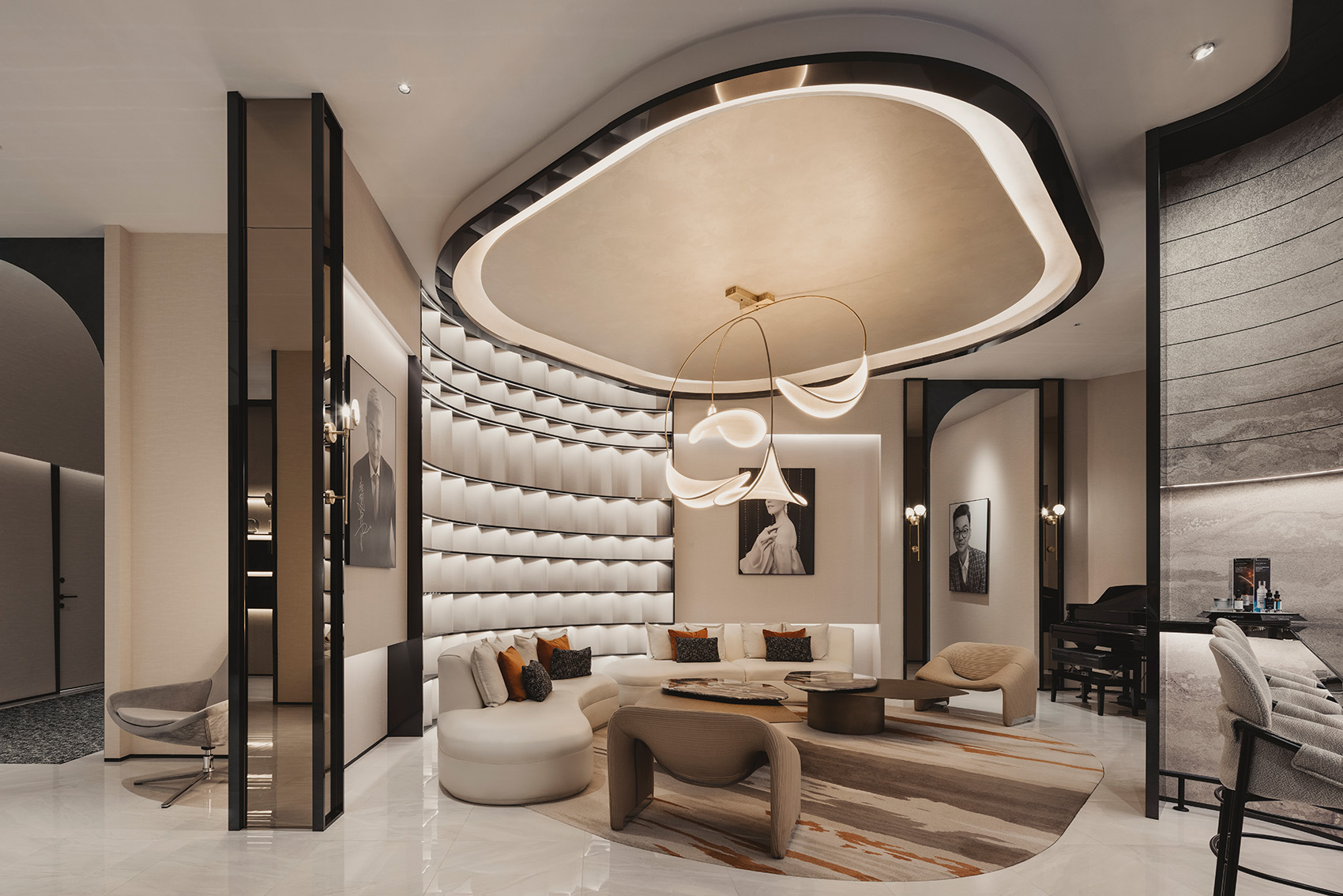
The Clifford Clinic’s clinical team has delivered HBOT in Singapore for roughly four years and across more than 200 patients. The most important lesson has not been about HBOT itself. It has been about expectations. Patients who arrive with a defined goal and commit to a properly delivered course finish satisfied. Patients who arrive expecting a miracle, or who buy into market overclaims, almost always feel let down, regardless of how well the treatment was delivered.
The clinic’s approach is direct about which use cases HBOT serves well and which it does not. For wound healing, post-surgical recovery, sports injury, sleep improvement, selected longevity goals and the established medical indications listed earlier in this guide, the team is confident in HBOT’s role. For broad anti-ageing claims, instant energy promises and cancer treatment marketing, the team will say so plainly. That clarity is what builds trust in a market where it is in short supply.
The setting is built around the clinical decision. The chamber is a hard-shell unit running at a therapeutic 2.0 ATA. Every patient is screened and supervised by a doctor. The location in Raffles Place makes a complete course logistically realistic for working professionals, who are most likely to abandon treatment at an inconveniently located provider. The clinic operates alongside dermatology, aesthetics, plastic surgery, a Day Surgery unit and a longevity diagnostic suite, so HBOT sits inside a wider clinical capability rather than alone.
The clinical team’s guiding principle is consistent across every use case. Match the indication to the evidence, deliver at a therapeutic dose under proper medical supervision, set realistic expectations, and refuse to oversell. That is the standard patients should expect from any HBOT provider worth choosing.
Frequently Asked Questions
What is HBOT in Singapore?
Hyperbaric oxygen therapy in Singapore is a medical treatment in which a patient breathes 100% oxygen inside a pressurised chamber, typically at 2.0 ATA in a hard-shell clinical chamber. It is offered at hospital hyperbaric services, doctor-led private clinics and wellness centres, with significant differences between settings in chamber type, supervision and clinical credibility.
How much does HBOT cost in Singapore?
Costs vary by provider category, chamber type and session length. The Clifford Clinic publishes pricing for single sessions and packaged 5-session, 10-session and 20-session courses. See our HBOT cost in Singapore guide for current pricing and a breakdown of what drives the variation.
Is HBOT covered by MediSave in Singapore?
For one of 13 MOH-approved clinical indications, MediSave can be used up to S$100 per treatment session (or your MediSave balance, whichever is lower). Wellness sessions are not claimable.
Is HBOT covered by MediShield Life?
MediShield Life is a separate scheme from MediSave with its own claim limit of up to S$780 per treatment session, subject to MOH’s clinical criteria. Confirm eligibility with your treating doctor and the provider’s billing team.
Which conditions does HBOT actually treat?
The strongest evidence is for severe carbon monoxide poisoning, decompression illness, gas gangrene, necrotising soft tissue infections, selected non-healing wounds (including diabetic foot ulcers), compromised skin grafts and flaps, delayed radiation injuries, refractory osteomyelitis and selected acute ischaemic injuries. Sudden sensorineural hearing loss is clinically supported but not on MOH’s financing list. See our evidence grading guide for the full picture.
Can HBOT treat cancer?
No. HBOT does not treat cancer. It has supportive roles in managing delayed radiation injury and compromised grafts after reconstructive surgery, but it is not a cancer treatment.
Is HBOT safe?
Yes, with proper screening and supervision. The most common side effect is mild ear pressure during pressurisation. Contraindications include untreated pneumothorax, certain lung conditions, history of barotrauma, and some chemotherapy regimens.
How many HBOT sessions are typically needed?
Depends on the indication. Sports recovery and elective uses may be a single session or short course of 5. Clinical wound and post-surgical uses run longer. Radiation injury protocols often span 30 to 40 sessions. Your clinician sets the protocol.
What is the difference between hard-shell and soft-shell HBOT chambers?
Pressure. Hard-shell clinical chambers reach therapeutic pressures around 2.0 ATA, the pressure range supported by most published research. Soft-shell mild chambers operate at much lower pressures and cannot deliver the same dose. See our chamber comparison guide.
How do I choose an HBOT provider in Singapore?
Ask three questions of any provider. What pressure does the chamber actually reach? Is a doctor on site and screening patients? Is this an MOH-recognised indication or a wellness session? See our provider category comparison for the categories Singapore offers.
Is HBOT useful for longevity goals?
It can be part of a longer-term programme that includes objective measurement. The Clifford Clinic’s longevity stack pairs HBOT with telomere length testing, gut microbiome analysis, APOE gene testing, the PT217 plasma tau blood test, VO2 max and lactate threshold testing, multi-cancer early detection (MCED) screening and bone ultrasound for osteoporosis. Sessions for longevity are paid out of pocket.
Where is the nearest HBOT clinic in Singapore CBD?
The Clifford Clinic is located in Raffles Place, in the heart of the Singapore CBD, with a hard-shell HBOT chamber operating at 2.0 ATA under medical supervision. Hospital-based hyperbaric services include Singapore General Hospital’s Hyperbaric and Diving Medicine Centre.
Does HBOT improve sleep?
Improved deep sleep is the most consistent patient-reported observation during a course of HBOT, particularly in the first few sessions. The formal sleep-quality literature is still developing, but the clinical pattern is striking and reliably reported across patient groups.
Will HBOT make me feel an immediate energy boost?
Probably not in a meaningful, lasting way. Benefits emerge across a completed course rather than after a single session. Marketing that promises instant energy is selling sensation, not evidence.
What HBOT myths should I be aware of?
The biggest myths are that HBOT cures cancer (false), HBOT gives instant energy (overstated), all HBOT chambers are equivalent (false, pressure matters), and celebrity endorsement equals evidence (it does not). See our HBOT myths guide for the full list.
Key Research References
- Undersea and Hyperbaric Medical Society. Hyperbaric Oxygen Therapy Indications, 13th Edition.
- Kirby JP et al. Essentials of Hyperbaric Oxygen Therapy (2019 Review). Missouri Medicine.
- Tibbles PM, Edelsberg JS. Hyperbaric-Oxygen Therapy. New England Journal of Medicine.
- Heyboer M et al. Hyperbaric Oxygen Therapy. Side Effects Defined and Quantified. Advances in Wound Care.
- Ministry of Health Singapore. MediSave for outpatient treatments. moh.gov.sg/managing-expenses/schemes-and-subsidies/medisave/outpatient-care.
- CPF Board, Singapore. Using MediSave for outpatient treatments. cpf.gov.sg/member/healthcare-financing/using-your-medisave-savings/using-medisave-for-outpatient-treatments.
- Ministry of Health Singapore. MediShield Life benefits and claim limits. moh.gov.sg/managing-expenses/schemes-and-subsidies/medishield-life/medishield-life-benefits.
- Singapore General Hospital. Hyperbaric and Diving Medicine Centre. Clinical services and 24-hour diving emergency support.
- Chng J, Low CTE, Kang WL. The development of hyperbaric and diving medicine in Singapore. Singapore Medical Journal.
- Mayo Clinic. Hyperbaric oxygen therapy. Overview, indications and risks.
- Hachmo Y et al. Hyperbaric oxygen therapy increases telomere length and decreases immunosenescence in isolated blood cells. Ageing.
To discuss whether hyperbaric oxygen therapy is right for your specific case, book a consultation at The Clifford Clinic.

Author Bio
Dr Gerard Ee

Dr Gerard Ee is the Medical Director of The Clifford Clinic in Singapore. He earned his medical degree from St George's University of London and built his surgical experience across the Singapore General Hospital, National University Hospital, and Mount Sinai Hospital in New York. He holds Membership of the Royal College of Surgeons (Edinburgh) and a Postgraduate Diploma in Dermatology (Cardiff), and is fully accredited in aesthetic procedures including botulinum toxin, fillers, lasers, and light therapies. A strong advocate of minimally invasive, natural-looking results, Dr Ee has published in several medical and scientific journals and presented his research in cities including Taipei, Las Vegas, and London.
See all posts by Dr Gerard Ee »