


How Hyperbaric Oxygen Therapy Works: The Science Explained
The logic behind hyperbaric oxygen therapy (HBOT) may seem simple at a glance: breathing oxygen under pressure results in the body healing better. Decades of research have mapped the distinct biological mechanisms of HBOT. Understanding them explains both what the therapy can achieve and where its limits lie.
This article provides the science and background to our complete guide to hyperbaric oxygen therapy. We encourage you to read our complete guide if you want to know more about HBOT.
The Starting Point: Oxygen Transport
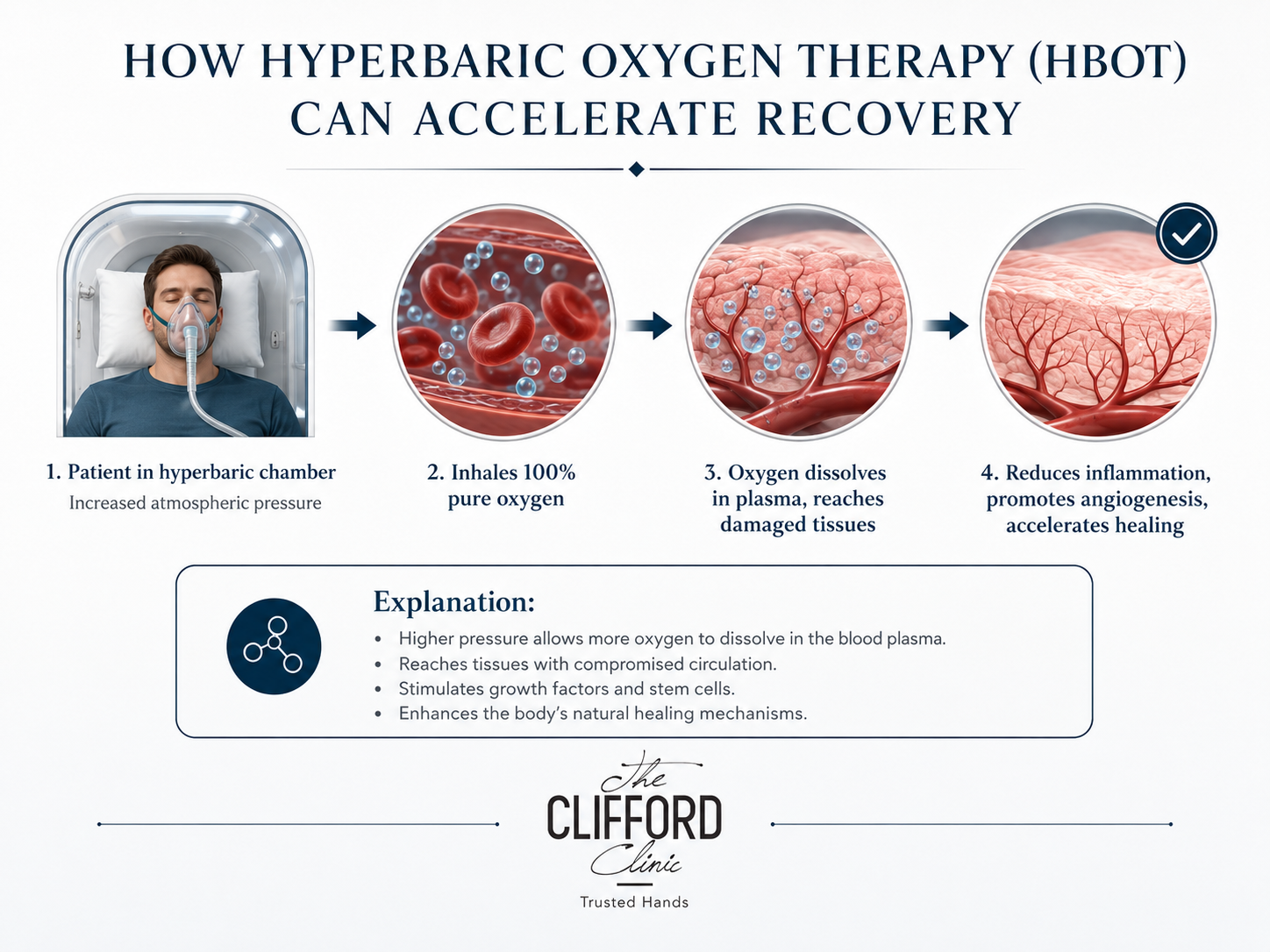
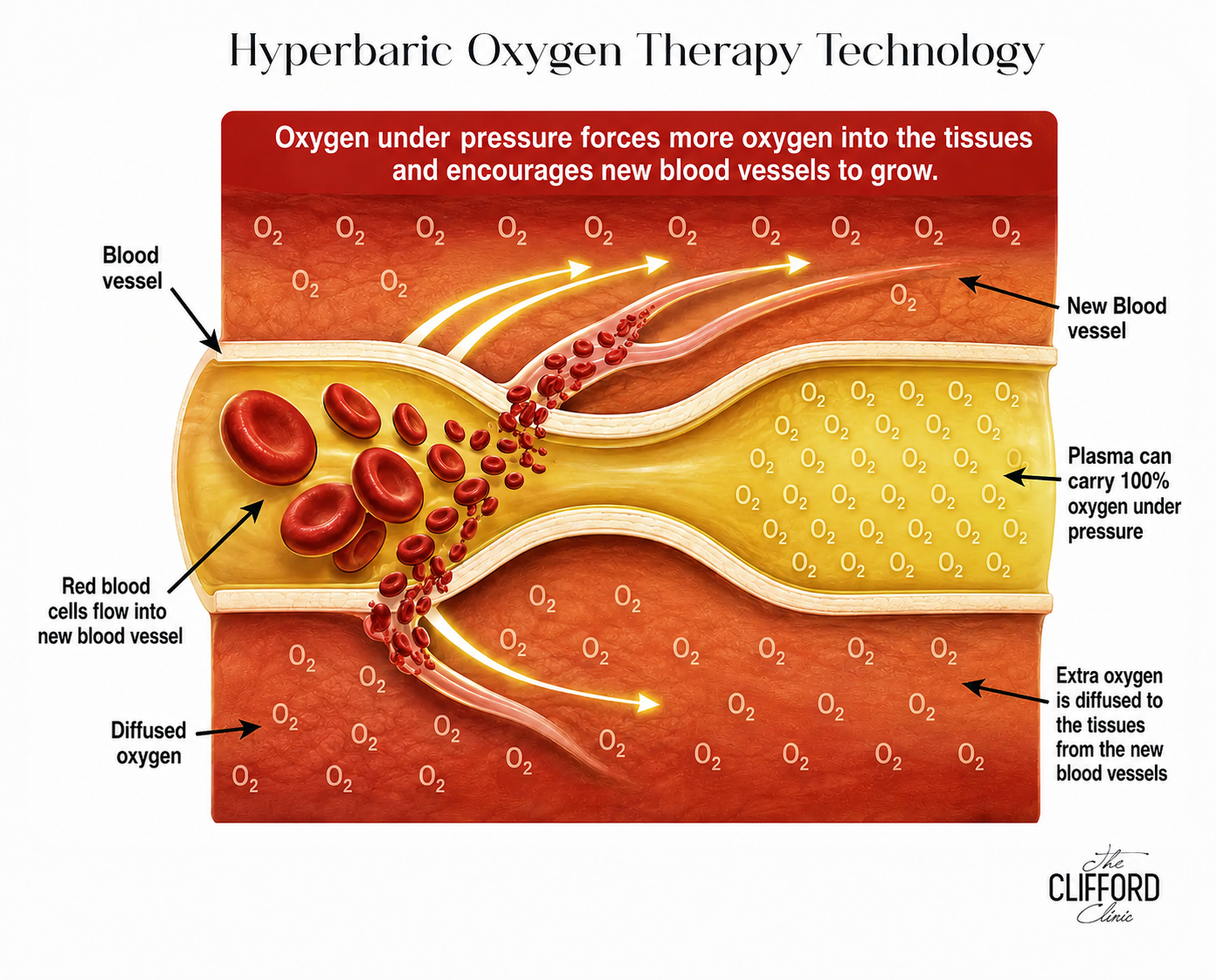
Under normal conditions, oxygen is carried mainly by haemoglobin inside red blood cells. The fluid part of blood, known as plasma, carries only a small amount of dissolved oxygen. At sea level, the haemoglobin system runs close to fully saturated, so breathing in more oxygen at normal pressure does very little to increase the amount of oxygen carried.
The 1996 New England Journal of Medicine review by Tibbles and Edelsberg quantified what hyperbaric pressure changes. Dissolved plasma oxygen rises from about 0.3 millilitres per decilitre at sea level to roughly 1.5 millilitres per decilitre breathing pure oxygen at normal pressure, and to about 6 millilitres per decilitre when pressure is increased to 3 atmospheres. The authors noted that the dissolved oxygen alone is more than enough to meet the resting needs of tissue. In addition to this, as the dissolved oxygen does not depend on red blood cells for transport, it can reach tissue that a compromised blood supply cannot.
Mechanism One: Hyperoxygenation
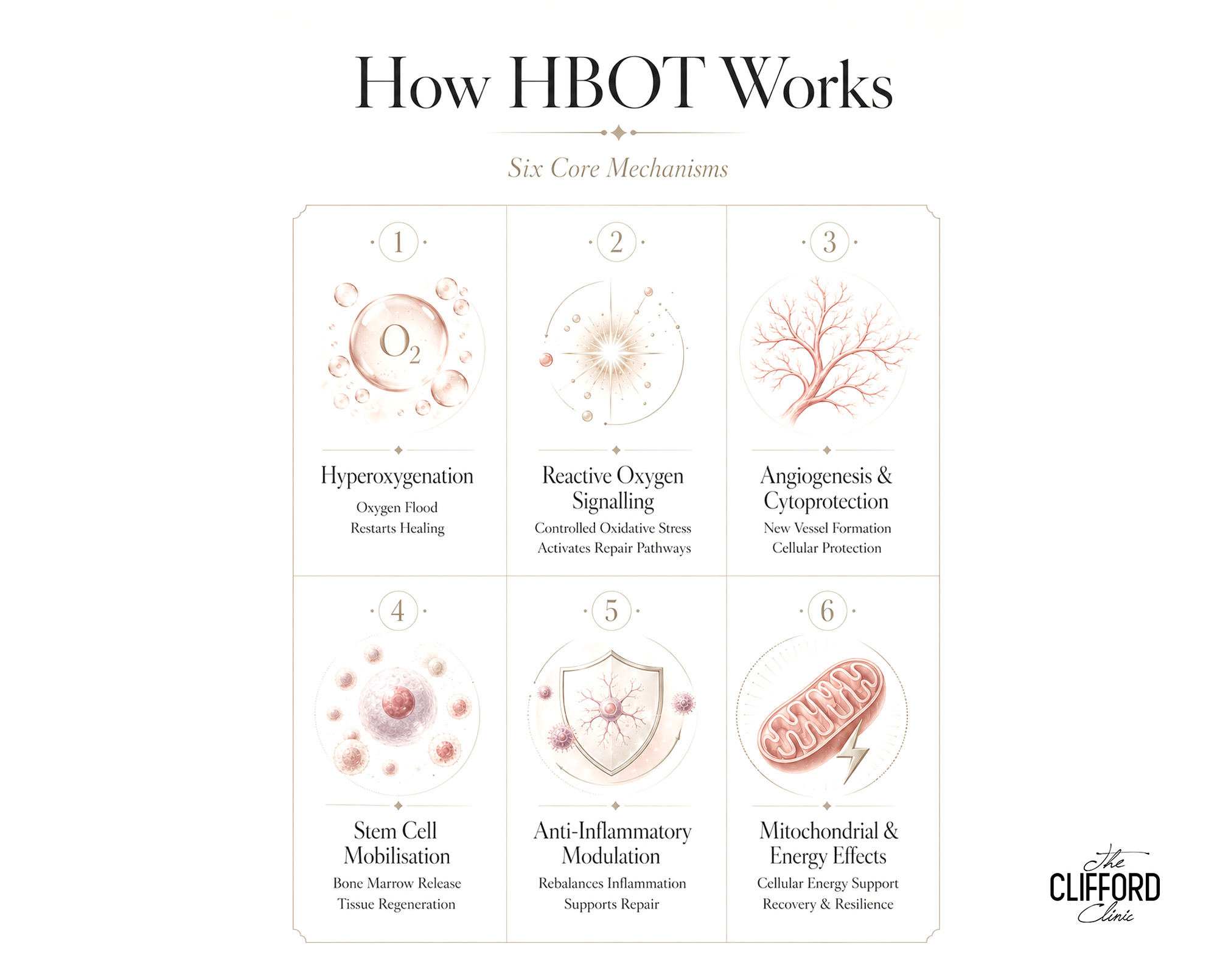
The immediate effect of an increase in dissolved plasma oxygen is hyperoxygenation. Tissues that were oxygen-starved due to swelling, injury or poor circulation are flooded with oxygen. This can restart stalled healing processes, which is the basis of HBOT’s established use in wound care.
Mechanism Two: Reactive Oxygen Signalling
In his influential 2009 review in the Journal of Applied Physiology, “Oxidative stress is fundamental to hyperbaric oxygen therapy,” Stephen Thom explained that the controlled, brief oxidative stress of HBOT is what drives its benefits. The reactive oxygen and nitrogen species generated during an HBOT session act as signalling molecules, switching on repair-related pathways. The therapeutic effect is a hormetic one, meaning it is a small controlled stress that provokes a beneficial adaptive response.
Mechanism Three: Angiogenesis and Cytoprotection
The 2010 study by Godman and colleagues in Cell Stress and Chaperones is a clear demonstration of how HBOT works. The researchers ran a genome-wide analysis of gene expression in the human cells that line small blood vessels, also known as microvascular endothelial cells, after hyperbaric treatment under conditions designed to replicate clinical settings.
The results showed that HBOT strongly up-regulated immediate early transcription factors and protective molecular chaperones. HBOT also activated the Nrf-2 pathway, a master regulator of the cell’s antioxidant defences. Functionally, treated cells showed increased proliferation, greater resistance to oxidative stress, and enhanced formation of new vascular tube structures, which is a laboratory marker of angiogenesis. The effect on tube formation was particularly dramatic after two daily treatments. These changes were minimal without elevated pressure.
Mechanism Four: Stem Cell Mobilisation
Hyperbaric research indicates that a course of HBOT mobilises stem cells. Stephen Thom’s research demonstrated that repeated HBOT increases the number of CD34-positive progenitor cells released from bone marrow into circulation. These cells provide raw material for tissue regeneration across multiple organ systems, explaining why HBOT has such a broad range of applications.
Mechanism Five: Anti-Inflammatory Modulation
HBOT not only suppresses inflammation, but it also rebalances it. A 2018 study in Scientific Reports using a muscle injury model by Oyaizu and colleagues showed this dual action. HBOT suppressed the early surge of circulating macrophages, then accelerated the helpful invasion of macrophages into the injured tissue, while increasing the number of proliferating satellite cells and regenerated muscle fibres. The researchers concluded that HBOT has a dual role in decreasing inflammation and accelerating myogenesis.
Mechanism Six: Mitochondrial and Energy Effects
Mitochondria are the energy factories inside cells; they depend on oxygen to function. A 2020 paper in Cell Stress and Chaperones by Tezgin and colleagues examined how HBOT influences mitochondrial and glycolytic energy metabolism in human cells. This research offers one proposed explanation for the improvements in fatigue and performance that many patients report after HBOT. Our guide to the benefits of hyperbaric oxygen therapy explores these applications.
Why is it the Combination That Matters
No single mechanism explains hyperbaric oxygen therapy completely. Hyperoxygenation, reactive oxygen signalling, angiogenesis, stem cell mobilisation, anti-inflammatory modulation and mitochondrial effects, acting together, give HBOT its unusually broad clinical reach. It also explains why HBOT is delivered as a course. Angiogenesis and stem cell effects build session by session, which is why a single treatment produces little lasting change.
To see how strong the evidence is for each application is, read our review on whether HBOT really works.
What HBOT Cannot Do
Understanding the mechanisms also clarifies their limits. HBOT improves oxygen delivery and supports the body’s repair systems but it does not replace those systems. HBOT cannot fix a problem that is not oxygen-related, nor will it substitute for surgery, medication, or mental health care. But HBOT can be a powerful adjunct that strengthens the cellular environment to support other forms of medical treatment or care.
Pressure Determines the Dose
Because these mechanisms depend on dissolved plasma oxygen, and dissolved oxygen rises with pressure, the chamber’s pressure is effectively the dose. The Godman study confirmed this directly by showing that increasing oxygen without elevated pressure produced a minimal effect. This is why the hyperbaric oxygen chamber you choose matters.
Mechanism Seven: Influencing the Body’s Oxygen-Sensing Pathways
The human body has a sophisticated oxygen-sensing system built around a protein called hypoxia-inducible factor, or HIF, which switches on repair and blood-vessel-growth genes when tissue is short of oxygen. Stephen Thom’s 2009 Journal of Applied Physiology review shows that the controlled oxidative stress induced by an HBOT session influences oxygen-sensing signalling pathways in ways that promote the body’s repair programmes.
As HBOT influences biological signals, the effects of HBOT outlast the session itself. HBOT is thus best understood as a treatment that switches on the body’s own regenerative machinery rather than just topping up its oxygen supply. This also explains the cumulative nature of HBOT. Each session is a controlled stimulus, and the adaptive response builds over a course.
Why the Mechanisms Explain the Treatment Schedule
Understanding how HBOT works at a cellular level explains why it is delivered the way it is. Because the therapy works by sending repeated biological signals that build adaptive responses, angiogenesis, stem cell mobilisation and antioxidant defence, it is best delivered as a course of repeated, spaced sessions.
The 2010 Godman study solidified this by showing that new vessel formation in human cells was strongest after repeated daily treatments. As the mechanism is cumulative, the treatment schedule mirrors this by also being cumulative. This is the scientific rationale behind why clinics recommend 10, 20 or more sessions rather than just one session and why finishing a course matters as much as starting one. Our treatment guide explains how a course is structured around this biology.
The Clifford Clinic Perspective

When monitoring how hyperbaric oxygen therapy benefits our patients, The Clifford Clinic’s clinical team finds that the first positive change felt by patients is surprisingly not angiogenesis or stem-cell mobilisation, but sleep. Improved deep sleep is the most common piece of unprompted feedback the clinical team receives from our patients, and it often appears early in a course of HBOT.
The team’s explanation is that the science of how hyperbaric oxygen therapy works is not one isolated effect but several overlapping ones. Better oxygenated tissue, modulated inflammation, and better supported cellular energy production are integrated by the body in ways that show up as everyday changes a patient can physically notice. Better sleep is one visible signal that the underlying biology is responding to HBOT.
The second observation the clinical team consistently makes concerns wounds. Increased dissolved oxygen reaching poorly perfused tissue supports repair processes, which translates into wounds that close and repair faster. Seeing this pattern repeatedly, across four years and in more than 200 patients, is what gives Clifford’s team confidence that data from clinical studies reflects something real rather than just theoretical.
Do note that while understanding how hyperbaric oxygen therapy works explains why the treatment is delivered as a course at a therapeutic 2.0 ATA, and why results build session by session, it does not mean every benefit is dramatic or immediate.
Frequently Asked Questions
How does hyperbaric oxygen therapy work in simple terms?
It raises pressure so oxygen dissolves directly into the blood plasma. This allows oxygen to reach tissue that a normal blood supply cannot, triggering healing mechanisms such as new blood vessel growth and stem cell release.
Why does HBOT need multiple sessions?
Effects such as angiogenesis and stem cell mobilisation build cumulatively. Laboratory research shows the angiogenic response strengthens with repeated treatments.
Does HBOT really mobilise stem cells?
Yes. Research by Stephen Thom shows repeated HBOT increases the number of circulating CD34-positive stem cells released from bone marrow.
Is the oxidative stress from HBOT harmful?
No, when properly dosed. Research shows the brief, controlled oxidative stress of HBOT acts as a signal that switches on repair pathways, which has a beneficial hormetic effect.
Key Research References
- Tibbles PM, Edelsberg JS. Hyperbaric-Oxygen Therapy. New England Journal of Medicine, 1996.
- Thom SR. Oxidative stress is fundamental to hyperbaric oxygen therapy. Journal of Applied Physiology, 2009.
- Godman CA et al. Hyperbaric oxygen induces a cytoprotective and angiogenic response in human microvascular endothelial cells. Cell Stress and Chaperones, 2010.
- Oyaizu T et al. Hyperbaric oxygen reduces inflammation, oxygenates injured muscle, and regenerates skeletal muscle via macrophage and satellite cell activation. Scientific Reports, 2018.
- Tezgin D et al. The effect of hyperbaric oxygen on mitochondrial and glycolytic energy metabolism: the caloristasis concept. Cell Stress and Chaperones, 2020.
To discuss how these mechanisms apply to your goals, book a consultation at The Clifford Clinic.

Author Bio
Dr Gerard Ee

Dr Gerard Ee is the Medical Director of The Clifford Clinic in Singapore. He earned his medical degree from St George's University of London and built his surgical experience across the Singapore General Hospital, National University Hospital, and Mount Sinai Hospital in New York. He holds Membership of the Royal College of Surgeons (Edinburgh) and a Postgraduate Diploma in Dermatology (Cardiff), and is fully accredited in aesthetic procedures including botulinum toxin, fillers, lasers, and light therapies. A strong advocate of minimally invasive, natural-looking results, Dr Ee has published in several medical and scientific journals and presented his research in cities including Taipei, Las Vegas, and London.
See all posts by Dr Gerard Ee »