


HBOT for Radiation Injury After Cancer Treatment: Evidence and Referral Pathways
| Medically reviewed by The Clifford Clinic clinical team
Reviewer: Dr Gerard Ee, MBBS Practising at The Clifford Clinic, Raffles Place, Singapore Last reviewed: June 2026 How we review: Articles in this hyperbaric oxygen library are written for The Clifford Clinic and reviewed by medical professionals. Reviewers check medical accuracy and ensure claims align with current MOH, UHMS and peer-reviewed guidance. |
Radiation therapy is one of oncology’s most powerful tools, but it can leave a small group of patients with tissue damage that surfaces months or years later. This delayed radiation injury (to soft tissue, bone, or mucosa) can be painful, slow to heal and frustrating to treat, and hyperbaric oxygen therapy is a recognised indication for it among international hyperbaric medicine bodies.
This guide explains what delayed radiation injury is, how HBOT is thought to help, what the evidence supports, and how the Singapore referral pathway typically works. For broader context, read alongside our complete guide to hyperbaric oxygen therapy and our evidence-grading guide on approved, supported, emerging and wellness HBOT uses.
What Is Delayed Radiation Injury?
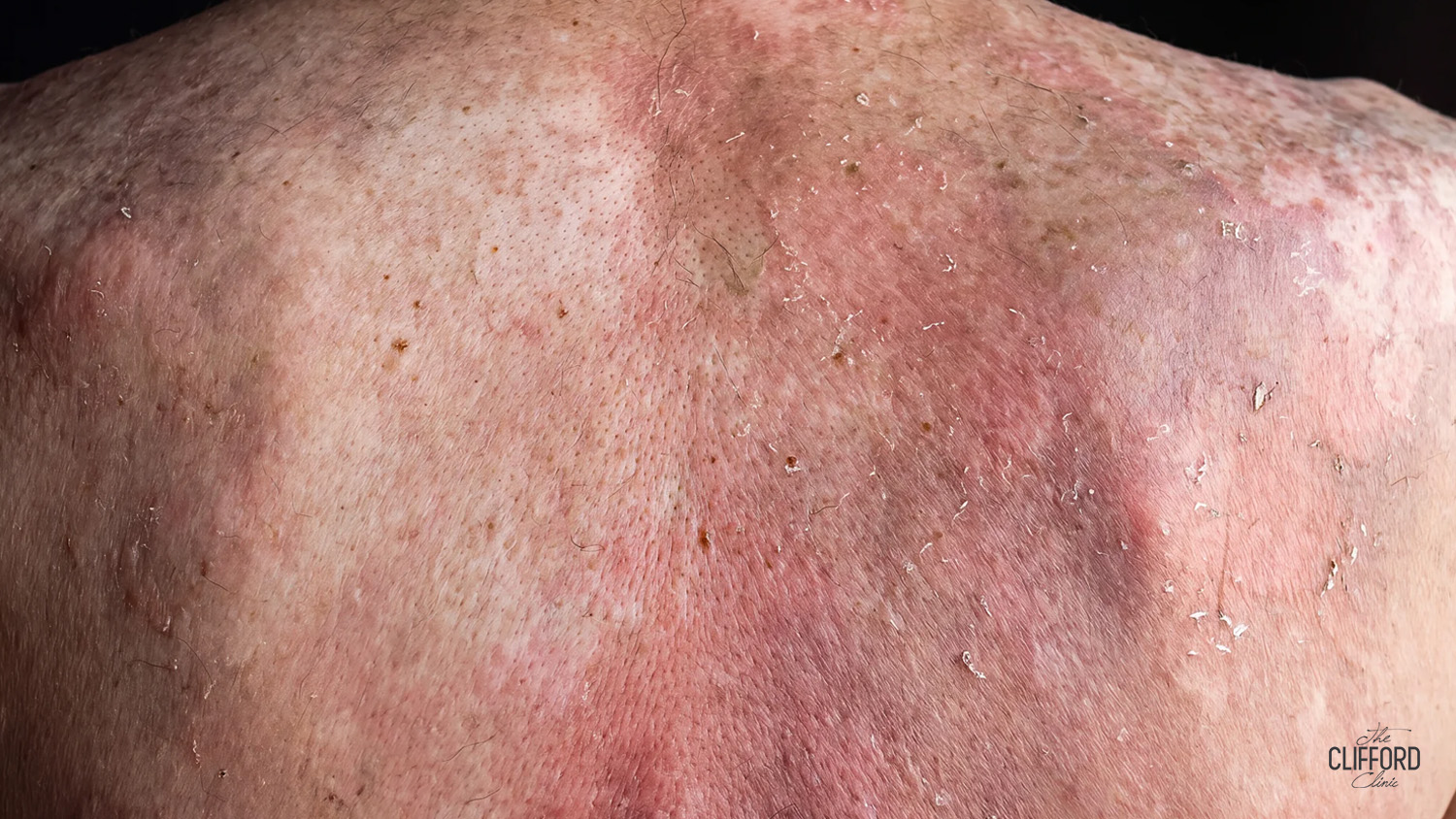
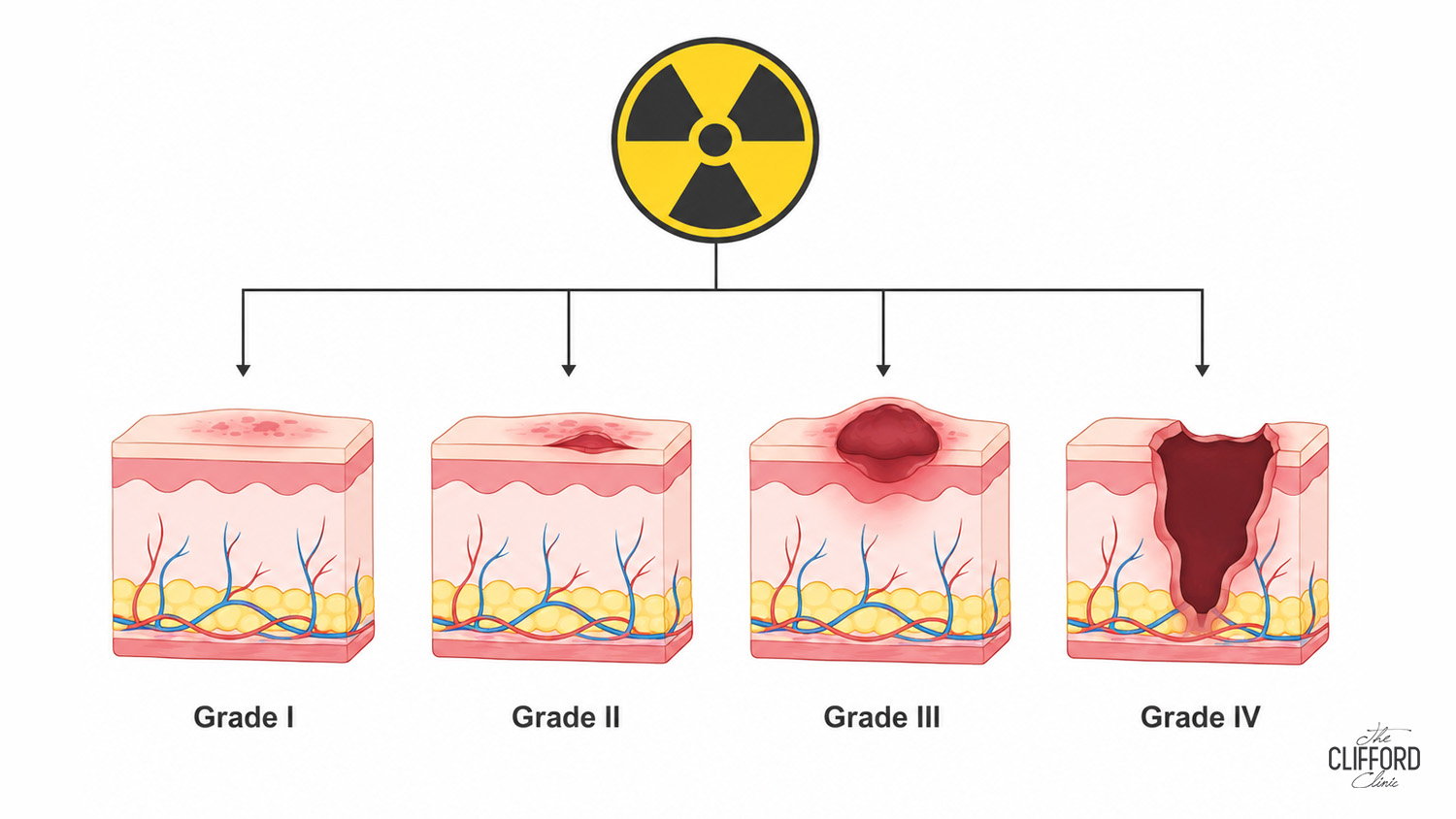
Delayed radiation injury is tissue damage that appears months or years after radiation treatment for cancer, in tissue that was within or close to the radiation field. Unlike the acute inflammation patients notice during treatment, this is a slower, deeper change in the tissue’s small blood vessels, fibrous architecture and oxygen supply. The result can be tissue that breaks down, bleeds, fails to heal or becomes necrotic.
Common patterns include radiation cystitis (bladder) and proctitis (rectum) after pelvic radiation, osteoradionecrosis of the jaw and soft tissue mucositis after head and neck radiation, and chest wall or breast soft tissue damage after thoracic radiation. Patients are often surprised, having considered themselves recovered before a slow-developing problem emerges.
How HBOT Helps in Radiation-Damaged Tissue
The core problem of radiation-damaged tissue is oxygenation. Scarred, reduced small blood vessels leave the tissue chronically hypoxic. HBOT addresses this in two ways. Each session raises the dissolved oxygen reaching the tissue, supporting whatever repair capacity remains. Across a course, hyperbaric exposure also appears to stimulate angiogenesis, the growth of new small blood vessels, progressively improving the irradiated area’s long-term oxygen supply.
This is why radiation injury protocols run long. The benefit comes not from any one session but from cumulative remodelling of the tissue’s vascular bed across many weeks.
The Evidence
Delayed radiation injury is a recognised indication in the Undersea and Hyperbaric Medical Society’s list. Peer-reviewed studies, including Marx and colleagues’ classic work on osteoradionecrosis of the jaw and the subsequent reviews summarised in Heyboer and colleagues’ 2017 Advances in Wound Care article, describe HBOT as a useful adjunct in selected cases.
The evidence is not uniformly positive across every radiation injury subtype. Support is most consistent for osteoradionecrosis of the mandible, late radiation cystitis with intractable bleeding, and certain forms of late soft tissue breakdown in the irradiated field.
Common Patterns
Patients referred for HBOT after cancer treatment generally fall into three groups. The first are head and neck cancer survivors with osteoradionecrosis of the jaw, often presenting with non-healing extraction sockets, exposed bone or chronic pain. The second are pelvic cancer survivors with radiation cystitis or proctitis, with recurrent bleeding, urgency, or pain, often years after treatment. The third are patients with non-healing wounds, sinus tracts or tissue breakdown in any previously irradiated field.
There are also patients referred prophylactically, before planned dental extractions in a previously irradiated mandible, to reduce the risk of triggering osteoradionecrosis.
Typical Treatment Protocols
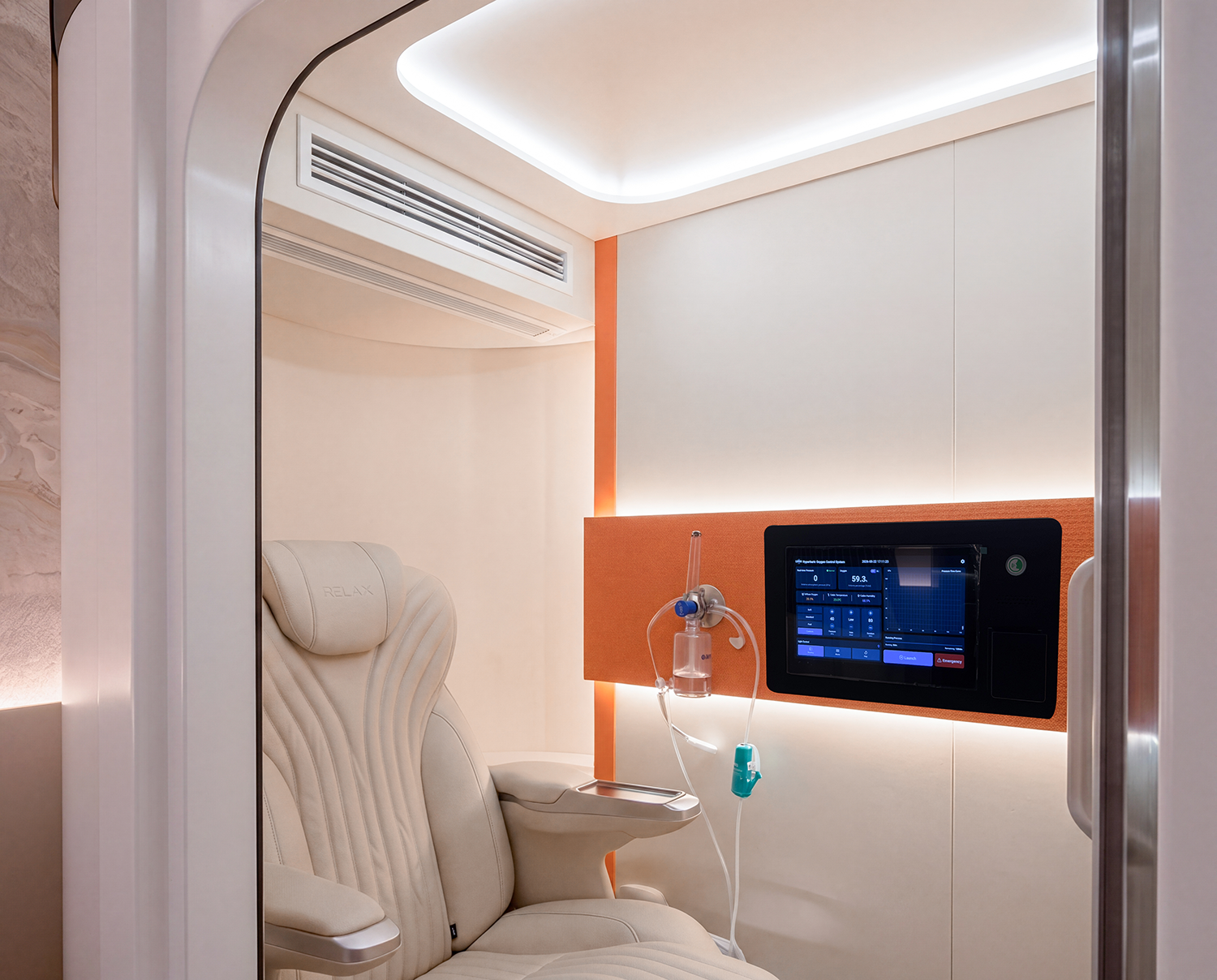
Radiation injury protocols are longer than most other HBOT courses. A typical course runs 30 to 40 sessions, sometimes more, at pressures around 2.0 to 2.4 ATA, scheduled across several weeks. The goal is not a quick symptomatic improvement but durable vascular remodelling of the damaged tissue. Patients who expect short-term relief in the first few sessions are usually disappointed. The benefits tend to consolidate later in the course.
Because of the duration, schedule and clinical complexity, hospital-based hyperbaric units that are integrated with oncology, ENT, urology and radiation oncology services are typically the most appropriate setting. The hyperbaric clinician works alongside the patient’s wider oncology team rather than acting alone.
HBOT for Radiation Injury: Evidence and Use Cases
| Use or Claim | Evidence Tier | How We Talk About It |
|---|---|---|
| Osteoradionecrosis of the Mandible | Supported | Recognised adjunct in selected cases, often around dental procedures. |
| Late Radiation Cystitis / Proctitis | Supported | May be considered for intractable bleeding or symptoms. |
| Non-Healing Wounds in Irradiated Tissue | Supported | Adjunct when standard care has not progressed. |
| Acute Radiation Effects During Treatment | Wellness | Not an HBOT indication. Managed by the oncology team. |
| Cancer Treatment Itself | Wellness | HBOT does not treat cancer. Not within scope of this indication. |
The Singapore Referral Pathway
In Singapore, the typical pathway for a radiation injury HBOT referral starts with the patient’s oncologist, surgeon or specialist responsible for the affected area, for example, an ENT surgeon for head and neck cases, a urologist for radiation cystitis, or a colorectal team for radiation proctitis. They diagnose the radiation-related problem, attempt or coordinate standard treatments, and refer to a hyperbaric medicine service when HBOT is considered appropriate.
Singapore General Hospital’s Hyperbaric and Diving Medicine Centre is the most established local pathway, with experience in late radiation injury alongside the wider oncology services. Selected patients may be appropriate for private clinic HBOT, particularly for surgical or post-surgical wound contexts.
| MediSave and MediShield Life note
Osteoradionecrosis and delayed radiation injuries are on MOH’s approved indication list for HBOT. Two separate Singapore healthcare schemes may apply to qualifying cases. MediSave (CPF medical savings) can be used for up to S$100 per treatment session. MediShield Life (national health insurance) is a separate scheme with a claim limit of up to S$780 per treatment session. The two operate independently, and both require MOH’s clinical criteria to be met. Confirm with MOH, CPF Board and your provider’s billing team. |
When HBOT Is Not Considered
HBOT is not used to treat active cancer, and it is not given during a course of curative radiation therapy. Patients with active untreated malignancy in the proposed treatment area, certain lung conditions, active ear infections or significantly uncontrolled medical conditions may need those issues addressed before HBOT can be safely planned.
A clinically responsible programme will screen carefully, set realistic expectations and integrate the HBOT plan with the patient’s wider oncology and surgical care.
The Clifford Clinic Perspective

The Clifford Clinic’s clinical team approaches radiation injury HBOT with realism. Delayed radiation injury is genuinely supported in the hyperbaric medicine literature, and patients who fit the recognised criteria deserve a clear referral pathway rather than vague promises. For most classical radiation injury cases (osteoradionecrosis of the mandible, late radiation cystitis, late radiation proctitis), the team’s view is that a hospital-based hyperbaric service integrated with the patient’s oncology team, such as Singapore General Hospital’s Hyperbaric and Diving Medicine Centre, is usually the most appropriate setting. The clinic will say so plainly when that is the right pathway.
Where The Clifford Clinic fits is in surgical and post-surgical contexts where the patient’s primary treating team has asked for HBOT to support recovery, for example after reconstructive surgery in previously irradiated tissue, or for a wound that is compromised by underlying radiation damage. In those cases, a hard-shell chamber at a therapeutic 2.0 ATA, doctor-led screening by a clinician, and a Raffles Place location that makes a long course logistically realistic can add value to the wider plan.
Across four years and more than 200 patients, the clinical team’s consistent observation is that radiation injury responds best to a long, patient course at a therapeutic pressure, integrated with the wider oncology and surgical team. Patients who expect quick relief tend to be disappointed. Patients who commit to a properly planned course often see meaningful improvement weeks or months in.
The team’s guiding principle is straightforward. HBOT for radiation injury should be a multidisciplinary decision, made for a recognised indication, delivered at a therapeutic dose, and never sold as a substitute for the oncology or surgical care the patient actually needs.
Frequently Asked Questions
Does HBOT treat cancer?
No. HBOT does not treat cancer. It may be used to help manage delayed tissue damage caused by previous cancer radiation therapy.
How long after radiation therapy can radiation injury appear?
Months to many years. Some patients develop delayed problems within a year, others not until five or ten years later.
How many sessions are needed for radiation injury?
Often 30 to 40 sessions or more, scheduled across several weeks. The exact protocol depends on the indication and the clinician.
Is HBOT painful?
No. The main sensation is mild ear pressure during pressurisation, managed with simple equalisation techniques.
Will MediSave cover HBOT for radiation injury?
It may, if your case meets MOH’s clinical criteria. Confirm with your treating doctor and the provider’s billing team.
Is hospital HBOT or private clinic HBOT better for radiation injury?
For classical radiation injury indications, hospital-based hyperbaric units integrated with oncology services are usually most appropriate. Private clinics fit better for surgical and post-surgical contexts within the wider plan.
Are there risks specific to radiation injury patients?
Patients are screened for lung effects of previous treatment, ear and sinus health, and other relevant factors. Risks are managed by the supervising doctor.
Can HBOT prevent radiation injury before it happens?
Prophylactic HBOT is sometimes considered before planned dental procedures in previously irradiated mandible patients. This is a specialist decision.
Key Research References
- Undersea and Hyperbaric Medical Society. Hyperbaric Oxygen Therapy Indications, 13th Edition — delayed radiation injury.
- Heyboer M et al. Hyperbaric Oxygen Therapy: Side Effects Defined and Quantified. Advances in Wound Care, 2017.
- Marx RE. Osteoradionecrosis: a new concept of its pathophysiology. Journal of Oral and Maxillofacial Surgery.
- Bennett MH et al. Hyperbaric oxygen therapy for late radiation tissue injury. Cochrane Database of Systematic Reviews.
- Singapore General Hospital. Hyperbaric and Diving Medicine Centre — services and conditions treated.
- Kirby JP et al. Essentials of Hyperbaric Oxygen Therapy: 2019 Review. Missouri Medicine.

To discuss whether HBOT may be appropriate as part of your post-cancer recovery plan, book a consultation at The Clifford Clinic.

Author Bio
Dr Gerard Ee

Dr Gerard Ee is the Medical Director of The Clifford Clinic in Singapore. He earned his medical degree from St George's University of London and built his surgical experience across the Singapore General Hospital, National University Hospital, and Mount Sinai Hospital in New York. He holds Membership of the Royal College of Surgeons (Edinburgh) and a Postgraduate Diploma in Dermatology (Cardiff), and is fully accredited in aesthetic procedures including botulinum toxin, fillers, lasers, and light therapies. A strong advocate of minimally invasive, natural-looking results, Dr Ee has published in several medical and scientific journals and presented his research in cities including Taipei, Las Vegas, and London.
See all posts by Dr Gerard Ee »