


Hair Loss Diagnosis in Singapore, Scalp Check, Trichoscopy and Blood Tests
Hair loss diagnosis in Singapore should always come before treatment. A doctor identifies the cause of your hair loss through your medical history, a scalp examination, a pull test, trichoscopy, which is scalp microscopy, and blood tests where indicated, occasionally supported by genetic analysis or a scalp biopsy. This step determines whether subsequent treatment has a chance of working.
This guide explains each diagnostic step, what it detects, and how a medical assessment differs from a free scalp analysis. It supports our complete guide to diagnosis first hair loss treatment in Singapore.
Why diagnosis matters more than treatment choice
Hair loss is a symptom with more than a dozen distinct causes, including genetic pattern loss, stress triggered shedding, autoimmune disease, thyroid dysfunction, iron deficiency, scalp infections and medication effects, and several of these can coexist in the same person. Twelve months of laser sessions cannot fix shedding caused by iron deficiency, and a year of scalp treatments cannot stop androgenetic alopecia. Pattern hair loss is progressive, and follicles that miniaturise and die during a year of wrong treatment cannot be revived later. Hair loss is also sometimes the first visible sign of thyroid disease or significant nutritional deficiency, which a camera scan at a scalp centre will not detect.
At The Clifford Clinic, every treatment plan starts with the structured assessment below.
Step one, medical history
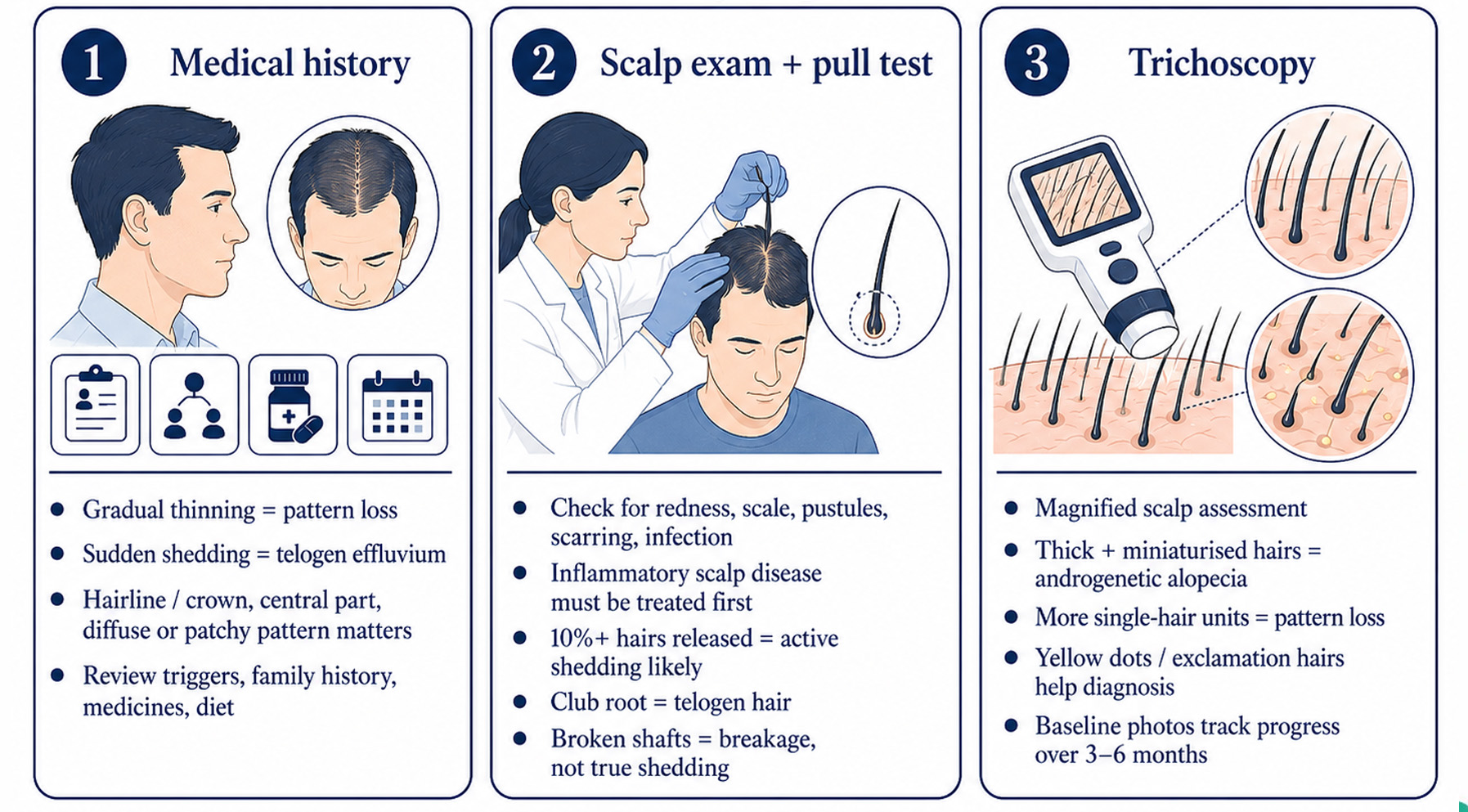
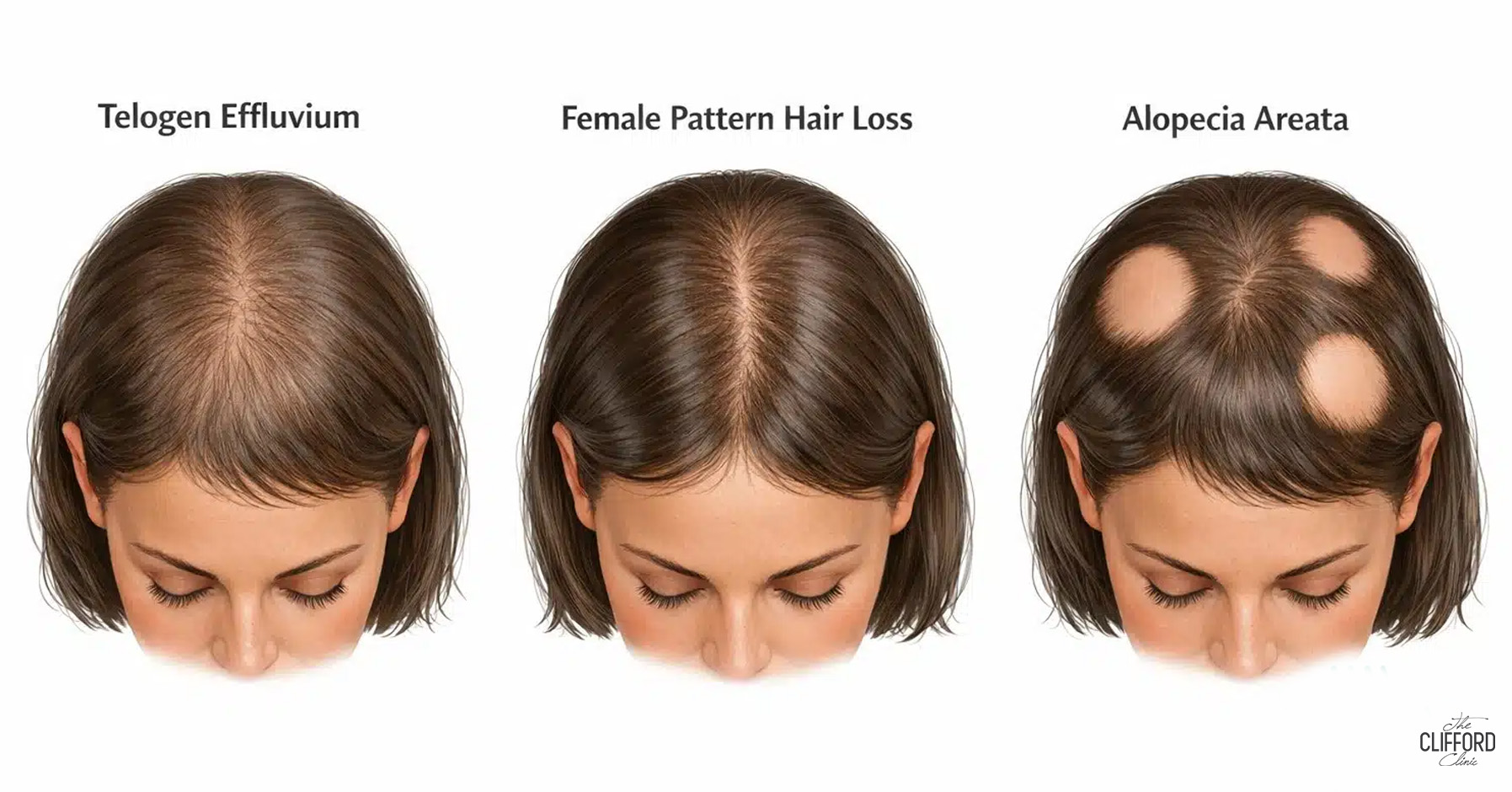
The medical history often indicates the diagnosis before examination. Gradual thinning over years suggests pattern hair loss, while a sudden increase in shedding points to telogen effluvium, which characteristically begins two to three months after a trigger such as high fever, surgery, childbirth, dieting or severe stress. The location of loss is also diagnostic. The hairline and crown are affected in male pattern loss, the central parting widens in female pattern loss, shedding is diffuse in telogen effluvium, and discrete patches suggest alopecia areata. Medications, family history and diet are reviewed, and vegetarian or rapidly restricted diets are common contributors in Singapore.
Step two, scalp examination and pull test
The doctor examines your scalp for redness, scaling, pustules, scarring or signs of infection, findings that change the treatment plan, because inflammatory and infectious scalp conditions must be treated before any regrowth therapy is appropriate. In the pull test, the doctor grasps sections of 40 to 60 hairs and applies gentle traction. If 10 percent or more come away easily, active shedding such as telogen effluvium or active alopecia areata is likely. A negative pull test with visible thinning points more towards pattern hair loss. Shed hairs can also be examined under magnification, because telogen hairs have a characteristic club shaped root, while broken shafts suggest breakage rather than true loss from the root.
Step three, trichoscopy
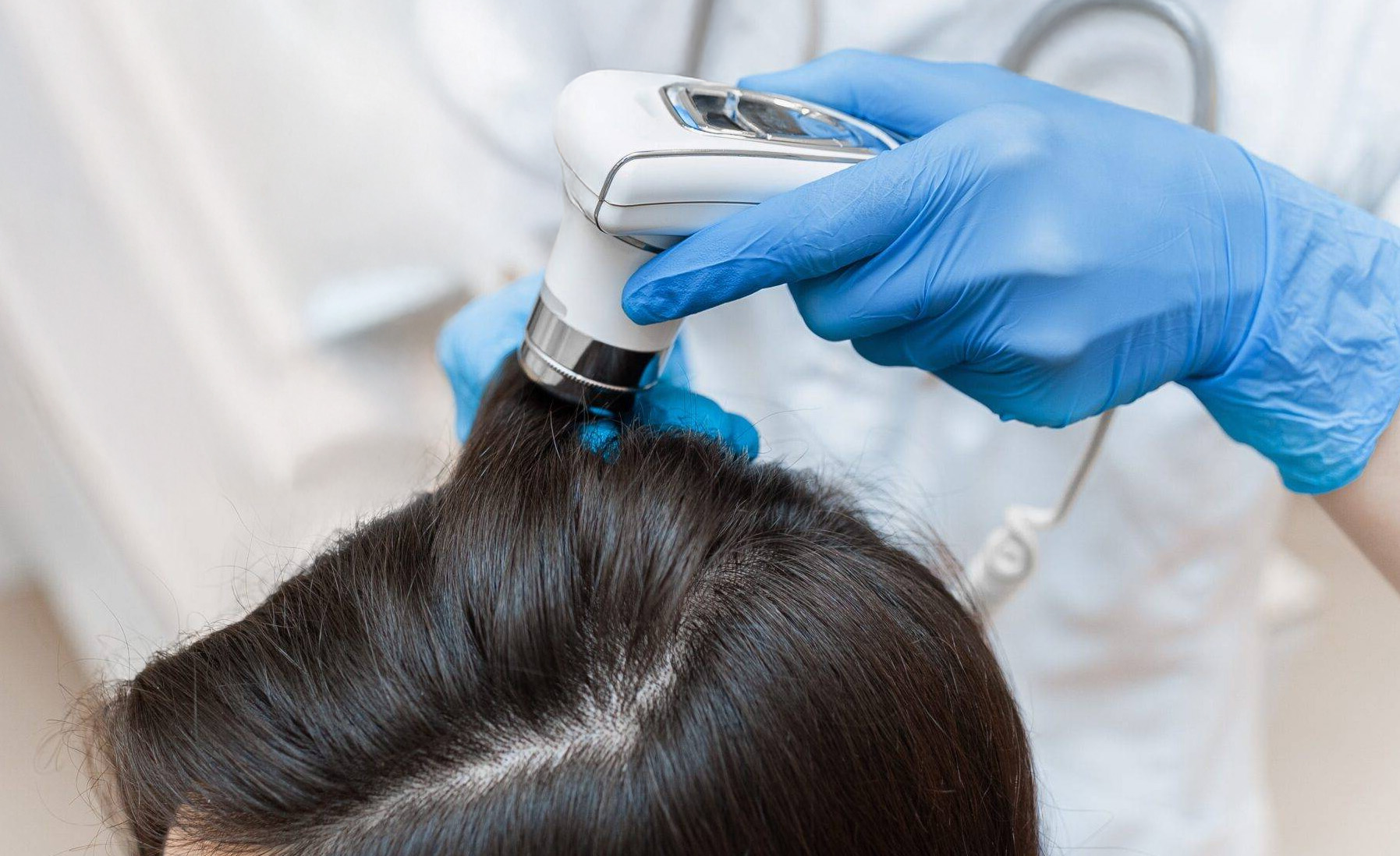
Trichoscopy is a magnified digital examination of the scalp and hair shafts, and it is the principal tool of modern hair loss diagnosis. It allows the doctor to see hair shaft diameter variation, known as anisotrichosis, which is the signature of androgenetic alopecia, because healthy thick hairs grow beside miniaturised fine ones in the same area. It reveals follicular unit composition, since healthy scalps grow hairs in groups of two to three while pattern hair loss shows increasing numbers of single hair units. It shows empty follicles and yellow dots seen in alopecia areata and advanced pattern loss, exclamation mark hairs characteristic of active alopecia areata, and scalp inflammation invisible to the naked eye. Trichoscopy also creates a baseline, because standardised images at fixed scalp positions repeated at intervals of three to six months turn a subjective impression into measurable change in density and shaft thickness.
Step four, blood tests
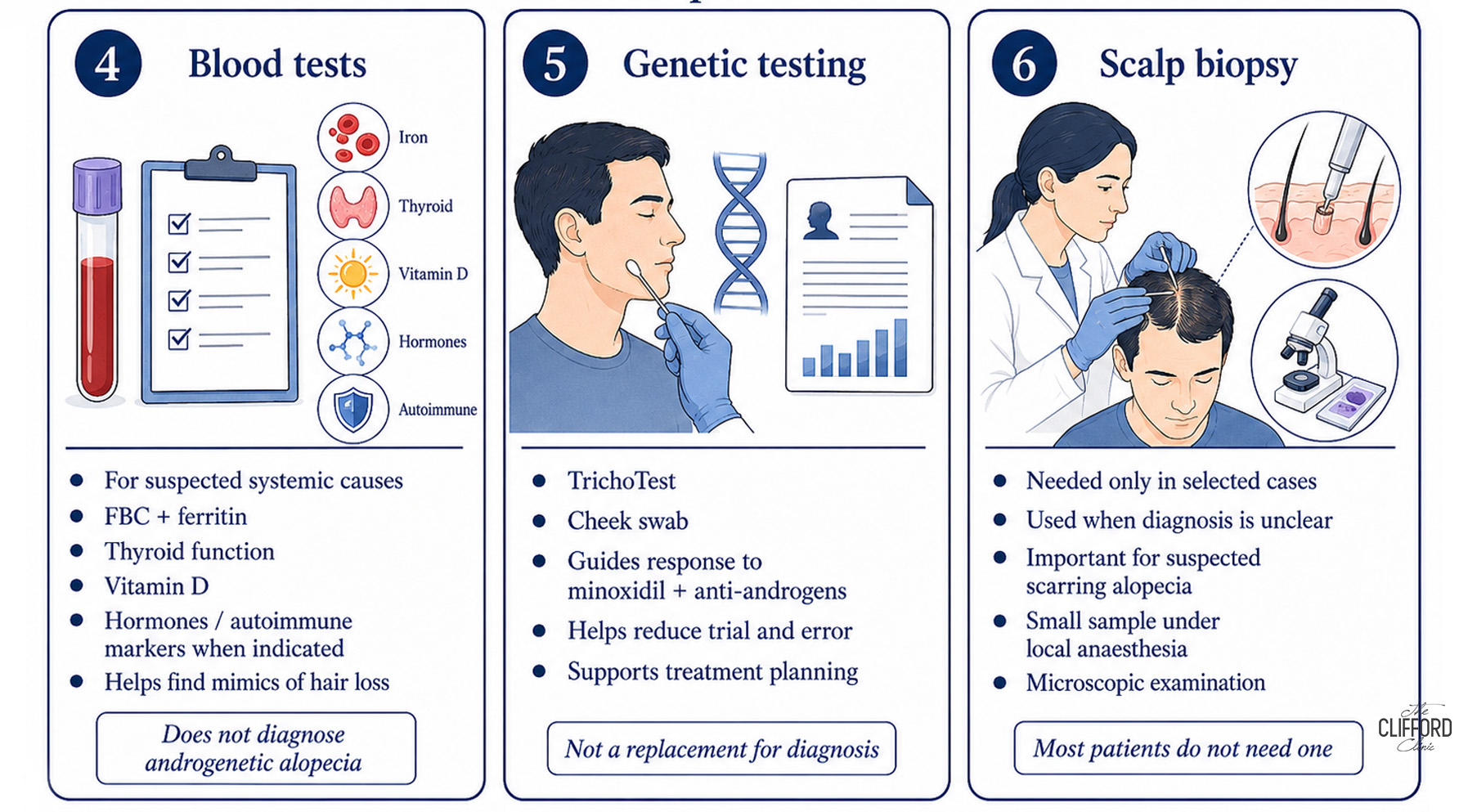
Blood tests are indicated when the history or examination suggests a systemic contributor. A full blood count screens for anaemia and chronic illness. Ferritin, which reflects iron stores, identifies iron deficiency, one of the most common reversible causes in women, and it can contribute even before anaemia develops. Thyroid function testing detects both overactive and underactive thyroid, which cause diffuse shedding. Vitamin D deficiency is common in Singapore despite the climate and is associated with several hair loss types. Hormonal screens are added where polycystic ovary syndrome or other endocrine causes are suspected, and autoimmune markers where alopecia areata or connective tissue disease is suspected. A normal ferritin may still be suboptimal for hair regrowth, and no blood test diagnoses androgenetic alopecia, because blood tests exist to find or exclude the other causes that mimic or worsen it.
Step five, genetic testing
The Clifford Clinic offers TrichoTest, a genetic test that analyses variations in genes affecting how you metabolise and respond to different hair loss treatments, including minoxidil and anti androgens. A cheek swab generates a report that helps your doctor prioritise the medications most likely to work for your genetic profile, rather than discovering this by trial and error over successive six month cycles. It is not a replacement for clinical diagnosis, because it does not identify the cause of the loss, but for patients committing to long term medication it can shorten the time to an effective regimen.
Step six, scalp biopsy
Few cases need a biopsy, a small sample of scalp taken under local anaesthesia for microscopic examination. It is mainly used when scarring alopecia is suspected, because scarring alopecia is a permanent, inflammation driven destruction of follicles that requires urgent and completely different treatment, and when the diagnosis remains unclear after the steps above. Most patients will never need one, but access to this level of assessment is one difference between a medical clinic and a scalp centre.
How to prepare for your assessment
Bring photographs of your hair from one, three and five years ago, because they establish the real rate of change better than memory. List your medications and supplements with doses, since high dose biotin can interfere with laboratory tests and is often stopped for several days beforehand. Note your timeline, including anything significant in the two to four months before the shedding started. Bring any blood tests from the past year and details of treatments already tried and for how long, because minoxidil for six weeks and minoxidil for six months are not comparable trials. Know your family history on both sides.
Medical diagnosis compared with a free scalp analysis
A medical doctor can order blood tests, prescribe medication and diagnose thyroid, iron and autoimmune causes, and typically ends the assessment with ranked treatment options and prices. A retail scalp centre performs a scalp camera analysis and typically ends with a package recommendation, without the ability to order blood tests, prescribe medication or diagnose systemic causes. A camera image showing sebum on your scalp is not a diagnosis, because everyone produces sebum, and clogged pores is not a recognised cause of pattern hair loss. Our guide on choosing between a hair loss doctor, dermatologist and scalp centre covers this further.
When to get assessed promptly
Book a medical assessment rather than a scalp package if you notice sudden heavy shedding, round or patchy bald spots, scalp pain, redness, scaling or possible infection, loss of eyebrows or eyelashes, hair loss during pregnancy or breastfeeding, or hair loss alongside fatigue, weight change or palpitations. These signs can indicate conditions that need specific medical treatment first.
What happens after diagnosis
Once the cause is established, treatment can be matched to it. Telogen effluvium may need only management of the trigger and time, deficiencies are corrected and rechecked, and pattern hair loss receives a staged plan, typically medication first with laser and regenerative options considered based on severity, budget and goals. Every option, with costs, is compared in our full guide to hair loss treatment in Singapore and the cost guide.
Frequently asked questions
How do I know what is causing my hair loss?
The pattern of loss and recent triggers narrow the possibilities, but a confident diagnosis needs a medical history, scalp examination, trichoscopy and, where indicated, blood tests.
What blood tests should I do for hair loss?
Commonly a full blood count, ferritin, thyroid function and vitamin D, with hormonal or autoimmune tests in selected cases, tailored to your history rather than run on everyone.
Is trichoscopy accurate?
Trichoscopy is a well-established diagnostic tool that reliably identifies the miniaturisation pattern of androgenetic alopecia and the signs of alopecia areata and scalp disease, and its accuracy depends on the experience of the interpreting doctor.
How much does hair loss diagnosis cost in Singapore?
Consultation with trichoscopy at a doctor led clinic is a modest cost, with blood tests added only where indicated, and it is the highest value step in the treatment journey. See the cost guide.
Can I diagnose myself online?
Online research can produce a reasonable hypothesis, but self diagnosis misses coexisting causes, such as a postpartum shed overlapping early pattern loss, and these combinations are common and change the treatment plan.
References
Almohanna HM, Ahmed AA, Tsatalis JP, Tosti A. The role of vitamins and minerals in hair loss, a review. Dermatology and Therapy. 2019. PMID 30547302.
Grover C, Khurana A. Telogen effluvium. Indian Journal of Dermatology, Venereology and Leprology. 2013. PMID 24177606.
Harries M, Trueb RM, Tosti A, et al. Management of primary cicatricial alopecias. British Journal of Dermatology. 2016.
Ho CH, Sood T, Zito PM. Androgenetic alopecia. StatPearls. 2023. PMID 28613674.
Kantor J, Kessler LJ, Brooks DG, Cotsarelis G. Decreased serum ferritin is associated with alopecia in women. Journal of Investigative Dermatology. 2003. PMID 14675207.
Kaufman KD. Androgens and alopecia. Molecular and Cellular Endocrinology. 2002. PMID 12573816.
Li D, et al. Biotin interference in clinical immunoassays. 2017.
Malkud S. Telogen effluvium, a review. Journal of Clinical and Diagnostic Research. 2015. PMID 26558178.
McDonald KA, Shelley AJ, Colantonio S, Beecker J. Hair pull test, evidence based update. Journal of the American Academy of Dermatology. 2017. PMID 27424420.
Mubki T, Rudnicka L, Olszewska M, Shapiro J. Evaluation and diagnosis of the hair loss patient. Journal of the American Academy of Dermatology. 2014. PMID 25128118.
Rudnicka L, Olszewska M, Rakowska A, et al. Trichoscopy update. Journal of Dermatological Case Reports. 2011. PMID 22408709.
Trost LB, Bergfeld WF, Calogeras E. The diagnosis and treatment of iron deficiency and its potential relationship to hair loss. Journal of the American Academy of Dermatology. 2006. PMID 16600208.
Book a hair and scalp assessment

The first step is always a proper diagnosis. Our doctors examine your scalp, identify the cause of your hair loss, and recommend a plan matched to your condition, budget and goals, with no pressure to buy packages.
The Clifford Clinic. 50 Raffles Place, #01-01 Singapore Land Tower, Singapore 048623 (Exit B, Raffles Place MRT). Opening hours Monday to Friday 10am to 8pm, Saturday 10am to 5pm, closed on Sundays and Public Holidays. Call 6532 2400 or WhatsApp 8318 6332.
Last reviewed July 2026.
How this article was reviewed. As the reviewer, Dr Gerard Ee checked this article for medical accuracy, treatment suitability, Singapore context and compliance with HSA and MOH advertising guidelines.
Transparency. The Clifford Clinic provides the non surgical hair loss treatments described in this article. The information here is for education and does not replace an individual consultation.
Medical disclaimer. This article is for general information only and does not replace a consultation with a qualified medical practitioner. Individual results vary and no specific outcome is guaranteed. Any medication mentioned should be prescribed and monitored by a doctor.

Author Bio
Dr Gerard Ee

Dr Gerard Ee is the Medical Director of The Clifford Clinic in Singapore. He earned his medical degree from St George's University of London and built his surgical experience across the Singapore General Hospital, National University Hospital, and Mount Sinai Hospital in New York. He holds Membership of the Royal College of Surgeons (Edinburgh) and a Postgraduate Diploma in Dermatology (Cardiff), and is fully accredited in aesthetic procedures including botulinum toxin, fillers, lasers, and light therapies. A strong advocate of minimally invasive, natural-looking results, Dr Ee has published in several medical and scientific journals and presented his research in cities including Taipei, Las Vegas, and London.
See all posts by Dr Gerard Ee »