
Melasma Treatment in Singapore, Why It Recurs and Where Pico Laser Fits
Written by Dr Bernard Ong. Medically reviewed by Dr Gerard Ee
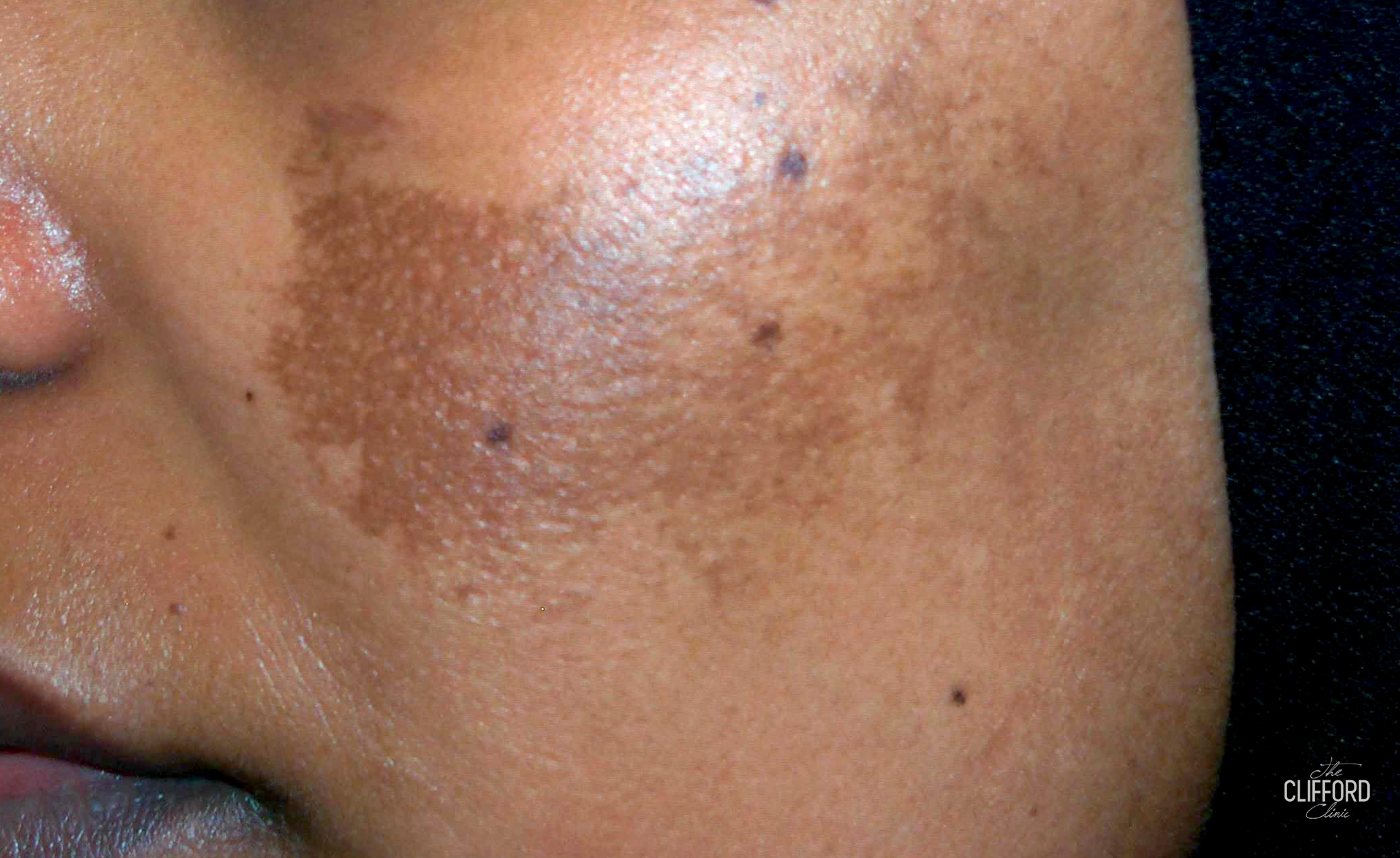
Melasma is a chronic pigmentation condition that is managed, not simply removed. It appears as symmetrical brown patches on the cheeks, forehead or upper lip, and it relapses with sun, heat and hormonal triggers. Effective treatment in Singapore combines rigorous photoprotection, prescription topical therapy and, in selected cases, low-energy picosecond laser toning, followed by long-term maintenance to prevent recurrence.
What is melasma?
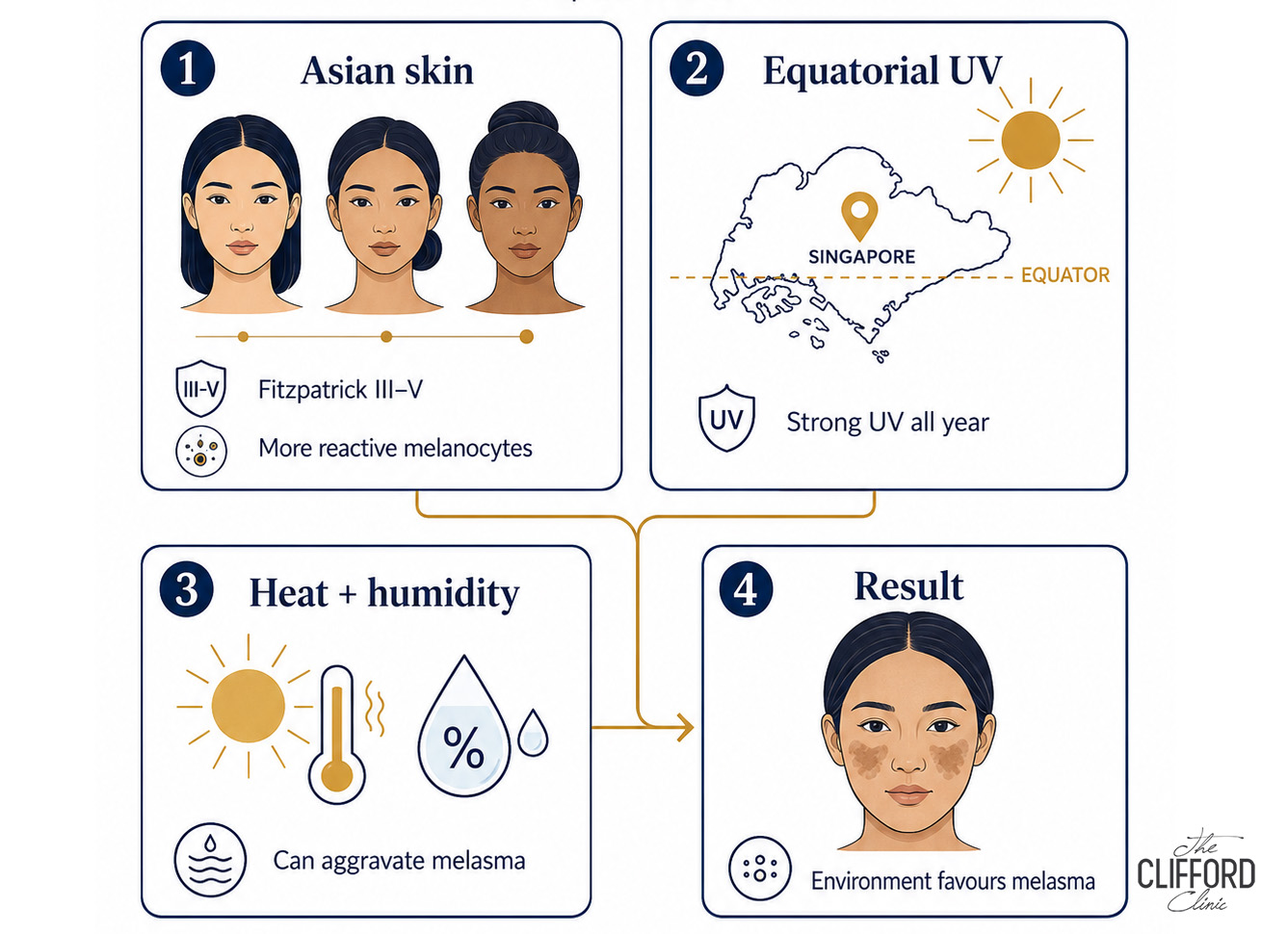
Melasma is a disorder of overactive melanocytes producing excess pigment in symmetrical patches, most commonly on the cheeks, forehead, upper lip and jawline. It predominantly affects women from their late twenties onward and is strongly associated with hormonal shifts. Pregnancy, hormonal contraception and genetics all play roles. Under the surface, melasma involves not just pigment but also increased blood vessels and a disturbed basement membrane, which explains why treatments directed at pigment alone are frequently ineffective.
Why melasma is common in Singapore
Asian skin (Fitzpatrick III to V) carries more reactive melanocytes, and Singapore’s equatorial location delivers intense ultraviolet exposure throughout the year. Combined with persistent heat and humidity, both of which aggravate melasma, these factors make the local environment particularly conducive to the condition.
Why melasma comes back
Common Melasma Triggers and Prevention Steps
| Trigger | Why It Matters | Prevention Step |
|---|---|---|
| Ultraviolet Light | Directly stimulates melanocytes; UVA penetrates glass and clouds | SPF 50, PA++++ sunscreen daily, reapplied outdoors |
| Visible Light | Blue light induces lasting pigment in darker skin types | Tinted sunscreen with iron oxides, not clear formulations |
| Heat | Raises skin temperature and vascular activity in melasma patches | Limit prolonged outdoor heat; use shade and hats |
| Hormones | Pregnancy and hormonal contraception activate melanocytes | Review contraception options with your doctor if melasma recurs |
| Inflammation | Irritating skincare or aggressive procedures can provoke rebound | Gentle routine, avoid over-exfoliation, conservative treatments |
Why melasma is different from sun spots
Sun spots are discrete lesions that can be removed individually, although new ones may develop over time. Melasma, by contrast, is a field condition in which an affected area of skin remains predisposed to re-pigmentation even after it appears to have cleared. Consequently, treatments that are highly effective for sun spots may prove ineffective or even counterproductive in melasma, and ongoing maintenance forms an essential part of any melasma treatment plan. Where the diagnosis is uncertain, see our guide to pigmentation types.
Can Pico laser treat melasma?
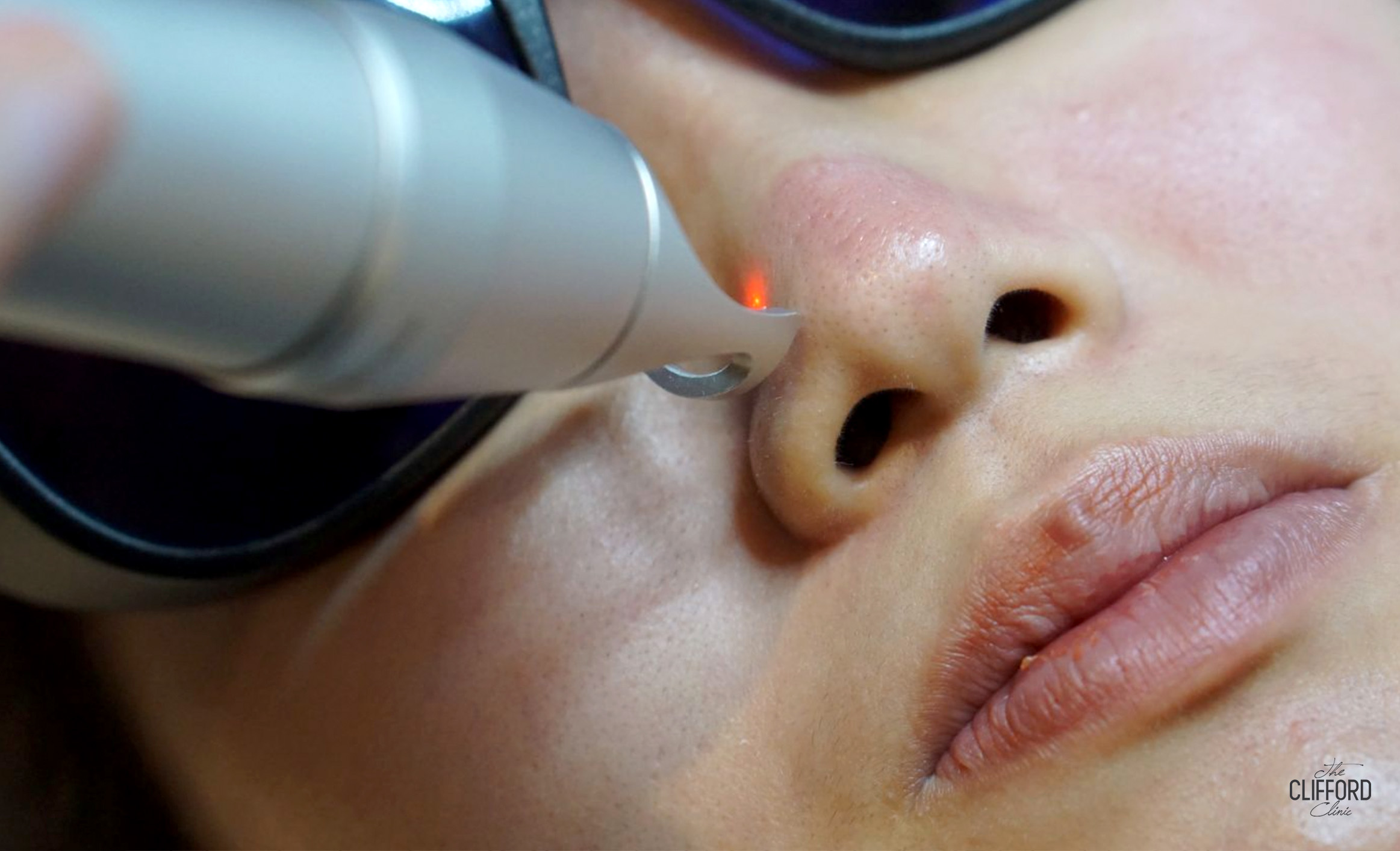
Pico laser has a role in selected cases. Pico laser at low, sub-thermal toning settings can break down excess pigment with minimal heat, and is used in Singapore as an adjunct once melasma has been stabilised with sunscreen and topical therapy. It does not, however, suppress the underlying overactivity of the melanocytes. When it is used alone or too aggressively, the pigmentation commonly recurs and may rebound to a darker shade. This is discussed further in our companion article on Pico laser for melasma.
When laser may worsen melasma
Laser is not appropriate as an initial intervention when melasma is untreated and active, when the skin is tanned or inflamed, when sessions are performed too frequently, or when energy settings are raised in pursuit of a rapid, visible result. Rebound pigmentation following over-aggressive laser treatment is one of the most common reasons patients present for consultation with pigmentation worse than at the outset.
Topical skincare and sunscreen
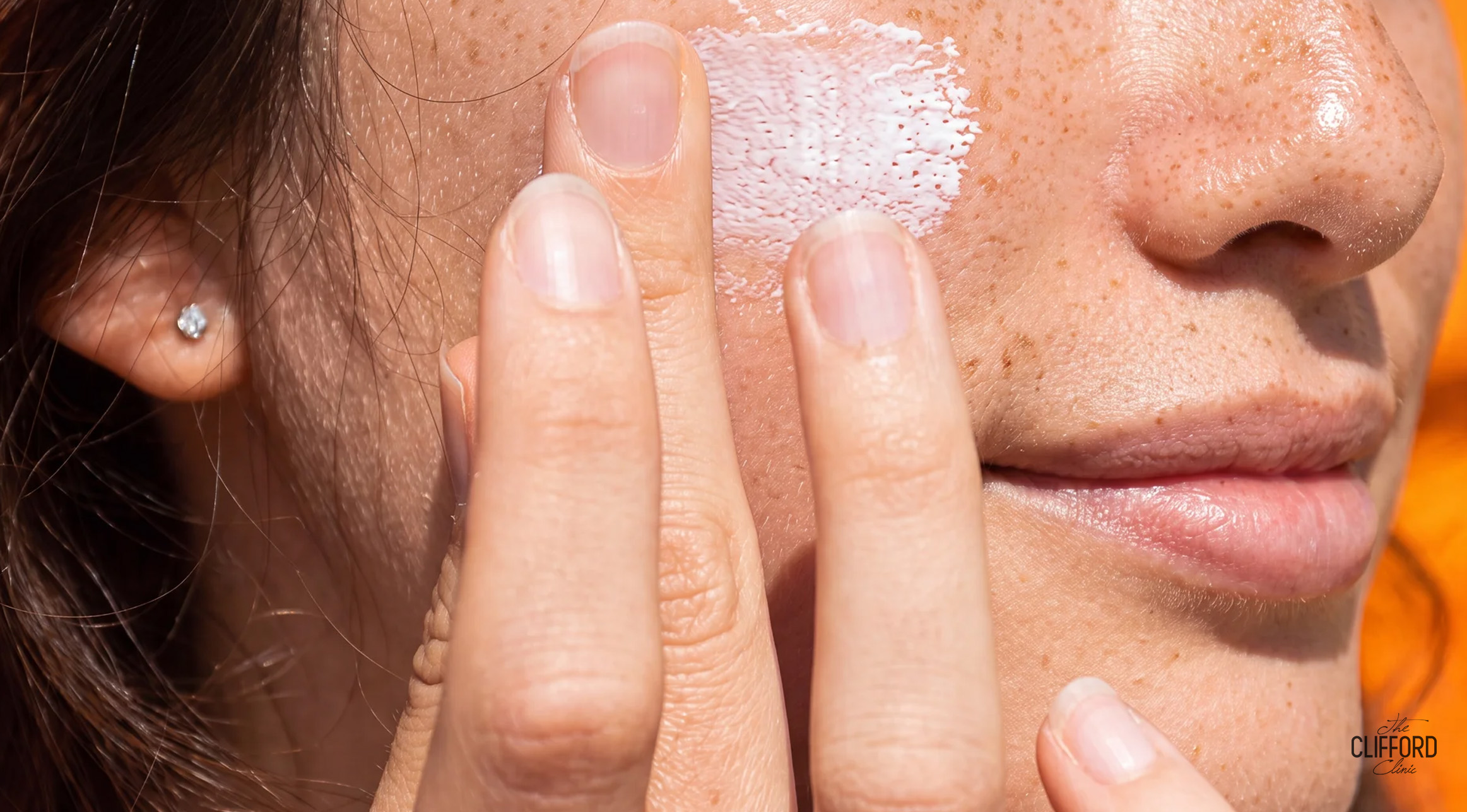
The foundation of melasma control is a daily tinted SPF 50, PA++++ sunscreen containing iron oxides, combined with prescription topical agents such as hydroquinone courses, triple-combination creams, tranexamic acid or azelaic acid, as directed by the treating physician. Oral tranexamic acid may be added in resistant cases following appropriate screening. Most patients achieve meaningful lightening with this regimen alone within two to three months.
Maintenance after improvement
Once melasma has lightened, the objective shifts to preventing relapse through uninterrupted daily photoprotection, a maintenance topical agent, avoidance of known triggers, and periodic clinical review. Some patients add occasional low-energy toning sessions. Pigmentation typically fluctuates from month to month. A treatment plan that anticipates and manages relapse achieves more consistent long-term outcomes than one in which each recurrence is regarded as a failure.
Doctor’s perspective. The patients who achieve the best outcomes in melasma are seldom those seeking a single definitive cure. They are those who accept that melasma is a long-term condition and adopt consistent daily photoprotection as a lasting routine. Laser has a defined role, but sustained daily photoprotection over a period of years outperforms any single device-based treatment.
Suitable vs not suitable for melasma laser toning
- May be suitable:melasma stabilised on sunscreen and topicals, realistic expectations, willingness to maintain, no recent tanning.
- Not suitable:active untreated melasma, pregnancy, inflamed or tanned skin, expectation of permanent one-course cure.
Why melasma is more than surface pigment
Melasma is now understood to involve far more than overactive pigment cells. The melanocytes act within a disturbed environment that includes altered keratinocytes and fibroblasts, an increased number of mast cells, and a raised density of small blood vessels in the dermis. Ultraviolet light stimulates the surface skin cells to release chemical signals that activate pigment production, while the dermal blood vessels release growth signals that sustain it. This vascular and inflammatory component is a major reason melasma relapses and resists simple pigment removal, and it is why treatment works best when it addresses pigment, inflammation and the blood vessels together, through sun protection, topical agents, tranexamic acid, and where appropriate a wavelength such as 595 nm that targets the vascular component.
The wavelengths we use for melasma
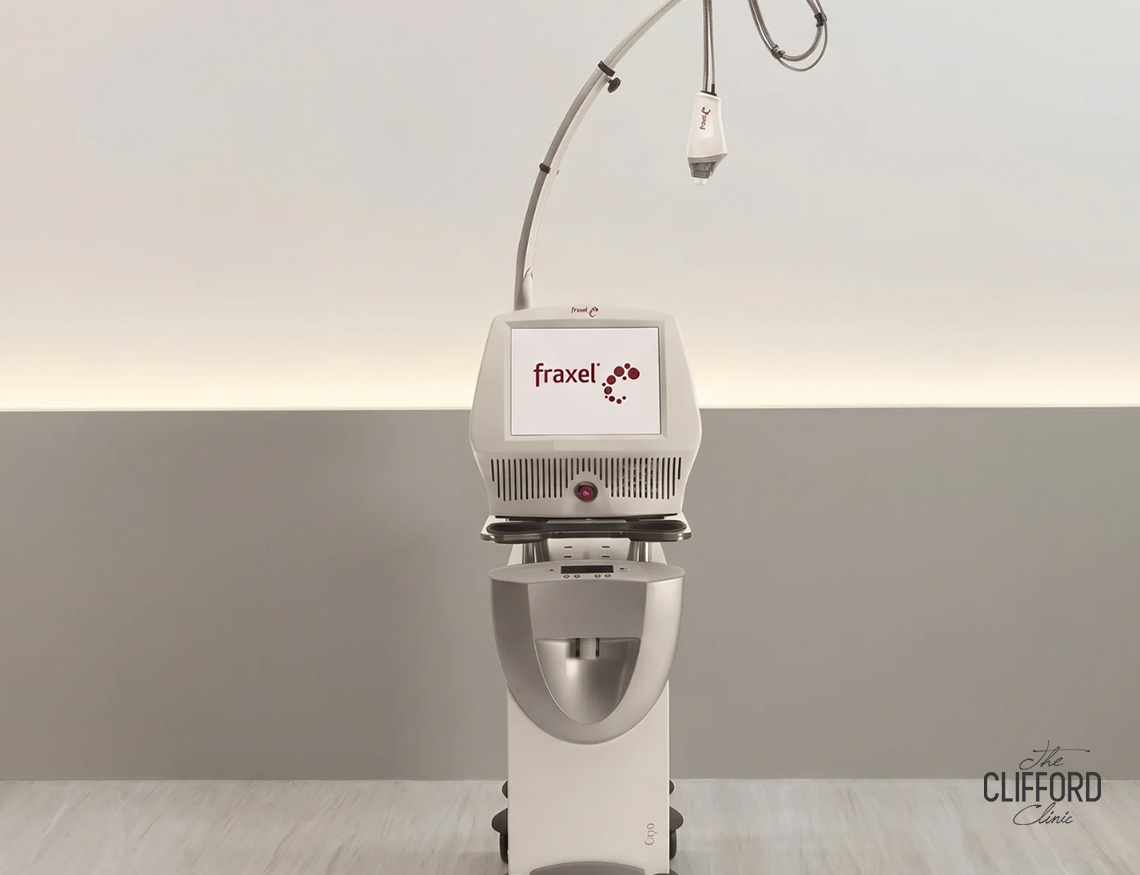
Melasma is treated cautiously and rarely with a single tool. Low-energy 1064 nm toning reduces the pigment with little heat, while a 595 nm wavelength is useful because it also targets the small dermal blood vessels that keep melasma active. Where the surface is dull or uneven, the non-ablative Fraxel 1927 can refine tone. Each of these sits within a plan led by sun protection and topical treatment, and the energy is kept deliberately gentle, because melasma is the pigment most easily provoked by an aggressive setting.
Frequently asked questions
Can melasma be cured permanently?
No treatment reliably cures melasma permanently. It can be controlled to the point of being barely visible, but the underlying tendency remains and triggers can reactivate it. Treatment plans that incorporate ongoing maintenance are required to sustain results.
Is Pico laser good for melasma?
Used as an adjunct at low-energy settings in stabilised melasma, Pico laser can accelerate clearance. As a standalone or first-line treatment, it carries a significant risk of rebound pigmentation and suboptimal results.
Why does melasma come back after laser?
Because laser removes pigment without changing the overactive melanocytes, hormones, or light exposure that produced it. In the absence of sunscreen and topical therapy, these cells resume pigment production.
What sunscreen is best for melasma?
A tinted SPF 50, PA++++ formulation containing iron oxides, which blocks visible light as well as ultraviolet. Untinted sunscreens leave the visible-light pathway open.
Can heat make melasma worse?
Yes. Heat is an independent trigger, which is relevant in Singapore’s climate. Prolonged outdoor heat, hot yoga and steam rooms can all aggravate melasma even when sun protection is adequate.
How many sessions are needed for melasma?
Where toning is appropriate, courses often run monthly over several months alongside topicals, followed by maintenance. Session counts are individual and reviewed against progress photos.
Building a Durable Melasma Treatment Plan
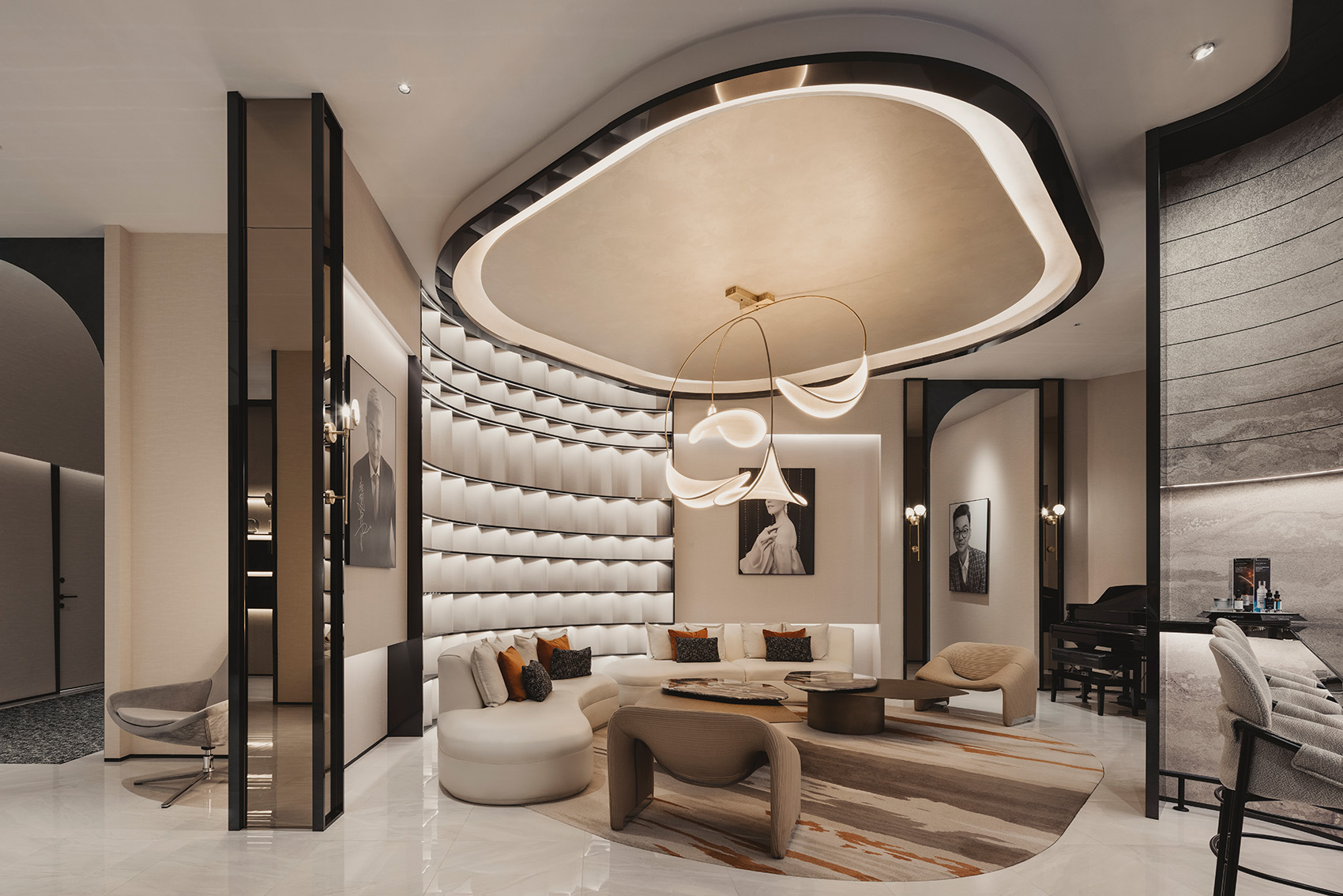
Melasma responds to steady, consistent management rather than quick fixes. For a diagnosis and a staged plan, see our pigmentation treatment in Singapore overview or book at The Clifford Clinic, 50 Raffles Place, #01-01 Singapore Land Tower. Call (65) 6532 2400 or WhatsApp (65) 8318 6332.
Further reading: AAD Melasma overview and DermNet Melasma.
References
- Efficacy and safety of picosecond laser for the treatment of melasma, a systematic review and meta-analysis. Lasers in Medical Science, 2023. https://pubmed.ncbi.nlm.nih.gov/36897459.
- A systematic review of picosecond laser in dermatology, evidence and recommendations. Lasers in Surgery and Medicine, 2021. https://onlinelibrary.wiley.com/doi/10.1002/lsm.23244.
- American Academy of Dermatology, melasma overview. https://www.aad.org/public/diseases/a-z/melasma-overview.
- DermNet, melasma. https://dermnetnz.org/topics/melasma.
- Characteristics of dermal vascularity in melasma and solar lentigo. Photodermatology, Photoimmunology and Photomedicine, 2024. https://onlinelibrary.wiley.com/doi/10.1111/phpp.12953.

Author Bio
Dr Gerard Ee

Dr Gerard Ee is the Medical Director of The Clifford Clinic in Singapore. He earned his medical degree from St George's University of London and built his surgical experience across the Singapore General Hospital, National University Hospital, and Mount Sinai Hospital in New York. He holds Membership of the Royal College of Surgeons (Edinburgh) and a Postgraduate Diploma in Dermatology (Cardiff), and is fully accredited in aesthetic procedures including botulinum toxin, fillers, lasers, and light therapies. A strong advocate of minimally invasive, natural-looking results, Dr Ee has published in several medical and scientific journals and presented his research in cities including Taipei, Las Vegas, and London.
See all posts by Dr Gerard Ee »