
Secret RF, Treating Active Acne and Scars Together
Written by Dr Bernard Ong. Medically reviewed by Dr Gerard Ee. Dr Gerard Ee (MBBS, MRCS, Diploma in Practical Dermatology, Cardiff) is the Founder and Medical Director of The Clifford Clinic, with more than 14 years of experience treating acne, and among the first doctors in Singapore to use AGNES and AviClear. This article reflects the clinical approach of The Clifford Clinic, and is for general education only. It does not replace a personal consultation. Last reviewed July 2026.
One of the firmest rules in acne medicine is that active acne is treated before scars, because remodelling a surface that continues to break out allows new scars to replace those just treated. Secret RF is the notable exception to that rule. In selected cases it can address active acne and existing scarring within the same course, which changes the sequencing for patients who would otherwise face two separate treatment phases spread across many months. This guide explains the mechanism, the patients it suits, and where it sits among the other scar tools.
Summary
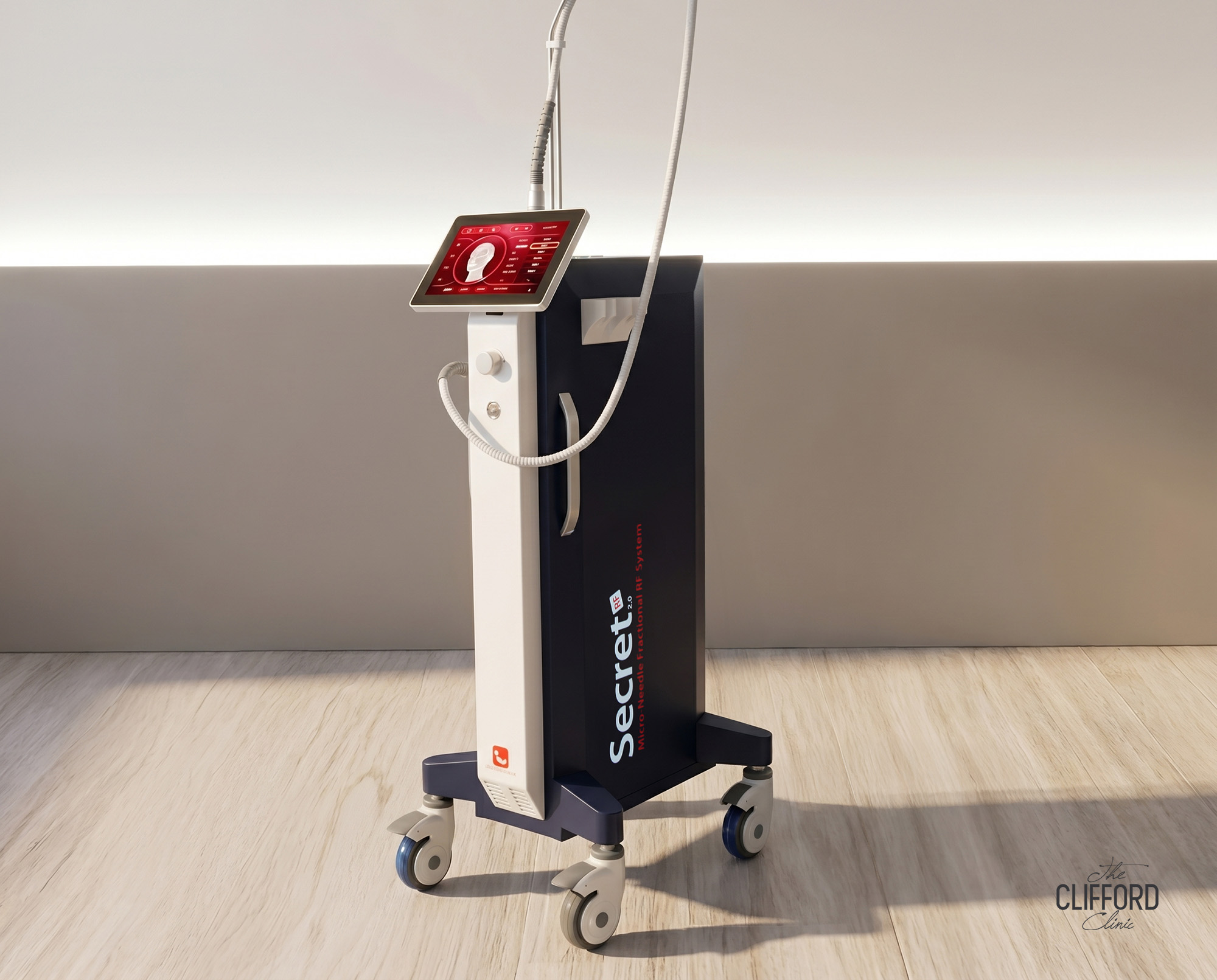
Secret RF is a radiofrequency microneedling device that delivers energy at a controlled depth within the skin. The energy that remodels scar tissue also reaches the sebaceous glands, so a single treatment can improve active acne and atrophic scarring concurrently. It is suited to patients who present with both problems simultaneously, particularly where waiting for full acne control before beginning scar work would impose a long delay. It does not replace acne-specific treatment where acne is severe, and scar type still determines whether other tools are required alongside.
Assessment before treatment
The determining question is whether the patient genuinely presents with both problems in a proportion that justifies combining them. Severe active cystic acne with early marks is treated for the acne alone in the first instance. Modest ongoing breakouts alongside established boxcar and rolling scars is the presentation in which the combined approach is appropriate. Scar types are mapped at this stage, since ice pick scars require focal acid treatment and tethered rolling scars require subcision, and the residual acne is graded to determine whether medical treatment should run in parallel.
How Secret RF works
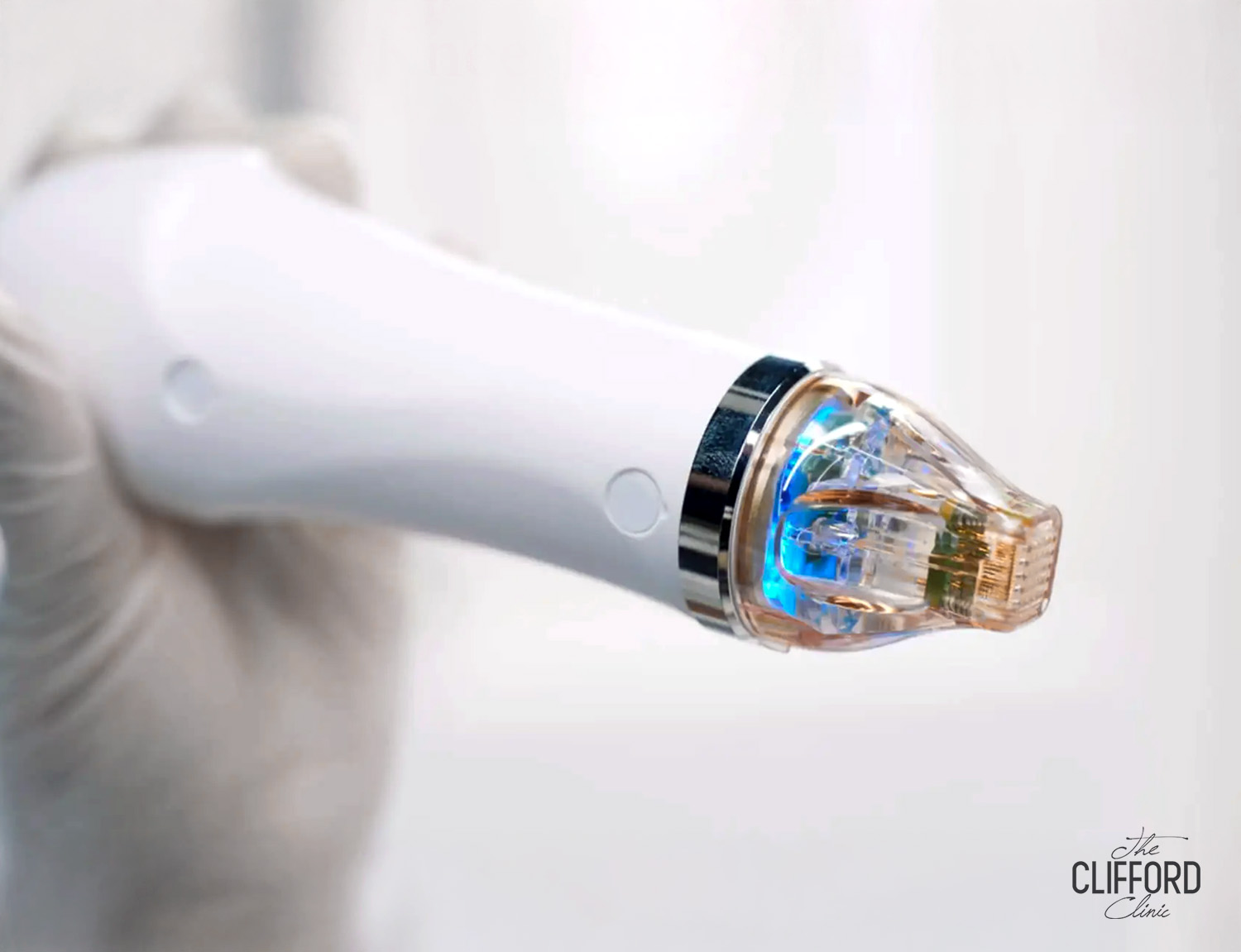
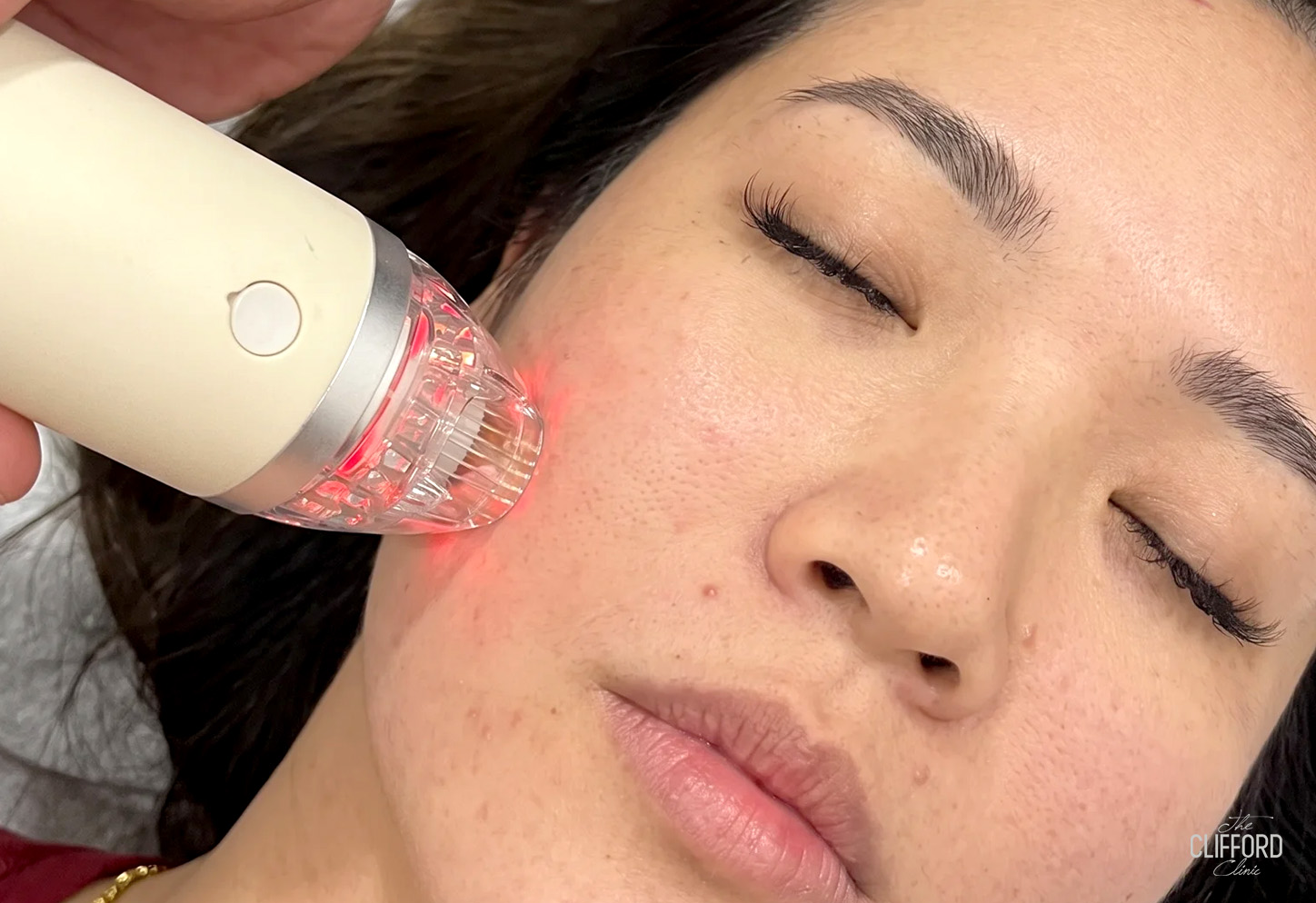
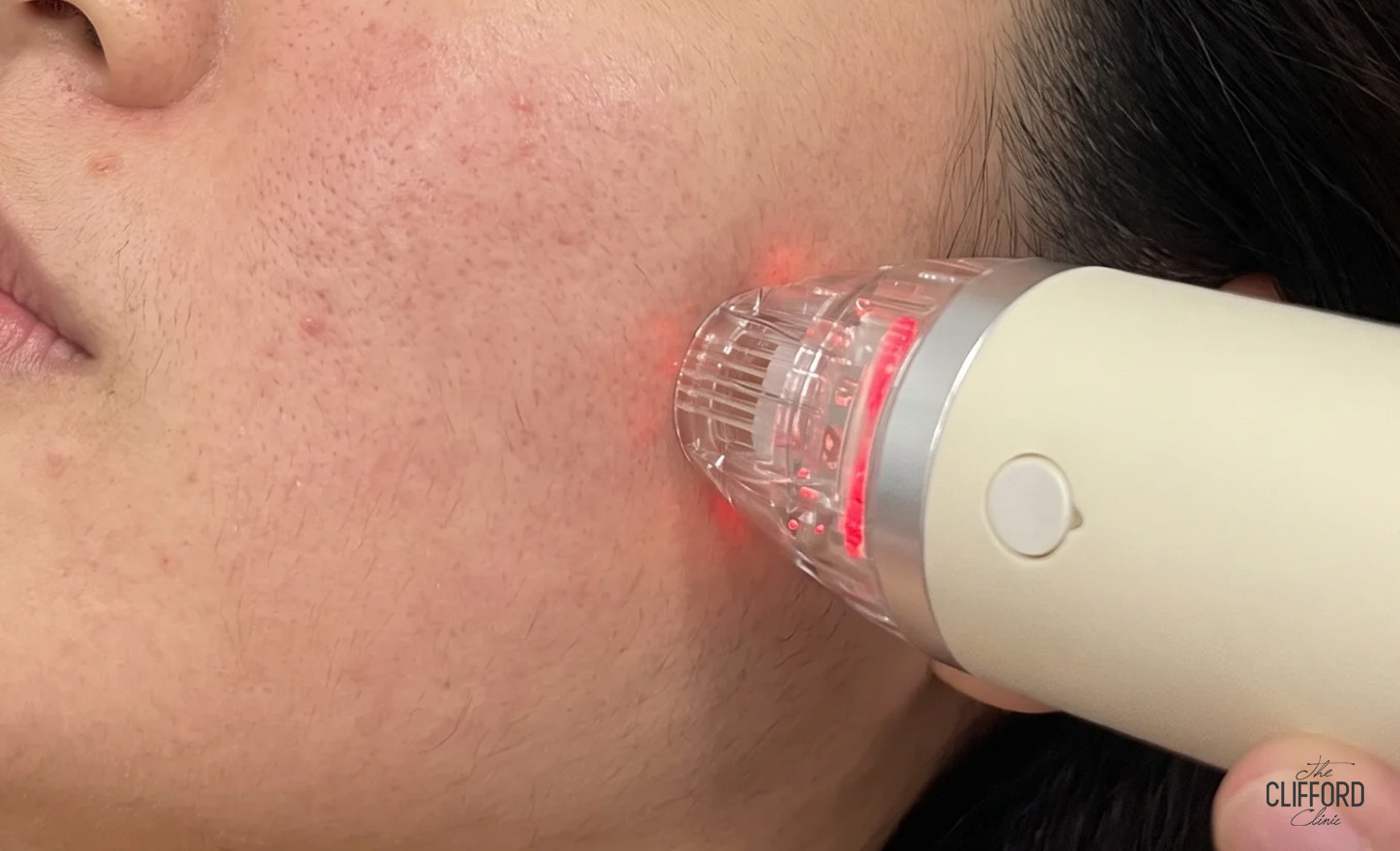
Insulated microneedles pass through the skin surface and deliver radiofrequency energy at a selected depth, so heat is generated within the dermis while the epidermis is comparatively protected. In scar treatment that controlled thermal injury stimulates collagen remodelling, which lifts depressed scars gradually over the following months. Because the energy is delivered at depth and the sebaceous glands lie within that zone, the same treatment can reduce gland activity and follicular inflammation, which is the mechanism underlying its effect on active acne. Adjustable depth is the property that allows one device to serve both purposes.
Why Sequencing Matters and Why Secret RF Differs
Acne is ordinarily controlled before scar work is begun, because inflammation actively generates new scars, and remodelling collagen in a face that continues to sustain fresh damage yields poor value and unreliable results. Secret RF addresses part of that objection by acting on the acne process itself while remodelling proceeds. This does not, however, permit active disease to be disregarded on the strength of that mechanism alone. Where acne is severe, it is still treated in its own right, and Secret RF forms part of a plan rather than a substitute for one. The exception applies to selected cases, not to every patient who would prefer to omit a step.
Where it fits alongside other scar treatments
Scar type still governs which treatment is selected, whatever device is used to deliver it. Ice pick scars respond to focal acid application rather than to energy delivered across a field. Tethered rolling scars require release of their fibrous bands before any surface or dermal energy can lift them. Boxcar scars and generalised textural change are the indications in which radiofrequency microneedling performs well, alongside fractional resurfacing. Most faces carry a mixture of scar types, so Secret RF typically forms one component of a staged plan rather than the entire answer, and the combination is set out at the mapping stage.
When Secret RF is not recommended
It is not used as the sole treatment for severe nodulocystic acne, which requires decisive acne-specific management. It is not used in place of subcision for predominantly tethered rolling scars, nor in place of focal acid treatment for ice pick scars. It is approached cautiously where active infection is present, and pigmentation risk is discussed carefully in darker skin tones, although delivery of energy at depth with surface protection is one reason radiofrequency microneedling is often preferred in these patients over ablative resurfacing.
Common misconceptions
The commonest misconception is the assumption that because one device addresses both problems, sequencing ceases to matter, and that scar work may be started while severe acne remains uncontrolled. A second is the expectation that a single modality will address every scar type on a mixed face. A third is assessment of results too early, since collagen remodelling continues for months after the final session and an assessment at six weeks understates the eventual outcome. A fourth is neglect of sun protection afterwards, which determines pigment outcomes in this climate, where ultraviolet exposure is high throughout the year.
What the Evidence Shows
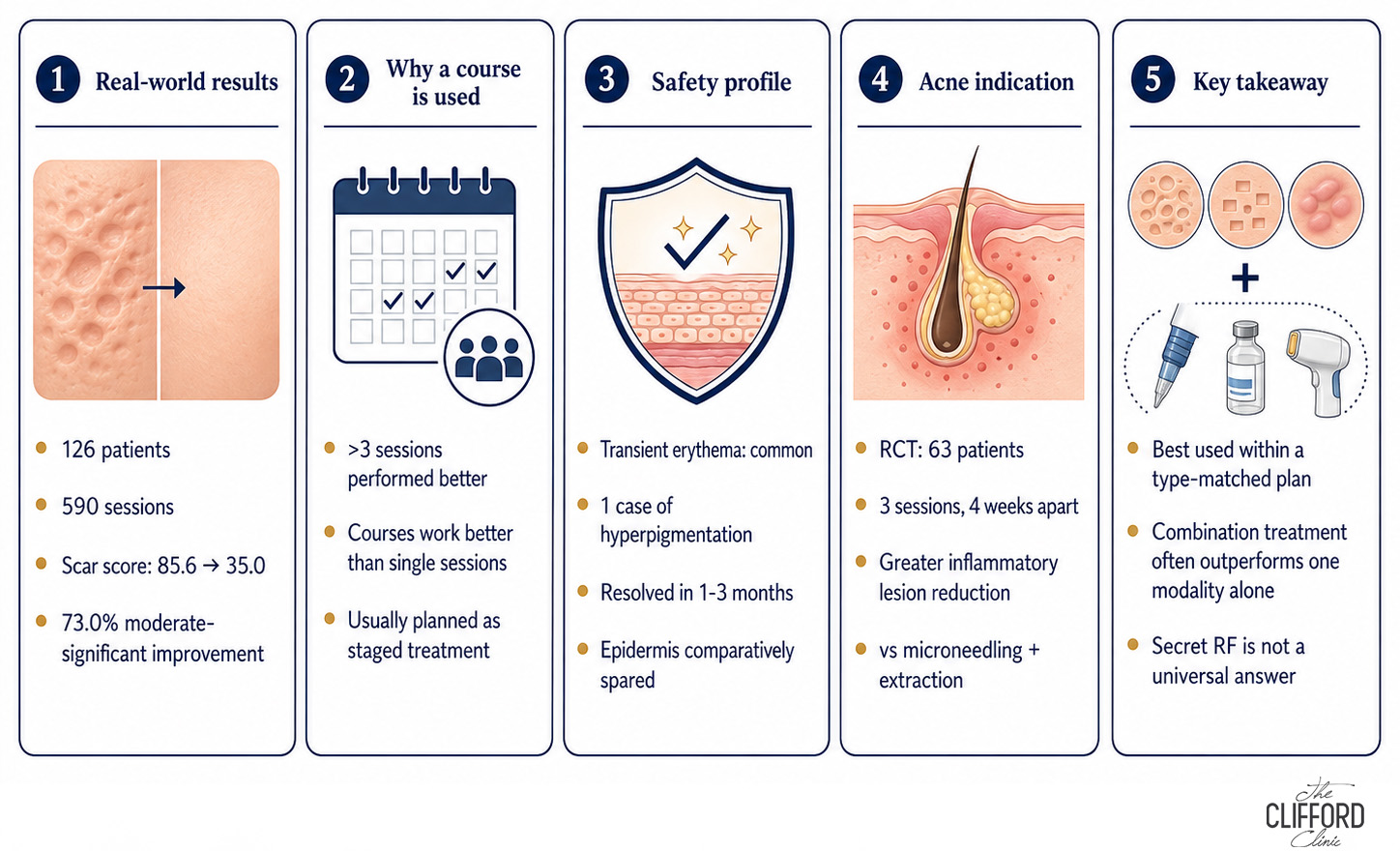
Radiofrequency microneedling has been evaluated for atrophic acne scarring in a real-world study of 126 patients across 590 treatment sessions, in which mean scar severity scores fell from 85.6 before treatment to 35.0 afterwards, and 73.0 per cent of patients achieved moderate to significant improvement. The same study found that patients receiving more than three sessions did better than those receiving three or fewer, which is the basis for treating in a course rather than singly. Transient erythema occurred in all patients and a single case of hyperpigmentation resolved within one to three months, a safety profile consistent with the epidermis being comparatively spared. For the acne indication, a randomised controlled trial of 63 patients with moderate to severe facial acne compared three sessions of sebaceous gland electrothermolysis at four-week intervals against microneedling with extraction, and found a significantly greater reduction in inflammatory lesions in the radiofrequency group at twelve weeks. The scar literature also consistently shows that combined, type-matched approaches outperform any single modality used alone, which is why Secret RF is used within a plan rather than as a universal answer.
Realistic Expectations
Treatment is delivered as a course of sessions spaced weeks apart, with redness and mild swelling for a day or two after each. Scar improvement is judged months after the final session, and the realistic outcome is a meaningful reduction in depth and shadowing rather than erasure. Where active acne forms part of the picture, it can be expected to settle alongside, supported by medical skincare and any acne-specific treatment running in parallel.
When to seek assessment
Assessment is warranted for patients who have both active acne and established scarring and have been advised that they must wait months before the scars can be addressed. That advice is right in many cases, but not all, and proper mapping will establish which situation applies.
Insulated versus non-insulated needles
Not all radiofrequency microneedling is equivalent, and the principal distinction is whether the needles are insulated. Insulated needles deliver energy only from the tip, concentrating heat at a selected depth while the shaft and the epidermis above are protected. Non-insulated needles deliver energy along their entire length, which distributes heat through the upper layers as well. For patients prone to pigmentation, and where sparing of the surface is a priority, insulation is a meaningful clinical advantage rather than a marketing distinction.
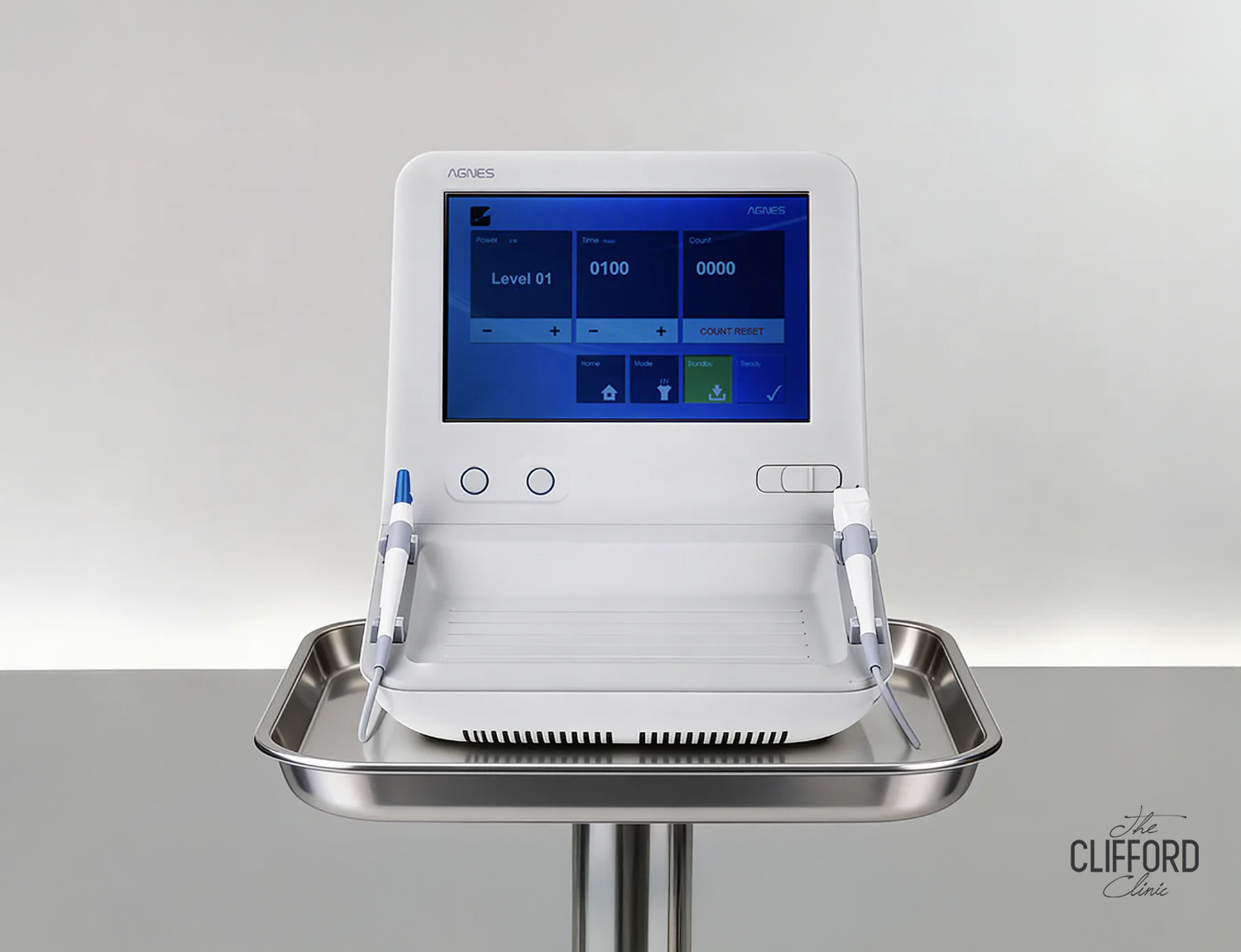
Insulation is also the technical link between scar treatment and acne treatment. Because insulated needles allow the operator to select the depth at which energy lands, the same device can be set to remodel dermal collagen for scarring or to reach the sebaceous glands for active acne. AGNES applies the same insulated principle at the level of an individual gland, so the two treatments are conceptually related despite serving different purposes.
Realistic staging for combined acne and scarring
A practical plan for combined active acne and scarring usually runs in overlapping phases rather than in strict sequence. The acne component is first brought under control with medical skincare and, where required, gland-directed or oral treatment. Secret RF may begin during that phase in selected cases, contributing to both objectives. Once the acne is quiescent, the remaining scar work is completed with whichever type-matched tools the mapping identified, and pigmentation or residual redness is addressed last.
Compression of the whole journey into a few weeks is not a realistic undertaking. Collagen remodelling is slow by nature, and the final assessment sits months after the last session regardless of how efficiently the phases are arranged. The gain from combining is fewer months spent waiting, not an accelerated result.
Frequently asked questions
Can acne scars be treated while acne is still active?
Usually acne is treated first, but Secret RF is an exception that can address active acne and atrophic scarring together in selected cases, because its energy reaches both the scar tissue and the oil glands.
Does Secret RF help with active acne?
Secret RF has a role in appropriate cases, alongside acne-specific treatment where that is required. The radiofrequency energy delivered at depth reduces sebaceous gland activity and follicular inflammation, as well as stimulating collagen remodelling.
Is Secret RF suitable for darker skin?
Radiofrequency microneedling is often preferred in darker skin tones because energy is delivered at depth while the surface is comparatively spared, which reduces pigmentation risk compared with ablative resurfacing.
How many Secret RF sessions are needed for acne scars?
It is delivered as a course of sessions spaced weeks apart. Published series report better outcomes in patients receiving more than three sessions, and the final result is judged months later as collagen continues to remodel.

Patients with active acne and scarring together can ask whether Secret RF is able to address both.
The Clifford Clinic, 50 Raffles Place, Singapore Land Tower. Call (65) 6532 2400 or WhatsApp (65) 8318 6332 to arrange a consultation.
Related reading
- Best Acne Treatment in Singapore
- Acne Treatment at The Clifford Clinic
- Secret RF
- Acne Scar Treatment
- Infini Acne Scar Treatment
- How Our Doctors Choose Your Acne Treatment
Selected References
- HealthHub Singapore. Acne. https://www.healthhub.sg/a-z/diseases-and-conditions/acne.
- American Academy of Dermatology. Guidelines of care for the management of acne vulgaris. https://www.aad.org/member/clinical-quality/guidelines/acne.
- Acne vulgaris. https://dermnetnz.org/topics/acne.
- Ahn GR, Kim JM, Park SJ, Li K, Kim BJ. Selective sebaceous gland electrothermolysis using a single microneedle radiofrequency device for acne patients. Lasers in Surgery and Medicine 2020. https://pubmed.ncbi.nlm.nih.gov/31502662/. Ding Z, et al. Efficacy and safety of fractional microneedle radiofrequency for atrophic acne scars, a real-world clinical study of 126 patients. Lasers in Surgery and Medicine 2024. https://pubmed.ncbi.nlm.nih.gov/38282120/.
- Guidelines of care for the management of acne vulgaris. JAAD. https://www.jaad.org/article/S0190-9622(23)03389-3/fulltext.
- Chen X, Wang S, Yang M, Li L. Chemical peels for acne vulgaris, a systematic review of randomised controlled trials. BMJ Open 2018. https://pubmed.ncbi.nlm.nih.gov/29705755/.
Medical disclaimer: The Clifford Clinic publishes this article as general patient education only. It is not a substitute for an in-person clinical assessment, and the suitability, outcome and risk profile of any treatment differ from patient to patient. Arrange a consultation with one of our doctors before beginning treatment for acne.