




Knee Injections and Viscosupplementation in Singapore
Introduction
Knee pain is a common challenge faced by active, working-age adults in Singapore. Whether it’s climbing the stairs at home, walking the downtown MRT ramps or training for the weekend tennis session, when the knee begins to let you down it affects mobility, quality of life and activity levels. At our Day Surgery orthopaedic centre in Singapore, we specialise in evidence based non surgical treatments like knee injections including hyaluronic acid viscosupplementation. This injection aims to reduce pain, restore function and delay or avoid the need for knee replacement surgery. In this article we explore the role of knee injections and viscosupplementation in Singapore. From how they work, who is suitable, what to expect, how they integrate with rehabilitation and how our orthopaedic research credentials (including numerous peer-reviewed knee-joint publications) elevate outcomes.
What Are Knee Injections & Viscosupplementation?
Knee injections are minimally invasive procedures in which therapeutic substances are delivered directly into the knee joint (intra-articular) to address pain, inflammation, lubrication loss or cartilage damage. Their advantages: low downtime, outpatient setting, targeted delivery and rapid return to activity.
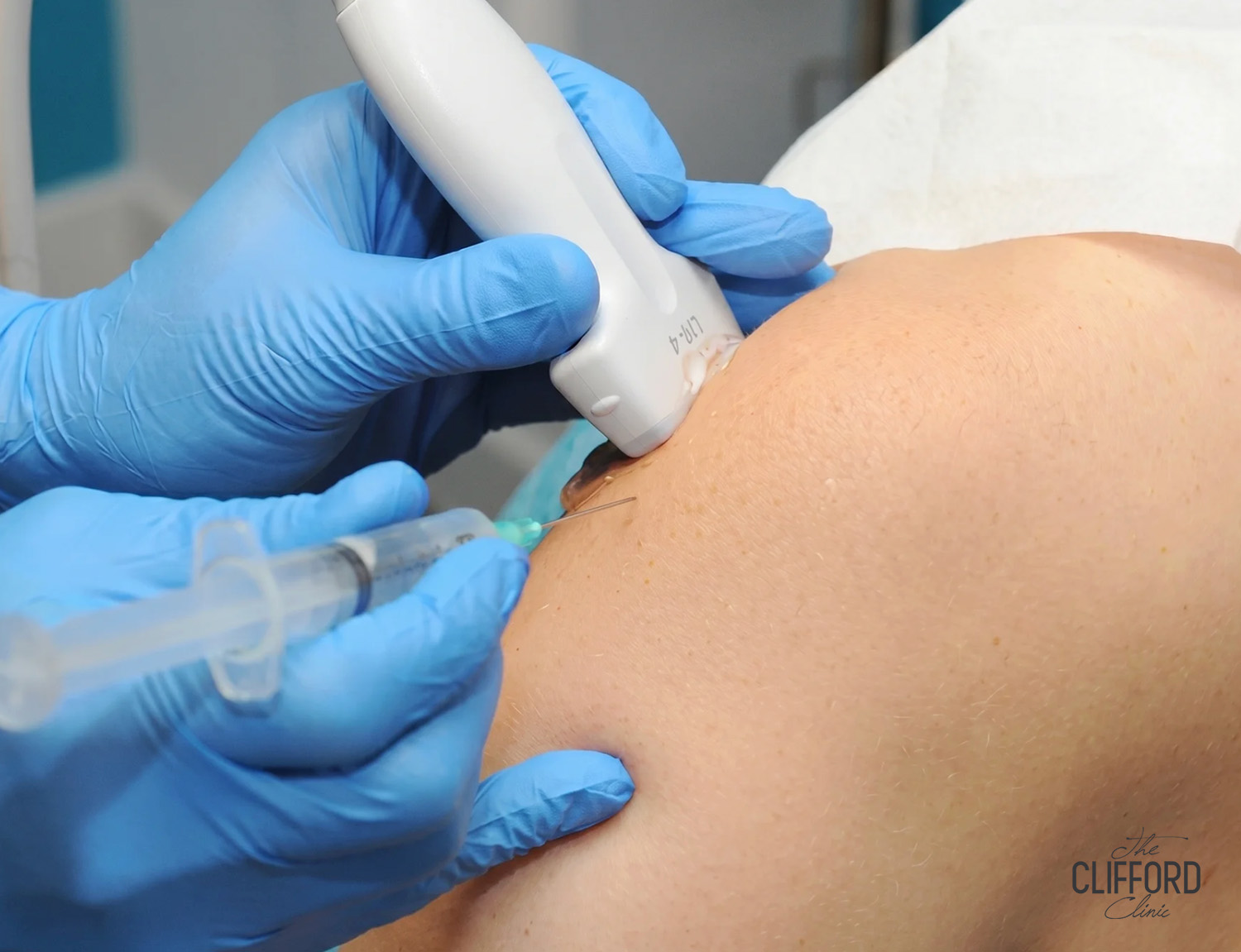
Viscosupplementation refers specifically to injecting a hyaluronic acid (HA)-based product into the knee joint to supplement the degraded synovial fluid in osteoarthritic knees. The synovial fluid in a healthy knee contains hyaluronic acid which acts as a lubricant and shock-absorber. In osteoarthritis the cartilage deteriorates and the synovial fluid becomes less effective; by injecting viscoelastic HA-products the aim is to restore better lubrication, reduce friction, absorb mechanical load and improve joint comfort.
Beyond viscosupplementation, other types of knee injections include:
- Corticosteroid injections: potent anti-inflammatory agents used for flares.
- Platelet-Rich Plasma injections: utilise the patient’s own blood platelets to deliver growth-factors for healing and joint support.
- Stem-cell or regenerative therapies: emerging options aiming at tissue repair rather than simple symptom relief.
In Singapore, knee injections are increasingly offered in orthopaedic and sports-medicine settings as part of a multi-modal strategy combining injection, physical therapy and activity modification.
Why Choose Viscosupplementation & Knee Injections in Singapore?
From our vantage point as an aesthetic physician with a special interest in orthopaedics, owning a MOH Approved Day Surgery clinic (with immediate access to imaging, controlled injection protocols, ultrasound guidance and robust rehab pathways), we identify key advantages:
- Pain relief and improved function
Especially for mild to moderate osteoarthritis, viscosupplementation can reduce pain, improve range of motion and allow patients to re-engage in walking, stairs, sports and daily life with less discomfort. - Delay or avoid knee replacement
For patients who are not yet ready for surgery, injections offer a bridge: maintain joint function, slow symptomatic decline, buy time. Many in Singapore seek this option to remain active and defer prosthetic surgery. - Minimal downtime
Because the procedure is outpatient, low-risk and quick (typically done under local anaesthetic), patients can resume many of their normal activities soon after the injection (with appropriate advice). - Personalised approach anchored in research
At our centre we apply the same rigour used in our published orthopaedic knee-joint research: patient selection, imaging review, injection accuracy (often ultrasound-guided), post-injection rehab protocols and outcome tracking. This elevates results. - Integration with Singapore environment & lifestyle
In Singapore’s multi-ethnic, multi-sport, active-living population, knee injections provide a realistic, pragmatic tool. Whether your goal is office work plus gym, weekend tennis, or caring for children/grandchildren, the metrics matter: pain reduction, stair-climbing ability, ability to walk the city. - Able to claim insurance
We are able to claim Medisave and Hospital Insurance as procedure can be done in a Day Surgery under sterile conditions.

Who Is a Good Candidate?
Ideal candidates for viscosupplementation and knee injections are those who:
- Have mild to moderate osteoarthritis (e.g., joint space narrowing, some cartilage preservation) rather than “bone-on-bone” severe degeneration.
- Have not achieved adequate relief from conservative measures (weight-management, exercise/physiotherapy, NSAIDs) and are seeking alternatives before surgery.
- Are motivated to engage in rehabilitation post-injection (strengthening quads/hips, reducing load, modifying biomechanics) so the injection outcome is maximised.
- Wish to maintain or restore function and activity levels (rather than simply “wait for surgery”) and accept realistic outcomes
- Are suitable medically (no active knee infection, good skin around injection site, no known allergy to HA product).
Candidates who are less likely to respond: knees with complete cartilage loss and severe deformity, major instability, inflammatory arthritis (e.g., rheumatoid), or those unwilling/unable to follow rehab.
How the Procedure Works — What to Expect
Pre-Procedure
- A detailed assessment: medical history, physical exam, imaging (X-ray ± MRI) to grade osteoarthritis, check alignment, meniscal/ligament status.
- Discuss medications/supplements (e.g., anticoagulants, NSAIDs) and lifestyle (heavy load activities) that may impact the injection outcome.
- Agree on the type of injection (HA viscosupplement vs steroid vs PRP), the number of sessions, costs and expectations.
During the Procedure
- Outpatient in a sterile room; skin cleaned, local anaesthetic applied.
- Needle inserted into the joint cavity (often ultrasound-guided to improve accuracy, especially in narrow joint spaces).
- If needed, aspirate joint fluid (effusion) then inject the product.
- The whole process takes about 5-10 minutes; minimal discomfort. Patients often describe mild pressure, fullness.
Post-Procedure Recovery
- Expect some mild soreness, swelling or feeling “full” in the knee for 24-48 hrs. Ice, rest for that period.
- Resume light activities (walking) soon after; avoid high-impact exercise for the first 1-2 weeks (or as advised).
- Physical therapy begins (typically within 1 week) focusing on quadriceps/hams/gluteal strengthening, range of motion, gait control and load-modification.
- Follow-up review to track pain, mobility, activity level, and determine whether further injections or alternative plan required.
Timeline of Benefit
- For hyaluronic-acid injections: some patients report improvement at ~4-6 weeks, often continuing through 6-12 months.
- Benefit duration depends on joint health, alignment, body-weight, rehab compliance, activity levels.
- Repeat injections may be considered when symptoms recur.
Integrating Into a Broader Treatment Plan
In our practice we emphasise that an injection is not a stand-alone. To maximise outcomes you should integrate it into a coherent plan:
- Load-Management & Weight Control
Reducing mechanical stress (e.g., losing excess body-weight, avoiding deep knee-bends/squats if alignment compromised) expands the lifespan of the intervention. Weight can be managed with injections using GLP-1 agonist. - Biomechanics & Movement Correction
Address alignment issues (varus/valgus), footwear, gait patterns, knee-in collapse on stairs, single-leg control, especially in Singapore’s stair-rich HDB environments. - Structured Rehabilitation
Post-injection, start a tailored physio regime focusing on:
- Quadriceps strength (leg-press, straight-raise)
- Hip/gluteal strength (posterior chain)
- Hamstring flexibility
- Balance/single-leg control
- Low-impact cardio (swimming, cycling) until high-impact (running, pivoting) resumed.
- Monitoring & Research-Driven Follow-Up
Given our team’s background in orthopaedic research and publications (especially knee joint arthroplasty and joint-preservation topics), we monitor objective metrics: range of motion, validated outcome scores, imaging when indicated. This enables us to tailor next-step decisions (repeat injection, advanced biological therapy, or move to surgery) with data.
Risks, Limitations & Managing Expectations
Risks & Side-Effects
- Injection-site soreness, swelling or redness (common, transient).
- Joint effusion may occur in first 12-24 h with HA injections.
- Rarely: infection (joint sepsis), allergic reaction (especially avian-derived HA), flare reaction (sterile but painful).
- For corticosteroid injections: temporary rise in blood glucose (important in diabetic patients).
Limitations
- It is not a cure for osteoarthritis. It addresses symptoms and joint mechanics, but cannot recreate lost cartilage.
- In advanced disease (severe joint-space loss, major deformity, bone-on-bone contact) the benefit may be limited or short-lived.
- Duration of benefit is variable and depends heavily on rehab, load-management and joint alignment.
Managing Expectations
- Set realistic goals: improved stair use, less pain on walks, more comfortable gym sessions, rather than “completely cured”.
- Clear timeline: e.g., 4-6 weeks for onset of effect, benefits may last 6-12 months, then reassess.
- Emphasise that the injection is a component of a broader strategy (rehab + lifestyle + joint protection).
- If symptoms return or structural problems worsen, transition to next-level options (joint preservation surgery, joint replacement) should not be delayed unnecessarily.
Why Our Clinic Stands Out for Knee Injections & Viscosupplementation in Singapore
- Day-surgery capability: In-house outpatient surgery suite, allowing immediate access to imaging, sterile injection facility, physiotherapy linkage and surgical backup if needed.
- Research-anchored orthopaedic expertise: Our team has published peer-reviewed studies on knee joint alignment, arthroplasty outcomes and joint-preservation concepts — translating that rigor to injection practice.
- Tailored injection protocols: Not a one-size-fits-all. We select the appropriate injection type (HA/PRP/steroid) based on imaging, activity goal, alignment and joint status, and monitor outcomes quantitatively.
- Comprehensive rehab pathway: From day 1 post-injection, we coordinate physiotherapy, strength training, activity re-introduction, gait/movement correction, and reassess at preset milestones.
- Singapore-centric, patient-centric: We understand the Singapore context — multi-generation households, HDB staircases, weekend sports, MRT commutes — and tailor rehabilitation and expectations accordingly.
FAQ – Common Questions Patients Ask
Q: How long before I feel better?
A: With hyaluronic-acid injections most patients notice improvement in 4-6 weeks; some sooner, some later. The full benefit may continue up to 6-12 months.
Q: How often can I have these injections?
A: Depends on the product used, joint condition, response and alignment. Some HA products are injected once; others are a series of 3-5 weekly doses. Your surgeon will recommend frequency based on your case.
Q: I had previous knee surgery — can I still have knee injections?
A: Yes — but it depends on the surgery type, current joint status, presence of implant, alignment etc. A detailed review is needed to determine appropriateness.
Q: Do knee injections affect my ability to travel?
A: Generally no. However, after the injection it’s wise to avoid long periods of immobility (e.g., long-haul flights or extended car rides) for 24-48 h, to reduce swelling risk. Ice and light movement help.
Q: Which is better: HA injection (viscosupplementation) or PRP?
A: It depends on your joint condition and goals. HA is more predictable in mild/moderate osteoarthritis for lubrication and shock absorption; PRP is more biologic, variable in outcome, and suited when you are seeking tissue-healing potential rather than just symptom relief. Your specialist will advise which is most suitable for you.
Conclusion
For individuals in Singapore dealing with knee pain from osteoarthritis or joint degeneration, knee injections, especially viscosupplementation with hyaluronic acid represent a viable, minimally invasive treatment option. When delivered within a well-structured clinical environment (day-surgery capable, research-based, rehab-integrated) and combined with lifestyle/rehabilitation efforts, they can meaningfully reduce pain, improve mobility and delay surgery.
As a Day Surgery clinic owner that houses a host of team of specialist from orthopaedic surgeons, sports physicians and plastic surgeons that are experienced in knee joint surgery, trauma, sports injuries and joint preservation, I encourage patients to view injections not as a quick permanent fix but as a strategic component of a joint-care plan. From a proper assessment to injection to rehab and lifestyle optimisation. If you’re experiencing knee pain that limits your activity, prevents you from stairs, compromises your weekend sport or slows your walk, now is an appropriate time to explore whether knee injections and viscosupplementation in Singapore are right for you.

Author Bio
Dr Gerard Ee

Dr Gerard Ee is the Medical Director of The Clifford Clinic in Singapore. He earned his medical degree from St George's University of London and built his surgical experience across the Singapore General Hospital, National University Hospital, and Mount Sinai Hospital in New York. He holds Membership of the Royal College of Surgeons (Edinburgh) and a Postgraduate Diploma in Dermatology (Cardiff), and is fully accredited in aesthetic procedures including botulinum toxin, fillers, lasers, and light therapies. A strong advocate of minimally invasive, natural-looking results, Dr Ee has published in several medical and scientific journals and presented his research in cities including Taipei, Las Vegas, and London.
See all posts by Dr Gerard Ee »