
Keloid vs Hypertrophic Scar, How to Tell the Difference and Why It Matters
The two conditions look similar early on yet behave very differently, and the right treatment plan depends on getting the diagnosis right. This guide explains how doctors distinguish the two, and it sits within our wider keloid scar treatment Singapore resource.
The Main Difference
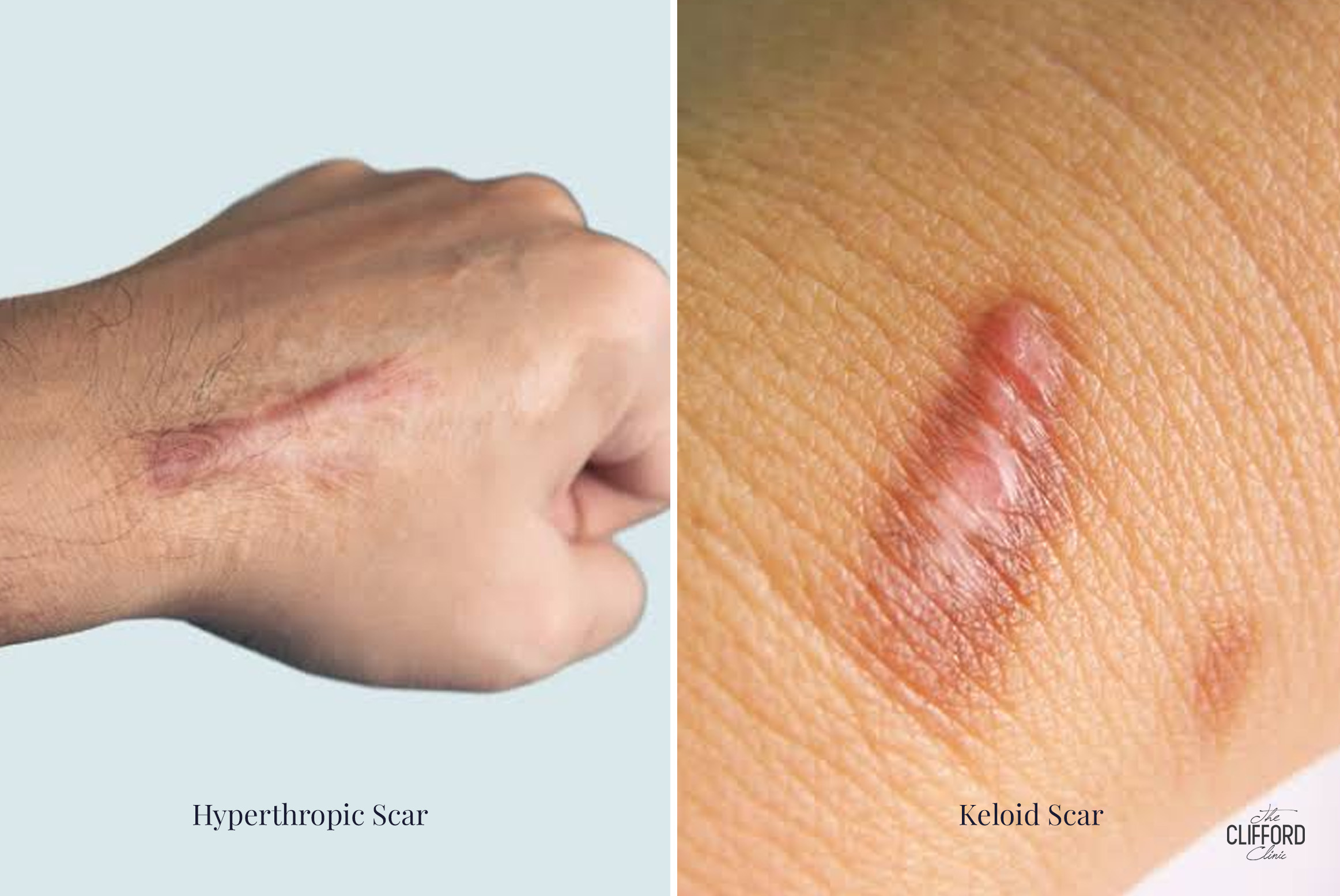
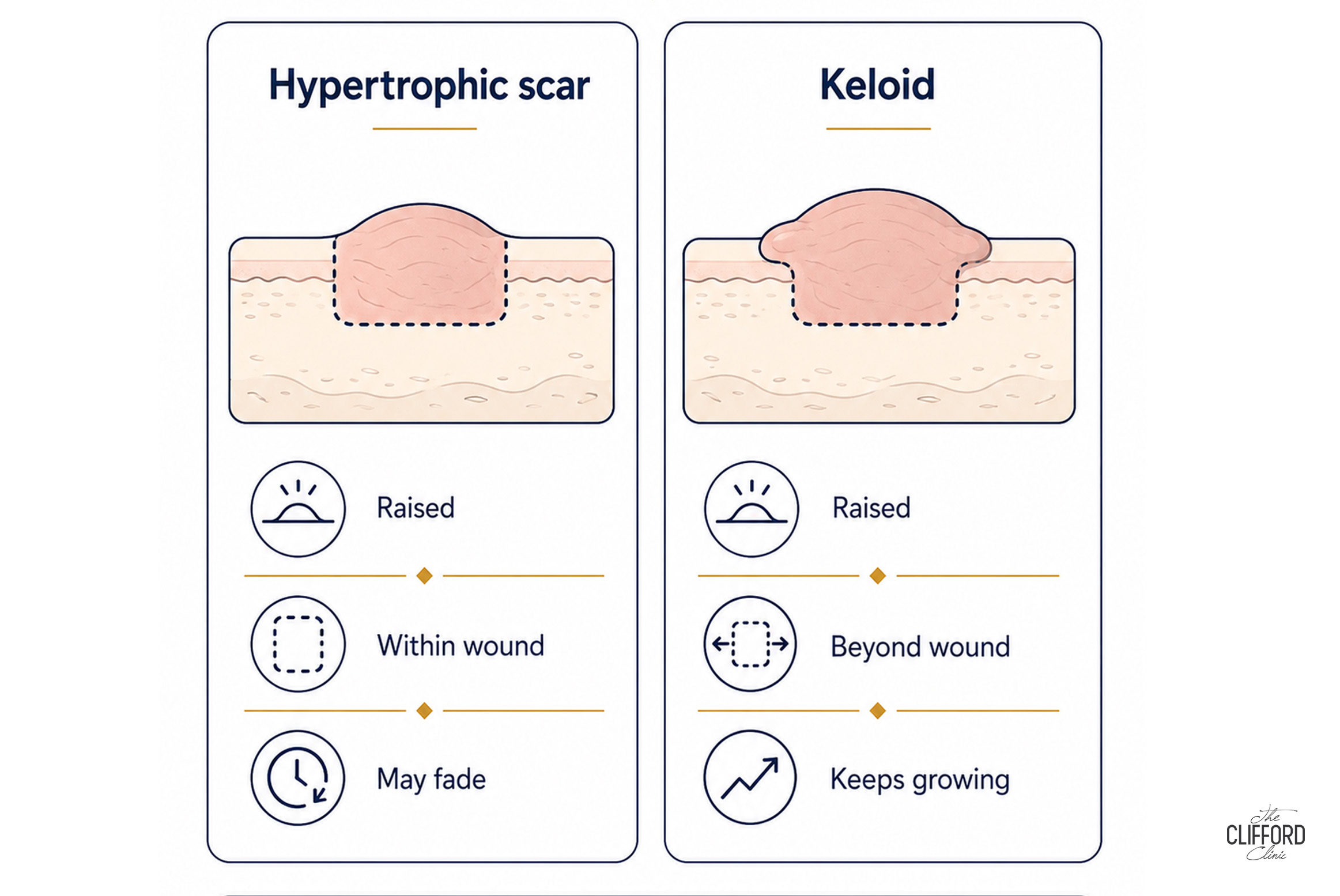
A hypertrophic scar is a raised scar that stays within the boundaries of the original wound. A keloid grows beyond those boundaries, invading surrounding healthy skin. That boundary rule is the single most reliable distinguishing feature. A hypertrophic scar often fades over time, while a keloid keeps building [1][2].
Why Both Scars Form
Both are forms of excessive scarring. When skin is injured, the body produces collagen to repair the wound. In normal healing, collagen production winds down once the wound closes. In both keloids and hypertrophic scars, that control fails and collagen keeps accumulating [1][2]. The difference lies in how far, and for how long, the overgrowth continues. A hypertrophic scar eventually reaches a limit and often settles, while a keloid keeps recruiting surrounding skin.
How to Tell Them Apart
Boundaries
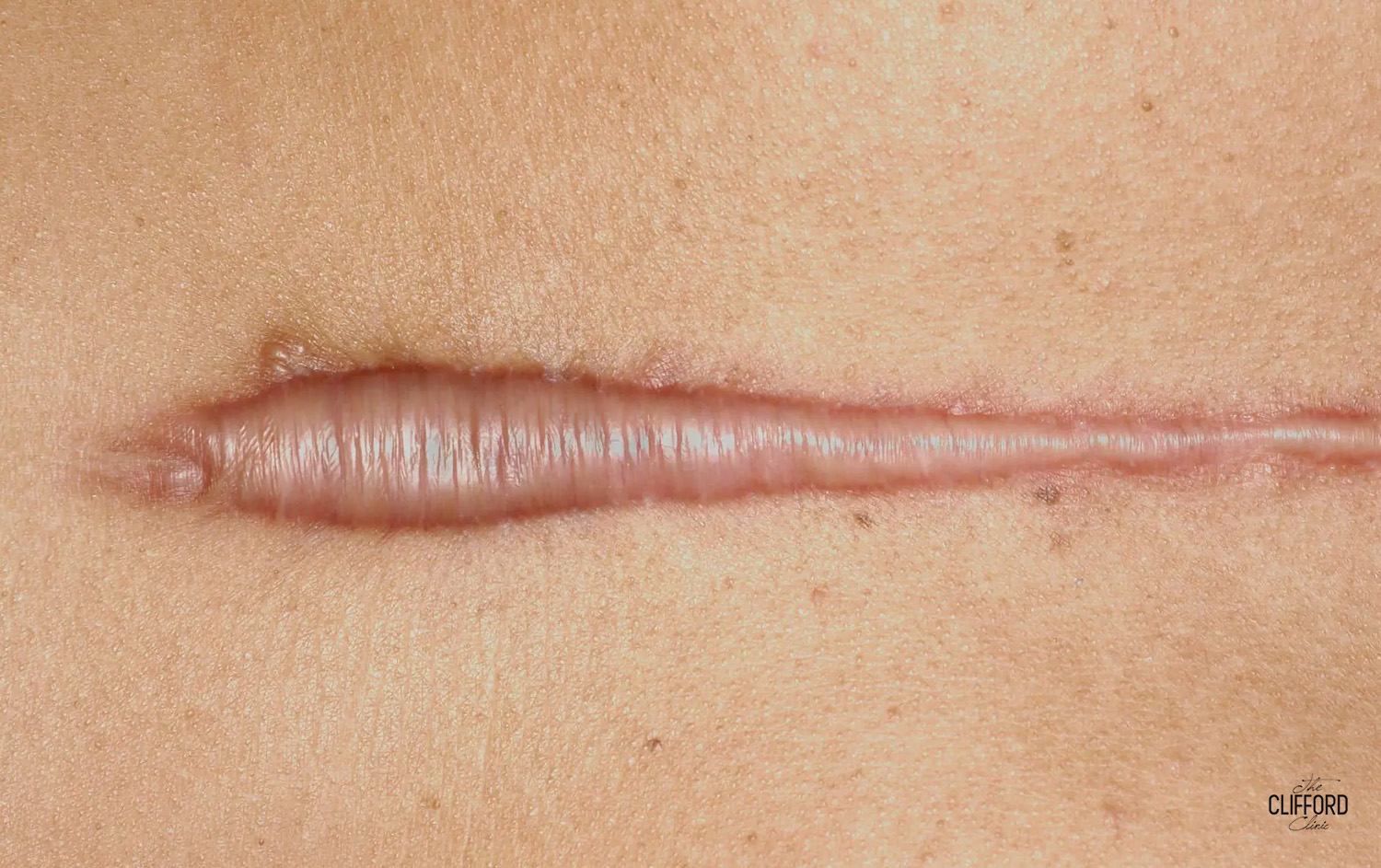
The hypertrophic scar respects the wound’s borders, so it may be thick and raised but its footprint matches the original injury. The keloid extends outward, sometimes in a claw like or mushrooming pattern that clearly overruns the original wound.
Timing
Hypertrophic scars typically develop within the first month or two after the injury. Keloids are slower and can appear months, a year, or even longer after the wound, sometimes after an injury so minor you cannot recall it.
Natural Course
Hypertrophic scars often improve spontaneously, flattening and fading over time even without treatment. Keloids do not go away on their own, and many continue enlarging slowly for years.
Symptoms
Both can itch and feel tight. Keloids are more often persistently itchy, tender or painful, and the discomfort tends to continue as long as the keloid keeps growing. If your raised scar is currently itchy, painful or growing, read what to do about an active keloid.
Who Gets Them
Hypertrophic scars affect everyone roughly equally. Keloids show strong patterns, being markedly more common in darker skin tones, in younger people, and in those with a family history. In Singapore, keloid risk is a routine consideration.
Location
Hypertrophic scars form wherever wounds heal under tension. Keloids favour the earlobes, chest, shoulders, upper back and jawline. High tension sites like the chest and shoulders produce the most aggressive keloids and the highest relapse rates, while the earlobe tends to respond better [12]. A raised scar on the earlobe after a piercing that grows beyond the piercing site is a keloid until proven otherwise, covered in our ear keloid removal guide.
Quick Comparison
For boundaries, hypertrophic stays within the wound while a keloid grows beyond it. For onset, hypertrophic appears within weeks while a keloid takes months or longer. For natural course, hypertrophic often improves over time while a keloid persists and may keep growing. For recurrence after treatment, hypertrophic is low to moderate while keloids are high. For typical sites, hypertrophic appears anywhere under tension while keloids favour ears, chest, shoulders, upper back and jaw. For risk profile, hypertrophic affects all skin types similarly while keloids disproportionately affect darker skin and those with family history.
Why the Diagnosis Changes Your Treatment
For hypertrophic scars, conservative measures often suffice, including silicone, pressure, time, and sometimes a short course of steroid injections. Because they tend to improve naturally, aggressive intervention is rarely justified early.
Keloids, by contrast, do not improve on their own, respond less predictably, and recur at high rates. Surgical excision alone almost always recurs [2], so surgery is close to contraindicated as a standalone keloid treatment and must be paired with adjuvant therapy such as steroid injections, radiotherapy, pressure or silicone. Keloids usually need combination therapy and a long-term recurrence monitoring plan, covered in why keloids come back after surgery.
Misdiagnosing a keloid as a hypertrophic scar is the costlier error. It leads to under treatment, false reassurance, and sometimes surgical excision that triggers a larger keloid than the patient started with.
Can a Doctor Always Tell Immediately?
Usually, but not always. An early keloid that has not yet outgrown the wound boundary can look identical to a hypertrophic scar. In these cases, doctors weigh supporting evidence such as skin tone, family history, location, the scar’s age, and whether it is still actively growing. Occasionally a period of observation or a biopsy is appropriate, which is one reason professional assessment beats self diagnosis.
When to See a Doctor
Seek assessment if your raised scar is growing beyond the original wound, is still enlarging after several months, itches or hurts persistently, or sits in a high risk site such as the earlobe, chest or shoulder, especially with darker skin or a family history. Early keloids are easier to treat than established ones, and newer lesions respond better to injection therapy [2].
Frequently Asked Questions
Can a hypertrophic scar turn into a keloid?
No, they are distinct processes. However, an early keloid can be mistaken for a hypertrophic scar before it visibly outgrows the wound boundary, which can look like a change. Persistent raised scars should be assessed.
Do hypertrophic scars go away on their own?
Often, yes. Many flatten and fade substantially over time. Keloids do not resolve without treatment.
Which is harder to treat, a keloid or a hypertrophic scar?
Keloids. They respond less predictably and recur far more often, which is why they usually need combination therapy and follow up.
Is a piercing bump a keloid?
Not necessarily. Many piercing bumps are irritation bumps or granulomas that settle with aftercare. A true keloid keeps growing beyond the piercing site and does not resolve on its own.
The Clifford Clinic Approach

Over more than 16 years of treating keloid scars, The Clifford Clinic has found that keloids treated with steroid injections alone almost always come back. Our signature approach combines V Beam pulsed dye laser, botulinum toxin and steroid injections, supported by silicone. These target different parts of the keloid at once to prevent recurrence. V Beam is central and rarely offered elsewhere, and it is safe on darker skin tones. We never remove a keloid by surgery alone, since that reliably brings it back. For large or stubborn keloids, surgery combined with radiotherapy works well. We treat young keloids early and choose pigment safe, skin tone aware methods from the start. You can read more about our clinic at cliffordclinic.com.
Medically reviewed content. This article is educational and does not replace a consultation. For an accurate diagnosis of a raised scar, contact The Clifford Clinic, Singapore.
Related Guides
Keloid scar treatment in Singapore, the complete guide
Steroid injections for keloids
Laser treatment for keloid scars
Ear keloid removal in Singapore
References
- Laser Therapy of Traumatic and Surgical Scars and an Algorithm for Their Treatment. Lasers in Surgery and Medicine. 2020.
- Management of Keloids and Hypertrophic Scars. American Family Physician. 2024.
- Laser Therapy for Treating Hypertrophic and Keloid Scars. The Cochrane Database of Systematic Reviews. 2022.
- Treatment Response of Keloidal and Hypertrophic Sternotomy Scars, Comparison Among Intralesional Corticosteroid, 5 Fluorouracil and 585 nm Pulsed Dye Laser. Archives of Dermatology. 2002.
- Efficacy and Safety of Glucocorticoid Based Therapies in the Management of Keloids, a Systematic Review and Meta Analysis. Frontiers in Medicine. 2025.
- Comparing Combination Triamcinolone Acetonide and 5 Fluorouracil With Monotherapy in the Treatment of Hypertrophic Scars. Plastic and Reconstructive Surgery. 2024.

Author Bio
Dr Gerard Ee

Dr Gerard Ee is the Medical Director of The Clifford Clinic in Singapore. He earned his medical degree from St George's University of London and built his surgical experience across the Singapore General Hospital, National University Hospital, and Mount Sinai Hospital in New York. He holds Membership of the Royal College of Surgeons (Edinburgh) and a Postgraduate Diploma in Dermatology (Cardiff), and is fully accredited in aesthetic procedures including botulinum toxin, fillers, lasers, and light therapies. A strong advocate of minimally invasive, natural-looking results, Dr Ee has published in several medical and scientific journals and presented his research in cities including Taipei, Las Vegas, and London.
See all posts by Dr Gerard Ee »