
The HBOT In Singapore: Decision Guide, Pre-Booking Checklist and Self-Assessment
Medically reviewed by The Clifford Clinic clinical team
Most patients who are keen Hyperbaric Oxygen Therapy (HBOT) have a goal in mind but only partial understanding of what HBOT entails. This guide is designed to close the gap between the two to help you define your goal more precisely, check your suitability for the treatment, ask your provider the right questions, and decide whether HBOT is the right next step for you.
To make this a more comfortable read, we have structured this guide like a working checklist rather than an article that you need to read once. Please use this guide alongside our complete guide to hyperbaric oxygen therapy in Singapore and the HBOT evidence grading guide.
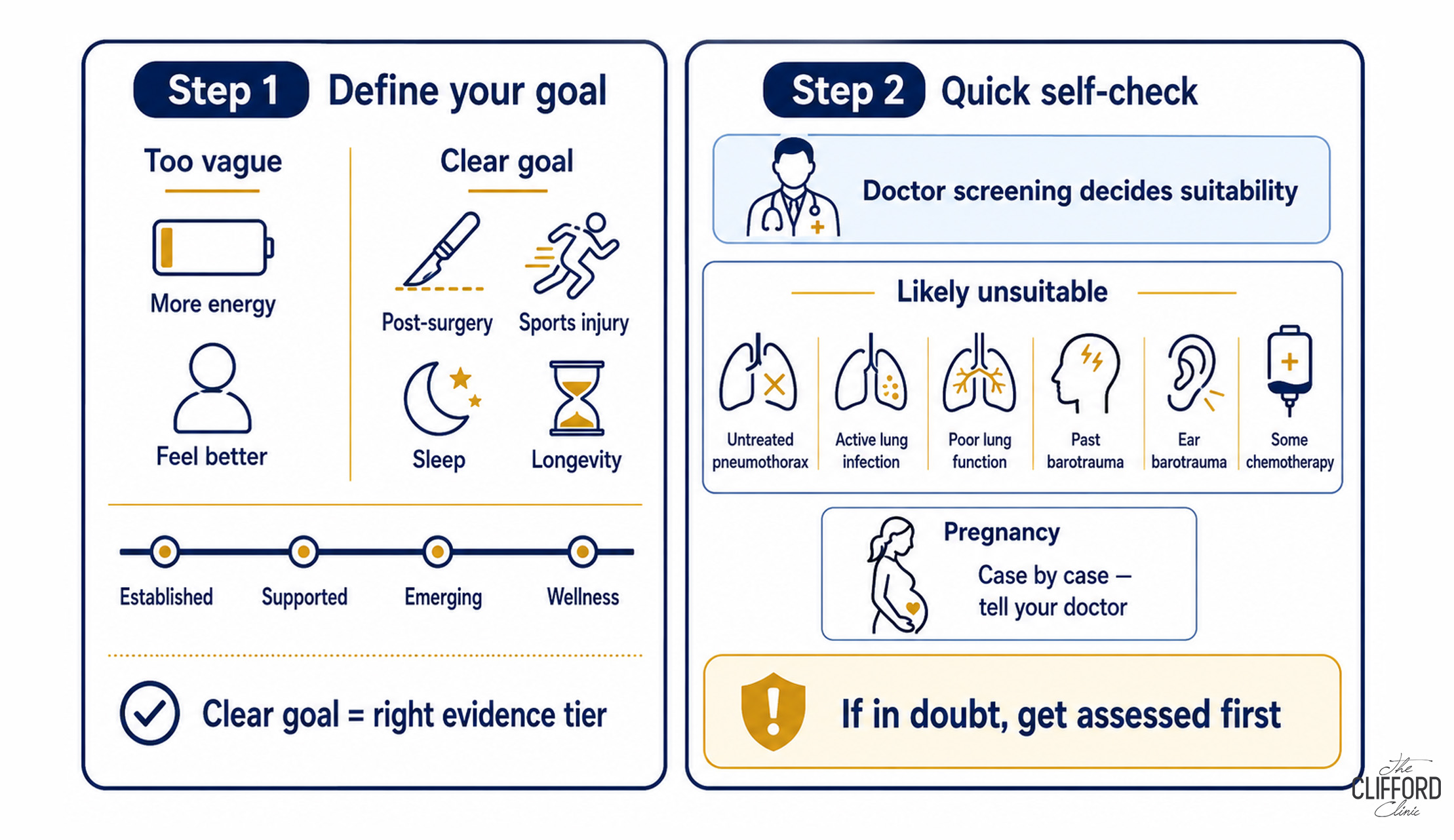
Step 1: Define Your Goals
The most common mistake patients make is being vague with their goals. An example of a vague goal is wanting more energy or wanting to feel better. It is important to be specific about what you want to address using HBOT. Examples of well-defined goals are wanting to use HBOT to aid with post-surgical recovery, improve a sports injury, treat a sleep problem, or for longevity tracking.
A clearly defined goal lets you place yourself on the HBOT evidence spectrum to check if your goal is an established indication, supported in selected cases, emerging research area, or falls under non-research backed wellness use. The HBOT evidence grading guide can help you place your goal.
Step 2: Self-Assessment for Suitability
A proper medical screening from an accredited doctor is what will ultimately determine your diagnosis and suitability for HBOT, but a brief self-assessment can save you time and money by helping you decide if you should proceed with a professional assessment.
Conditions that make a patient unsuitable for HBOT include untreated pneumothorax, active lung infections or significantly impaired lung function, a history of barotrauma from previous pressure exposure, ear barotrauma, and certain chemotherapy regimens. If you have any of these conditions, you are very likely unsuitable for HBOT.
Pregnant women can suitable for HBOT on a case-by-case basis. If you are pregnant, please mention it to your doctor during consultation.
For more details, our HBOT side effects and safety guide covers contraindications and what is screened for.
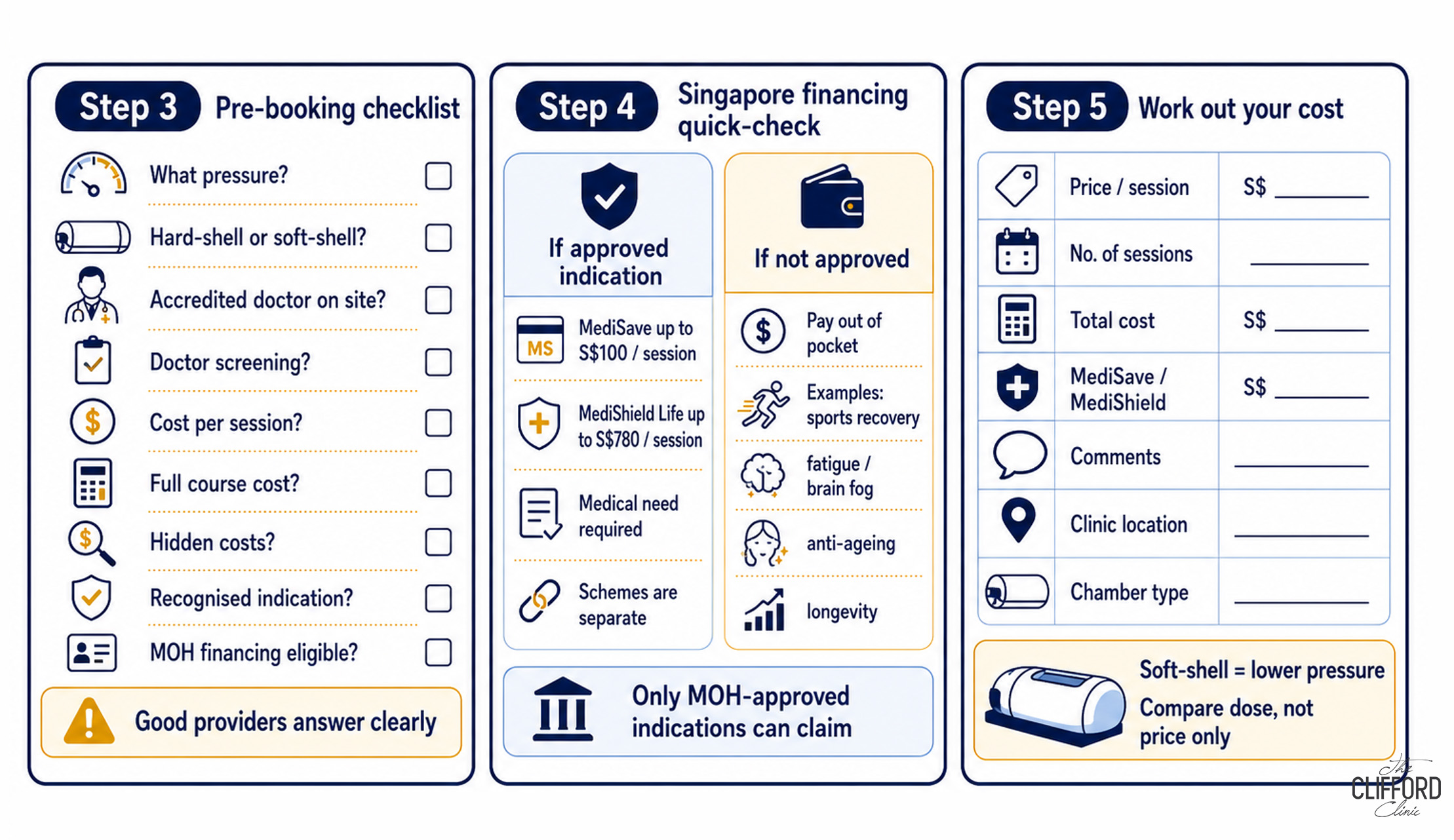
Step 3: Pre-Booking Checklist
Below are some important questions to ask your provider before your first HBOT session.
- What pressure does the HBOT chamber reach during a session
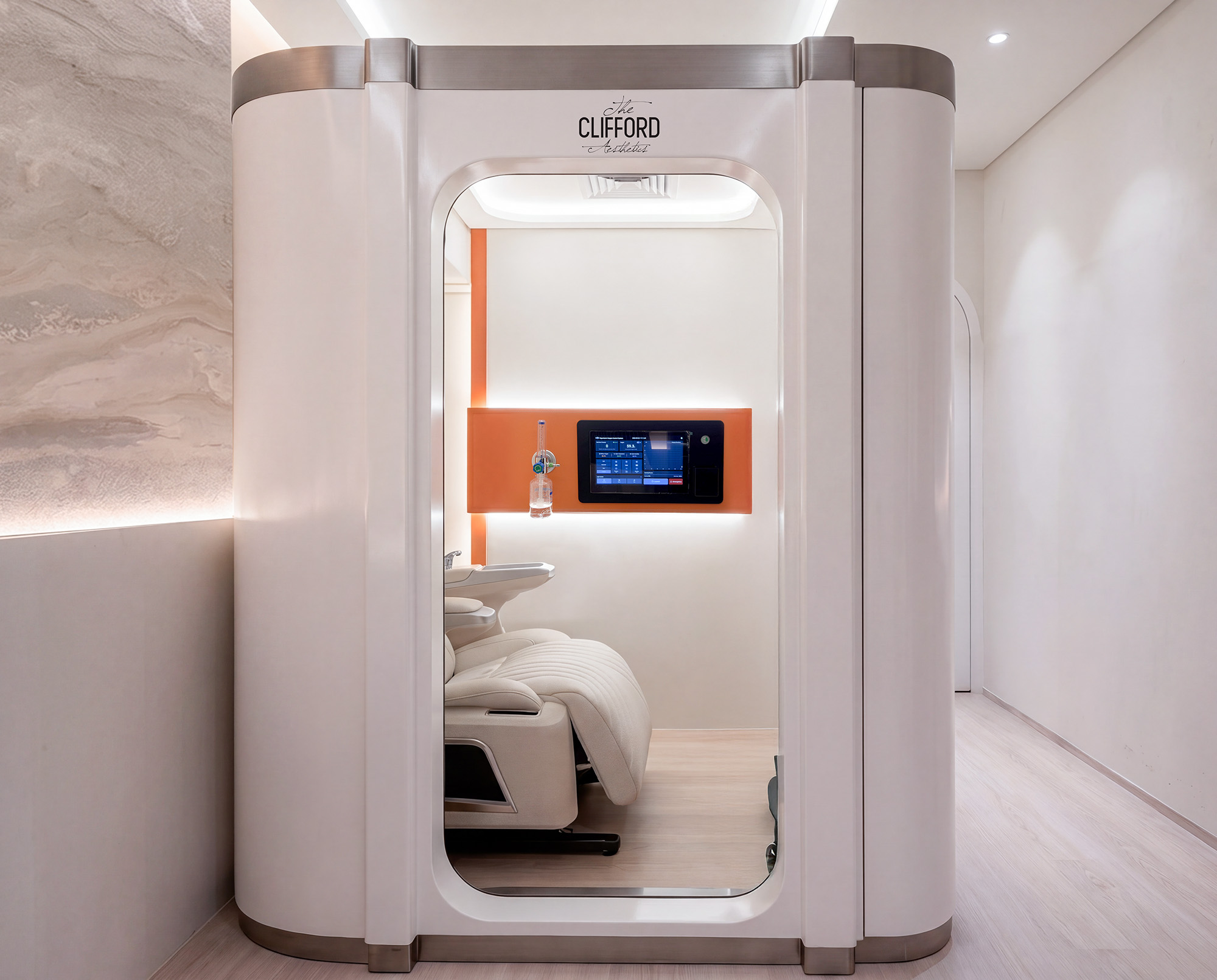
- Is the chamber used a hard-shell or soft-shell chamber
- Will there be an accredited doctor on site during the HBOT session
- Will the pre-session screening be done by an accredited doctor and what contraindications are being screened for
- What is the cost per session, what is the full cost for a course, and are there any additional hidden costs
- Is my goal a recognized clinical indication, or is it something that HBOT is not indicated to treat
- Does my goal fall under the 13 approved indications that will allow me to apply for MediSave or MediShield Life financial assistance
A trustworthy clinic or wellness establishment will be able to answer these questions clearly and accurately. Patients should be wary of providers who cannot, or are unwilling to, answer these questions.
Step 4: Eligibility Quick-Check for Singapore Financing
HBOT is claimable under MediSave or MediShield Life if the patient is suffering from certain medical condition. Generally, MediSave covers up to $100 SGD per treatment session and MediShield Life has a claim limit of up to $780 SGD per treatment session. The two schemes operate independently and be apply for only when HBOT is medically necessary for treating one of the 13 clinical conditions approved by the Ministry Of Health (MOH).
If your goal does not fit one of the 13 approved indications, you will need to pay out of pocket. Examples of non-approved treatment goals include sports recovery, fatigue, brain fog, anti-ageing, and longevity. Our HBOT MediSave and MediShield Life guide provides the full list of conditions and how to confirm eligibility.
Step 5: Working Out Your Cost
You can build a simple cost worksheet by noting the per-session price, the recommended number of sessions, the total out of pocket cost, and MediSave or MediShield Life support if applicable. You may also add a comments column to record the advantages of certain providers such as location of the clinic or type of HBOT chamber used. Comparing total cost and advantages across different providers using this worksheet can help you decide which provider is the more finically sensible option for you.
The Clifford Clinic’s complete hyperbaric oxygen cost guide lists The Clifford Clinic’s current package pricing for both single sessions and structured courses.
We would also like to caution that soft-shell chambers cannot reach a therapeutic pressure required for a course to be done at a clinically meaningful dose. We advise patients to also take the chamber type into consideration when comparing costs.
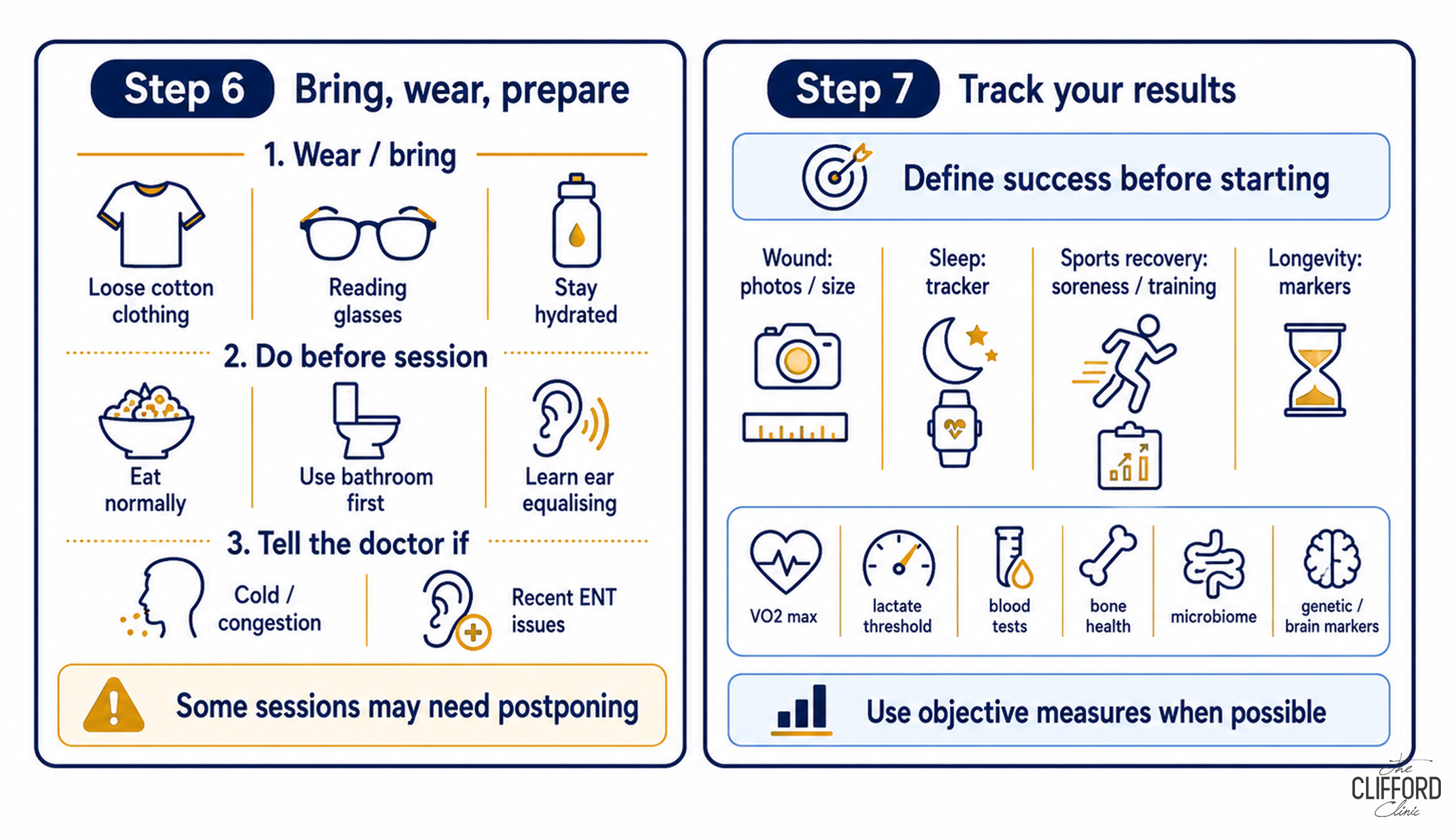
Step 6: What to Bring, Wear and Prepare
On the day of a session, wear loose and comfortable cotton clothing. Synthetic fabrics, metal items, electronics, jewellery and cosmetics are typically restricted from entering the chamber because of the oxygen-rich environment.
Fasting is not required, you may eat a normal meal before the session. Stay well hydrated and bring your reading glasses if you intend to do some reading during the session. Do use the bathroom before chamber pressurisation.
Patients prone to ear pressure issues should know basic equalisation techniques in advance. The Clifford Clinic’s clinical team will teach these techniques to all patients before the first session.
If you are suffering from congestion, have a cold, or have recently had ENT issues, you should mention this to the on-site doctor. In some cases the session is best postponed.
Step 7: Track Your Results
Before starting your course, define what you consider success in terms of achieving you treatment goals. For example, if you are undergoing HBOT to heal a wound, your treatment success benchmarks can be closure rate and post-HBOT wound size. Progress can be easily tracked via photographs in this case. If your goal is to improve sleep, you may use a simple sleep tracker to record progress. For sports recovery, improvements in training tolerance or perceived soreness can be your gauge.
Objective markers such as telomere length testing, gut microbiome, APOE gene testing, the PT217 plasma tau blood test, VO2 max and lactate threshold testing, multi-cancer early detection (MCED) screening and bone ultrasound for osteoporosis are all options offered alongside HBOT at The Clifford Clinic that can be used to track your progress if your goal is longevity.
Summary
HBOT Decision Guide: Step-by-Step Checklist
| Decision Step | What to Do |
|---|---|
| 1. Goal Definition | Define your specific treatment goal. |
| 2. Suitability Self-Check | Do a self-check to determine if you should proceed with getting a professional diagnosis to confirm your suitability for HBOT. |
| 3. Pre-Booking Checklist | Ask your provider the questions on your checklist to assess their credibility. Trustworthy clinics will not hesitate to answer you. |
| 4. Financing Eligibility Check | Confirm if your case meets MOH’s claim eligibility criteria. Otherwise, plan for out-of-pocket payment. |
| 5. Cost Worksheet | Work out your total cost and compare your options. |
| 6. Prepare for Your First Session | Ensure you are well and dressed appropriately. |
| 7. Track Your Results | Define what you determine as success. |
The Clifford Clinic Perspective
The Clifford Clinic’s clinical team’s experience spans over four years and more than 200 patients. Based on our experience, disappointment is usually not caused by the HBOT treatment itself but a result of unmanaged expectations and treatment goals that do not align with what HBOT is indicated to treat. The team thus formulated this simple seven step guide to help patients understand their own goals and the limitations.
When a patient arrives without a defined goal, our doctors will first help them define one during consultation. If the patient’s goal turns out to be outside what HBOT can realistically deliver, the clinical team will be honest and caution them against buying a course. If their goal happens be one of the MOH recognised indication, the team will assess whether their case is best served in our clinic or in a hospital. If a hospital-based HBOT setting is more beneficial, the team will refer them to a government accredited hospital.
For patients whose goals include post-surgical recovery, elective recovery, longevity care delivered with measurement, selected supported indications, our doctors will do a proper assessment determine if they are suitable for HBOT. Safety is our number one priority, the team will turn down any patient who is not suitable.
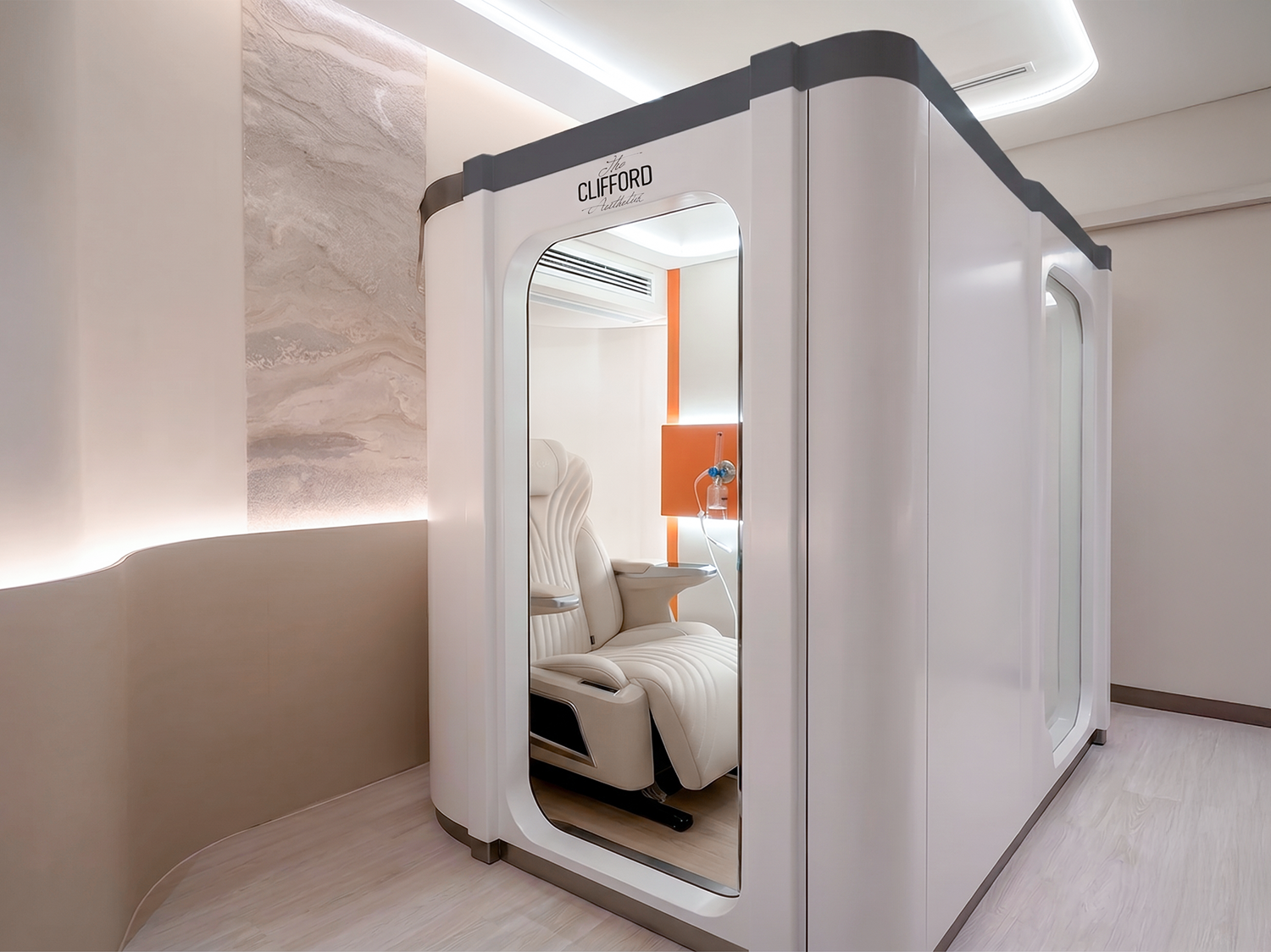
HBOT at The Clifford Clinic is done a hard-shell chamber at a therapeutic pressure of 2.0 ATA. All assessments and screenings are done by an accredited clinician. The clinical team’s guiding principle is to ensure that the treatment is matched to the patient’s needs, thus we encourage a small amount of homework to be done in the form of our seven step guide before booking a HBOT session with us. It is always important to define the goal, check your own suitability, ask questions, confirm financing, plan how to measure results before committing to anything to avoid falling for aggressive marketing that is done by some clinics.
Frequently Asked Questions
How long should the decision process take?
Typically a week or two. A proper consultation with an accredited doctor should be your first step in the decision-making process.
Do I need a doctor’s referral to consider HBOT?
Not for elective wellness or longevity care, but bringing recent medical records to your consultation helps with the screening process. For recognised medical indications, a referral often improves coordination with your care team.
Should I get the consultation even if I am unsure?
Yes. A proper diagnosis is the only way to know whether your specific case is suitable HBOT.
How can I prepare for the consultation in advance?
Define your goal, write down any medical conditions and medications, and if you are coming to our clinic, we recommend completing our seven step guide before your consultation session.
What if HBOT is not right for my goal?
Not all treatment goals are compatible with HBOT. A responsible clinic will always caution you not to do a course if your goal is unsuitable for HBOT.
Can I switch providers mid-course?
Yes, but it can be disruptive. Choosing the right provider from the start is recommended.
How quickly should I expect to see results?
This depends on your goal. For example, sleep quality often improves early while wound healing builds across weeks and longevity is measured over months. Define your expected timeline and what you hope to achieve before committing to HBOT.
What if I cannot answer some of the self-assessment questions?
The doctor will work through them with you during your consultation session. Bring with you what you know and let the doctor handle the rest.
Key Research References
- Ministry of Health Singapore. MediSave for outpatient treatments — moh.gov.sg/managing-expenses/schemes-and-subsidies/medisave/outpatient-care.
- Ministry of Health Singapore. MediShield Life benefits and claim limits — moh.gov.sg/managing-expenses/schemes-and-subsidies/medishield-life/medishield-life-benefits.
- Undersea and Hyperbaric Medical Society. Hyperbaric Oxygen Therapy Indications, 13th Edition.
- Heyboer M et al. Hyperbaric Oxygen Therapy: Side Effects Defined and Quantified. Advances in Wound Care.
- Kirby JP et al. Essentials of Hyperbaric Oxygen Therapy: 2019 Review. Missouri Medicine.
- Singapore General Hospital. Hyperbaric and Diving Medicine Centre — services and conditions treated.
- Mayo Clinic. Hyperbaric oxygen therapy: overview, indications and risks.

To run through this decision guide, book a consultation at The Clifford Clinic.

Author Bio
Dr Gerard Ee

Dr Gerard Ee is the Medical Director of The Clifford Clinic in Singapore. He earned his medical degree from St George's University of London and built his surgical experience across the Singapore General Hospital, National University Hospital, and Mount Sinai Hospital in New York. He holds Membership of the Royal College of Surgeons (Edinburgh) and a Postgraduate Diploma in Dermatology (Cardiff), and is fully accredited in aesthetic procedures including botulinum toxin, fillers, lasers, and light therapies. A strong advocate of minimally invasive, natural-looking results, Dr Ee has published in several medical and scientific journals and presented his research in cities including Taipei, Las Vegas, and London.
See all posts by Dr Gerard Ee »