


Circumcision in Singapore (2026): A Doctor’s Guide for Adults and Boys
By Dr Law Zhi Wei, MBBS, The Clifford Clinic
Written and medically reviewed by Dr Law Zhi Wei, MBBS. Published 26 June 2026. Last reviewed 26 June 2026.
Circumcision in Singapore is a common day procedure, and in 2026, most adults and boys aged 6 and above can have it done in under 20 minutes under local anaesthesia and go home the same day. If you are weighing it up for yourself or your son, common questions include: which method, how much it costs, whether Medisave or the CDA can be used, how much it hurts, and how long recovery takes. This guide answers each of those based on my own practice at The Clifford Clinic, where I have performed more than 500 circumcisions using the conventional, Shang Ring, ZSR Stapler, and laser-assisted techniques.
Contents
What is circumcision, and who in Singapore needs it?
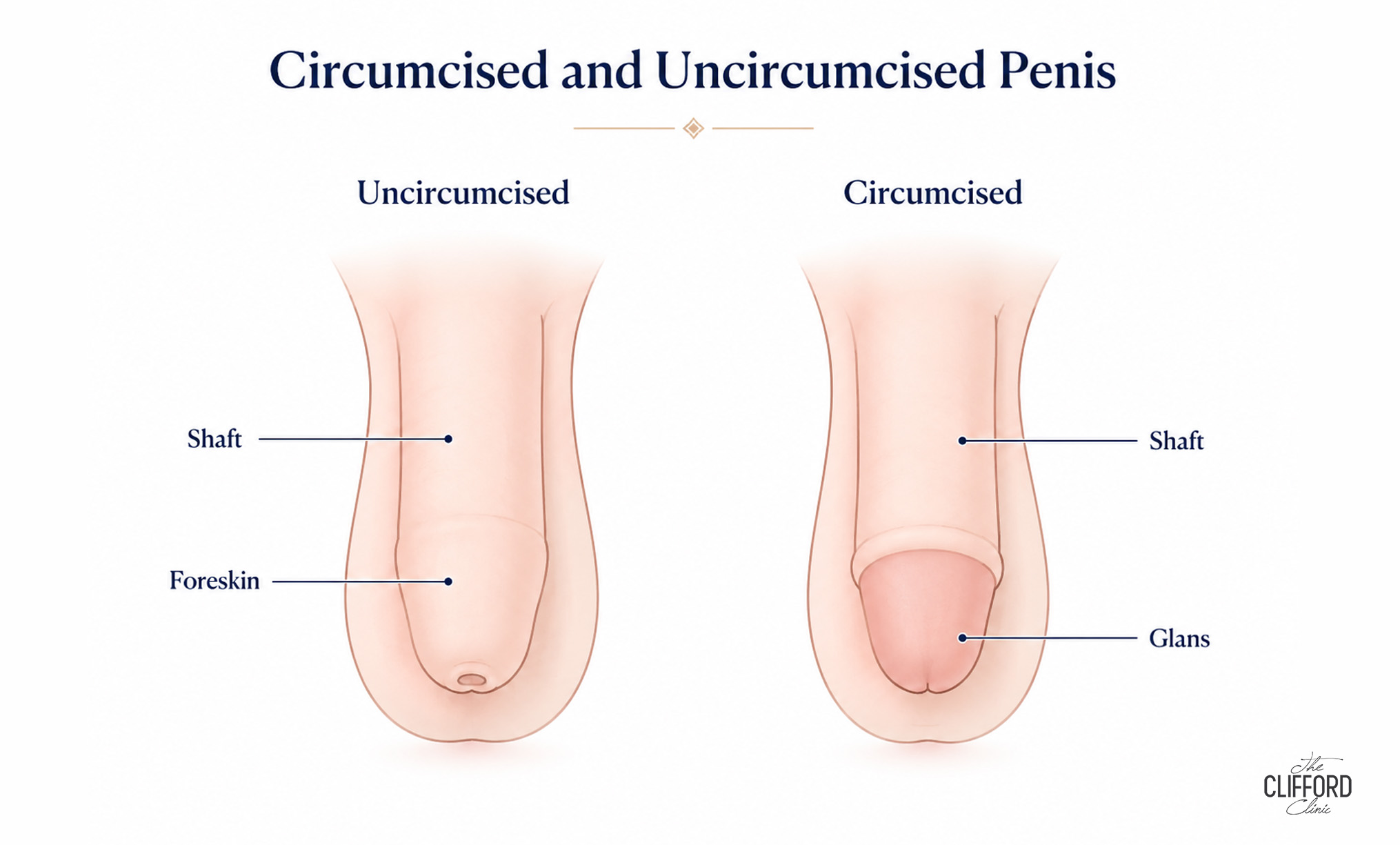
Circumcision is the surgical removal of the foreskin, the loose double layer of skin that covers the head (glans) of the penis. In Singapore, people choose it for three broad reasons: a medical problem, religious or cultural practice, or personal preference.
Medical reasons
The most common adult medical reason is phimosis (a foreskin too tight to retract). Others include recurrent balanitis (repeated infection of the head and foreskin), paraphimosis, and lichen sclerosus (BXO, a scarring skin condition). In these cases, circumcision is often curative or strongly preventive, and because there is a medical indication, the procedure is usually Medisave-claimable.
Religious and cultural reasons
For Singapore’s Malay-Muslim community, circumcision (sunat or khatan) is a rite of passage, usually carried out in boyhood. Some families of other backgrounds request it as well.
Elective reasons
A growing group of adult men, often aged 20 to 50, choose circumcision electively for hygiene, appearance, or to reduce the risk of certain infections. In my own practice, the single most common adult reason is phimosis, and the most common question parents ask is when the right time is for their son.
What circumcision methods are available in Singapore in 2026?
Four techniques are in routine use in Singapore in 2026: conventional sutured circumcision, the Shang Ring, the ZSR Stapler, and laser-assisted circumcision. The right choice depends on age, anatomy, the medical reason, and personal preference.
Conventional sutured circumcision
Conventional sutured circumcision is a long-established surgical technique. The foreskin is removed with a scalpel or scissors, and the edges are closed with dissolvable stitches. It remains the right choice for unusual anatomy, redo surgery, or where a device cannot be fitted reliably. Recovery is a little longer because of the suture line.
Shang Ring circumcision
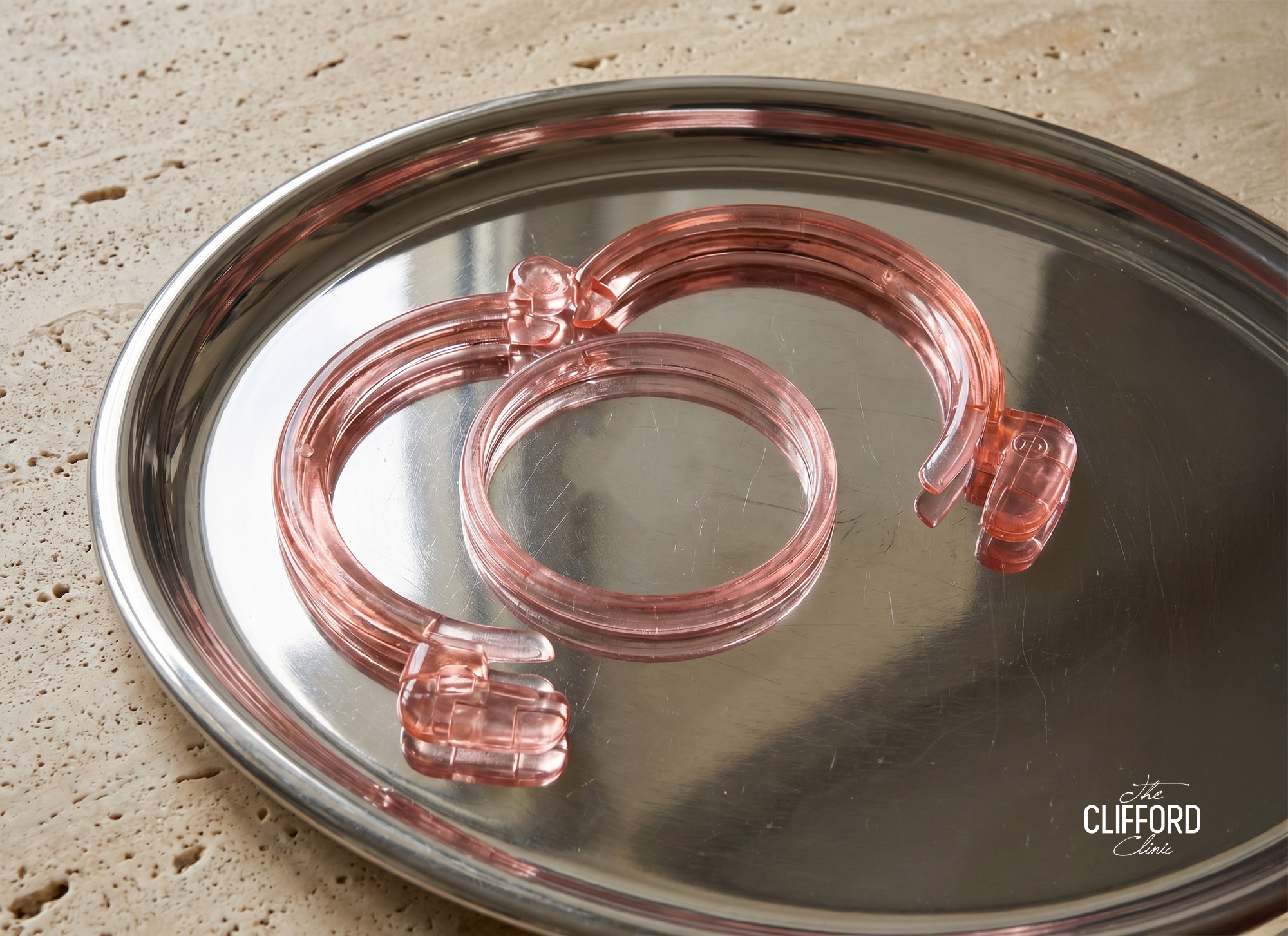
A two-piece plastic-ring device that clamps the foreskin while the excess tissue is trimmed above the inner ring. It needs no stitches, is quick, and produces a neat, even scar line. The outer ring sits on the penis for about 10-14 days and is removed in a short clinic visit. A no-flip technique often avoids an injection in children. The Shang Ring received World Health Organization (WHO) prequalification in 2015.
ZSR Stapler circumcision
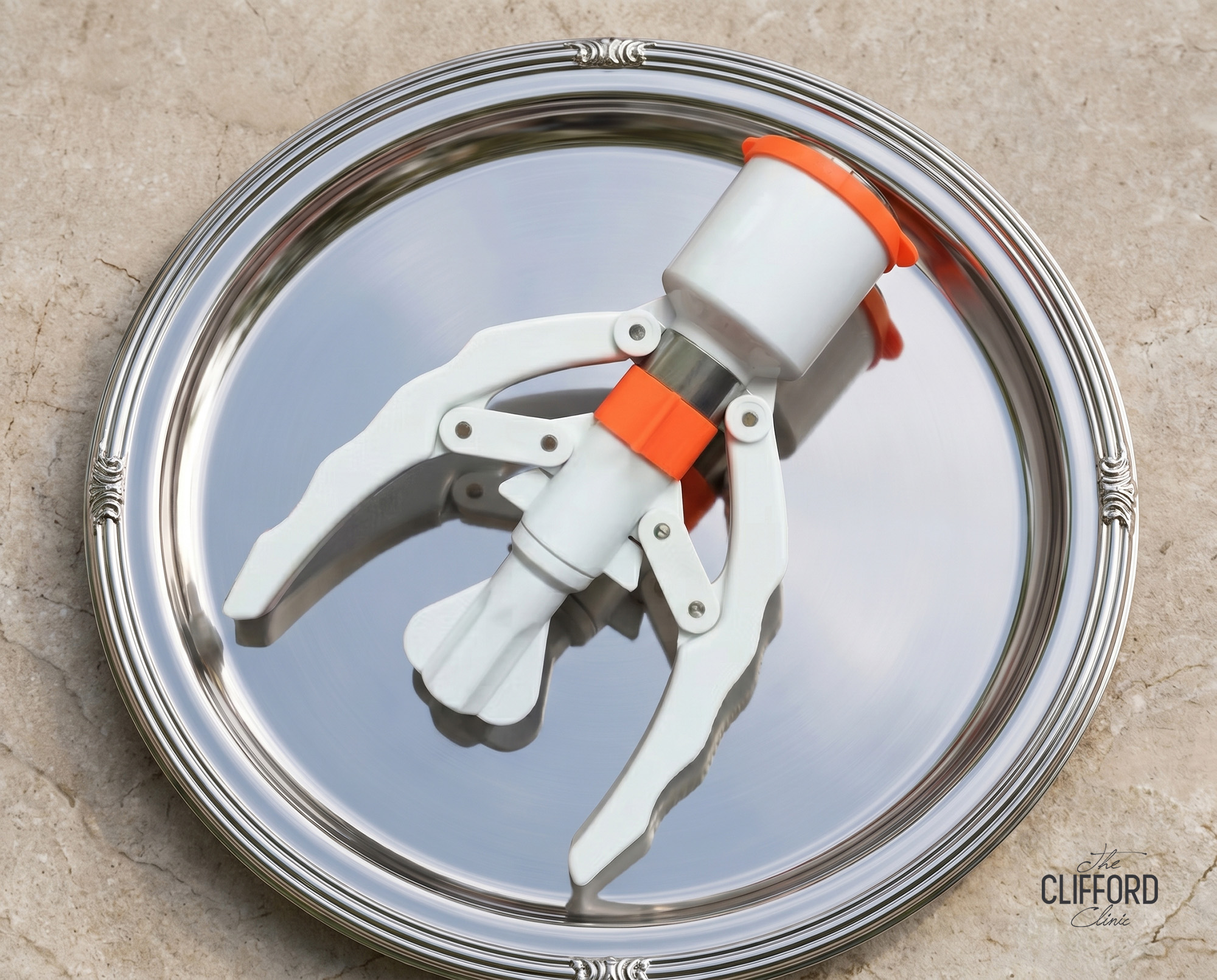
A single-use disposable device that cuts the foreskin and seals the edge with a circular row of small stainless-steel staples in one motion. It is fast and tidy, and the staples loosen and shed on their own over the following weeks. The ZSR Stapler is approved by the Health Sciences Authority (HSA) and is in routine use in Singapore. Randomised and pooled comparisons of stapler circumcision against conventional surgery have reported shorter operative time and less intra-operative bleeding.
Laser-assisted circumcision
In Singapore, “laser circumcision” usually means conventional excision using an electrosurgical or laser cutting tool in place of a cold blade, which helps control bleeding. It is not a separate device class, and it still involves a sutured closure, so recovery resembles conventional surgery.
Bipolar diathermy used alongside the device methods
In my own practice at The Clifford Clinic, the Shang Ring and the ZSR Stapler are used together with bipolar diathermy (on a ValleyLab generator) to seal small blood vessels during the procedure and reduce intra-operative bleeding. The device compresses the tissue while diathermy seals any remaining microvessels, useful when treating the thicker, more vascular foreskin of adults and adolescents. Reviews of device-based and electrosurgical circumcision support lower blood loss and shorter operative times compared with conventional surgery.
Side-by-side comparison
The table below compares the four circumcision methods used in Singapore in 2026.
| Feature | Conventional | Shang Ring | ZSR Stapler | Laser-assisted |
|---|---|---|---|---|
| Procedure time | 30 to 45 min | 10 to 20 min | 10 to 15 min | 30 to 45 min |
| Closure | Dissolvable sutures | No stitches | Self-shedding staples | Dissolvable sutures |
| Removal visit | Not needed | Ring off about day 7 | Staples shed in weeks | Not needed |
| Bleeding control | Diathermy and sutures | Minimal bleeding | Minimal bleeding | Laser or diathermy aids haemostasis |
| Cosmetic line | Depends on technique | Uniform | Uniform | Depends on technique |
| Often suited to | Complex anatomy | Adults and boys, needle-averse | Adults wanting a quick, tidy result | Cases preferring laser cutting |
For most working adults and school-age boys, I would recommend a device-assisted circumcision, and reserve conventional excision for the cases that genuinely need it.
For a fuller side-by-side of all four methods, see our guide to circumcision techniques in Singapore.
How much does circumcision cost in Singapore in 2026?
At The Clifford Clinic, the circumcision fee for patients paying by cash or using Medisave is $1,888. Costs across Singapore vary by setting and by how the bill is structured, and Medisave (the national medical savings scheme administered by the CPF Board), the CDA and Integrated Shield insurance can each reduce what you actually pay when you are eligible.
Cash or Medisave at The Clifford Clinic
The $1,888 fee covers the procedure performed by the doctor in our sterile operating theatre, with standard consumables and routine follow-up. Where there is a medical indication, Medisave can be used to offset the eligible portion.

Public benchmarks
As a reference point, the Ministry of Health publishes hospital bill benchmarks for circumcision under the SH808P code. For patients older than 6 months the listed surgeon-fee benchmark is roughly $950 to $2,150.
Insurance and Integrated Shield Plans
Patients claiming through hospital insurance are billed under a different structure that itemises the components insurers cover (operation, doctor and anaesthetist fees, consumables, and any sedation). The actual out-of-pocket cost depends on your Integrated Shield Plan and any rider (for example plans offered by AIA, Great Eastern, Prudential, Income or Singlife), and in most medically indicated cases, it is lower than the cash price.
Sedation
Sedation is used mainly for younger boys who cannot stay still under local anaesthesia alone, or for adults who request sedation. There is an additional cost when it is needed.
CDA and Baby Bonus (for boys)
The Child Development Account (CDA), part of the Baby Bonus Scheme, can be used at CDA-approved institutions to pay for a son’s circumcision. The Clifford Clinic is CDA-approved, and the CDA can be combined with Medisave and insurance where eligible.

Is circumcision painful, and what anaesthesia is used?
Device-based circumcision in Singapore is well-tolerated. It is performed under a layered anaesthesia approach, and most adults feel pressure and movement rather than pain during the procedure.
Step 1: Topical numbing cream
We apply BLT cream, a compounded preparation of benzocaine 20%, lidocaine 10%, and tetracaine 4%, to the foreskin about 30 minutes before, so the skin is numb before anything else happens.
Step 2: Local anaesthetic injection
A penile block with lidocaine is then performed to deepen the anaesthesia. Because the cream has already numbed the skin, the injection itself is far more comfortable than most people expect.
Step 3: Sedation
Intravenous sedation is reserved for younger boys who cannot reliably cooperate under local anaesthesia alone or adults who request it. Sedation is given by a trained anaesthetist with continuous monitoring throughout.
Postoperative pain is usually mild and controlled with simple painkillers (paracetamol, with or without a short course of an anti-inflammatory). The fear of pain is the single biggest reason men delay this procedure. In practice, most describe the procedure as uncomfortable rather than painful.
What happens on the day of your circumcision?
It is a day procedure. You arrive, the area is numbed, the operation takes 10 to 20 minutes in our operating theatre, you rest briefly, and you go home the same day with aftercare instructions. The whole visit is usually around 1.5 to 2 hours.
- Arrival and paperwork (about 10 minutes), with a final review and consent with Dr Law.
- BLT numbing cream is applied to the foreskin; you wait about 30 minutes for it to take effect.
- You change into a gown and walk into the operating theatre, lying on your back while the surgical area is cleaned and draped.
- Local anaesthetic is given. For patients who need sedation, it is given now.
- The procedure takes 10 to 20 minutes, depending on the method. You may hear the soft hum of the bipolar diathermy generator used to control bleeding.
- A light non-adherent dressing is applied, and you rest in recovery for 20 to 30 minutes.
- Discharge with written aftercare, painkillers, and a follow-up appointment. Most patients walk out and travel home unaided.

How long does circumcision take to recover?
Most adults are back at desk work within 2 to 3 days, resume light exercise from around week 3, and are fully healed by 3 to 4 weeks, with sexual activity usually advised from week 4 to 6. Children generally heal faster.
Adults
- Days 0 to 1: Mild ache and a light dressing. The first urination is normal and not painful.
- Days 2 to 3: Peak swelling, which is expected and not a complication. Most desk-based workers return to the office in this window.
- Days 4 to 7: Swelling settles and most light activity resumes.
- Days 10 to 14: With the Shang Ring, the outer ring is removed in a brief clinic visit. With the ZSR Stapler, the staples loosen and shed around this time.
- Weeks 3 to 4: Light exercise resumes and the wound reaches full healing. Sexual activity is usually advised from week 4 to 6.
Children
Boys generally heal faster than adults but need closer supervision in the first week, mainly to stop them from disturbing the area or returning to rough play too soon. Most return to school within 3 to 5 days.
What are the risks and complications of circumcision?
Circumcision has a low complication rate when performed by a trained doctor in a sterile operating theatre, but it is still surgery and carries some risks. In published series of device-based circumcision, serious adverse events occur in under 1% of cases.
- Bleeding: Minor in most cases. Bleeding: Minor in most cases, occasionally needing a return to the clinic for re-cautery. Bipolar diathermy is used during surgery to control bleeding.
- Infection: Uncommon (typically under 2%) when surgery is performed in a sterile operating theatre with antiseptic preparation.
- Suboptimal cosmetic result: Asymmetry or an uneven scar line, more common with hand-sewn techniques than with device methods.
- Wound separation: Rare, and more likely if strenuous or sexual activity is resumed too early.
- Altered sensation: Minor changes in the first few weeks are common and almost always settle as the nerves recover.
A dedicated sterile operating theatre, rather than an ordinary procedure room, meaningfully lowers the infection risk, and it is what I would look for in any clinic.
Is circumcision suitable for my son? (boys aged 6 and above)
At The Clifford Clinic, I perform circumcision for boys aged 6 and above. Below that age, the procedure is more appropriately done under general anaesthesia in a hospital setting, which we do not offer.
The age policy reflects two practical realities: younger children often cannot cooperate with local anaesthesia and light sedation, and a calm, cooperative child has a safer and more comfortable experience. Our typical paediatric anaesthesia approach is:
- BLT numbing cream is applied 30 minutes before the procedure.
- Local anaesthetic injection where needed.
- Light sedation for younger boys, or any child who would otherwise find the procedure distressing. It is given in the theatre with continuous monitoring.
CDA and Baby Bonus payments are accepted, and Medisave applies where there is a medical indication. Most boys return to school within 3 to 5 days.
What should adult men know about circumcision in Singapore?
For most adults, the device-assisted methods (Shang Ring or ZSR Stapler) are preferred for the shorter procedural time, minimal bleeding, a neat result, and a quick return to work. Conventional surgery is kept for specific anatomical reasons.
The typical adult I see is a man between 20 and 50 who wants the procedure done with minimal disruption, whether for phimosis, recurrent infection, hygiene, or personal preference. Planning around two to three days off desk work, and avoiding the gym and intimacy until the wound has healed, covers most men’s concerns. If there is a medical indication, such as phimosis or recurrent balanitis, Medisave and the utilization of hospitalization insurance plans usually apply.
How do you choose a circumcision clinic and doctor in Singapore?
Choose a clinic that operates in a dedicated sterile operating theatre, where the doctor (not an assistant) performs the procedure, that offers more than one method, and that is transparent about cost and follow-up. Before booking, I would ask the clinic the following questions.
- Is the circumcision done in a dedicated sterile operating theatre?
- How many circumcisions has the doctor personally performed? Surgical caseload tends to track with outcomes.
- Which methods does the clinic offer? A clinic that offers both the Shang Ring and the ZSR Stapler can match the method to you.
- Is bipolar diathermy used to control bleeding?
- What anaesthesia options are offered, and is sedation available?
- Is the clinic CPF and Medisave-accredited, and CDA-approved?
- What follow-up is included, and what happens if a complication arises?
A clinic that answers all of these clearly takes its surgery seriously.
Frequently asked questions
Is circumcision claimable under Medisave in Singapore?
Yes, when there is a recognised medical indication such as phimosis, recurrent balanitis, BXO or paraphimosis. The procedure is listed under the MOH TOSP code SH808P, and Medisave can offset the eligible portion. Purely elective or cosmetic circumcision is generally not claimable.
Can I use the CDA or Baby Bonus to pay for my son’s circumcision?
Yes, at a CDA-approved clinic. The Clifford Clinic is CDA-approved. Payment is made on the day using the CDA card and PIN, and the CDA can be combined with Medisave and insurance, where eligible.
Does insurance cover circumcision in Singapore?
Most Integrated Shield Plans cover circumcision when there is a medical indication. Coverage varies by insurer and plan tier, so pre-approval is sensible. We help arrange the letter of guarantee, where applicable.
How long does the procedure take?
Shang Ring and ZSR Stapler procedures usually take 10 to 15 minutes. Conventional and laser-assisted circumcision usually takes 30 to 45 minutes. The full clinic visit is around 1.5 to 2 hours, including numbing and recovery.
What is the youngest age you circumcise at The Clifford Clinic?
Six years old. Below this age, the procedure is more appropriately performed under general anaesthesia in a hospital setting, which we do not offer.
Will my penis look different afterwards?
Yes. The foreskin is removed, permanently exposing the head of the penis. The device methods produce a uniform circumferential scar line that most men find tidy, and it settles further over a few months.
Does circumcision affect sexual function?
Multiple systematic reviews, including a 2025 review in The Journal of Sexual Medicine, have found no clinically meaningful adverse effect on sexual function or satisfaction in adult men.
What is the difference between the Shang Ring and the ZSR Stapler?
The Shang Ring is a two-piece plastic ring that sits on the penis for about 7 days before removal in a clinic visit, and it can often be placed without an injection. The ZSR Stapler cuts and seals with staples in one step, with no ring to remove; the staples shed on their own over the following weeks.
Is laser circumcision better than conventional circumcision?
“Laser circumcision” usually means conventional excision using a laser or electrosurgical cutting tool instead of a blade, which can help control bleeding. It still involves a sutured closure, so recovery is similar to conventional surgery rather than to a device method.
When is conventional circumcision still the right choice?
For unusual anatomy (severe scarring, buried penis, redo surgery, hypospadias) where a device cannot be fitted reliably, or when the doctor judges that a tailored hand-sewn closure is safer.
How soon can I exercise after circumcision?
Light desk work in 2 to 3 days, walking and light cardio from week 2, the gym from around week 3, and contact sports from week 4.
When can I have sex after circumcision?
Most doctors advise waiting until the wound is fully healed, usually 4 to 6 weeks, to reduce the risk of bleeding or wound separation.
What happens if there is a complication after surgery?
Serious complications are uncommon (under 1% in published device-based series). All Clifford circumcisions include follow-up, and we review any concerns promptly. Most issues, such as minor bleeding, are simple to manage.
The bottom line
Circumcision in Singapore is a common day procedure. For most adults and boys aged 6 and above it takes 10 to 20 minutes under local anaesthesia, with same-day discharge. The method that suits you depends on age, anatomy and personal preference, and the cost can often be offset through Medisave, the CDA or Integrated Shield insurance where you are eligible. If you would like to talk through which option fits your situation, arrange a consultation at The Clifford Clinic.
If you are considering circumcision for yourself or your son and would like it assessed, contact us today at (65) 6532 2400, email us at thecliffordclinic@gmail.com, or book a consultation through our contact us page.
Related reading at The Clifford Clinic
- Phimosis (tight foreskin) in Singapore: treatment and when circumcision is needed
- Shang Ring circumcision in Singapore
- ZSR stapler circumcision in Singapore
- Circumcision for boys aged 6-12: using Baby Bonus and CDA
- Children circumcision in Singapore
About the author

Dr Law Zhi Wei is a Singapore-trained medical doctor at The Clifford Clinic with more than five years of surgical training across general surgery, urology and paediatric surgery at Singapore General Hospital, Changi General Hospital, Sengkang General Hospital, and KK Women’s and Children’s Hospital, including registrar postings in urology and general surgery. He has personally performed more than 500 circumcisions across the conventional, laser-assisted, Shang Ring and ZSR Stapler techniques. The Clifford Clinic operates a sterile surgical theatre and is CPF and Medisave-accredited and CDA-approved, with assistance for hospital insurance claims where there is a medical indication.
References
- Hohlfeld A, Ebrahim S, Shaik MZ, Kredo T. Circumcision Devices Versus Standard Surgical Techniques in Adolescent and Adult Male Circumcisions. Cochrane Database of Systematic Reviews. 2021.
- Cao D, Liu L, Hu Y, et al. A Systematic Review and Meta-Analysis of Circumcision With Shang Ring vs Conventional Circumcision. Urology. 2015;85(4):799-804.
- Awori Q, Lee RK, Li PS, et al. Use of Topical Versus Injectable Anaesthesia for ShangRing Circumcisions in Men and Boys in Kenya: a Randomized Controlled Trial. PLoS One. 2019.
- Grudzinska M, Gondek J, Czajkowski M, Matuszewski M. Impact of Device-Assisted Circumcision on Sexual Quality of Life in Adult Males: A Systematic Review. The Journal of Sexual Medicine. 2025.
- Ministry of Health Singapore. SH808P, Penis, Paraphimosis/Phimosis/Reduction Prepuce, Circumcision: Hospital Bill Benchmarks.
- World Health Organization. WHO Prequalification of the ShangRing Male Circumcision Device. 2015.
- Hohlfeld AS, Ebrahim S, Zaki Shaik M, Kredo T. Circumcision Devices Versus Standard Surgical Techniques in Adolescent and Adult Male Circumcisions: A Cochrane Review. BJU International. 2022.
- Fan Y, Cao D, Wei Q, et al. The Characteristics of Circular Disposable Devices and in Situ Devices for Optimizing Male Circumcision: A Network Meta-Analysis. Scientific Reports. 2016.
- Jin XD, Lu JJ, Liu WH, et al. Adult Male Circumcision With a Circular Stapler Versus Conventional Circumcision: A Prospective Randomized Clinical Trial. Brazilian Journal of Medical and Biological Research. 2015.
- Chou AC, Laih CY, Ku FY. A Retrospective Taiwanese-Population-Based Clinical Study on Determining the Efficacy and Safety of Disposable Circumcision Anastomat. Journal of Clinical Medicine. 2022.