

Can Pico Laser Make Pigmentation Worse? Rebound Pigmentation Explained
Medically reviewed by Dr Bernard Ong. Edited by Dr Gerard Ee, Medical Director, The Clifford Clinic.
Pico laser can make pigmentation worse in specific situations. For example, too aggressive laser settings, or when poor aftercare when treating melasma, inflamed, or tanned skin. The mechanism is likely post-inflammatory hyperpigmentation or melasma rebound, both driven by heat and inflammation. This risk is higher in darker Asian skin. It is largely preventable with an accurate diagnosis, conservative settings, correct spacing and strict sun protection.
How a pigment treatment can worsen pigment
Pigment cells, called melanocytes, respond to heat and inflammation by producing more melanin. This is a protective reflex, because melanin absorbs ultraviolet light and shields the deeper skin from further injury, so the melanocyte reads inflammation of any cause as a signal to make more of it. A laser can provoke this reflex and trigger new pigment rather than removing old pigment if excessive heat is delivered, or is used on skin that is already inflamed or reactive.. The lower heat of picosecond lasers reduces this risk compared with older lasers, because a picosecond pulse releases its energy in trillionths of a second and shatters pigment mechanically before heat has time to spread into the surrounding tissue, but it does not eliminate it, especially in reactive skin and in melasma.
The two main ways it happens
Post-Laser PIH vs Melasma Rebound
| Problem | What It Is | Main Triggers |
|---|---|---|
| Post-Inflammatory Hyperpigmentation | New pigment made in response to inflammation from the treatment | Excess heat, aggressive settings, inflamed or tanned skin, poor aftercare |
| Melasma Rebound | Melasma darkening after treatment | Treating active melasma, too high energy, too frequent sessions, sun exposure |
What is rebound pigmentation?
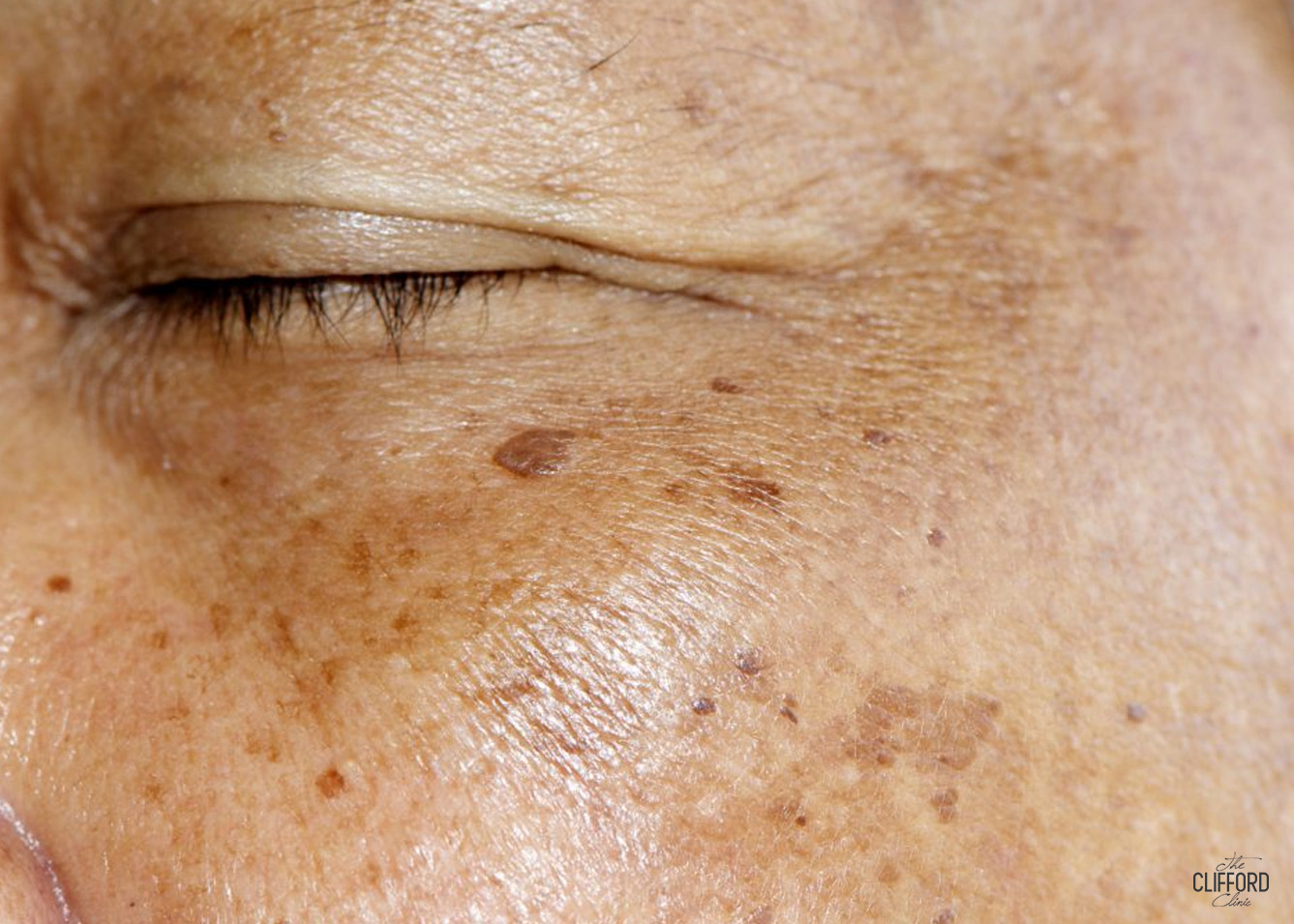
Rebound pigmentation is when pigment returns darker after a treatment, most characteristically in melasma. It is distinct from post-inflammatory hyperpigmentation in that the original melasma patch itself deepens, rather than new pigment forming in or around the treated area. In melasma, the underlying condition is primed to react, so an aggressive approach that would clear a sun spot can instead deepen the patches. This is why melasma is treated so cautiously, with low-energy settings, wide spacing and a foundation of sun protection and topicals.
What is post-inflammatory hyperpigmentation after laser?
Post-inflammatory hyperpigmentation is new pigment produced in response to inflammation, and after laser it can arise from excess heat, treating inflamed or sunburnt skin, picking at crusts, or inadequate sun protection during recovery. It typically appears in the days to weeks after treatment, in or around the treated area, and can take three to twelve months to fade, and longer where the pigment has settled into the deeper layer of the skin rather than the surface. Because Asian skin has more reactive melanocytes, it is the most common meaningful side effect of energy treatments here.
Why melasma is higher risk
Melasma is the pigmentation condition most likely to be worsened by laser. It is not simply surface pigment. It involves overactive melanocytes, a weakened boundary between skin layers, increased blood vessels and heightened sensitivity to ultraviolet light, visible light and heat. The weakened boundary is the most consequential of these, because it allows pigment to fall from the upper skin into the deeper dermis, where it is far harder to reach and far slower to clear. Melasma should be first stabilised with sun protection and topicals, only treated with gentle low-energy toning where appropriate. Avoid pushing for fast results. Our melasma treatment guide and our article on Pico laser for melasma explains the cautious approach.
Asian skin and the tendency to pigment
Asian skin, in Fitzpatrick types three to five, carries more baseline melanin and more reactive melanocytes than lighter skin, it is more prone to post-inflammatory hyperpigmentation after any inflammation, including from lasers, procedures, acne or irritation. It does not mean laser is unsafe in Asian skin, because picosecond lasers with conservative settings are used routinely and safely here. Settings, spacing and aftercare must respect the skin’s reactivity.
Wrong timing, settings or aftercare
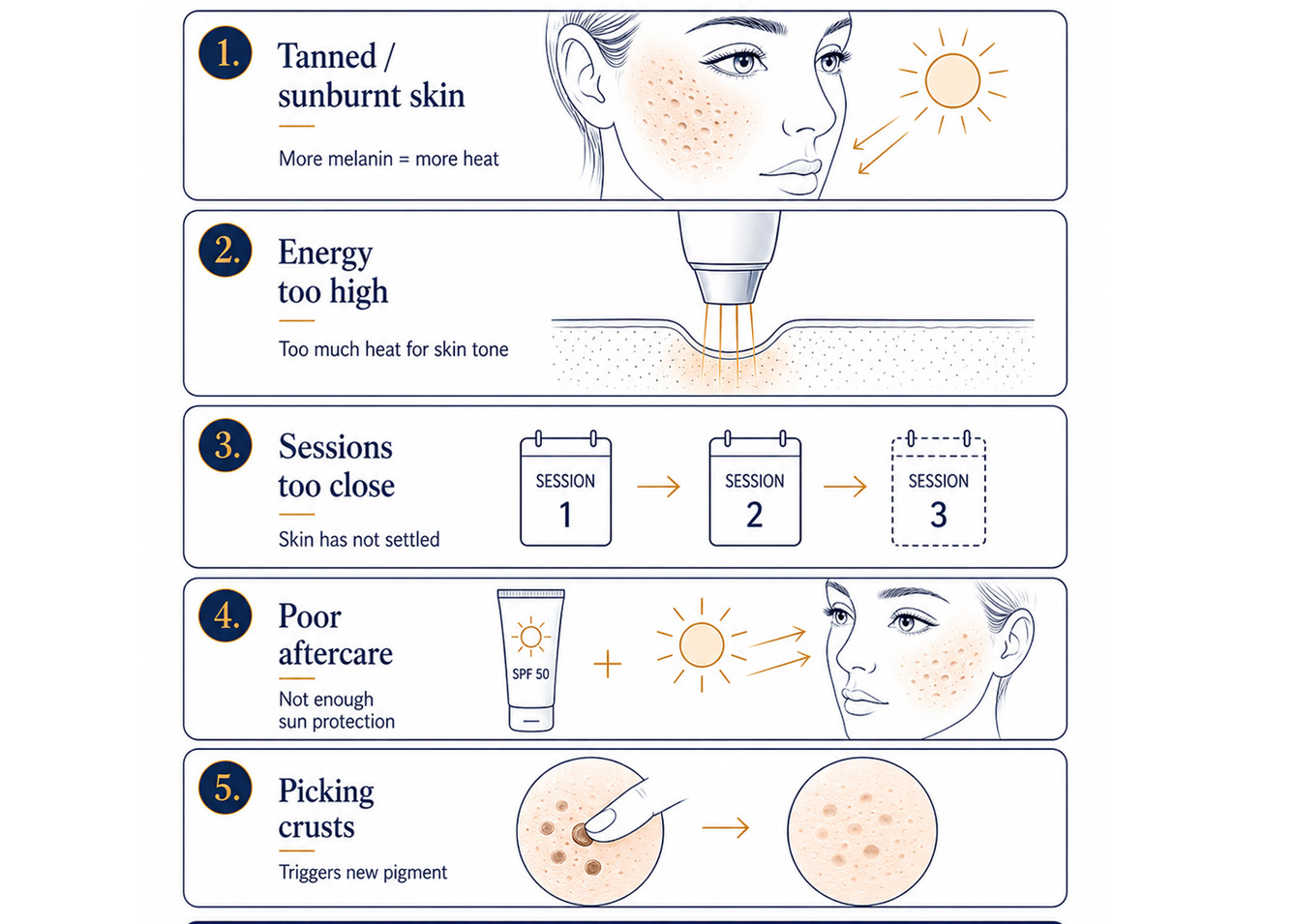
Most cases of worsened pigment trace back to one of a few avoidable factors. Treating skin that is tanned or sunburnt raises the risk, because the extra melanin in a tan absorbs more of the laser energy as heat. Using energy that is too high for the skin tone delivers excess heat. Spacing sessions too closely does not allow the inflammation from the previous session to settle before more heat is delivered. Neglecting sun protection or picking at crusts during healing invites new pigment. Each of these is within the control of the clinic and the patient.
Preparing the skin to lower the risk
Preparing the skin before the first session lowers the risk of worsened pigment. For patients prone to post-inflammatory hyperpigmentation, and particularly in melasma, two to four weeks of topical preparation with pigment-inhibiting agents can lower the baseline melanin load, so the skin is calmer and less reactive when treated. These agents, most commonly hydroquinone, tranexamic acid or azelaic acid, suppress tyrosinase, the enzyme melanocytes require for melanin creation, and are prescribed and supervised by a doctor. Avoiding sun exposure in the weeks before treatment is equally important, because a recent tan raises the melanin the laser will encounter and with it the heat delivered. Stabilising active acne or eczema beforehand removes another source of inflammation. Preparation most often separates a smooth course from a reactive one.
How to reduce the risk
An accurate diagnosis ensures the right approach for the pigment type, particularly identifying melasma that needs caution. Strict sun protection with gentle aftercare during recovery prevents post-inflammatory darkening. Reviewing the course against serial photographs allows the doctor to adjust or pause treatment at the first sign of a problem. Our Pico laser aftercare guide details the recovery care.
What to do if pigmentation worsens
If pigment darkens progressively after treatment, the correct response is to pause laser treatment, not to intensify it. Further aggressive treatment of darkening pigment, especially melasma, usually deepens the problem. Instead, the skin is protected with strict sun protection and gentle care, and the plan is reviewed with a doctor, who may reinforce topical treatment before considering any further laser. Many cases of post-inflammatory hyperpigmentation fade over months with conservative management alone. Our article on pigmentation looking darker after Pico laser explains what is expected and what needs review.
When to pause laser
Laser should be paused when pigment is progressively darkening rather than lightening, when a melasma patch is deepening, when the skin is inflamed, and whenever the response is not what was expected. Pausing is a deliberate clinical decision that prevents a temporary setback from becoming a prolonged one.
Doctor’s perspective. Pico laser can worsen pigment in the wrong circumstances, and almost every one of those circumstances is preventable. The pattern to avoid is aggressive laser on active melasma in pursuit of fast results. A slow, conservative and diagnosis-led course is what keeps pigmentation improving rather than worsening.
Who is suitable and who is not
- Suitable for diagnosed pigmentation treated with settings and spacing matched to the skin, with strong aftercare and sun protection.
- Requires caution with active untreated melasma treated aggressively, tanned or inflamed skin, unrealistic demand for fast results, or an undiagnosed lesion.
How wavelength and energy choices reduce the risk
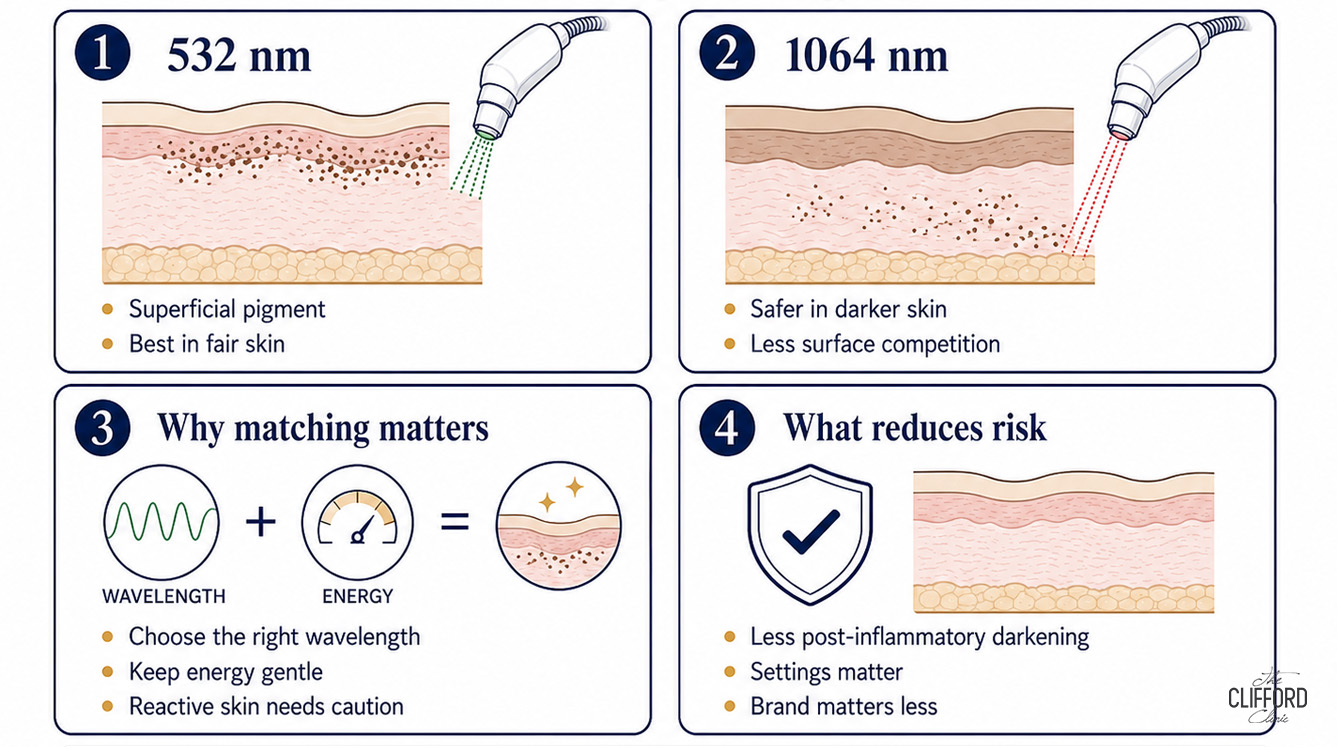
Much of the risk of worsening pigment comes down to matching the wavelength and energy to the skin. Shorter wavelengths such as 532 nm are powerful on superficial pigment in fair skin but compete with the surrounding pigment in darker skin, where a longer 1064 nm wavelength is safer. Being able to select among several wavelengths, and to hold the energy to a gentle endpoint in reactive skin, is a large part of how post-inflammatory darkening is avoided. It is the settings and the wavelength, not the brand of laser, that protect the skin.
Frequently asked questions
Can Pico laser make melasma worse?
Yes, if treated too aggressively, too frequently, or on active or sun-exposed skin, melasma can rebound darker. This is why melasma is treated cautiously with low-energy toning within a wider plan.
What is rebound pigmentation?
It is pigment returning darker after treatment, characteristically in melasma, caused by inflammation or overstimulation of reactive pigment cells that respond by producing more melanin.
What is PIH after laser?
Post-inflammatory hyperpigmentation is new pigment produced in response to inflammation from the treatment, more common in darker skin and largely preventable with conservative settings and good aftercare.
Why did my pigmentation get darker after laser?
It may be expected temporary darkening of treated spots as pigment sheds, or post-inflammatory hyperpigmentation or melasma rebound if it worsens or spreads, which needs review.
How can I reduce PIH risk?
Ensure an accurate diagnosis, conservative settings for your skin tone, adequate spacing, avoidance of tanning, and strict sun protection with gentle aftercare.
Should I continue Pico laser if pigmentation worsens?
No. Progressive darkening should prompt a pause and review, not more aggressive treatment, because continuing usually deepens the problem.
Protect your skin with a cautious, diagnosis-led plan

Worsened pigment is largely preventable with the right approach. Learn about Pico laser in Singapore and pigmentation treatment in Singapore, or book at The Clifford Clinic, 50 Raffles Place, #01-01 Singapore Land Tower. Call (65) 6532 2400 or WhatsApp (65) 8318 6332.
Selected References
- Comparison of picosecond and nanosecond Nd:YAG 1064 nm lasers in the treatment of melasma. Plastic and Reconstructive Surgery, 2023. https://pubmed.ncbi.nlm.nih.gov/36729879.
- Characteristics of dermal vascularity in melasma and solar lentigo. Photodermatology, Photoimmunology and Photomedicine, 2024. https://onlinelibrary.wiley.com/doi/10.1111/phpp.12953.
- DermNet, postinflammatory hyperpigmentation. https://dermnetnz.org/topics/postinflammatory-hyperpigmentation.

Author Bio
Dr Gerard Ee

Dr Gerard Ee is the Medical Director of The Clifford Clinic in Singapore. He earned his medical degree from St George's University of London and built his surgical experience across the Singapore General Hospital, National University Hospital, and Mount Sinai Hospital in New York. He holds Membership of the Royal College of Surgeons (Edinburgh) and a Postgraduate Diploma in Dermatology (Cardiff), and is fully accredited in aesthetic procedures including botulinum toxin, fillers, lasers, and light therapies. A strong advocate of minimally invasive, natural-looking results, Dr Ee has published in several medical and scientific journals and presented his research in cities including Taipei, Las Vegas, and London.
See all posts by Dr Gerard Ee »