



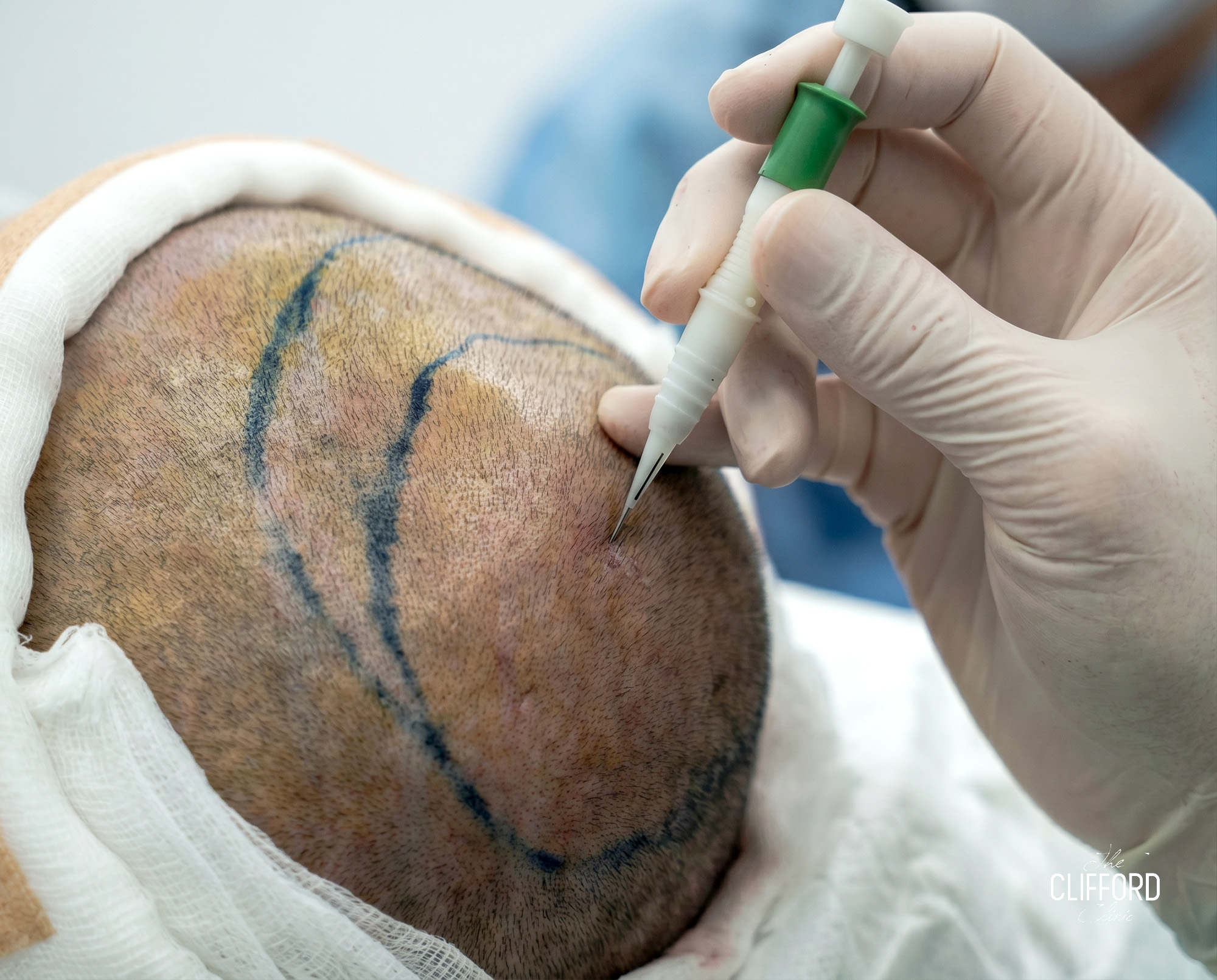
Hair Transplant India vs Singapore: Cost, FUE Results & Why You May Not Need to Travel Overseas
India is often promoted as an affordable destination for medical procedures, including hair transplant surgery, and it is easy to see why patients may be curious. Hence, we do see many people researching hair restoration eventually come across search terms such as hair transplant India, hair transplant cost in India, FUE hair transplant India, best hair transplant clinic in India.
India has a large healthcare ecosystem, many established hospitals and clinics, and a strong medical tourism industry. The country has also been actively positioned as a global destination for Medical Value Travel, supported by government initiatives such as “Heal in India”, e-medical visa access, medical tourism facilitation, and a growing focus on international patient care. According to India’s Press Information Bureau, India recorded 507,244 foreign nationals arriving for medical treatment in 2025, and India’s medical tourism market was estimated at about USD 8.7 billion in 2025, with projections of USD 16.2 billion by 2030.
So yes, India is a major player in medical tourism. But when it comes to hair transplant surgery, the real question is not only where is the cheapest procedure? The better question is: where can you get a safe, well-planned, natural-looking FUE hair transplant with proper aftercare and long-term support?
For Singapore-based patients, travelling to India for a hair transplant may look attractive at first. However, once flights, hotels, transport, time away from work, recovery overseas, remote follow-up, and possible post-procedure concerns are factored in, the total value may be very different from the advertised price.
At The Clifford Clinic, patients can consider FUE hair transplant in Singapore with local consultation, competitive pricing, doctor-led planning, and convenient follow-up. The clinic’s published pricing indicates that a typical 2,000-graft case is estimated at around SGD $6,000 before GST, or approximately SGD $3 per graft, depending on consultation, case complexity, graft requirement, and the final treatment plan.
For many patients, this means a hair transplant in Singapore may be more competitive than expected — especially when compared against the full cost and inconvenience of overseas treatment.
Why India Has Become a Popular Hair Transplant Destination
India is one of Asia’s most recognised medical tourism markets. Patients travel there for a wide range of treatments because of its large pool of medical professionals, private healthcare infrastructure, English-speaking medical environment, and relatively lower treatment costs compared with many Western countries. India’s Press Information Bureau also notes that India ranks 10th among 46 medical tourism destinations globally, and that medical travellers are drawn by factors such as affordability, quality, expertise, and healthcare infrastructure.
This broader reputation has also influenced interest in hair transplant India searches. Cities such as Delhi, Mumbai, Bangalore, Chennai, Hyderabad, Pune, Jaipur, and Ahmedabad are commonly associated with medical tourism and cosmetic procedures. Many clinics in India advertise FUE, FUT, DHI, high-density hair transplant, beard transplant, eyebrow transplant, and large graft packages.
Patients searching for hair transplant India cost, FUE hair transplant cost India, 2000 grafts hair transplant India, 3000 grafts hair transplant India, and best hair transplant surgeon in India are usually trying to compare affordability, graft count, and expected results before deciding where to undergo treatment.
That is completely understandable. Hair transplant surgery is a major decision, and cost matters. But cost should never be separated from safety, planning, donor preservation, graft survival, recovery, and aftercare.
Hair Transplant India vs Singapore: Looking Beyond Headline Cost
When comparing hair transplant India vs Singapore, many patients only compare the procedure fee. This is one of the biggest mistakes in medical tourism research.
A fair comparison should include the complete treatment journey:
| Cost or Care Factor | India Hair Transplant | Singapore Hair Transplant |
| Procedure fee | May appear lower upfront | Competitive local pricing available |
| Flights | Required | Not required |
| Hotel stay | Required | Not required |
| Time off work | Usually required | Usually easier to manage |
| Recovery location | Overseas hotel or temporary accommodation | At home in Singapore |
| Follow-up | Often remote after returning | Local and more convenient |
| Complication review | May require a local doctor or return travel | Easier access to the treating clinic |
| Long-term hair loss management | May be harder across borders | Easier with local continuity |
| Overall convenience | Lower | Higher |
This is why The Clifford Clinic’s Singapore pricing is important. Its published cost page notes an estimated SGD $6,000 before GST for approximately 2,000 grafts, which works out to around SGD $3 per graft, with the final quotation depending on consultation, graft requirement, technique and treatment plan.
For a Singapore patient, this can make local FUE hair transplant more competitive than expected. Instead of focusing only on whether India has a lower advertised per-graft rate, it may be more useful to ask:
What is the total cost of getting a safe, natural-looking result with proper follow-up?
When viewed this way, doing a hair transplant in Singapore can be a smarter and more convenient choice.
Why Hair Transplant Cost Should Not Be Judged Per Graft Alone
Hair transplant pricing is usually based on the number of grafts required. A graft is a small natural grouping of hair follicles, often containing one to four hairs. The number of grafts needed depends on the size of the thinning area, hairline design, donor density, hair characteristics and desired coverage.
However, more grafts do not always mean a better result.
A good hair transplant is about using the right number of grafts in the right way. If grafts are placed too densely in the wrong area, the donor supply may be wasted. If the hairline is designed too low, too straight or too aggressively, the result may look unnatural as the patient ages. If too many grafts are extracted, the donor area may look thin or overharvested.
The International Society of Hair Restoration Surgery describes FUE as a procedure that removes individual follicular units, usually from the back of the head, using micro-punches. It also highlights that FUE requires physician-driven judgment, skill and experience rather than being treated as a simple mechanical extraction process.
This is why patients should not choose a clinic based only on “cheap hair transplant India” or “lowest hair transplant cost in India”. A low price per graft may not be good value if graft survival, donor management, hairline design and aftercare are compromised.
Why Choose the FUE Hair Transplant Method?
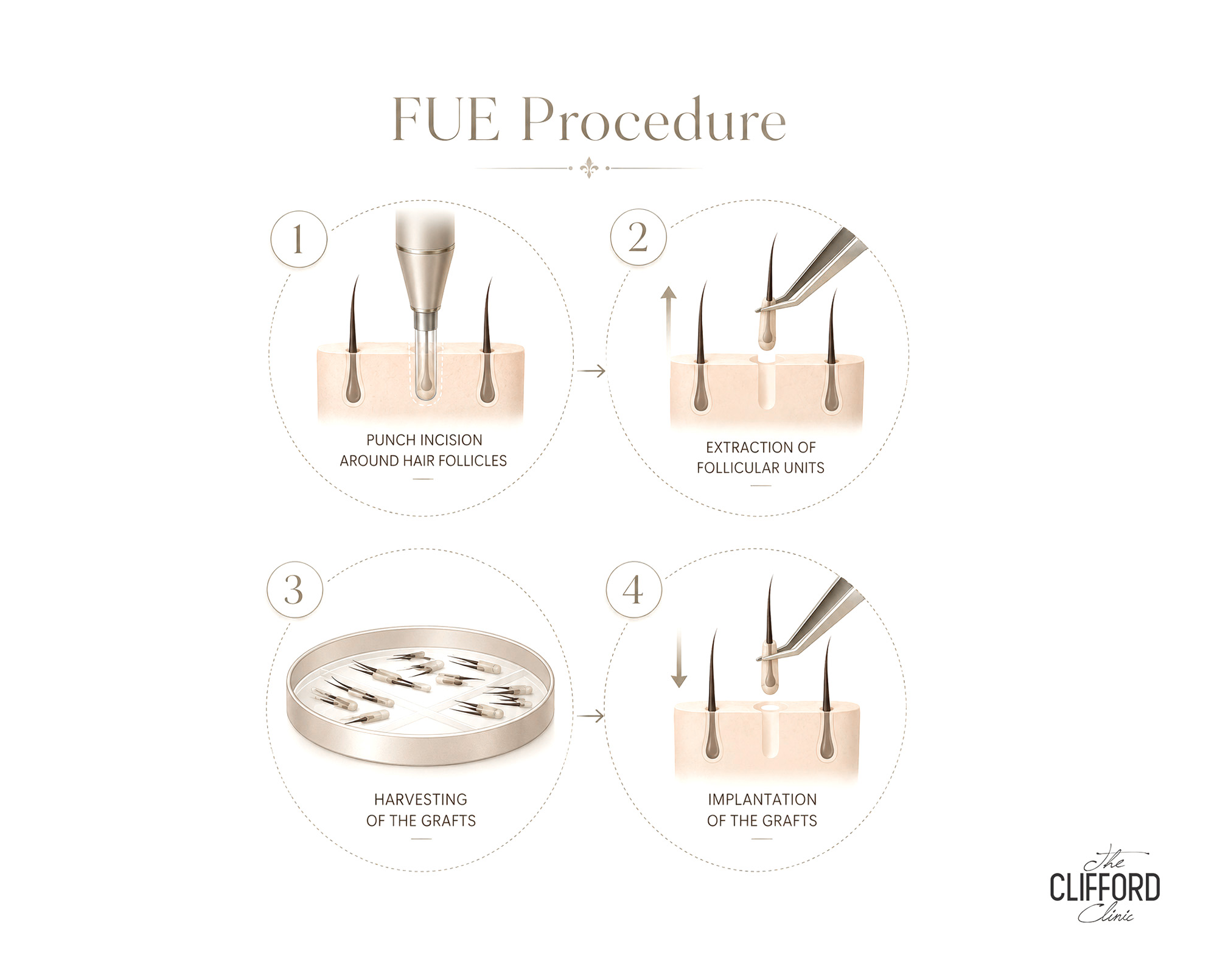
FUE, or Follicular Unit Extraction, is one of the most preferred modern methods for hair transplant. It involves extracting individual follicular units from the donor area, usually the back or sides of the scalp, and implanting them into areas affected by thinning, baldness or hairline recession.
The Clifford Clinic’s hair restoration page describes FUE as a technique that harvests individual follicles one at a time from the donor region, allowing for lower downtime and smaller, less noticeable post-transplant scarring.
1. FUE avoids a long linear scar
Older FUT strip surgery involves removing a strip of scalp from the donor area. While FUT may still be suitable for selected cases, it can leave a linear scar.
FUE avoids this long strip scar because follicles are extracted individually. This can be especially attractive for patients who prefer shorter hairstyles or want a more discreet recovery.
2. FUE can create natural-looking results
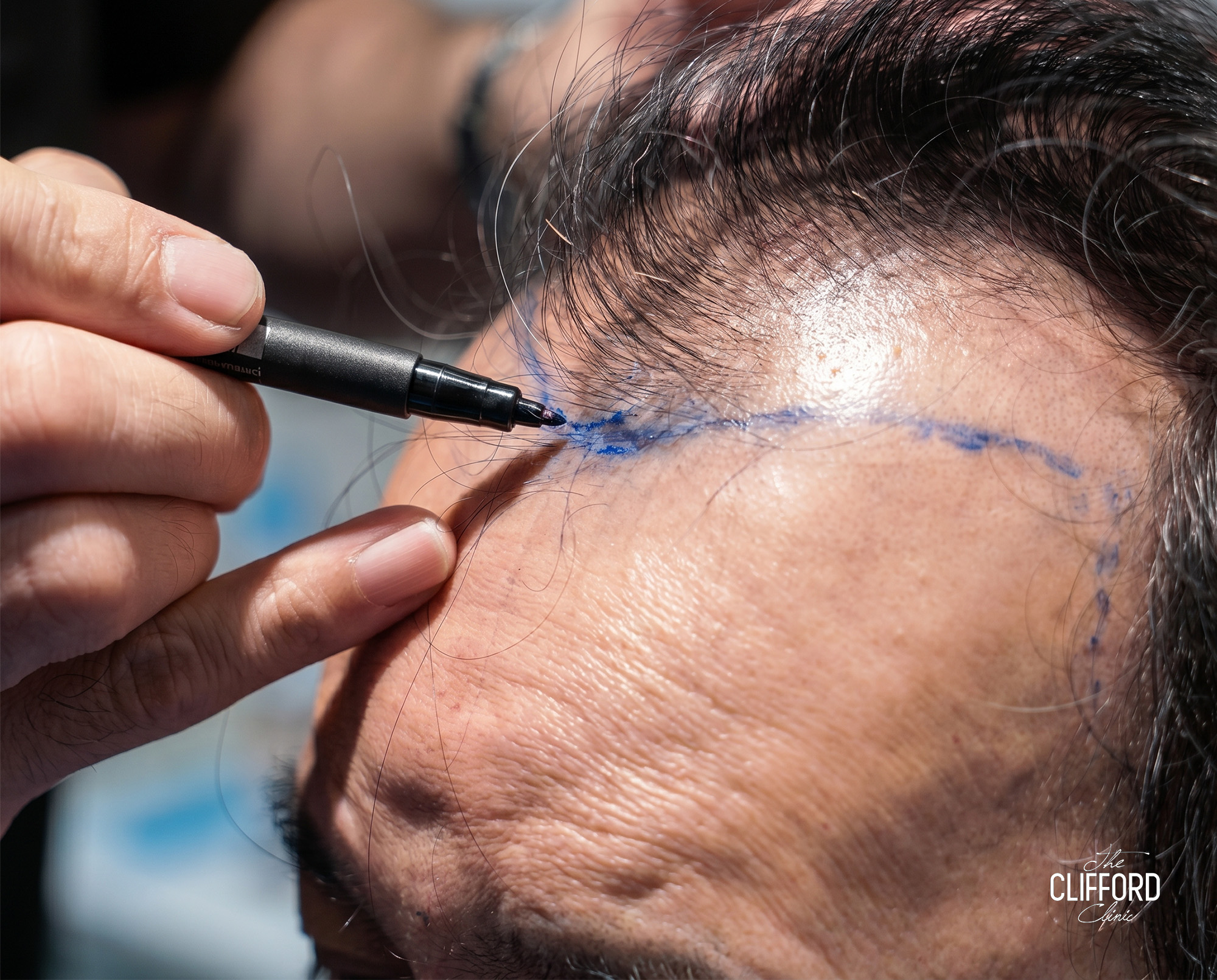
A natural hair transplant result depends on the angle, direction, distribution and density of the transplanted grafts. The goal is not simply to fill a bald area, but to make the transplanted hair blend naturally with the patient’s existing hair.
The Clifford Clinic’s content highlights that recipient sites should be planned according to the desired hairline, angle, direction and density so the result looks natural.
3. FUE is suitable for hairline and frontal restoration
Many patients searching for FUE hair transplant in India are trying to restore a receding hairline or thinning frontal scalp. FUE is commonly used for these areas because it allows careful placement of grafts to recreate a softer, more natural-looking hairline.
A well-designed hairline should match the patient’s age, facial proportions, hair characteristics and long-term hair loss pattern.
4. FUE supports careful donor management
The donor area is limited. Once grafts are extracted, they cannot simply be replaced. This makes donor preservation extremely important.
A good FUE plan should avoid overharvesting and consider whether the patient may need additional treatment in the future. This is especially important for younger patients or those with progressive male-pattern hair loss.
5. FUE can be part of a complete hair restoration plan
A hair transplant restores hair in selected areas, but it does not automatically stop future hair loss in the surrounding native hair. This is why FUE should ideally be combined with long-term hair restoration planning when suitable.
Patients who want to understand broader treatment options can explore The Clifford Clinic’s hair restoration treatments in Singapore.
The Clifford Clinic’s Skills and Experience in FUE Hair Transplant
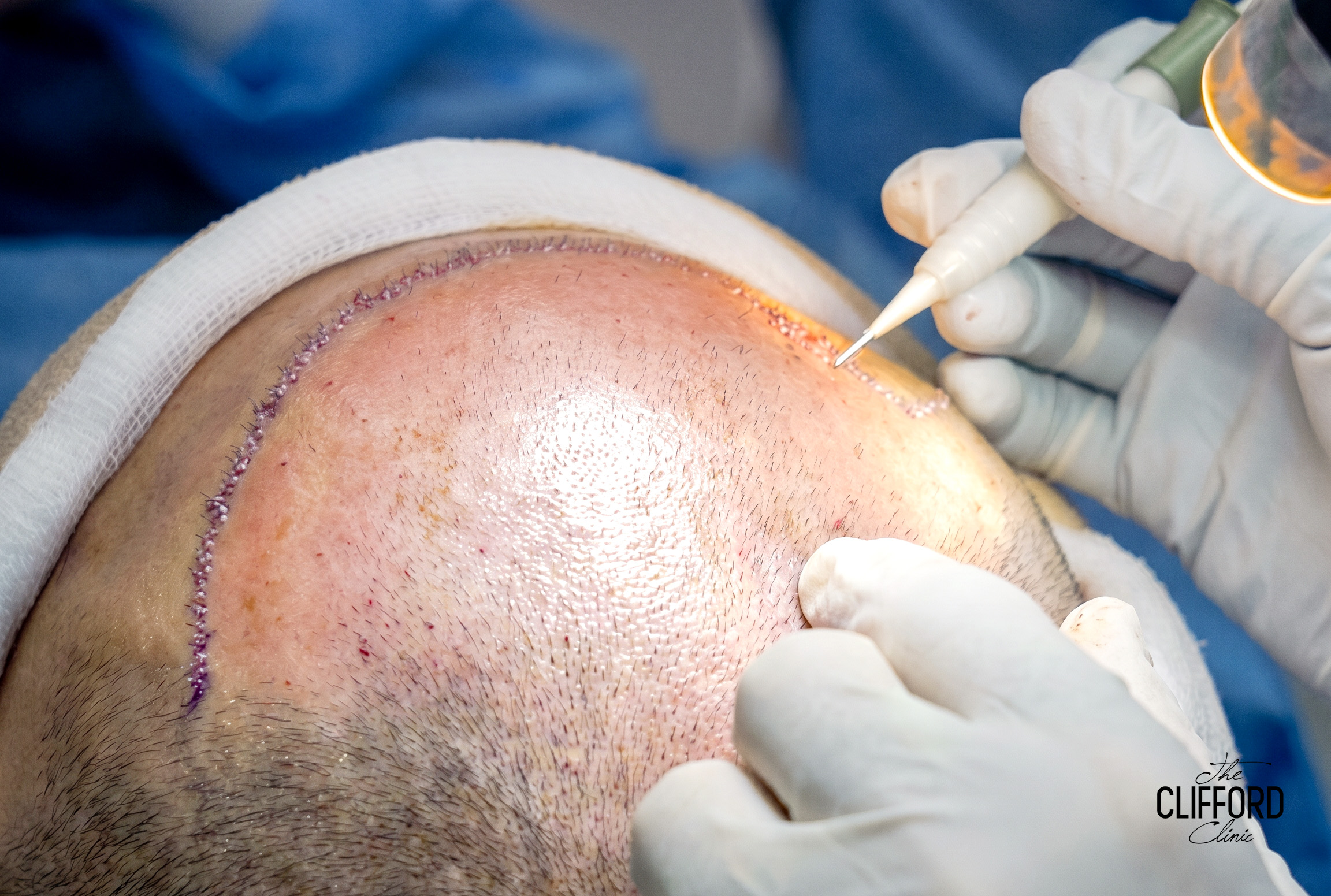
Choosing a hair transplant clinic should not be based only on price or location. The experience of the medical team, the planning process and the quality of graft handling all matter.
The Clifford Clinic states that it has over 15 years of experience in aesthetic medicine and hair transplantation, and notes that the success of a hair transplant depends on the experience, technique and knowledge involved in harvesting and handling follicles.
This experience is important because FUE is a detailed, technique-sensitive procedure. Each graft must be extracted carefully, prepared correctly and implanted with attention to the patient’s natural hair direction.
The Clifford Clinic’s approach includes:
Doctor-led assessment
Before recommending FUE, the clinic assesses the cause of hair loss, donor supply, scalp condition and whether ongoing hair loss should be stabilised first. Its hair restoration page also notes that not every patient is suitable for surgery, making proper consultation important.
Personalised graft planning
The number of grafts required depends on the patient’s hair loss pattern, donor quality, desired density and long-term needs. The goal is not to transplant the highest possible graft count, but to use grafts strategically.
Natural hairline design
Hairline design is one of the most important parts of FUE hair transplant. The transplanted hair must suit the patient’s face and blend with existing hair.
Careful graft preparation and implantation
The Clifford Clinic outlines a multi-step transplant process including donor area preparation, follicle harvesting, graft preparation, recipient area preparation and graft implantation.
Local follow-up in Singapore
Instead of managing recovery across borders, Singapore patients can return to the clinic for review and support.
For patients who want a more personal view of what the procedure can involve, The Clifford Clinic also shares a FUE hair transplant journey.
Why Local Aftercare Can Make a Big Difference
A hair transplant does not end when the grafts are implanted. Recovery happens in stages, and patients often have questions along the way.
In the first few days, the transplanted grafts need to be protected. Patients may need advice on washing, sleeping position, swelling, redness, scabbing, exercise, sun exposure, and when to resume normal activities.
Over the following weeks and months, some shedding can occur before new growth gradually appears. Many patients only start seeing early regrowth around months 3 to 4, with density improving over the following months. The Clifford Clinic’s content notes that the first 7 to 10 days are especially important for protecting grafts, while more representative results often take months to develop.
For Singapore patients, this is where local treatment becomes very valuable.
Instead of recovering in a hotel overseas or relying only on remote messages after returning home, patients can visit the clinic for follow-up. If they are unsure whether redness, shedding, scabbing, or scalp sensitivity is normal, they can get guidance more conveniently.
This can make the recovery process feel less stressful and better supported.
Why Singapore Patients May Not Need to Travel to India
There is nothing wrong with researching overseas options. India has a strong medical tourism industry and many patients are drawn to it for valid reasons. However, a hair transplant is a long-term decision, and the cheapest advertised package may not always offer the best overall value.
For patients living in Singapore, choosing The Clifford Clinic may make sense because it offers:
- A local consultation before committing
- No need for international travel
- Recovery at home
- Easier access to follow-up
- Competitive pricing for a 2,000-graft case
- Doctor-led planning
- A more convenient long-term relationship with the clinic
- Support for both surgical and non-surgical hair restoration
When you remove the cost of flights, hotels, airport transfers, overseas recovery, and possible return visits, local FUE hair transplant can become much more competitive.
This is why a patient searching for hair transplant cost in India should also compare the full journey of doing a hair transplant in Singapore, not just the overseas procedure fee.
Is FUE Hair Transplant Suitable for Everyone?
FUE hair transplant can be suitable for many patients, but not everyone is an ideal candidate.
It may be suitable for patients with:
- Receding hairline
- Male-pattern hair loss
- Female-pattern thinning with suitable donor hair
- Thinning crown
- Stable hair loss
- Adequate donor hair
- Realistic expectations
The Clifford Clinic’s hair restoration page notes that a hair transplant may be suitable for patients with male-pattern hair loss, female-pattern thinning with suitable donor hair, receding hairline, thinning crown and stable hair loss with realistic expectations. It also states that proper consultation is important because not every patient is suitable for surgery.
This is another reason not to rush into overseas packages. Some patients may need medical treatment first. Others may not have enough donor hair for the result they want. Some may need a staged approach rather than a large one-time graft session.
A proper consultation helps patients understand what is realistic before committing to surgery.
Patients who are still deciding can also read The Clifford Clinic’s guide to the pros and cons of hair transplant.
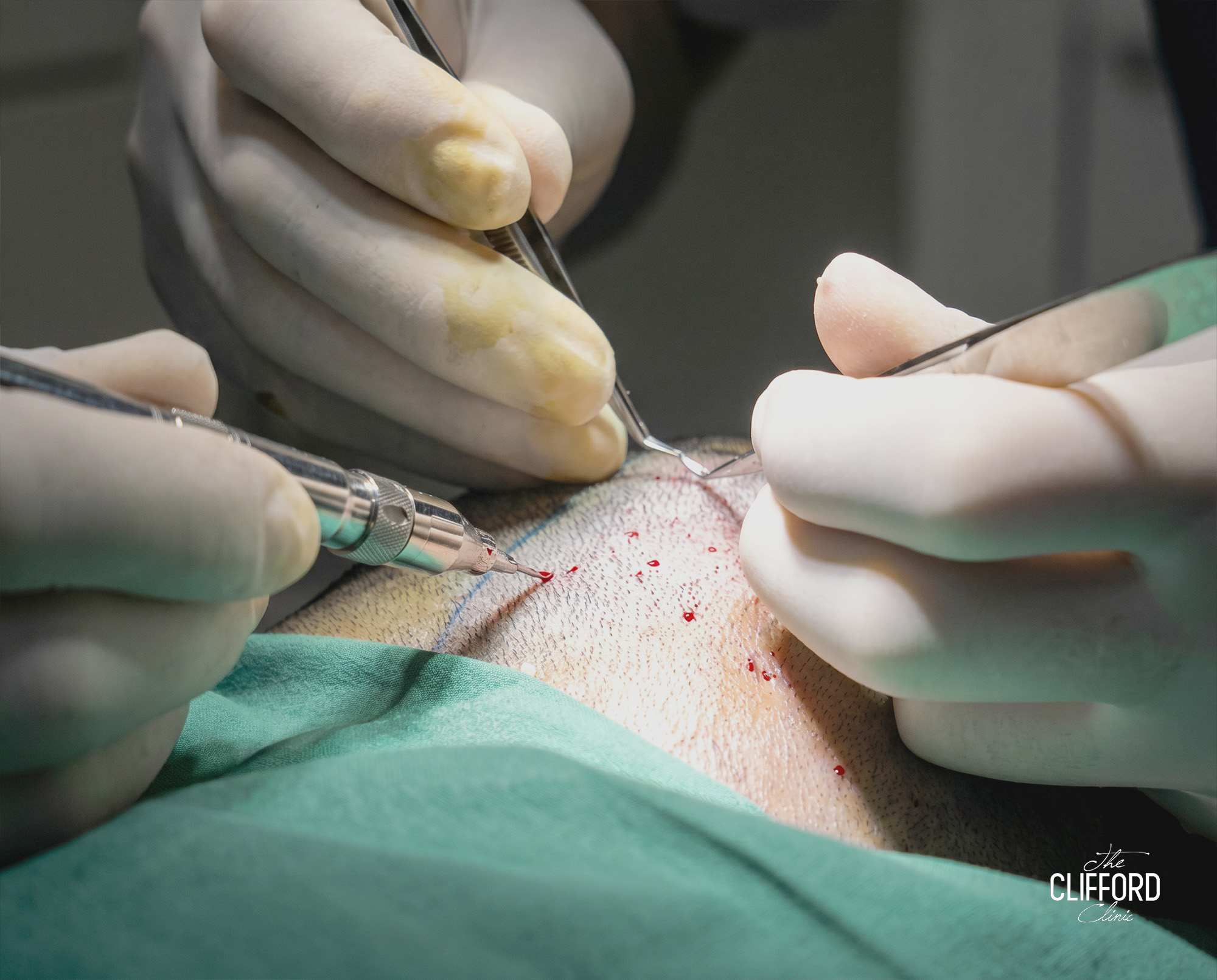
What Makes a Good FUE Hair Transplant Result?
A good FUE hair transplant should look natural, balanced, and suitable for the patient’s face. It should not look harsh, overly straight, or obviously transplanted.
Important factors include:
Hairline design
The hairline should match the patient’s age, facial proportions, natural hair direction, and future hair-loss pattern.
Graft angle and direction
Hair grows at different angles in different parts of the scalp. Correct placement helps transplanted hair blend naturally with existing hair.
Density planning
The goal is not always maximum density in one area. A good plan uses donor hair wisely and considers future hair loss.
Donor preservation
The donor area is limited. Overharvesting can make the back or sides of the scalp look thin.
Graft handling
Follicles must be handled gently and kept viable before implantation.
Long-term strategy
Hair loss may continue, so patients may need maintenance treatments even after a successful transplant.
The Clifford Clinic’s FUE information also reminds patients that hair is usually harvested from areas that do not fall out easily, but no clinic can guarantee that transplanted hairs will never fall out.
Honesty is important. A good clinic should explain both the benefits and limitations of treatment clearly.
Why Choose The Clifford Clinic Instead of Travelling to India?
For Singapore patients comparing India and Singapore, The Clifford Clinic offers a strong local option for FUE hair transplant.
Here is why patients may choose The Clifford Clinic:
Competitive Singapore hair transplant pricing
With published pricing from around SGD $3 per graft, The Clifford Clinic offers a cost structure that may be more competitive than patients expect from a Singapore clinic.
Over 15 years of hair transplant and aesthetic experience
The Clifford Clinic states that it has over 15 years of experience in aesthetic medicine and hair transplantation.
FUE-focused hair restoration
The clinic offers FUE hair transplant, a technique designed to extract individual follicles with smaller, less noticeable scarring compared with older strip techniques.
Local follow-up and accountability
Patients can consult, undergo treatment and return for review in Singapore instead of coordinating care across countries.
Natural-looking hairline planning
The procedure is planned with attention to graft placement, angle, density and overall appearance.
Broader hair restoration support
The clinic also offers a range of hair restoration solutions, allowing suitable patients to consider both surgical and non-surgical options.
For many Singapore-based patients, this combination of pricing, experience, convenience and continuity makes The Clifford Clinic a strong alternative to overseas hair transplant travel.
Frequently Asked Questions About Hair Transplant India vs Singapore
Is a hair transplant cheaper in India than in Singapore?
India may advertise lower per-graft prices, but Singapore patients should compare the total cost. Flights, hotel stays, transport, meals, time away from work, recovery overseas, remote follow-up, and possible post-procedure medical review can reduce the apparent savings.
How much does FUE hair transplant cost in Singapore?
At The Clifford Clinic, a typical 2,000-graft FUE case is estimated at around SGD $6,000 before GST, or approximately SGD $3 per graft. The final price depends on consultation, graft requirement, treatment area, case complexity, and the recommended treatment plan.
Is FUE better than FUT?
FUE avoids the long linear scar associated with FUT strip surgery and may suit patients who prefer shorter hairstyles. However, the most suitable technique depends on donor hair, scalp condition, hair-loss pattern, treatment goals, and the doctor’s assessment.
Do I need 2,000 or 3,000 grafts?
The number of grafts depends on the size of the thinning area, desired density, donor supply, hair thickness, and long-term hair loss pattern. A patient searching for 2000 grafts hair transplant India or 3000 grafts hair transplant India should still have a proper assessment before deciding on the graft count.
Why choose The Clifford Clinic instead of travelling overseas?
The Clifford Clinic offers FUE hair transplant in Singapore with local consultation, competitive pricing, personalised planning, natural hairline design, and convenient follow-up. For Singapore-based patients, this can be more practical than travelling overseas and managing recovery remotely.
Final Thoughts: Hair Transplant in Singapore May Be Better Value Than Travelling to India
India is a respected and popular medical tourism destination, and it will continue to attract patients searching for affordable treatment. Searches such as hair transplant India, hair transplant India cost, FUE hair transplant India, best hair transplant clinic in India, and best hair transplant surgeon in India are common because patients naturally want to compare options.
But for Singapore-based patients, the cheapest overseas quote may not always be the smartest choice.
A successful hair transplant depends on proper diagnosis, donor-area planning, graft survival, natural hairline design, careful implantation, aftercare, and long-term hair loss management. These are not small details. They directly affect the final result.
The Clifford Clinic offers patients the opportunity to undergo FUE hair transplant in Singapore with competitive pricing, local recovery, experienced planning, and convenient aftercare. With published pricing around SGD $3 per graft and a typical 2,000-graft case estimated at around SGD $6,000 before GST, many Singapore patients may find that they do not need to travel as far as India to access a value-driven hair transplant option.
Before deciding, compare the full journey. Review hair transplant Singapore cost, explore hair restoration treatments in Singapore, read a real FUE hair transplant journey, and understand the pros and cons of hair transplant.
For many patients, the best hair transplant decision is not about travelling the furthest for the lowest advertised price. It is about choosing careful planning, natural results, accessible aftercare, and a clinic you can return to when it matters.

Author Bio
Dr Gerard Ee

Dr Gerard Ee is the Medical Director of The Clifford Clinic in Singapore. He earned his medical degree from St George's University of London and built his surgical experience across the Singapore General Hospital, National University Hospital, and Mount Sinai Hospital in New York. He holds Membership of the Royal College of Surgeons (Edinburgh) and a Postgraduate Diploma in Dermatology (Cardiff), and is fully accredited in aesthetic procedures including botulinum toxin, fillers, lasers, and light therapies. A strong advocate of minimally invasive, natural-looking results, Dr Ee has published in several medical and scientific journals and presented his research in cities including Taipei, Las Vegas, and London.
See all posts by Dr Gerard Ee »