
Juvescars: A Targeted Solution for Acne Scars
Acne scars can leave a lasting imprint long after breakouts are gone—both on the skin and on self-confidence.
Juvescars is a targeted treatment approach designed to address atrophic acne scarring using a biostimulatory injectable that encourages your skin to repair itself from within. Unlike aggressive resurfacing procedures or temporary fillers, Juvescars focuses on long-term skin regeneration by stimulating natural collagen production. This minimally invasive treatment offers a safe and gradual path to smoother, more resilient skin—with minimal downtime and no need for surgery.
Understanding Acne Scars
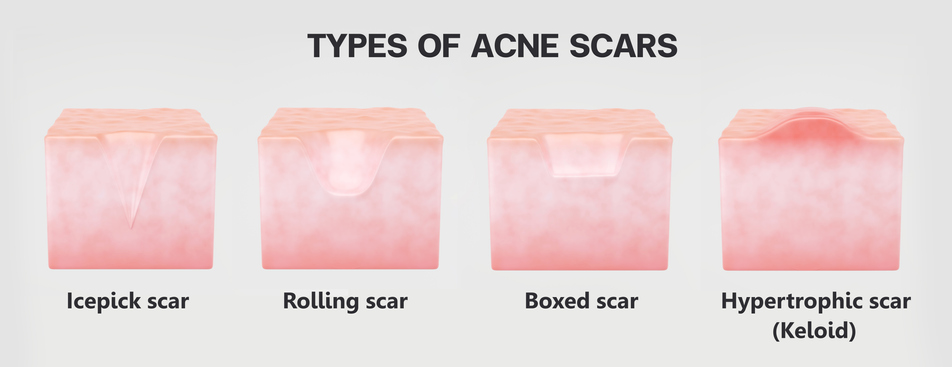
Acne scars are the result of inflammatory acne lesions such as papules, pustules, or cysts. When these lesions penetrate deeply into the skin, they damage the surrounding tissue. As the body attempts to heal this damage, it produces collagen fibers. When the balance of collagen production is disrupted either too little or too much, the skin forms a scar.
Acne scars are not just cosmetic concerns; they often affect emotional wellbeing and confidence.


How Acne Scars Are Formed
The formation of acne scars is a multi-step process:
Inflammation: Severe acne causes inflammation, which damages skin tissues.
Tissue Breakdown: The inflamed acne lesion destroys collagen and elastin fibers.
Wound Healing: The body initiates a repair process, producing new collagen.
Imbalanced Collagen Remodeling: When the amount or structure of new collagen is abnormal, scars form.
Scars are more likely to develop when acne is picked at or left untreated, particularly cystic or nodular acne.
Juvescars: A New Approach
Juvescars is a treatment protocol utilising a hybrid injectable combining polylactic acid (PLA) and non-crosslinked hyaluronic acid (HA). It represents a novel, regenerative approach to acne scar management, targeting the root causes of atrophic scarring.
It is not a filler or a resurfacing procedure. Instead, it is designed to stimulate natural collagen production in a controlled, gradual, and localised manner. It improves skin texture, elasticity, and volume by enhancing the skin’s regenerative processes.
For regulatory context, the Korean Ministry of Food and Drug Safety medical device database lists them among the model and product names registered under a Class 4 tissue repair material entry held by VAIM Co., Ltd. The database records approval number 제허17-972호 and item record 2017008208.1. This entry confirms the products’ listing within the Korean medical device database but does not by itself establish clinical effectiveness for acne scars or regulatory approval in Singapore.
Benefits of Juvescars Treatment
Gradual and Natural Results: Improvements occur progressively over weeks to months.
Non-Surgical and Minimally Invasive: No downtime required.
Targeted Stimulation of Collagen: Improves depressed scars without overcorrection.
Safe for All Skin Types: Minimal risk of pigmentation or post-inflammatory hyperpigmentation (PIH).
Long-Lasting Outcome: Results can persist for over 12 months after a complete course.

The Science Behind Juvescars
It consists of two main components:
1. Polylactic Acid (PLA)
PLA is a biodegradable, biocompatible polymer that has been used in medicine for decades. When injected into the dermis:
- It stimulates fibroblasts to produce collagen (Type I and III)
- Induces a controlled inflammatory response
Reconstructs skin architecture by increasing dermal thickness
2. Hyaluronic Acid (HA)
Non-crosslinked HA provides immediate hydration and volume to the skin, acting as a carrier for PLA particles. It improves tissue pliability and supports wound healing in the early phase of treatment.
The synergistic effect of PLA and HA provides both short-term and long-term skin improvement. Unlike traditional fillers that provide immediate but temporary volume, Juvescars offers sustained improvement by remodeling the skin from within.
A 2026 preclinical study described the polylactic acid component of these hybrid formulations more specifically as poly-D,L-lactic acid, or PDLLA, combined with non-crosslinked hyaluronic acid. The researchers distinguished between two formulations: it contained PDLLA microspheres measuring 20–40 µm, with 42.5 mg of PDLLA and 7.5 mg of hyaluronic acid per vial, while PDLLA Volume contained larger 40–60 µm microspheres, with 170 mg of PDLLA and 30 mg of hyaluronic acid per vial.2 These differences are relevant because findings from one formulation should not automatically be assumed to apply identically to the other.

Treatment Protocol
Juvescars is typically administered over a course of 2 to 3 sessions spaced one month apart. Each session involves:- Topical anesthesia to ensure comfort
- Microdroplet intradermal injections targeted into the scarred regions
- Post-procedure care, which may include sunscreen and moisturization
Injection volume and formulation dilution were specifically examined in the 2026 animal study. The researchers deliberately injected different concentrations into the central ear arteries of rabbits using volumes of 0.1 mL and 0.2 mL. Transient interruption of arterial flow occurred with the higher injection volume at the standard concentration and lower dilution, but blood flow was restored within five minutes in all affected ears.2 As this was a deliberate intra-arterial animal experiment, the tested volumes and dilution ratios should not be interpreted as a recommended human facial injection protocol.
Who Is Suitable for Juvescars?
Juvescars is ideal for individuals who:
Have atrophic acne scars, especially rolling or boxcar types
Seek natural-looking improvement without the risks of overcorrection
Want a non-surgical, low-downtime treatment
Are not candidates for aggressive laser or surgical procedures
Have skin of color and are concerned about PIH risks from ablative resurfacing
It may not be the best option for:
Active acne breakouts (should be controlled prior to treatment)
Deep ice pick scars (which may benefit more from TCA CROSS or punch excision)


Combining Juvescars with Other Treatments
Juvescars can be integrated into a multimodal acne scar treatment strategy, offering greater efficacy and more comprehensive skin remodeling when paired with complementary procedures:
Microneedling RF (Radiofrequency): This enhances skin texture, stimulates collagen, and tightens tissue. When used before or after Juvescars, it primes the skin to respond better to biostimulatory injections.
Fractional Lasers (e.g., CO2 or Er:YAG): These resurface the upper layers of the skin, improving superficial irregularities and enhancing the penetration of Juvescars.
Subcision: A manual technique that releases fibrous bands tethering the skin, often used for rolling scars. Following subcision, Juvescars can be injected to fill and regenerate the released area.
TCA CROSS (Trichloroacetic Acid Chemical Reconstruction of Skin Scars): This is highly effective for ice pick scars. Once the deep pit has been treated, Juvescars may be applied in surrounding areas to improve overall skin texture and support healing.
Each treatment modality addresses different dimensions of acne scarring. A personalised combination plan curated by an experienced physician ensures that every type of scar—whether superficial or deep, narrow or broad—is optimally treated.
Clinical Evidence and Safety Profile
Studies have shown that PLA-based injectables significantly increase dermal thickness, collagen content, and skin elasticity over time. Adverse effects are rare, with transient swelling, mild bruising, or redness resolving within a few days.
Juvescars uses FDA-approved components and is administered by trained aesthetic physicians under sterile protocols, ensuring safety and efficacy.
In the rabbit ear study, neither formulation produced persistent vascular occlusion, intravascular thrombosis, embolisation or clinically visible skin necrosis during the seven-day observation period.2 Countercurrent flow was observed only at the standard concentration and lower dilution, while transient vascular-flow disturbances were influenced by injection volume and dilution. These findings provide preclinical information about intravascular behaviour under the experimental conditions studied. They do not establish the incidence of vascular complications in human facial treatment or demonstrate clinical improvement in human acne scars.

Post-Treatment Expectations
Week 1: Skin feels plumper and more hydrated due to HA
Week 4–6: Visible improvement in scar depth and smoothness
Month 3 and beyond: Continued collagen stimulation and texture refinement
Results are subtle and natural. Most patients notice gradual fading of their scars, smoother contours, and improved skin resilience.
Why Do Juvescars at The Clifford Clinic?
Doctor-Supervised Expertise: All treatments are conducted by experienced aesthetic physicians trained in advanced acne scar management. Each plan is tailored to your unique scar pattern, skin type, and treatment goals.
Integrated Scar Treatment Philosophy: The clinic utilises a multi-modality approach, combining Juvescars with lasers, microneedling, subcision, and other therapies for comprehensive results. Juvescars is positioned as the regenerative anchor in this strategy.
Clinical Safety Standards: Treatments are performed in a licensed medical facility under strict hygiene protocols using approved medical-grade products and techniques.
Proven Track Record: The Clifford Clinic has a strong portfolio of acne scar cases, with visible, gradual improvements documented over time. Patients are monitored closely through every stage of the healing and remodeling process.
Customised Aftercare and Follow-up: Beyond treatment, patients benefit from detailed aftercare plans, follow-up consultations, and guidance on skincare, sun protection, and maintenance therapy to ensure lasting results.
FAQ
The content in Juvescars is not a conventional filler. While traditional fillers rely on volumization using substances like cross-linked HA, it is a hybrid biostimulatory formulation that actively remodels tissue over time. The PLA component stimulates fibroblasts to regenerate Type I and III collagen, leading to gradual and natural restoration of dermal structure. This makes Juvescars more regenerative in nature, targeting the root cause of atrophic scars rather than offering only temporary plumping.
Yes. Juvescars is often used as part of a combination protocol. It is compatible with previously treated skin, including areas that have undergone subcision, fractional laser resurfacing, or filler placement. In fact, it can help reinforce tissue integrity and improve collagen remodeling after such treatments. However, a thorough consultation is necessary to assess the timing, layering, and spacing of past procedures to avoid over-treatment or complications.
Histopathological examination in the 2026 animal study found generally preserved vascular architecture, together with occasional localised foreign-body responses characterised by macrophages and multinucleated giant cells in tissues adjacent to larger vessels.2 Occasional focal perivascular necrotic changes were also observed with the higher-volume formulation, although these changes did not involve the vascular lumen and no intravascular thrombosis or embolisation was identified. These animal findings cannot be used to calculate the frequency of papules, nodules or granulomas following human treatment.
Juvescars is well-tolerated in Fitzpatrick skin types IV–VI. Unlike energy-based devices that carry a higher risk of PIH, the injectable nature of Juvelook avoids superficial skin disruption. Because it targets dermal remodeling without ablative injury, it is particularly suitable for patients who are prone to pigmentary shifts. When paired with sun protection and appropriate skincare, the treatment is a safe and effective option for ethnic skin.
Histological studies on PLA-based injectables have demonstrated increased dermal collagen density, upregulation of fibroblasts, and improved extracellular matrix integrity. Clinically, PLA has been shown to enhance dermal thickness and skin elasticity over time. While it is a newer formulation, it draws from well-documented principles in tissue biostimulation. Early clinical reports and case studies support its effectiveness in treating atrophic scars, with improvements in depth, texture, and dermal firmness noted over a 12–16 week period.
The 2026 study provides formulation-specific preclinical evidence concerning vascular behaviour and local tissue response following intra-arterial exposure.2 It was an animal experiment rather than a human acne-scar trial and did not assess scar depth, scar grading, skin texture or patient satisfaction. The paper therefore supports discussion of formulation behaviour and tissue response, but it should not be presented as direct clinical proof that the treatment improves acne scars in people.
References
- Ministry of Food and Drug Safety, Republic of Korea. Medical Device Database: VAIM Co., Ltd. Tissue repair material (조직수복용재료). Approval number 제허17-972호. Item record 2017008208.
- Vachiramon V, Boonyarattanasoonthorn T, Rattanapinyopituk K, Duangbupha J, Limprasutr V, Kijtawornrat A, Wan J. Investigation of Vascular Behaviour and Tissue Response Following Intra-Arterial Injection of Poly D,L-Lactic Acid with Hyaluronic Acid Hybrid Biostimulators (Juvelook® and Juvelook Volume®) in a Rabbit Ear Model. Journal of Functional Biomaterials. 2026;17(9):447. doi:10.3390/jfb17090447.