
What Are ECM Skinboosters? A Complete Guide to ECM Skinbooster
Written by Dr Law Zhi Wei
If you have been researching skin rejuvenation treatments in Singapore, you may have come across the term ECM skinbooster and in particular, a treatment called Elravie Re2O. This guide explains exactly what ECM skinboosters are, why they represent a fundamental advance over conventional injectables, and why ECM Skinbooster by L&C Bio is widely regarded as the most innovative product in this category today.
Whether you are visiting The Clifford Clinic for the first time or looking to deepen your understanding of a treatment your doctor has recommended, this article provides everything you need to know, backed by science, clinical data, and the expertise of Dr Law Zhi Wei.
What Is the Extracellular Matrix (ECM) and Why Does It Matter?
The extracellular matrix, or ECM, is the biological scaffolding that makes up over 70% of the skin’s dry weight. It is a complex, three-dimensional network of proteins, glycoproteins, and polysaccharides that surrounds skin cells, provides structural support, and enables the cellular communication essential for healthy, youthful skin.
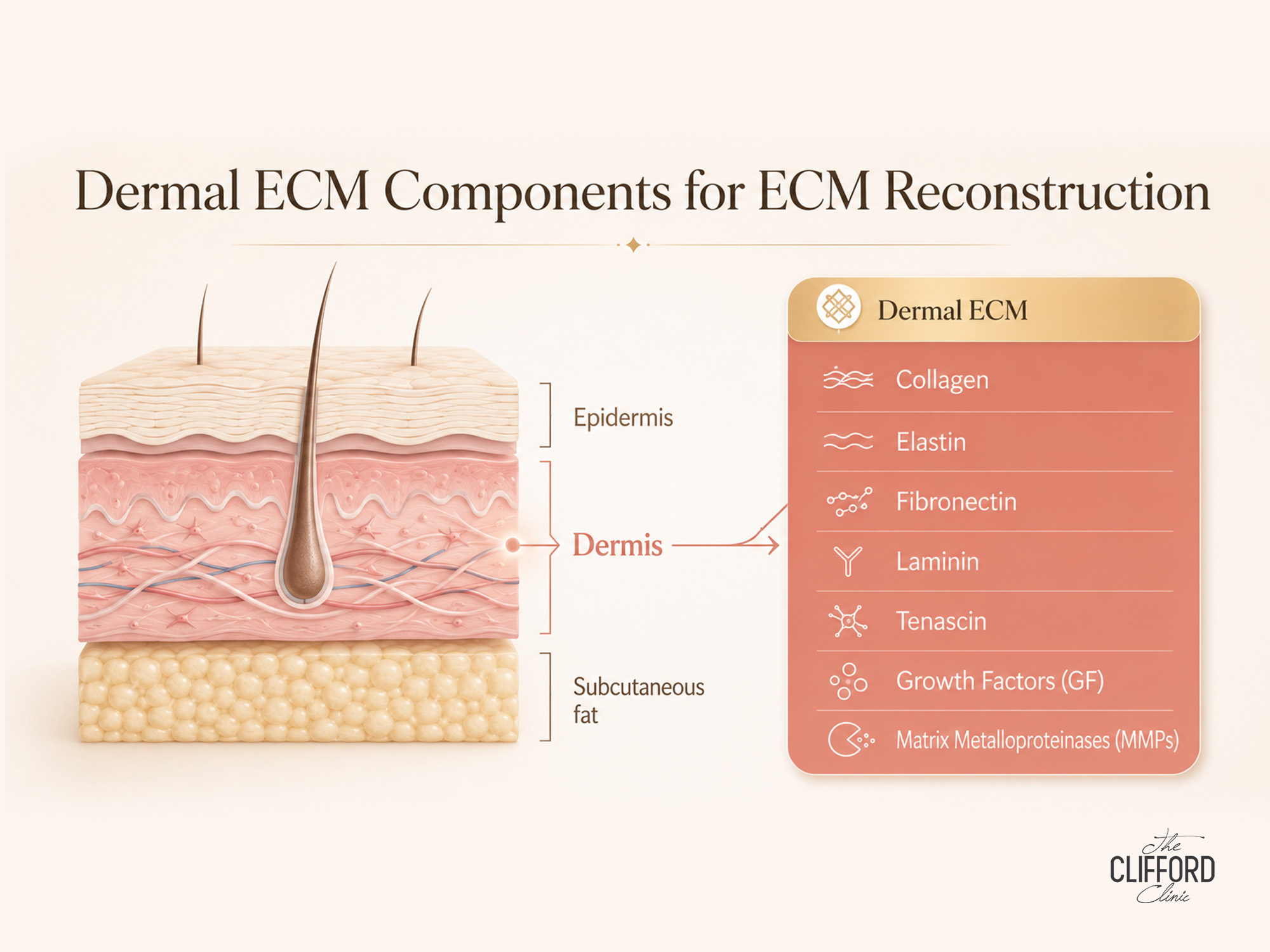
The ECM is composed of several key components, each with a distinct role. Collagen, spanning multiple types including I, III, IV, V, VI, VII, and XVII, serves as the primary structural protein giving skin its firmness and tensile strength. Elastin provides the elastic fibres that allow skin to spring back after movement. Hyaluronic acid and glycosaminoglycans (GAGs) are water-binding molecules that maintain dermal hydration and volume. Fibronectin and laminin are glycoproteins essential for cell adhesion, wound healing, and tissue repair. Tenascin is an ECM protein group involved in tissue remodelling. Growth factors, including VEGF, FGF, IGF, PDGF, and TGF-β, are signalling molecules stored within the ECM that coordinate skin repair and regeneration. Finally, matrix metalloproteinases (MMPs) are enzymes that break down old or damaged ECM to allow new matrix deposition and tissue renewal.
Fibroblasts, often described as the architects of the skin — live within this matrix and are responsible for producing and maintaining all of these components. Their three core functions are structural support (synthesising ECM proteins to maintain tissue strength), wound healing (releasing growth factors to promote tissue regeneration), and inflammatory response regulation (secreting cytokines involved in repair). When the ECM is healthy and well-structured, fibroblasts remain active and productive. When the ECM degrades, fibroblast activity declines, and the skin begins to age visibly.
How Does Skin Ageing Relate to ECM Decline?
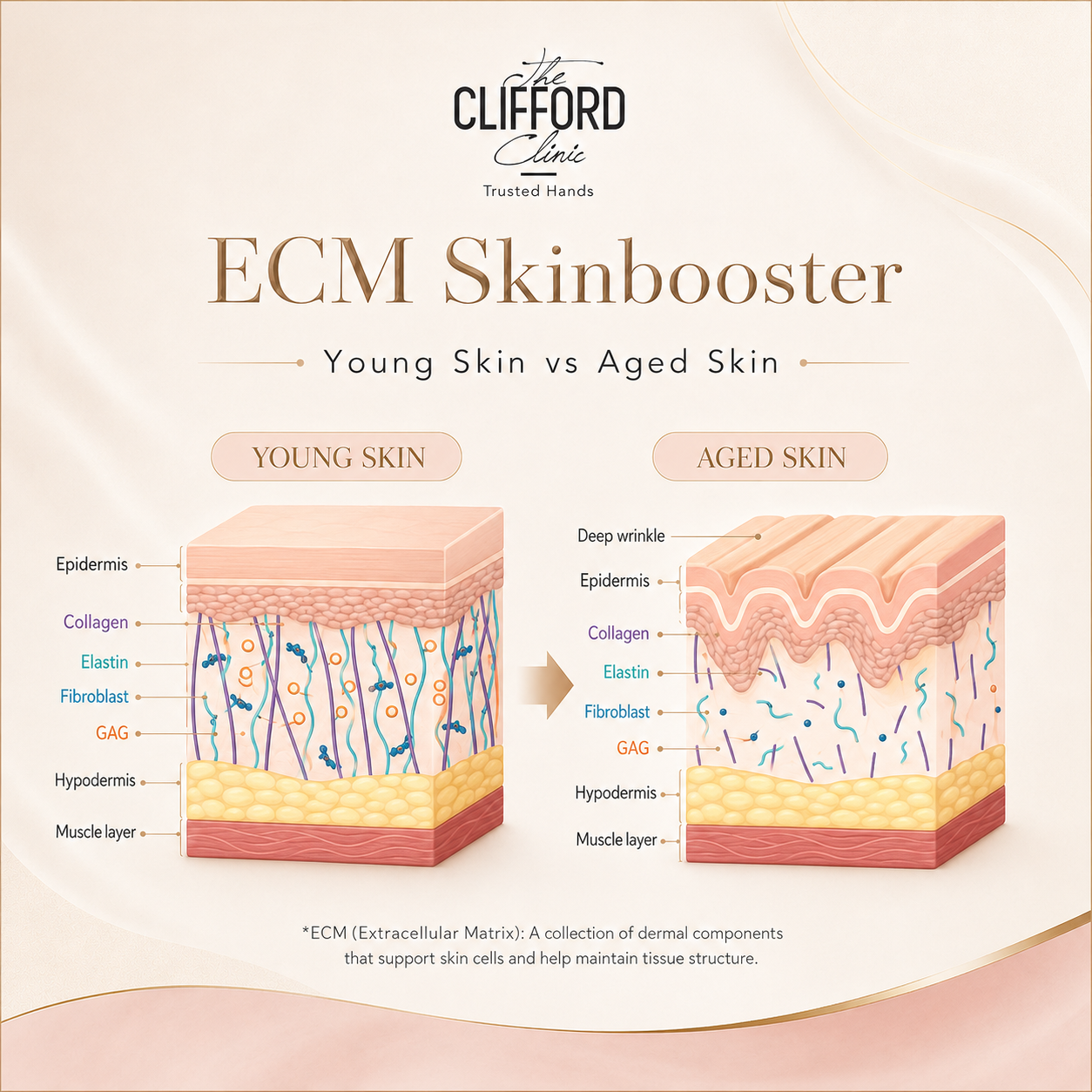
Skin ageing is, at its core, a story of ECM degradation. Collagen, predominantly Type I (around 80%) and Type III (around 15%) begins declining at a rate of approximately 1 to 1.5% per year from as early as our twenties. By the time we reach our forties and sixties, collagen and elastin stores are significantly depleted, and the dermal structure begins to collapse. The dense, interwoven scaffold of young skin, rich in collagen and elastin fibres with abundant fibroblasts — gives way to a fragmented, loosely organised matrix with sparse cellular activity. Deep wrinkles form at the surface as a direct consequence of this internal structural failure.
The visible consequences are well known: fine lines deepen into wrinkles, skin loses its bounce and firmness, pores enlarge, and the complexion becomes dull and uneven. Sun exposure dramatically accelerates this process through photoageing, causing additional fragmentation of collagen and elastin fibres.
The fundamental cause of skin ageing is not merely surface dryness or loss of volume, it is the progressive reduction of the ECM itself. This insight is what separates ECM skinboosters from all previous generations of injectable treatments.
The Evolution of Skin Boosters: Why ECM Boosters Are Different
The injectable skin rejuvenation category has evolved through several generations, each building upon the limitations of the last. First-generation treatments were simple hyaluronic acid water glow injections focused on surface hydration. The second generation added vitamins, antioxidants, and amino acids to the HA base. Third-generation PDRN (polynucleotide) injections introduced DNA repair mechanisms and early biostimulation. The fourth generation brought exosomes and biodegradable polymer collagen stimulators such as PDLLA. Now, fifth-generation ECM boosters, of which ECM Skinbooster is the defining product represent a categorical shift: rather than stimulating the skin indirectly, they directly inject the actual structural components of real human skin ECM.

Previous generations of skin boosters, even the best HA-based formulations and PDRN treatments, work primarily as collagen stimulators. They send signals to the skin to produce more of its own collagen, but they do not directly replenish the full spectrum of ECM components that are lost with age. ECM Skinbooster changes this entirely. By injecting real human ECM, it addresses the root cause of skin ageing rather than its downstream consequences.
About L&C Bio: The Company Behind ECM Skinbooster
ECM Skinbooster is developed and manufactured by L&C Bio (Life and Creativity Bio), a South Korean biotechnology company that has built its reputation on differentiated human tissue processing technology. L&C Bio is not a new entrant to this field. It is a recognised leader in human tissue-based regenerative medicine, with a track record spanning nearly a decade of broad clinical use across surgical and medical settings.
L&C Bio holds the number one domestic market share in South Korea for human tissue products, commanding approximately 50% of the market as of 2020. Their hADM-based products have been supplied to approximately 2,500 medical institutions, including general hospitals, plastic surgery clinics, and dermatology centres with over 1.72 million units sold from January 2016 to October 2024. Their product portfolio spans the full range of human tissue grafts: skin, bone, cartilage, fascia, tendon, ligament, and nerve, under brand names including MegaDerm, MegaFill, MegaBone, MegaCartilage, and MegaNevre Prime.
From a regulatory and quality standpoint, L&C Bio holds accreditation from the AATB (American Association of Tissue Banks), the highest standard of tissue bank quality assurance in the United States and is FDA-listed for unprocessed tissue, as well as registered with South Korea’s MFDS. Their research output is substantial, with over 100 SCI-grade papers secured, including publications in the journal Biomaterials (impact factor 10.317), demonstrating that their technology claims are underpinned by rigorous independent scientific validation.
L&C Bio’s entry into the aesthetic injectable market with ECM Skinbooster is therefore not a speculative venture — it is the application of deep, validated expertise in human tissue processing to a new clinical indication. The same proprietary technology that underpins their surgical tissue grafts has been adapted and refined specifically for intradermal aesthetic use.
What Is ECM Skinbooster? The World’s First Real Human Skin ECM Booster
ECM Skinbooster (pronounced Re-Two-O) is an injectable ECM booster made from processed, micronized human Acellular Dermal Matrix (hADM). It is the first product in the global aesthetic market to directly inject real human skin ECM components intradermally to address the fundamental biological cause of skin ageing. Its tagline, Remain your youth with Real Human Skin reflects a genuine technological distinction rather than a marketing claim.
In terms of product specifications, each syringe contains 150 mg of human Acellular Dermal Matrix as its active ingredient, classified as a human tissue product under medical-grade regulatory frameworks. The hADM particles are micronized to below 100 micrometres in diameter, making them fine enough for intradermal injection while retaining their fibrous ECM architecture. The product has a five-year shelf life and is stored at room temperature between 1 and 30 degrees Celsius. It is manufactured in South Korea by L&C Bio.
What Does ‘Acellular Dermal Matrix’ Mean?
hADM (human Acellular Dermal Matrix) is sterilised dermal tissue derived from human skin, from which all cellular material including cells, fat layers, and potential antigens — has been carefully removed using L&C Bio’s proprietary AlloClean Technology. What remains is the pure ECM scaffold: the structural proteins, glycoproteins, and growth factors that define the native architecture of human dermis. This is the material that is then micronized and delivered as ECM Skinbooster.
The Composition of ECM Skinbooster
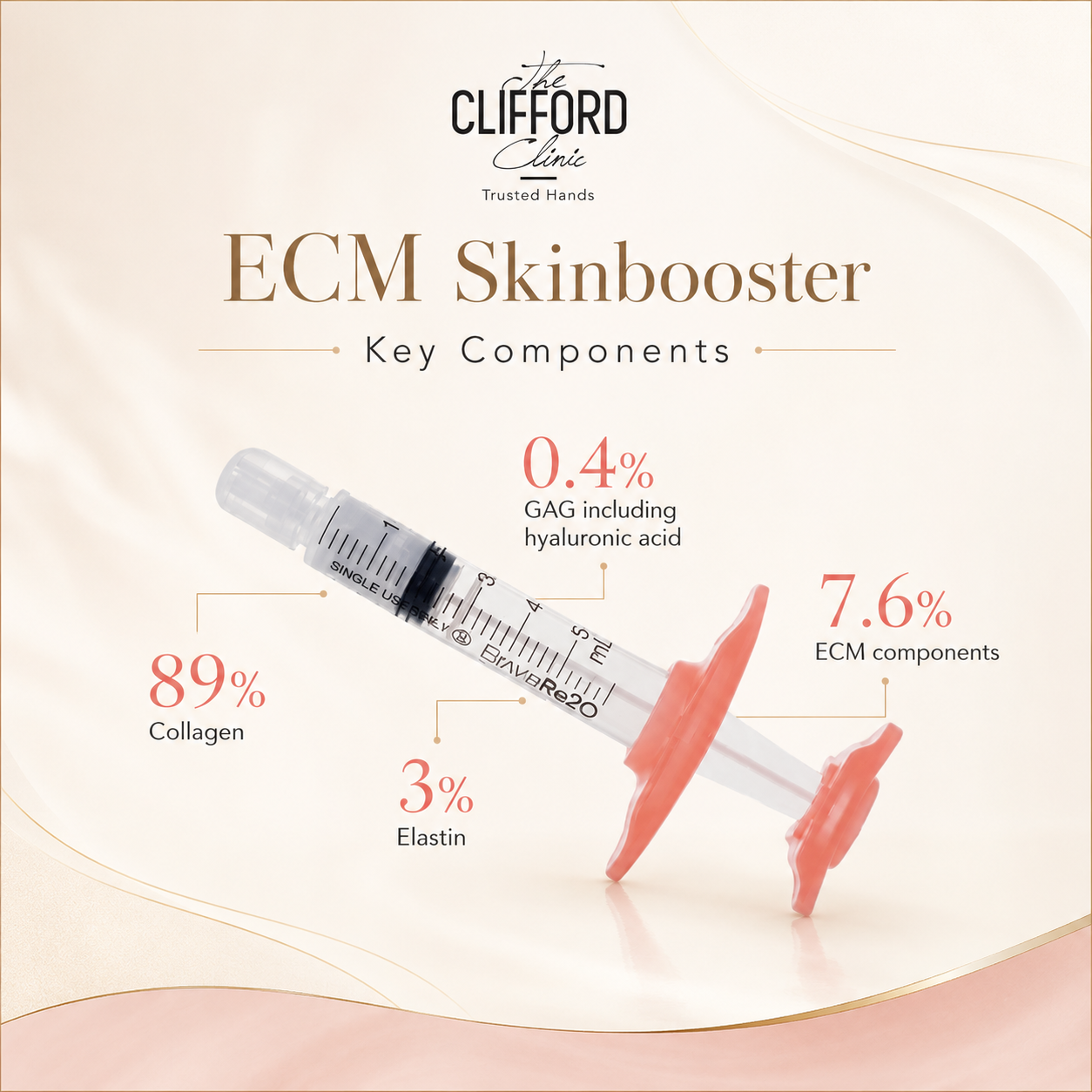
Unlike conventional skin boosters that are single-component formulations, typically just hyaluronic acid or a synthetic polymer. ECM Skinbooster contains the full spectrum of human dermal ECM components in their natural proportions. Collagen makes up the dominant fraction at 89%, with Type I collagen (approximately 70–80% of the total) providing primary structural support, Type III collagen (approximately 10–15%) contributing skin elasticity, Type IV collagen (approximately 3–5%) structuring the basement membrane, and smaller quantities of Types V, VI, VII, and XVII collagen serving roles in structural integrity, cell-matrix linkage, and epithelial tissue stability. Elastin accounts for 3% of the composition, providing skin flexibility and recoil. Glycosaminoglycans including hyaluronic acid represent 0.4% of the matrix, contributing to moisture retention. The remaining 7.6% comprises other ECM components including fibronectin, laminin, tenascin, and retained growth factors.
This breadth of compositional diversity spanning seven collagen subtypes alongside elastin, GAGs, and multiple structural glycoproteins is something that no synthetic injectable can replicate. It is what makes ECM Skinbooster a true ECM booster rather than a collagen stimulator.
How Is ECM Skinbooster Made? The AlloClean Technology
The manufacture of ECM Skinbooster relies on L&C Bio’s proprietary AlloClean Technology, a tissue processing platform developed and refined over years of producing medical-grade human tissue grafts for surgical use. The process proceeds in two key stages.
The first stage is decellularisation using AlloClean Technology, in which human skin is processed to remove all cells, pathogens, and antigens while preserving the native ECM structure intact. This produces a safe, biocompatible acellular dermal matrix that maintains the three-dimensional collagen and elastin scaffold needed for effective tissue regeneration. A critical advantage of AlloClean Technology over competing processing methods is its extremely low residual DNA levels significantly lower than the comparative benchmarks of other processing platforms, as confirmed by assay data. This minimal DNA residue is what eliminates immune rejection risk and maximises the product’s safety profile.
The second stage is micronization, in which the processed hADM is reduced to particles below 100 micrometres in diameter, fine enough to pass through standard aesthetic injection needles, while retaining the fibrous ECM architecture that provides biological signals to fibroblasts upon injection.
The result is a product with excellent biocompatibility, a proven safety record backed by over 1.72 million units of clinical use across related hADM products, and a unique structural composition that no synthetic material can match. It is a genuinely novel category of injectable, one that treats the cause of skin ageing rather than its surface manifestations.

“What sets ECM Skinbooster apart from every other injectable I have worked with is that it is not pretending to be skin — it is skin. When I explain to patients that we are supplementing their dermis with actual human dermal matrix that has been safely processed and micronized, the clinical rationale is immediately clear. We are not asking the skin to do something it may no longer be capable of on its own. We are giving it back the raw materials it has lost. That is a fundamentally different conversation, and it leads to a fundamentally different outcome.” — Dr Law Zhi Wei, Aesthetic Physician, The Clifford Clinic Singapore |
How DoesECM Skinbooster Work? The Dual-Function Mechanism
ECM Skinbooster works through a dual-function mechanism, delivering both immediate and progressive benefits following injection into the deep dermis.
Phase 1 — Immediate Effect: Direct ECM Supplementation
When micronized hADM is injected into the deep dermis, the ECM components are immediately present in the tissue. The natural hydrophilicity of these components — particularly the hyaluronic acid and GAGs within the matrix — attracts moisture, producing an immediate improvement in skin hydration and a subtle micro-volumising effect that softens the appearance of wrinkles, pores, and surface irregularities. Patients often notice an early improvement in skin texture and density within days of treatment.
Phase 2 — Progressive Effect: Fibroblast Activation and ECM Regeneration
Over the weeks following injection, the injected hADM particles act as a biological scaffold that fibroblasts actively incorporate into and remodel. This triggers a cascade of regenerative activity. Fibroblasts are activated and begin producing increased quantities of Collagen Types I and III, along with elastin and hyaluronic acid, while fibroblast populations themselves expand. Activated fibroblasts also secrete key growth factors, including FGF (fibroblast growth factor), VEGF (vascular endothelial growth factor), IGF (insulin-like growth factor), PDGF (platelet-derived growth factor), and TGF-β (transforming growth factor beta) amplifying the regenerative response beyond the immediate injection site. New blood vessel formation, or neovascularisation, occurs as endothelial cell populations increase, improving skin perfusion and nutrient delivery. Throughout this process, the injected ECM progressively integrates with newly formed ECM, creating a continuously strengthened dermal scaffold over time.
This is fundamentally different from HA-based skin boosters, which act through mechanical stretching of fibroblasts or simple hydration effects. ECM Skinbooster provides the actual building blocks of the ECM, enabling a more comprehensive and durable regenerative response that addresses the biological deficit of skin ageing rather than masking it.
What Skin Concerns DoesECM Skinbooster Address?
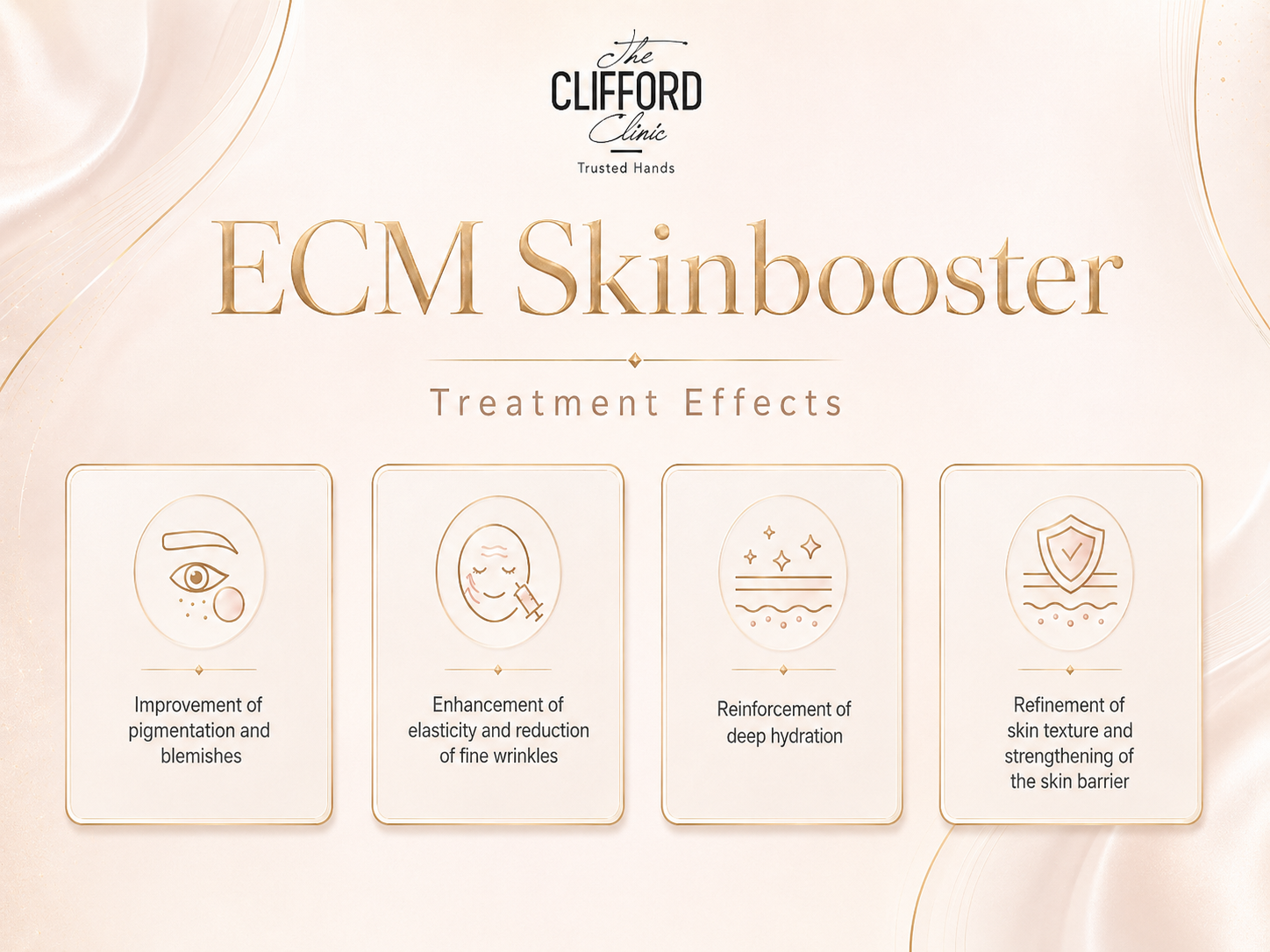
ECM Skinbooster has been clinically evaluated across ten key skin quality indicators, with measurements and assessments conducted by the Global Medical Research Center. Results evaluated four weeks after a single treatment session showed meaningful improvements across all parameters. Pore size was reduced by 17%, while skin texture density improved by 11.3%. Skin redness decreased by 9.7%, and skin radiance increased by 4.4%. Notably, skin elasticity improved by 16.3% and skin moisture by 5.9%, both measured objectively using Cutometer and Moisturemeter instruments respectively. Additional improvements were observed in fine line reduction, skin barrier strengthening, pigmentation and blemish improvement, and atrophic acne scar appearance.
These results are particularly significant because they were achieved after a single session. With a full initial course of three treatments at four-week intervals, outcomes are expected to be substantially more pronounced, and sustained for six months or more with appropriate maintenance.
At The Clifford Clinic, ECM Skinbooster is indicated for patients presenting with rough and dry skin lacking radiance, fine lines and early signs of ageing, enlarged pores and uneven skin texture, poor skin elasticity and reduced firmness, atrophic acne scars, rosacea and chronic skin redness, photoaged or sun-damaged skin, and patients seeking post-procedural skin maintenance to preserve and build upon results from other aesthetic treatments.
ECM Skinbooster vs Other Skin Boosters: How Does It Compare?
To understand what makes ECM Skinbooster genuinely different, it helps to consider how it compares with the categories of injectable it supersedes. Conventional skin boosters and collagen stimulators, including HA-based formulations, PDRN, PDLLA, and porcine or fish collagen products share a common limitation: they are either synthetic, animal-derived, or single-component formulations that work indirectly by stimulating the skin’s own collagen production.
ECM Skinbooster, by contrast, is derived from real human skin, contains the full spectrum of ECM components in natural proportions, is injected into the deep dermis rather than the superficial dermis, and works through direct ECM supplementation alongside fibroblast activation. In practical terms, this means an immediate micro-volumising and hydrating effect is combined with a long-term regenerative process that results in genuine ECM renewal — neovascularisation, structural collagen deposition, and elastin restoration — rather than simple surface hydration. Because the product undergoes full acellularisation, there is zero immune rejection risk, an advantage that animal-derived products such as porcine collagen cannot offer. Duration of effect with maintenance is six months or more, compared to three to six months for most conventional boosters.
This distinction was confirmed in preclinical animal studies conducted using a photoaged hairless mouse model, in which ECM Skinbooster was directly compared against Water Glow Injection (HA), PDRN, and Atelo Collagen. Histological analysis showed that ECM Skinbooster produced the highest mean collagen density score at 162 — compared to 128 for the HA water glow injection, 137 for PDRN, and 141 for Atelo Collagen — and demonstrated visually superior wrinkle reduction across all comparison groups.
| “One question I often receive is: how does ECM Skinbooster compare to what I am already doing — whether that is Profhilo, PDRN, or exosomes? My answer is that ECM Skinbooster occupies a different category entirely. The others are asking your skin to do more work. ECM Skinbooster is giving your skin more material to work with. For patients who have had prior treatments with good but plateauing results, introducing ECM Skinbooster often unlocks a new level of improvement because you are now addressing what the skin has genuinely lost, not just signalling for more production from a depleted factory. At The Clifford Clinic, we also find it pairs exceptionally well with energy-based devices as part of a comprehensive skin health programme.”
— Dr Law Zhi Wei, Aesthetic Physician, The Clifford Clinic Singapore |
What to Expect: TheECM Skinbooster Treatment Experience at The Clifford Clinic
Before Treatment
A thorough skin consultation with Dr Law Zhi Wei will assess your skin condition, concerns, and goals before any treatment is recommended. ECM Skinbooster is suitable for virtually anyone presenting with visible signs of skin ageing or ECM degradation from patients in their late twenties with early photoageing concerns to those in their fifties and sixties seeking meaningful structural skin quality restoration. Topical anaesthetic cream is applied 30 to 45 minutes before the procedure to maximise comfort throughout.
During Treatment
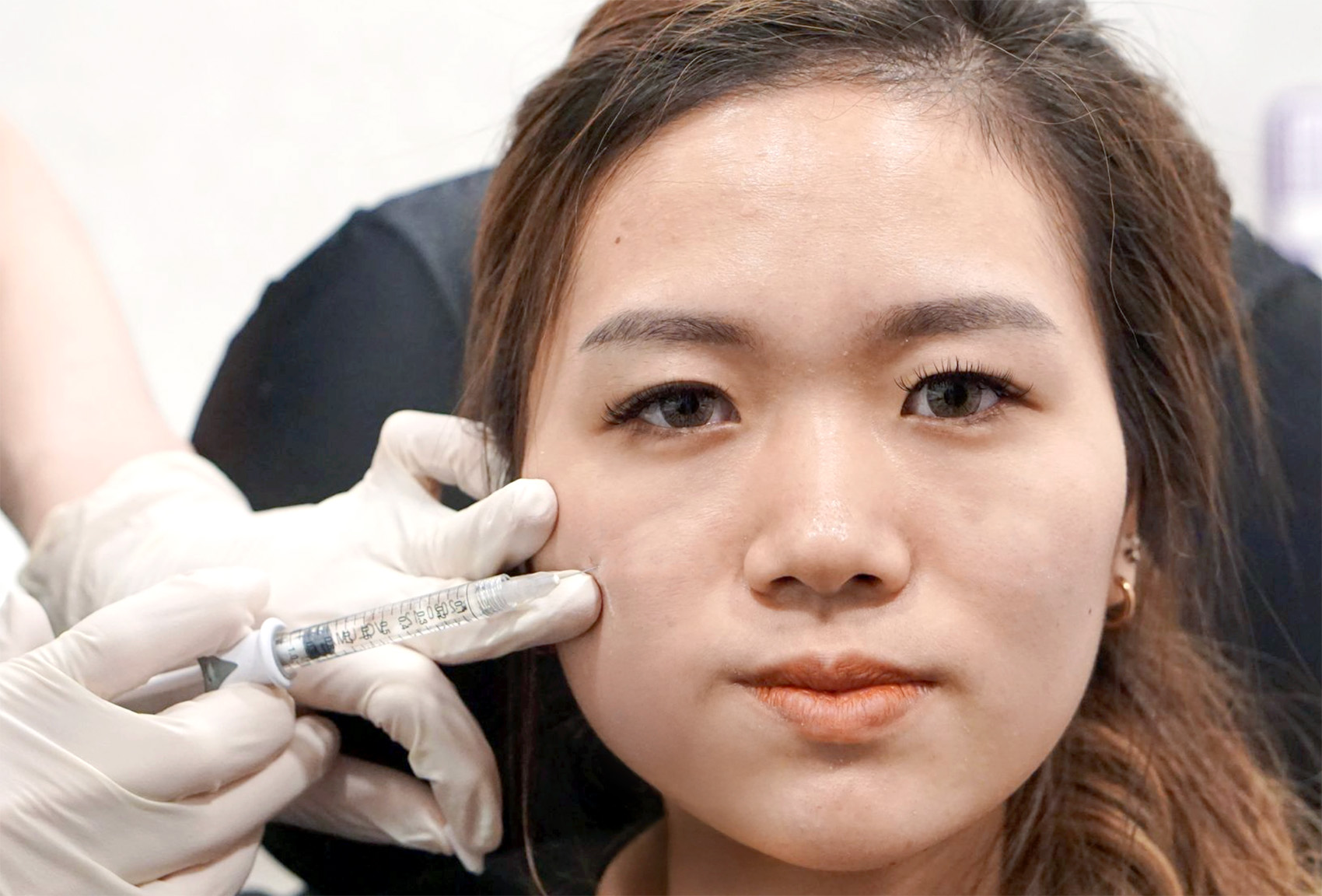
ECM Skinbooster is supplied as a dry powder, 150 mg per syringe that is reconstituted with normal saline immediately before injection. The consistency can be adjusted based on treatment area and clinical goals: a finer dilution for full-face coverage using 150 mg ECM Skinbooster in 5 cc of saline, a dedicated neck protocol using 4 cc, or a combined full-face and neck protocol using 9 cc. For patients who would benefit from additional hydration, non-crosslinked HA can be incorporated into the mixture, and a small amount of 2% lidocaine may be added to further minimise procedural discomfort.
Injection is performed into the deep dermis at a depth of more than 2 mm and an angle of 45 to 60 degrees using a fine needle (30 to 33 gauge, 4 mm) or a 25 to 26 gauge cannula for areas such as the under-eye and nasolabial folds. For the neck, the target depth extends into the deep dermis and subcutaneous layer, with volumes of approximately 0.025 ml per point. Automated injector devices such as Dermashine Pro and Mirajet can also be used for consistent deep dermal delivery. After injection, gentle massage helps distribute the particles evenly, particularly important in delicate areas such as the under-eye and neck.
After Treatment
Mild swelling, redness, or transient micro-nodules may be present immediately after treatment, typically resolving within 24 to 48 hours. If micro-nodules persist beyond this window, they can be managed conservatively with oral antihistamines, anti-inflammatory medication, or a small saline injection into the affected area followed by gentle massage, an approach that typically resolves the nodules within one to two weeks. Patients can cleanse the skin lightly three to four hours after treatment, and makeup can be applied the following day. Saunas, steam rooms, and vigorous exercise should be avoided for one week post-treatment. Keeping the skin well hydrated during the recovery period is encouraged.
Treatment Protocol and Timeline
The recommended initial protocol for ECM Skinbooster is three sessions spaced four weeks apart — a loading phase designed to build sufficient ECM scaffold and initiate meaningful fibroblast activation. Following this initial course, a single maintenance session every six to nine months is recommended to sustain and progressively enhance the results achieved. Combining ECM Skinbooster with energy-based devices is encouraged where appropriate, as the combination is thought to further amplify ECM regeneration.
In terms of results timeline, initial improvements in hydration and skin texture are visible within days of the first session. Progressive collagen remodelling and structural improvement develop over four to eight weeks. The full benefit of a three-session course becomes apparent over two to three months, with effects sustained for six months or more with maintenance.
Is ECM Skinbooster Safe?
Safety is the foundation upon which ECM Skinbooster was built. L&C Bio’s AlloClean Technology achieves full cellular removal while preserving ECM integrity, eliminating the cellular and antigenic material that would otherwise trigger immune responses. The result is a product with zero immune rejection risk confirmed through the acellularisation process, extremely low residual DNA levels significantly below competing processing benchmarks, AATB accreditation as the highest standard of tissue bank quality assurance, FDA listing for unprocessed human tissue, MFDS registration in South Korea, and a broad clinical use track record underpinned by over 1.72 million units of L&C Bio hADM products used safely across 2,500 institutions.
In clinical use, adverse effects are mild and transient. Temporary swelling, redness, and bruising at the injection sites are the most commonly reported side effects, typically resolving within one to two days. The product’s biocompatible pH further minimises discomfort during the procedure itself. No serious adverse events attributable to the hADM material have been reported in the extensive clinical use history of L&C Bio’s tissue products.
Why Choose The Clifford Clinic for ECM Skinbooster in Singapore?
At The Clifford Clinic, we were among the early adopters of ECM Skinbooster in Singapore because we recognised that it represented something genuinely new in aesthetic medicine, not incremental improvement, but a category shift. We offer ECM Skinbooster as part of a medically directed, individualised approach to skin health that goes beyond surface-level correction.
Dr Law Zhi Wei brings both the clinical expertise and the evidence-based philosophy needed to deploy this treatment effectively. Every patient’s skin is different, and the decision of whether to use ECM Skinbooster as a standalone treatment, combine it with other modalities, or integrate it into a longer-term skin health programme is made through careful consultation and assessment — never through a one-size-fits-all approach.
If you are interested in ECM skinbooster treatment in Singapore, or would like to explore whether ECM Skinbooster is right for you, we invite you to book a consultation with Dr Law Zhi Wei at The Clifford Clinic. We look forward to helping you restore your skin’s biology — not just its appearance.
Frequently Asked Questions AboutECM Skinbooster at The Clifford Clinic
|
References
- Landau M, Fagien S. Science of Hyaluronic Acid Beyond Filling: Fibroblasts and Their Response to the Extracellular Matrix. Plastic and Reconstructive Surgery. 2015.
- Widgerow AD, Fabi SG, Palestine RF, et al. Extracellular Matrix Modulation: Optimizing Skin Care and Rejuvenation Procedures. Journal of Drugs in Dermatology. 2016.
- Widgerow AD, Markowitz O, Carruthers J, Jacob C, Robison T. Dermatoporosis: Strategies for Rebuilding the Extracellular Matrix of the Skin. Journal of Drugs in Dermatology. 2023.
- Stellavato A, Corsuto L, D’Agostino A, et al. Hyaluronan Hybrid Cooperative Complexes as a Novel Frontier for Cellular Bioprocesses Re-Activation. PloS One. 2016.
- Cui Y, Wang F, Voorhees JJ, Fisher GJ. Rejuvenation of Aged Human Skin by Injection of Cross-Linked Hyaluronic Acid. Plastic and Reconstructive Surgery. 2021.
- Hsieh DM, Bi X, Zhong S, Wu Y. In Vivo Investigation of the Biostimulatory and Rejuvenating Effects of Small-Particle Cross-Linked Hyaluronic Acid Injections in Photoaged Human Skin. Aesthetic Surgery Journal. 2023.
- Kim YH, Park S, Cho JH, Han SY, Cho SW. Multifunctional Skin Dermal Extracellular Matrix Enabling Skin-Relevant Bioactivity for Tissue Remodeling, Hydration, and Anti-Hyperpigmentation. Journal of Microbiology and Biotechnology. 2026.
- Park S, Lee MJ, Kim HJ, et al. Skin ECM Provides a Bio-Derived Platform for Supporting Dermal Renewal and Matrix Synthesis. Journal of Microbiology and Biotechnology. 2025.
- Smith L, Rahmati M, Pizzol D, et al. Biostimulants in Aesthetic Medicine: A Systematic Review and Meta-Analysis of Efficacy, Safety, and Patient Satisfaction. Aesthetic Surgery Journal. 2025.
- Fisher SM, Borab Z, Weir D, Rohrich RJ. The Emerging Role of Biostimulators as an Adjunct in Facial Rejuvenation: A Systematic Review. Journal of Plastic, Reconstructive and Aesthetic Surgery. 2024.
- L&C Bio. Elravie Re2O Training Slide — Confidential Product Documentation. L&C Bio Co. Ltd., South Korea. 2024.

Author Bio
Dr Gerard Ee

Dr Gerard Ee is the Medical Director of The Clifford Clinic in Singapore. He earned his medical degree from St George's University of London and built his surgical experience across the Singapore General Hospital, National University Hospital, and Mount Sinai Hospital in New York. He holds Membership of the Royal College of Surgeons (Edinburgh) and a Postgraduate Diploma in Dermatology (Cardiff), and is fully accredited in aesthetic procedures including botulinum toxin, fillers, lasers, and light therapies. A strong advocate of minimally invasive, natural-looking results, Dr Ee has published in several medical and scientific journals and presented his research in cities including Taipei, Las Vegas, and London.
See all posts by Dr Gerard Ee »