


Vasectomy Reversal in Singapore: Success Rates, Techniques and What to Expect
Medically reviewed by Dr Nathaniel Heah, Consultant Urologist, FAMS (Urology). Clinical focus: Andrology and Men’s Health. Last reviewed: June 2026. Next review: June 2027.
Vasectomy is intended to be a permanent form of contraception, but circumstances can change. A new relationship, the loss of a child, or simply a change of heart can lead a man to ask whether his vasectomy can be undone. For many, the answer is yes. Vasectomy reversal is a microsurgical procedure that reconnects the vas deferens so that sperm can once again enter the semen, restoring the potential for natural conception.
At The Clifford Surgery, reconstructive and andrology procedures are discussed with Dr Nathaniel Heah, FAMS (Urology), a UK fellowship-trained Consultant Urologist who completed his fellowship in Reconstructive Urology at University College London Hospital (UCLH), together with Dr Law Zhi Wei, MBBS (NUS), MRCSEd. This article explains how reversal works, the realistic chances of success, what influences the outcome, and how reversal compares with assisted reproduction.
Vasectomy Reversal: Quick Facts
Vasectomy Reversal: Key Questions and Answers
| Question | Answer |
|---|---|
| Can a Vasectomy Be Reversed? | Often yes, but success is not guaranteed |
| Main Techniques? | Vasovasostomy, vas-to-vas, or vasoepididymostomy, vas-to-epididymis |
| Patency, Sperm Return? | About 85 to 90% for vasovasostomy, and 65 to 84% for vasoepididymostomy. |
| Pregnancy Rate? | About 50 to 70% for vasovasostomy, and 21 to 42% for vasoepididymostomy. |
| Biggest Success Factor? | Time since vasectomy: about 97% patency within 3 years, about 71% at 15 years or more |
| When Do Sperm Return? | About 2 to 4 months for vasovasostomy, and 3 to 6 months for vasoepididymostomy. |
| Reversal or IVF? | Similar delivery rates. IVF is faster but more intensive for the partner. |
What Is a Vasectomy Reversal?
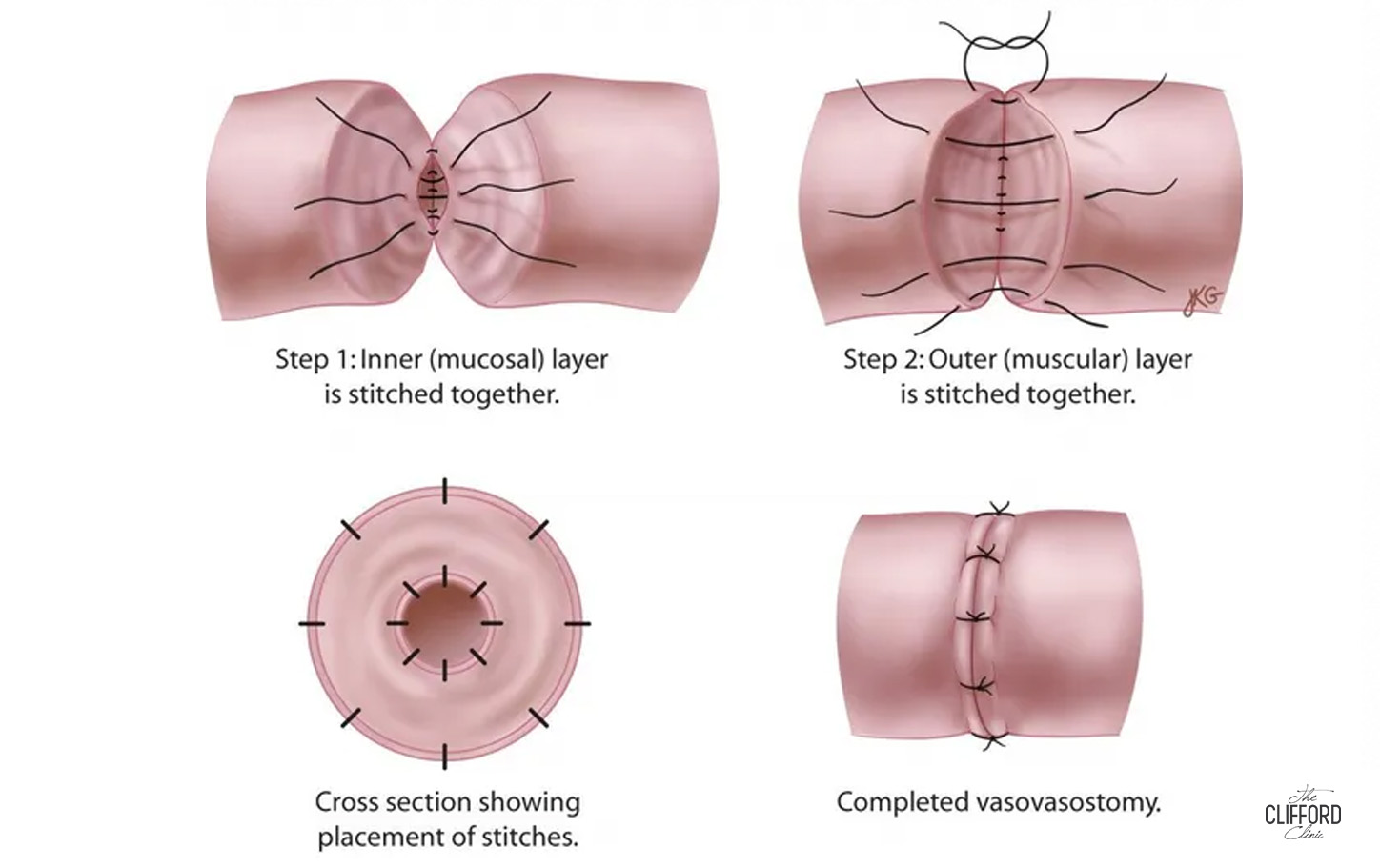
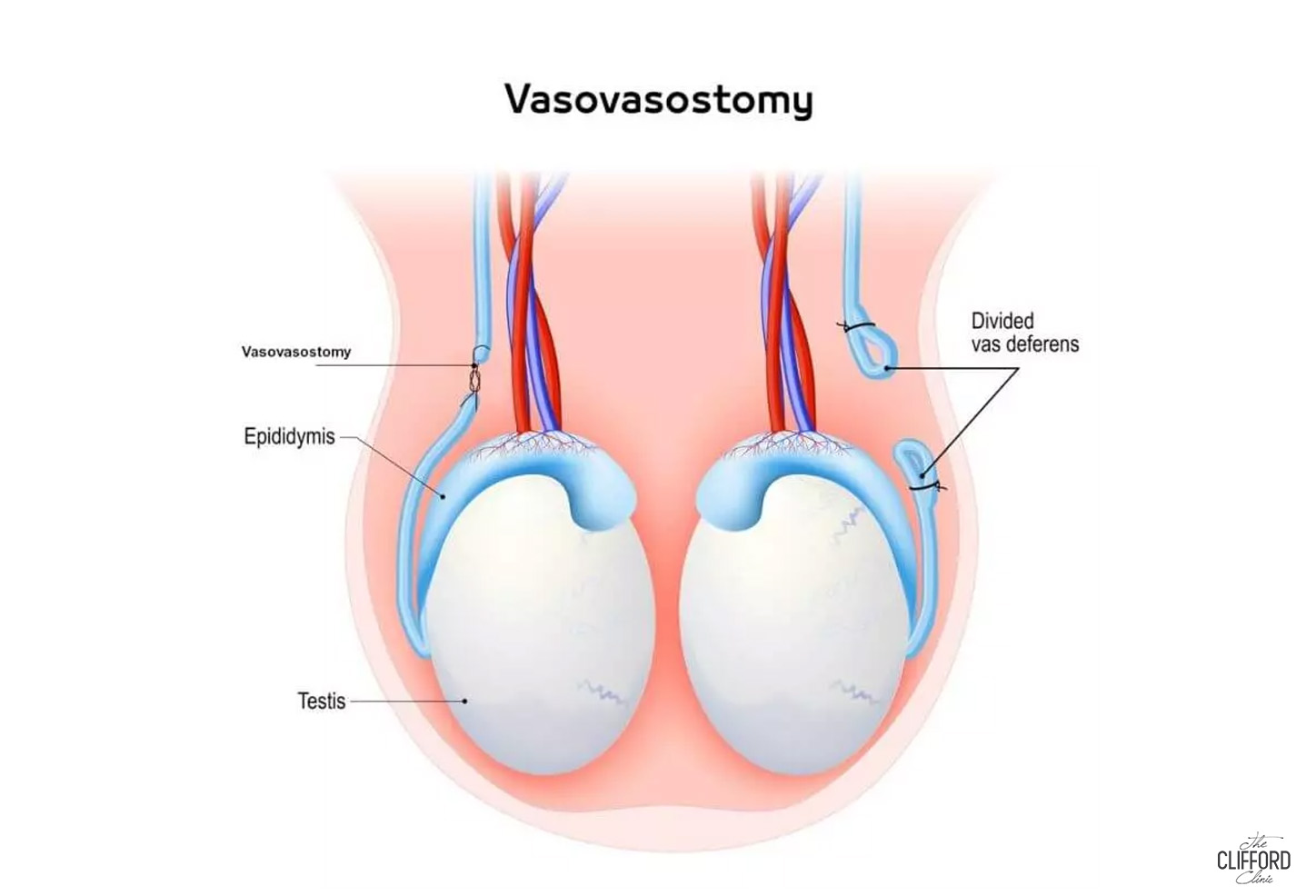
A vasectomy reversal restores the pathway that a vasectomy interrupted. During the vasectomy, the vas deferens (the tube carrying sperm from the testicle) was cut and sealed. A reversal reopens this pathway using fine microsurgical techniques performed under magnification. There are two main approaches, and the surgeon often decides which is needed only once the procedure is underway and the fluid from the vas can be examined.
The Two Main Surgical Techniques
The choice between the two techniques is determined by what the surgeon finds during the operation, specifically whether sperm are present in the fluid from the vas deferens.
- Vasovasostomy is the more common procedure. It is performed when sperm are present in the vasal fluid at the time of surgery. The two cut ends of the vas deferens are reconnected using a modified one-layer or two-layer microsurgical anastomosis. Both methods produce comparable results.
- Vasoepididymostomy is required when there is a blockage at the epididymis, indicated by no sperm or only sperm heads in the vasal fluid. This more complex procedure connects the vas deferens directly to the epididymis. The likelihood of needing this technique increases the longer the interval since the vasectomy.
Vasectomy Reversal Success Rates
Success is measured in two ways. Patency means that sperm return to the ejaculate after surgery. Pregnancy rate means that a couple goes on to conceive. Patency is always higher than the pregnancy rate, because conception also depends on the female partner and other factors.
Reported patency rates are approximately 85 to 90% for microsurgical vasovasostomy, with a recent meta-analysis showing around 89.4%, and 65 to 84% for vasoepididymostomy. The one-year patency rates range from 54 to 93%, with a median of about 82%.
Reported pregnancy rates are around 50 to 70% after vasovasostomy, with one meta-analysis showing 73%, and 21 to 42% after vasoepididymostomy. The crude cumulative delivery rate after reversal is in the region of 40 to 49.5%.
What Affects the Chance of Success
The single most important predictor is the obstructive interval, meaning the time between the original vasectomy and the reversal. The longer the interval, the lower the chance of success, as the figures below illustrate.
Vasectomy Reversal Success Rates by Time Since Vasectomy
| Time Since Vasectomy | Patency Rate | Pregnancy Rate |
|---|---|---|
| Up to 3 Years | 97% | 76% |
| 3 to 8 Years | 88% | 53% |
| 9 to 14 Years | 79% | 44% |
| 15 Years or More | 71% | 30% |
Other factors are also important. The quality of sperm found in the vasal fluid during surgery has a significant effect. When good quality (grade 1) sperm are present on both sides, patency is around 94% and the pregnancy rate around 63%, compared with about 60% and 31% respectively when only the poorest quality (grade 5) sperm are found. Finding motile sperm on both sides during surgery points to a higher success rate, and younger patients tend to have better outcomes.
When Will Sperm Return?
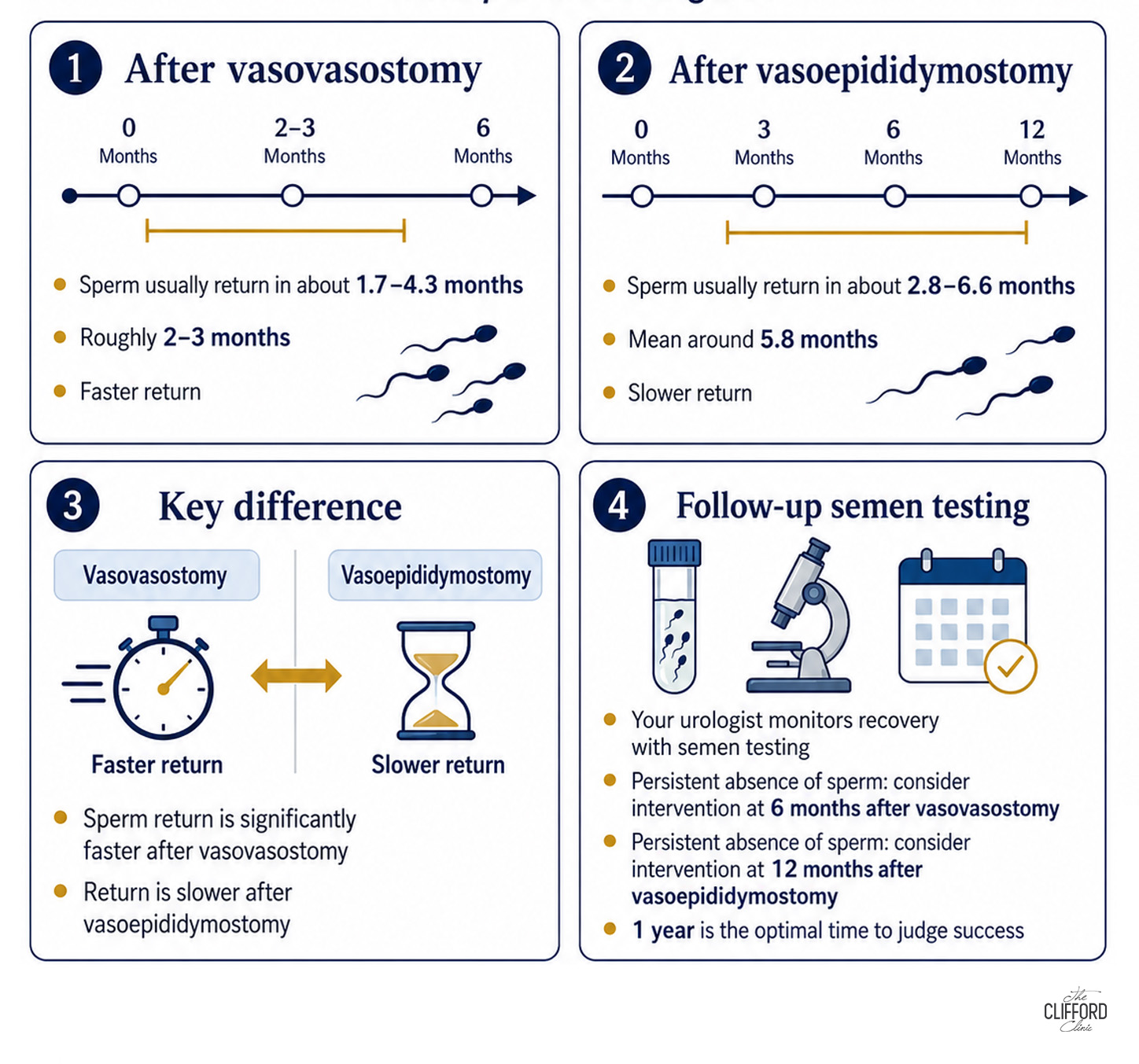
Sperm do not reappear immediately in the seminal fluid. They typically return to the ejaculate about 1.7 to 4.3 months after vasectomy (roughly 2 to 3 months). After vasoepididymostomy, the return is slower, at about 2.8 to 6.6 months (mean around 5.8 months). Sperm return is therefore significantly faster after vasovasostomy than after vasoepididymostomy.
Your urologist will monitor recovery with semen testing. Intervention for persistent absence of sperm is usually considered 6 months after vasovasostomy and 12 months after vasoepididymostomy. Testing at one year is regarded as the optimal time to define whether the surgery has succeeded.
Understanding Late Failure
In some men, sperm return after surgery but then disappear again, a situation called late failure or secondary azoospermia. This occurs in roughly 0 to 12% of vasovasostomy cases and in a wider range, about 1 to 50%, after vasoepididymostomy, and it usually happens within the first two years. Because late failure is more common after the more complex vasoepididymostomy, sperm cryopreservation (banking and freezing sperm) is worth discussing in advance, so that a backup option is available if it occurs.
Vasectomy Reversal Compared With IVF and ICSI
Couples seeking a pregnancy after a vasectomy often weigh reversal against in vitro fertilisation with intracytoplasmic sperm injection (IVF/ICSI), in which sperm are retrieved directly and used to fertilise eggs in the laboratory. When the two are compared, delivery rates are broadly similar, around 40% for reversal versus about 43.8% for IVF/ICSI. The key difference is time. The time to pregnancy is significantly shorter with IVF/ICSI (around 8.2 months) than with reversal (around 16.3 months). Some couples who undergo a reversal and later move on to assisted reproduction reach a cumulative delivery rate of about 57.4%.
There is no single right answer. Reversal offers the prospect of natural conception, potentially for more than one pregnancy, with the physical demands falling on the male partner. IVF/ICSI can be faster but is more intensive for the female partner and is repeated for each pregnancy attempt. The female partner’s age and fertility, cost, and personal preference all influence the decision, which is best made together with your specialist.
How a Reversal Differs From the Original Vasectomy
A vasectomy is a short, minimally invasive day procedure. A reversal is a microsurgical operation, carried out under magnification so the surgeon can rejoin the very fine internal channel of the vas deferens with precision. It generally takes longer than the original vasectomy and demands specialised microsurgical training, which is why it should be performed by a urologist experienced in reconstructive techniques.
Recovery After a Vasectomy Reversal
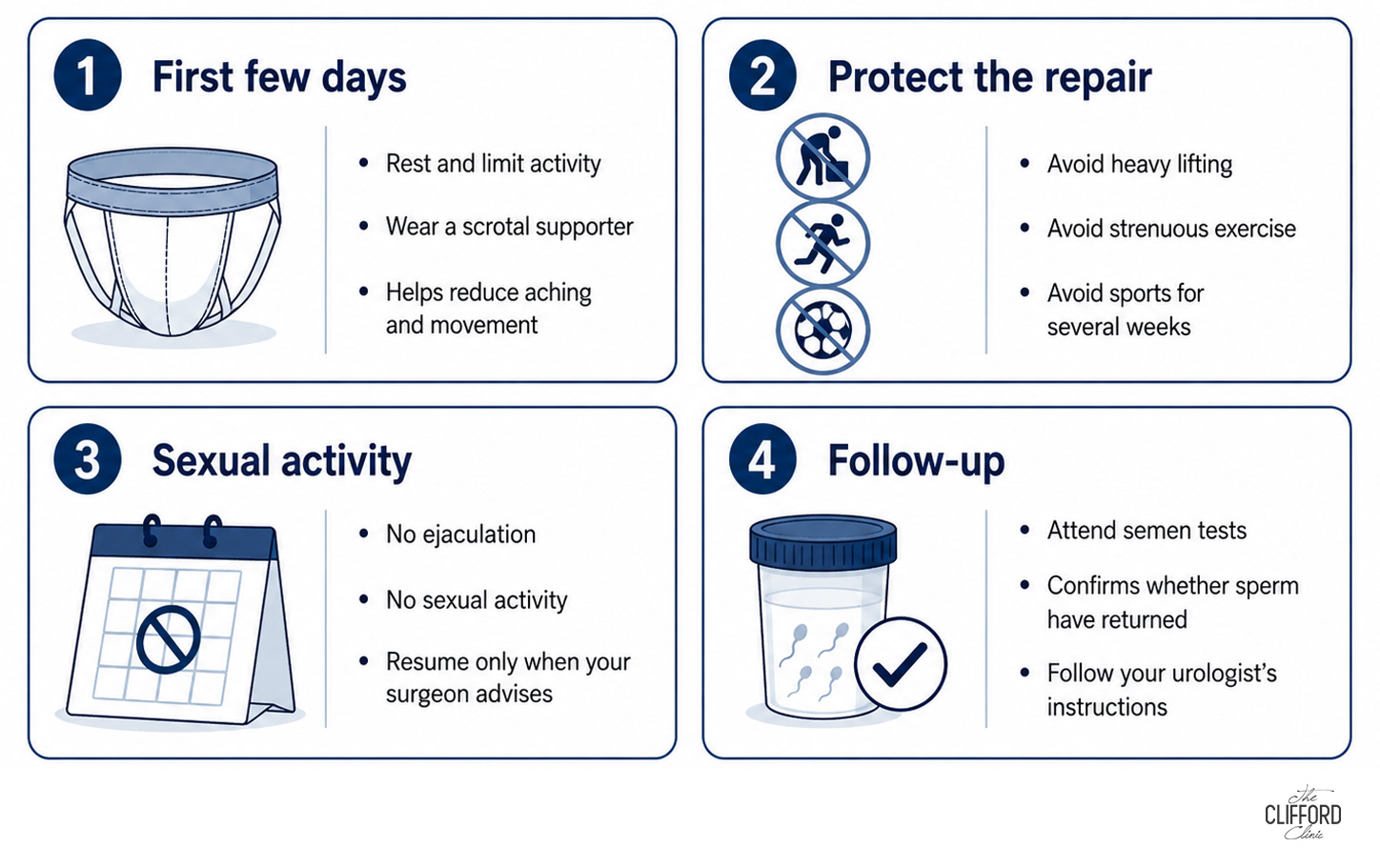
Recovery after a reversal is generally straightforward, but the delicate repair means it heals more slowly than a vasectomy. Most discomfort is mild and settles over the first week or two, and simple oral painkillers are usually sufficient. Your urologist will give you individual instructions, which typically include:
- Rest and limited activity in the first few days, with a scrotal supporter to ease aching and limit movement
- Avoiding heavy lifting, strenuous exercise and sports for several weeks to protect the repair
- Refraining from ejaculation and sexual activity for the period your surgeon advises, so the reconnection can heal
- Attending follow-up semen tests so your urologist can confirm whether sperm have returned
Because sperm take months rather than weeks to reappear, patience during the follow-up period is an important part of recovery. Your urologist will guide you on when to expect the first semen test and how to interpret the results.
Is Vasectomy Reversal Right for You?
Reversal can be considered if the obstructive interval is short, the female partner’s fertility is favourable, and the couple prefers natural conception. A careful consultation allows your urologist to discuss the likely chance of success in your specific situation, the choice of technique, the value of sperm cryopreservation, and how reversal compares with assisted reproduction for you as a couple. Reversal cannot be guaranteed to restore fertility, so realistic expectations are important.
Frequently Asked Questions
How successful is vasectomy reversal?
Patency (the return of sperm to the ejaculate) is around 85 to 90% after microsurgical vasovasostomy and 65 to 84% after vasoepididymostomy. Pregnancy rates are lower, around 50 to 70% and 21 to 42% respectively, because conception also depends on the female partner.
Does a longer time since vasectomy reduce success?
Yes. The obstructive interval is the most important predictor. Patency falls from around 97% within 3 years to about 71% at 15 years or more, with pregnancy rates following a similar pattern.
What is the difference between vasovasostomy and vasoepididymostomy?
Vasovasostomy reconnects the two ends of the vas deferens and is used when sperm are present in the vasal fluid. Vasoepididymostomy connects the vas directly to the epididymis and is needed when there is an epididymal blockage. The surgeon decides which is required during the operation.
Should I choose reversal or IVF?
Both achieve broadly similar delivery rates, around 40% for reversal and 44% for IVF/ICSI. Reversal allows natural conception over time, while IVF/ICSI is usually faster but more intensive for the female partner. The right choice depends on the time since vasectomy, the female partner’s fertility, cost and personal preference.
Can a reversal stop working after it initially succeeds?
Occasionally. Late failure, where sperm return and then disappear, can occur within the first two years, more often after vasoepididymostomy. This is one reason sperm cryopreservation is discussed beforehand.
Medical References
Key medical sources:
- Vasectomy: AUA Guideline. The Journal of Urology. 2012. Sharlip ID, Belker AM, Honig S, et al. https://doi.org/10.1016/j.juro.2012.09.080
- Vasectomy Reversal. Fertility and Sterility. 2006. American Society for Reproductive Medicine Practice Committee. https://pubmed.ncbi.nlm.nih.gov/17055839
- Vasectomy: Common Questions and Answers. American Family Physician. 2025. Arnold JJ, Villanueva D, Puntkattalee MJ. https://www.aafp.org/link_out?pmid=40961303
Related Vasectomy Guides
Explore our other vasectomy guides for more detail on cost, technique, recovery and the decision itself:
- Vasectomy in Singapore
- Sperm Banking Before Vasectomy
- Is Vasectomy Right for Me?
- Post-Vasectomy Semen Analysis (PVSA)
Medical Disclaimer
This article is for general educational purposes and does not replace a consultation with a qualified medical professional. Vasectomy reversal outcomes vary between individuals and cannot be guaranteed. Success-rate figures are drawn from published international studies and may differ from your personal chance of success, which your urologist will discuss at the consultation.
Medically reviewed by Dr Law Zhi Wei, MBBS (NUS), MRCSEd, Partner, The Clifford Surgery | Co-authored with Dr Nathaniel Heah, FAMS (Urology), Consultant Urologist | Last reviewed: June 2026 | Next review: June 2027
Speak with a Urologist About Vasectomy Reversal at The Clifford Surgery

To discuss vasectomy reversal and your likely chance of success, book a consultation with Dr Nathaniel Heah, FAMS (Urology), Consultant Urologist, or Dr Law Zhi Wei, MBBS (NUS), MRCSEd, at The Clifford Surgery, 50 Raffles Place, #01-01 Singapore Land Tower, Singapore 048623. Call (65) 6532 2400 or WhatsApp (65) 8318 6332. Monday to Friday 10am to 8pm, Saturday 10am to 5pm.

Author Bio
Dr Gerard Ee

Dr Gerard Ee is the Medical Director of The Clifford Clinic in Singapore. He earned his medical degree from St George's University of London and built his surgical experience across the Singapore General Hospital, National University Hospital, and Mount Sinai Hospital in New York. He holds Membership of the Royal College of Surgeons (Edinburgh) and a Postgraduate Diploma in Dermatology (Cardiff), and is fully accredited in aesthetic procedures including botulinum toxin, fillers, lasers, and light therapies. A strong advocate of minimally invasive, natural-looking results, Dr Ee has published in several medical and scientific journals and presented his research in cities including Taipei, Las Vegas, and London.
See all posts by Dr Gerard Ee »