

Breast Implants vs Fat Transfer vs Breast Lift, Which Procedure Treats Which Concern
Implants add defined and predictable volume, fat transfer adds moderate volume using the patient’s own tissue, and a breast lift repositions and reshapes the breast without primarily adding volume. Choosing between them starts with naming the dominant concern, whether that is size, shape, droop, or a combination, because each operation corrects a different problem and the wrong choice corrects the wrong problem well. This guide compares all three, as part of our full resource on breast augmentation with implants in Singapore.
What Each Operation Changes
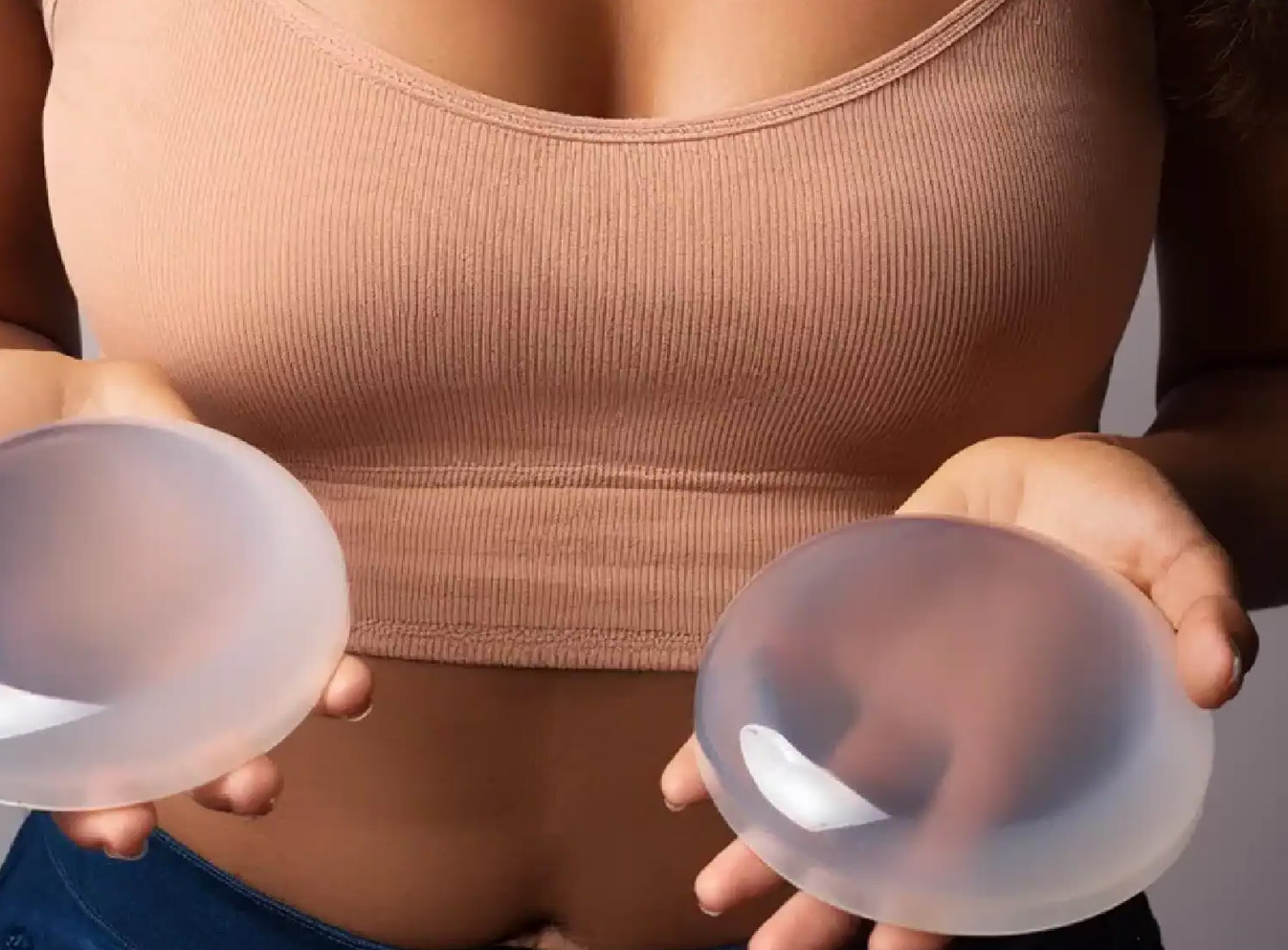
Breast implants place a silicone or saline device behind the gland or muscle to increase volume and upper-pole fullness. Because the device has a fixed volume, the gain is chosen in advance and delivered reliably. Implants introduce device-specific considerations, namely monitoring, possible revision, and the risks in our safety guide. They are not lifetime devices.
Fat transfer, also called fat grafting, harvests fat by liposuction, commonly from the abdomen or thighs, purifies it, and injects it into the breasts. It adds volume with the patient’s own tissue, requires no implant, and contours the donor area at the same time. Its constraints follow from the biology of the graft, which requires sufficient donor fat and a blood supply that only part of each graft establishes. A proportion is therefore reabsorbed in the months after surgery, so the retained volume cannot be specified in advance, and gain per session remains moderate at typically up to around one cup size, with more than one session sometimes required.
Breast lift, or mastopexy, removes excess skin and repositions the breast and nipple higher on the chest wall. It corrects droop, known clinically as ptosis, which neither implants nor fat meaningfully correct, because both add volume without altering where the nipple sits. A lift does not add implant-scale volume, and it involves more extensive breast scars, with the scar pattern determined by the degree of lift required.
How the Three Procedures Compare
Breast Augmentation Options Compared
| Consideration | Implants | Fat Transfer | Breast Lift |
|---|---|---|---|
| Main Purpose | Adds defined volume | Adds moderate volume using the patient’s own fat | Repositions and reshapes |
| Volume Predictability | Generally more controllable | Limited by donor fat and graft retention | Does not primarily add volume |
| Additional Surgical Site | Breast | Breast + liposuction donor sites | Breast |
| Implant-Related Risks | Yes, monitoring and revision possibility | None | None unless combined with implants |
| Scarring | Depends on incision route | Small access and liposuction incisions | More extensive breast scars |
| Possible Future Procedures | Monitoring, possible revision | Further grafting sessions possible | Occasional revision |
The risk profiles differ in kind rather than in amount. Implants carry device-related risks, fat transfer carries graft-related risks such as oil cysts, calcifications and partial resorption together with the risks of liposuction, and a lift carries the most breast scarring. Ranking the three by a single risk score would therefore mislead, because the decision turns on which category of risk is acceptable in exchange for which benefit.
Which Procedure Suits Which Presentation
- Adequate skin with a wish for clearly greater size. Implants are the only option that delivers large, defined volume gain reliably.
- A wish for subtle increase without an implant, with adequate donor fat. Fat transfer is appropriate.
- Good volume with breasts that have dropped, typically after children or weight loss. A lift is indicated, because a larger implant chosen to fill loose skin adds weight and worsens droop over time.
- Deflation combined with droop, common after pregnancy. A combined lift with implant, or staged surgery, is considered, and fat transfer sometimes contributes.
- Presentation after major weight loss. Skin excess usually dominates, so the lift is addressed first and volume second.
Two boundaries drive most recommendations. Significant ptosis is a lift problem rather than a bigger-implant problem, and fat transfer cannot replicate implant-scale volume. Dr Naidu frames the decision around three questions. Where does the nipple sit relative to the breast fold? Is the patient mainly lacking volume, or is there significant loose skin and tissue descent? And is the wish to be larger, or to have the breast repositioned and reshaped? An implant alone may suit a patient whose nipple remains at or above the fold and whose main problem is volume loss or mild deflation, whereas a lift alone suits adequate volume with descended tissue, and both together are considered when ptosis and volume loss coexist. He is equally explicit about the shortcut he avoids, in that true ptosis is not corrected with an excessively large implant, because such an implant fills loose skin only temporarily, leaves a low nipple uncorrected, and adds further weight to tissues that are already stretched. In borderline cases the trade-off is stated plainly, since avoiding a lift avoids lift scars but may mean accepting residual droop, whereas adding a lift gives greater control over nipple position and shape at the cost of additional scars and a more complex operation.
Hybrid Augmentation, Implants Combined With Fat
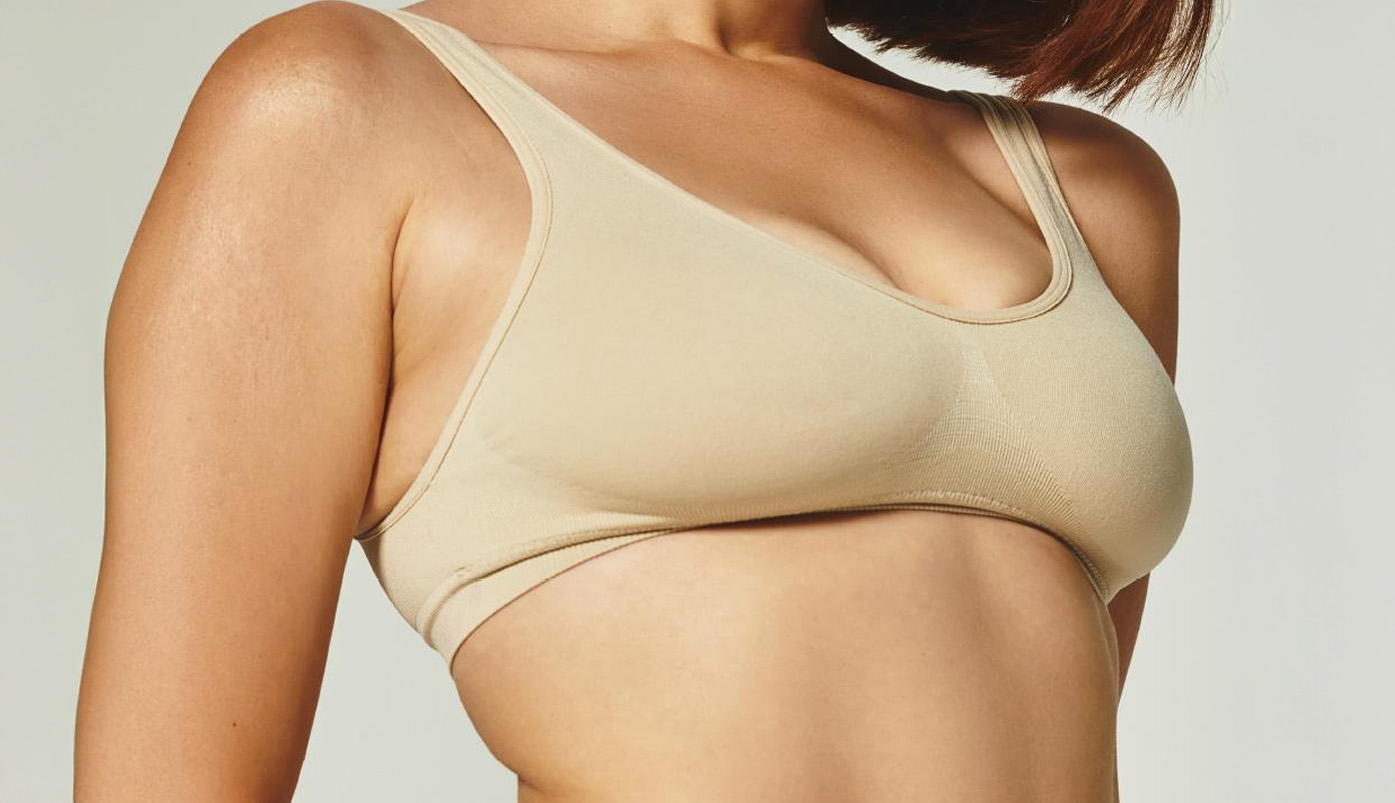
The three options are not mutually exclusive. Hybrid augmentation uses an implant for the core volume and shape, then adds a layer of grafted fat where soft-tissue coverage is thin, typically over the upper pole and along the cleavage line. The grafted layer sits between the implant and the skin, so it softens the implant edge and blurs the transition that would otherwise be visible in a slim patient. It adds the donor-site surgery and the partial-resorption behaviour of fat grafting to the implant operation, so it is chosen deliberately rather than by default. The usual candidates have low body fat and thin chest tissue and want an implant-scale result without visible implant margins. Dr Naidu uses hybrid augmentation selectively rather than routinely, with the implant providing the main volume and structure while the patient’s own fat refines the contours around it. It is most valuable along the cleavage and the upper-medial breast in thin patients, where implant edges are most apparent, and for rippling, minor asymmetry, or achieving a shape without moving up to a larger implant. Its limits are equally clear, in that sufficient suitable donor fat is required, not all transferred fat survives, retained volume varies between patients, a second session is occasionally required, and grafted fat can produce benign oil cysts or calcifications that should be documented for future breast imaging. It remains a contouring tool rather than a substitute for a breast lift, so where the nipple is significantly low or the skin envelope excessively loose, added fat will not correct the underlying ptosis.
A Four-Question Decision Framework
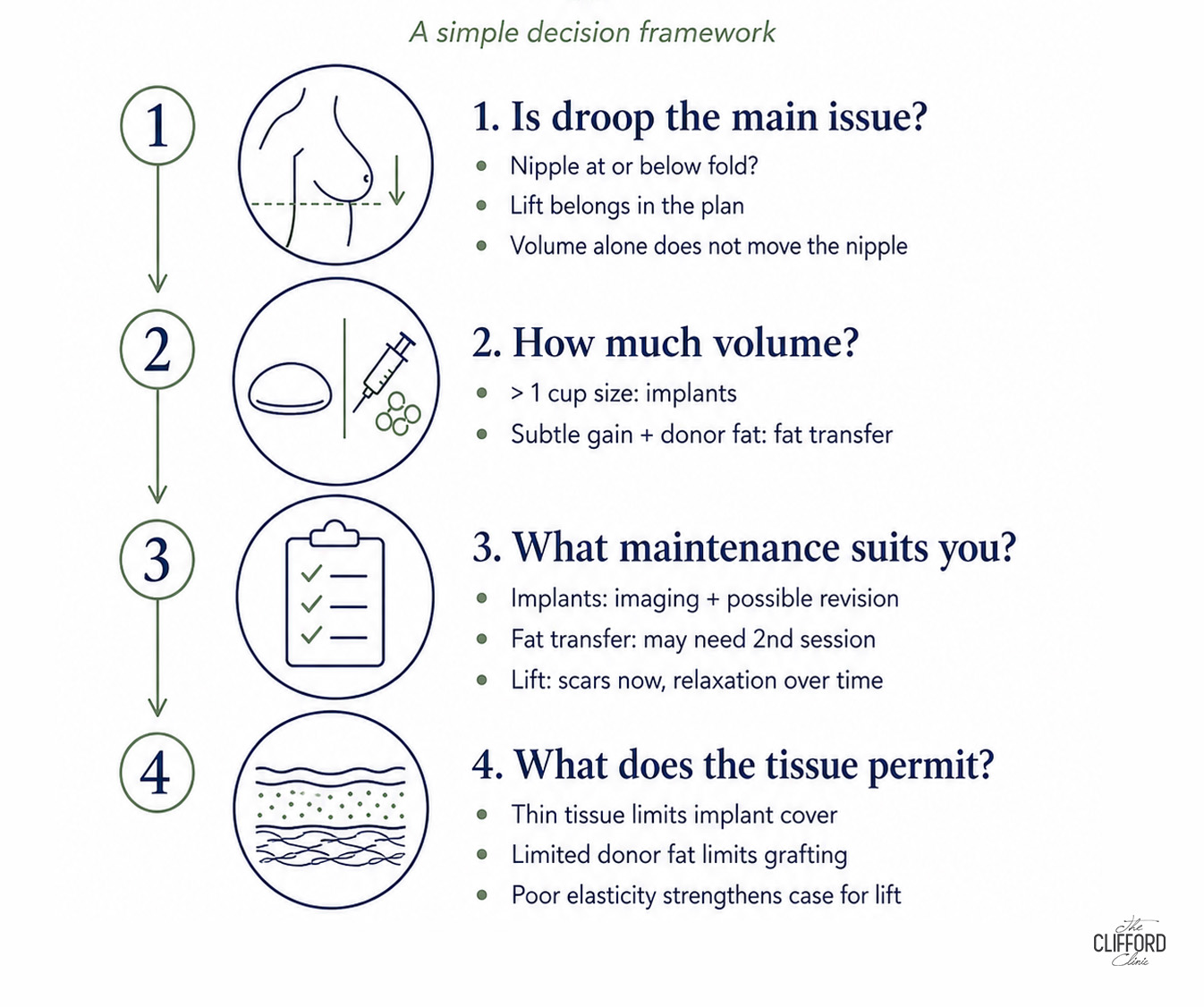
The following four questions are worked through in order, since each one narrows the options the next question has to consider.
- Is droop the dominant problem?Assessed standing and front-on, a nipple sitting at or below the breast fold indicates that lifting belongs in the plan, either before or alongside any volume decision. Added volume cannot correct nipple position, because neither an implant nor grafted fat moves the nipple on the chest wall.
- How much volume is wanted? A definite, shaped gain of more than approximately one cup size points to implants. A subtle gain within the natural range, where donor fat is available, keeps fat transfer viable.
- What maintenance profile is acceptable? Implants commit the patient to surveillance imaging and possible future revision. Fat transfer may require a second session and responds to weight change. A lift trades scars in the short term for gradual relaxation of the result over time.
- What does the tissue permit?Thin soft-tissue coverage constrains how well an implant can be concealed, limited donor fat constrains grafting, and poor skin elasticity constrains every option while strengthening the case for including a lift.
These answers usually converge on one or two workable plans, which is the shortlist to bring into consultation, where examination refines it.
Recovery and Cost Compared
Recovery differs more in location than in magnitude. Implant recovery centres on the chest, with tightness and a staged return to exercise over four to six weeks, whereas fat transfer adds donor-site soreness and compression garments over the liposuctioned areas, which patients often report as the more noticeable discomfort. Recovery after a lift resembles implant surgery with more incision care. Costs are not directly comparable either. Fat transfer is priced as two procedures in one, namely liposuction and grafting, a lift reflects its longer operating time, and implants carry the device cost together with the lifetime monitoring described in our cost guide. Total plans should be compared rather than headline figures.
Long-Term Considerations for Each Option
Pregnancy and weight change alter breast tissue around any of these results, which is why some patients defer surgery until after completing their family, a question discussed further in pregnancy, breastfeeding and mammograms. Screening is affected in different ways. Implants require the mammography facility to be informed and may need additional views, and transferred fat can produce calcifications that imaging must distinguish from other findings. Experienced breast radiologists manage both routinely, but a claim of no effect on mammograms would be false for either procedure. Longevity also differs between the three, in that implants need monitoring and possibly revision, surviving grafted fat behaves as living tissue and fluctuates with body weight, and the result of a lift gradually yields to gravity and ageing.
Three Worked Patient Examples
The first presentation follows two children and a period of breastfeeding, typically with volume loss and mild-to-moderate droop. Where the nipple still sits above the fold, a dual-plane implant alone often restores both volume and the appearance of lift. Where the nipple sits at or below the fold, the realistic options are a lift combined with an implant, or acceptance that an implant alone will underdeliver. Fat transfer suits this patient only where goals are modest and donor fat is available.
The second presentation follows a weight loss of around 20kg. Skin excess usually dominates, because the breast is deflated and the envelope lax. Lifting is generally the foundation and volume, whether implant or fat, is the optional second stage. Weight stability for several months before surgery makes every measurement more reliable.
The third is the lean athlete seeking subtle enhancement. Thin tissue and low body fat limit both implant camouflage and the available donor fat. The workable plans are a modest implant with maximal coverage, achieved through dual-plane placement and careful sizing, hybrid augmentation where any donor fat exists, or recalibrated expectations. The animation trade-offs set out in the placement discussion apply in full.
Three different presentations produce three different answers by a single method, namely naming the dominant problem and then matching the operation to it.
Questions That Distinguish a Genuine Consultation
Whichever procedure appeals, the recommendation is worth testing with several questions. Why this operation rather than the other two for my anatomy? What would my result look like if we did nothing, or did less? What does this choice commit me to over ten years, in monitoring, maintenance and likely further surgery? What happens to this result if I become pregnant or my weight changes by ten kilograms? The most revealing question is the last one. Under what circumstances would you advise me against the procedure I asked about? A clinic that only ever recommends the procedure it markets most heavily is answering its own question rather than the patient’s. A consultation that examines the patient, names the dominant problem, and explains why the alternatives were set aside is the standard worth insisting on, whoever is ultimately chosen.
Frequently Asked Questions
Can fat transfer replace implants?
For moderate, natural-looking gains, often yes, given adequate donor fat. For larger, defined augmentation, no. Retention limits and the number of sessions required make implants the realistic route.
Can I combine procedures?
Yes. A lift with implants is common for deflation combined with droop, and fat can refine implant results, an approach known as hybrid augmentation. Combination surgery needs particularly careful planning.
Which lasts longest?
None is permanent. Implants are not lifetime devices, retained fat fluctuates with weight, and lifts relax over time. Each carries a different maintenance profile rather than one being a clear winner.
Is fat transfer safer because it is my own tissue?
It avoids implant-specific risks but adds graft-related and liposuction risks. The risk profile is different rather than absent.
How much of the transferred fat survives?
A meaningful fraction of each graft is reabsorbed over the first months, and commonly cited survival ranges vary widely by technique and patient. What survives at around six months is generally stable, which is why results are judged at that point and why a second session is sometimes planned from the outset.
Will a breast lift make my breasts smaller?
A lift removes skin rather than significant breast tissue, so volume is broadly preserved. Reshaping can nonetheless read as slightly smaller, because projection replaces spread. Patients wanting both a lift and clearly greater volume are the classic candidates for a lift combined with an implant.
Can fat transfer correct asymmetry?
Often, yes. Adding fat selectively to the smaller side is one of its strengths. Larger asymmetries may still be better served by different implants on each side.
Which option looks most natural?
Fat transfer performs best on feel and movement, because it uses the patient’s own tissue, within its volume limits. A well-planned implant in adequate coverage also reads as natural. The least natural outcomes come from mismatched plans, such as oversized implants on thin frames, rather than from any option being intrinsically unnatural.
Medically reviewed by Dr Shenthilkumar Naidu, MBBS (NUS), FRCS (Edin), MOH-accredited Consultant Plastic Surgeon. He trained in Plastic and Reconstructive Surgery at the National University Hospital and Hanyang University Hospital in Seoul, and has taught at the NUS Faculty of Medicine.
Selected References. U.S. FDA, Breast Implants. Peer-reviewed mastopexy-augmentation and hybrid-augmentation literature in Plastic and Reconstructive Surgery and Aesthetic Surgery Journal.
Explore the full breast implant series
Considering breast augmentation? Visit the main Breast implants at The Clifford Clinic service page to book a consultation, or continue with the rest of this series.
Breast Augmentation With Implants in Singapore — the complete guide
· Breast Implant Cost in Singapore
· Motiva Breast Implants in Singapore
· Breast Implant Size and Profile
· Breast Implant Placement, Incisions and Scars
· Breast Augmentation Recovery Timeline
· Breast Implant Safety and Monitoring
· Breast Implant Removal and Revision
· Breast Implants, Pregnancy, Breastfeeding and Mammograms.

Author Bio
Dr Gerard Ee

Dr Gerard Ee is the Medical Director of The Clifford Clinic in Singapore. He earned his medical degree from St George's University of London and built his surgical experience across the Singapore General Hospital, National University Hospital, and Mount Sinai Hospital in New York. He holds Membership of the Royal College of Surgeons (Edinburgh) and a Postgraduate Diploma in Dermatology (Cardiff), and is fully accredited in aesthetic procedures including botulinum toxin, fillers, lasers, and light therapies. A strong advocate of minimally invasive, natural-looking results, Dr Ee has published in several medical and scientific journals and presented his research in cities including Taipei, Las Vegas, and London.
See all posts by Dr Gerard Ee »