


Sperm Banking Before Vasectomy: Should You Freeze Sperm First?
Medically reviewed by Dr Nathaniel Heah, Consultant Urologist, FAMS (Urology). Clinical focus: Andrology and Men’s Health. Last reviewed: June 2026. Next review: June 2027.
Vasectomy is intended to be permanent, so it is worth thinking ahead about the small chance that your circumstances or wishes could change. Sperm banking, the freezing and storage of a semen sample before your vasectomy, is an optional way to preserve the possibility of biological fatherhood without relying on a later reversal. At The Clifford Surgery, vasectomy and fertility discussions are led by Dr Nathaniel Heah, FAMS (Urology), a UK fellowship-trained Consultant Urologist with subspecialty expertise in Andrology and Men’s Health, with clinical support from Dr Law Zhi Wei, MBBS (NUS), MRCSEd, where appropriate. This guide explains what sperm banking involves, who should consider it, and how it compares with reversal.
Sperm Banking Before Vasectomy: Quick Facts
| Question | Answer |
|---|---|
| What Is Sperm Banking? | Collecting and freezing a semen sample before a vasectomy for possible future use |
| Is It Necessary? | No. It is optional. Men who are certain often choose not to bank. |
| Who Should Consider It? | Men with any uncertainty, younger men, or those whose circumstances may change |
| How Is Banked Sperm Used Later? | Through assisted reproduction such as IUI, IVF or ICSI |
| Banking or Reversal? | Banking avoids reversal uncertainty. Reversal can allow natural conception. |
| Does It Change Permanence? | No. Vasectomy remains permanent. Banking is a backup, not a reason to treat it as reversible. |
Why Consider Sperm Banking Before Vasectomy?
A vasectomy should only be chosen when you are confident your family is complete. Even so, life can change in ways that are hard to predict, such as a new relationship or, in the hardest cases, the loss of a child. Sperm banking is a way to keep a door open. It does not make a vasectomy reversible, but it preserves the option of biological fatherhood through assisted reproduction, without depending on the variable success of a surgical reversal.
What Sperm Banking Involves
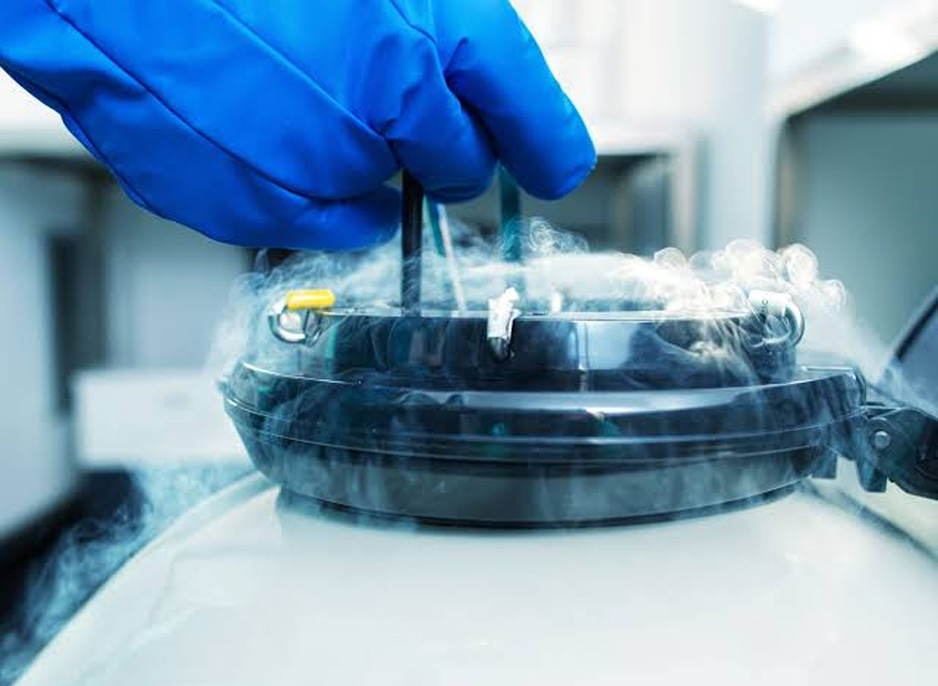
Sperm banking is straightforward. Before your vasectomy, you provide one or more semen samples, which are assessed and then frozen (cryopreserved) and stored at a licensed facility. Because the samples are collected before the vasectomy, they contain sperm that can later be thawed and used in fertility treatment. Storage is ongoing, so there are typically annual storage fees, and you will complete consent forms covering how long the sample is stored and how it may be used.
Who Should Consider It
Sperm banking is optional, and many men who are certain about permanent contraception choose not to bank. It is most worth considering if you:
- Have any lingering uncertainty about future biological children
- Are younger, with more years in which circumstances could change
- Anticipate a possible change in relationship or life situation
- Would prefer a backup that does not rely on the success of a future reversal
If you recognise yourself in these points, you should take more time to consider the suitability of vasectomy, as well as to consider sperm banking before vasectomy. A vasectomy chosen with genuine certainty rarely needs a fallback, but the option exists for peace of mind.
Sperm Banking vs Vasectomy Reversal
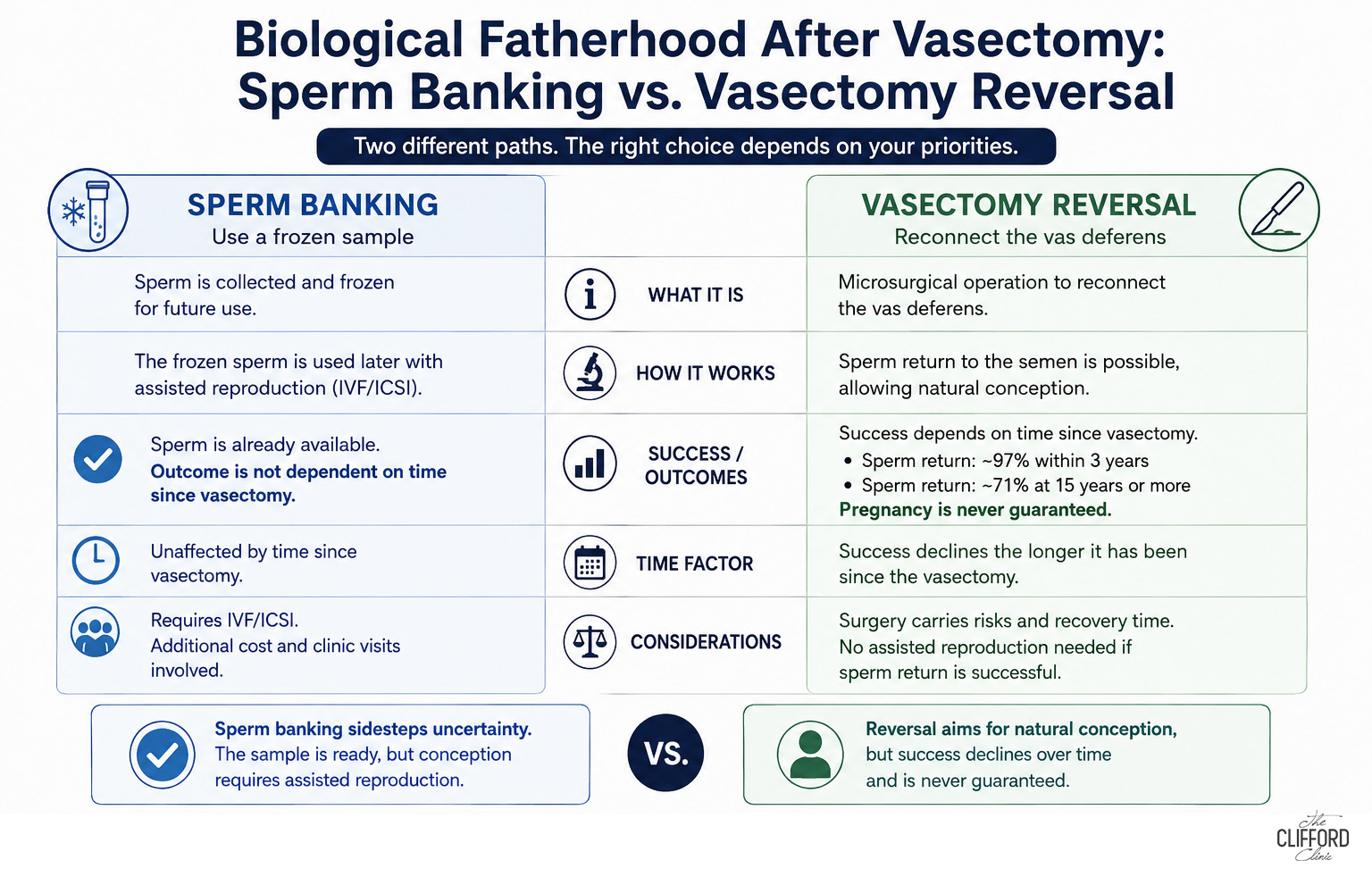
Both sperm banking and vasectomy reversal are ways to pursue biological fatherhood after a vasectomy, but they work very differently. Reversal is a microsurgical operation to reconnect the vas deferens, with success that declines the longer it has been since the vasectomy. Sperm return is around 97% within 3 years but falls to about 71% at 15 years or more, and pregnancy is never guaranteed. Sperm banking sidesteps that uncertainty entirely, because the frozen sample is already available, but using it requires assisted reproduction rather than natural conception. For a fuller explanation of reversal outcomes, see our dedicated vasectomy reversal guide.
How Banked Sperm Is Used
If you later decide to have children, the frozen sample is thawed and used in assisted reproduction. Depending on the sample quality and the couple’s circumstances, this may involve intrauterine insemination (IUI) or in vitro fertilisation with intracytoplasmic sperm injection (IVF/ICSI). Success depends on factors including sperm quality and the female partner’s fertility and age, which a fertility specialist will assess. Banking gives you the material to work with; it does not by itself guarantee a pregnancy.
Making a Regret-Free Decision
The best protection against regret is a well-considered decision, not a fallback plan. A thorough consultation, an honest conversation with your partner, and taking your time between the consultation and the surgery date all help ensure you are choosing a vasectomy for the right reasons. Sperm banking can be part of that conversation, especially for younger men or those with any doubt. Your urologist can help you weigh whether banking is worthwhile in your situation, or whether your certainty makes it unnecessary.
Costs and Practical Considerations
Sperm banking has its own costs, separate from the vasectomy fee. These typically include an initial assessment and freezing fee and recurring annual storage fees for as long as the sample is kept. Samples are stored at a licensed andrology or fertility facility, and you should confirm current fees, storage duration and consent terms directly with that facility.
Understanding Regret and Why Certainty Comes First
Regret after a vasectomy is uncommon among men who decide with genuine certainty, but it is more likely when the choice is rushed, made under pressure, or taken at a younger age. Sperm banking is not a substitute for certainty. It is a practical safeguard for the minority of situations where the future is genuinely hard to predict. Thinking honestly about how you might feel years from now, and in a different relationship or circumstance, is the most useful preparation of all.
Talking It Through With Your Partner
Permanent contraception is best approached as a shared decision. Discussing it openly with your partner, including whether sperm banking gives either of you added peace of mind, helps ensure you both understand the permanence and the options. Partners are welcome at the consultation at The Clifford Surgery, and having the conversation before the procedure date, rather than after, reduces the chance of later doubt. If either of you feels uncertain, that is a reason to take more time, not to rush.
Is Sperm Banking Right for You? A Short Checklist
You may find banking worth discussing if you can relate to several of the following:
- I am relatively young, or expect many more years in which life could change
- There is some chance my relationship or family circumstances could change
- I would feel more at ease knowing a stored sample exists as a backup
- I would prefer not to depend on the uncertain success of a future reversal
- I am comfortable that using banked sperm would involve assisted reproduction
If few or none of these apply and you are fully certain, banking may simply be unnecessary. The point of the checklist is not to encourage banking, but to help you make a deliberate choice either way.
What Sperm Banking Does Not Do
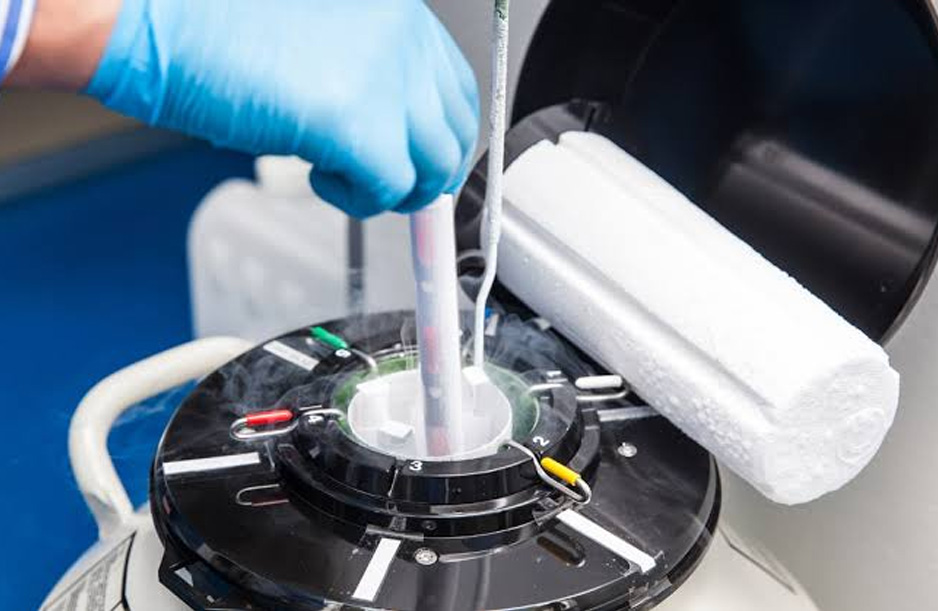
It is worth being clear about the limits. Sperm banking does not restore your own fertility, does not make a vasectomy reversible, and does not guarantee a future pregnancy, because any later use depends on the sample quality and the female partner’s fertility. It also does not remove the need to treat a vasectomy as permanent. What it does provide is a stored option that can be used through fertility treatment if your circumstances change, which for some men is a meaningful reassurance.
What the Evidence Shows on Later Fertility Options
If you may want children later, it helps to know the evidence on your options. A surgical reversal has a good chance of returning sperm to the ejaculate when done early, around 97% within 3 years, but this falls to about 71% at 15 years or more. Pregnancy is never guaranteed, because it also depends on the female partner’s fertility. Sperm banking sidesteps this decline entirely. A frozen sample collected before the vasectomy remains available regardless of how much time passes, although using it requires assisted reproduction such as IUI or IVF/ICSI. For men who are largely certain but want a safeguard, banking offers a predictable backup. For those who would prefer natural conception and act within a few years, reversal remains a strong option.
Frequently Asked Questions
Do I need to bank sperm before a vasectomy?
No. Sperm banking is optional. Men who are confident their family is complete often choose not to bank. It is mainly worth considering if you have any uncertainty or your circumstances may change.
How long can sperm be stored?
Frozen sperm can be stored for years, subject to the facility’s policies, consent terms and any local regulations. Confirm the storage duration and renewal process with the storage facility.
When should I bank sperm if I decide to?
Before the vasectomy, since the point is to store sperm collected while you are still fertile. Discuss timing with your urologist and the storage facility so the sample is secured before your procedure date.
Can I bank sperm after my vasectomy?
Banking is done before the procedure, while sperm are still present in the ejaculate. After a vasectomy, there are no sperm in the semen, so obtaining sperm would require a surgical retrieval procedure, which is more invasive. This is why the sample is collected beforehand.
How many samples should I store?
This depends on the sample quality and your future plans, and more than one sample is sometimes recommended. The storage facility and your urologist can advise on how many samples give you a reasonable reserve for later fertility treatment.
Medical References
Key medical sources:
- Vasectomy: AUA Guideline. The Journal of Urology. 2012. Sharlip ID, Belker AM, Honig S, et al. https://doi.org/10.1016/j.juro.2012.09.080
- Vasectomy Reversal. Fertility and Sterility. 2006. American Society for Reproductive Medicine Practice Committee. https://pubmed.ncbi.nlm.nih.gov/17055839
- Vasectomy: Common Questions and Answers. American Family Physician. 2025. Arnold JJ, Villanueva D, Puntkattalee MJ. https://www.aafp.org/link_out?pmid=40961303
Related Vasectomy Guides
Explore our other vasectomy guides for more detail on cost, technique, recovery and the decision itself:
- Vasectomy in Singapore
- Vasectomy Reversal in Singapore
- Is Vasectomy Right for Me?
- Vasectomy Cost, MediSave & Insurance
Medical Disclaimer
This article is for general educational purposes and does not replace a consultation with a qualified medical professional. Sperm banking and fertility treatment involve separate facilities, fees and consent processes; confirm current details with the relevant provider before proceeding.

Medically reviewed by Dr Law Zhi Wei, MBBS (NUS), MRCSEd, Partner, The Clifford Surgery | Co-authored with Dr Nathaniel Heah, FAMS (Urology), Consultant Urologist | Last reviewed: June 2026 | Next review: June 2027
Discuss Vasectomy and Fertility Options at The Clifford Surgery

To discuss vasectomy, sperm banking and your options before deciding, book a consultation with Dr Nathaniel Heah, FAMS (Urology), Consultant Urologist, or Dr Law Zhi Wei, MBBS (NUS), MRCSEd, at The Clifford Surgery, 50 Raffles Place, #01-01 Singapore Land Tower, Singapore 048623. Call (65) 6532 2400 or WhatsApp (65) 8318 6332.

Author Bio
Dr Gerard Ee

Dr Gerard Ee is the Medical Director of The Clifford Clinic in Singapore. He earned his medical degree from St George's University of London and built his surgical experience across the Singapore General Hospital, National University Hospital, and Mount Sinai Hospital in New York. He holds Membership of the Royal College of Surgeons (Edinburgh) and a Postgraduate Diploma in Dermatology (Cardiff), and is fully accredited in aesthetic procedures including botulinum toxin, fillers, lasers, and light therapies. A strong advocate of minimally invasive, natural-looking results, Dr Ee has published in several medical and scientific journals and presented his research in cities including Taipei, Las Vegas, and London.
See all posts by Dr Gerard Ee »