
Surgical vs Non-Surgical Eye Bag Removal in Singapore, How to Choose
The choice between surgical and non-surgical eye bag removal is decided by the grade of the fat protrusion and the quality of the lower eyelid skin. Mild Grade 1 to 2 protrusion with firm skin is treated non-surgically with AGNES + Secret RF, at $2,500 for the first session, with results lasting typically 3 to 5 years. Grade 3 to 4 protrusion or loose skin requires surgery, because no radiofrequency device removes skin.
Recommendations for eye bag removal in Singapore follow the equipment a clinic owns more closely than the anatomy presented at consultation. A practice equipped only with radiofrequency devices arrives at a radiofrequency recommendation, and a surgical practice arrives at a surgical one, because neither is in a position to offer the alternative.
Both the non-surgical AGNES + Secret RF protocol and scarless surgical eye bag removal are performed at Clifford Clinic by Dr Gerard Ee, who has treated over 500 eye bag patients across more than 10 years and whose observations below are given in the first person. The recommendation therefore rests on the examination findings rather than on what the clinic is equipped to offer, and because the clinic is paid for either pathway, the fee structure gives no reason to prefer one. The three deciding variables are the grade of the eye bag, the quality of the lower eyelid skin, and the age of the patient. In my experience I have found that patients who arrive having already selected a pathway by name are the group most often redirected at examination, because the selection was made on the downtime they could accept rather than on the volume of fat that has to be removed.
The two treatment pathways
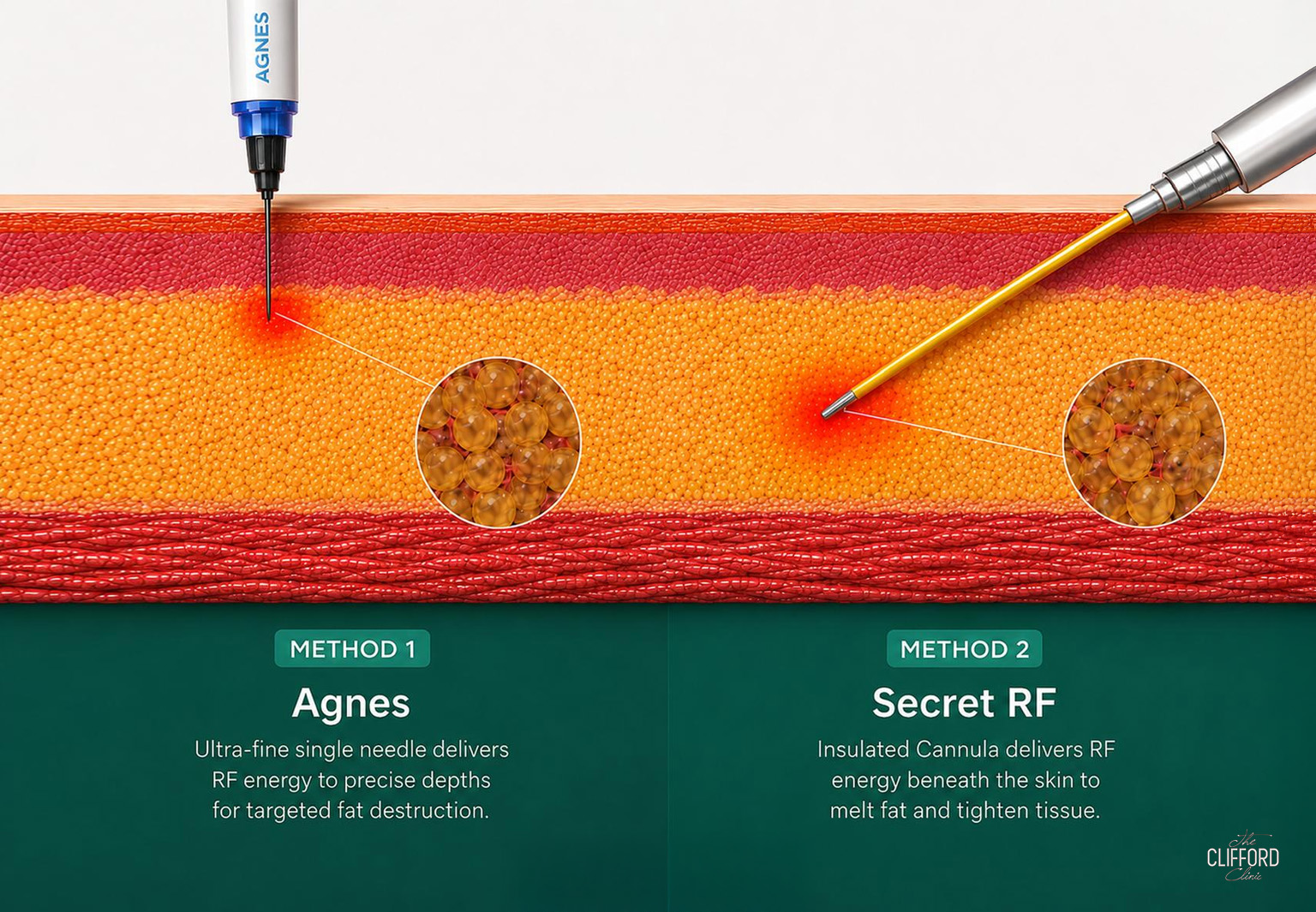
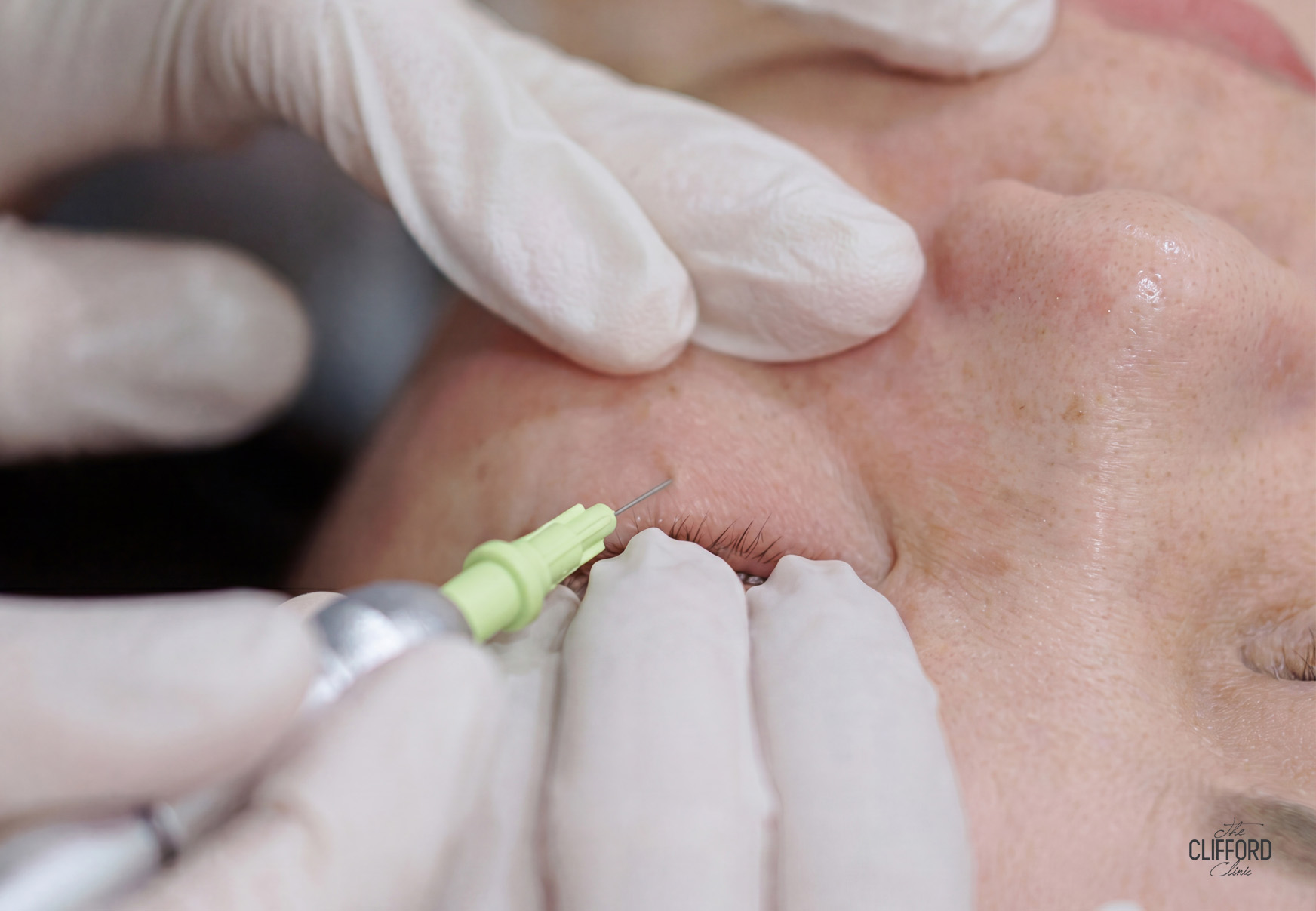
Non-surgical pathway, AGNES + Secret RF. The protocol combines two radiofrequency (RF) devices in sequence. AGNES delivers RF energy through micro-insulated needles placed directly into the protruding fat compartments, and each compartment is treated in turn rather than the lid being heated as a whole. The insulation confines the heat to the exposed needle tip, so the fat is coagulated at depth while the overlying skin is spared, and the coagulated fat is then cleared by the body over the following weeks. Secret RF then delivers RF through a fine insulated cannula also inserted into the fat pad, but at a different depth from the AGNES RF. Heating at that second depth both reduces the residual fat and stimulates new collagen formation, which tightens the skin envelope so that it re-drapes over the flattened contour. The procedure takes about 20 minutes after numbing. Mild bruising and swelling follow for 4 to 5 days, and dry eyes are common for the first 1 to 2 days. What the protocol reduces is fat, and what it tightens is skin that still holds elasticity. It removes no skin, and the improvement typically holds for 3 to 5 years rather than permanently.
Surgical pathway, scarless eye bag removal (transconjunctival blepharoplasty). The protruding fat is removed or repositioned through an incision made on the inside of the lower eyelid, so no external scar is created and the skin and muscle of the lower lid are left uncut. Where a tear trough groove accompanies the bag, the fat may be repositioned into the groove rather than excised, which flattens the bag and fills the hollow in one step. Fat that has been excised does not re-accumulate, so the volume correction is generally permanent, whereas the ageing of the overlying skin continues. A pinch blepharoplasty can be added where there is excess or loose skin, and removes a fine strip of skin just below the lash line to tighten the lower eyelid, and it is commonly added in older patients whose skin will not contract adequately on its own. Surgery carries the risks common to lower eyelid procedures, including prolonged bruising, asymmetry between the two sides and, uncommonly, a change in the position of the lid margin, and these are set out at the surgical consultation.
The three deciding factors
1. The grade of the eye bags
Eye bags are graded from 1 (mild) to 4 (severe) according to how far the fat protrudes and how much it distorts the lid-cheek junction. The grade is assigned at examination with the patient upright and in several positions of gaze, because a protrusion that is barely visible on straight gaze becomes obvious on upgaze.
- Grade 1 to 2 (mild to moderate). Thefat pads protrude mildly and the lid-cheek transition is preserved. The volume to be reduced at this grade lies within what radiofrequency coagulation can clear, so AGNES + Secret RF is commonly the appropriate first intervention where the lower eyelid skin is also firm. The outcome at this grade is a reduction of the protrusion rather than its complete removal, and some fullness on upgaze usually remains.
- Grade 3 to 4 (moderate to severe). Thefat protrusion is significant, often with a deep groove beneath the bag. Radiofrequency reduces fat by coagulating it in place and leaving the body to clear it, and at this volume the achievable reduction falls short of the correction required, so repeated sessions deliver a partial contour change at the full course price. Surgery is the appropriate choice at Grade 3 to 4 in most patients, and the more economical one, because excision removes the whole protruding compartment in a single procedure. In my experience of Grade 3 to 4 protrusion I have found that a course of radiofrequency produces a visible but incomplete change, and that the patient presents for surgery some months later no closer to the contour sought.
2. Skin quality
Skin quality carries as much weight as grade in this decision, and is the variable most often omitted from a treatment recommendation, because a photograph shows the protrusion but not the elasticity of the skin lying over it.
After any fat reduction, whether radiofrequency or surgical, the overlying skin must contract over the flattened area. Lower eyelid skin is the thinnest on the body, at roughly half a millimetre, and its capacity to retract once volume is removed depends on the elastin content of the dermis, which declines with age and cumulative sun exposure. Radiofrequency treatment may therefore produce a deflated or wrinkled contour rather than a smooth one where the lower eyelid skin is already loose or crepey, and the patient exchanges a full lower lid for a hollow one. Firm lower eyelid skin is a precondition for a good non-surgical result. In my experience of lower eyelid assessment I have found that the speed with which pinched skin returns predicts the non-surgical result more reliably than the size of the bag does, because skin that is slow to recoil will not re-drape over a flattened contour.
Surgery is the better option where the skin is loose, because the excess skin is excised directly by pinch blepharoplasty at the same sitting as the fat is addressed. No energy device removes skin, so laxity that is already established is corrected only by excision.
3. Age
Age functions as a proxy for the first two factors rather than as a criterion in its own right. Fat protrusion enlarges and the elastin content of the lower eyelid skin falls with age, so older patients more often meet the surgical criteria. Younger patients with hereditary mild eye bags and firm skin are the group in which the non-surgical protocol performs best. Because the correlation between age and anatomy is only approximate, age is weighed alongside grade and skin quality and never in place of them.
Surgical vs non-surgical eye bag removal, side by side
The two pathways have not been compared against one another in a controlled trial, so the figures below are drawn from clinical practice and from outcomes recorded at Clifford Clinic rather than from head-to-head evidence. They describe what is typical rather than what is guaranteed, and recovery and durability vary between individuals.
AGNES + Secret RF and Scarless Eye Bag Surgery Compared
| Feature | AGNES + Secret RF, Non-Surgical | Scarless Surgery, ± Pinch Blepharoplasty |
|---|---|---|
| Indicated For | Mild Grade 1 to 2 bags, firm skin | Grade 3 to 4 bags, loose skin, older patients |
| Anaesthesia | Topical numbing ± local anaesthesia | Local anaesthesia, ± sedation |
| Procedure Time | About 20 minutes, after about 30 minutes of numbing | Longer, and dependent on whether a pinch blepharoplasty is added. Confirmed at surgical consultation |
| Visible Scar | None | None externally. Incision inside the eyelid; pinch incision sits in the lash line. |
| Typical Downtime | About 4 to 5 days of mild bruising and swelling | Longer recovery. Bruising and swelling over 1 to 2 weeks is common |
| Results Timeline | From about 2 weeks. Full results at 1 to 2 months | Visible from about 2 weeks, once swelling has settled |
| Longevity | Typically 3 to 5 years, after which a maintenance session is usually required | Generally permanent, as the excised fat does not re-accumulate |
| Addresses Loose Skin | No. Secret RF tightens firm skin but does not correct established laxity | Yes, with pinch blepharoplasty |
| Cost at Clifford | $2,500 for the first session and $1,800 for subsequent sessions | Quoted after surgical assessment |
When non-surgical is the right choice
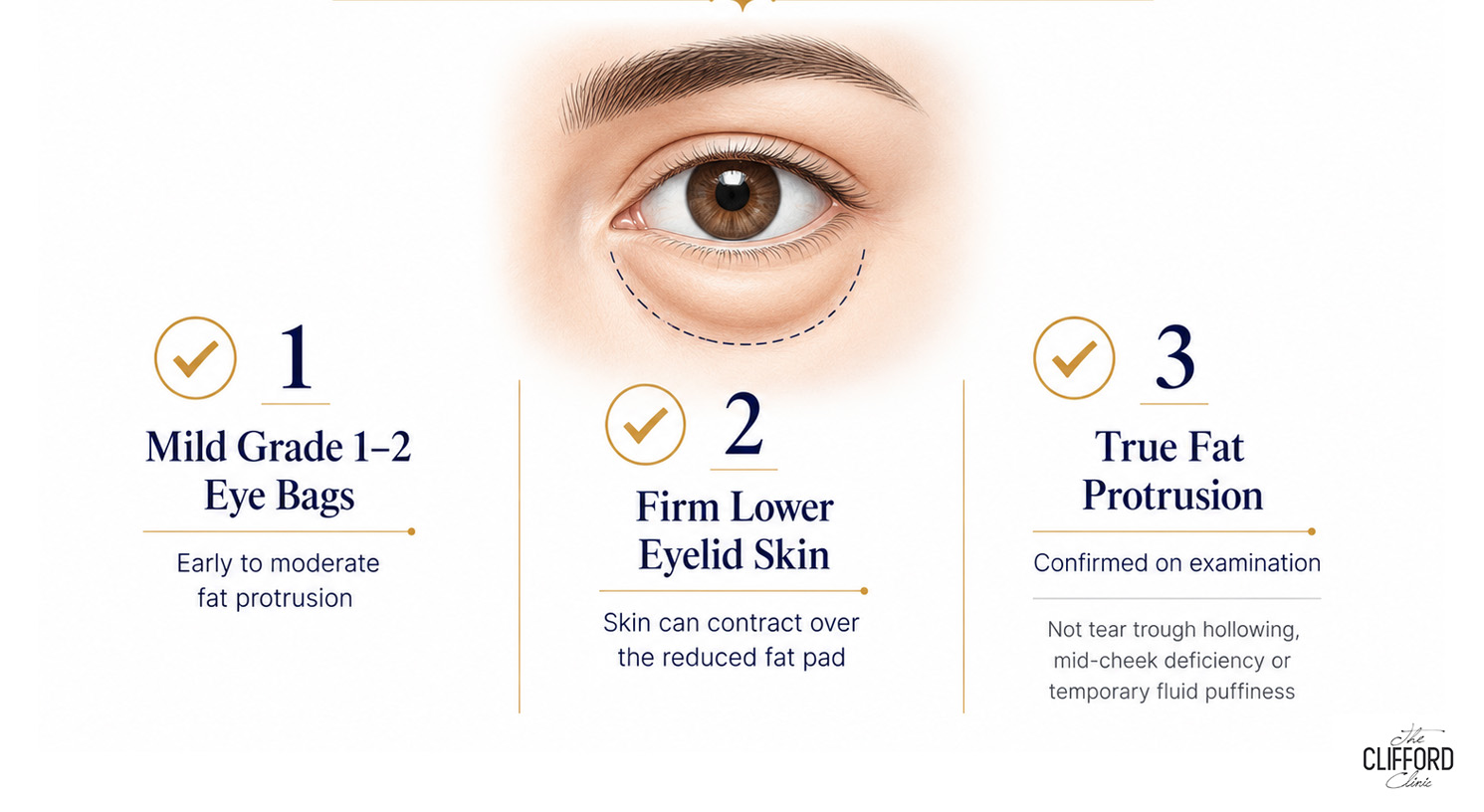
AGNES + Secret RF is appropriate where the assessment confirms the following.
- Mild Grade 1 to 2 fat protrusion.
- Firm, good-quality lower eyelid skin.
- Minimal downtime is a priority, with most patients socially presentable within about 4 to 5 days.
- A result lasting typically 3 to 5 years, achieved without surgery and maintained by repeat treatment thereafter, is an acceptable objective.
Three limitations apply. Results develop gradually over 1 to 2 months rather than immediately, a second session is sometimes required where the protrusion sits at the upper end of the treatable range, and the treatment cannot tighten skin that is already lax. AGNES + Secret RF is also requested by name more often than any other option at consultation, and in a proportion of those requests it is not the clinically appropriate choice, because the protrusion or the skin laxity exceeds what radiofrequency can address.
When surgery is the right choice
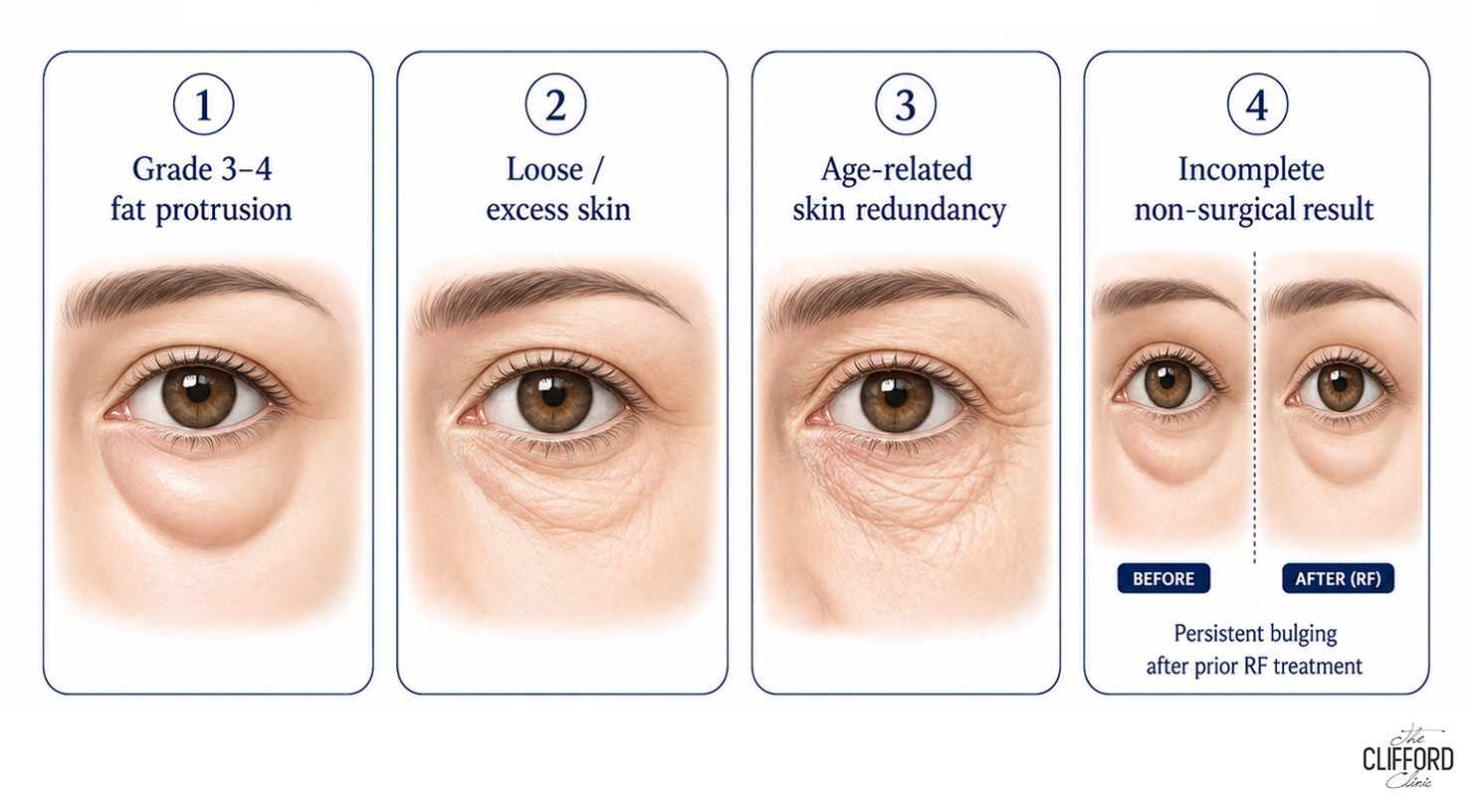
Scarless eye bag removal, with pinch blepharoplasty where indicated, is appropriate where the assessment shows the following.
- Grade 3 to 4 fat protrusion.
- Loose or excess lower eyelid skin.
- Significant skin redundancy associated with age.
- Previous non-surgical treatment that produced an incomplete result because the fat protrusion exceeded what radiofrequency can reduce.
Surgery involves a longer recovery and a larger fee at the outset, but in a correctly selected patient it addresses both the fat and the skin in a single procedure. The economic comparison turns on durability rather than on the initial fee. Where a second non-surgical session is required the course costs $4,300 at the prices above, and that result holds for typically 3 to 5 years before maintenance falls due, whereas surgical fat removal is generally permanent. Surgical fees are quoted after assessment, so the two cannot be compared as single figures. In my experience of patients who present after two or three radiofrequency sessions performed elsewhere, I have found that the limiting factor was the volume of fat rather than the technique, and that surgery would have been the correct first recommendation. Both pathways are provided within the same group, so recommending surgery in preference to non-surgical eye bag removal carries neither a commercial cost nor a commercial advantage, and the recommendation is made on the examination alone.
Combination and staged pathways
The two pathways are not mutually exclusive. Where a single intervention will not address every element of the deformity, a planned sequence across both is used, and the order is set by which element limits the result.
- Surgery first, refinement later.A patient with Grade 3 bags may undergo surgical fat removal, followed later by Secret RF to maintain skin quality as the skin ages. Excision corrects the volume, but it does not slow the elastin loss that continues in the overlying skin.
- Fat treatment first, filler later.Many patients present with both a true bag and a tear trough. Filler placed into the trough before the bag is reduced fills a hollow whose depth is about to change, and is commonly over-corrected as a result. The fat is treated first, non-surgically or surgically according to grade, and the trough is reassessed after 1 to 2 months. In many cases the groove largely resolves once the bag is flattened, and no filler is required.
- Non-surgical now, surgery accepted later.A younger Grade 2 patient may reasonably elect AGNES + Secret RF in the present, on the understanding that progressive skin laxity will in time make surgery appropriate. Later surgery reflects the progression of ageing rather than a failure of the first treatment, and each stage is managed on its own findings.
The sequence to avoid is the reverse one, namely repeated non-surgical expenditure on a problem that is clearly surgical.
Common errors in treatment selection
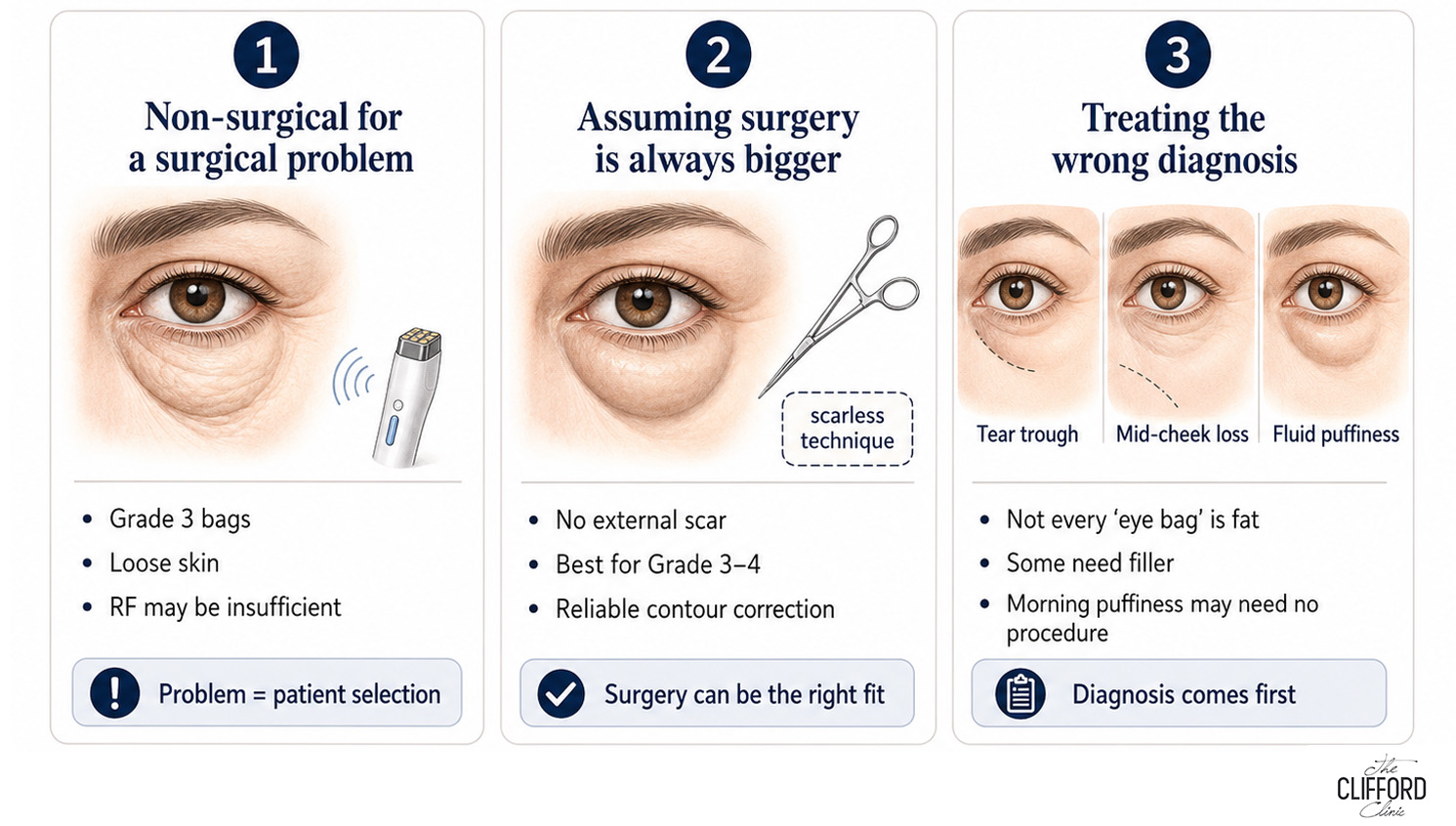
Mistake 1. Choosing non-surgical treatment for a surgical problem. A patient with Grade 3 bags and loose skin may complete two or three RF sessions and remain dissatisfied with the contour, because the volume of fat exceeded what coagulation can reduce and the skin lacked the elasticity to retract. The limitation lies in patient selection rather than in the device.
Mistake 2. Assuming that surgery is always the larger intervention. Many patients fear surgery and select the non-invasive option by default. The scarless technique leaves no external scar, however, and at Grade 3 to 4 it is the intervention that reliably corrects the protrusion.
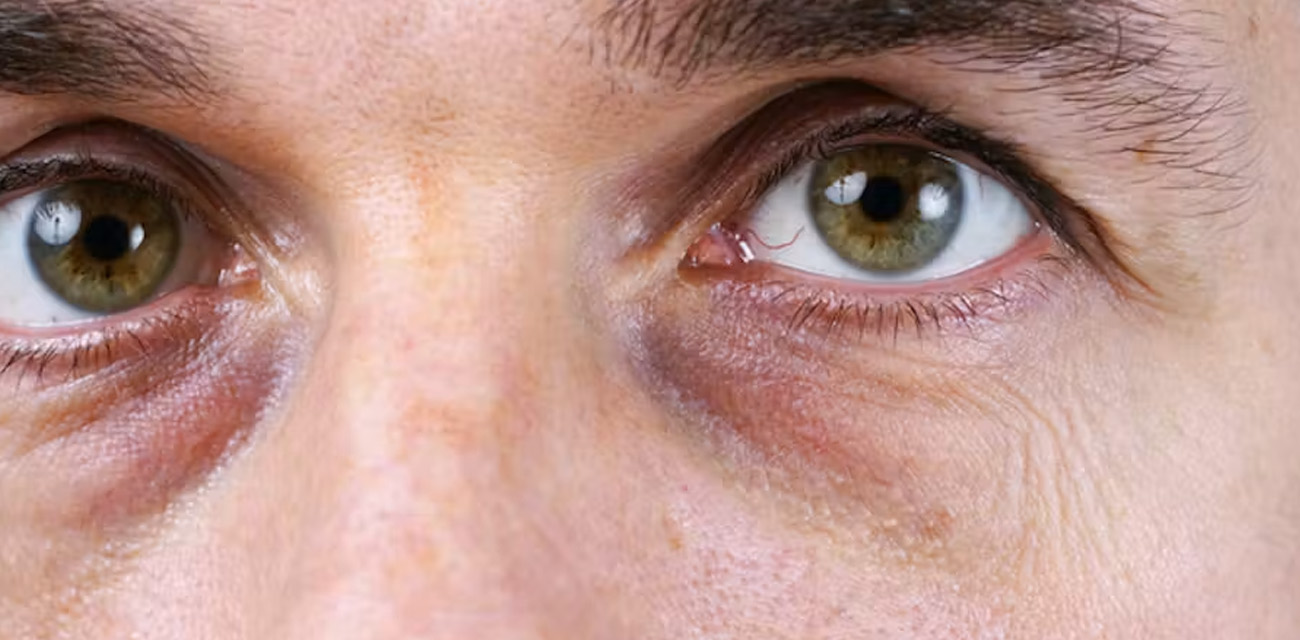
Mistake 3. Treating the wrong diagnosis entirely. Some conditions presented as eye bags are tear trough hollows or mid-cheek volume loss, which require filler rather than fat reduction. Some periorbital puffiness is fluid retention, which is characteristically worst on waking, settles through the day, and requires no procedure. In my experience of patients who present certain that they have eye bags, I have found that a substantial proportion have hollowing or fluid retention instead, and reducing fat in either group removes volume that was never in excess.
Doctor’s note, Dr Gerard Ee, MBBS MRCS DP Dermatology, founder and medical director of Clifford Clinic and The Clifford Surgery. “The selection rule I apply is straightforward. Mild Grade 1 to 2 eye bags with firm skin are treated with AGNES + Secret RF. A deep tear trough or mid-cheek volume loss is treated with filler. Grade 3 to 4 bags or loose skin are treated surgically, often with a pinch blepharoplasty in older patients. The rule holds only where the diagnosis is correct, and the diagnosis comes from the examination.”
Choosing a clinic that offers both pathways
A clinic equipped only for non-surgical treatment will still offer a non-surgical plan to patients whose anatomy requires surgery.
Clifford Clinic is doctor-led and equipped for both pathways, so the recommendation may range across AGNES + Secret RF, fillers for tear troughs, scarless surgery and pinch blepharoplasty. Together with The Clifford Surgery, Clifford Clinic is the only centre among the commonly compared Singapore aesthetic clinics offering both non-surgical and surgical eye bag removal, including scarless eye bag removal and pinch blepharoplasty. Across more than 500 treated eye bag cases, matching the treatment to the anatomy rather than the anatomy to the available treatment has produced consistently natural results. In my experience I have found that the most useful conclusion of an assessment is sometimes that no procedure is indicated, since a proportion of patients who attend for eye bag removal have fluid retention or a shadow cast by the orbital rim and are better served without treatment.
Frequently asked questions
Is non-surgical eye bag removal as effective as surgery?
For the right patient, namely mild Grade 1 to 2 bags with firm skin, non-surgical treatment produces results that typically last 3 to 5 years. For Grade 3 to 4 bags or loose skin, surgery is more effective. Neither approach is superior independently of the anatomy.
Does scarless eye bag surgery leave any scar?
The incision is made on the inside of the lower eyelid, so there is no visible external scar. The fine incision required for an added pinch blepharoplasty sits within the lash line and heals discreetly.
Can I try non-surgical first and do surgery later if needed?
Beginning with the non-surgical protocol is reasonable where the anatomy sits at the boundary between the two pathways, since a Grade 2 bag with firm skin may be corrected fully without surgery. Where the assessment clearly indicates a surgical problem, beginning with non-surgical treatment adds cost and delay without altering the eventual need for surgery. Which of the two applies is established at examination.
What is a pinch blepharoplasty?
A pinch blepharoplasty removes a fine strip of excess lower eyelid skin just below the lash line. It is often combined with fat removal in older patients whose skin would not contract adequately on its own.
Which option has less downtime?
Non-surgical treatment typically causes 4 to 5 days of mild bruising and swelling, versus a longer recovery for surgery. Bruising and swelling commonly persist over 1 to 2 weeks after surgery. Downtime should not determine the choice, since a shorter recovery carries no value where the correction achieved is incomplete.
How do I know my eye bag grade?
Grading requires a physical examination of the fat protrusion, skin quality and lid laxity. It cannot be done reliably from a photograph, because the assessment depends on how the fat protrudes in different positions of gaze. The assessment is carried out at consultation.
Am I too young for eye bag surgery, or too old for non-surgical treatment?
Anatomy rather than age is the criterion. A 30-year-old with hereditary Grade 3 bags may need surgery. A 60-year-old with mild bags and unusually firm skin remains a candidate for radiofrequency treatment.
What does each option cost?
AGNES + Secret RF is $2,500 for the first session and $1,800 for subsequent sessions. Surgical pricing depends on the technique required, including whether a pinch blepharoplasty is added, and is quoted after surgical assessment.
Booking an eye bag assessment
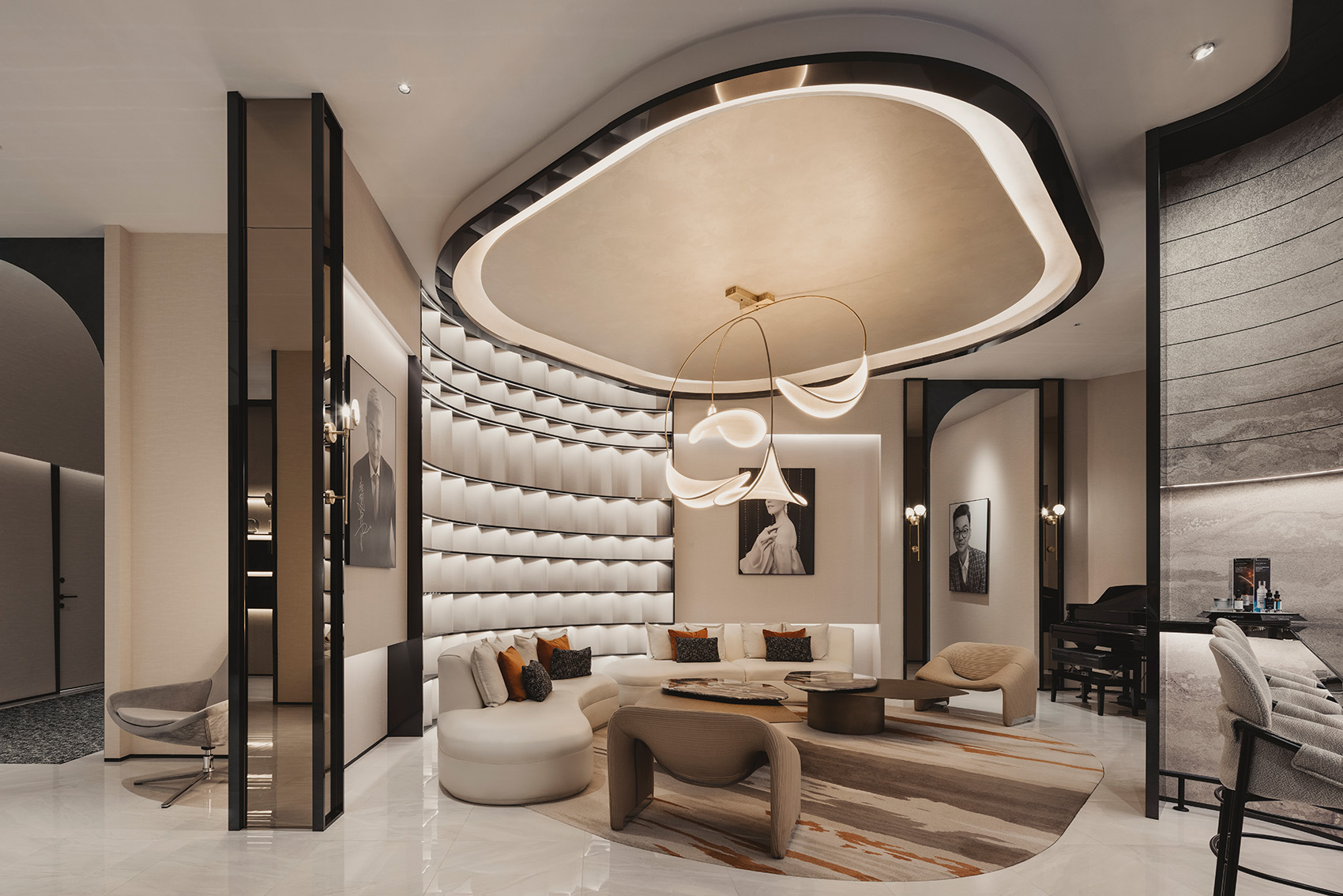
Book an eye bag assessment at Clifford Clinic. The assessment grades the eye bags and evaluates the skin quality, and establishes whether the appropriate pathway is non-surgical, surgical or neither.
This article is for general information and does not replace a medical consultation. Suitability, outcomes and downtime vary between individuals.