
Pico Laser vs Q-Switched Laser in Singapore, Which Is Better for Pigmentation in Asian Skin?
Written by Dr Bernard Ong. Medically reviewed by Dr Gerard Ee
Neither laser is universally better. They differ in pulse duration, not purpose. Pico laser fires in picoseconds, shattering pigment with more mechanical impact and less heat, which generally means fewer sessions and lower heat-related risk in Asian skin. Q-switched lasers fire in nanoseconds, carry decades of evidence and cost less per session. The appropriate choice depends on pigment type, skin and budget, a matter of diagnosis rather than brand.
Why Pico and Q-switched lasers are compared
Both are pigment-selective lasers used for the same family of conditions, including freckles, sun spots, PIH, dermal pigmentation such as Hori’s naevus, tattoos, and, cautiously, melasma toning. Most aesthetic clinics in Singapore carry one or both, so patients naturally ask which to choose.
How each laser works
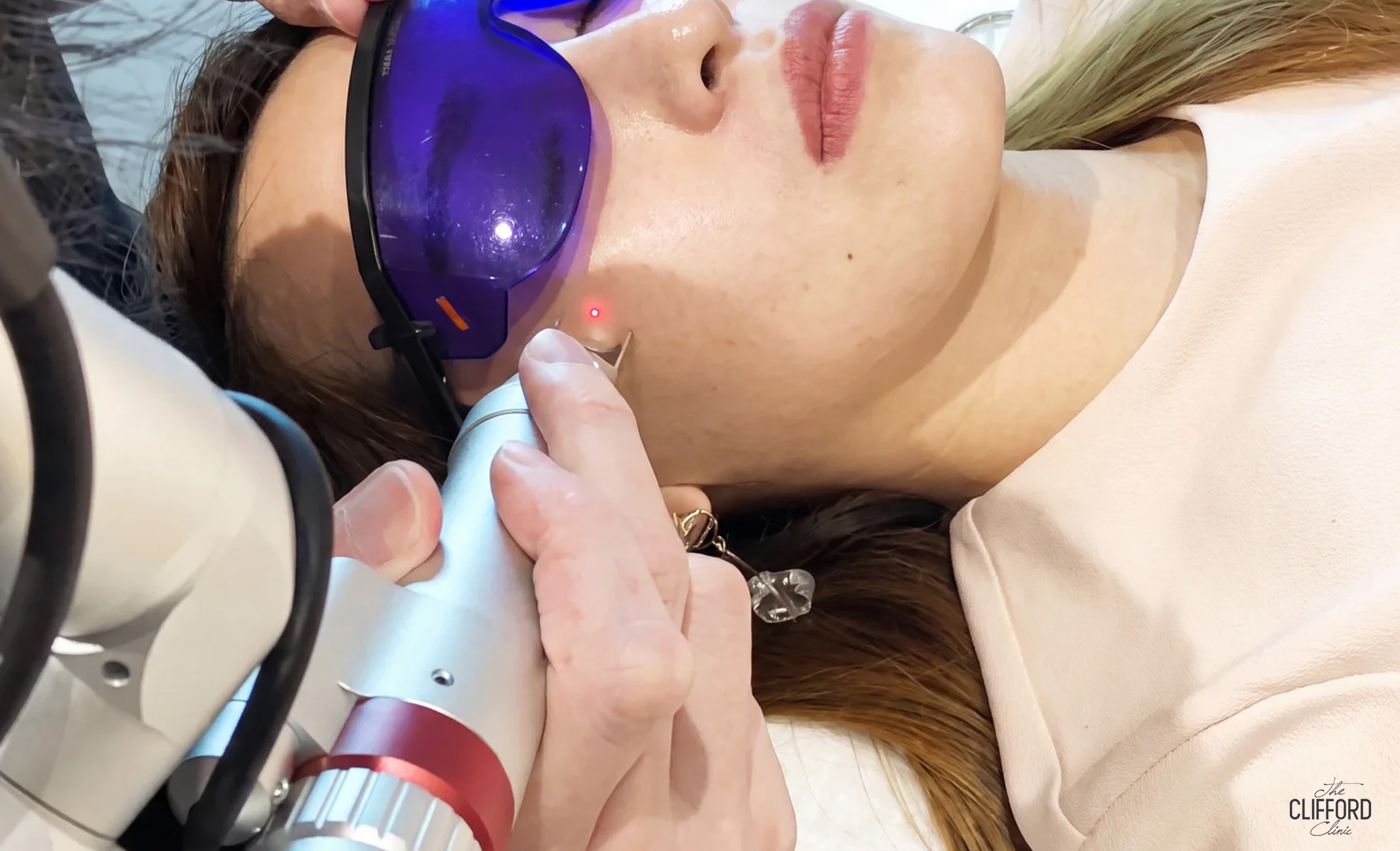
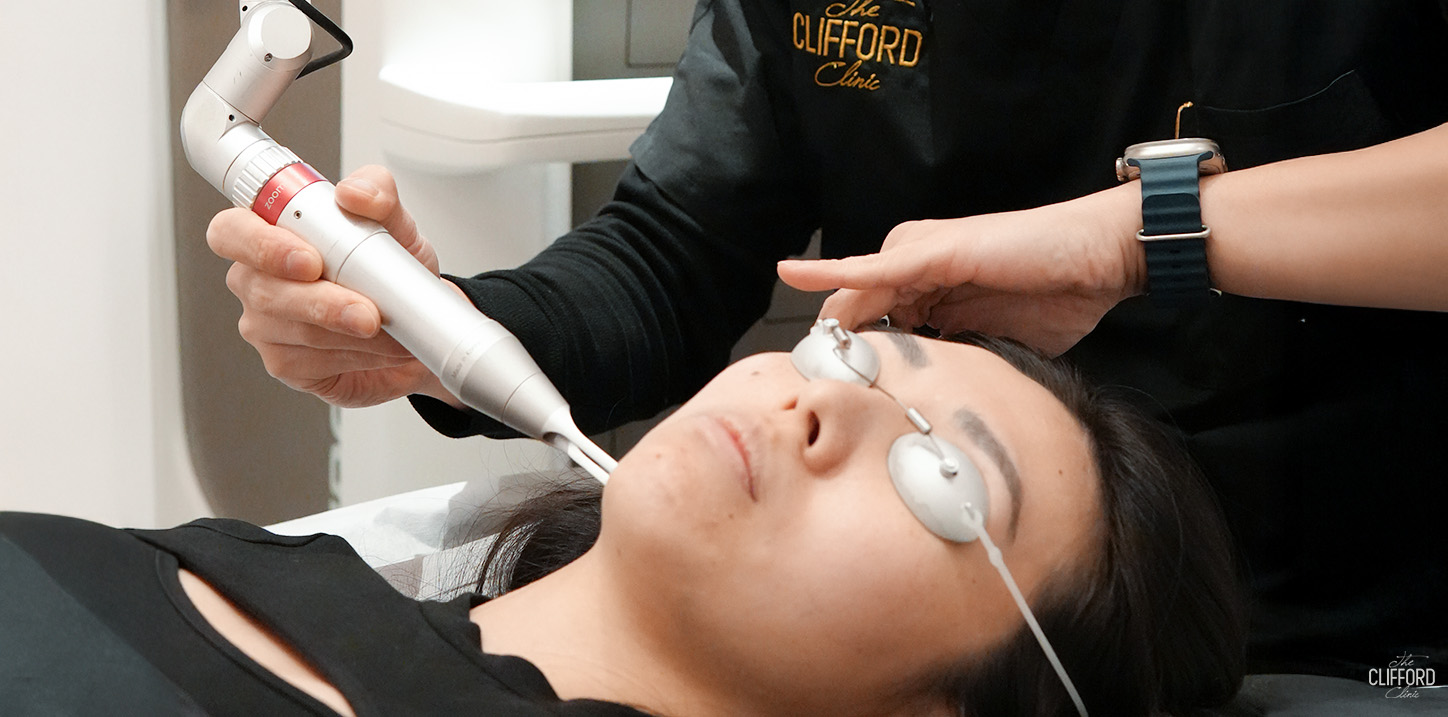
A Q-switched laser delivers energy in nanoseconds (billionths of a second), destroying pigment mainly photothermally, by heating it. Pico laser compresses similar energy into picoseconds (trillionths of a second), up to a thousand times shorter, so pigment is destroyed mainly photoacoustically, by pressure. Less heat escaping into surrounding skin is the core engineering difference, and it matters most in melanin-rich skin, where stray heat triggers post-inflammatory hyperpigmentation.
Side-by-side comparison
Pico Laser and Q-Switched Laser Compared
| Factor | Pico Laser | Q-Switched Laser |
|---|---|---|
| Pulse Duration | Picoseconds, mainly photoacoustic effect | Nanoseconds, mainly photothermal effect |
| Heat Delivered to Skin | Lower | Higher |
| PIH Risk in Asian Skin | Lower, with proper settings | Higher, though manageable with experience |
| Typical Sessions for Similar Clearance | Often fewer | Often more |
| Evidence Base | Strong and growing since mid-2010s | Decades of published data |
| Typical Price per Session | Higher | Lower |
| Tattoo and Stubborn Pigment | Fragments smaller particles, helpful for resistant cases | Effective, may plateau on resistant inks |
| Melasma Toning | Low-fluence toning with less heat | Established low-fluence 1064 nm toning protocols |
Pigmentation types each may treat
Both platforms treat freckles, sun spots, PIH and dermal pigment competently in experienced hands. Dermal conditions such as Hori’s naevus and naevus of Ota need the 1064 nm wavelength on either platform, over multiple sessions. For thin, superficial spots, either laser clears well. The difference shows in total session count and side-effect margin rather than in what is possible.
Melasma: why the choice is not simple
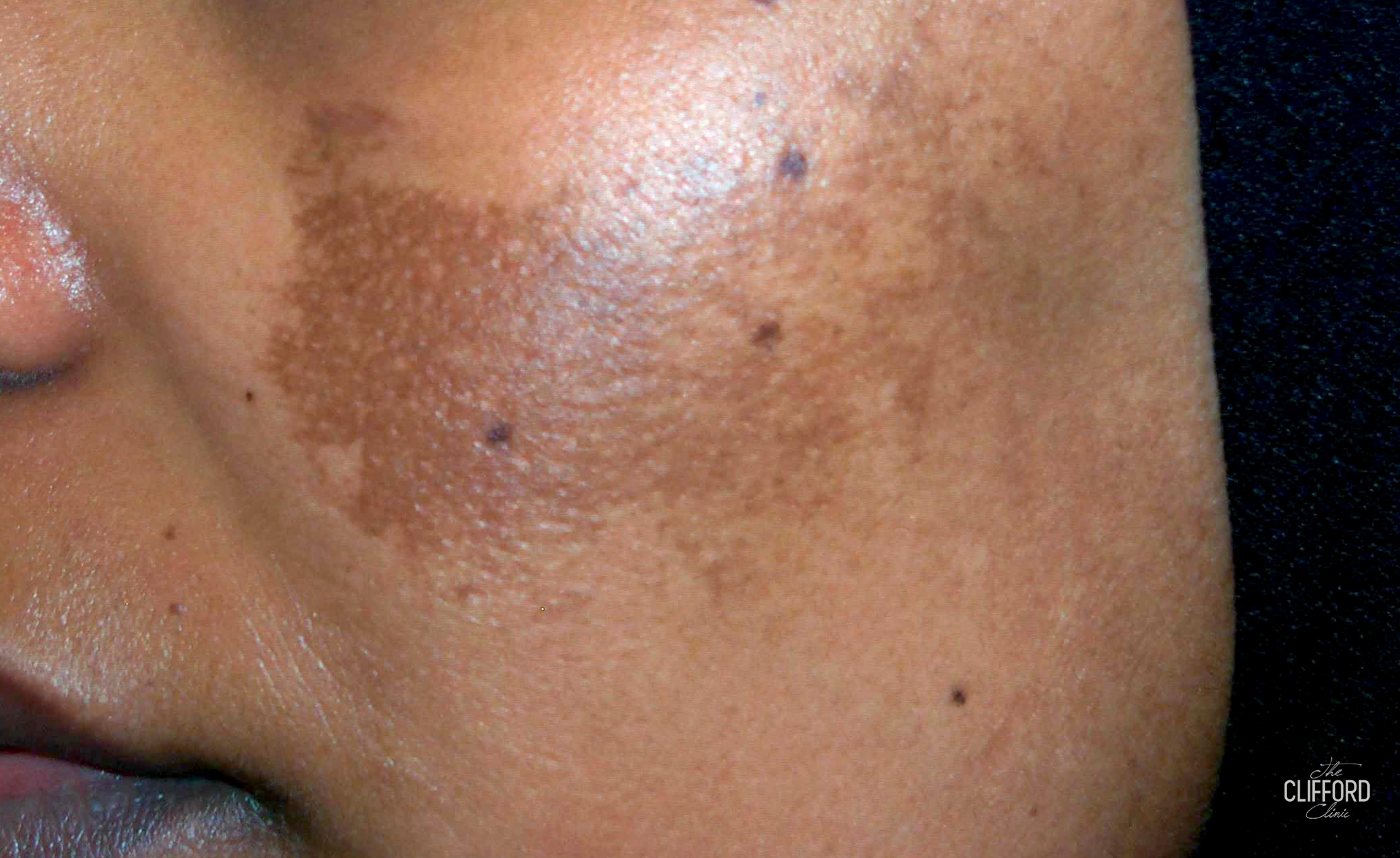
Melasma reacts poorly to heat and aggressive settings on both platforms. Low-fluence Q-switched 1064 nm toning has years of published protocols. Low-fluence Pico toning achieves similar goals with less thermal load. Either way, the laser is an adjunct to sunscreen and topicals in a stabilised patient, and the practitioner’s restraint matters more than the laser. Our melasma treatment guide explains the full framework.
PIH and Asian skin considerations
For Fitzpatrick III to V skin, the appropriate treatment removes pigment without provoking new pigment. Pico’s lower heat gives it a wider safety margin for PIH-prone skin, which is why many Singapore practices favour it for Asian skin, while noting that a skilled operator on a Q-switched platform with conservative settings remains a safe, effective option.
Downtime and side effects
Downtime is similar and short for both, comprising hours of redness, days of spot-darkening and fine crusting. Side-effect profiles overlap, with PIH, transient lightening and rare texture change on both. Frequency of pigment complications trends lower with picosecond systems in comparative studies. Aftercare is identical and is covered in our Pico laser aftercare guide.
Cost and session planning
Q-switched sessions are usually cheaper individually. Pico courses are often shorter. Over a full course the totals frequently converge, so compare projected course costs rather than single-session prices. Our Pico laser price guide covers what a fair quote includes.
Which one is better?
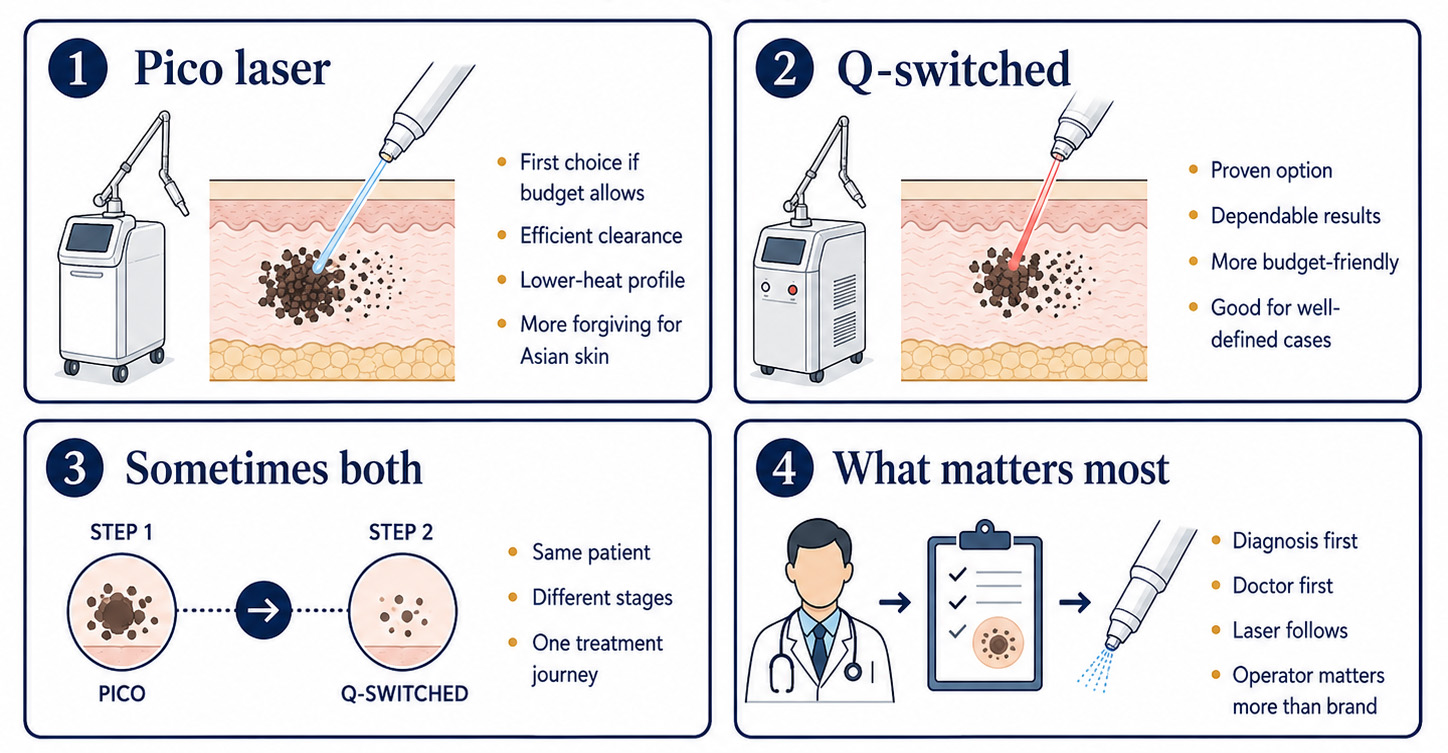
For most Asian-skin pigmentation cases where budget allows, Pico laser’s efficiency and heat profile make it the more forgiving first choice. Q-switched remains a proven and dependable option, particularly for budget-conscious courses and well-understood indications. And for several conditions, an experienced doctor may deliberately use both across one treatment journey.
Doctor’s perspective. Patients sometimes request Pico as a brand rather than a treatment. The operator, however, matters more than the device. A well-diagnosed condition treated conservatively on a Q-switched platform outperforms a misdiagnosed one treated on the newest picosecond system. The diagnosis and the clinician should be chosen first; the laser follows from them.
Why diagnosis matters more than laser name
Treatment failure in pigmentation is almost never a matter of owning the wrong laser. It results from directing any laser at the wrong diagnosis. Melasma treated as freckles rebounds on either platform. Dermal pigment treated with superficial settings fails on either platform. Once the diagnosis is established, the platform question largely resolves itself.
How our picosecond platforms compare in practice
Our picosecond platforms cover the same wavelengths a Q-switched laser offers, including 1064 nm and 532 nm, and add others such as 595 nm, 660 nm, 694 nm and 785 nm, all delivered in far shorter pulses with less heat. That shorter pulse is what gives picosecond treatment its wider safety margin in Asian skin. The wavelength is still chosen by pigment depth, but with more options and a gentler thermal profile than a nanosecond laser.
Frequently asked questions
Is Pico laser better than Q-switched laser?
Pico is newer, delivers less heat and often needs fewer sessions, making it the more forgiving option in Asian skin. Q-switched remains effective and more affordable per session. Neither is categorically superior for every case.
Is Q-switched laser still useful?
Yes. It has decades of evidence, works well for freckles, sun spots, dermal pigment and tattoos, and remains standard in many established protocols, including melasma toning.
Which laser is safer for Asian skin?
Both are safe in experienced hands. Pico’s lower heat gives a wider margin against post-inflammatory hyperpigmentation in Fitzpatrick III to V skin.
Which laser is better for melasma?
Neither is a melasma cure. Both are used at low-fluence toning settings as adjuncts within a sunscreen-and-topicals plan. The practitioner’s conservatism is the deciding safety factor.
Which laser is better for freckles?
Both clear freckles well. Pico may need fewer sessions. Q-switched typically costs less per session. Total course cost and convenience often decide.
Can both lasers be used in one treatment plan?
Yes. Doctors sometimes sequence platforms and wavelengths across a course for different pigment layers or stages of response.
Get matched to the right laser, not sold one
The platform decision belongs at the end of a consultation, not the start. Learn about pigmentation treatment in Singapore or book an assessment at The Clifford Clinic, 50 Raffles Place, #01-01 Singapore Land Tower. Call (65) 6532 2400 or WhatsApp (65) 8318 6332.
Selected References
- Comparing the efficacy and safety of a 730 nm picosecond laser with a 532 nm Q-switched Nd:YAG laser for facial pigmented disorders. European Journal of Medical Research, 2026. https://pubmed.ncbi.nlm.nih.gov/41782066.
- DermNet: lasers in dermatology. https://dermnetnz.org/topics/lasers-in-dermatology.
- Disorders of hyperpigmentation, part I: pathogenesis and clinical features of common pigmentary disorders. Journal of the American Academy of Dermatology, 2023. https://pubmed.ncbi.nlm.nih.gov/35151757.

Author Bio
Dr Gerard Ee

Dr Gerard Ee is the Medical Director of The Clifford Clinic in Singapore. He earned his medical degree from St George's University of London and built his surgical experience across the Singapore General Hospital, National University Hospital, and Mount Sinai Hospital in New York. He holds Membership of the Royal College of Surgeons (Edinburgh) and a Postgraduate Diploma in Dermatology (Cardiff), and is fully accredited in aesthetic procedures including botulinum toxin, fillers, lasers, and light therapies. A strong advocate of minimally invasive, natural-looking results, Dr Ee has published in several medical and scientific journals and presented his research in cities including Taipei, Las Vegas, and London.
See all posts by Dr Gerard Ee »