



Paraphimosis – Why a Stuck Foreskin Is an Emergency and What to Do
Quick answer
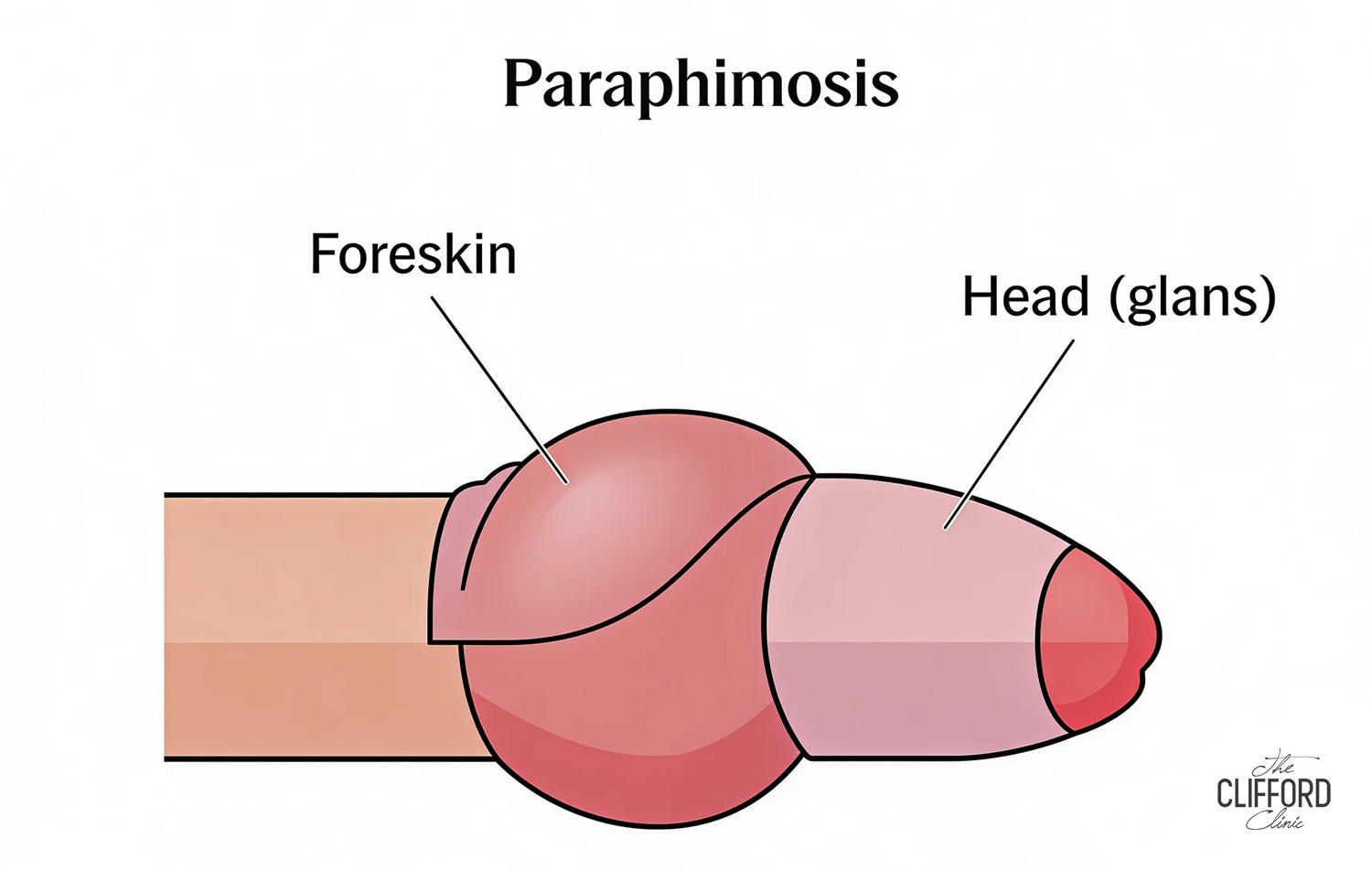
Paraphimosis is when a foreskin has been pulled back behind the head of the penis and cannot be returned to its normal position. The trapped ring of skin acts like a tight band, blood and fluid cannot drain, and the head swells progressively. It is a urological emergency because the swelling can restrict blood supply to the head of the penis if it is left untreated. It is uncommon, with an incidence estimated at under 0.1 percent in uncircumcised males, but it needs same-day medical attention rather than a routine appointment. Most cases are relieved by manual reduction. Once the acute episode is settled, circumcision is commonly recommended to prevent it from happening again. For the complete overview, see our Circumcision Singapore guide.
If this is happening right now
If your foreskin is currently stuck behind the head of the penis and the head is swelling, stop reading and get medical help today. Go to a hospital emergency department, or call a clinic that can see you immediately.
Do not wait to see whether it settles overnight. Do not book a routine appointment for next week. The longer the constricting ring stays in place, the more the head swells, and the more swollen it becomes, the harder it is to reduce.
While you are arranging that, avoid repeated forceful attempts to pull the skin forward, which worsen swelling and can tear the skin.
What paraphimosis is
The foreskin normally slides forward and back over the head of the penis. In paraphimosis, it has been retracted behind the head, usually past the ridge known as the coronal sulcus, and then cannot be brought forward again.
The mechanism is straightforward. The foreskin opening is narrower than the head it has slipped behind, so it sits like a tight elastic band at the base of the head. That band obstructs the drainage of blood and lymph fluid from the head. Fluid accumulates, the head swells, and the swelling makes the band relatively tighter still.
That self-reinforcing loop is the entire problem. It is why the condition worsens with time rather than settling, and why early treatment is straightforward while delayed treatment is not.
Phimosis versus paraphimosis
These two words are constantly confused, and the difference matters because one is urgent and the other usually is not.
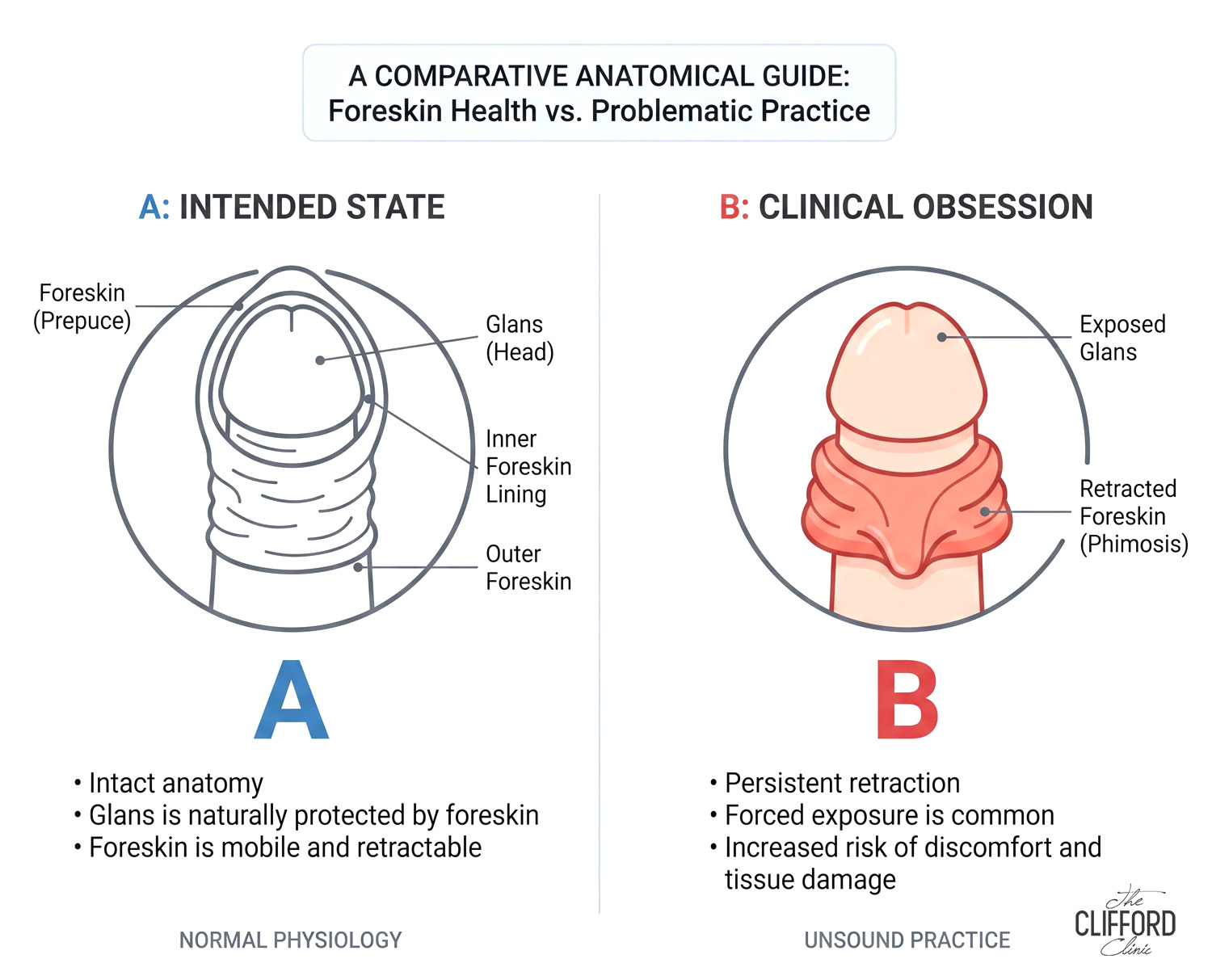
Phimosis means the foreskin cannot be pulled back over the head. It is a common condition, often long-standing, and it is treated on a planned basis with creams or surgery depending on the cause. Our phimosis guide covers it in detail.
Paraphimosis means the foreskin has been pulled back and will not come forward. It is uncommon, and it is urgent.
A useful way to remember it is that phimosis is stuck forward, and paraphimosis is stuck back. The two are related, because a tight foreskin is the main risk factor for getting trapped in the first place.
Why is parahimosis an emergency
The concern is blood supply. The constricting ring first obstructs venous and lymphatic drainage, which produces the swelling. If it persists, the rising pressure compromises arterial inflow to the head of the penis.
Prolonged, untreated cases can lead to tissue injury from inadequate blood supply, and in the most severe cases, tissue loss. This outcome is avoidable if treated promptly.
What causes it
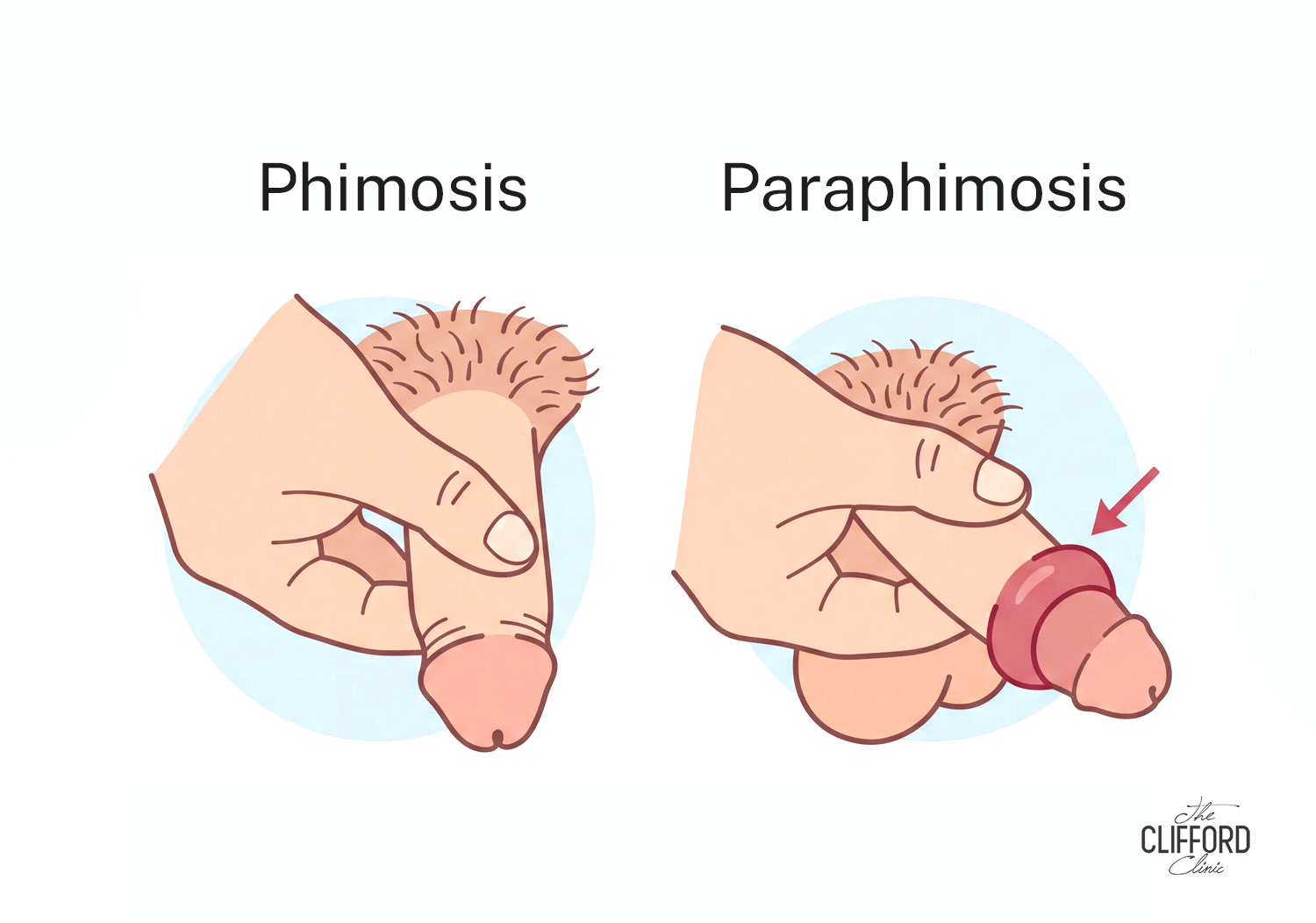
The most common scenario is a foreskin retracted for washing, for sex, or for a medical examination, and then simply not returned to its normal position afterwards. This happens more easily when the foreskin is already somewhat tight.
Medical procedures are a recognised cause, particularly catheter insertion, where the foreskin is retracted to clean the area and is not replaced afterwards. In hospital settings, this is a known and preventable event.
Vigorous sexual activity or masturbation can precipitate it, as can forceful retraction of a tight foreskin. In children, a common cause is a caregiver or the child himself retracting a foreskin that was not ready to be retracted.
Underlying tightness from a scarring skin condition, diabetes-related inflammation, or repeated infection raises the risk considerably, which is why paraphimosis often occurs in men who already had foreskin problems.
How doctors reduce it
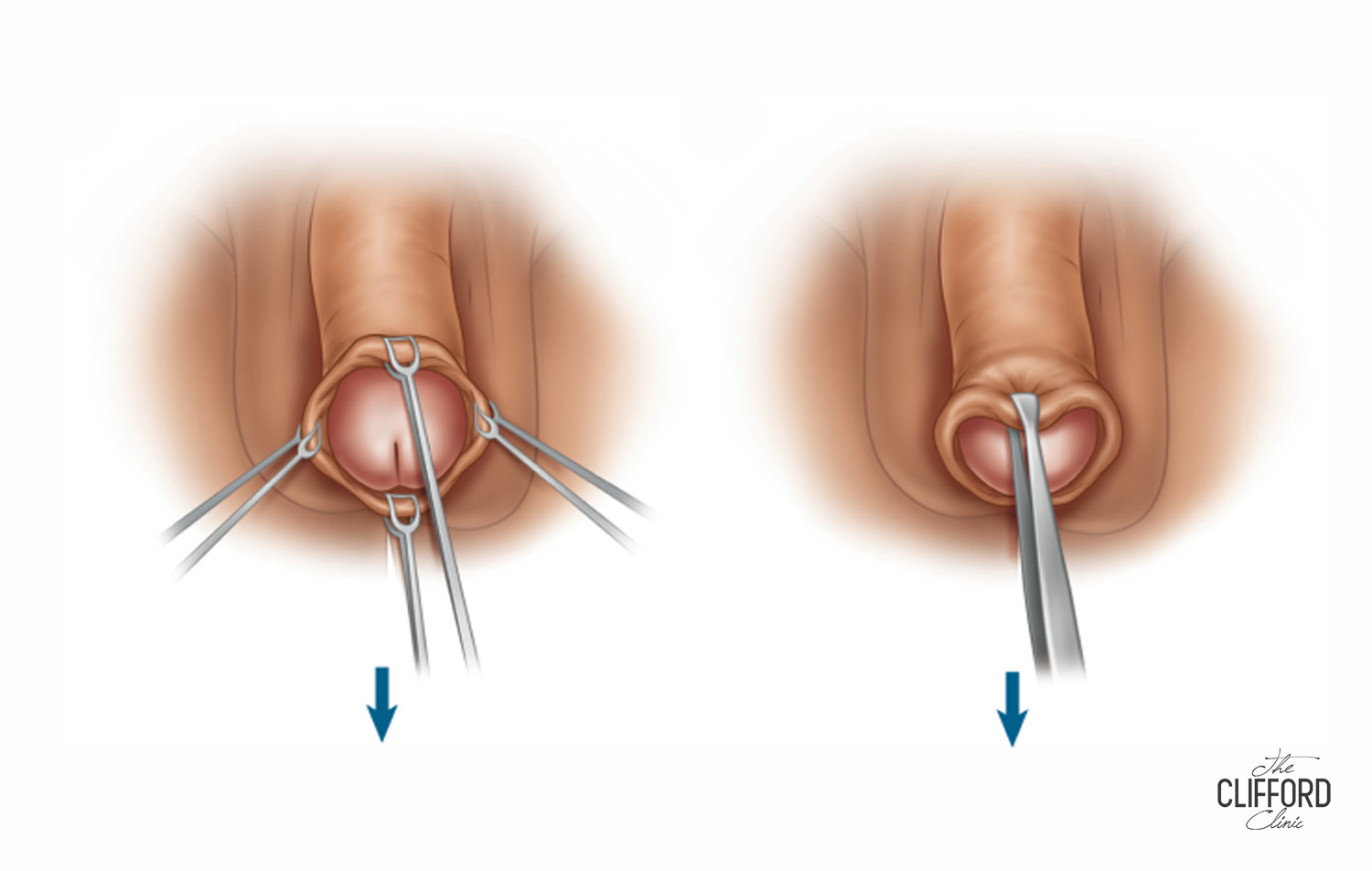
The treatment for an acute episode is manual reduction, and in most cases it is successful.
Pain relief and local anaesthesia are given first, because the area is tender and reduction requires firm, sustained pressure. The swelling is then reduced. This is typically done by applying steady compression to the swollen head for several minutes to squeeze fluid out of the tissue, sometimes assisted by a cold compress or by other measures a doctor may use to draw fluid out. Once the head is smaller, the foreskin can usually be eased back over it, with the thumbs pushing the head backwards while the fingers draw the foreskin forward.
Where simple reduction does not work, a doctor may use additional techniques to decompress the tissue before trying again.
The relief is generally immediate once the foreskin is back in position, and the swelling then settles over the following days.
What happens if reduction fails
If manual reduction is unsuccessful, a small procedure is used to release the constricting band. This is done under local anaesthesia and involves a limited incision in the tight ring, which relieves the constriction and allows the foreskin to be replaced.
This is a release procedure rather than a definitive treatment. It solves the emergency, but the underlying tight foreskin remains. A plan for the future is discussed once the acute problem is settled.
Why circumcision often follows
Having had one episode of paraphimosis, you are at meaningful risk of another, because the anatomy that allowed it has not changed. The foreskin is still tight, and it can still become trapped.
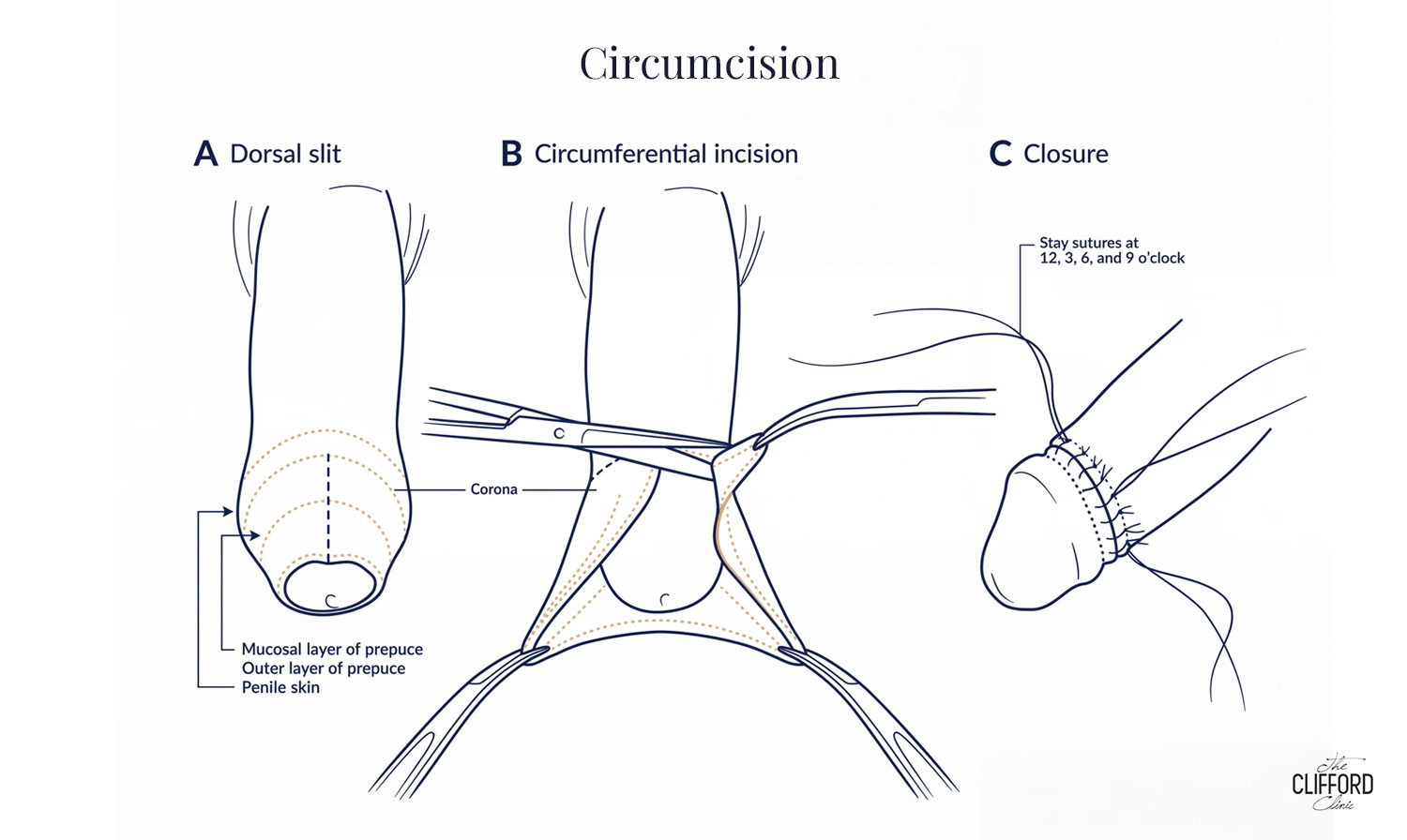
Circumcision removes the foreskin entirely, so there is no ring of tissue left to trap behind the head. It is therefore the definitive way to prevent recurrence, and it is commonly recommended electively after the acute episode has resolved rather than performed during the emergency itself.
A Cochrane review of 18 randomised trials, covering 3,472 participants, reported no severe adverse events with either device-based or conventional surgical techniques. Infection rates in proper medical settings generally range from about 0.5 to 5 percent. Adults typically have the procedure under local anaesthesia as day surgery, with around five to seven days of medical leave.
Because a previous episode of paraphimosis is a clear medical indication, MediSave and insurance generally apply. Our MediSave and insurance guide explains how.
Preventing it from happening again
Until definitive treatment, a few habits reduce the risk.
Always return the foreskin to its normal forward position after washing, after sex, and after any examination. Make this automatic rather than something you remember sometimes. If you have a catheter or attend for any procedure where the foreskin is retracted, check that it has been replaced before you leave.
Avoid forceful retraction of a tight foreskin, since the tear and swelling it causes make trapping more likely next time. And address the underlying tightness rather than tolerating it long term, because a tight foreskin is the root risk factor. If you are diabetic, blood sugar control is part of this, since it drives the inflammation that tightens the foreskin in the first place. Our guide to circumcision and diabetes explains that link.
Paraphimosis in children

In boys, the foreskin is naturally fused to the head in early childhood and is not designed to be retracted. This is normal development, and most boys can retract the foreskin naturally by adolescence.
Forcing a young boy’s foreskin back is the main avoidable cause of paraphimosis in children, and it can also cause the small tears that lead to scarring and later phimosis. Do not forcefully reduce the foreskin, clean only what is easily visible, and let separation happen on its own.
If a child’s foreskin does become trapped with the head swelling, the same urgency applies. Seek care the same day. Our child age guide covers normal foreskin development.
A note from the clinic
“Paraphimosis is one of the few foreskin problems where hours matter. The men we see for it are usually embarrassed and have waited longer than they should. Our message is always the same, come the day it happens, because it is straightforward to relieve early and genuinely difficult if you leave it. Then we talk about making sure it never happens again.”
Frequently asked questions
What is paraphimosis?
It is when a retracted foreskin becomes trapped behind the head of the penis and cannot be brought forward, causing the head to swell.
Is paraphimosis an emergency?
Yes. The trapped ring restricts drainage and can compromise blood supply to the head of the penis if untreated, so it needs same-day medical attention.
What is the difference between phimosis and paraphimosis?
Phimosis means the foreskin will not pull back. Paraphimosis means it has pulled back and will not come forward. The second is the urgent one.
What should I do right now if my foreskin is stuck?
Seek medical help today at an emergency department or a clinic that can see you immediately. Avoid repeated forceful attempts to pull the skin forward.
How is it treated?
Usually by manual reduction after pain relief, with steady compression to reduce swelling before easing the foreskin forward. If that fails, a small release procedure under local anaesthesia is used.
Will I need a circumcision afterwards?
It is commonly recommended once the acute episode has settled, because it removes the tissue that can become trapped and so prevents recurrence.
How common is paraphimosis?
It is uncommon, with an incidence estimated at under 0.1 percent in uncircumcised males.
Can it happen more than once?
Yes. After one episode, the anatomy remains the same, so recurrence is a real risk until the underlying tightness is addressed.
Can it happen to children?
Yes, most often when a young boy’s foreskin is forcibly retracted before it has separated naturally. Therefore, the foreskin should never be forced back.
Is circumcision after paraphimosis claimable on MediSave?
A previous episode of paraphimosis is a clear medical indication, so MediSave generally applies within the set limits. Confirm at your consultation.
Book a review after an episode

If you have had an episode of paraphimosis that was relieved, the next step is a planned review to deal with the underlying tightness so it does not recur. The consultation covers what caused it, whether circumcision is the right preventive step, and what it would cost.
Book a consultation at The Clifford Surgery
Related guides
- Circumcision Singapore, the complete guide
- Phimosis and tight foreskin
- Balanitis and recurrent foreskin infections
- Circumcision and diabetes
- Adult circumcision in Singapore
- Where to get circumcision in Singapore
Medical review box

This article is written by Dr Law Zhi Wei of The Clifford Surgery. Dr Law is a Singapore-trained doctor with more than five years of surgical posting experience. He graduated from the National University of Singapore with an MBBS and holds Membership of the Royal College of Surgeons of Edinburgh, a Graduate Diploma in Family Medicine, and a Postgraduate Diploma in Practical Dermatology from Cardiff University. He trained in the Urology Department at Singapore General Hospital, where he performed hundreds of circumcisions, and completed rotations in urology, general surgery, and paediatric surgery at KK Women’s and Children’s Hospital, Sengkang General Hospital, and Changi General Hospital. He has personally performed more than 500 circumcisions across the conventional, laser-assisted, Shang Ring, and ZSR Stapler techniques, supported by the dedicated Urology Department led by Dr Nathaniel Heah. This article is general information and not a substitute for urgent medical care. If your foreskin is trapped and the head is swelling, seek medical attention today.
Dr Law Zhi Wei profile, https://cliffordclinic.com/dr-law-zhi-wei/
Clinical research and publications, https://cliffordclinic.com/clinical-research/
References
- European Association of Urology, Guidelines on Paediatric Urology, phimosis and paraphimosis. https://uroweb.org/guidelines/paediatric-urology
- National University Hospital, Services for Circumcision. https://www.nuh.com.sg/care-at-nuh/services/department-of-urology/services-for-circumcision
- Ministry of Health Singapore, TOSP SH808P bill information. https://www.moh.gov.sg/managing-expenses/bills-and-fee-benchmarks/cost-financing/tosp-sh808pless-than-6m-bill-information/
Medical evidence references
- Hohlfeld A, Ebrahim S, Shaik MZ, Kredo T. Circumcision Devices Versus Standard Surgical Techniques in Adolescent and Adult Male Circumcisions. The Cochrane Database of Systematic Reviews. 2021. https://www.cochranelibrary.com/cdsr/doi/10.1002/14651858.CD012250.pub2/full
- Friedman B, Khoury J, Petersiel N, et al. Pros and Cons of Circumcision, An Evidence-Based Overview. Clinical Microbiology and Infection. 2016. https://pubmed.ncbi.nlm.nih.gov/27497811
- Nabavizadeh B, Li KD, Hakam N, et al. Incidence of Circumcision Among Insured Adults in the United States. PLoS One. 2022. https://pubmed.ncbi.nlm.nih.gov/36251658

Author Bio
Dr Gerard Ee

Dr Gerard Ee is the Medical Director of The Clifford Clinic in Singapore. He earned his medical degree from St George's University of London and built his surgical experience across the Singapore General Hospital, National University Hospital, and Mount Sinai Hospital in New York. He holds Membership of the Royal College of Surgeons (Edinburgh) and a Postgraduate Diploma in Dermatology (Cardiff), and is fully accredited in aesthetic procedures including botulinum toxin, fillers, lasers, and light therapies. A strong advocate of minimally invasive, natural-looking results, Dr Ee has published in several medical and scientific journals and presented his research in cities including Taipei, Las Vegas, and London.
See all posts by Dr Gerard Ee »