


Laser Treatment for Acne Scars: Fractional CO2 and Fraxel 1550 Explained
Written by Dr Bernard Ong. Medically reviewed by Dr Bernard Ong. Expert opinion by Dr Bernard Ong
Dr Bernard Ong is an aesthetic doctor at The Clifford Clinic has more than 16 years of experience treating acne scars with established protocols refined over the years to deliver results in a safe and effective manner.
Fractional CO2 laser is often called the gold standard for resurfacing acne scars, and for the right scar in the right skin it earns that reputation. Used without care, it can cause lasting harm, especially in darker skin. This article explains how fractional CO2 works, its role in a combination plan, what it treats well, what to expect in downtime, building on our complete acne scar treatment guide, what causes acne scars and the types of acne scars.
How fractional CO2 laser works
A fractional CO2 laser creates thousands of microscopic columns of controlled thermal injury in the skin, leaving the tissue between them intact. The intact tissue drives rapid healing while the injury triggers new collagen. As that remodels over months, depressed scars lift and texture improves. Our clinic’s Edge fractional CO2 laser page and the deeper piece on fractional CO2 laser treatment describe the technology in more detail.
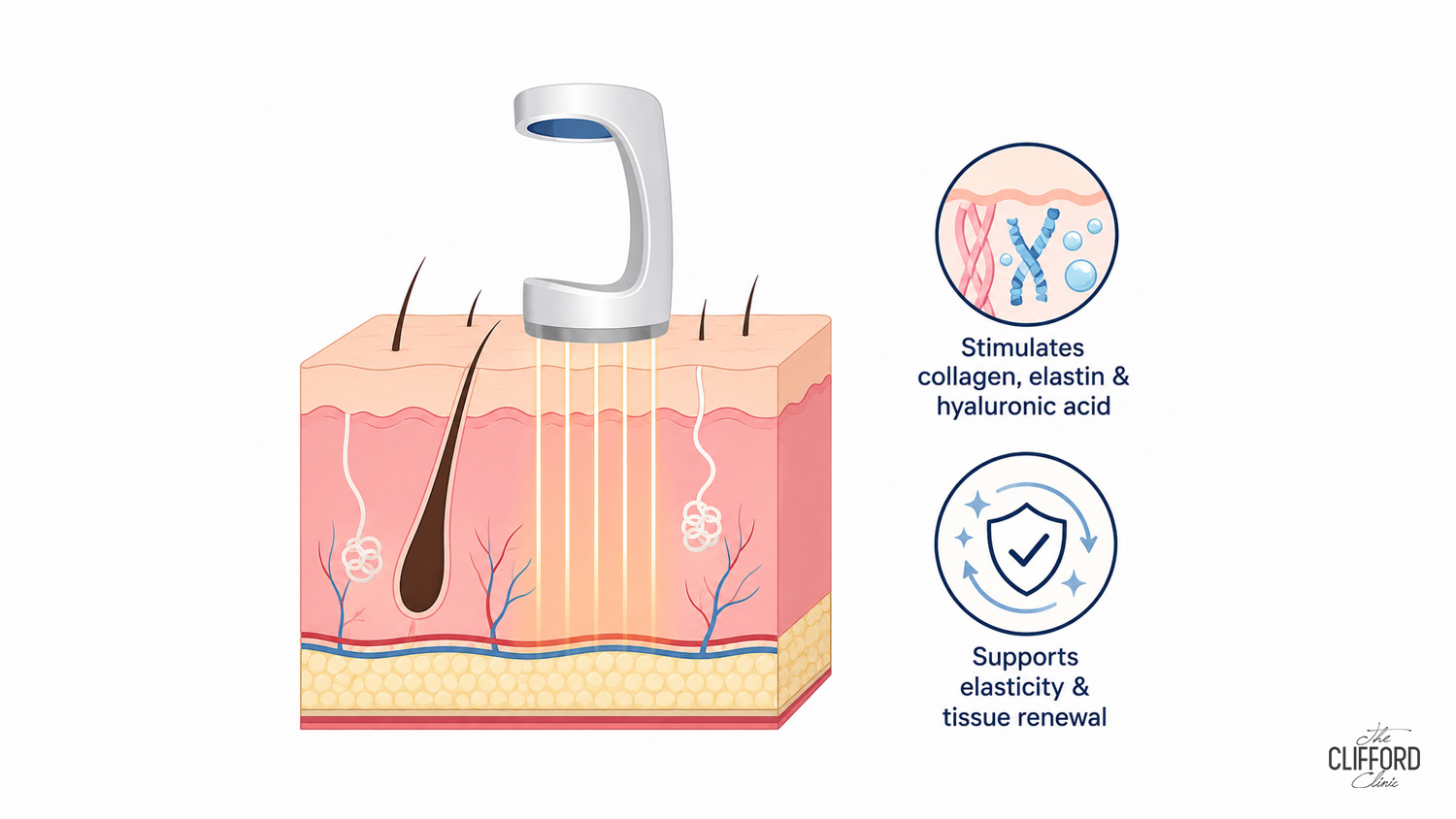
The CO2 laser emits at a wavelength of 10,600 nm, which is strongly absorbed by water in the skin. In fractional mode the beam is split into a grid of microscopic columns, microthermal zones (MTZs), each made up of a central core of vaporised (ablated) tissue surrounded by a rim of thermal coagulation. Only a fraction of the surface is treated in each pass. The untreated islands of intact skin between the MTZs act as reservoirs of healthy cells that drive rapid re-epithelialisation, making fractional resurfacing far safer than fully ablative methods. Two settings determine the effect. The first, energy per microbeam in millijoules, sets how deep each column reaches. The second, treatment density or coverage, is the percentage of skin treated and sets how aggressive the session is.
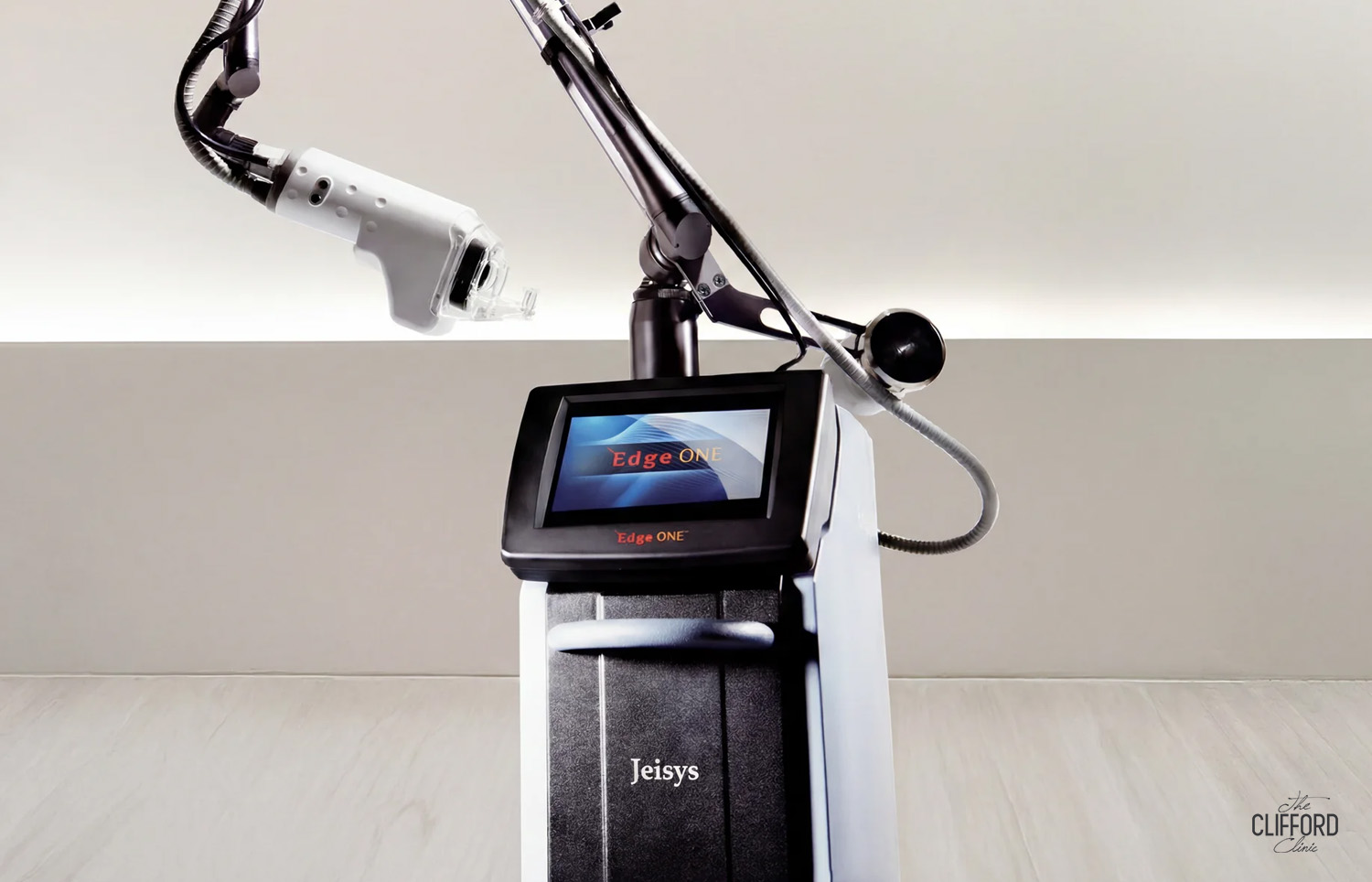
The version of fractional CO2 used at The Clifford Clinic, the Edge fractional CO2 laser, the Jeisys EdgeOne CO2, FDA-cleared under 510(k) K162169, is among the newest generation of the technology. It emits at 10,600 nm (10.6 µm) and delivers fractional microbeams as fine as 120 µm at energies up to 300 mJ per beam, with adjustable spot density up to 42.4%. Those finer beams and higher per-beam energy let it remodel collagen deeper while treating a smaller footprint of surface tissue, so compared with older CO2 systems, it causes less ablative damage to the surface, which means a gentler recovery and a lower risk of post-inflammatory hyperpigmentation, a meaningful advantage in the Asian and darker skin tones common in Singapore.
What it treats well, and what it doesn’t
Fractional CO2 is excellent for boxcar scars, general surface irregularity and overall skin texture. It is less suited, on its own, to two situations. Deep ice pick scars usually need TCA CROSS rather than laser, because the laser cannot reach the base of a narrow deep pit effectively. And rolling scars that are tethered will not lift with resurfacing alone. The fibrous bands have to be released first with subcision. Laser is a powerful tool, but matching it to the right scar is what produces results.
Ablative versus non-ablative lasers
Resurfacing lasers fall into two families defined by their wavelength and how they interact with tissue. Ablative lasers vaporise tissue. The CO2 laser works at 10,600 nm, and the erbium YAG laser at 2,940 nm, which is even more strongly absorbed by water and so ablates more crisply with a thinner zone of surrounding coagulation. Non-ablative fractional lasers instead deliver columns of thermal coagulation into the dermis while leaving the epidermis essentially intact. The Fraxel 1,550 nm erbium-glass laser is the best-known example, with the 1,927 nm thulium wavelength used for more superficial pigment. Ablative lasers remodel more aggressively per session at the cost of more downtime and higher pigment risk. Non-ablative lasers are gentler and safer in darker skin, but usually need more sessions for equivalent improvement. Our comparison of ablative versus non-ablative lasers for deep scars works through that trade-off.
Fraxel 1550: the non-ablative erbium-glass laser
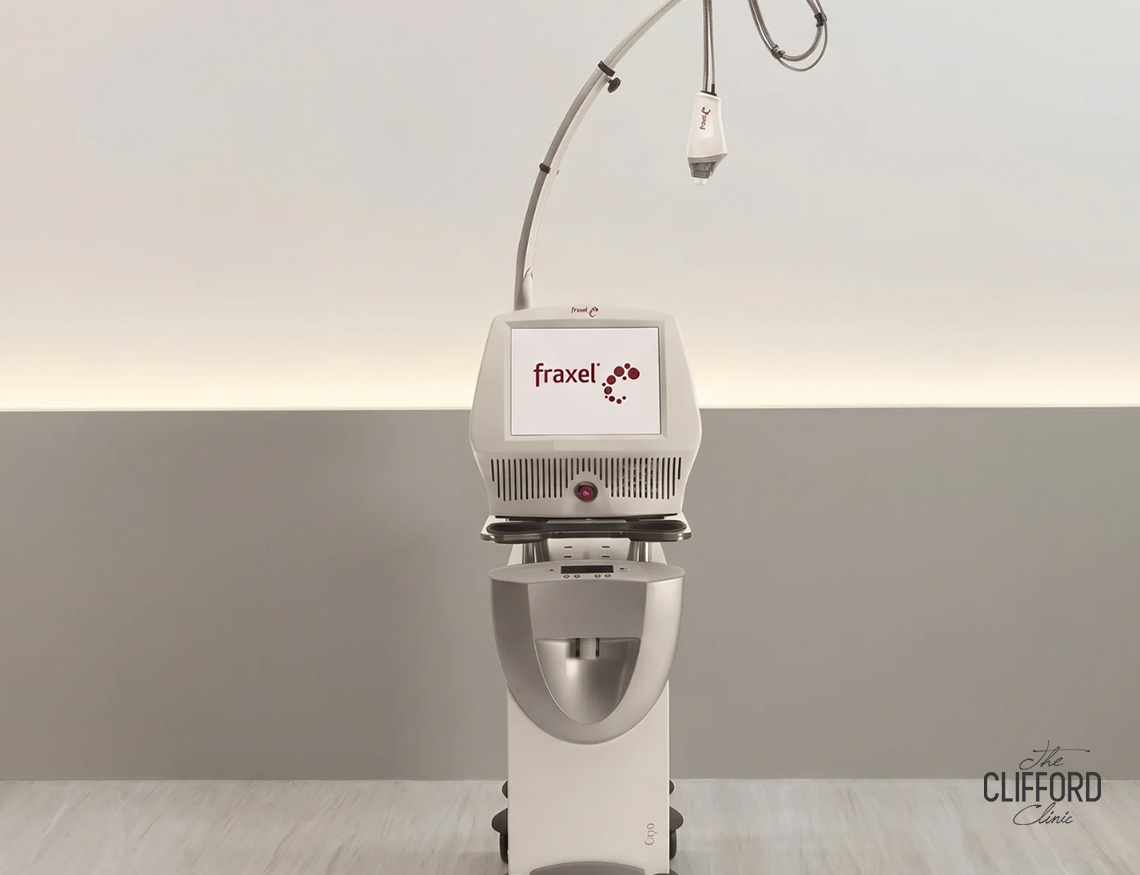
The Fraxel 1550 is a non-ablative fractional laser built around an erbium-doped fibre that emits at 1,550 nm. Like the CO2 laser, its chromophore is water, but because it coagulates rather than vaporises, the epidermis is preserved. Each microbeam creates a column of coagulated dermis, an MTZ, and the damaged cells are extruded as microscopic epidermal debris (MENDs) over the following days, triggering fresh collagen. The result is genuine dermal remodelling with markedly less downtime than ablative CO2, typically a day or two of redness and swelling, mild bronzing and fine flaking rather than open resurfacing.
The Fraxel 1550 is a strong choice for boxcar scars and overall texture, and especially for patients who cannot take much downtime or whose skin tone carries a higher pigment risk. Non-ablative 1,550 nm resurfacing has a well-documented safety record in Fitzpatrick IV to VI skin. Its main limitation is that, being gentler per pass, it usually needs more sessions than ablative CO2 for equivalent improvement. It does not address tethered rolling scars, which need subcision first, or deep ice pick scars, which need TCA CROSS.
Downtime and what to expect
Fractional CO2 involves real, if short, downtime, typically a few days of redness, mild swelling and some flaking as the skin heals, sometimes a little longer depending on the energy used. A properly-dosed session with a few days’ recovery will always outperform one too gentle to shift a scar. Most need a series, spaced to let collagen mature between them.
The settings that decide the result
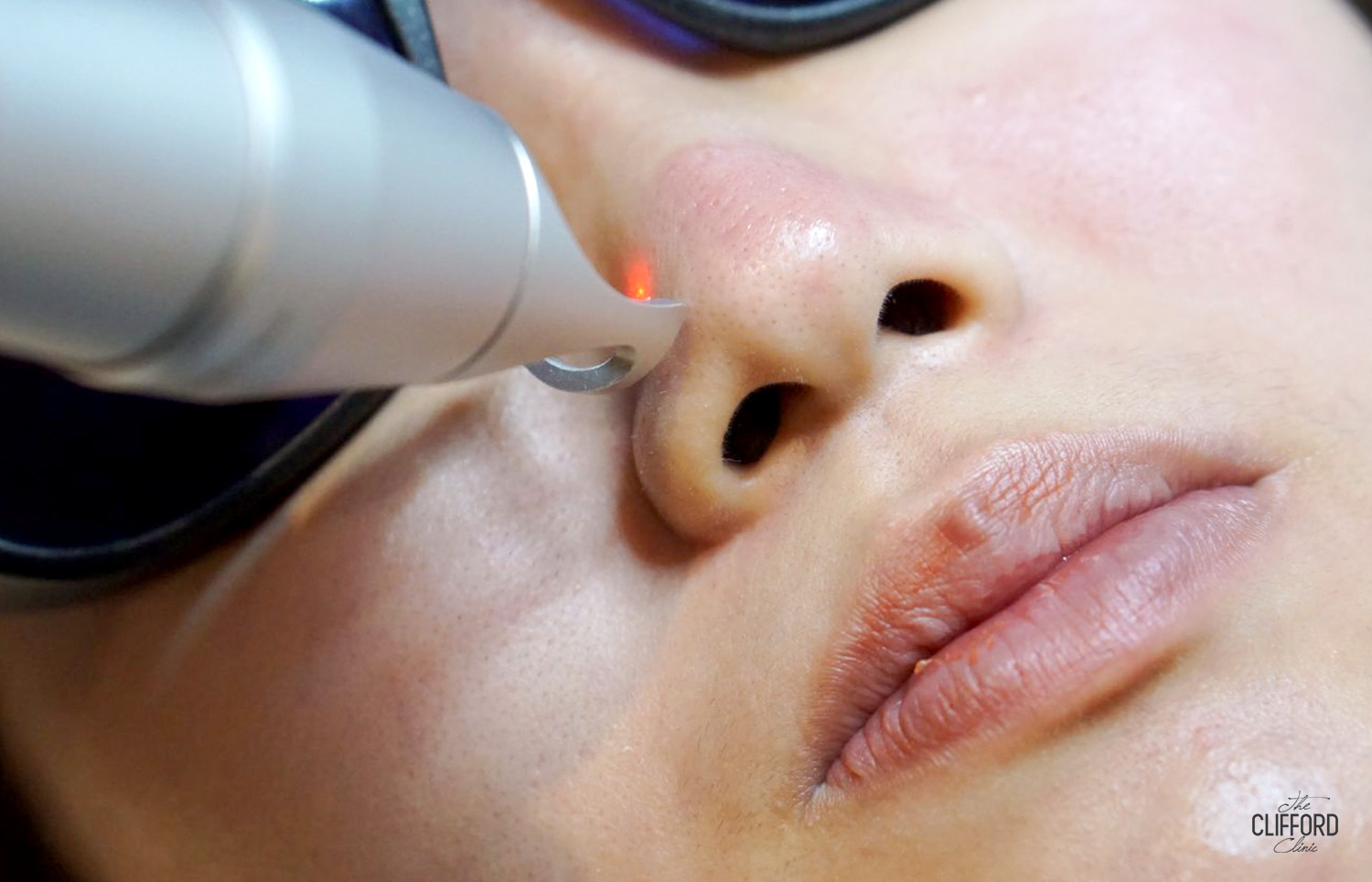
Whichever device is used, three settings govern both the outcome and the recovery. Energy, in millijoules per microbeam, determines how deep each treatment column reaches. Higher energy drives deeper remodelling for thicker, deeper scars. Density or coverage, the proportion of skin treated per session, determines how intense the treatment is and how long it takes to heal. Pushing all three high gives the strongest single-session result but the longest downtime and, in darker skin, the greatest pigment risk. Lowering them and treating more often is the safer route to the same destination. Choosing these parameters to suit the scar depth and skin tone, rather than running one fixed protocol, is what separates a good result from a complication.
Laser and darker skin, a careful approach
In darker skin tones, fractional CO2 carries a higher risk of post-inflammatory hyperpigmentation, so it is used more cautiously and at lower energy settings, with insulated RF microneedling such as Infini as the deeper-working backbone because it spares the surface. Pairing treatment with PDRN such as Rejuran also helps the skin recover. Our acne scar treatment for dark skin guide covers the safe options in detail. The key principle is that the same laser that is ideal for one patient may be the wrong first choice for another.
Where laser fits in a combination plan
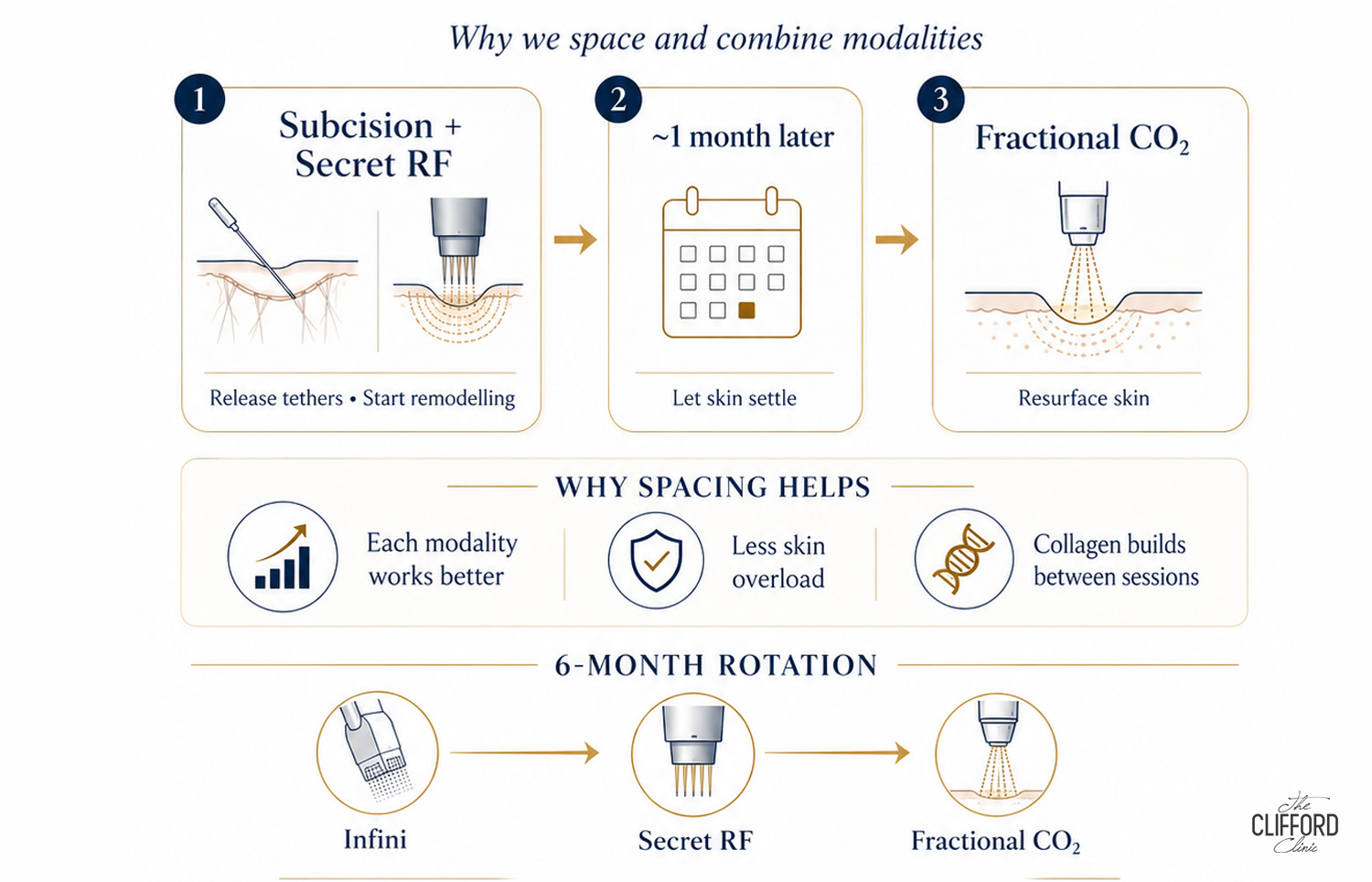
Fractional CO2 is rarely used alone. A typical sequence begins with subcision combined with Secret RF to release tethers and start remodelling, and then fractional CO2 about a month later to resurface, once the skin has settled. Spacing modalities this way lets each work without overwhelming the skin and allows collagen to build between sessions. A rotation across modalities, for example Infini, Secret RF and fractional CO2 over six months, typically delivers around twenty to thirty per cent improvement, with more when biostimulators are added. The thinking behind layering is in our combination therapy article.
Where Pico MLA fits, and where it does not
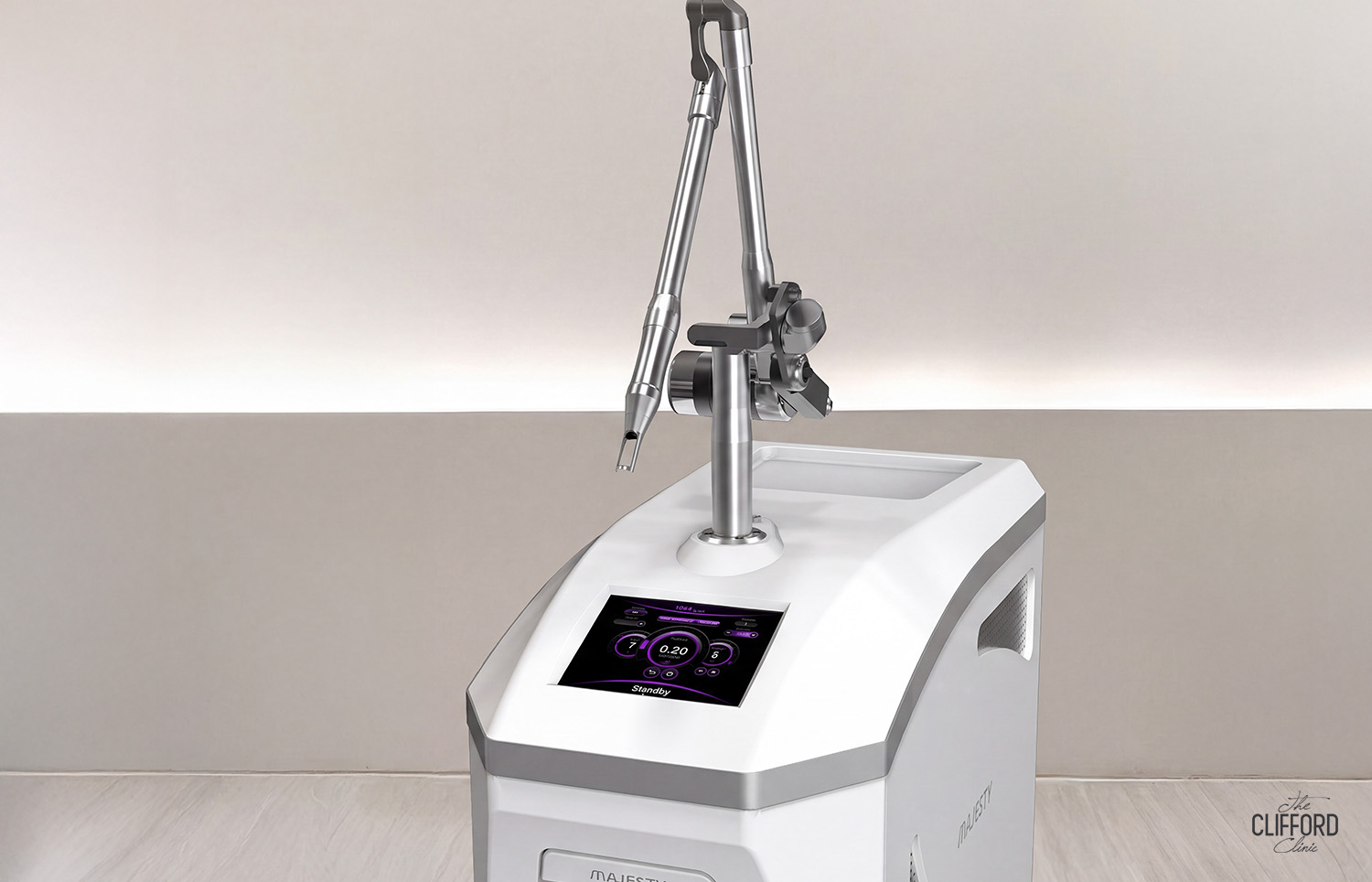
Fractional CO2 is not the only laser used for scar-prone skin. Pico MLA is a picosecond laser fitted with a microlens array, which concentrates the beam into many tiny high-energy points just beneath the surface. These points create microscopic zones of controlled effect that trigger fresh collagen and break up pigment, while the skin between them stays intact, so recovery is quick and downtime is minimal. It is effective in refining enlarged pores, smoothing fine surface irregularities, and evening out pigment and post-acne marks.
Pico MLA works at and just below the surface, so it is not effective for tethered rolling scars, which are anchored deep by fibrous bands and need subcision to release them, nor is it the tool for deep ice pick scars. Pico MLA is therefore used as a surface-and-pigment complement within a combination plan, excellent for pores and skin quality alongside the deeper work of RF microneedling, subcision and fractional CO2, rather than as a treatment for depressed scars in its own right.
Lessons from practice
Two things come up often. The first is patients expecting a single laser session to transform deep scarring. Laser is powerful but it is a course of treatment and part of a plan, not a one-off miracle. The second is patients who have had aggressive laser in darker skin elsewhere and developed pigmentation. This can be avoided with careful energy selection. Power and precision matter, but so do restraint and sequencing. The candid six things your doctor isn’t telling you expands on this.
Who is a good candidate for fractional CO2 (and who is not)
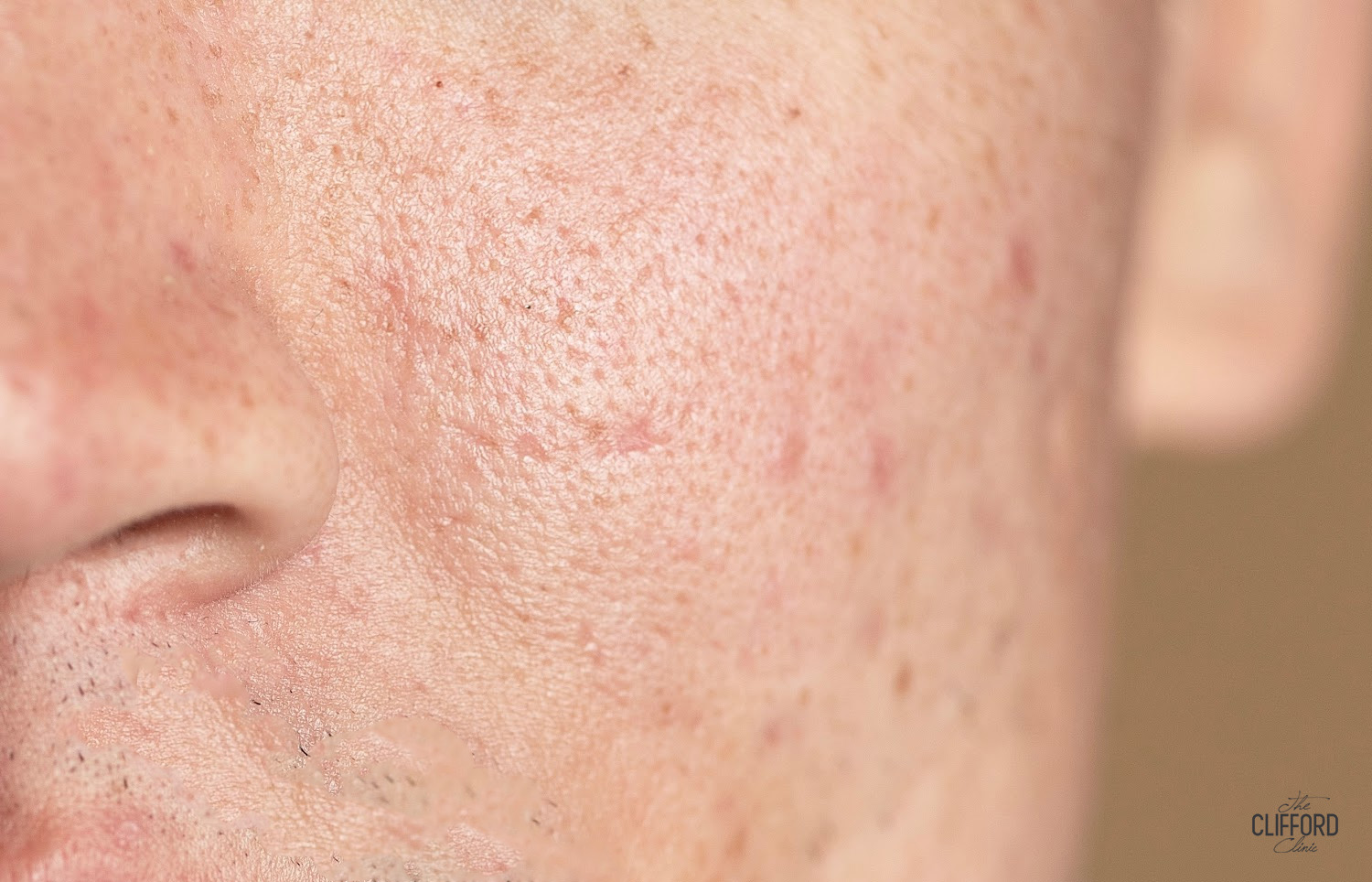
Patient selection is half of getting a good laser result. The ideal candidate has boxcar scars or general surface irregularity, stable rather than actively inflamed acne, a skin tone whose pigmentation risk can be managed, and the ability to take a few days of downtime. Greater caution is needed in patients with very active acne, recent sun exposure or tanning, a strong tendency to pigment, or an expectation of a single-session cure. None of these necessarily rules laser out, but each changes how, and whether, it is used, and in what sequence with other treatments.
Fractional CO2 is never offered standalone. Every plan starts with a full-face assessment, weighing which scars are present, what the skin tone will tolerate, and what other steps (subcision, RF, PDRN) need to come first or alongside. Matching the patient to the tool is what turns a powerful laser into a good result rather than a complication.
How many fractional CO2 sessions will you need?
There is no fixed number as it depends on the depth and extent of scarring, your skin tone and how the skin responds. Most patients need a course rather than a single treatment, with sessions spaced several weeks apart to allow healing and collagen formation between them. In darker skin, more sessions at lower energy are favoured rather than fewer aggressive ones to keep pigmentation risk low. The improvement continues to develop for months after the final session as collagen matures.
Be wary of any promise that one laser session will transform deep scarring. That expectation leads to disappointment. Fractional CO2 is powerful, but it is a course of treatment and part of a combination plan, not a one-off fix.
Clinical summary
Fractional CO2 laser is an excellent tool for boxcar scars and overall texture, but it is part of a plan rather than a cure. Deep ice pick scars need TCA CROSS, tethered rolling scars need subcision first, and darker skin needs lower energy and careful pairing with RF and PDRN. Used thoughtfully and in sequence, it is a powerful contributor to smoother skin. To continue, compare RF microneedling options, read do acne scars go away on their own, or the acne scars vs hyperpigmentation guide.
Frequently Asked Questions
What removes acne scars fast?
No treatment removes true scars overnight. Fractional CO2 laser is among the more powerful options for boxcar scars and texture, but it works over a series of sessions and months of collagen remodelling.
Is Pico MLA good for acne scars?
Pico MLA is a picosecond laser with a microlens array that is excellent for refining enlarged pores and evening out pigment, with minimal downtime. It is not effective for tethered rolling scars, which need subcision, nor for deep ice pick scars. Dr Ong uses it as a surface-and-pigment complement within a combination plan rather than as a treatment for depressed scars.
Is fractional CO2 laser safe for dark skin?
It can be, but with care. In darker skin Dr Ong uses lower energy settings and often prefers insulated RF microneedling such as Infini as the deeper-working option, because aggressive CO2 carries a higher risk of post-inflammatory hyperpigmentation.
How much downtime does fractional CO2 laser have?
Typically a few days of redness, mild swelling and flaking, sometimes a little longer with higher energy. Dr Ong favours a properly-dosed treatment with a few days of recovery over an under-powered, zero-downtime session.
Is Fraxel 1550 or fractional CO2 better for acne scars?
They are different tools. Fractional CO2 (ablative, 10,600 nm) gives stronger remodelling per session but more downtime and higher pigment risk. The Fraxel 1550 (non-ablative erbium-glass, 1,550 nm) is gentler with less downtime and a better safety record in darker skin, but usually needs more sessions for a comparable result. The choice depends on scar depth, skin tone and downtime tolerance.
Can fractional CO2 treat all acne scars?
No. It is excellent for boxcar scars and surface texture but less effective alone on deep ice pick scars (which need TCA CROSS) and tethered rolling scars (which need subcision first). It works best within a combination plan.
Device specifications & sources
- S. FDA 510(k) K121481 (INFINI, Lutronic Inc.): insulated RF microneedling system, 49-pin handpiece, maximum RF generator output approximately 50 W.
- S. FDA 510(k) K162169 (EdgeOne CO2 Laser, Jeisys Co., Ltd.): fractional CO2 laser, 10.6 µm (10,600 nm); fractional spot sizes 120/350/800 µm; fractional pulse energy 1-300 mJ; spot density 0-42.4%; cleared for ablative skin resurfacing.

Written, medically reviewed and expert opinion by Dr Bernard Ong, The Clifford Clinic. This article is for general education and reflects Dr Ong’s clinical experience treating acne scars in Singapore. It is not medical advice. Treatment suitability, results, downtime and cost vary between individuals. Please arrange a consultation for advice specific to your skin.