
Laser Toning vs Pico Toning in Singapore: Same Technique, Different Pulse
Written by Dr Bernard Ong. Medically reviewed by Dr Gerard Ee
Laser toning and Pico toning are closely related, but they are not identical. Both spread low-energy treatment over a broad area and build improvement over a course, rather than trying to erase one brown spot in a single pass. Traditional toning is usually performed with a nanosecond Q-switched laser. Pico toning uses a shorter picosecond pulse, so less heat spreads into the surrounding skin. That difference can be useful in heat-reactive Asian skin, especially in melasma. Neither approach is a cure for melasma, and neither should be confused with high-energy spot treatment.
The word “toning” describes the method, not the machine
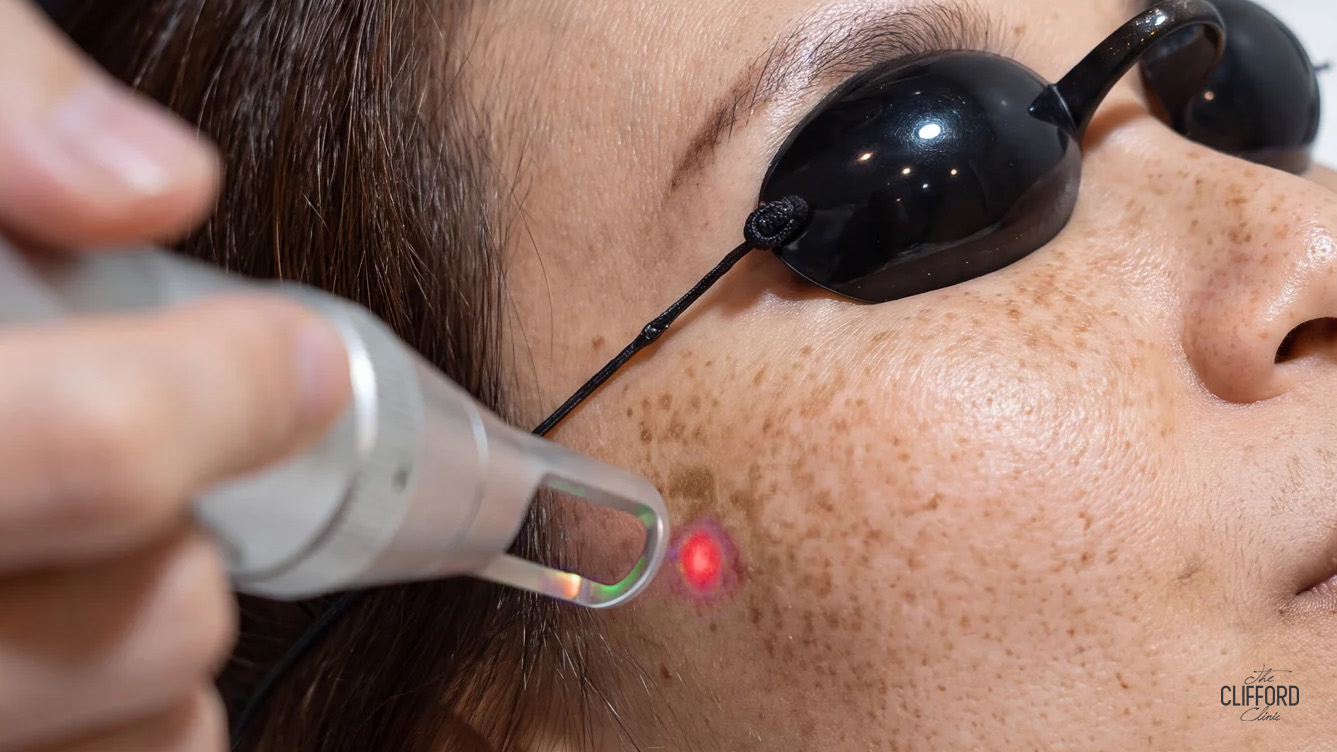
Toning is a technique. The doctor selects a large spot size and a genuinely low fluence, then makes several light passes over the whole treatment area. Each pass is deliberately sub-threshold: the aim is to disturb pigment gradually without producing the obvious whitening or crusting expected when a discrete sun spot is treated directly. The result is therefore cumulative. A single session may leave the skin looking a little clearer, but the treatment is judged across a series rather than after one visit.
Traditional laser toning
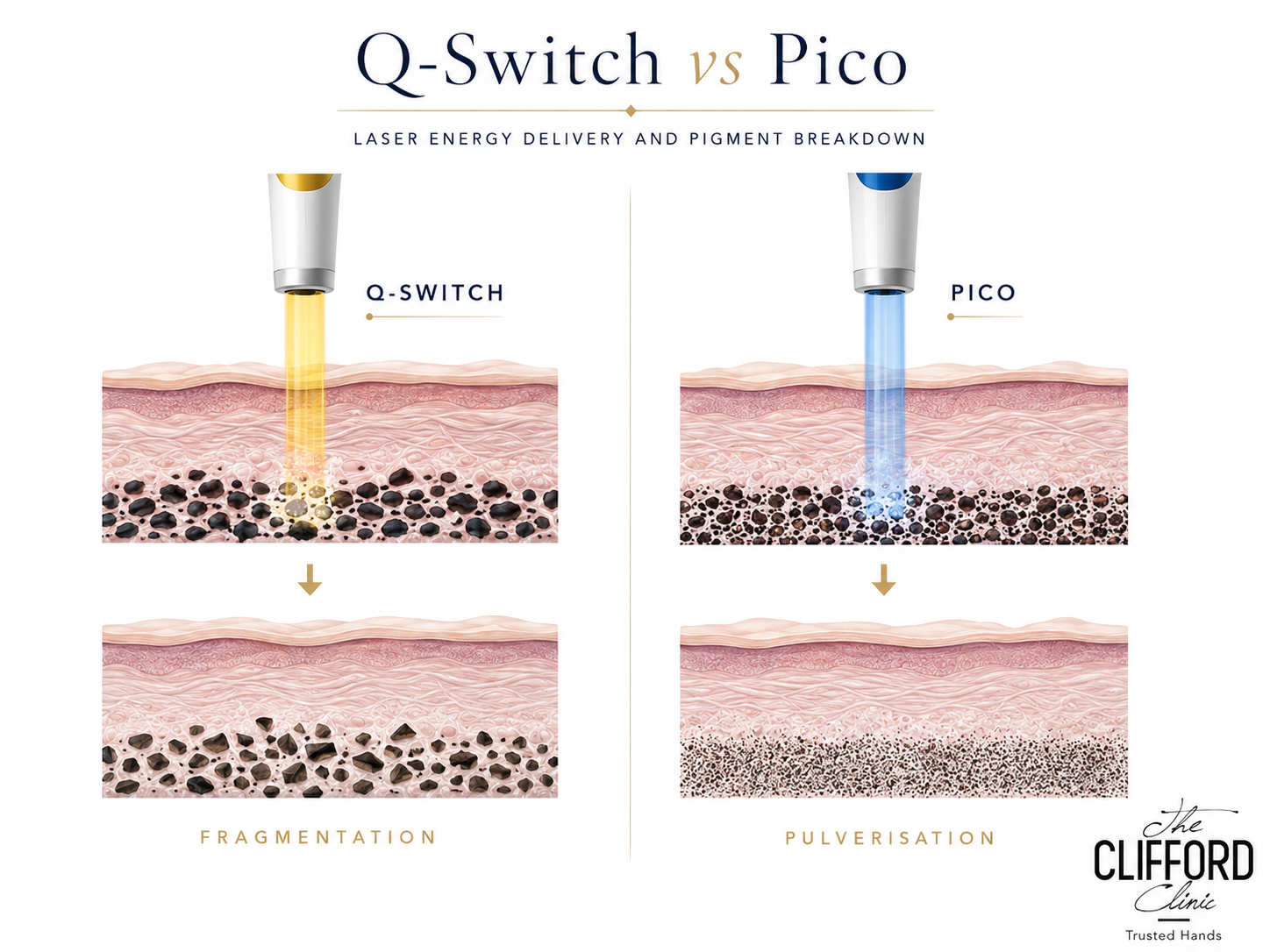
Conventional laser toning most often uses a Q-switched 1064 nm Nd:YAG laser. Its pulses are measured in nanoseconds, typically around five to ten nanoseconds. At low fluence, the beam can be passed across diffuse pigment with limited surface injury. This approach has a long clinical history in the cautious management of melasma, although the margin between “gentle enough” and “too much” still depends on the settings, the interval between sessions and the state of the skin on the day.
What changes with Pico toning
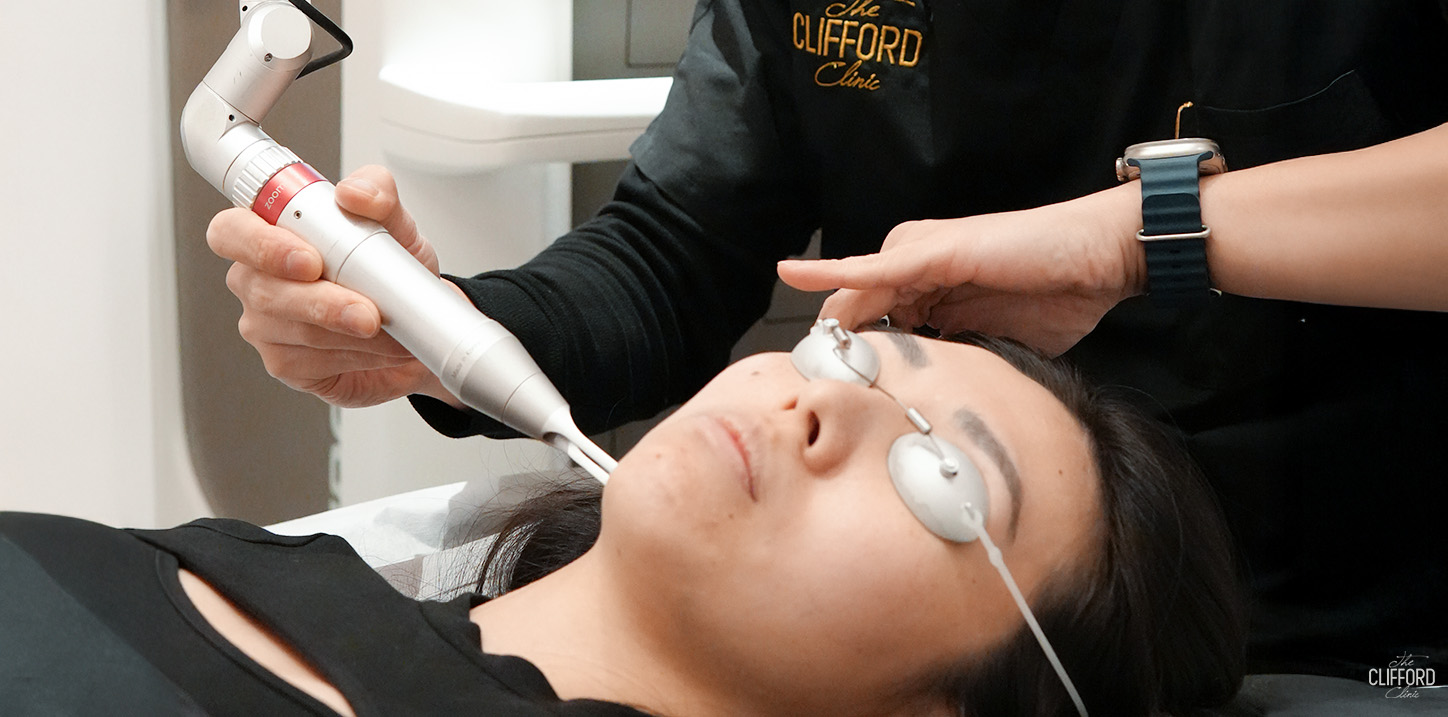
Pico toning uses the same broad, low-energy pattern with a picosecond laser. A picosecond pulse is delivered over several hundred picoseconds rather than several nanoseconds. More of the effect is mechanical, or photoacoustic, and less is carried as heat into adjacent tissue. In a split-face randomised trial of 1064 nm treatment for melasma, both picosecond and nanosecond toning improved pigment. The picosecond-treated side was associated with less discomfort and post-treatment redness, which is the practical advantage most patients notice. For a broader treatment overview, including the wavelengths and indications used beyond toning, see our Pico laser treatment in Singapore page.
Laser toning, Pico toning and spot treatment at a glance
The three approaches can all involve a laser, but they are used for different patterns of pigment. The table compares the treatment logic rather than ranking one machine above another.
| Feature | Q-switched laser toning | Pico toning | Targeted spot treatment |
|---|---|---|---|
| Treatment pattern | Low-energy passes over a broad area | Low-energy passes over a broad area | Higher energy confined to an individual lesion |
| Typical pulse duration | Nanoseconds, often about 5–10 ns | Picoseconds, often about 300–750 ps | Depends on the device and target |
| Heat profile | A greater thermal contribution | Less thermal spread; predominantly photoacoustic | Concentrated within the treated spot |
| Best fit | Diffuse pigment and selected stabilised melasma | Diffuse pigment and selected stabilised melasma where a lower heat load is useful | Confirmed freckles and sun spots with clear borders |
| Expected pace | Gradual; usually assessed after a course | Gradual; usually assessed after a course | Often one to three sessions for suitable superficial lesions |
Why low energy is sometimes the whole point
A sun spot and melasma may both look brown, but they do not behave alike. A sun spot is a defined target and may tolerate a direct, higher-energy pulse. Melasma is reactive. Heat and inflammation can switch its melanocytes back on, so trying to force a quick clearance may leave the patch darker than it was. Toning accepts a slower pace in exchange for a lower inflammatory burden. That trade-off is not a weakness of the treatment; it is the reason the technique exists.
Melasma: toning sits on top of the basics
For melasma, neither traditional nor Pico toning should stand alone. Daily photoprotection comes first, including attention to visible light; a tinted sunscreen containing iron oxides is often preferred. Topical therapy is used to suppress pigment production and calm inflammation. Oral tranexamic acid may be considered for suitable patients after medical screening. Once the condition is stable, low-fluence toning can be added to reduce the remaining pigment load. Our melasma treatment guide explains the broader plan, and the article on Pico laser for melasma focuses on the laser component.

Diffuse PIH and dullness
Toning may also help when pigment is scattered rather than sharply defined, as with diffuse post-inflammatory hyperpigmentation or an uneven, dull complexion. The trigger still matters. If acne, eczema or friction is continuing to inflame the skin, each new episode lays down more pigment. Treating the cause first is usually more productive than adding laser sessions. Where the inflammation is controlled, gentle toning can lighten the residual background gradually and complement a consistent topical routine.
Toning is not a substitute for targeted spot treatment
A patient with three isolated sun spots does not automatically need whole-face toning. Those lesions are usually better assessed individually and, once confirmed benign, treated directly. Toning is more useful when the colour change is diffuse, when melasma limits how aggressive treatment can be, or when a broad background of pigment remains after the more obvious spots have been addressed. Some treatment plans use both methods at different stages, but they are not interchangeable.
How often toning is done and when to judge the result
Sessions are commonly spaced three to four weeks apart. Four to six treatments are often needed before the response can be judged fairly, because each visit is intentionally gentle. Melasma may then need maintenance at longer intervals. Shortening the gap does not make pigment clear proportionally faster; it gives the skin less time to settle and increases the chance of irritation or rebound.
The main risk is over-treatment
Toning can worsen pigmentation when the energy is no longer truly low, sessions are repeated too frequently, or treatment is performed on inflamed or recently tanned skin. The result may be post-inflammatory hyperpigmentation, a darker melasma flare, or—after prolonged excessive treatment—small patchy areas of pigment loss. Progress is therefore reviewed over time rather than chased session by session. In this setting, restraint is part of the treatment mechanism.
Aftercare and maintenance
Recovery is usually limited to mild redness for a few hours. A gentle cleanser, moisturiser and daily photoprotection are more useful than an elaborate post-laser routine. For melasma, continuing the prescribed topicals and tinted sunscreen between sessions helps protect the improvement. The Pico laser aftercare guide covers the general recovery principles in more detail.
Doctor’s perspective
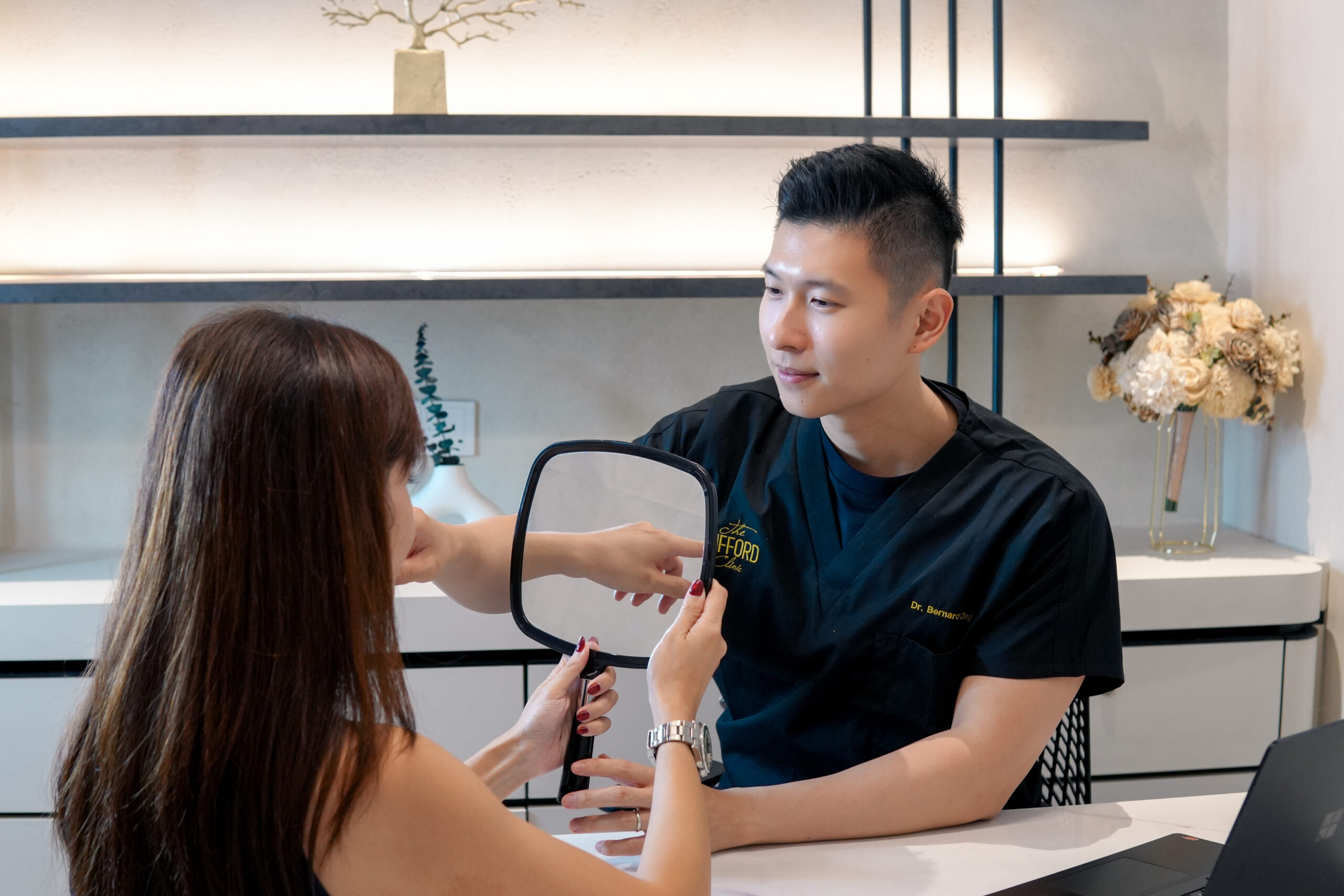
The difficult part of toning is not making the laser stronger. It is knowing when the skin has had enough. Patients understandably want visible change quickly, but in melasma the fastest-looking protocol is often the one most likely to trigger rebound. A conservative course, supported by sunscreen and topical treatment, usually gives a more stable result than trying to clear everything at once.
Who may suit toning—and who may not
- May suit toning: stabilised melasma, diffuse post-inflammatory pigment, general dullness or uneven tone, and patients who accept gradual improvement with little downtime.
- May be better served by spot treatment: a small number of confirmed freckles or sun spots with clear borders.
- Needs caution or postponement: active inflammation, recently tanned skin, untreated melasma being approached aggressively, or any pigmented lesion that has not been diagnosed.
How toning is delivered at The Clifford Clinic
Toning is performed on picosecond platforms using low 1064 nm energy spread across the treatment area rather than aimed at a single lesion. In selected melasma plans, a 595 nm wavelength may be added to address the small dermal vessels that contribute to the condition. The device choice is secondary to the treatment pattern: low energy, adequate spacing and review of the skin’s response.
Frequently asked questions
Is Pico toning the same as Pico laser?
Pico toning is one way of using a picosecond laser: low energy is passed over a broad area to improve diffuse pigment gradually. “Pico laser” is the wider category and also includes higher-energy treatment of individual lesions and fractional treatment for texture.
Is laser toning good for melasma?
Low-fluence toning can be a useful adjunct after melasma has been stabilised with photoprotection and topical therapy. It is not a cure, and aggressive toning can aggravate the condition.
How often should Pico toning be done?
A common interval is three to four weeks. The schedule should be adjusted to the condition and the skin’s response rather than shortened in an attempt to force faster clearance.
Can toning make pigmentation worse?
Yes. Excessive energy, overly frequent sessions, or treatment of inflamed or tanned skin can cause post-inflammatory hyperpigmentation or melasma rebound.
Is Pico toning painful?
Most patients describe mild warmth or light snapping. Picosecond toning is generally well tolerated and tends to cause less discomfort and redness than older nanosecond toning.
How many sessions are usually needed?
Because the treatment is deliberately gentle, four to six sessions are commonly needed before the result can be assessed. Melasma may also require maintenance and ongoing topical care.
A gradual approach to diffuse pigment
Toning works best when the diagnosis is clear and the pace is deliberately conservative. For a wider overview, read about Pico laser in Singapore and pigmentation treatment in Singapore. Appointments are available at The Clifford Clinic, 50 Raffles Place, #01-01 Singapore Land Tower. Call (65) 6532 2400 or WhatsApp (65) 8318 6332.
Selected references
- Comparison of picosecond and nanosecond Nd:YAG 1064 nm lasers in the treatment of melasma. Plastic and Reconstructive Surgery, 2023. https://pubmed.ncbi.nlm.nih.gov/36729879
- Characteristics of dermal vascularity in melasma and solar lentigo. Photodermatology, Photoimmunology and Photomedicine, 2024. https://onlinelibrary.wiley.com/doi/10.1111/phpp.12953
- DermNet: lasers in dermatology. https://dermnetnz.org/topics/lasers-in-dermatology