
Acne Scar Removal Cost in Singapore, What Actually Drives the Price
Written by Dr Bernard Ong. Medically reviewed by Dr Gerard Ee Dr Gerard Ee (MBBS, MRCS, Diploma in Practical Dermatology, Cardiff) is the Founder and Medical Director of The Clifford Clinic, with more than 14 years of experience treating acne, and among the first doctors in Singapore to use AGNES and AviClear. This article reflects the clinical approach of The Clifford Clinic, and is for general education only. It does not replace a personal consultation. Last reviewed July 2026.
Acne scar treatment is priced differently from acne treatment because scars are a structural problem in the skin, and repairing structure requires several tools across several sessions. Patients frequently request a single figure, but a quotation cannot be produced before the scar type is established. This guide explains what determines acne scar removal cost in Singapore, how each treatment is priced, and how to judge a quotation.
Summary
Cost is determined by scar type, scar depth, the number of areas requiring treatment and the number of sessions the plan requires. Ice pick, boxcar and rolling scars each respond to different instruments, and most patients present with a mixture, so a realistic plan combines treatments across a staged series. Credible clinics therefore assess and map the scars before quoting, and no single price for acne scar removal is meaningful without that assessment.
What the consultation assesses
The face is mapped area by area rather than assessed at a glance. Each area is examined for the type of scarring present, comprising narrow deep ice pick scars, sharply defined boxcar scars, broad shallow rolling scars tethered from beneath, or a combination of these. Redness and pigmentation are distinguished from true scars, since marks resolve spontaneously and scars do not, and treating one as the other is wasteful. Skin tone, tendency to pigment, prior treatments and downtime tolerance all shape the plan. Active acne is assessed at the same consultation, as scar repair follows acne control.
How the main treatments are priced
Subcision
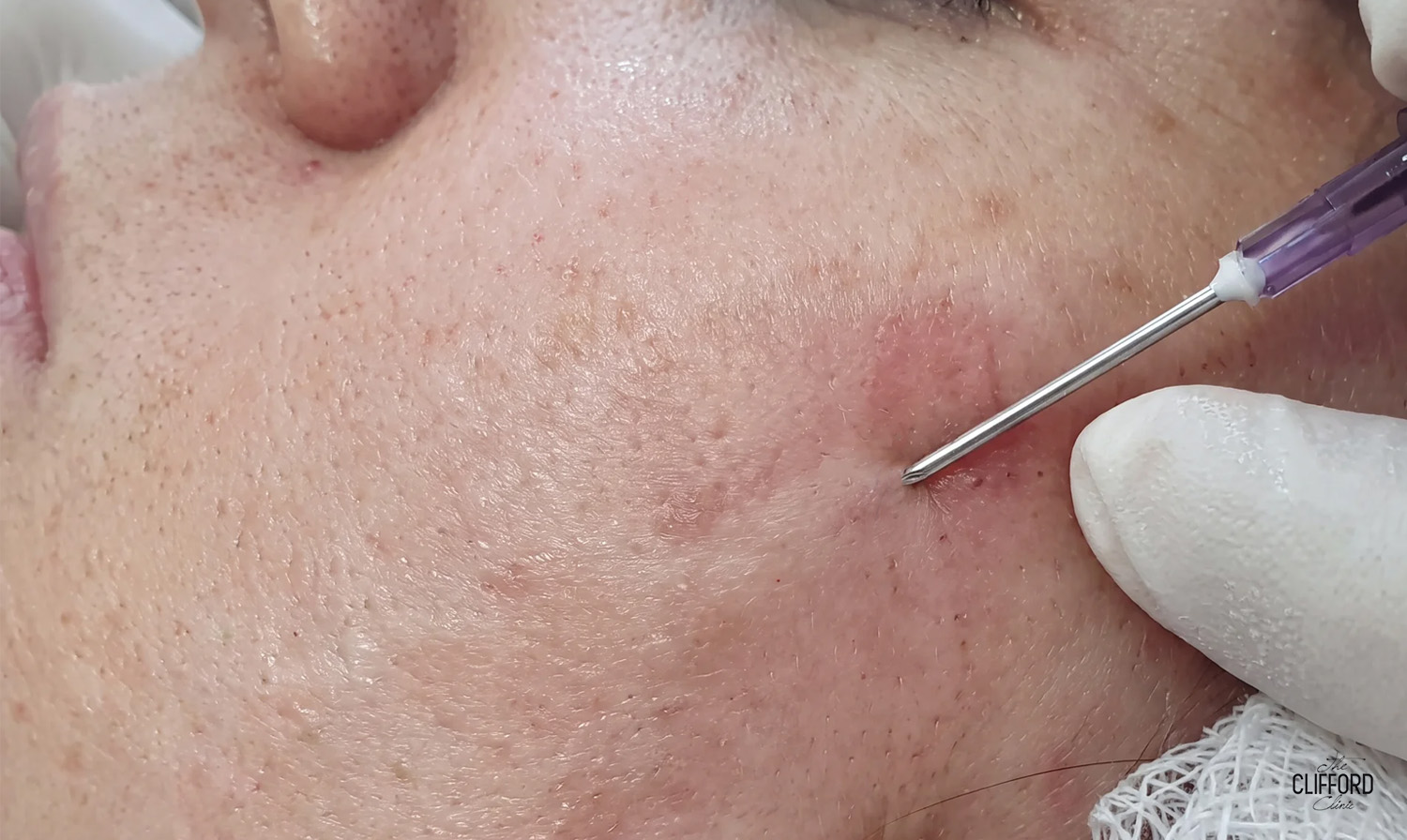
Subcision releases the fibrous tethers that pull rolling scars downward, using a fine instrument passed beneath the scar to divide the bands. It is priced per session and usually requires a series of three to four sessions spaced four to six weeks apart, sometimes combined with filler or biostimulator support to hold the released tissue while collagen forms. For tethered rolling scars no other modality substitutes for it, which is why it commonly anchors the plan and why its session count drives much of the total cost.
TCA CROSS
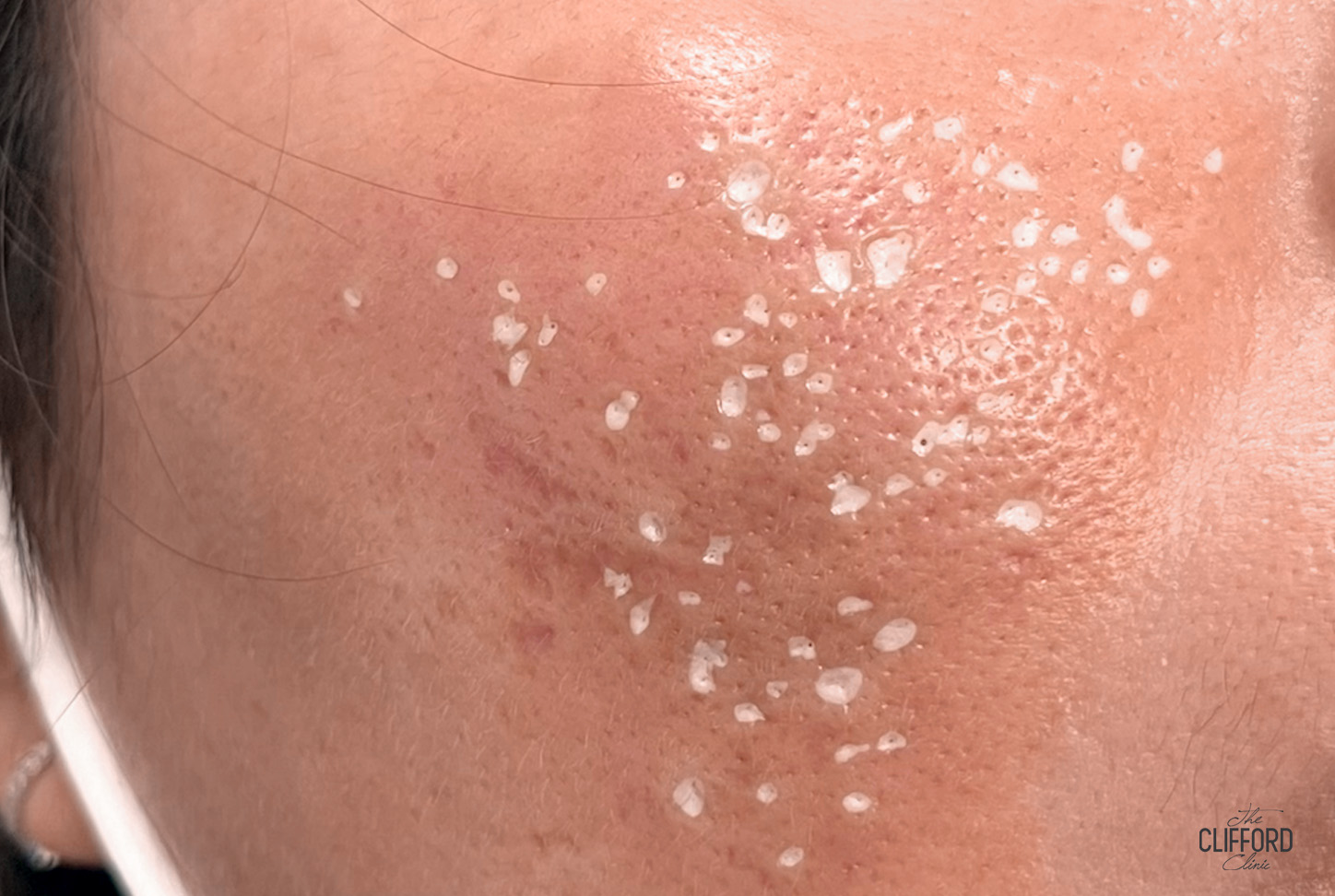
TCA CROSS, the chemical reconstruction of skin scars technique, applies high-strength trichloroacetic acid precisely into the base of individual ice pick scars, stimulating collagen that lifts the floor of the scar toward the surface. It is the most economical modality per session and typically requires four to six sessions spaced four weeks apart. Because the acid is applied scar by scar rather than across a field, cost reflects the number of scars treated rather than the area covered.
Fractional CO2 and RF microneedling
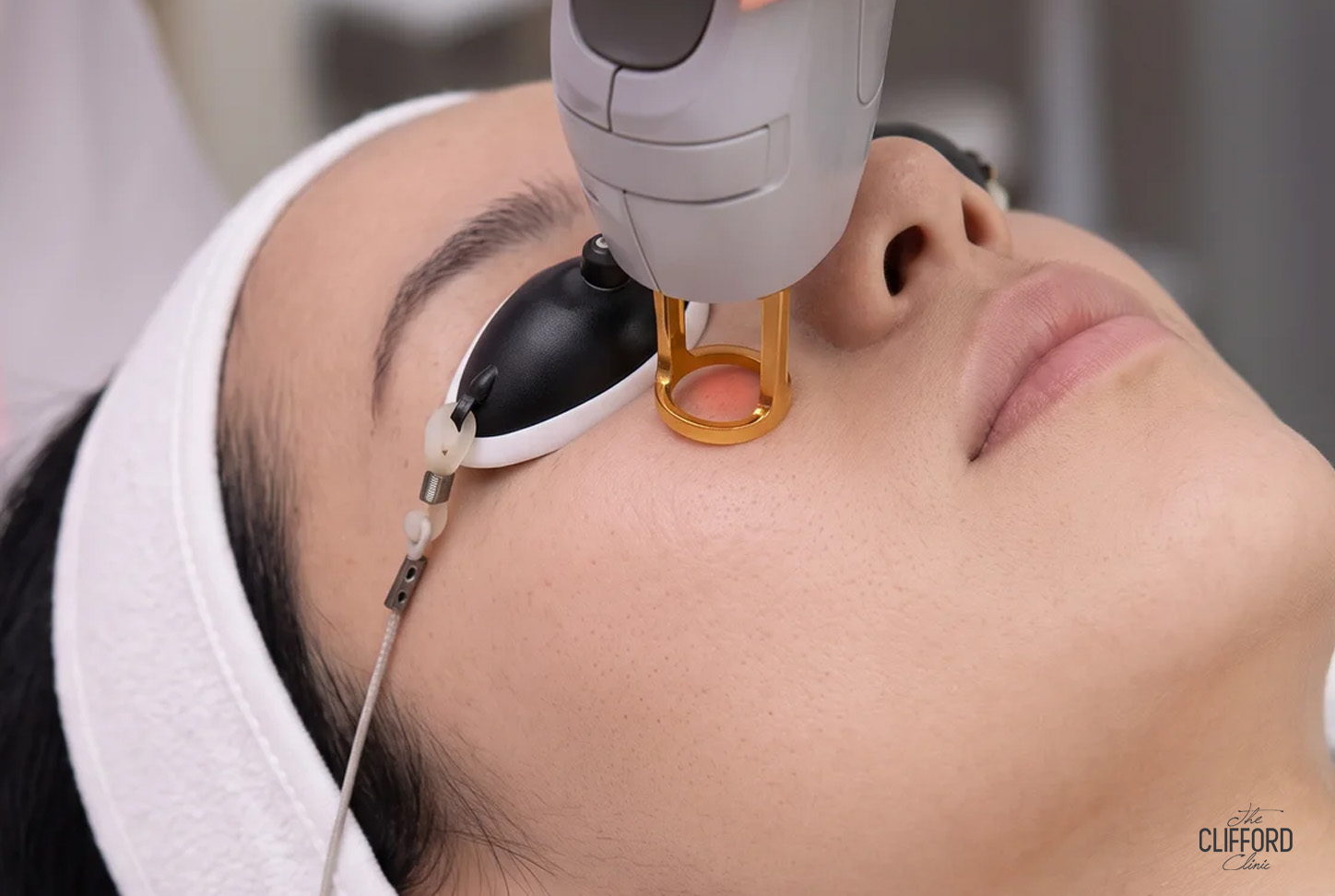
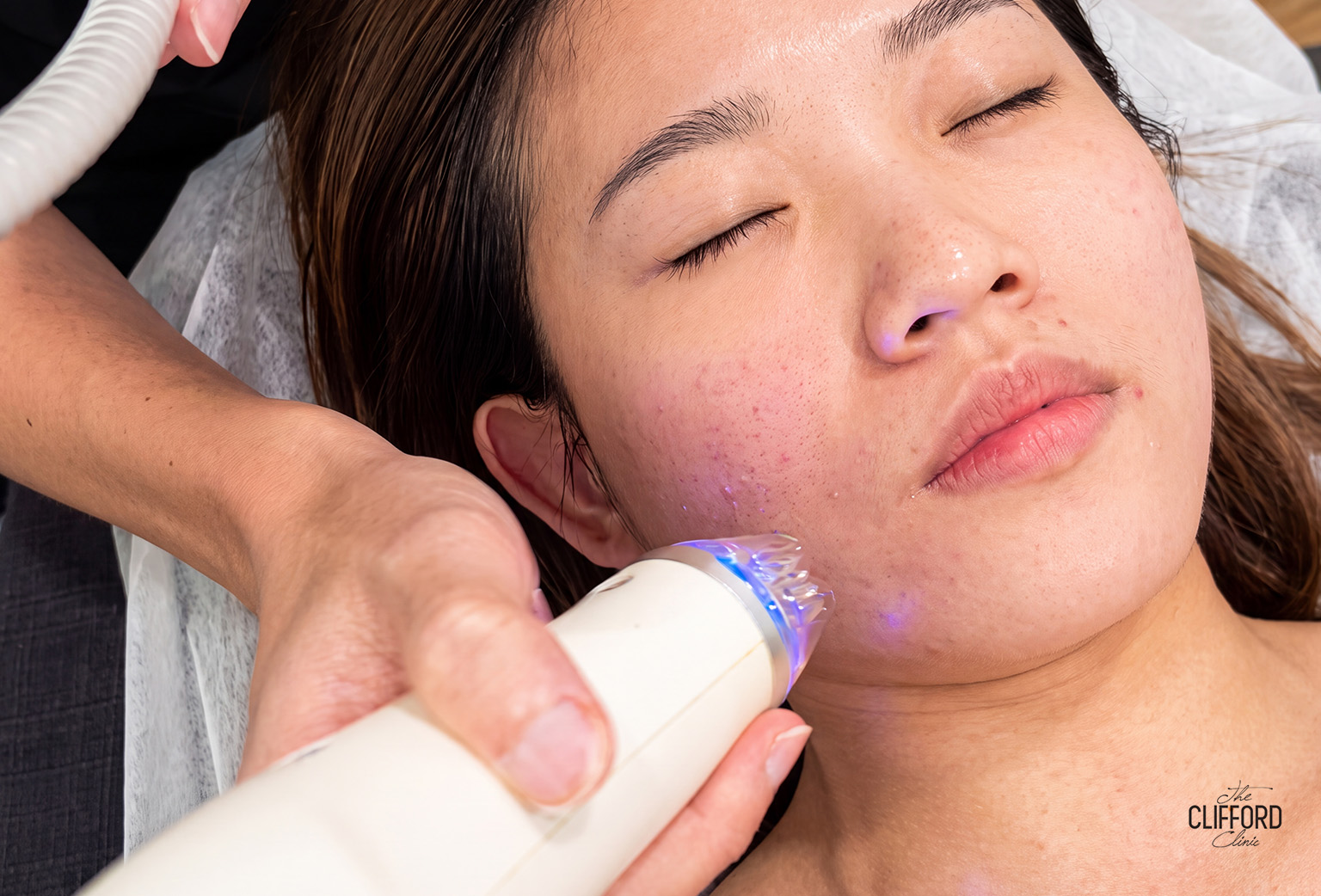
Ablative fractional carbon dioxide resurfacing remodels the surface and performs well for boxcar scars and general texture. It is priced per session and carries genuine downtime of five to seven days of redness and peeling. Radiofrequency microneedling delivers energy at depth through insulated needles with less surface disruption, which suits patients who cannot accommodate that downtime or who carry a higher risk of post-inflammatory hyperpigmentation in darker skin. Both are courses rather than single events, and both are priced according to the area treated and the device used, which is why quotations for the same procedure differ between clinics.
Pico and pigment lasers
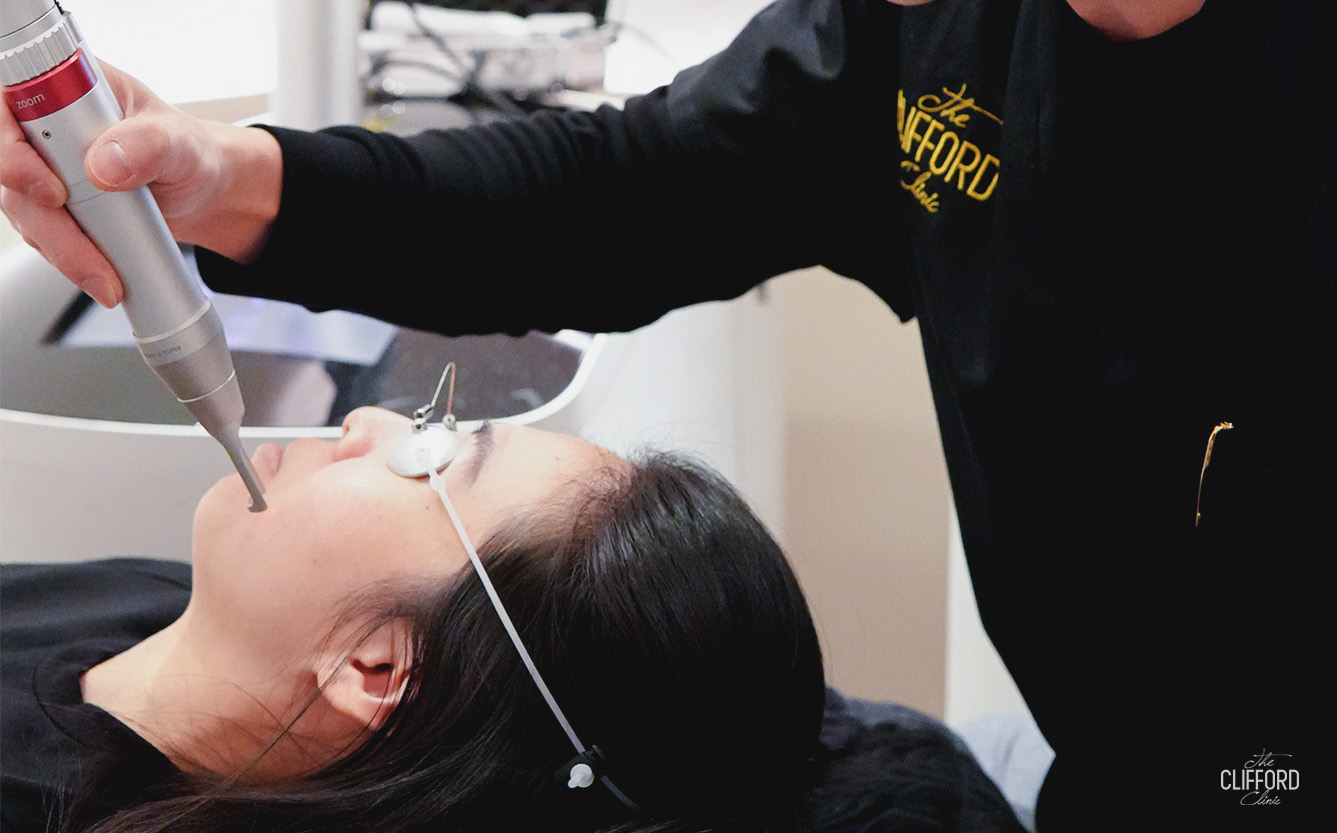
Pico-based treatments and pigment lasers address the discolouration accompanying scarring and refine texture, generally at a lower per-session cost than the structural modalities. They are the finishing layer rather than the structural repair, and a plan that quotes them alone as scar removal is a common source of patient disappointment, because pigment clearance leaves the contour of the scar unchanged.
Why scar quotes differ so much
Two patients with similar-looking scarring can receive very different quotations because the underlying scar types differ. A face dominated by tethered rolling scars requires subcision-led work, whereas a face of scattered ice pick scars requires TCA CROSS, and a mixed presentation requires the two sequenced against each other. Quotations also differ by the number of sessions assumed, whether review consultations are included, the specific devices used and the seniority of the operator. A quotation issued without a scar map prices an average face rather than the one presenting for treatment.
Common mistakes in scar planning
The most expensive error is treating scars while acne remains active, since new lesions generate new scars and the repair work is undone. The second is purchasing a single laser package for a mixed scar face, which under-treats every scar type that laser does not address. The third is expecting complete erasure, since realistic scar treatment achieves substantial improvement in depth and shadowing rather than a return to unscarred skin, and honest clinics state this before payment. The fourth is stopping a course early, as collagen remodelling accumulates across sessions and continues for months after the final treatment.
What the evidence shows
Combination treatment outperforms single-modality treatment for atrophic acne scarring. In a randomised controlled trial of 40 patients, subcision combined with fractional carbon dioxide laser produced significantly greater improvement than subcision alone (p<0.001), and subcision combined with cross-linked hyaluronic acid also outperformed subcision alone (p=0.015), with no significant difference between the two combined approaches. A randomised split-face study of 25 patients found the same pattern for radiofrequency microneedling, where adding subcision improved both clinical grading (p=0.009) and patient satisfaction (p=0.001) compared with radiofrequency microneedling alone. Subcision is effective for tethered rolling scars, focal acid application for ice pick scars, and fractional ablative and radiofrequency devices for boxcar scars and overall texture. Results continue to improve for months after the final session as collagen remodels. Controlling active acne before beginning structural repair, and selecting pigment-safe settings in darker skin tones to avoid post-inflammatory hyperpigmentation, are both supported by the same body of evidence.
Realistic outcomes
A realistic plan combines two or three modalities across a series of sessions and produces meaningful improvement in depth and shadowing rather than erasure. The final result is judged months after the last session, once collagen remodelling has completed. An itemised quotation follows assessment rather than preceding it, and a clinic acting honestly will identify which scars are likely to respond well and which will improve only partially.
When to see a doctor
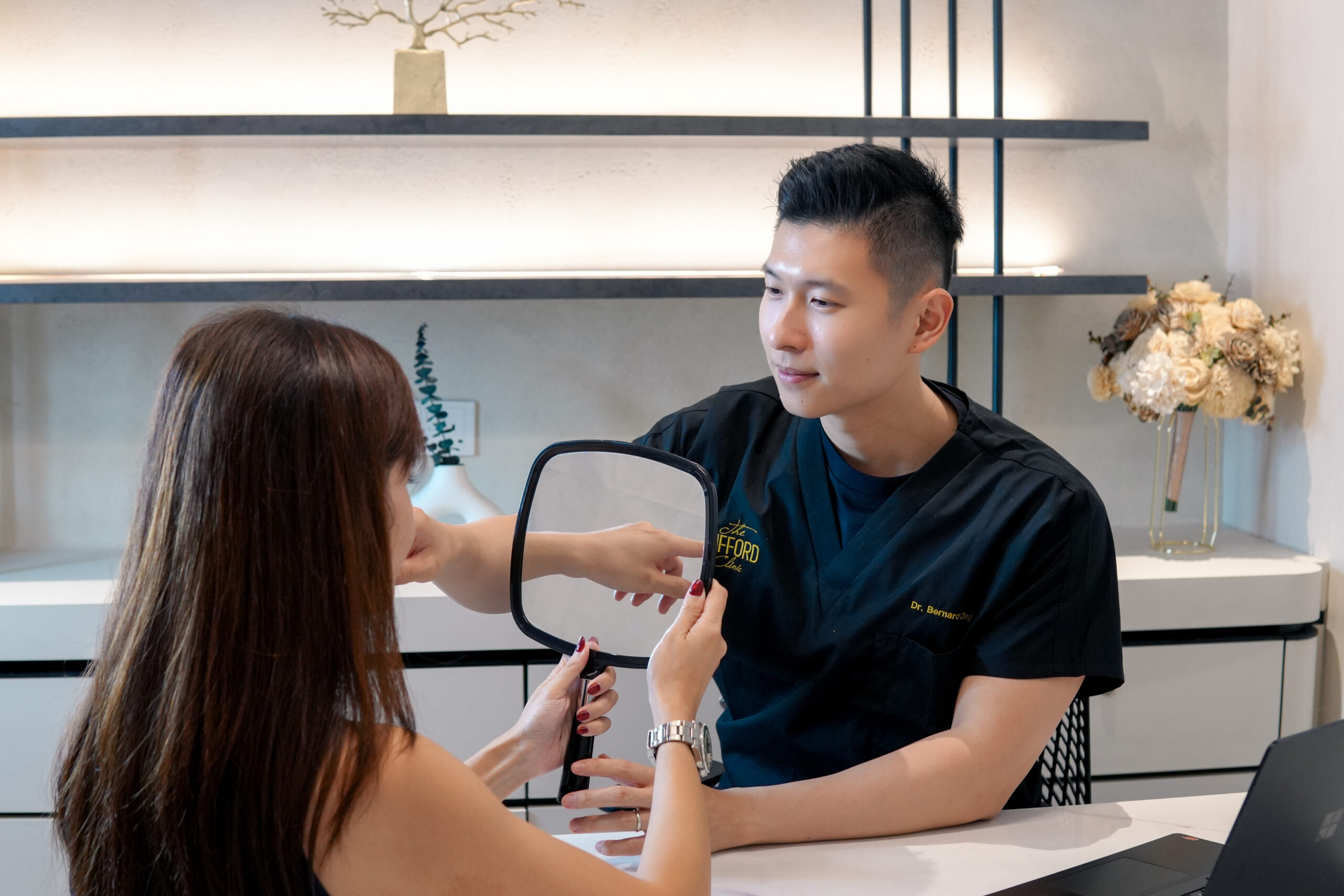
Assessment is appropriate once active acne is controlled and the scars have become the principal concern, or earlier where it is unclear whether the marks present are pigmentation or true scarring. Establishing which of the two is present carries no treatment cost, whereas treating the wrong one does.
Matching treatment to scar type
Scar type is the single largest cost determinant. Ice pick scars are narrow tracks that reach deep into the dermis, and resurfacing lasers cannot reach their base efficiently, so focal acid application into each scar is both the economical and the effective route. Boxcar scars have defined walls and flat floors, which ablative fractional resurfacing and radiofrequency at depth remodel well. Rolling scars are tethered from below by fibrous bands, and no quantity of surface energy will lift them until those bands are divided by subcision. Plans led by resurfacing alone therefore disappoint patients whose scarring is predominantly rolling.
Because most faces carry a mixture of scar types, realistic plans combine two or three modalities and stage them across sessions.
Sessions, timelines and staging costs
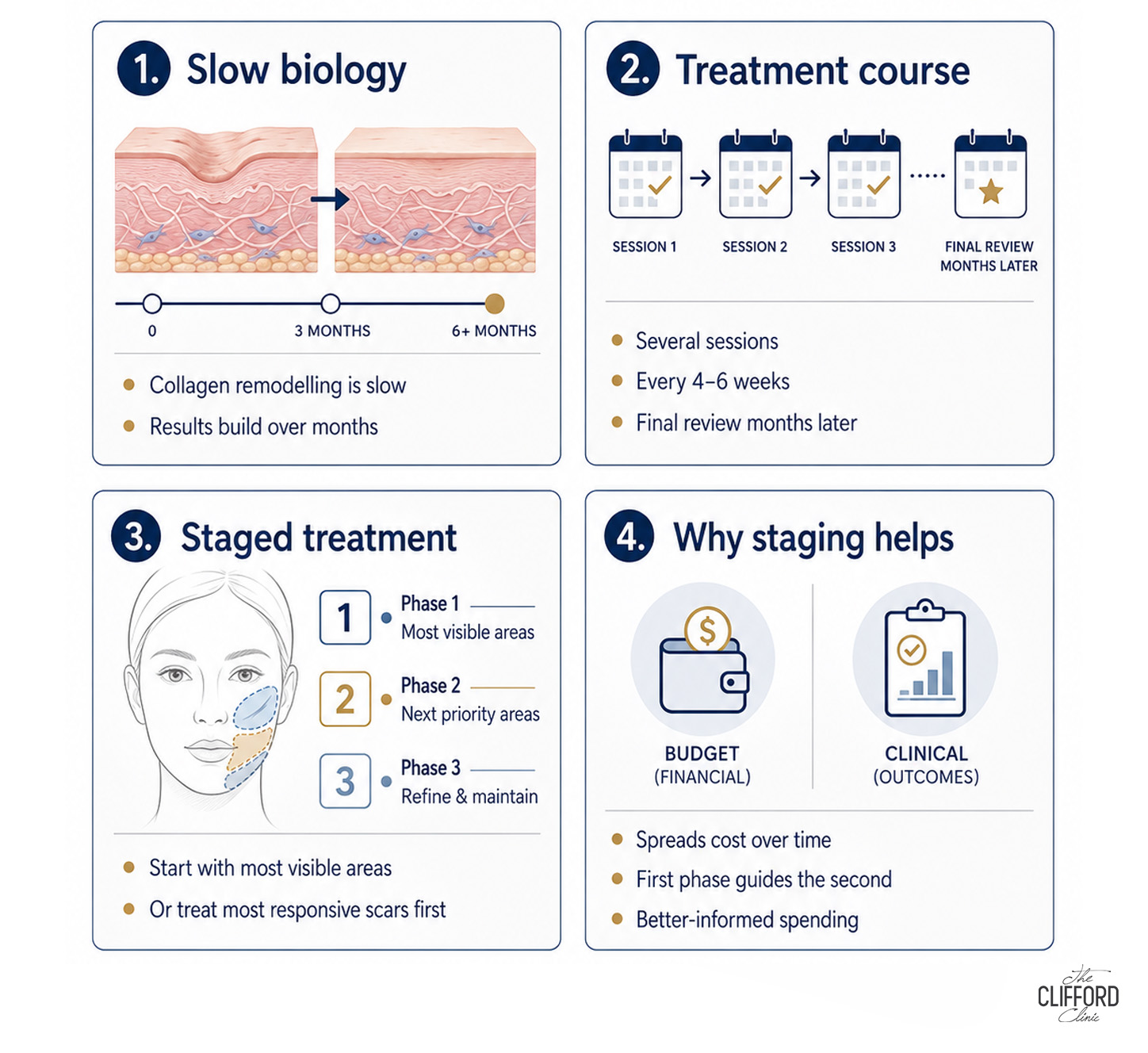
Scar treatment is priced across a course because collagen remodelling is a slow biological process. A typical programme runs several sessions spaced four to six weeks apart, with the final assessment months after the last treatment. Costs can usually be staged by treating the most visible areas or the most responsive scar types first and reassessing afterwards. Staging suits patients budgeting over time and carries a clinical advantage, since the response to the first phase informs the second and expenditure is committed with better information.
Frequently asked questions
How much does acne scar removal cost in Singapore?
Cost depends on scar type, scar depth, the number of areas involved and the number of sessions required. Most patients need a combination of treatments across several sessions, so credible clinics map the scars and quote after assessment rather than over the telephone.
Which acne scar treatment is most cost-effective?
The most cost-effective modality is the one matched to the scar type present. TCA CROSS is efficient for ice pick scars, subcision is essential for tethered rolling scars, and fractional resurfacing suits boxcar scars and texture. Combination treatment outperforms single modalities in randomised trials.
Can acne scars be removed completely?
Substantial improvement is realistic, whereas complete erasure generally is not. A well-constructed plan reduces depth and shadowing so that scars become considerably less noticeable in normal light.
Should I treat active acne or scars first?
Active acne is treated first, because repairing structure while new lesions continue to form means new scars replace those already paid for.
Arrange a scar mapping assessment and receive an honest, itemised plan.
The Clifford Clinic, 50 Raffles Place, Singapore Land Tower. Call (65) 6532 2400 or WhatsApp (65) 8318 6332 to arrange a consultation.
Related reading
- Best Acne Treatment in Singapore, A Doctor-Led Guide
- Acne Treatment at The Clifford Clinic
- Acne Scar Treatment
- Subcision for Acne Scars
- TCA CROSS
- Pico MLA Laser
Selected References
- HealthHub Singapore. Acne. https://www.healthhub.sg/a-z/diseases-and-conditions/acne
- American Academy of Dermatology. Guidelines of care for the management of acne vulgaris. https://www.aad.org/member/clinical-quality/guidelines/acne.
- Acne vulgaris. https://dermnetnz.org/topics/acne
- Guidelines of care for the management of acne vulgaris. JAAD. https://www.jaad.org/article/S0190-9622(23)03389-3/fulltext
- Abdelwahab AA, Omar GAB, Hamdino M. A combined subcision approach with either fractional CO2 laser or cross-linked hyaluronic acid versus subcision alone in atrophic post-acne scar treatment. Lasers Med Sci. 2022. https://pubmed.ncbi.nlm.nih.gov/36564573/.
- Faghihi G, Poostiyan N, Asilian A, et al. Efficacy of fractionated microneedle radiofrequency with and without adding subcision for the treatment of atrophic facial acne scars. J Cosmet Dermatol. 2017. .
- Long-term outcomes of 1726 nm laser treatment for acne. JAAD. https://www.jaad.org/article/S0190-9622(25)02900-7/fulltext
Medical disclaimer. The Clifford Clinic publishes this article as general patient education only. It is not a substitute for an in-person clinical assessment, and the suitability, outcome and risk profile of any treatment differ between patients. Arrange a consultation with one of our doctors before beginning treatment for acne scarring.

Author Bio
Dr Gerard Ee

Dr Gerard Ee is the Medical Director of The Clifford Clinic in Singapore. He earned his medical degree from St George's University of London and built his surgical experience across the Singapore General Hospital, National University Hospital, and Mount Sinai Hospital in New York. He holds Membership of the Royal College of Surgeons (Edinburgh) and a Postgraduate Diploma in Dermatology (Cardiff), and is fully accredited in aesthetic procedures including botulinum toxin, fillers, lasers, and light therapies. A strong advocate of minimally invasive, natural-looking results, Dr Ee has published in several medical and scientific journals and presented his research in cities including Taipei, Las Vegas, and London.
See all posts by Dr Gerard Ee »