
Hyperbaric Oxygen Therapy Uses and Candidates: A Research-Backed Guide
Hyperbaric oxygen therapy is used for a wide range of goals, from healing stubborn wounds to supporting recovery, brain health and longevity. But it is not for everyone, and the right candidate matters as much as the right condition. This guide explains the uses of HBOT, grounded in the research, and sets out who is best suited to it. For the full overview, see our complete guide to hyperbaric oxygen therapy.
The Approved Medical Uses
The foundation of hyperbaric medicine is a set of 14 conditions formally approved by the Undersea and Hyperbaric Medical Society, supported by decades of evidence. The 1996 New England Journal of Medicine review by Tibbles and Edelsberg and the 2009 Journal of Applied Physiology review by Stephen Thom both centre their analyses on these well-validated uses.
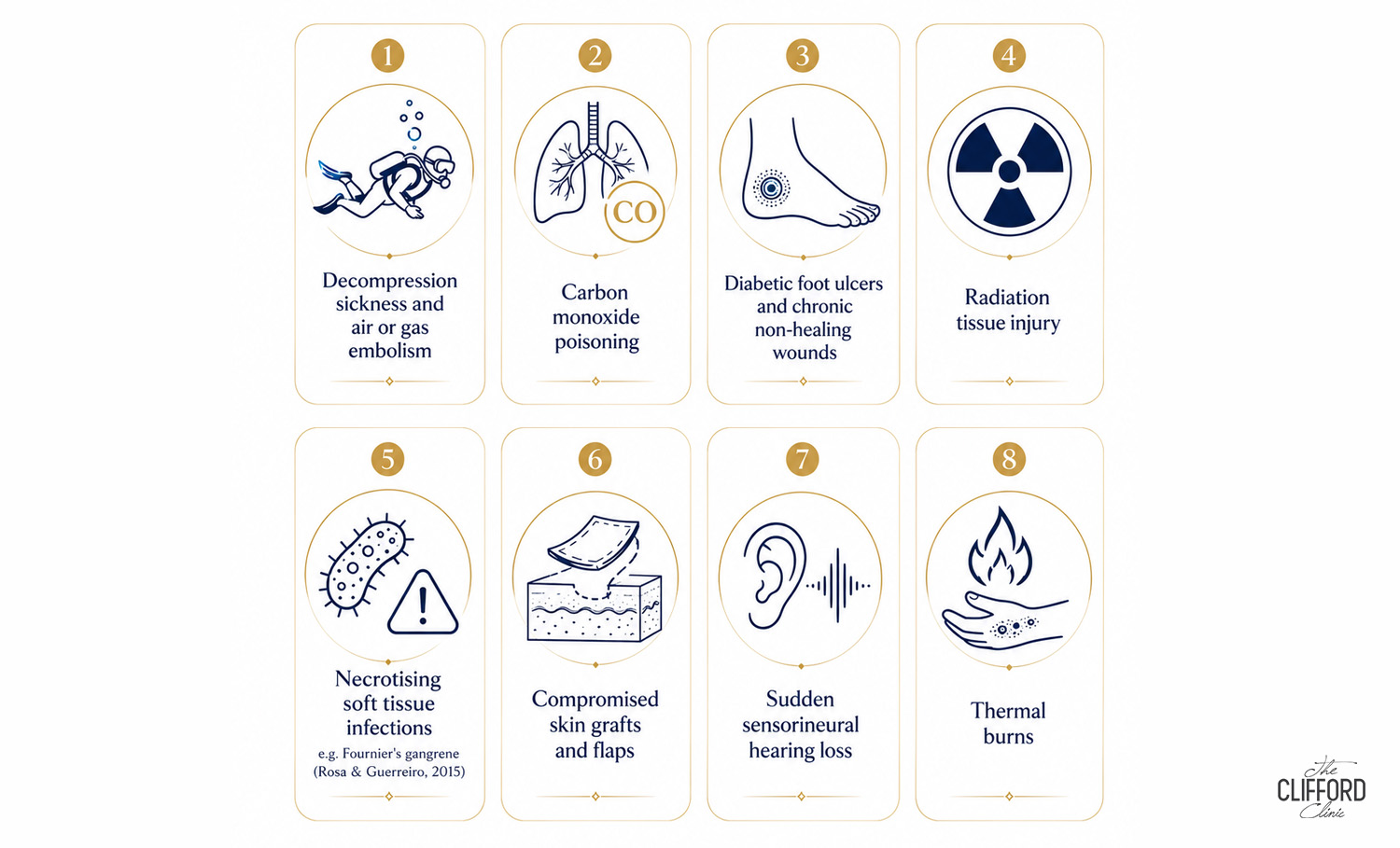
- Decompression sickness and air or gas embolism
- Carbon monoxide poisoning
- Diabetic foot ulcers and chronic non-healing wounds
- Radiation tissue injury
- Necrotising soft tissue infections, such as the Fournier’s gangrene cases reviewed by Rosa and Guerreiro in 2015
- Compromised skin grafts and flaps
- Sudden sensorineural hearing loss
- Thermal burns
Recovery and Performance Uses
Beyond the approved indications, a strong and growing body of research supports HBOT for recovery and performance.
- Sports injury recovery. The 2019 randomised controlled trial by Chen and colleagues showed reduced muscle-damage markers in injured athletes, and the 2018 Scientific Reports study by Oyaizu and colleagues demonstrated faster muscle regeneration
- Post-surgical healing and reduced downtime
- Fibromyalgia and chronic pain, supported by randomised trial evidence
Brain Health, Wellness and Longevity Uses
A third group of uses is where HBOT is biologically plausible with promising and emerging evidence.
- Cognitive performance and brain health. The 2020 randomised trial by Hadanny and colleagues found measurable cognitive gains in healthy older adults, and the 2021 study by Shapira and colleagues reported reduced amyloid burden and improved vascular function
- Skin rejuvenation and anti-ageing, examined in the 2014 Medical Gas Research review by Asadamongkol and Zhang
- Energy, sleep and general wellness
Our guide to the benefits of hyperbaric oxygen therapy explores these, and our evidence review grades how strong the support is for each.
Who are good candidates for HBOT?
The strongest candidates share several traits.
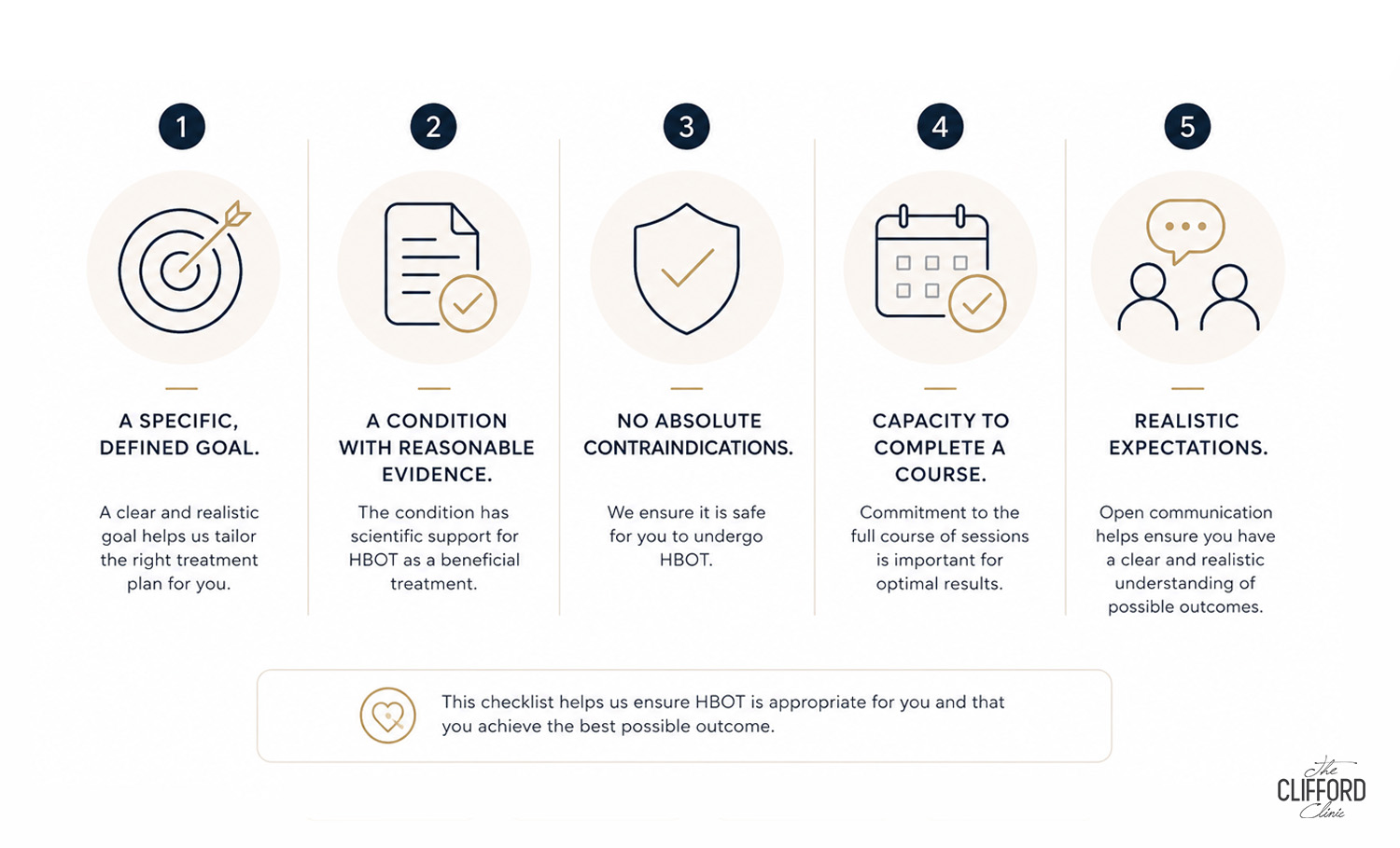
- A specific, defined goal.HBOT works best aimed at a clear target, not vague wellness.
- A condition with reasonable evidence.The closer your goal is to an established use, the more predictable the result.
- No absolute contraindications.Screening must rule these out first.
- Capacity to complete a course.HBOT works cumulatively. The research protocols, from 10 sessions for athletic recovery to 60 for cognitive enhancement, only work if completed.
- Realistic expectations.Understanding what HBOT can and cannot do leads to satisfaction.
Our guides to HBOT treatment and hyperbaric oxygen cost explain the commitment involved.
Who Should Not Have HBOT
Some conditions are absolute contraindications. An untreated pneumothorax, certain chemotherapy drugs and the medication disulfiram. Others, such as severe COPD, active sinus infections, recent ear surgery, severe claustrophobia and pregnancy, require individual medical judgement. The 2017 Advances in Wound Care review by Heyboer and colleagues stresses that identifying these is essential for safe, informed treatment. Our side effects and safety guide sets them out in full. This is why a medical screening, not a wellness form, is essential before any course.
Matching the Use to the Right Protocol
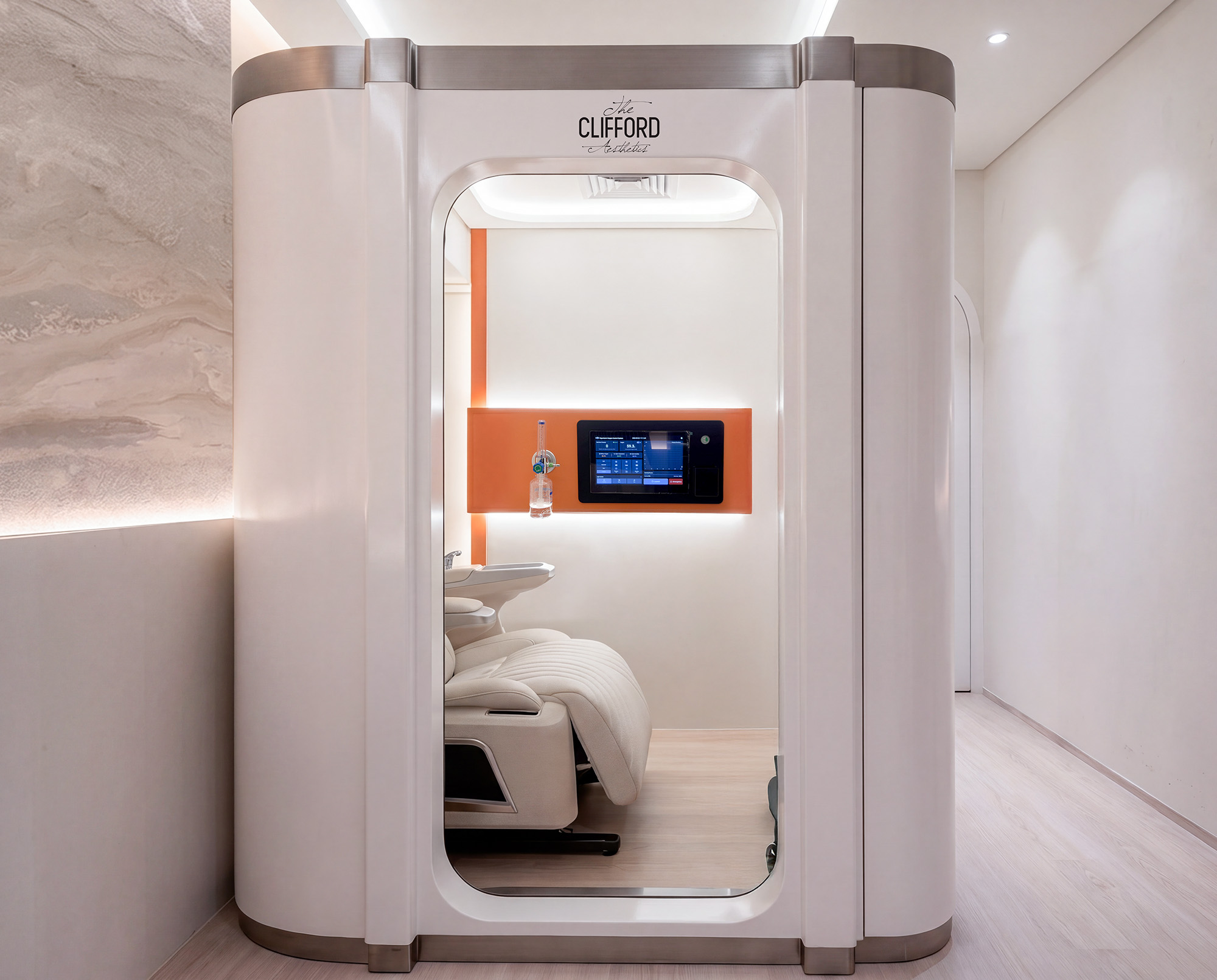
Different uses call for different protocols. A wellness goal may need 10 sessions in a comfortable chamber, while wound healing may need 30 to 60 sessions in a hard-shell hyperbaric oxygen chamber at clinical pressure. The Godman 2010 research confirms why pressure cannot be compromised. The therapeutic cellular response depends on pressure. Match the protocol to the use.
HBOT Across Life Stages
The uses of HBOT shift across a lifetime. Younger adults most often turn to HBOT for sports injury recovery and post-surgical healing. In mid-life, the focus often moves toward energy, skin and the early stages of a longevity strategy. In later years, interest centres on cognitive health, wound healing and supporting the body’s declining repair capacity, the areas where the Hadanny and Shapira studies are most relevant. What does not change is the principle. HBOT should always be matched to a specific goal, supported by reasonable evidence, and delivered after proper screening.
HBOT Within a Wider Care Plan
HBOT rarely works best in isolation. For wounds, it complements standard wound care. For recovery, it complements rehabilitation. For longevity it complements screening, nutrition and lifestyle, all part of The Clifford Clinic’s longevity and wellness practice. The clinic draws on the same evidence-based standard reflected across the wider network at drgerardee.com.
A Closer Look: Hearing Loss and Neurological Recovery
Two less-discussed uses of HBOT illustrate how the therapy is applied in practice. The first is sudden sensorineural hearing loss, a distressing condition where hearing drops abruptly and standard treatment does not always work. A salvage-treatment study by Uzzi and colleagues treated patients with sudden hearing loss using pure oxygen at 2.5 atmospheres absolute for 90 minutes across 30 sessions, after conventional medical therapy had failed.
The second is neurological recovery after stroke. A 2018 clinical study by Rosario and colleagues investigated HBOT for the functional impairments that persist after an ischaemic stroke, and a trial by Yan and colleagues examined combined hyperbaric oxygen therapy in patients with post-stroke depression. These studies focus on the recovery phase, where the brain is rebuilding, rather than the acute emergency.
Your Next Step
Hyperbaric oxygen therapy is genuinely useful, but only when the use, the candidate and the protocol line up. The next step is not to book a course, but to have it properly assessed.
A screening consultation does three things. It confirms your goal and whether HBOT genuinely suits it, drawing on the evidence summarised in our review of whether HBOT works. It rules out the contraindications set out in our side effects and safety guide. And it matches you to the right protocol, the right chamber and pressure, session length and number of sessions, with transparent pricing.
A provider who is willing to tell you that HBOT is not the right choice, when that is the honest answer, is exactly the kind of provider worth consulting. The Clifford Clinic offers this assessment as part of a doctor-led longevity and wellness practice.
The Clifford Clinic Perspective
The range of hyperbaric oxygen therapy uses is wide, and The Clifford Clinic’s clinical team treats the decision of who should actually have it as the most important step, more important than the chamber or the protocol. The clinic’s view of legitimate HBOT uses is grounded in recognised medical indications, wound healing, post-surgical recovery, sports and recovery, and longevity-focused care. These map onto the clinic’s wider work in dermatology, aesthetics, plastic surgery and its Day Surgery unit. On the longevity side specifically, HBOT is paired with objective testing including telomere length testing, gut microbiome analysis, APOE gene testing, the PT217 plasma tau blood test, VO2 max and lactate threshold testing, multi-cancer early detection (MCED) screening and bone ultrasound for osteoporosis, so that progress is measured rather than assumed.
A good candidate, in the clinical team’s experience, is a patient with a clear goal that fits one of those uses, no significant contraindications, and a realistic understanding that results come from a completed course rather than a single session. The team’s consultation is built to establish exactly that. Every prospective patient is screened by a doctor on site, who reviews medical history, confirms the intended use is appropriate, and sets a protocol, including the therapeutic 2.0 ATA the clinic’s hard-shell chamber delivers, around the individual rather than a one-size template.
Just as important is who the clinical team will not treat or will ask to wait. Patients with an untreated pneumothorax, active lung infections or relevant lung conditions, or a history of barotrauma are not suitable until those issues are resolved, and the team will postpone or decline rather than proceed. Anyone whose goal sits outside the evidence, particularly those expecting an immediate energy or longevity transformation, is given a frank conversation about what HBOT realistically can and cannot do before any course is booked.
Over four years and more than 200 patients, the clinic’s consistent practice has been to treat the consultation, not the chamber, as the real start of treatment.
Frequently Asked Questions
What is hyperbaric oxygen therapy used for?
It is used for 14 approved medical conditions such as wound healing and carbon monoxide poisoning, for recovery and performance goals supported by trial evidence, and for wellness and longevity applications where evidence is emerging.
Who is a good candidate for HBOT therapy?
Someone with a specific goal, a condition with reasonable evidence, no absolute contraindications, the capacity to complete a course and realistic expectations.
Can healthy people use hyperbaric oxygen therapy?
Yes. Research such as the 2020 randomised controlled trial by Hadanny and colleagues was conducted in healthy older adults. Healthy people use HBOT for recovery, cognitive performance and longevity goals, provided they are screened.
How do I know if HBOT is right for me?
A medical screening consultation will assess your goal, your health and any contraindications, and match you to the right protocol.
Key Research References
- Tibbles PM, Edelsberg JS. Hyperbaric-Oxygen Therapy. New England Journal of Medicine, 1996.
- Thom SR. Oxidative stress is fundamental to hyperbaric oxygen therapy. Journal of Applied Physiology, 2009.
- Chen CY et al. Early Recovery of Exercise-Related Muscular Injury by HBOT. BioMed Research International, 2019.
- Oyaizu T et al. Hyperbaric oxygen reduces inflammation, oxygenates injured muscle, and regenerates skeletal muscle via macrophage and satellite cell activation. Scientific Reports, 2018.
- Hadanny A et al. Cognitive enhancement of healthy older adults using hyperbaric oxygen: a randomized controlled trial. Aging, 2020.
- Shapira R et al. Hyperbaric oxygen therapy alleviates vascular dysfunction and amyloid burden in an Alzheimer’s disease mouse model and in elderly patients. Aging, 2021.
- Heyboer M et al. Hyperbaric Oxygen Therapy: Side Effects Defined and Quantified. Advances in Wound Care, 2017.
To find out whether you are a good candidate, book a consultation at The Clifford Clinic.

Author Bio
Dr Gerard Ee

Dr Gerard Ee is the Medical Director of The Clifford Clinic in Singapore. He earned his medical degree from St George's University of London and built his surgical experience across the Singapore General Hospital, National University Hospital, and Mount Sinai Hospital in New York. He holds Membership of the Royal College of Surgeons (Edinburgh) and a Postgraduate Diploma in Dermatology (Cardiff), and is fully accredited in aesthetic procedures including botulinum toxin, fillers, lasers, and light therapies. A strong advocate of minimally invasive, natural-looking results, Dr Ee has published in several medical and scientific journals and presented his research in cities including Taipei, Las Vegas, and London.
See all posts by Dr Gerard Ee »