



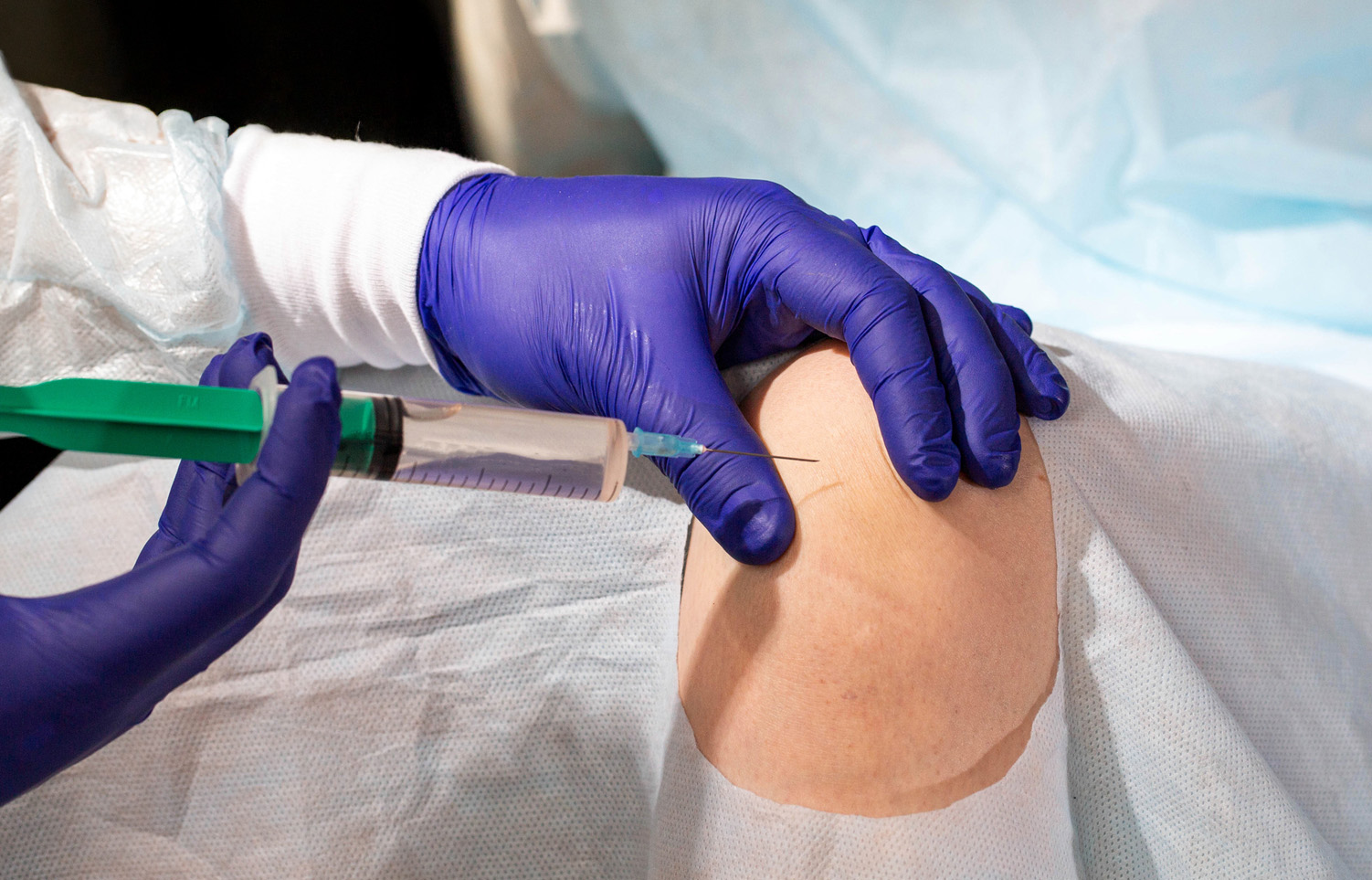
What to Expect Before, During and After a Knee Injection
A knee injection follows a predictable sequence, whether the preparation includes PRP, hyaluronic acid, Conjuran or a corticosteroid. Knowing what to expect from a knee injection reduces procedural anxiety and improves adherence to the aftercare and rehabilitation that determine the final result.
This guide covers the knee injection journey before, during and after, with clinical perspective from Dr Gerard Ee at The Clifford Clinic in Singapore.
Before the Injection: Assessment and Preparation
A knee injection should never be the first intervention. The assessment that precedes it determines whether an injection is appropriate at all, and is the most consequential part of the process.
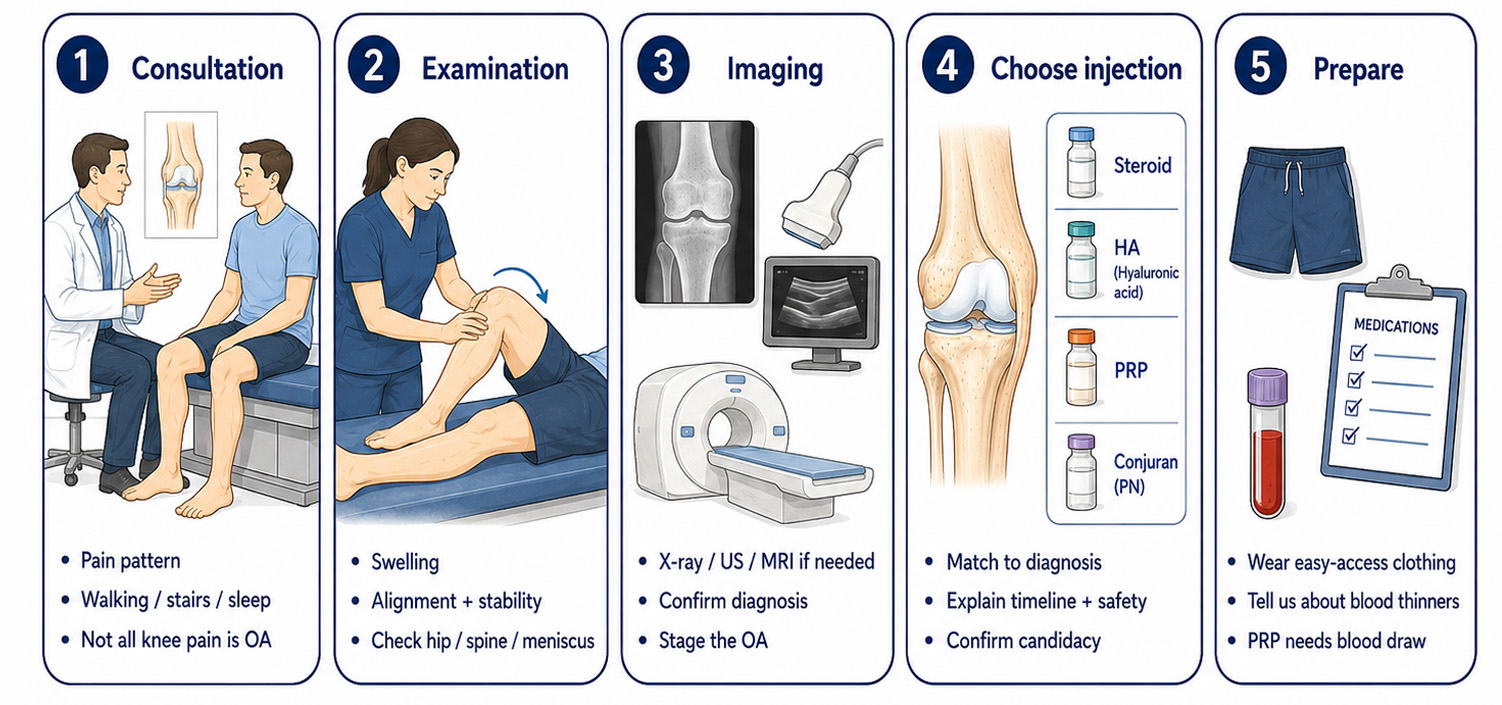
A thorough consultation. A detailed history is taken, covering the site of the pain, its triggers, its change over time, and its effect on stairs, walking, squatting and sleep. The resulting pattern is itself diagnostic. Pain that worsens with loading and eases with rest is characteristic of osteoarthritis, whereas night pain, locking or giving way points to a different cause.
A focused knee examination. The knee is examined for range of motion, swelling, alignment, stability and its behaviour under functional load. The examination distinguishes osteoarthritis from other causes of knee pain, such as a meniscus tear, ligament problem or referred pain from the hip or spine.
Imaging where needed. X-rays, ultrasound or MRI may be reviewed to confirm the diagnosis and gauge the stage of osteoarthritis. Staging determines which injection is appropriate. Established joint-space loss predicts a poorer response to biological injections, whereas an inflammatory presentation with effusion responds more readily to a corticosteroid.
Injection selection and confirmation of candidacy. Only once the diagnosis is clear does the discussion turn to which injection. The options are explained, together with the expected effect of each, the realistic timeline to benefit, and the relevant safety considerations.
Practical preparation. Knee injections require little special preparation, and eating and drinking are unrestricted. Wear comfortable clothing that allows access to the knee. If you take blood-thinning medication or have other medical conditions, tell your doctor in advance, as anticoagulation may require the injection to be rescheduled or the technique adjusted. For PRP, a blood sample is drawn on the day.
During the Injection: The Procedure Step by Step
A knee injection is a short in-clinic procedure performed using sterile technique. Although preparation differs by injection type, delivery follows a consistent sequence.
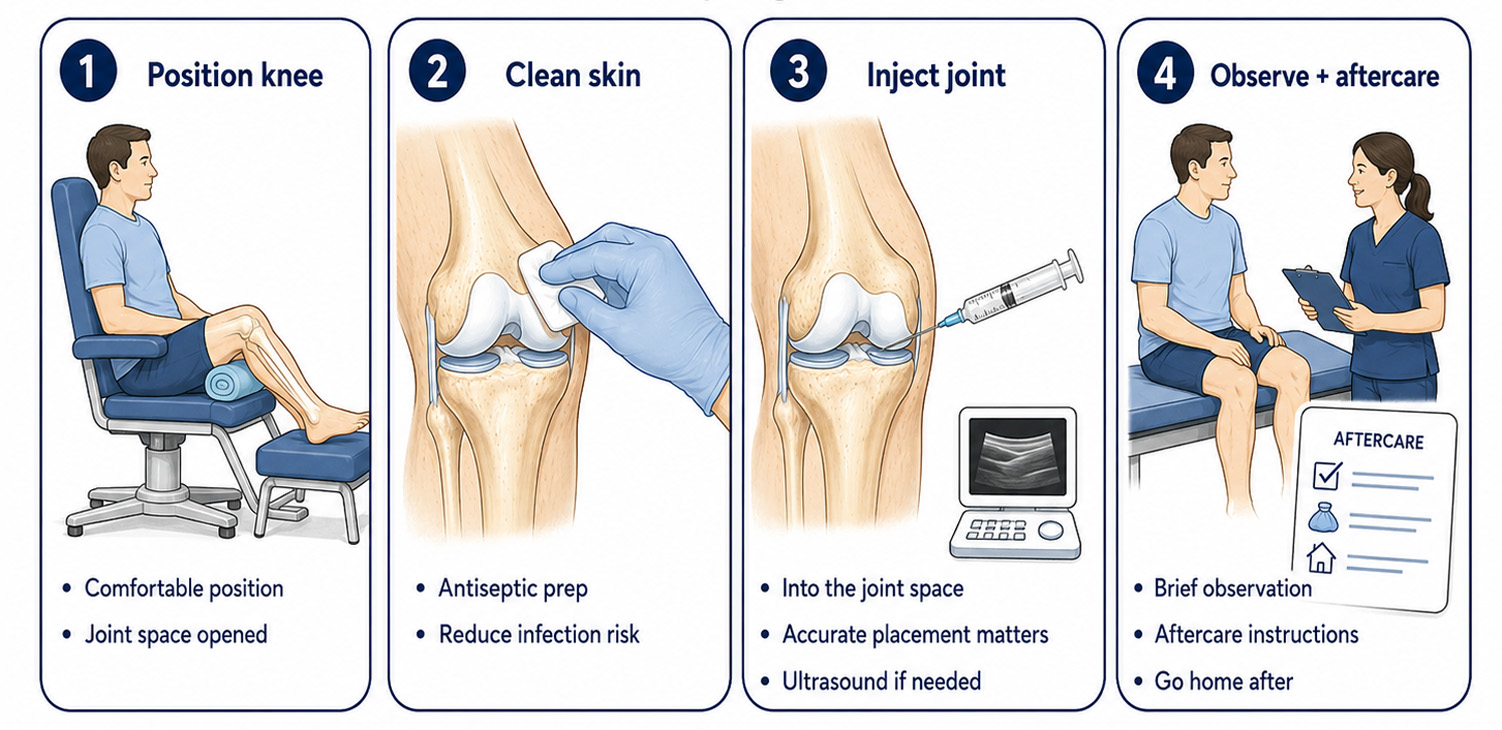
- The patient is settled and the knee positioned to open the joint space for safe, accurate access.
- Skin preparation. The skin over the knee is cleaned with an antiseptic solution to minimise infection risk.
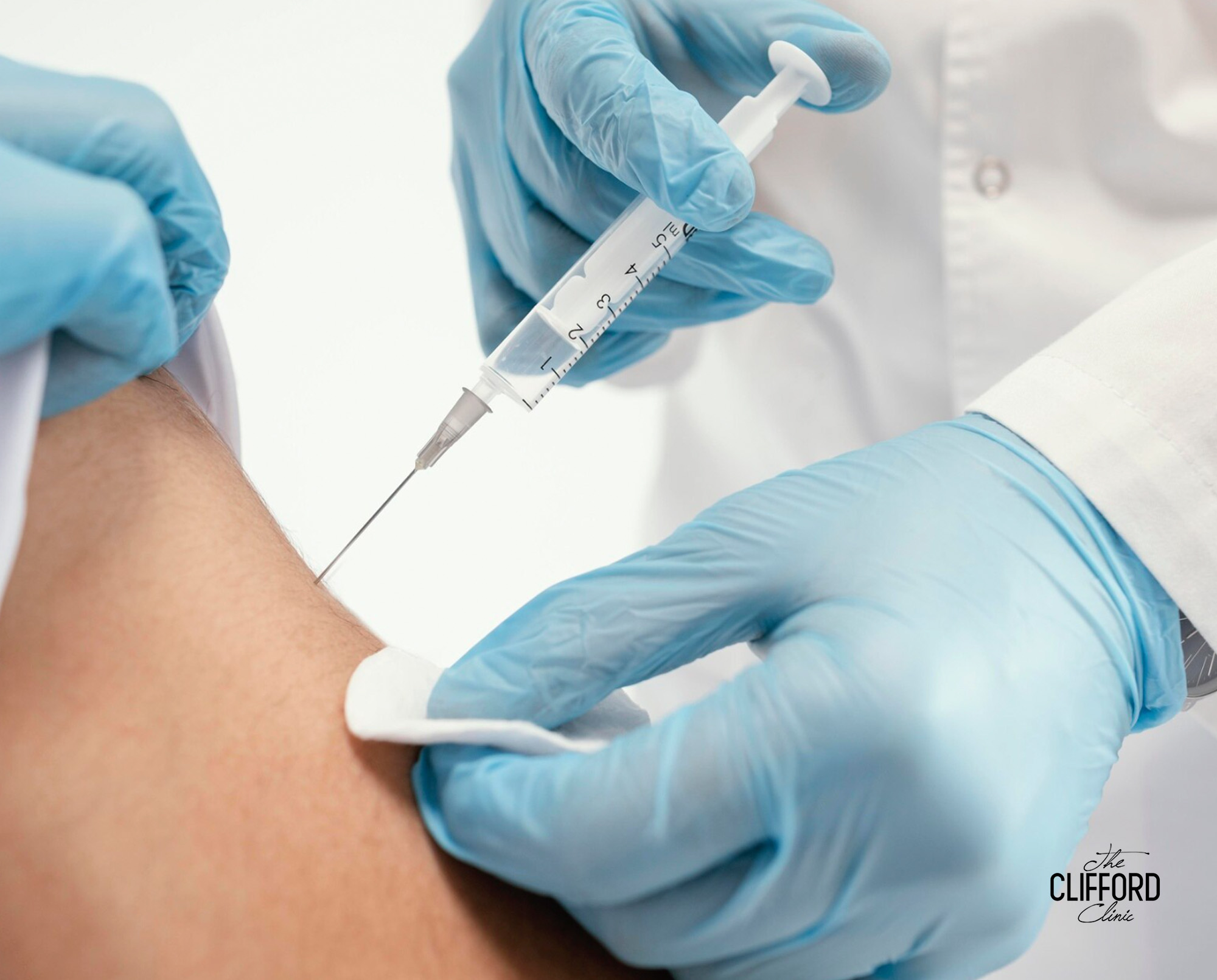
- The injection. The preparation is delivered into the joint space. Accurate intra-articular placement determines the result, since material deposited in the surrounding soft tissue does not reach the joint lining or the cartilage surface. Ultrasound guidance may be used where it improves placement accuracy.
- The patient is observed briefly and given aftercare instructions before discharge.
Discomfort is brief. Most patients describe pressure or a stinging sensation during the injection, followed by a temporary sensation of fullness in the knee. For PRP, there is also the blood draw beforehand, which feels like a standard blood test. The injection itself takes only a few minutes.
After the Injection: Immediate Aftercare
In the first hours and days after a knee injection, the following are expected and do not indicate a complication.
- Mild soreness, stiffness or a sense of fullnessin the knee, often for one to three days.
- Reduced tolerance for loading the knee for several days.
Aftercare consists of keeping activity within comfort for the first few days, withholding high-impact loading such as running, jumping or heavy leg training for one to two weeks, and following the specific instructions given for the injection used.
Warning signs. Although serious problems are uncommon, you should contact the clinic if you develop increasing warmth, significant or worsening swelling, fever, or pain that is escalating rather than settling. That combination raises the possibility of joint infection, which requires assessment without delay.
How Soon a Knee Injection Starts to Work
Onset and duration differ substantially between injection types, and mismatched expectations are the commonest source of dissatisfaction.
A corticosteroid (cortisone) injection acts fastest. Relief usually begins within one to three days as inflammation of the joint lining settles, is largely established within a week, and typically lasts between four and twelve weeks. A minority experience a short-lived increase in pain in the first day or two before improvement begins.
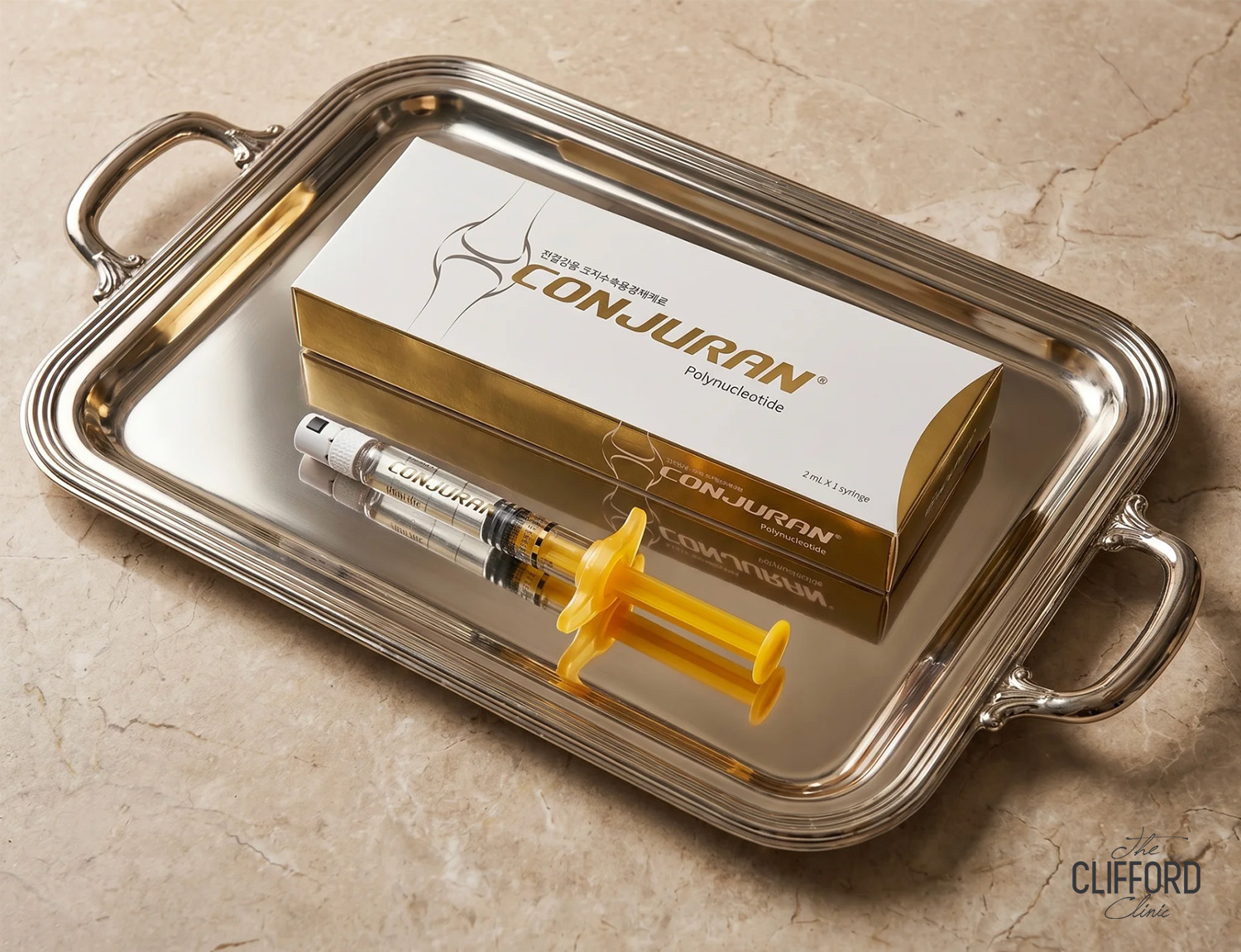
PRP, hyaluronic acid and Conjuran act gradually, and each is given as a course rather than as a single treatment. PRP is typically given as three injections at intervals of one to four weeks, with improvement first noticed at four to six weeks, maximal effect at around three months and benefit commonly reported to about twelve months. Hyaluronic acid is given as a single injection for high-molecular-weight and cross-linked products, or as three to five injections at weekly intervals for lower-molecular-weight preparations, with relief developing over four to six weeks and commonly lasting around six months. Conjuran is commonly given as three injections at intervals of one to two weeks, with the course reviewed at three to six months. A gradual response is therefore the expected pattern for all three and does not indicate treatment failure.
The pattern expected of the chosen injection, and the point at which progress will be reviewed, should be established before the procedure.
Rehabilitation After a Knee Injection
Long-term outcome depends less on the injection than on the rehabilitation that follows it. Pain relief opens a window in which strengthening can be performed without the pain that previously limited it.
Durable improvement is achieved through structured resumption of physiotherapy, progressive strengthening of the quadriceps, gluteal and hip musculature, graded management of load, and monitoring of practical markers such as stair comfort and walking tolerance. Quadriceps weakness increases the load transmitted through the joint surface, so restoring it addresses a source of pain that the injection does not. An injection given without this work commonly produces short-lived benefit.
Is a Knee Injection Safe?
Knee injections are widely used and generally well tolerated when performed by a qualified doctor under sterile technique. The considerations that follow apply to any intra-articular procedure.
The most common experiences are minor and expected. Soreness, stiffness or a sense of fullness in the knee persists for a day or two. With steroid injections specifically, some patients notice a brief “steroid flare” of increased pain before relief begins, and blood glucose can rise for several days, which is material for patients with diabetes and warrants closer monitoring over that period.
Less common considerations include infection of the joint, which is rare but serious and is the reason sterile technique and skin preparation are treated as non-negotiable. Anticoagulant use and other medical conditions are established beforehand for the same reason, and increasing warmth, significant swelling, fever or escalating pain should be reported rather than observed.
The principal safeguard is the assessment that precedes the injection rather than the injection technique alone. A treatment that is correctly matched to an accurate diagnosis, in a suitable candidate, is the basis of a safe and worthwhile knee injection.
Expert Opinion: The Clifford Clinic’s Approach to the Injection Journey
At The Clifford Clinic, the knee injection journey is built around two principles that Dr Gerard Ee and the team apply consistently. The diagnosis is established before any injection is offered, and the injection is then delivered with attention to accurate placement.
Pain referred from the hip or spine, or arising from the meniscus or ligaments, does not respond to an intra-articular injection, so the source is confirmed before any injection is offered.
The clinic provides a rehabilitation pathway and long-term follow-up, so that progress is reviewed against functional goals rather than symptom report alone. Treatment is personalised and stepwise, matched to the patient’s osteoarthritis grade, age, weight and activity level, and patients are counselled on realistic timelines and outcomes. The aim throughout is to keep patients active and to delay or avoid knee replacement where possible.
Frequently Asked Questions
Is a knee injection painful?
Most patients describe brief pressure or stinging during the injection, followed by a temporary feeling of fullness. Mild soreness for a day or two afterwards is normal. PRP also involves a blood draw, similar to a routine blood test.
How long does a knee injection take?
The injection takes only a few minutes. Additional time is required for consultation, preparation and a brief observation period afterwards. For PRP, additional time is needed for the blood draw and processing.
Can I walk and drive after a knee injection?
Light walking is usually fine soon after the procedure. Whether driving is advisable immediately depends on the injection given and the response of the knee, and should follow your doctor’s specific advice.
How soon will I feel better?
Corticosteroid injections usually act within one to three days. PRP, hyaluronic acid and Conjuran act gradually, with benefit developing over four to six weeks.
What should I do after a knee injection to get the best result?
Keep activity comfortable initially, withhold high-impact loading for one to two weeks, and follow a structured strengthening and rehabilitation plan. Rehabilitation is what turns pain relief into lasting improvement.
Related Reading
Other guides in The Clifford Clinic knee injection series.
- Early Knee Osteoarthritis, Why Timing Your Injection Treatment Matters.
- Knee Injections Compared, PRP, Hyaluronic Acid, Conjuran and Steroids.
- Treating Mild to Moderate Knee Osteoarthritis Without Surgery.
- PRP vs Hyaluronic Acid for Knee Osteoarthritis, Which Is Right for You?
- Steroid (Cortisone) Injections for Knee Pain, Benefits, Risks and Timing.
- Conjuran Knee Injections, What to Expect.
- Hyaluronic Acid Knee Injections (Viscosupplementation), A Patient’s Guide.
- PRP Injections for Knee Osteoarthritis, How They Work and Who They Help.
Clinic treatment pages.
Speak to The Clifford Clinic About Your Knee Pain

If a knee injection has been suggested, a consultation will establish whether it is appropriate, which preparation suits the stage of osteoarthritis, and what timeline to expect.
Knee assessments and injections at The Clifford Clinic are carried out by an experienced medical team that includes sports physicians and orthopaedic surgeons, supported by an MOH-approved day surgery facility for procedures that require it. Knee joint injections may also be claimable through Medisave and insurance. The clinic can advise on eligibility and coverage at consultation.
The Clifford Clinic 50 Raffles Place, #01-01 Singapore Land Tower, Singapore 048623 (Exit B, Raffles Place MRT). Phone (65) 6532 2400. WhatsApp (65) 8318 6332.
About Dr Gerard Ee

Dr Gerard Ee is a physician at The Clifford Clinic whose main specialty is dermatology and aesthetic medicine, and who is also trained in orthopaedic surgery, with an extensive peer-reviewed research record in orthopaedics. His published work spans knee surgery, including studies on total knee arthroplasty and joint line restoration in The Knee and the Journal of Bone and Joint Surgery (British), alongside shoulder, spine and bone-healing research in journals such as Knee Surgery, Sports Traumatology, Arthroscopy and Clinical Orthopaedics and Related Research. This research-informed background underpins the careful, individualised approach to knee care at The Clifford Clinic.
Medical Disclaimer
This article is for general education only and is not a substitute for personalised medical advice. Suitability for any knee injection, and specific aftercare instructions, can only be determined by a qualified doctor. Outcomes vary between individuals.

Author Bio
Dr Gerard Ee

Dr Gerard Ee is the Medical Director of The Clifford Clinic in Singapore. He earned his medical degree from St George's University of London and built his surgical experience across the Singapore General Hospital, National University Hospital, and Mount Sinai Hospital in New York. He holds Membership of the Royal College of Surgeons (Edinburgh) and a Postgraduate Diploma in Dermatology (Cardiff), and is fully accredited in aesthetic procedures including botulinum toxin, fillers, lasers, and light therapies. A strong advocate of minimally invasive, natural-looking results, Dr Ee has published in several medical and scientific journals and presented his research in cities including Taipei, Las Vegas, and London.
See all posts by Dr Gerard Ee »