
How Many Pico Laser Sessions Do You Need for Pigmentation?
Written by Dr Bernard Ong. Medically reviewed by Dr Gerard Ee
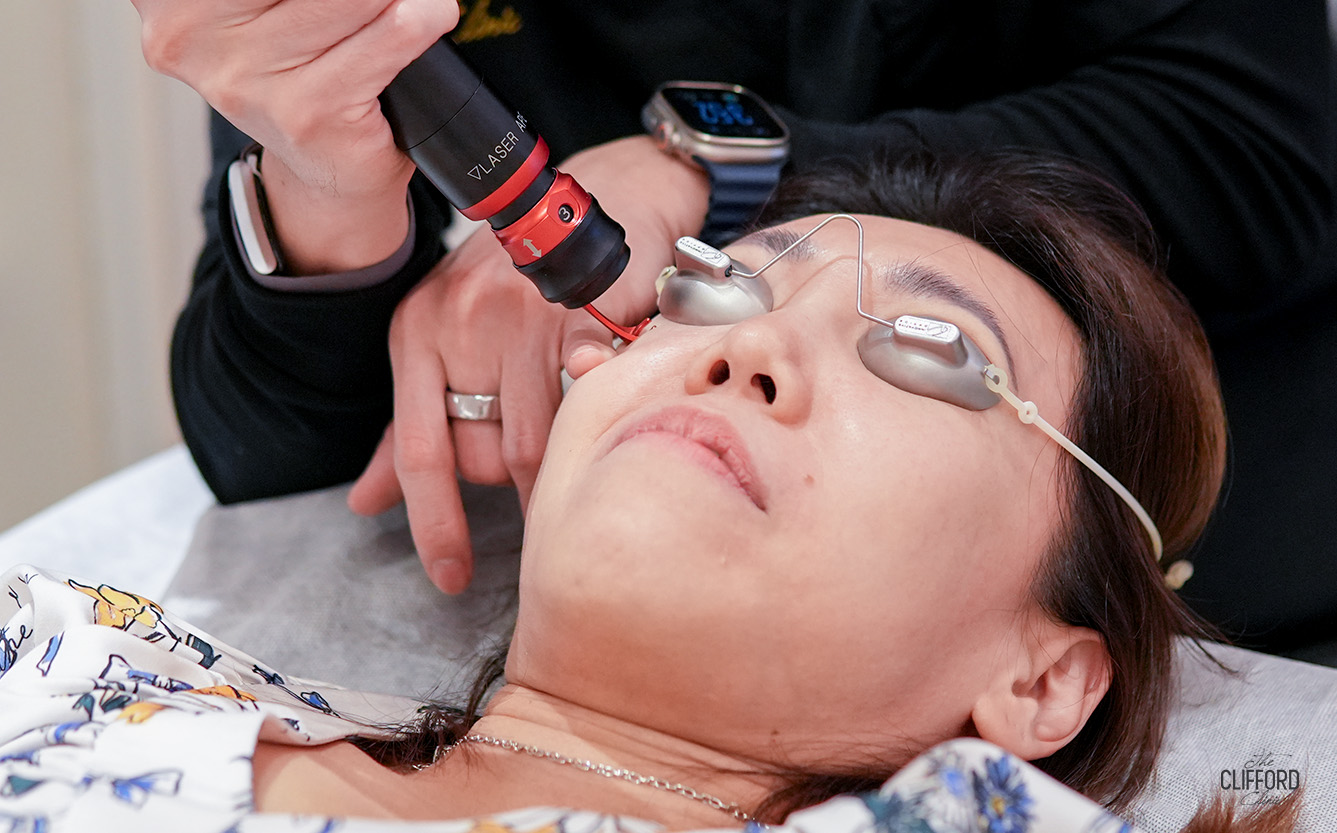
The number of Pico laser sessions needed for pigmentation depends on the type of pigment, its depth and your skin response. Discrete sun spots and freckles often clear in one to three sessions, post-inflammatory hyperpigmentation usually needs three to six, and dermal pigmentation such as Hori’s naevus or melasma toning needs six to ten or more sessions with maintenance. Session numbers are estimates made after a doctor examines your skin, not fixed promises given before diagnosis.
Why session numbers vary so much
Pigmentation is a complex problem because it may exist in different depths of the skin, thus respond differently to treatment. A superficial freckle absorbs the laser strongly and clears quickly, while dermal pigment sits deeper and is removed gradually across many sessions. Melasma is a chronic condition can only be managed, not cured.
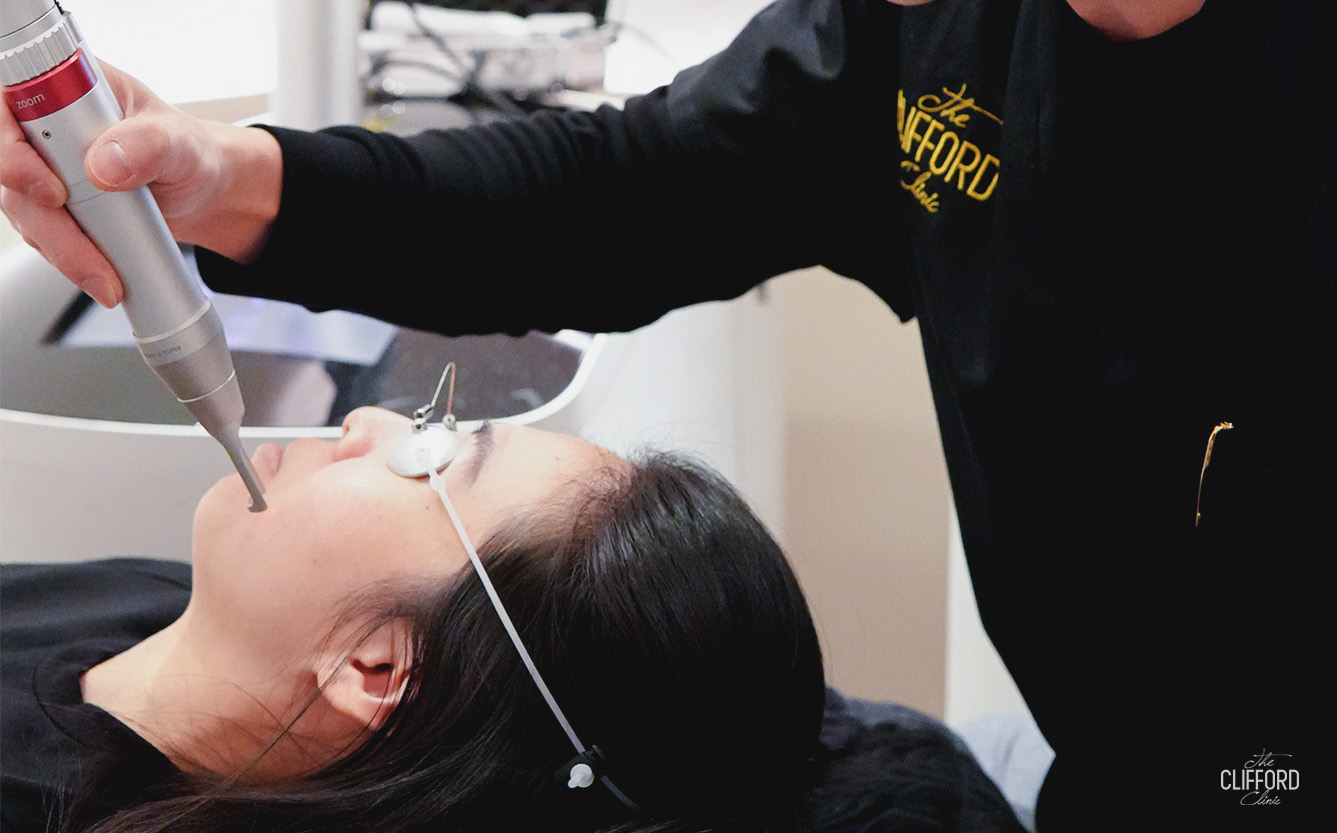
Pigment type and depth
Depth is the single biggest determinant of session count. Pigment in the upper layer of the skin, the epidermis, is easier to treat and clears in fewer sessions. Pigment in the deeper dermis is reached only by a longer wavelength, typically 1064 nm rather than the 532 nm used for surface pigment, and is cleared slowly as the body removes the fragmented particles between visits. Melasma adds another layer of complexity, as it involves overactive pigment cells, a weakened boundary between skin layers and increased blood vessels, factors which causes relapses and renders the condition unsuited to aggressive, rapid treatment.
Typical session ranges by pigment type
Typical Pico Laser Course by Pigmentation Type
| Pigment Type | Typical Course | Notes |
|---|---|---|
| Freckles | One to three sessions | Superficial pigment, responds quickly, recurrence with sun exposure |
| Sun Spots Solar Lentigines |
One to three sessions | Discrete spots often clear efficiently once confirmed benign |
| Post-Inflammatory Hyperpigmentation | Three to six sessions | Underlying acne or inflammation must be controlled first |
| Dermal Pigmentation such as Hori’s Naevus | Six to ten or more sessions | Deeper pigment cleared gradually over many visits |
| Melasma | Ongoing toning with maintenance | Managed cautiously, not cured, relapse expected without maintenance |
These ranges are guides. Your doctor gives a personal estimate after examining your pigment and skin tone.
Freckles and sun spots
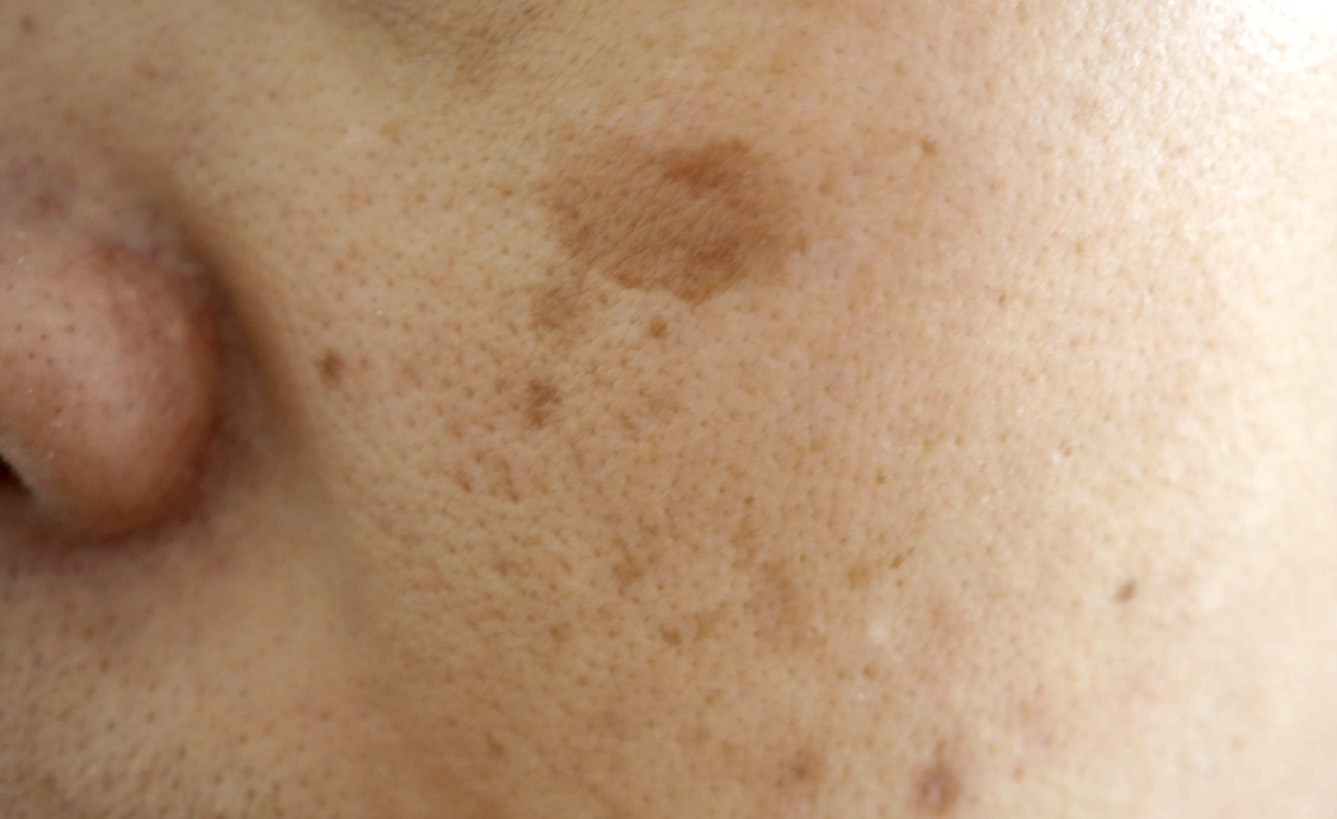
Freckles and sun spots are superficial andthe most efficient pigment to treat. Visible lightening can be observed by the first few sessions, and discrete spots often clear in one to three sessions. Because both reflect a tendency to form pigment with sun exposure, daily sun protection is what keeps the result, and new spots can appear over time without it. Our freckles and sun spot removal guides cover this in detail.
Post-inflammatory hyperpigmentation and acne marks
Brown marks left by acne, eczema or irritation are post-inflammatory hyperpigmentation, usually need three to six sessions to clear fully. The most important factor is control of underlying inflammation. Treatment of marks with concurrent breakouts is aesthetically ineffective due to the appearance of new pigmentation. After achieving control of active acne, sunscreen and topical treatment are adjunctive to laser treatments. Our post-inflammatory hyperpigmentation guide explains the sequence.
Melasma
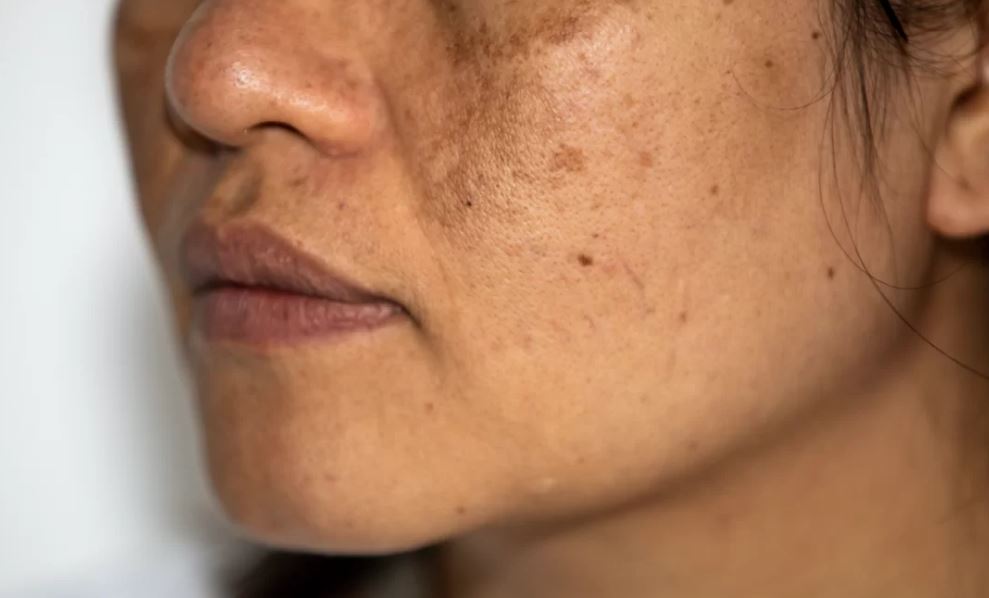
It is difficult to anticipate the treatment duration of Melasma as it is a long-term condition. Where laser is appropriate, low-energy toning settings alongside sun protection and topical treatment, as a series of five to ten sessions and followed by maintenance every one to two months are commonly found to be effective. It is vital to note, the condition can relapse and each patient responds differently, our melasma treatment guide sets out the wider plan.
Hori’s naevus and dermal pigmentation
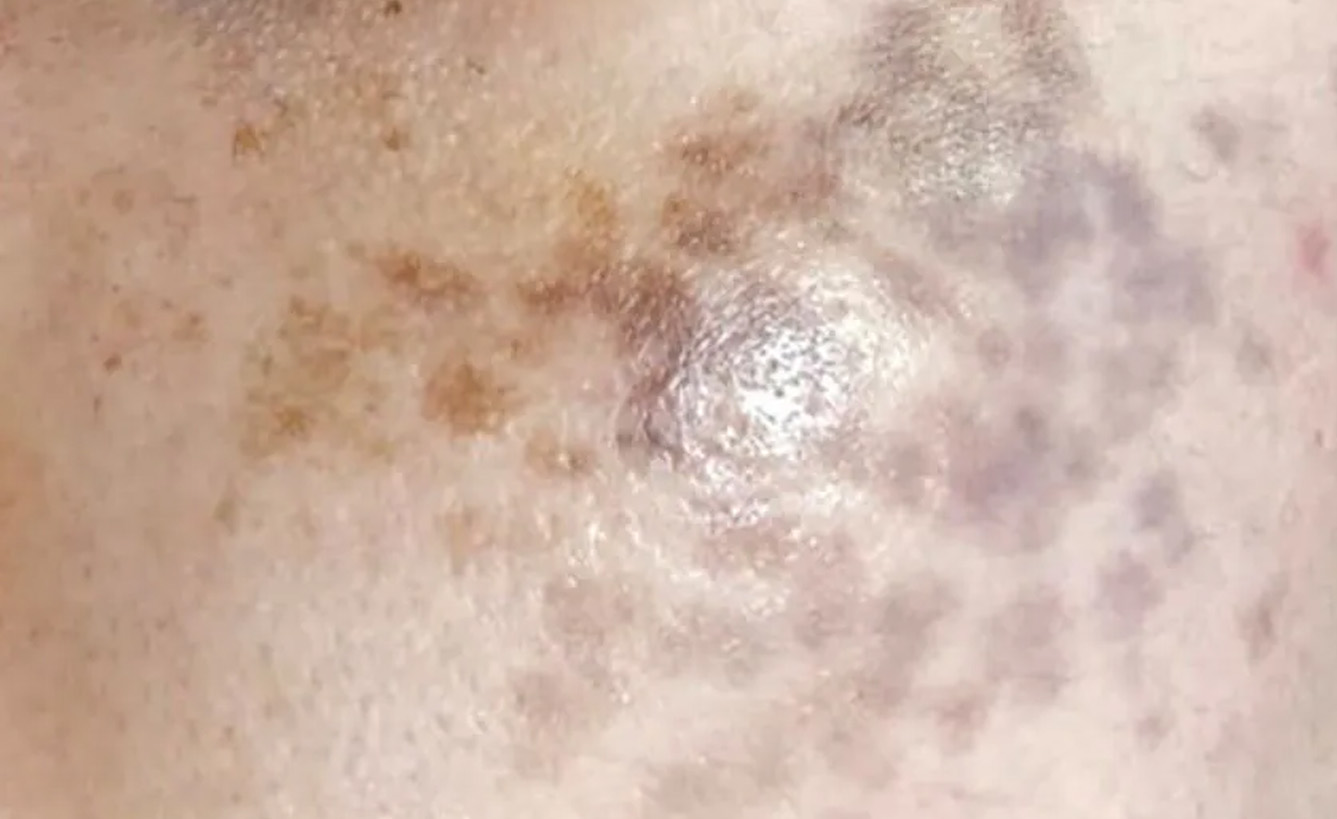
Dermal pigmentation such as Hori’s naevus require the greatest number of sessions as the pigment sits deep. Once treated, this pigment is unlikely to return, as the abnormal dermal cells are removed. Treatment is typically staged over six to ten or more sessions spaced six to twelve weeks apart, with conservative settings to protect the skin. Our Hori’s naevus guide covers what to expect.
Why sessions are spaced apart
Sessions are spaced three to four weeks apart for epidermal pigment and six to twelve weeks apart for dermal pigment. Fragmented pigments require time for spontaneous clearance between treatments, and the skin needs time for repair. Treating frequently does not increase effectiveness yet risks irritation and post-inflammatory hyperpigmentation, particularly in darker skin.
Why maintenance matters
Freckles and sun spots can return with sun exposure, and melasma relapses without ongoing care, so maintenance sessions and daily sun protection protect the result. Dermal pigmentation that has been fully cleared is more stable and usually does not need maintenance.
How progress is measured between sessions
Doctors track pigment response with photographs taken in consistent lighting, comparing each visit to the last so that settings and spacing can be adjusted to how your skin responds. If pigment clearance progresses well, the course may be shortened. If response is slow or if any darkening appears, frequency of sessions, wavelength, fluence, can be adjusted, and diagnosis should be reconsidered.
Factors that can lengthen or shorten your treatment course
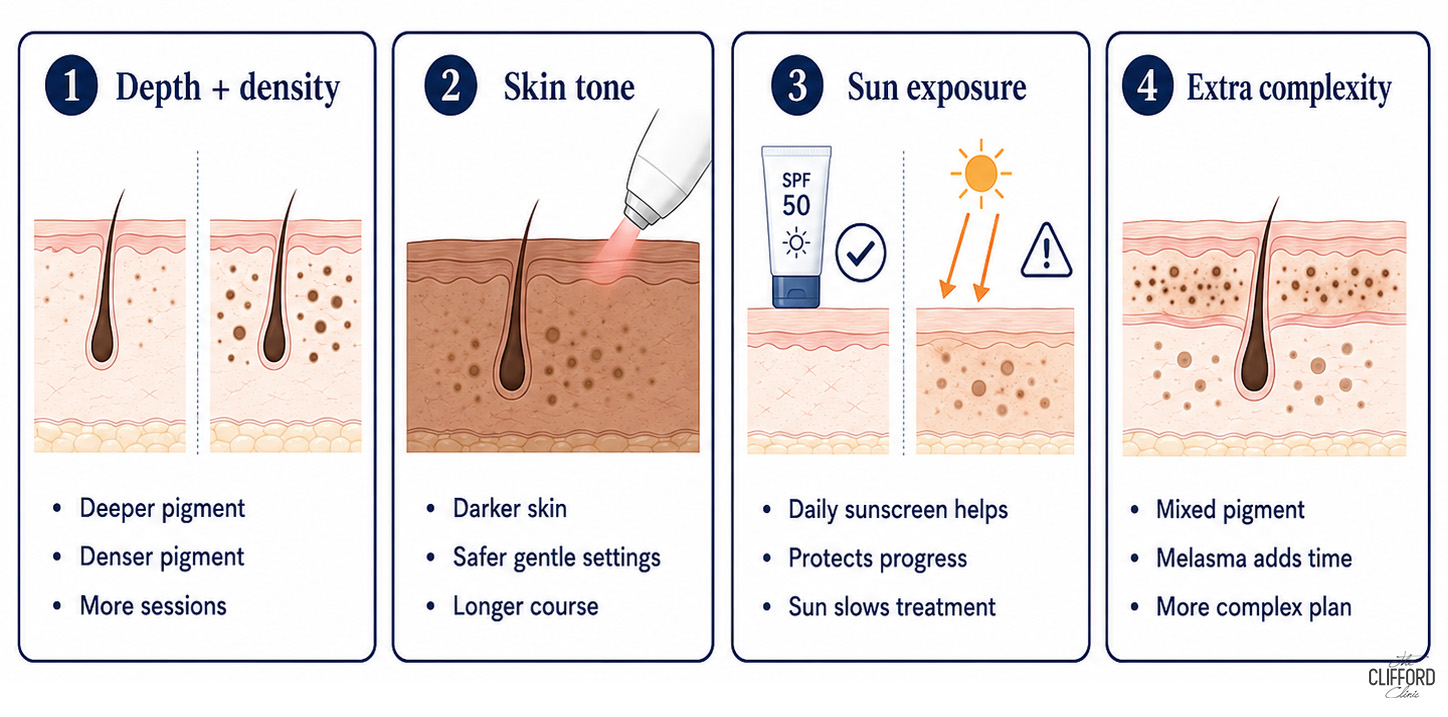
Pigment depth and density matter most.Deeper, denser pigment tend to require more sessions. Other factors that increase the duration of your treatment course can include.
- Darker skin,conservative settings prevent post inflammatory hyperpigmentation., thus likely extending the course. diligent sun protection effectively shortens the course by protecting each session’s gains Sun exposure during treatment slows progress and can cause new pigmentation, so. Coexisting conditions, such as melasma layered over dermal pigment, add complexity and time.
Why one session is rarely enough
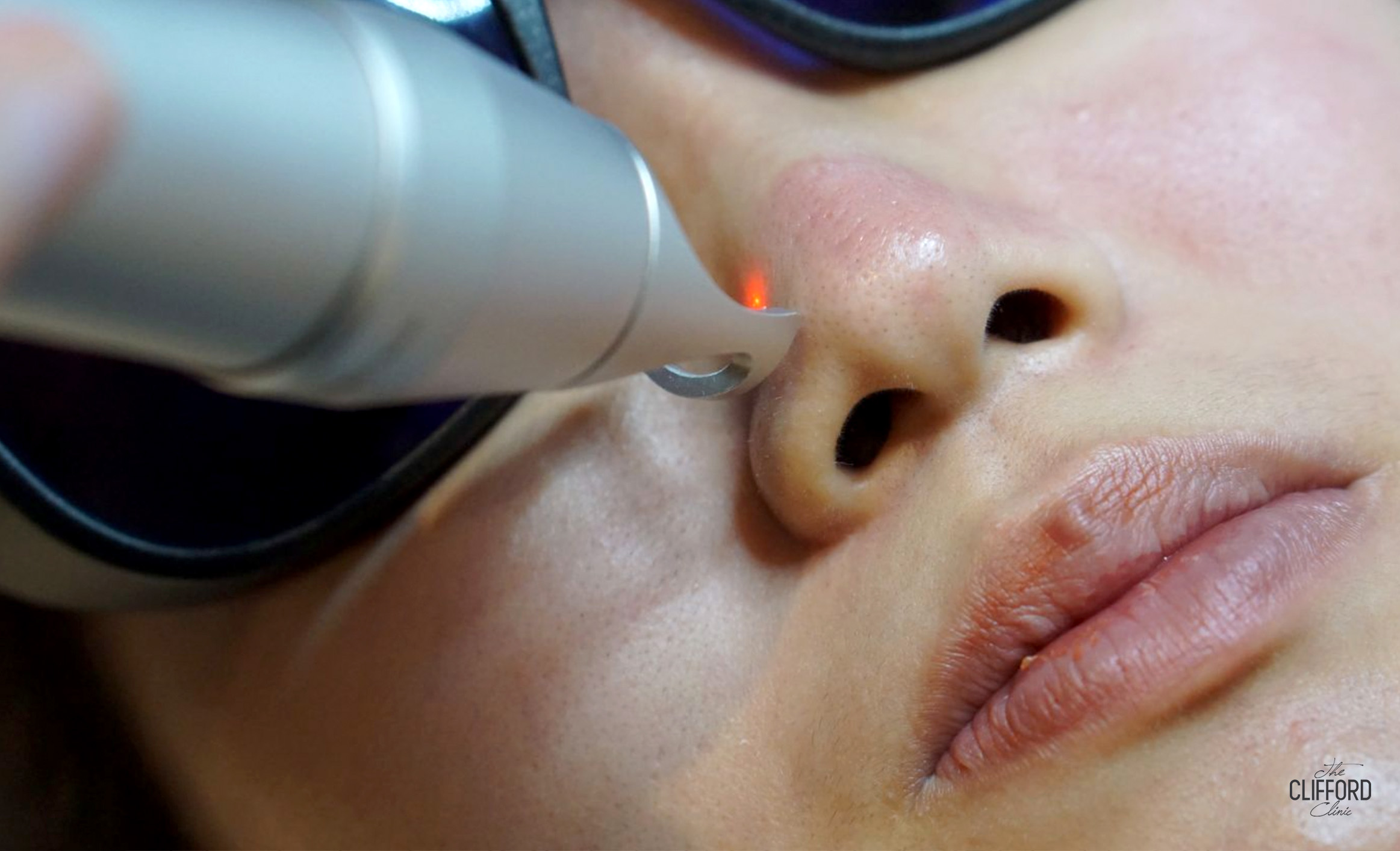
Occasionally a single discrete sun spot clears in one session, but most pigmentation needs a course. The laser removes a portion of the pigment each time, and the body clears it gradually, so results build across sessions rather than appearing all at once. Be cautious of any promise that one session will remove your pigmentation.
Doctor’s perspective. The honest figure comes after the diagnosis, not before. When someone asks for a guaranteed number on the phone, we explain that the same brown patch could need two sessions or a long course depending on what it actually is.
Who is suitable and who is not
- Diagnosed benign pigmentation, with a realistic understanding that the course length depends on pigment type and that some pigment needs maintenance.
- Requires caution.Active untreated melasma treated aggressively, recently tanned skin, active inflammation, or an undiagnosed or changing pigmented lesion that needs review first.
Frequently asked questions
How many Pico laser sessions do I need?
It depends on your pigment type, from one to three sessions for discrete sun spots to six to ten or more for dermal pigmentation or melasma toning. Your doctor estimates after examining your skin.
Can one Pico laser session remove pigmentation?
Occasionally for a single discrete sun spot, but most pigmentation needs a course, because the laser removes and the body clears pigment gradually across sessions.
How often should Pico laser be done?
Sessions are usually spaced three to four weeks apart for epidermal pigment, and longer for dermal pigment, to allow pigment clearance and skin recovery. Treating more frequently does not speed results and raises the risk of side effects.
Why does melasma need maintenance?
Melasma is a chronic, relapse-prone condition, so even after it lightens it tends to return without ongoing sun protection, topical care and occasional toning.
How many sessions for freckles?
Freckles are superficial and often lighten within one to three sessions, though new freckles can form with sun exposure, so sun protection maintains the result.
How many sessions for acne marks?
Brown acne marks usually need three to six sessions, and controlling active acne first is essential so that new marks do not keep forming during the course.
Get a session estimate matched to your pigment

The right number of sessions starts with knowing exactly what your pigmentation is. Learn about Pico laser in Singapore and pigmentation treatment in Singapore, or book at The Clifford Clinic, 50 Raffles Place, #01-01 Singapore Land Tower. Call (65) 6532 2400 or WhatsApp (65) 8318 6332.
Selected References
- Comparing the efficacy and safety of a 730 nm picosecond laser with a 532 nm Q-switched Nd:YAG laser for facial pigmented disorders. European Journal of Medical Research, 2026. https://pubmed.ncbi.nlm.nih.gov/41782066.
- Disorders of hyperpigmentation, part I: pathogenesis and clinical features of common pigmentary disorders. Journal of the American Academy of Dermatology, 2023. https://pubmed.ncbi.nlm.nih.gov/35151757.
- DermNet: lasers in dermatology. https://dermnetnz.org/topics/lasers-in-dermatology.

Author Bio
Dr Gerard Ee

Dr Gerard Ee is the Medical Director of The Clifford Clinic in Singapore. He earned his medical degree from St George's University of London and built his surgical experience across the Singapore General Hospital, National University Hospital, and Mount Sinai Hospital in New York. He holds Membership of the Royal College of Surgeons (Edinburgh) and a Postgraduate Diploma in Dermatology (Cardiff), and is fully accredited in aesthetic procedures including botulinum toxin, fillers, lasers, and light therapies. A strong advocate of minimally invasive, natural-looking results, Dr Ee has published in several medical and scientific journals and presented his research in cities including Taipei, Las Vegas, and London.
See all posts by Dr Gerard Ee »