
How Long Do Pico Laser Results Last? Maintenance for Melasma, Freckles and PIH
Written by Dr Bernard Ong. Medically reviewed by Dr Gerard Ee
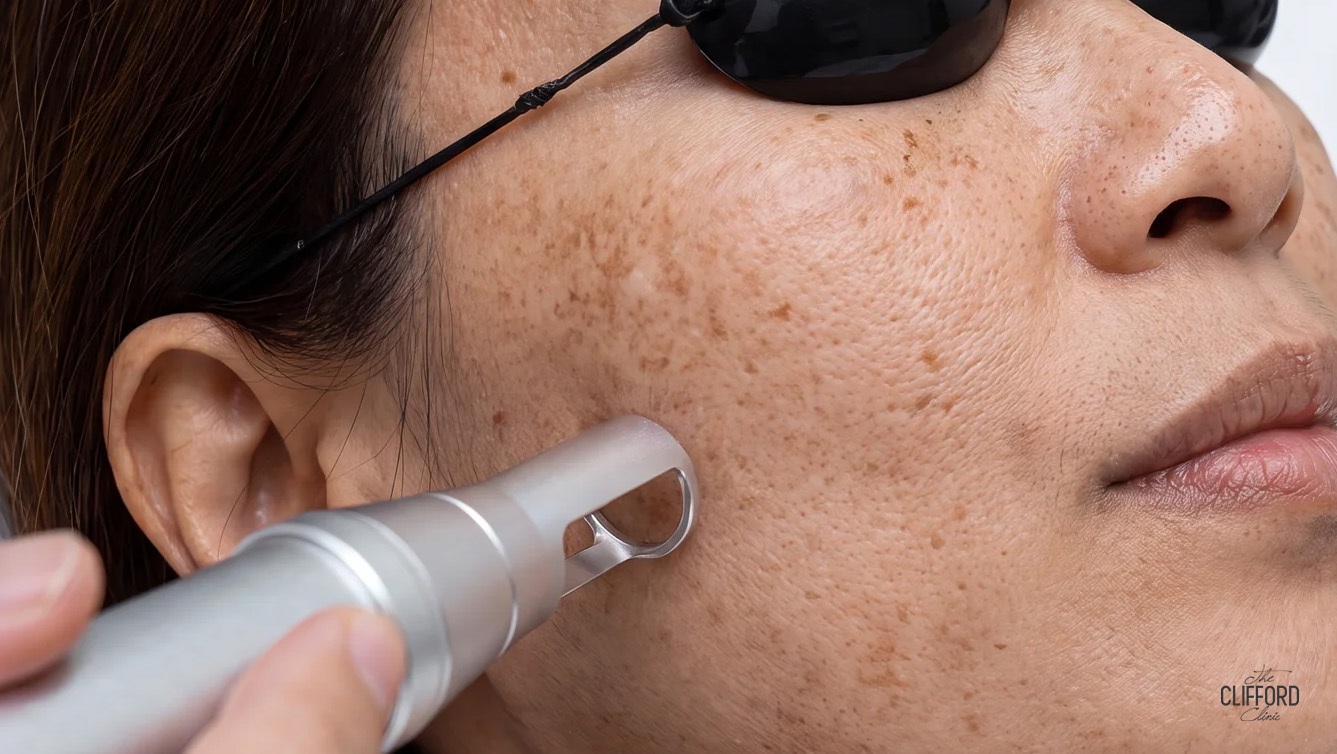
Pico laser results last longest when the pigment is fully cleared and the triggers that caused it are controlled. Dermal pigmentation such as Hori’s naevus sits deep in the dermis, and once those pigment cells are destroyed, they are not replaced, so clearance is usually permanent. Freckles and sun spots do not regrow where they were treated, but new ones appear over months to years with continued sun exposure, and melasma commonly relapses within three to six months without maintenance. Durability is therefore set by the pigment type and by daily sun protection. Maintenance is part of keeping results, not a sign that treatment failed.
Why Pico laser results last longer for some pigment types
The durability of a result is determined by the nature of the pigment, not by the laser. A laser clears the melanin already present but does not alter the cells that produced it, so recurrence depends on whether the underlying cause is still active. Dermal pigment comes from abnormal pigment cells deep in the dermis, which the laser destroys and the skin does not replace. Sun-driven pigment reappears because the melanocytes in sun-exposed skin survive treatment and resume producing melanin at the next ultraviolet exposure. Hormonally driven melasma persists as a tendency even after the visible pigment clears.
Result durability by condition
How Long Pico Laser Results Last by Pigmentation Type
| Condition | How Durable | Maintenance Strategy |
|---|---|---|
| Dermal Pigmentation such as Hori’s Naevus | Usually permanent once fully cleared | Little maintenance needed, general sun protection |
| Freckles | New freckles form with continued sun exposure | Daily sun protection, occasional touch-up |
| Sun Spots Solar Lentigines |
Treated spots stay clear, new ones can form | Daily sun protection to limit new spots |
| Post-Inflammatory Hyperpigmentation | Lasting once the inflammation is controlled | Control acne or irritation, sun protection |
| Melasma | Relapse-prone, usually within three to six months without maintenance | Ongoing sunscreen, topicals and toning every three to four months |
Melasma maintenance
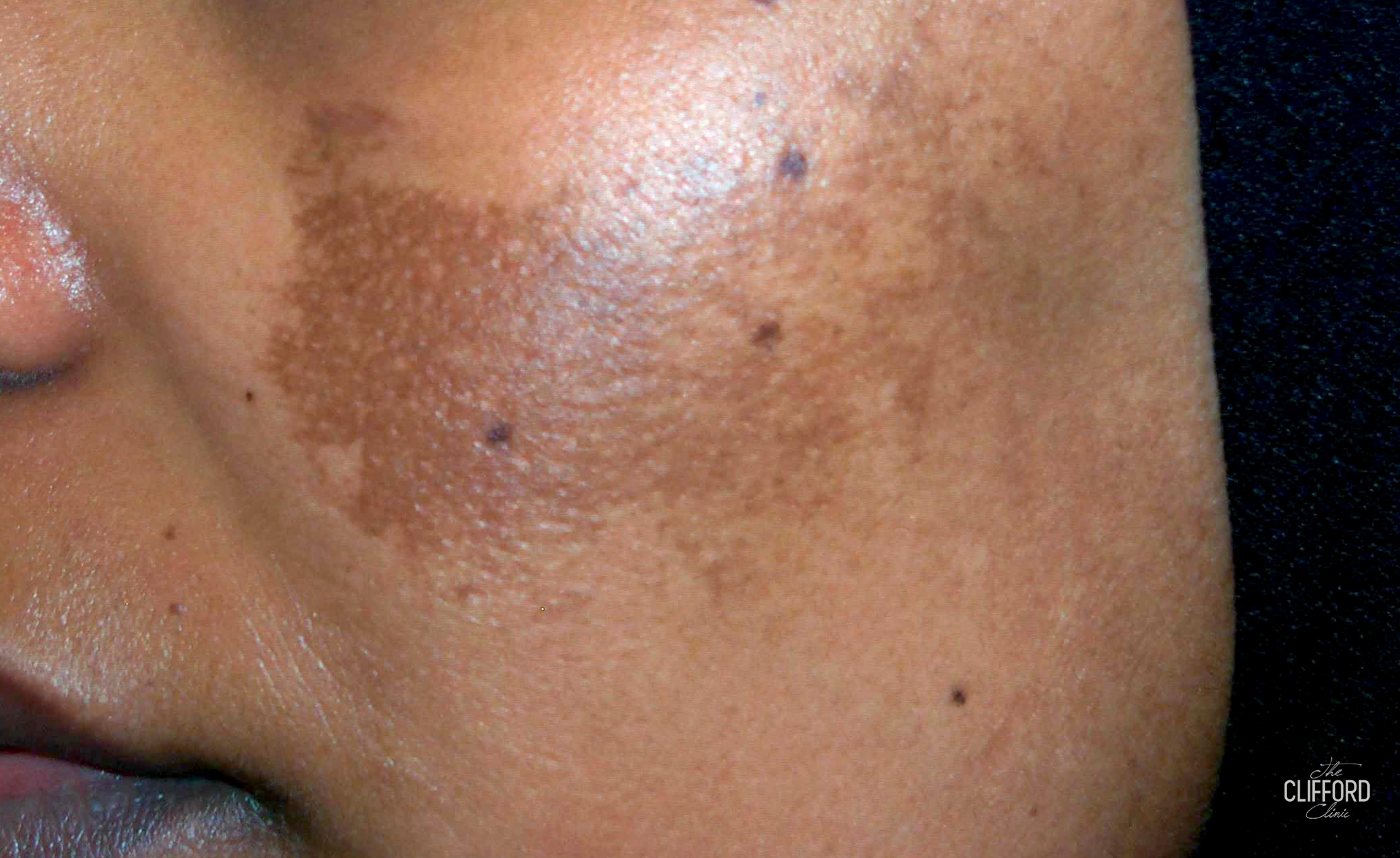
Melasma is a chronic condition involving overactive pigment cells that remain primed even after the skin looks clear, and it is triggered by ultraviolet light, visible light, heat and hormones. Clearing the pigment does not suppress these drivers, so pigmentation commonly returns within three to six months without maintenance. A realistic melasma plan therefore treats maintenance as permanent, with daily tinted sunscreen that also blocks visible light, topical treatment, and periodic low-energy toning where appropriate. Our melasma treatment guide explains the full approach.
Freckles and sun spots
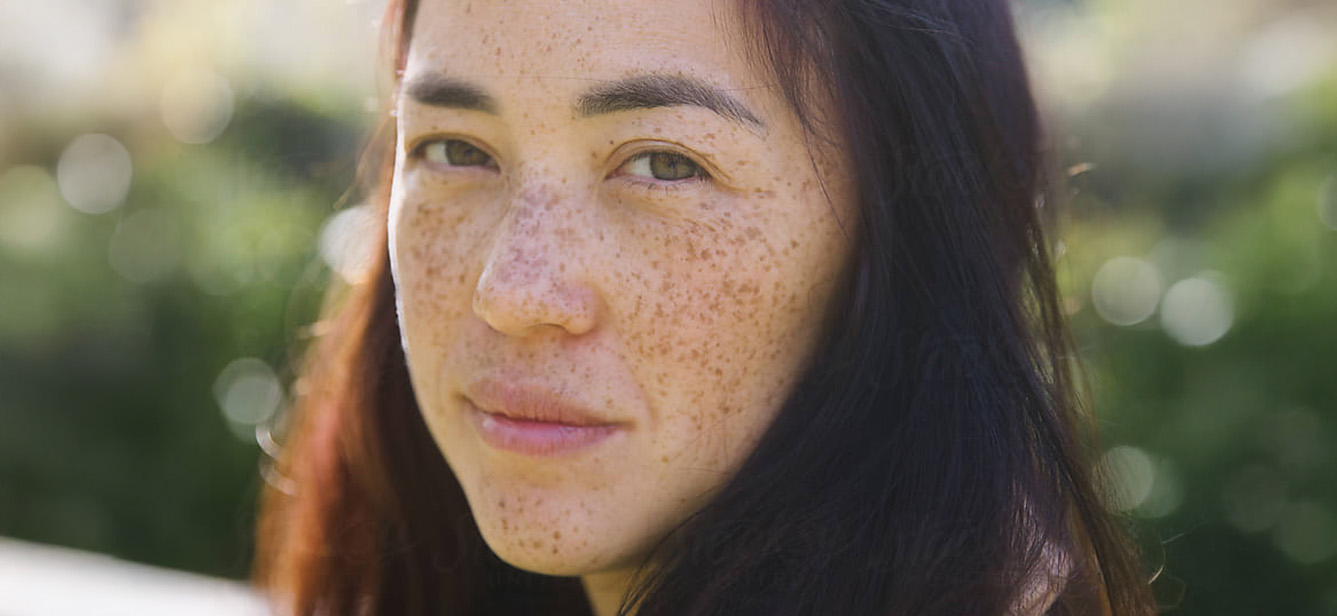
Freckles and sun spots are driven by cumulative ultraviolet exposure rather than by an internal process such as hormonal stimulation. A treated freckle or sun spot does not usually regrow in the same place, but new ones appear over time in sun-exposed skin. Durability of results is therefore determined by how many new lesions form rather than by regrowth of the treated ones.
Post-inflammatory hyperpigmentation and acne control
Post-inflammatory hyperpigmentation (PIH) lasts once cleared, provided the inflammation that caused it stays controlled. Marks already present continue to lighten for two to six months after the inflammation settles. If acne remains active, each new lesion leaves fresh pigmentation which can be disguised as old pigmentation. Durable results therefore depend on ongoing control of the underlying acne or skin condition, together with sun protection to prevent the marks from deepening. Our post-inflammatory hyperpigmentation guide covers this relationship.
Sun exposure in Singapore
Singapore’s equatorial climate is the single biggest challenge to lasting results. Ultraviolet exposure is intense through the year, with the midday ultraviolet index routinely in the very high to extreme range, and it reaches the skin during daily commuting, outdoor activity and even through car windows. This constant exposure drives new freckles and sun spots and reactivates melasma. There is no season of reduced risk, so sun protection is a daily habit rather than an occasional measure.
Sunscreen and visible-light protection
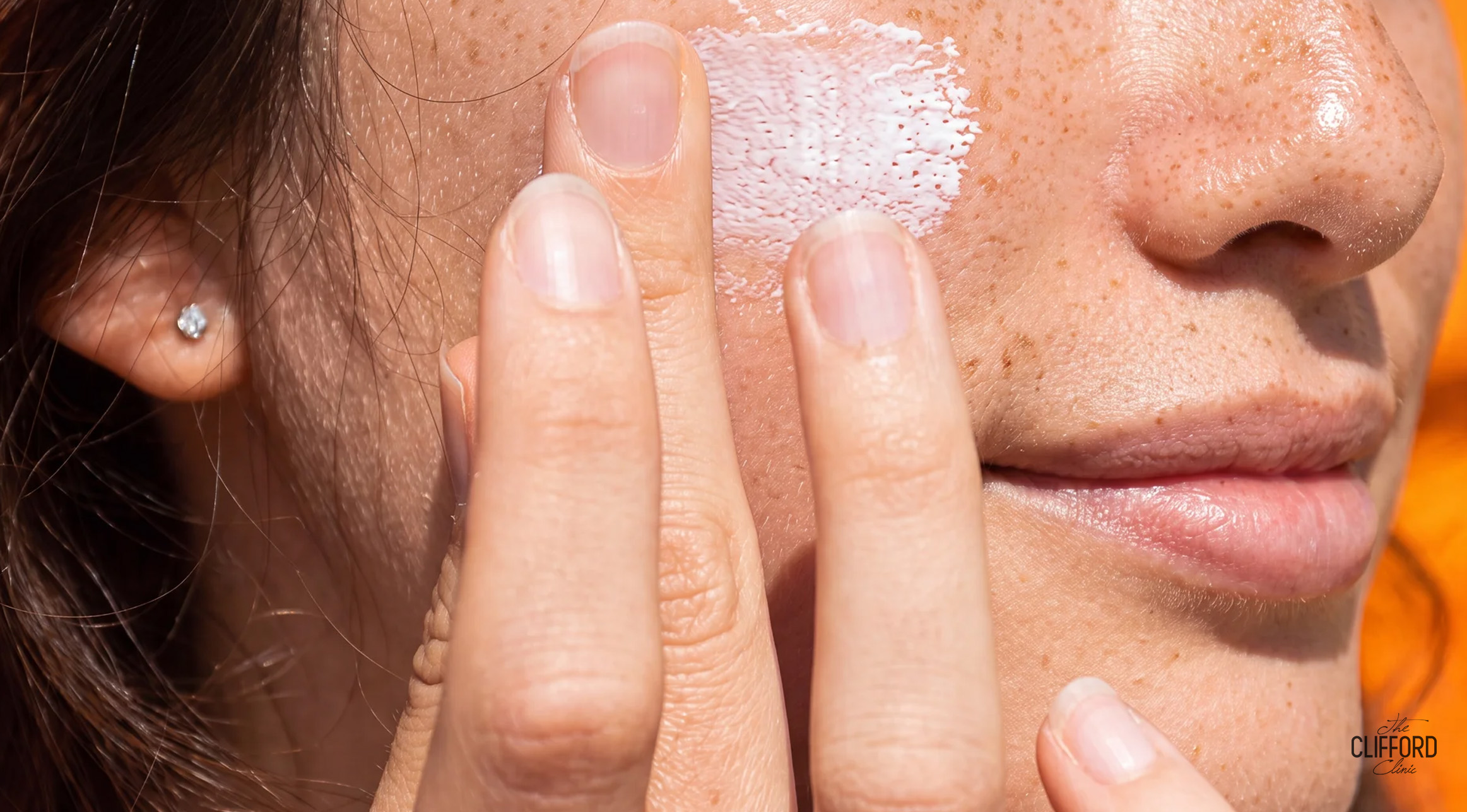
Daily broad-spectrum sunscreen of at least SPF 50 with PA++++ is the foundation of lasting results. For melasma, an ordinary clear sunscreen is not enough, because melasma also responds to visible light, which clear sunscreens do not block. A tinted sunscreen containing iron oxides absorbs visible light as well as ultraviolet, which makes it the preferred choice for melasma-prone skin. Applied generously every morning and reapplied every two to three hours outdoors, it preserves the result of every laser session.
Maintenance sessions
For relapse-prone or sun-driven pigment, occasional maintenance sessions help sustain the result. Spacing follows the pigment type. In stabilised melasma, toning is commonly repeated every three to four months, whereas sun-driven pigment usually needs no more than an annual review to clear any new spots. Maintenance sessions are performed at lower energies, since there is a smaller pigment load to clear.
Skincare after Pico laser
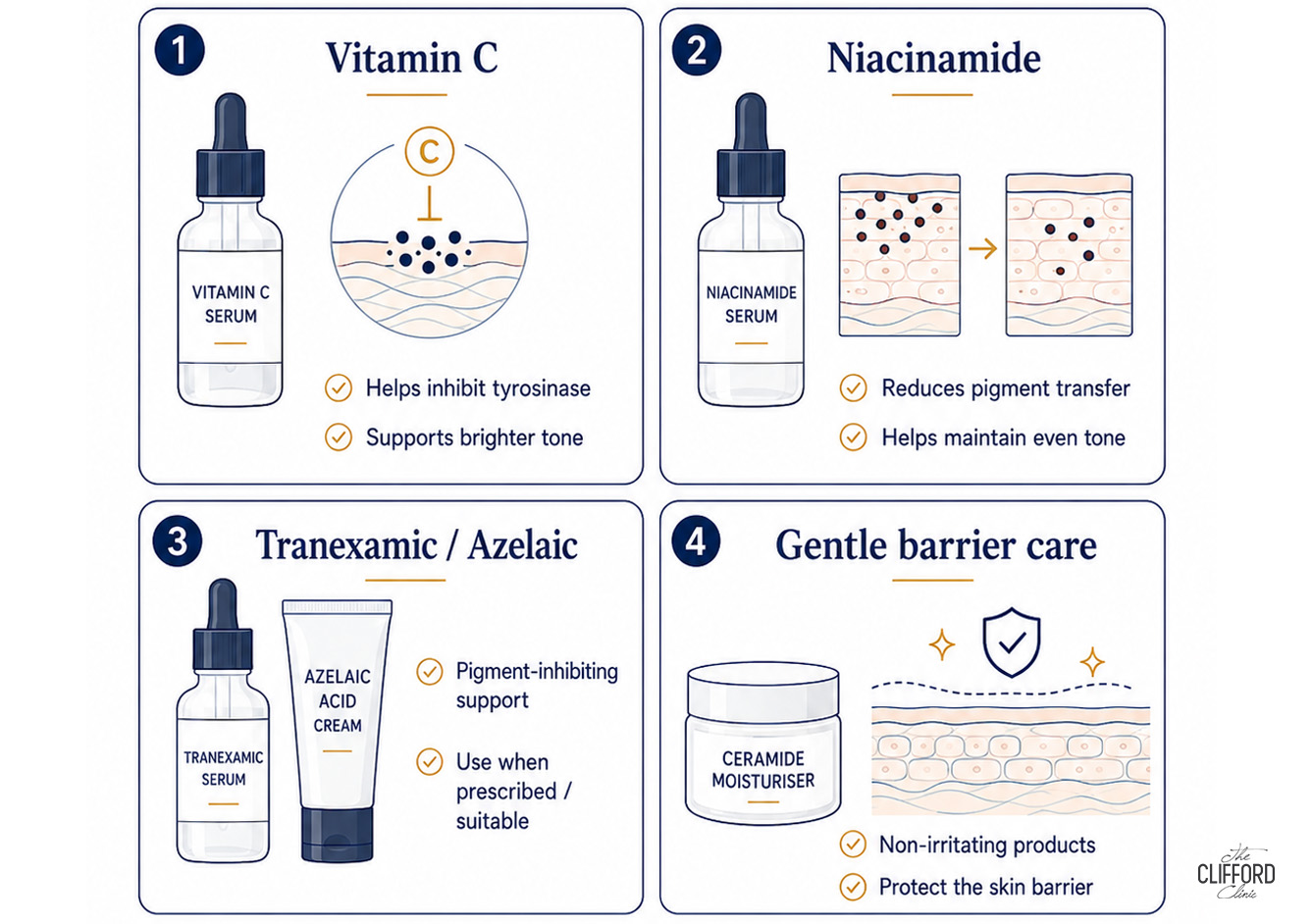
A supportive skincare routine extends results between sessions. Pigment-inhibiting ingredients such as vitamin C, niacinamide and, where prescribed, agents like tranexamic acid or azelaic acid help suppress new pigment and maintain an even tone. Vitamin C and azelaic acid inhibit tyrosinase, the enzyme that drives melanin production, while niacinamide reduces the transfer of pigment into surface skin cells. Gentle, non-irritating products protect the skin barrier, because irritation itself can trigger pigmentation in reactive skin.
When to reassess
If pigment returns or new pigment appears, it is worth reassessing rather than simply repeating treatment. Returning melasma may need the topical and sun protection plan strengthened before more toning. Occasionally, what looks like returning pigment is a different condition, and a lesion that is changing in size, border or colour needs examination rather than another laser session.
Telling recurrence apart from new pigment
True recurrence and new pigment formation look similar but call for different responses. A treated sun spot that reappears in exactly the same place is uncommon, whereas new sun spots forming nearby over months reflect ongoing sun exposure rather than failure of the original treatment. In melasma, the same patch tends to re-darken because the underlying tendency persists, which is true recurrence driven by the condition itself. In post-inflammatory hyperpigmentation, fresh marks appearing where new pimples healed are new pigment, not the return of old marks. New sun-driven pigment calls for stronger sun protection, recurrent melasma calls for reinforced maintenance, and new post-inflammatory marks call for better control of the underlying acne.
The role of an honest initial plan
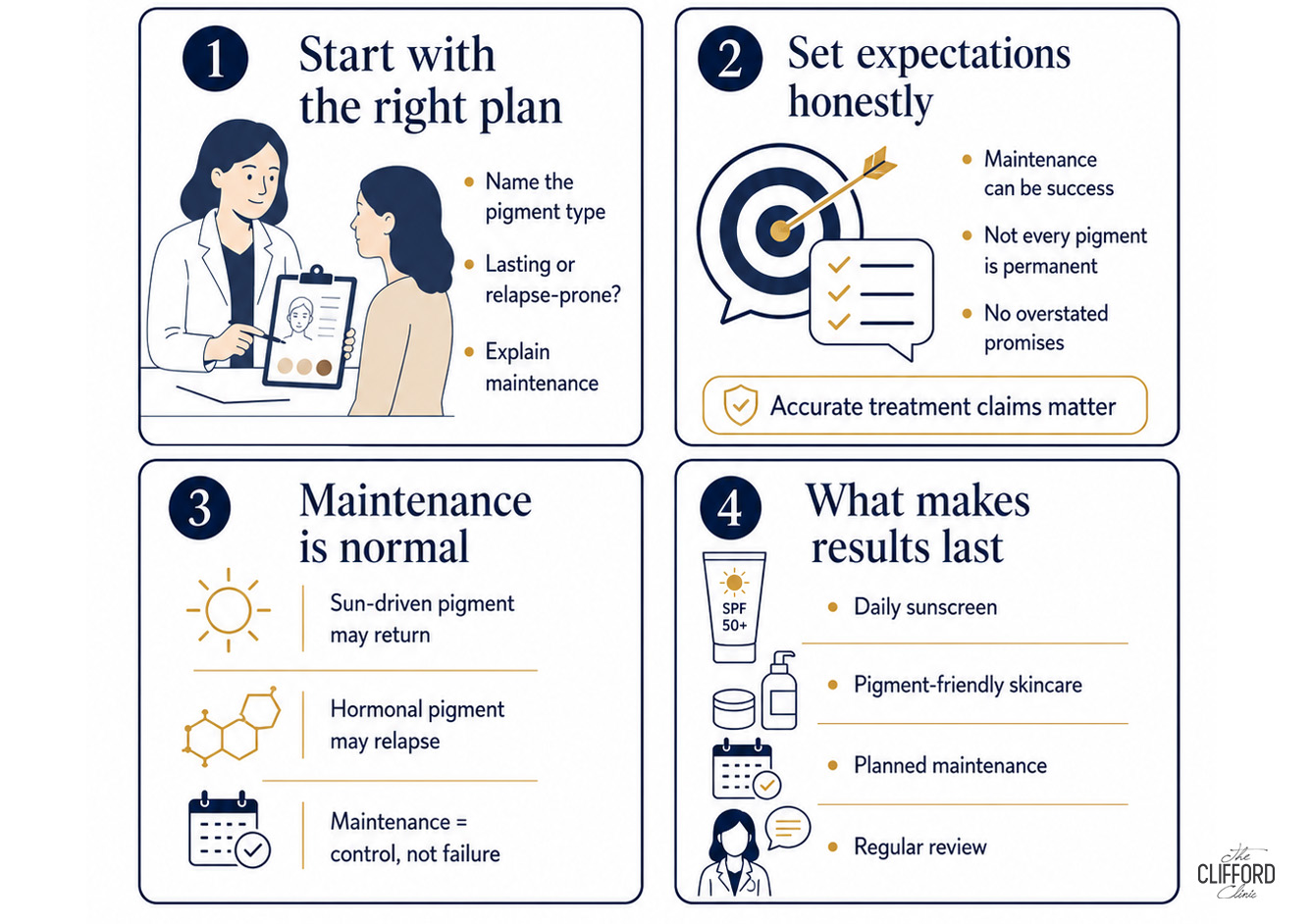
Durability starts at the first consultation, because expectations set correctly at the outset shape how a result is judged later. A plan that names the pigment type, explains whether it is likely to be lasting or relapse-prone, and sets out the maintenance required, allows a patient to see maintenance as part of success rather than as disappointment. Singapore’s advertising regulations for medical practices also require treatment outcomes to be described accurately and without overstated promises.
Doctor’s perspective. Patients sometimes feel that needing maintenance means the treatment failed. For sun-driven and hormonal pigment, maintenance is simply how the condition is managed, in the same way that eczema or hypertension is controlled rather than cured. The patients whose results last longest are not those who had the most sessions, but those who never stopped using sunscreen.
Who is suitable and who is not
- Suitable: patients who understand that durability depends on pigment type and sun protection, and who are willing to maintain results where the condition requires it.
- Treat with caution: those expecting permanent clearance of relapse-prone melasma, recently tanned skin, or an undiagnosed changing lesion needing review.
Frequently asked questions
How long do Pico laser results last?
It depends on the pigment. Dermal pigment usually stays cleared permanently, while new freckles and sun spots appear over months to years with continued sun exposure, and melasma commonly relapses within three to six months without maintenance. Sun protection largely determines durability.
Does pigmentation come back after Pico laser?
Treated pigment does not usually regrow in the same place, but new pigment can form with sun exposure, and melasma relapses without maintenance.
Is Pico laser permanent?
For dermal pigmentation, it is often lasting once fully cleared. For sun-driven and hormonal pigment, it is best viewed as managed with maintenance rather than permanent.
How often do I need maintenance?
It varies with pigment type and response. Cleared dermal pigment needs none, while stabilised melasma is commonly maintained with toning every three to four months. Your doctor plans this with you.
Why does melasma recur?
Because clearing the pigment does not remove the overactive pigment cells or the sun, light, heat and hormonal triggers that drive melasma. Maintenance keeps it controlled.
Can sunscreen make results last longer?
Yes. Daily broad-spectrum sunscreen and tinted sunscreen for melasma is the single most effective measure for preventing new pigment and protecting your results.
Keep your results with the right plan

Lasting results come from clearing the pigment and controlling its triggers. Learn about Pico laser in Singapore and pigmentation treatment in Singapore, or book at The Clifford Clinic, 50 Raffles Place, #01-01 Singapore Land Tower. Call (65) 6532 2400 or WhatsApp (65) 8318 6332.
Selected References
- Disorders of hyperpigmentation, part I: pathogenesis and clinical features of common pigmentary disorders. Journal of the American Academy of Dermatology, 2023. https://pubmed.ncbi.nlm.nih.gov/35151757.
- Characteristics of dermal vascularity in melasma and solar lentigo. Photodermatology, Photoimmunology and Photomedicine, 2024. https://onlinelibrary.wiley.com/doi/10.1111/phpp.12953.
- DermNet: lasers in dermatology. https://dermnetnz.org/topics/lasers-in-dermatology.

Author Bio
Dr Gerard Ee

Dr Gerard Ee is the Medical Director of The Clifford Clinic in Singapore. He earned his medical degree from St George's University of London and built his surgical experience across the Singapore General Hospital, National University Hospital, and Mount Sinai Hospital in New York. He holds Membership of the Royal College of Surgeons (Edinburgh) and a Postgraduate Diploma in Dermatology (Cardiff), and is fully accredited in aesthetic procedures including botulinum toxin, fillers, lasers, and light therapies. A strong advocate of minimally invasive, natural-looking results, Dr Ee has published in several medical and scientific journals and presented his research in cities including Taipei, Las Vegas, and London.
See all posts by Dr Gerard Ee »