
How Effective Is Laser Treatment for Active Acne?
Laser treatment for active acne works best when the device is aimed at the sebaceous gland, and the evidence is strongest for the three treatments that do exactly that: the 1726 nm sebum-selective laser, gold photothermal therapy and selective sebaceous-gland radiofrequency.
Vascular lasers such as Vbeam, the Q-switch laser and LED or photodynamic light have a role in calming inflammation and clearing marks, but the trial evidence for them as stand-alone acne treatments is thinner. This page is our reference guide to every energy device we use on active pimples: what each one does, how strong the evidence is, and which patients it suits.
Creams, oral medication and hormonal therapy remain the foundation of acne care, but lasers and energy devices offer a second route for people who cannot take or do not respond to medication. The important distinction is between devices that treat active acne, which act on the oil gland, the bacteria or the inflamed vessel, and devices that resurface scars, which act on collagen. This page is about the first group; scars are covered separately on our laser treatment for acne scars in Singapore page.
Laser treatment for pimples:
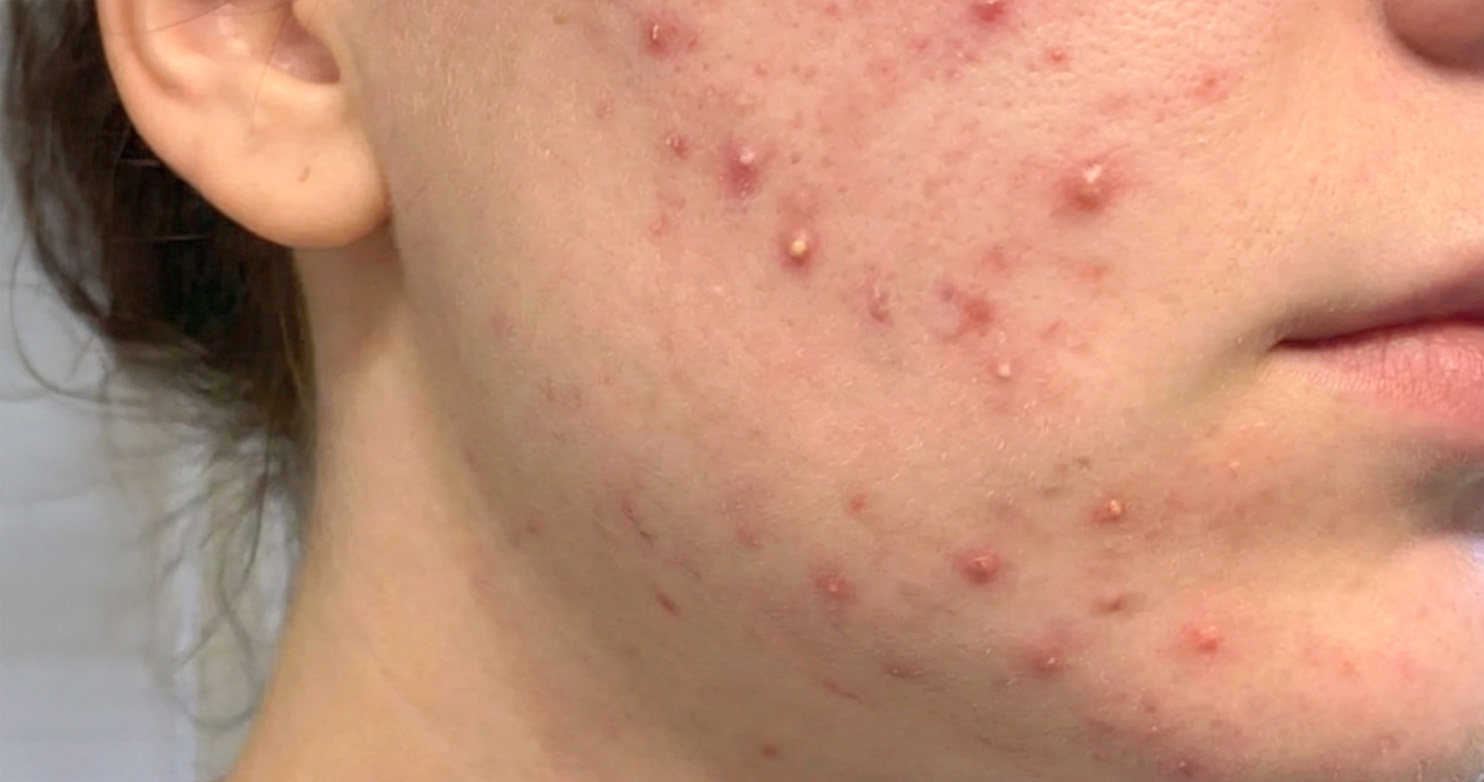
Pimples develop when dead skin cells and excess sebum clog the hair follicle, allowing Cutibacterium acnes to multiply inside it. The follicle wall becomes inflamed, and the result is a papule, pustule or, when the inflammation is deep, a nodule.
Energy devices interrupt that chain at different points. Sebum-selective lasers and photothermal treatments heat the sebaceous gland itself so that it produces less oil, which is the most durable effect in the trial data. Vascular lasers heat the dilated vessels feeding an inflamed pimple and dampen the redness. Blue light and photodynamic therapy act mainly on the bacteria and are short-lived unless repeated. No device eliminates acne; the useful question is how much and for how long each one reduces inflammatory lesions.
1726 nm sebum-selective laser (AviClear)
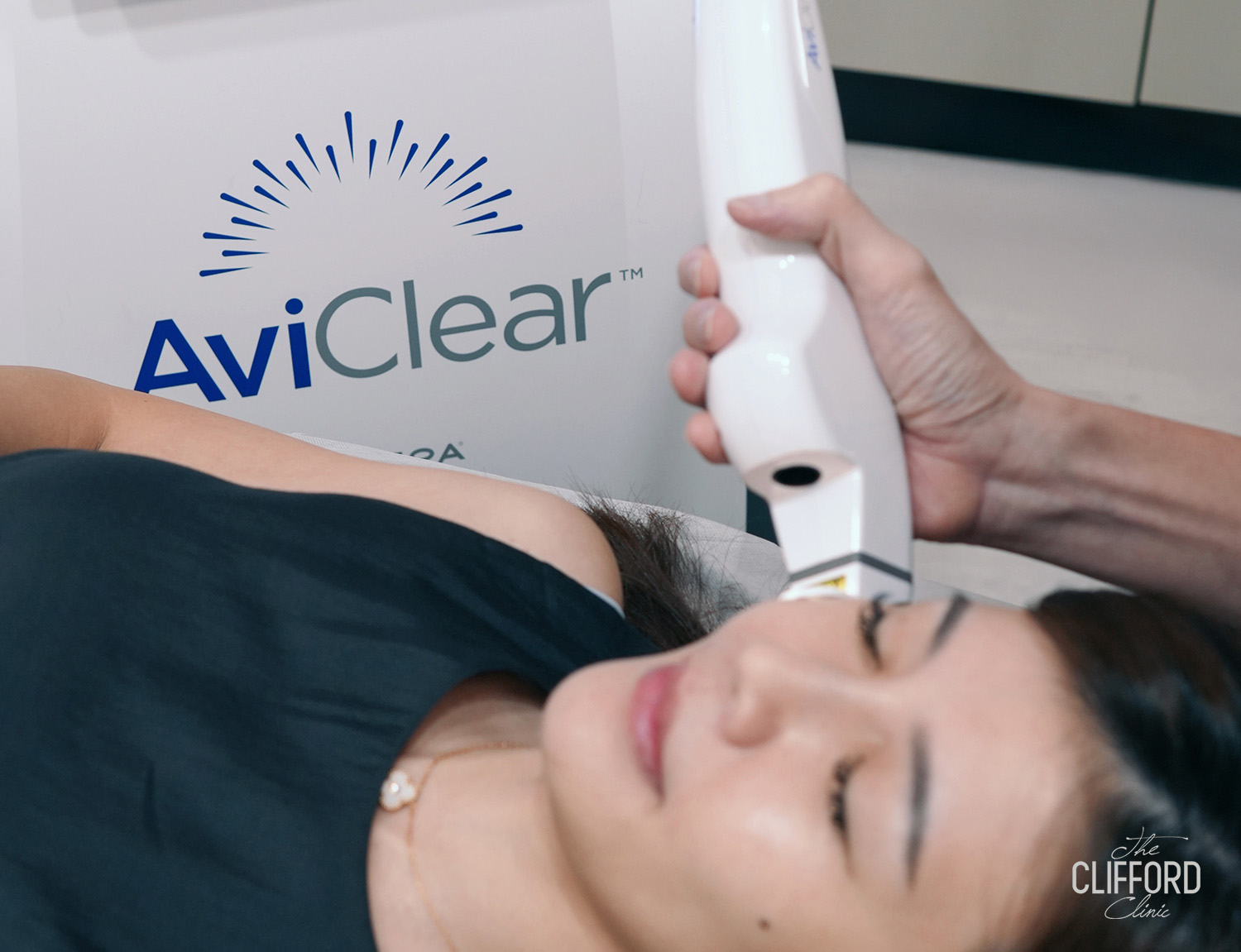
The 1726 nm wavelength is absorbed preferentially by sebum, so the laser heats the sebaceous gland while sparing the epidermis. In the pivotal multicentre trial of 104 patients with moderate-to-severe acne across skin types II to VI, three treatments about three weeks apart produced at least a 50% reduction in inflammatory lesions in 79.8% of patients at 12 weeks, 87.3% at 26 weeks and 91.5% at one year, with 66.2% clear or almost clear at one year. Side effects were limited to mild redness and swelling, and no blistering, crusting or pigment change was reported in any phototype in that trial. An independent series reported a 73 to 81% median lesion reduction to 12 months. At The Clifford Clinic this is one of three treatments that act on the gland itself. It has the largest published dataset of the three, and in our experience it is also the least comfortable. Its manufacturer lists pregnancy as a contraindication.
Gold photothermal therapy (Gold PTT)
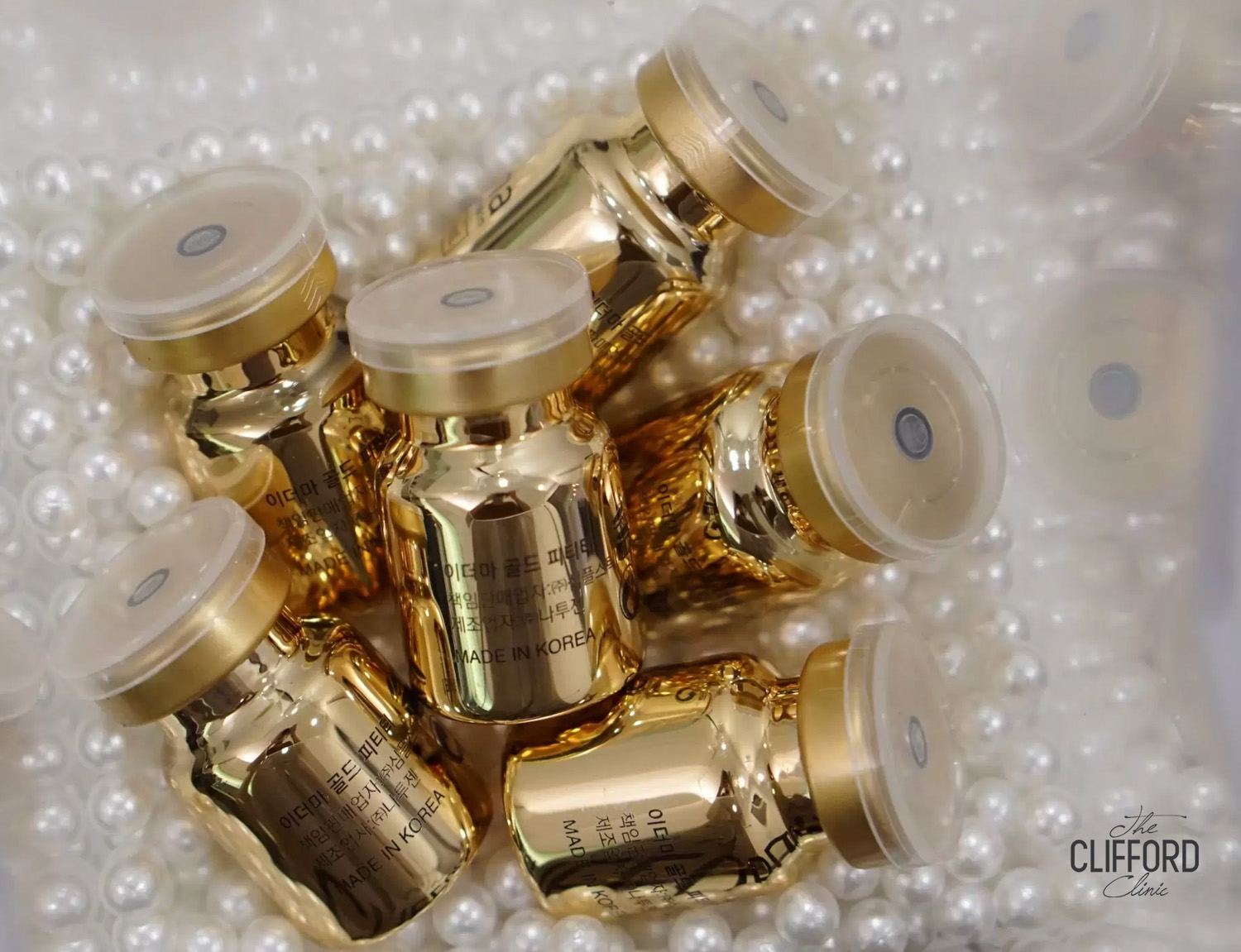
Gold PTT gets the heat into the gland a different way. Light-absorbing gold nanoparticles are driven into the pore and sebaceous gland with the Bellasonic 40 kHz LDM ultrasound, then activated with an 800 nm diode or 1064 nm long-pulsed laser so that the particles, not the skin, absorb the energy. The published trials describe these as gold microparticles; the term refers to the same class of light-absorbing gold-coated particle. A sham-controlled randomised trial of 51 patients found inflammatory lesions fell 53% against 30% with sham at 14 weeks after three treatments. An open-label European multicentre study found 76% of patients achieved at least a 40% lesion reduction after one course, with 89% of those maintaining it at 36 weeks. A multicentre study combining the particles with topical retinoids and a 1064 nm laser reported reductions of 55% at two months and 68% at twelve. A more recent series in Asian patients reported significant improvement, though its authors describe it as preliminary. Because it acts only where the particles sit, it is the option Dr Ee most often discusses with pregnant and breastfeeding patients — a personal clinical position, not a safety claim, and no device has pregnancy-specific evidence.
Selective sebaceous-gland radiofrequency (AGNES)
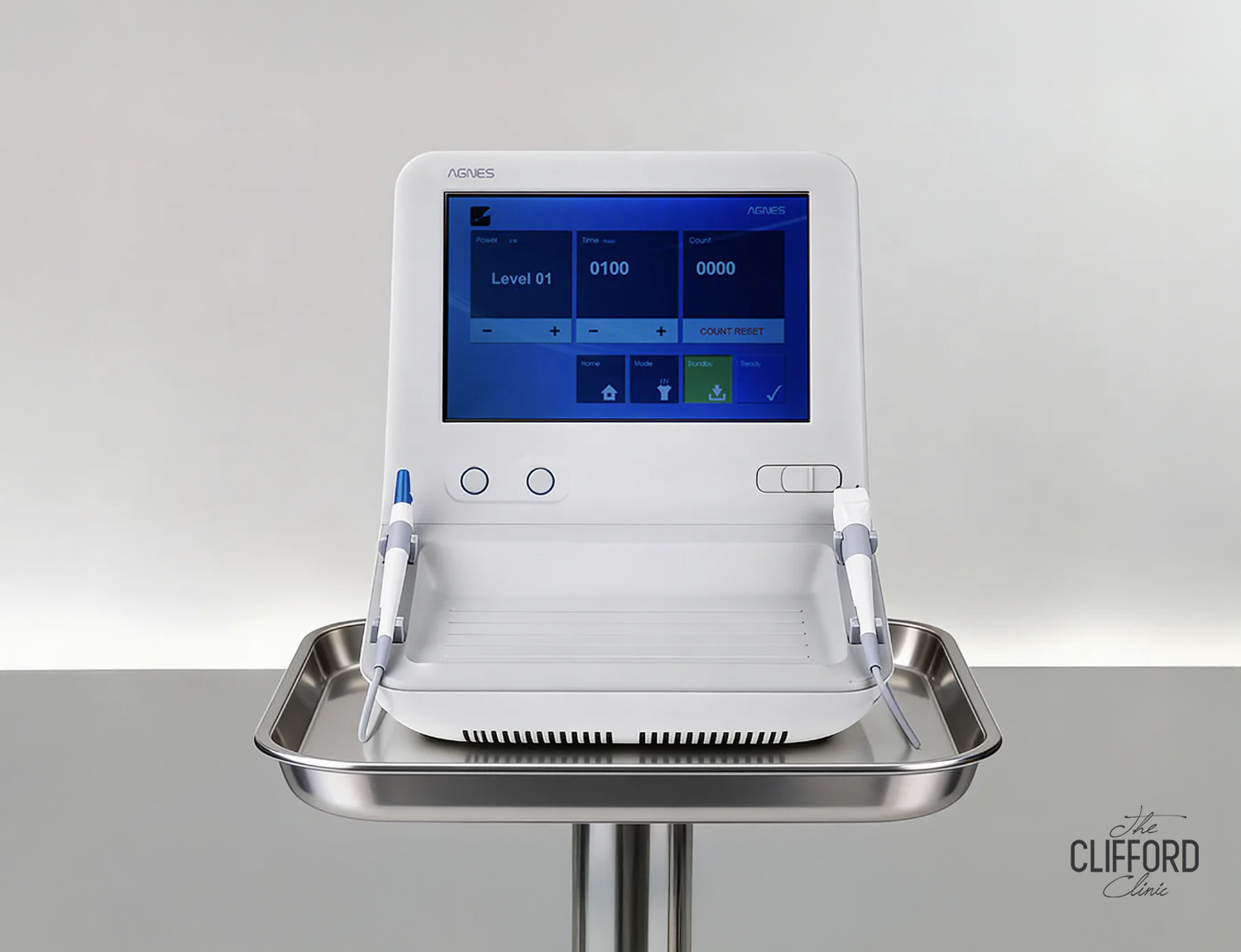
AGNES is not a laser but belongs in the same group: an insulated micro-needle delivers radiofrequency heat into an individual follicle’s sebaceous gland. In a randomised controlled trial of 63 patients, inflammatory lesions fell by 17.2 per patient with AGNES against 3.2 in the control group at 12 weeks. Its strength is precision, so it suits the person whose pimples keep returning in the same few pores rather than someone with diffuse oiliness. It is not usually the option discussed first in pregnancy.
Vascular laser (Vbeam 595 nm pulsed dye laser)
The 595 nm pulsed dye laser targets haemoglobin. A 2025 systematic review of vascular lasers for inflammatory acne found that they reduce inflammatory lesions and post-acne redness, but the studies are small and heterogeneous, so it is best regarded as an adjunct for red, inflamed acne rather than a gland-modifying treatment. It is also the laser we use for the flat red marks left after a pimple settles, which are post-inflammatory erythema — a vascular change rather than a pigment one.”
Q-switched 1064 nm laser
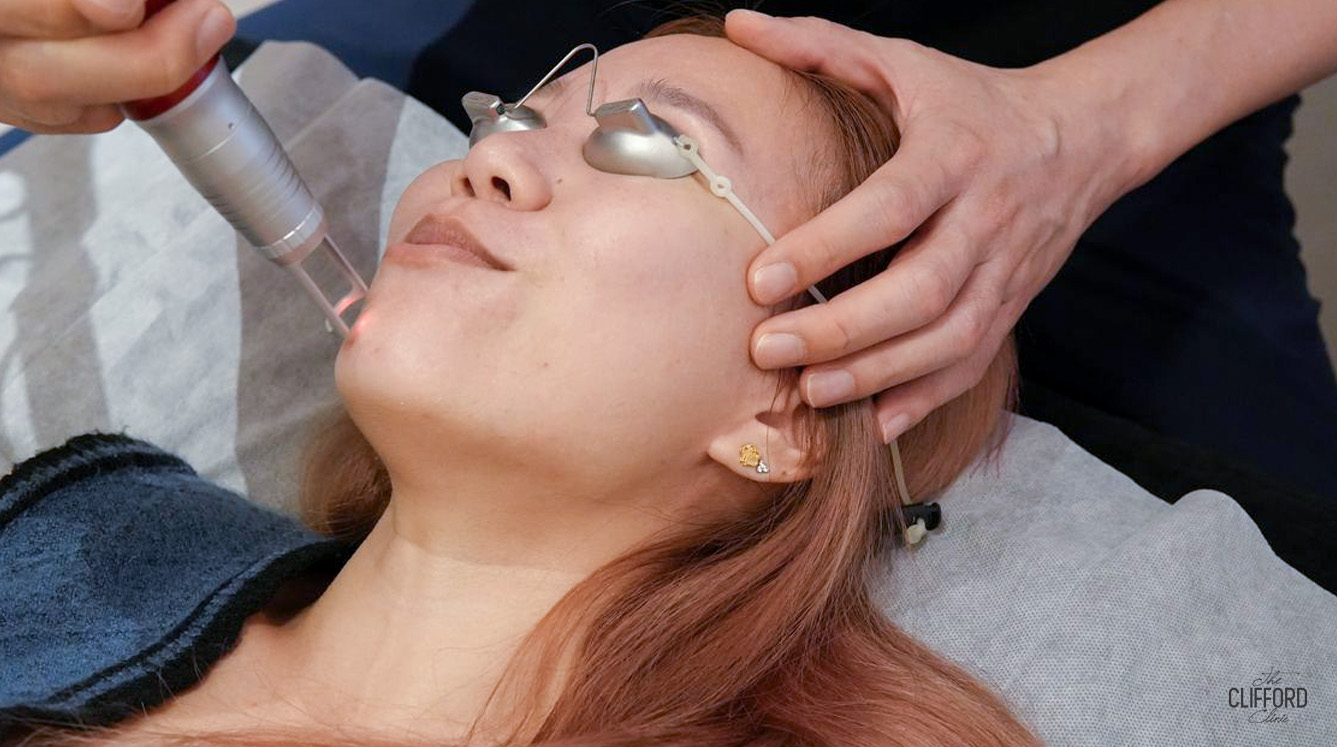
The Q-switch laser’s best-supported use in acne patients is the brown marks left after pimples heal. In a systematic review of laser treatment for post-inflammatory hyperpigmentation, 95% of laser-treated patients were rated as having good or excellent improvement, although the pooled studies were small and used different devices and rating scales. Its effect on active lesions is modest and the evidence sparse, so we use it for pigment and oil control in combination rather than as the main treatment.
LED, blue light and photodynamic therapy
The Cochrane review of light therapies for acne found limited evidence for most light-based treatments, with some benefit from photodynamic therapy using a photosensitiser. The 2024 Cochrane overview reached a similar conclusion, and a 2025 meta-analysis of at-home LED devices found small studies with short follow-up. The American Academy of Dermatology’s 2024 guideline says the evidence for devices in general is insufficient for a strong recommendation.
Laser treatment for active acne at a glance, with comparison table
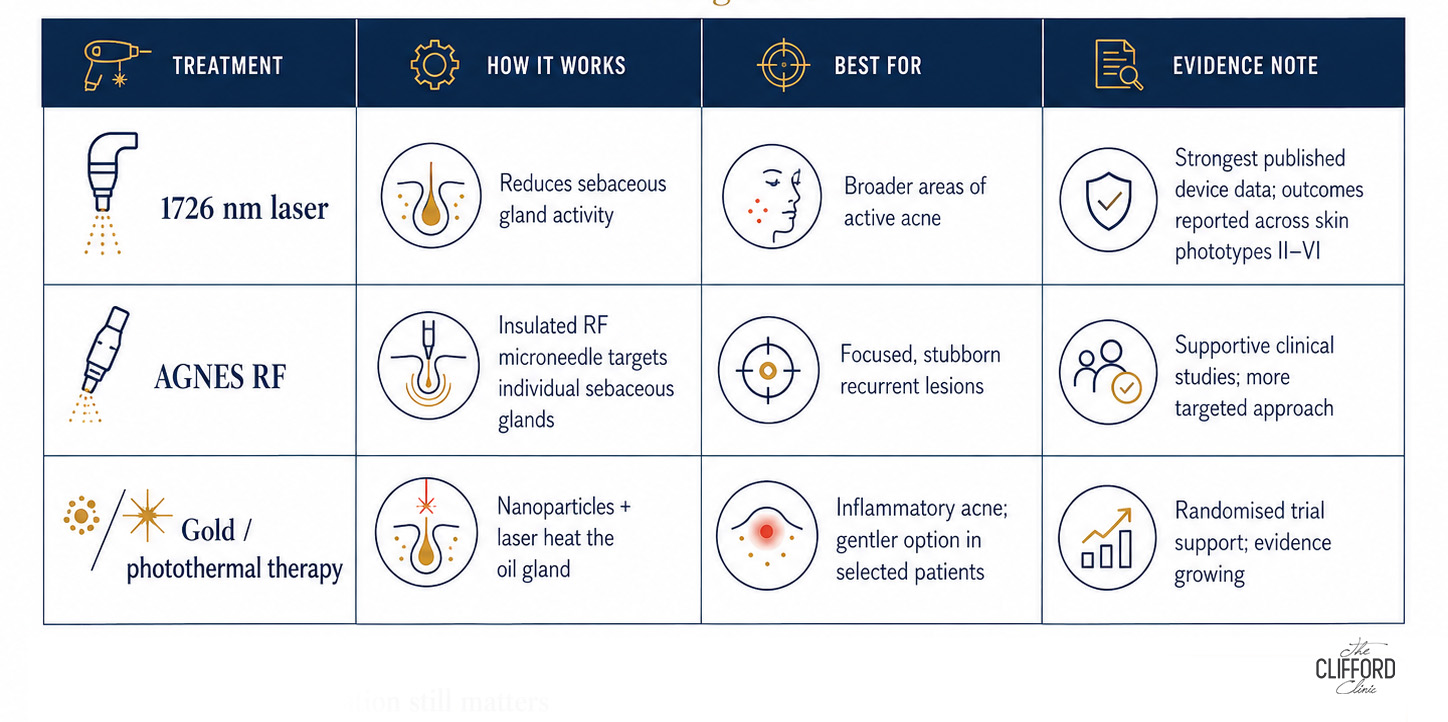
Two points sit behind the table. First, none of these devices replaces a topical retinoid, which remains the guideline’s foundation for treatment and maintenance. Second, the guideline’s caution about devices concerns the quantity of high-quality trials, not evidence of harm; the sebum-selective devices have the most complete published data, and the 1726 nm trial is the only one of the three to report outcomes across phototypes II to VI.
Laser treatment for pigmentation:
Lasers are also used for the redness and brown discolouration that remain after acne heals. Brown marks are post-inflammatory hyperpigmentation, extra melanin produced by the skin’s inflammatory response; they fade on their own over months, and a Q-switch or Pico laser speeds the process. Red marks are post-inflammatory erythema, a vascular change rather than a pigment one, and respond to Vbeam. Which laser suits which mark is explained on our laser for acne marks page.
Laser treatment for acne scars:
Lasers can also improve acne scars, but that is a different treatment on a different timetable: active acne is brought under control first, and the scars are then mapped by type, because most people have a mixture of rolling, boxcar and ice pick scars that respond to different procedures. The fractional CO2, Fraxel and Pico options are compared on our laser treatment for acne scars in Singapore page.
Types of Laser Treatments for Acne
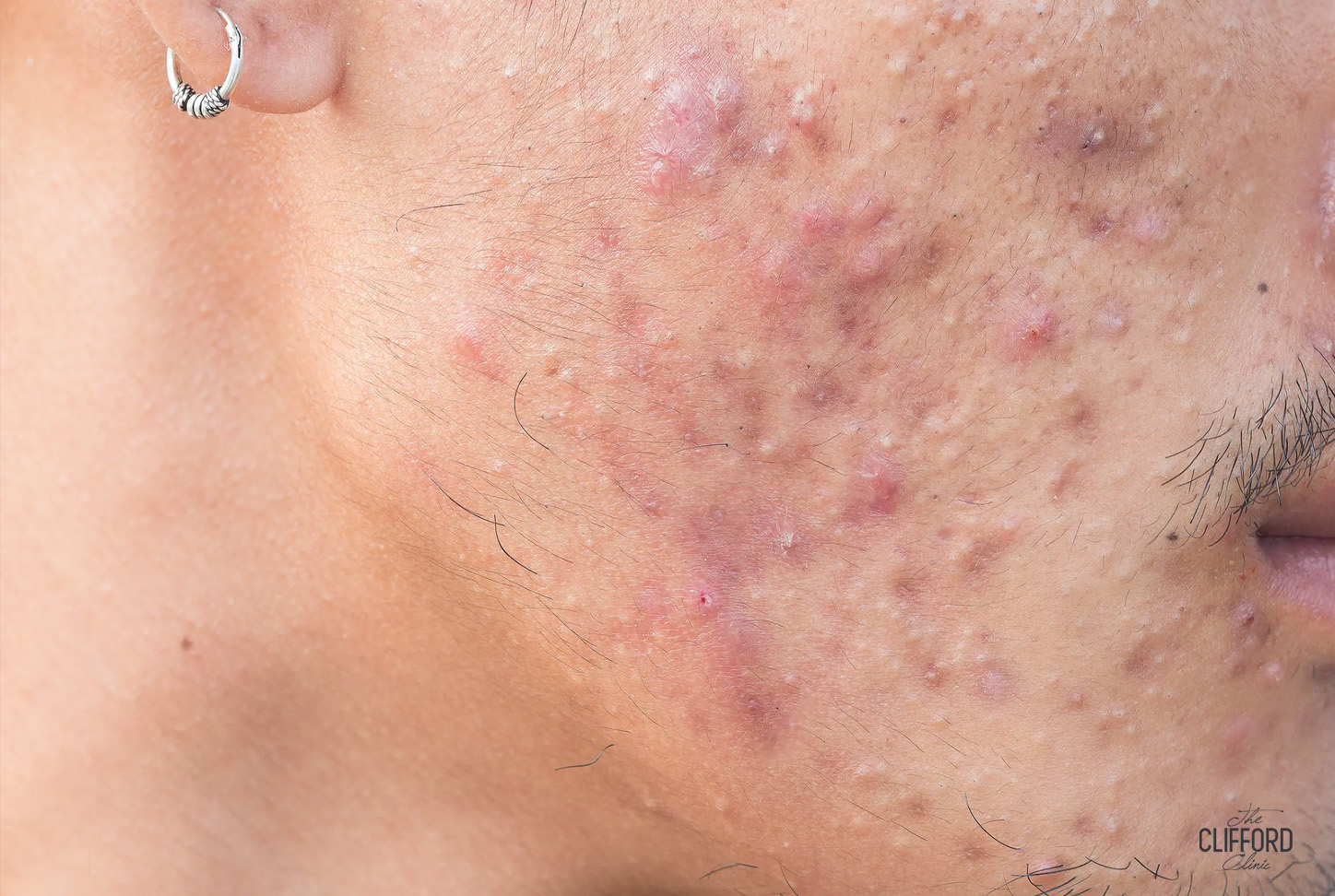
There are different laser treatments for acne available, depending on the patient and their individual skin concerns. The clinical applications of lasers vary in the wavelength and energy settings of the laser. Short, concentrated pulsating beams of light are delivered and accurately focused on the targeted areas of the skin. Some treatments require a few sessions over time before results are visible.
The three devices this article used to describe here — the Edge fractional CO2 laser, Fraxel and Infini radiofrequency microneedling — are scar-resurfacing tools that build collagen. They are not used on active pimples, and using them while acne is still inflamed raises the risk of pigmentation, so they belong to the scar stage of a plan.”
At The Clifford Clinic every device on this page is available under one roof, so the choice is made on your acne rather than on what a clinic happens to own. To find out which laser treatment for active acne suits you, book a consultation with Dr Gerard Ee and bring a list of the treatments you have already tried.
Frequently Asked Questions
Which laser is best for active acne?
For acne driven by oily skin, the best-evidenced devices are those that heat the sebaceous gland: the 1726 nm laser, where 91.5% of patients in a 104-patient multicentre trial achieved at least a 50% reduction in inflammatory lesions at one year, and gold-particle photothermal therapy. Vbeam suits red, inflamed acne, and Q-switch suits acne with brown marks. The right device depends on the pattern of your acne and whether you are pregnant or on medication.”
Can laser treatment stop acne from coming back?
No treatment guarantees that, but gland-directed devices produce the most durable results because they reduce sebum output rather than clearing the surface. In the 1726 nm trial, responses improved between 12 weeks and one year rather than fading, and 89% of gold-particle responders held their improvement at 36 weeks. Maintenance with a topical retinoid is still advised.”
How many laser sessions are needed for active acne?
Fewer than most people expect for gland-directed treatments: three sessions about three weeks apart for the 1726 nm laser, three to five sessions for Gold PTT, and two to three for AGNES. Vbeam, Q-switch and LED treatments are gentler per session and are given as a longer course.”
Is laser treatment for acne safe for Asian and darker skin?
The sebum-selective 1726 nm laser was tested in skin types II to VI with no blistering, scarring or pigment change reported in any phototype in that trial, and a review of radiofrequency treatments in types III to VI found only transient pigmentation. Vascular and pigment lasers need conservative settings in darker skin, which is why the device and its parameters are chosen at consultation rather than in advance.”
Can I have laser treatment for active acne while pregnant?
Some device treatments are discussed in pregnancy and some are not. Gold PTT is the option Dr Ee most often discusses with pregnant and breastfeeding patients — a personal clinical position, not a safety claim — because it acts only on the sebaceous glands where the gold particles have been placed. No device has pregnancy-specific evidence, and AviClear’s manufacturer lists pregnancy as a contraindication.”

Written by The Clifford Clinic editorial team. Medically reviewed by Dr Gerard Ee, MBBS, MRCS, Diploma in Practical Dermatology (Cardiff), Founder and Medical Director, The Clifford Clinic. Last medically reviewed and updated: September 2026.
Reference list
- Reynolds RV, Yeung H, Cheng CE, et al. Guidelines of Care for the Management of Acne Vulgaris. Journal of the American Academy of Dermatology. 2024;90(5):1006.e1–1006.e30.
- Alexiades M, Kothare A, Goldberg D, Dover JS. Novel 1726 nm Laser Demonstrates Durable Therapeutic Outcomes and Tolerability for Moderate-to-Severe Acne Across Skin Types. Journal of the American Academy of Dermatology. 2023;89(4):703–710.
- Goldberg D, Ronan S, Bhatia AC, et al. Safe and Effective Acne Treatment Across Skin Types with a 1726 nm Sebum-Selective Laser: One-Year Data from a Prospective Multicenter Study. Journal of the American Academy of Dermatology. 2026;94(2):517–524.
- Goldberg D, Kothare A, Doucette M, et al. Selective Photothermolysis with a Novel 1726 nm Laser Beam: A Safe and Effective Solution for Acne Vulgaris. Journal of Cosmetic Dermatology. 2023.
- Cutera. AviClear Important Safety Information. Accessed September 2026.
- U.S. Food and Drug Administration. Sebacia Microparticles: 510(k) Premarket Notification K181518. 2018.

Author Bio
Dr Gerard Ee

Dr Gerard Ee is the Medical Director of The Clifford Clinic in Singapore. He earned his medical degree from St George's University of London and built his surgical experience across the Singapore General Hospital, National University Hospital, and Mount Sinai Hospital in New York. He holds Membership of the Royal College of Surgeons (Edinburgh) and a Postgraduate Diploma in Dermatology (Cardiff), and is fully accredited in aesthetic procedures including botulinum toxin, fillers, lasers, and light therapies. A strong advocate of minimally invasive, natural-looking results, Dr Ee has published in several medical and scientific journals and presented his research in cities including Taipei, Las Vegas, and London.
See all posts by Dr Gerard Ee »