
Circumcision at KKH, NUH and Public Hospitals – Prices, Waiting Times and How to Choose
Circumcision is available through the public system in Singapore, and for many patients it is the most affordable route. KK Women’s and Children’s Hospital is the main centre for children, performing around 1,100 to 1,200 childhood circumcisions a year, almost all by carbon dioxide laser. National University Hospital provides circumcision for adults and older children through its urology department as a day surgery under local or general anaesthesia. Subsidised rates apply for eligible Singapore Citizens and Permanent Residents, and MediSave can be applied on top when there is a medical indication. The trade-offs are a referral requirement, longer waiting times, and no choice of surgeon. A private Ministry of Health-accredited Day Surgery Centre such as The Clifford Surgery costs more at S$1,888 before GST but offers a shorter waiting time, scheduling around school or work, and one doctor throughout. For the complete overview, see our Circumcision Singapore guide.

How the public route works
The public pathway is referral-led.
You normally start with a general practitioner or a polyclinic. The doctor examines the area, decides whether there is a genuine clinical problem such as a tight foreskin or recurrent foreskin infection, and issues a referral to the relevant hospital department. Children are referred to a paediatric surgery or paediatric urology service, and adults to a urology service.
At the hospital, there is a specialist consultation, where suitability is confirmed, and the procedure is planned and scheduled. The operation itself is done as day surgery, so the patient goes home after the circumcision. A follow-up appointment is arranged to check that the healing in on track.
Circumcisions done for religious, cultural or cosmetic reasons are treated differently. Subsidies and MediSave are built around medical need, so a request with no clinical indication is a weaker case for the public route and may be declined or deprioritised.
KKH for children
KK Women’s and Children’s Hospital is the highest-volume childhood circumcision provider in Singapore, carrying out around 1,100 to 1,200 procedures a year, with the carbon dioxide laser used for almost all of them.
The published outcomes are strong. KKH reports that no complications occur in more than 97.5 percent of its procedures, and that bleeding after the procedure, the most common problem, occurs in only 1.82 percent of cases.
For infants, toddlers and young children, this is the setting to prefer. Young children generally need general anaesthesia to stay still and comfortable, and that is best delivered with paediatric anaesthetic support in a paediatric hospital. Any private clinic that offers to circumcise a very young child in a basic clinic room, without that support, is not the right choice for your son. The Clifford Surgery treats boys from the age of 6 for exactly this reason, and refers younger children onward.
NUH for adults
National University Hospital provides circumcision through its Department of Urology. It notes that the procedure is carried out as a day surgery, either under general anaesthesia or local anaesthesia, and that painkillers and wound medication are prescribed afterwards. It also notes that the local anaesthetic wears off after roughly six to eight hours, which is when the first dose of painkiller should be taken.
The reasons NUH lists for circumcision in men are the familiar ones, a tight foreskin, recurrent foreskin infections, and social or religious grounds. Other restructured hospitals provide similar urology-led services.
For adults with complicating factors, this is a genuinely good route. If you have significant other medical conditions, are on blood thinners, have unusual anatomy, or need specialist input beyond the procedure itself, a full hospital has resources a Day Surgery Centre does not.
What subsidised care costs
Public hospital pricing depends on your citizenship status, the ward or day surgery class you choose, whether you are referred as a subsidised or private patient, the type of anaesthesia, and the specific procedure code. That is why no single price can be quoted accurately for everyone.
What you can do is check the official figures yourself. The Ministry of Health publishes fee benchmarks and total bill information for circumcision procedures under the surgical code SH808P, covering all cost components inclusive of GST. That page is the most reliable source for what public circumcision costs, and it is worth reading before comparing any private quote.
MediSave sits on top of this. Circumcision is a day surgery procedure, so MediSave can be withdrawn within set limits when there is a medical indication such as a tight foreskin, which is the most common medical reason for adult circumcision at around 52.5 percent of cases in one large study. The exact withdrawal limits should be confirmed at the point of care, since figures quoted online vary and are periodically revised.
Waiting times and referrals
Waiting time is the real cost of the public route, and it comes in three parts.
First, the wait for the specialist appointment after your referral. Second, the wait between that consultation and the scheduled operating date. Third, the constraint that the date you are given may not fall where you want it, which matters if you are planning around school holidays or a work project.
For a non-urgent, elective circumcision, these waits can be substantial, because urgent cases are prioritised ahead of you. For genuinely urgent problems, such as an episode of paraphimosis where the foreskin is trapped behind the head of the penis and the head is swelling, you should attend an emergency department immediately rather than wait for any elective pathway.
You are also unable to choose your surgeon in the public system, and the doctor who consults may not be the one who operates. For many patients, this is a fair trade for subsidised care. For others, it is the deciding factor.
When the public route is the right choice
Choose the public route when your son is an infant or a young child needing general anaesthesia, when the patient has other significant medical conditions, when the anatomy is complex, or there is a congenital abnormality. For these cases, a urologist or paediatric surgeon should be closely involved, and subsidised cost matters more than timing.
A responsible private clinic will tell you when you fall into this group. Turning away a case that belongs in a hospital is part of practising properly, not a lost sale.
When a private Day Surgery Centre fits better
A private Ministry of Health-accredited Day Surgery Centre suits a different profile. It fits healthy adults and boys aged 6 and above with straightforward anatomy, where the priorities are timing, continuity and discretion.
The practical differences are short waiting times, the ability to book around the June and December school holidays or a quiet work period, one doctor who handles the consultation, the procedure and the aftercare, and a private setting throughout. It is also a properly equipped surgical environment, more sterile than a basic clinic room and equipped to control bleeding, which makes it the safer choice for circumcision.
At The Clifford Surgery the professional fee is S$1,888 before GST, the consultation is S$100 before GST and waived if you proceed, follow up is included, medication is charged separately, and light sedation is available as an optional add on. Our guide to where to get circumcision in Singapore compares all three settings.

Comparing your real out-of-pocket cost
Comparing a public and a private quote fairly means comparing the same things.
Ask what the quoted figure covers, whether the consultation is charged separately or waived if you proceed, whether medication, dressings and follow-up are included, how much sedation or general anaesthesia adds, and whether GST is included in the stated number. Then ask how much MediSave is likely to offset in your specific case, and whether insurance applies.
For families, add one more question. The Baby Bonus Child Development Account can pay the clinic bill at an Approved Institution and does not require a medical reason, which changes the arithmetic considerably for an elective childhood circumcision. Our MediSave, insurance and Baby Bonus guide sets out how the sources stack.
Whichever setting you choose, circumcision is safe when properly performed. A Cochrane review of 18 randomised trials reported no severe adverse events with either device-based or conventional techniques. The decision is about fit, not about safety.
A note from the clinic
“We send patients to the public hospitals regularly, and we say so openly. If a child is very young, or a case is complex, KKH or NUH is the better place for him. What we offer is a properly equipped theatre, a short wait, and the same doctor from the first consultation to the last review. That suits a lot of people, and it does not suit everyone.”
Frequently asked questions
How much does circumcision cost at KKH?
The figure depends on citizenship status, subsidy eligibility, class of care and anaesthesia. The Ministry of Health publishes fee benchmarks and total bill data for circumcision under code SH808P, which is the most reliable source.
Is public hospital circumcision cheaper than private?
For eligible subsidised patients, it is usually cheaper. The trade-offs are waiting times, a referral requirement, and no choice of individual surgeon.
Do I need a referral for KKH or NUH?
Generally yes. The usual route is a general practitioner or polyclinic referral to the relevant hospital department.
How long is the wait in the public system?
For an elective, non-urgent circumcision, the wait can be significant, since urgent cases take priority. Ask for a current estimate at the point of referral.
Which hospital does children’s circumcision in Singapore?
KK Women’s and Children’s Hospital is the main centre, performing around 1,100 to 1,200 childhood circumcisions a year, almost all using the carbon dioxide laser.
Can adults get circumcised at NUH?
Yes. National University Hospital provides circumcision through its urology department as a day surgery under local or general anaesthesia.
Can I use MediSave at a public hospital?
Yes, within set limits, when there is a medical indication such as a tight foreskin. Confirm the current limits at the point of care.
Is the public system safe?
Yes. KKH reports no complications in more than 97.5 percent of its procedures, with post-procedure bleeding in 1.82 percent of cases.
Why would I pay private if public is subsidised?
Usually for timing, continuity of doctor, and the ability to schedule around school or work. If cost is the priority and you can wait, the public route is sensible.
My son is under 6, where should he go?
A paediatric hospital setting. Younger children generally need general anaesthesia with paediatric support, which is why The Clifford Surgery treats boys from age 6 and refers younger children onward.
Book a consultation
If you are weighing the public route against a private Day Surgery Centre, a consultation gives you the two things you need, a clear clinical opinion on whether surgery is needed at all, and an itemised figure so you can compare honestly.
Book a consultation at The Clifford Surgery
Related guides
- Circumcision Singapore, the complete guide
- Where to get circumcision in Singapore
- MediSave, insurance and Baby Bonus
- Circumcision for boys, the age guide
- Circumcision techniques compared
Medical review box
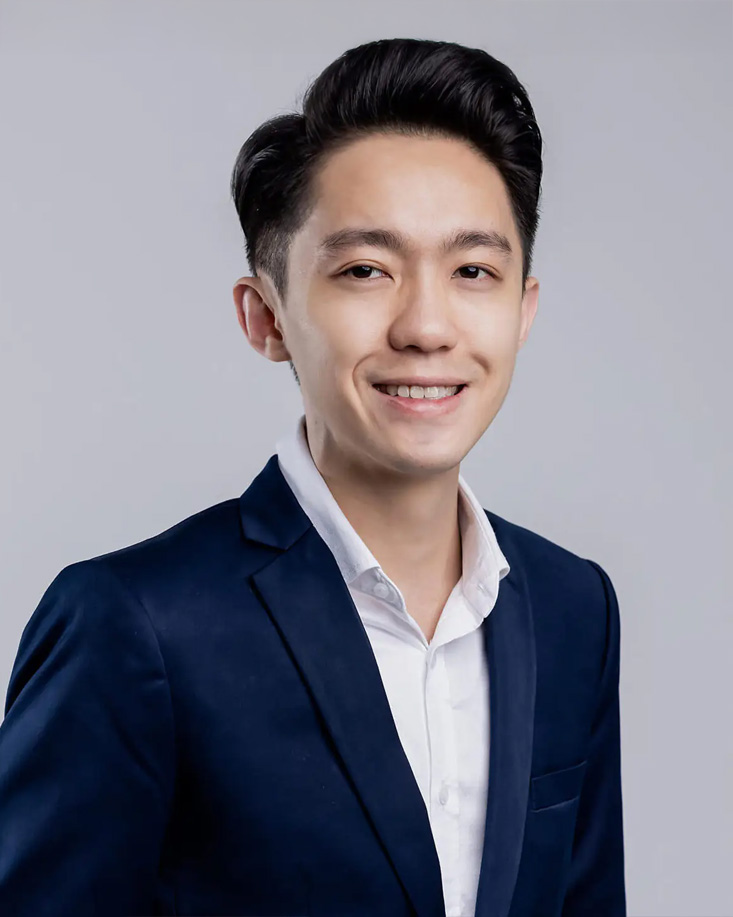
This article is written by Dr Law Zhi Wei of The Clifford Surgery. Dr Law is a Singapore-trained doctor with more than five years of surgical posting experience. He graduated from the National University of Singapore with an MBBS and holds Membership of the Royal College of Surgeons of Edinburgh, a Graduate Diploma in Family Medicine, and a Postgraduate Diploma in Practical Dermatology from Cardiff University. He trained in the Urology Department at Singapore General Hospital, where he performed hundreds of circumcisions, and completed rotations in urology, general surgery, and paediatric surgery at KK Women’s and Children’s Hospital, Sengkang General Hospital, and Changi General Hospital. He has personally performed more than 500 circumcisions across the conventional, laser-assisted, Shang Ring, and ZSR Stapler techniques. The Clifford Surgery operates a sterile surgical theatre as a Ministry of Health-accredited Day Surgery Centre, supported by the dedicated Urology Department led by Dr Nathaniel Heah. It is a CPF and MediSave accredited, CDA-approved medical institution. We assist with hospital insurance claims where there is a medical indication. This content is general information and not a substitute for a personal consultation.
Dr Law Zhi Wei profile, https://cliffordclinic.com/dr-law-zhi-wei/
Clinical research and publications, https://cliffordclinic.com/clinical-research/
References
- Ministry of Health Singapore, TOSP SH808P bill information. https://www.moh.gov.sg/managing-expenses/bills-and-fee-benchmarks/cost-financing/tosp-sh808pless-than-6m-bill-information/
- National University Hospital, Services for Circumcision. https://www.nuh.com.sg/care-at-nuh/services/department-of-urology/services-for-circumcision
- KK Women’s and Children’s Hospital, Laser circumcision outcomes. https://www.kkh.com.sg/about-kkh/who-we-are/clinical-outcomes/laser-circumcision-outcomes
- SingHealth, Circumcision for children. https://www.singhealth.com.sg/symptoms-treatments/circumcision-children-surgeries
Medical evidence references
- Hohlfeld A, Ebrahim S, Shaik MZ, Kredo T. Circumcision Devices Versus Standard Surgical Techniques in Adolescent and Adult Male Circumcisions. The Cochrane Database of Systematic Reviews. 2021. https://www.cochranelibrary.com/cdsr/doi/10.1002/14651858.CD012250.pub2/full
- Friedman B, Khoury J, Petersiel N, et al. Pros and Cons of Circumcision, An Evidence-Based Overview. Clinical Microbiology and Infection. 2016. https://pubmed.ncbi.nlm.nih.gov/27497811
- Nabavizadeh B, Li KD, Hakam N, et al. Incidence of Circumcision Among Insured Adults in the United States. PLoS One. 2022. https://pubmed.ncbi.nlm.nih.gov/36251658

Author Bio
Dr Gerard Ee

Dr Gerard Ee is the Medical Director of The Clifford Clinic in Singapore. He earned his medical degree from St George's University of London and built his surgical experience across the Singapore General Hospital, National University Hospital, and Mount Sinai Hospital in New York. He holds Membership of the Royal College of Surgeons (Edinburgh) and a Postgraduate Diploma in Dermatology (Cardiff), and is fully accredited in aesthetic procedures including botulinum toxin, fillers, lasers, and light therapies. A strong advocate of minimally invasive, natural-looking results, Dr Ee has published in several medical and scientific journals and presented his research in cities including Taipei, Las Vegas, and London.
See all posts by Dr Gerard Ee »