


Breast Implant Placement and Scars, Over or Under Muscle, Dual Plane and Incisions
Where the implant sits (the pocket, or placement) and where the incision is made are two separate surgical decisions, although patient information often presents “under the muscle,” “through the nipple” and “through the armpit” as a single list of options. Most incision routes can in fact serve several placements, and each decision carries its own trade-offs. This guide separates them, as part of our full resource on breast augmentation with implants in Singapore.
Decision 1. Implant placement
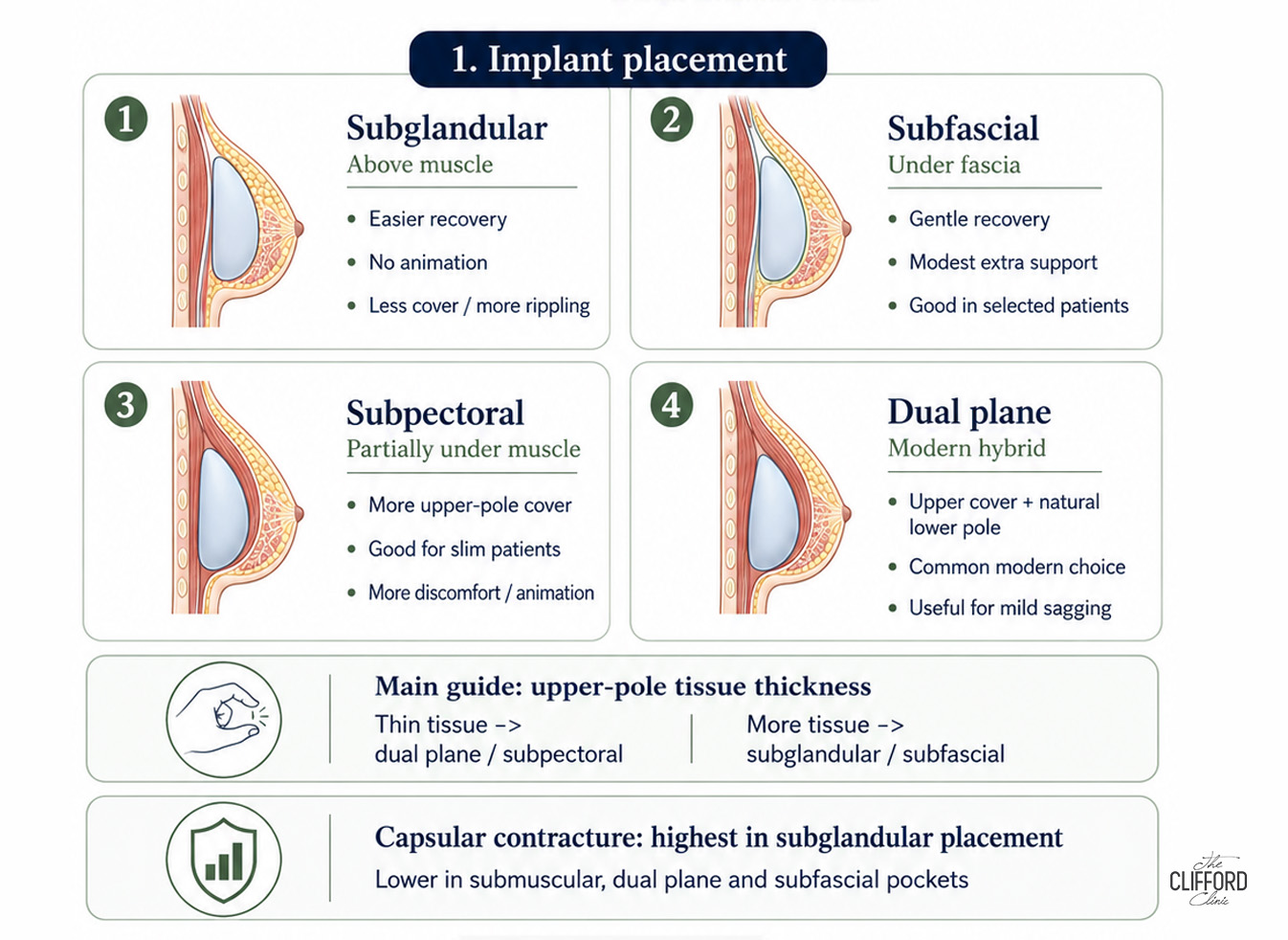
Subglandular placement, above the muscle
The implant sits behind the breast gland and in front of the pectoral muscle. Recovery is often more comfortable because the muscle is left undisturbed, and there is no animation, meaning the implant does not move when the muscle contracts. The trade-off is coverage. Where soft tissue is thin, the gland alone provides little camouflage, so implant edges and rippling are more likely to be seen or felt, and the implant may interfere slightly more with some mammographic views.
Subfascial placement, under the muscle fascia
The implant sits beneath the thin fascia overlying the pectoral muscle but above the muscle itself. This intermediate option adds a modest layer of support without dividing the muscle, so it preserves the gentler recovery of over-muscle placement while recruiting a little additional cover. It suits selected patients whose tissue coverage is already reasonable.
Subpectoral placement, partially under the muscle
The upper implant is covered by the pectoral muscle, which adds soft-tissue camouflage where it matters most, at the upper pole. This is often the recommendation for slim patients. The trade-offs are more early post-operative discomfort, because the muscle has been elevated, and possible animation deformity, meaning visible implant movement or distortion when the muscle contracts. Animation is most relevant to patients who train the chest heavily.
Dual plane placement, the modern hybrid
The muscle covers the upper implant while the lower pole sits directly behind the gland, which allows the lower breast to expand naturally over the implant rather than being held flat by muscle. Dual plane placement combines upper-pole camouflage with a natural lower-pole shape, and it is widely used in modern practice, particularly where there is mild sagging or a tight lower pole.
Upper-pole tissue thickness is the largest single driver of the choice. Thin coverage favours dual plane or subpectoral placement, whereas generous coverage opens the subglandular and subfascial options. Breast shape, degree of ptosis, implant choice and exercise habits then refine the decision. The published evidence supports this hierarchy. In pooled analyses covering tens of thousands of augmentations, wholly subglandular placement carries the highest capsular-contracture rate at around 6.9%, while submuscular placement (approximately 1.8%), dual plane (approximately 2.0%) and subfascial placement (approximately 2.8%) perform substantially better. These figures were confirmed most recently by a 91-study meta-analysis of more than 51,000 patients (Shen et al., JPRAS, 2019). The same hierarchy appears in Yuan et al., Aesthetic Surgery Journal, 2024, and in Alderhali et al., Aesthetic Plastic Surgery, 2026. The dual-plane approach itself was formalised by Tebbetts (Plastic and Reconstructive Surgery, 2006), whose principle is to tailor the pocket to the breast rather than the breast to a standard pocket, and that is the principle Dr Naidu applies. A simple bedside measure guides much of this, the pinch test. Where more than two centimetres of soft tissue can be pinched over the upper pole, over-muscle placement becomes realistic. Below that threshold, muscle coverage is generally favoured, because thin coverage is what makes implant edges visible and palpable. Published series in very thin patients have combined muscle and fascial-flap coverage to achieve implants that were neither visible nor palpable at follow-up. As Dr Naidu explains, “For thin or athletic patients with limited breast tissue, I generally favour a dual-plane placement. This provides additional muscle coverage over the upper part of the implant, helping to reduce visible edges and rippling.”
Decision 2. Incision route
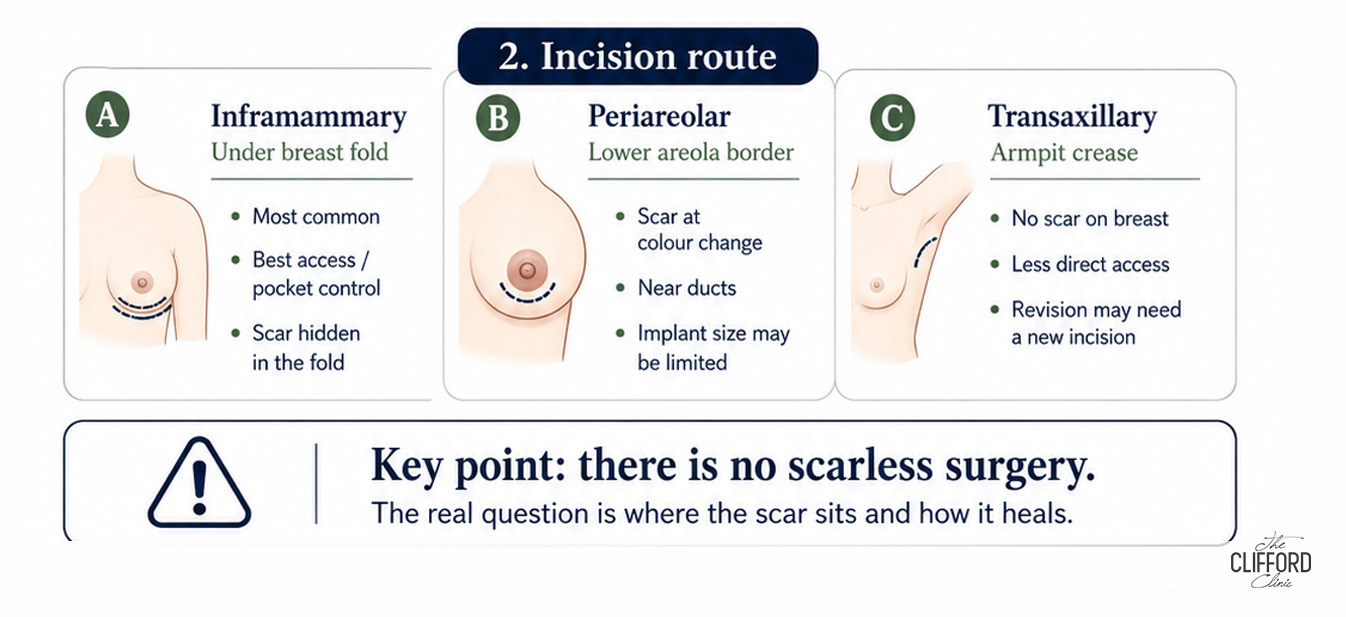
Inframammary incision, under the breast
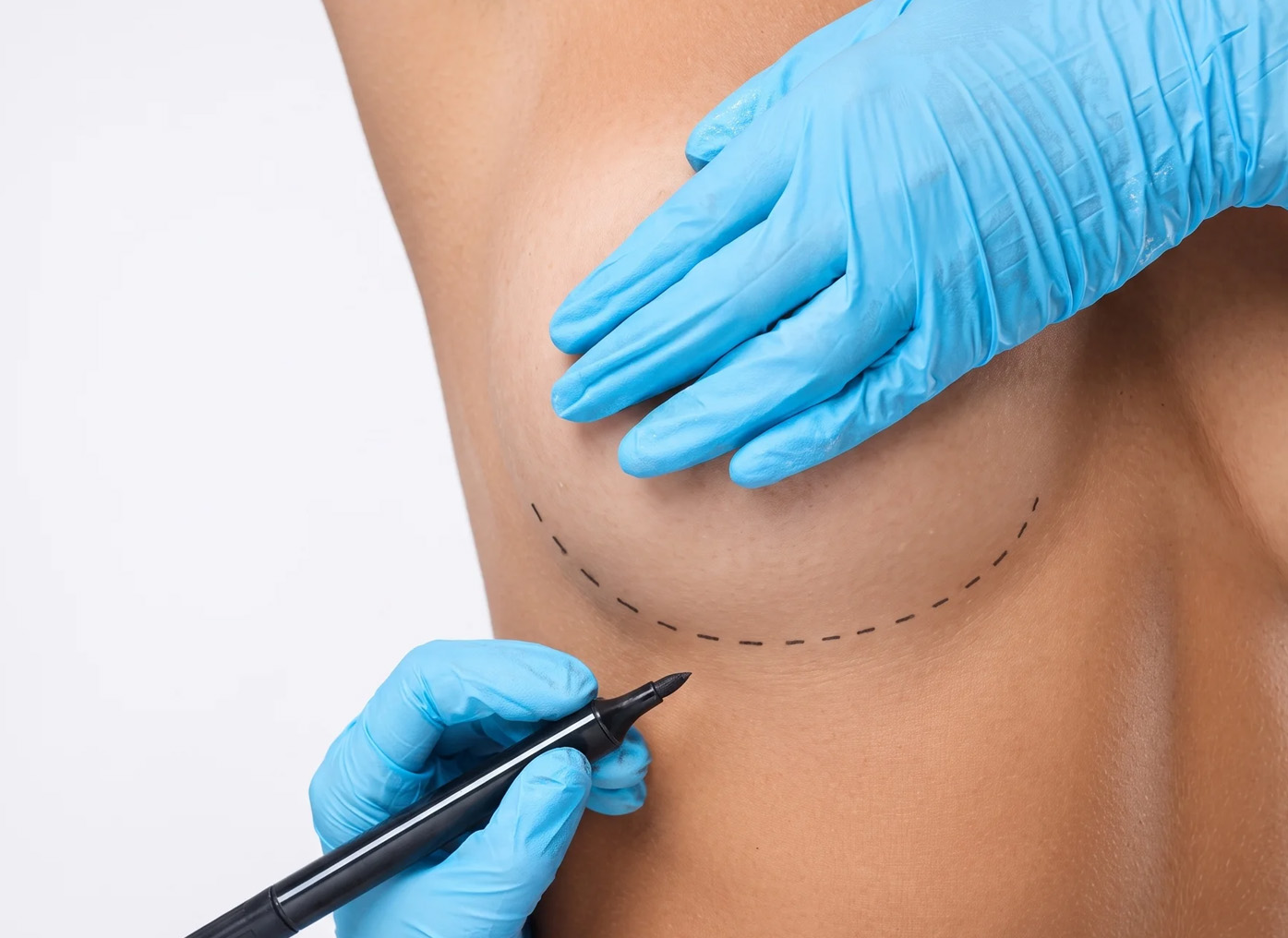
The incision is placed in the crease beneath the breast, which is the most commonly used route worldwide. It gives the surgeon the most direct access and the greatest control over the pocket, accommodates any implant type and placement, and can be reused for future revision without creating a second scar. The scar sits in the fold, where it is generally concealed within the natural crease, in bras and in swimwear.
Periareolar incision, around the lower areola
The incision runs along the lower border of the areola, placing the scar at the colour transition where it often heals inconspicuously. The route passes closer to milk ducts and glandular tissue than the other two, which is a relevant discussion point for patients planning to breastfeed, as covered in breastfeeding, pregnancy and mammograms. Areola size also limits the implant size that can be inserted through it.
Transaxillary incision, through the armpit
The incision is hidden in an armpit crease, leaving no scar on the breast itself. Access is more remote, so pocket dissection is less direct, revision surgery usually requires a different incision, and the route suits particular implant selections. It remains an appropriate option for the patient who strongly prefers no breast scar and whose anatomy and implant choice allow it.
Claims of scarless surgery warrant scepticism, because every incision leaves a scar. The useful questions are where the scar sits, how it tends to mature, and what scar care is advised, rather than whether a scar exists at all.
Animation deformity and the trade-off for patients who train
When an implant sits partly beneath the pectoral muscle, contracting that muscle, for example when pressing the palms together, performing push-ups or doing chest flies, can visibly move or briefly distort the implant. For most patients the effect is subtle and irrelevant to daily life. For patients who train the chest seriously, or whose work involves sustained upper-body effort, it warrants a deliberate conversation. The options are subfascial or subglandular placement where tissue coverage allows, an adjustment of expectations, or acceptance of mild animation as the price of better upper-pole camouflage. The decision should be made with the trade-off stated in advance rather than encountered months after surgery. “I also explain that patients with strong pectoral muscles may notice some movement of the breast during forceful chest contraction, so the choice of plane still has to be individualised,” says Dr Naidu. Patients with thin soft-tissue coverage are commonly considered better suited to submuscular or dual-plane placement, and that conversation belongs before surgery. The published data support this individualised approach. In a survey of 81 fitness competitors with breast implants, pectoral strength was largely unaffected or improved after augmentation regardless of plane, and satisfaction was high both at rest (92.6%) and during training (79.0%). Implant movement during pectoral exercises was, however, 2.5 times more likely with fully submuscular placement. For athletes with generous tissue coverage, that finding tilts the discussion toward muscle-sparing planes. For lean athletes with a thin pinch test, coverage still takes precedence. The decision is tissue-driven rather than activity-driven.
How placement affects recovery, contracture and future surgery
Placement choices carry consequences beyond appearance.
- Muscle-involving placements, meaning subpectoral and dual plane, are typically tighter and more uncomfortable in the first week, with a slightly longer return to upper-body exercise. Subglandular and subfascial recoveries are often gentler in the early period.
- Capsular contracture.Published series have generally associated submuscular placement with lower contracture rates than subglandular placement, although technique, implant surface and surgical protocol all contribute. No single number should be quoted without the context of the study that produced it.
- Submuscular placement tends to interfere less with mammographic views than subglandular placement, which is a genuine long-term consideration for patients of screening age. This is covered in our screening guide.
- Future revision.Pockets can be converted later, and conversion from subglandular to dual plane is a common revision manoeuvre when coverage thins with age, but each conversion is additional surgery. Choosing the plane that anticipates the future state of the tissue, rather than only its present state, is part of sound planning.
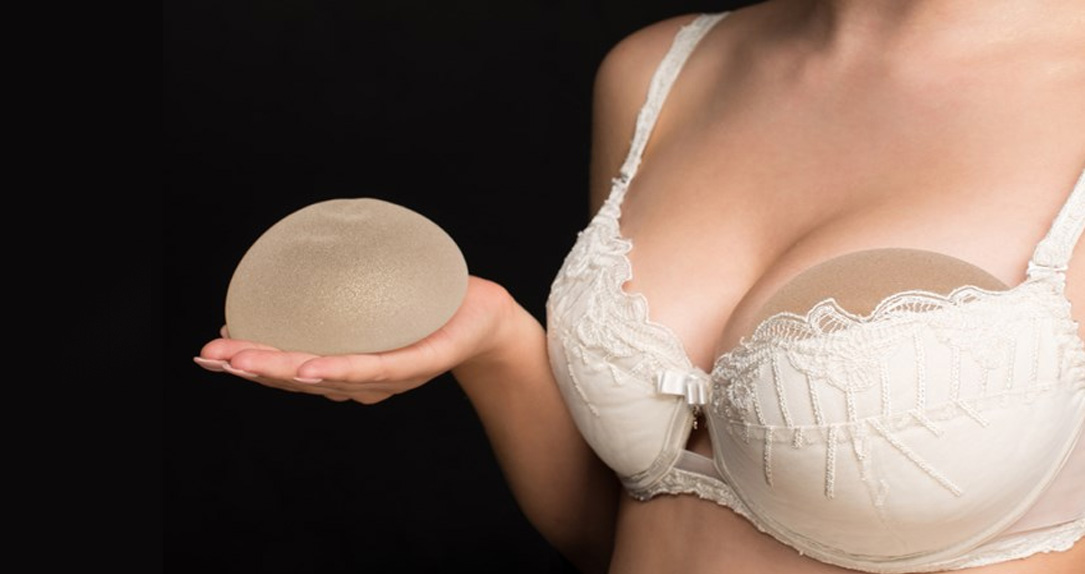
How placement and incision combine
A dual-plane pocket is most commonly created through an inframammary incision. Subglandular pockets can be approached through any of the three routes, whereas transaxillary access pairs with specific pocket and implant choices. The surgeon should be able to explain not only which combination is recommended, but why the alternatives were set aside for that patient’s anatomy.
Recovery differences by plane
Breast Implant Placement and Recovery Compared
| Aspect | Subglandular / Subfascial | Subpectoral / Dual Plane |
|---|---|---|
| Early Discomfort | Generally milder | Tighter, with muscle-related soreness in the first week |
| Return to Desk Work | Often marginally sooner | Within the normal window, sometimes a day or two later |
| Upper-Body Exercise | Standard staged return | Chest-specific training cleared last |
| Early Implant Position | Settles relatively quickly | Rides higher initially, then settles as the muscle relaxes over weeks |
| Long-Term Coverage | Depends on existing tissue thickness | Muscle supplements thin tissue at the upper pole |
Individual experience varies, and placement is only one input among several, but recovery forms part of the trade-off between planes rather than appearance alone.
Why pocket precision matters as much as pocket choice
Two patients can receive the same implant in the same plane and obtain different results, because the pocket itself is made by hand. Its width controls cleavage and side-fullness, its lower border sets the fold position, where imprecision underlies bottoming-out and fold asymmetries, and its symmetry between the two sides underpins the final balance. Modern technique favours precise, minimally traumatic dissection over blunt force, which gives better bleeding control, less drain use and gentler recoveries. This is the substance behind the advice to choose the surgeon rather than only the implant, since the device is manufactured to tolerance whereas the pocket is made once, individually. A prospective surgeon can reasonably be asked how fold position and pocket symmetry are controlled, and the specificity of the answer is itself informative. Dr Naidu’s own policy is direct, “For uncomplicated primary breast augmentation, I do not routinely use drains. Careful pocket creation and meticulous control of bleeding are more important. Current reviews have not demonstrated a clear benefit from routinely placing drains in primary augmentation, and drains can add discomfort and a potential route for infection.”
Questions worth asking a surgeon about placement and incision
The following questions are worth raising at consultation, because the answers reveal both the plan and the reasoning behind it.
- Which plane do you recommend for my tissue, and what specifically about my measurements drives that recommendation?
- What would make you choose differently, and did you consider the alternatives for me?
- How does this placement interact with my exercise habits and, if relevant, my future breastfeeding plans?
- Where exactly will my scar sit, how long will it be, and what does it typically look like at one year?
- If I ever need revision surgery, how does today’s incision and plane choice help or constrain it?
- How do you set and secure the fold position during surgery?
A surgeon who answers in terms of a specific anatomy, rather than a routine preference applied to every patient, is demonstrating the individualised judgment this decision requires.
Frequently asked questions
Is under the muscle better than over the muscle?
Neither is universally better. Thin tissue favours more coverage, whereas good coverage allows either approach. The trade-offs, namely recovery comfort, animation and rippling risk, run in opposite directions.
Which incision leaves the least visible scar?
Each route hides the scar differently. The fold scar sits in the crease, the periareolar scar sits at a colour boundary, and the armpit scar sits off the breast entirely. Healing quality varies between individuals, and no route is scarless.
Does under-the-muscle placement hurt more?
The early recovery is typically more uncomfortable when the muscle is involved, and this settles over days to weeks.
Can placement be changed later?
Yes. Revision surgery can convert planes, most commonly from subglandular to dual plane, when this is needed, as covered in removal, replacement and revision.
What is bottoming out, and is it related to placement?
Bottoming out is downward implant descent below the natural fold, lengthening the lower pole. It relates to tissue support, implant weight and fold management during surgery more than to any single plane, which is a further reason oversising is discouraged.
Does the transaxillary route increase any risks?
Its remote access makes precise pocket work more demanding and revision through the same route impractical. In experienced hands it is a legitimate option for suitable patients, and any surgeon offering it can reasonably be asked about their specific experience with the approach.
Will my incision scar be visible in swimwear?
Inframammary scars sit in the fold and are covered by virtually all swimwear. Periareolar scars sit on the breast but at a colour boundary, and transaxillary scars are visible only with arms raised. Scar maturation over 12 months or more does most of the fading work.
Which combination is most common?
Globally and in Singapore, dual-plane placement through an inframammary incision is the modern default for good reason, namely control, coverage and revisability. A default is not an obligation, and individual anatomy decides.
Medically reviewed by Dr Shenthilkumar Naidu, MBBS (NUS), FRCS (Edin), MOH-accredited Consultant Plastic Surgeon. The Best Singapore’s 2026 review names short-incision breast augmentation among his signature procedures.
References: Tebbetts, Plastic and Reconstructive Surgery (2006) · Shen et al., Journal of Plastic, Reconstructive & Aesthetic Surgery (2019) · Yuan et al., Aesthetic Surgery Journal (2024) · Alderhali et al., Aesthetic Plastic Surgery (2026) · U.S. FDA, Breast Implants.
Explore the full breast implant series
Consultations are booked through the main Breast implants at The Clifford Clinic service page, and the rest of this series continues below.
Breast Augmentation With Implants in Singapore — the complete guide · Breast Implant Cost in Singapore · Types of Breast Implants · Motiva Breast Implants in Singapore · Breast Implant Size and Profile · Breast Augmentation Recovery Timeline · Breast Implant Safety and Monitoring · Breast Implants vs Fat Transfer vs Breast Lift · Breast Implant Removal and Revision · Breast Implants, Pregnancy, Breastfeeding and Mammograms.