

Botox for Tight Hip Flexors and Anterior Hip Pain in Runners and Cyclists
Quick answer. Botox (botulinum toxin type A) may relax persistently overactive hip flexors, including the iliacus and psoas, when anterior hip or groin pain has not improved enough with stretching and physiotherapy. Evidence for this specific use is limited and mainly indirect, so treatment is reserved for carefully selected, resistant cases.
Medically reviewed by Dr Gerard Ee of The Clifford Clinic, Singapore. Last updated July 2026.
Tight hip flexors are a common complaint among runners, cyclists, dancers and people who sit for long periods. The main hip flexor, the iliopsoas, combines the iliacus and psoas and lifts the thigh during every step or pedal stroke. Persistent overactivity can cause aching at the front of the hip or groin, a tightness that never seems to release and restricted movement. It may also tilt the pelvis and affect performance. If stretching and rehabilitation have not reduced the overactivity, botulinum toxin may be considered as a targeted treatment.
What hip flexor syndrome is
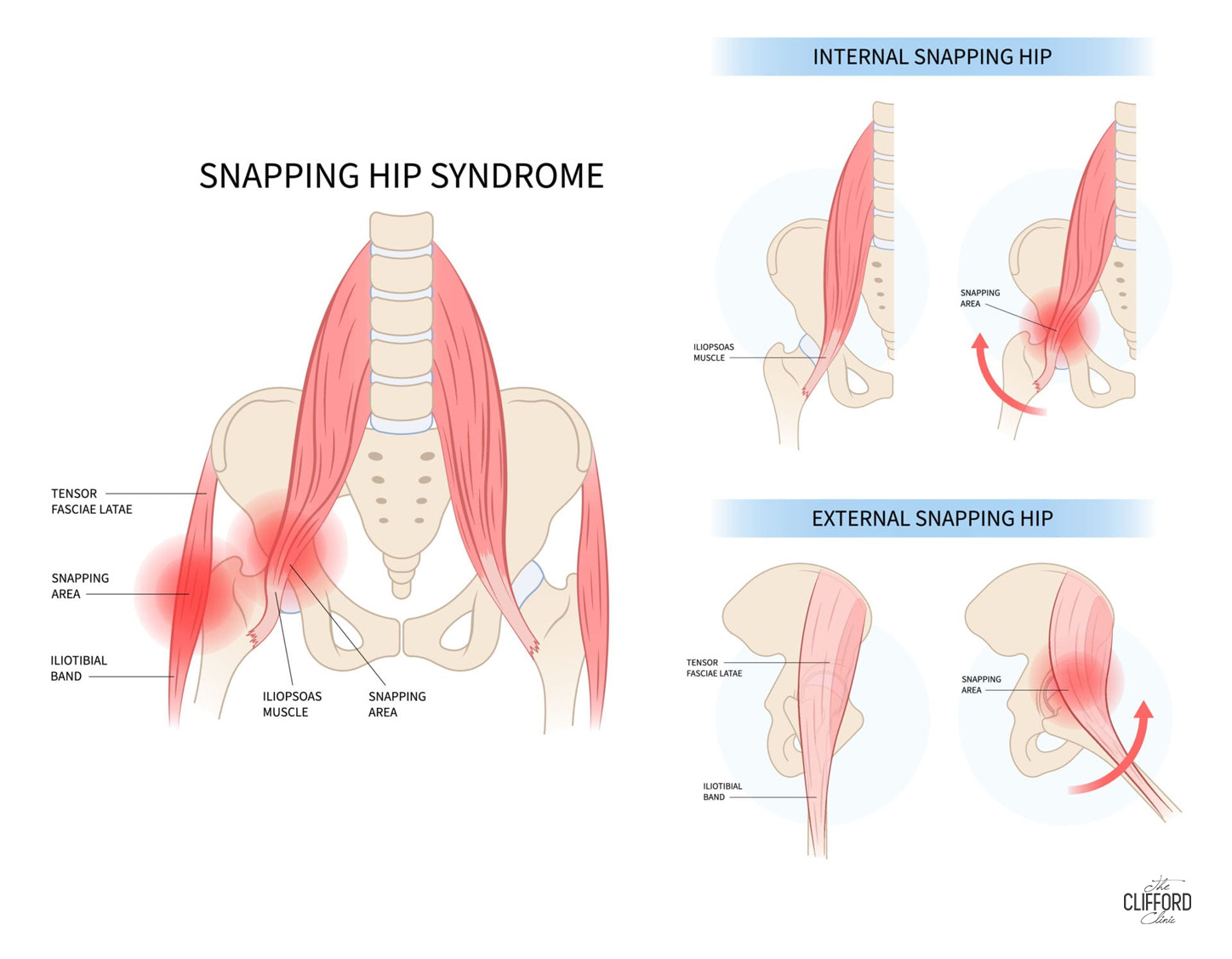
Hip flexor syndrome refers to pain and restricted movement caused by overuse or overactivity in the muscles that flex the hip. The iliopsoas runs from the lumbar spine and inner pelvis to the top of the thigh bone. Repetitive sports make it work thousands of times in a session, while prolonged sitting keeps it shortened. Over time, the muscle may become tight and tender. Symptoms include pain at the front of the hip or groin, a deep pulling sensation, discomfort when lifting the knee or extending the hip at the end of a stride, and sometimes catching in the hip.
Why hip flexor tightness causes pain
A hip flexor held in partial contraction loses some of its normal length and elasticity. The shortened muscle pulls on its attachments at the spine and thigh, placing more load on the tendon and front of the hip joint. It may tilt the pelvis forward and contribute to lower back or gluteal pain. Trigger points in the iliopsoas can refer pain into the groin or front of the thigh. Athletes may notice the problem most clearly late in a run or ride, when the muscle tires and power falls.
Why conventional treatments sometimes fall short
Treatment normally begins with stretching, mobility work, strengthening, load management and correction of sporting technique. Most patients improve. In resistant cases, however, high resting muscle tone can make stretching difficult, and the tightness returns when training resumes. Massage and dry needling may help temporarily, but the iliopsoas is deep and difficult to reach consistently. Reducing excessive muscle tone may then allow rehabilitation to progress.
How Botox works for tight hip flexors
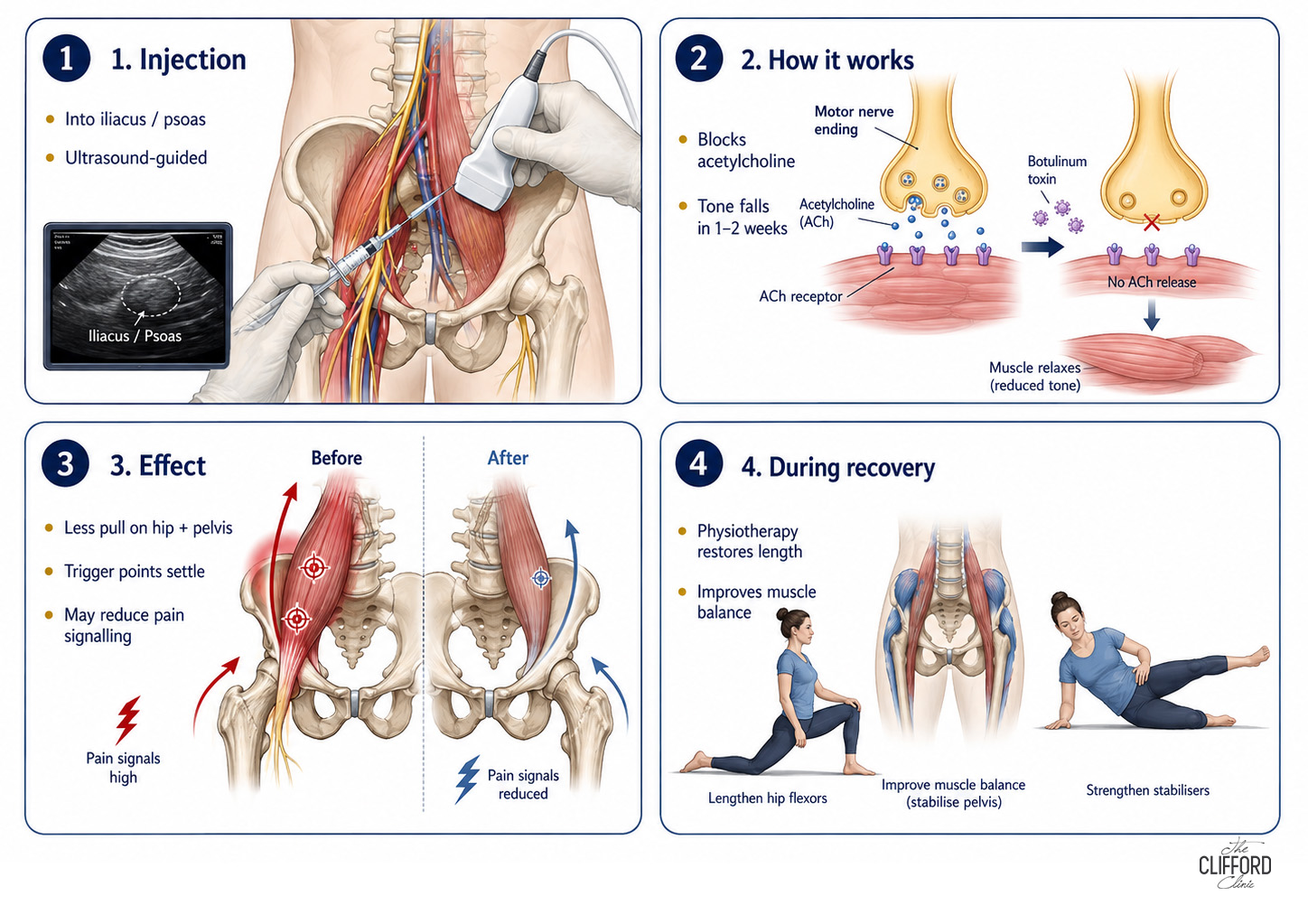
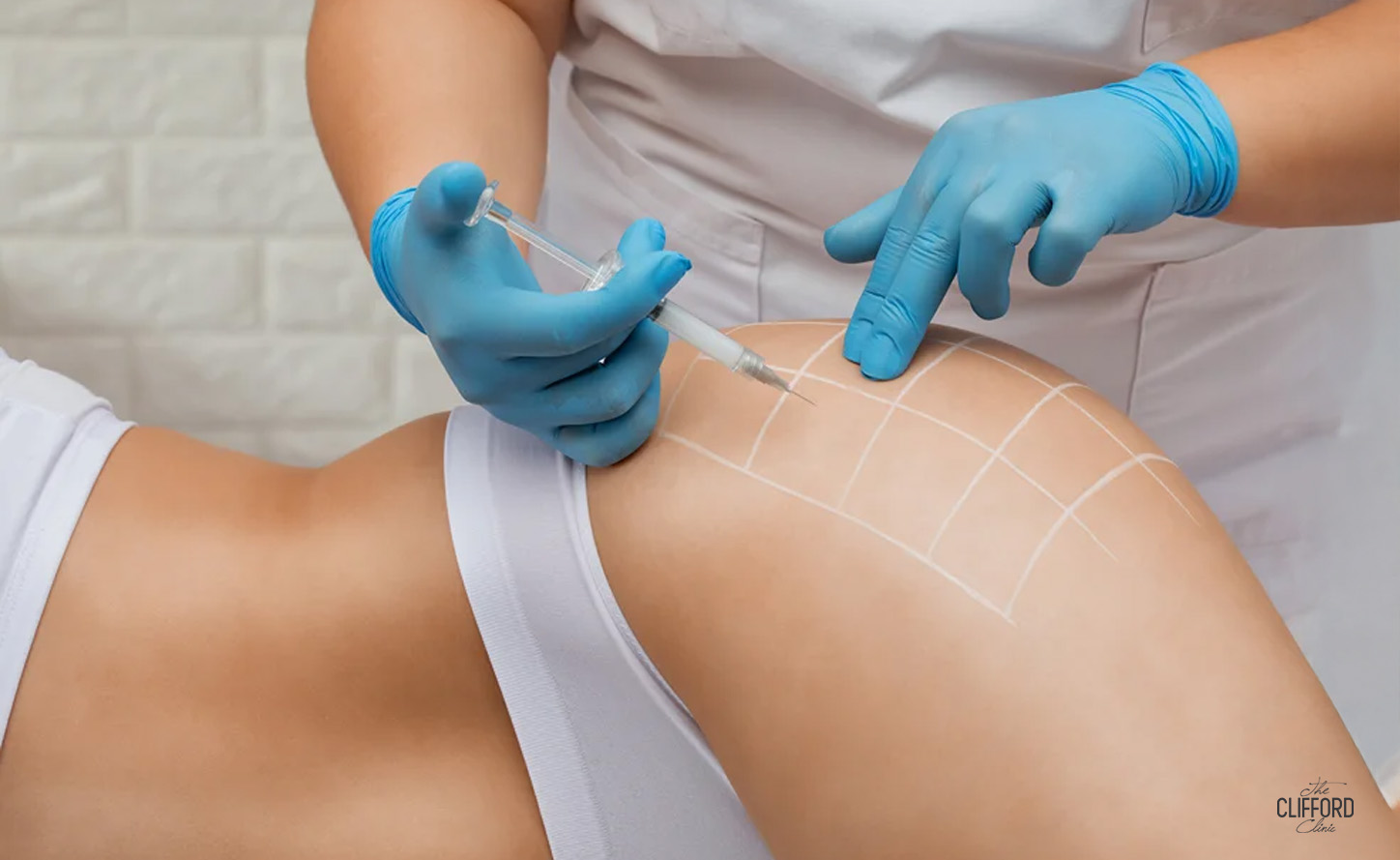
Botulinum toxin is injected into the overactive hip flexor, usually the iliacus or psoas. It blocks the release of acetylcholine, the chemical signal that makes a muscle contract. Resting tone falls over one to two weeks, reducing the pull on the hip and pelvis and allowing trigger points to settle. The treatment may also reduce local pain signalling. Physiotherapy during this period focuses on restoring length and improving the balance of the surrounding muscles. Ultrasound guidance is used because the iliopsoas lies close to important nerves and blood vessels.
What the evidence shows
Evidence for botulinum toxin in the hip flexors is limited. The stronger studies come from spasticity, particularly in children with cerebral palsy, where iliopsoas injections reduce muscle tone and improve hip movement. A myofascial pain trial that included the iliopsoas reported better later pain relief with botulinum toxin than with steroid injection. Neither setting directly represents isolated, non spastic hip flexor pain. Treatment therefore relies on related evidence, the behaviour of the muscle and clinical judgement, and should not be presented as routine first-line care.
When tight hip flexors are targeted accurately under ultrasound guidance, botulinum toxin can give fast, effective relief that would otherwise have taken weeks or months of physiotherapy.
Dr Dinesh Sirisena, Consultant in Sports and Exercise Medicine, The Clifford Clinic
Before we inject, we make sure the pain is coming from the muscle and not the hip joint itself. If imaging shows a problem the muscle cannot explain, the patient is better served by an orthopaedic assessment.
Dr Gerard Ee, Medical Director, The Clifford Clinic
At The Clifford Clinic, ultrasound guidance is used to place the injection accurately. Treatment is combined with physiotherapy so that the reduction in muscle tone can be used to restore length and improve hip mechanics.
Use of botulinum toxin in athletes
The aim in an athlete is not to weaken a healthy muscle. It is to reduce abnormal overactivity that is preventing rehabilitation. Some temporary weakness is expected, so timing matters. Athletes may choose an off-season period or lighter training block, then restore movement before rebuilding load. Competitive athletes should check the current status of the treatment with the relevant anti-doping authority.
Who may benefit, and who should avoid treatment
Hip Flexor Botox Treatment: Who May Benefit
| May Benefit | Should Avoid or Delay |
|---|---|
| Chronic anterior hip or groin pain from tight, overactive hip flexors | Pregnancy or breastfeeding |
| Tightness that resists stretching, mobility and strengthening work | Neuromuscular disease such as myasthenia gravis |
| Runners, cyclists or dancers limited by persistent hip flexor tension | Infection at the injection site |
| Willing to use the relaxation window for structured rehabilitation | In-season athletes who cannot accommodate temporary weakness |
Ruling out other causes of anterior hip pain
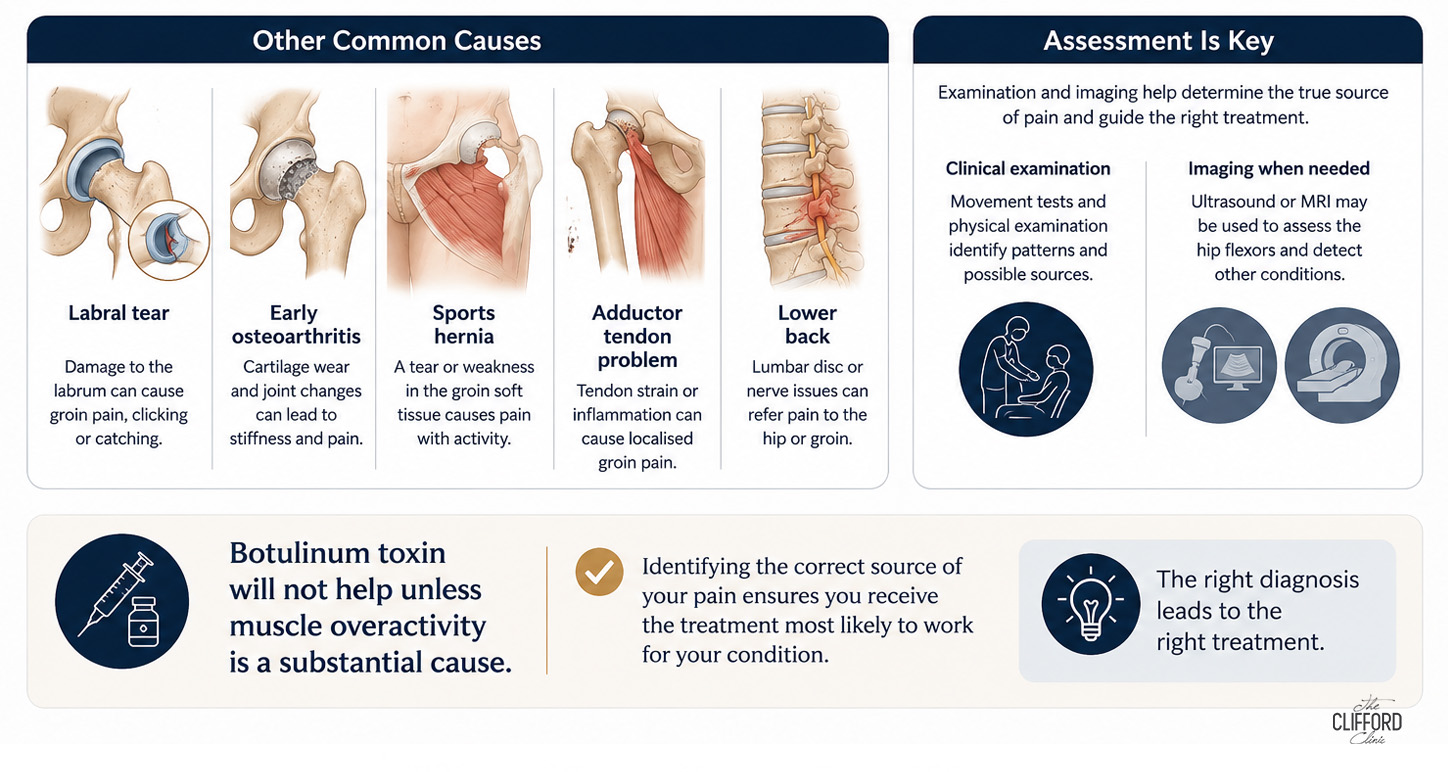
Pain at the front of the hip or groin can also arise from a labral tear, early osteoarthritis, a sports hernia, an adductor tendon problem or the lower back. Botulinum toxin will not help unless muscle overactivity is a substantial cause. Examination and, where necessary, ultrasound or MRI are used to assess the hip flexors and identify conditions requiring a different approach.
Risks and side effects
Botulinum toxin is generally well tolerated at the doses used for hip flexor pain. Soreness or bruising at the injection site and mild weakness in the treated muscle are most common. Athletes may notice a temporary reduction in explosive hip flexion. Spread to a neighbouring muscle is uncommon and resolves as the treatment wears off. Ultrasound guidance helps reduce the risks of injecting a deep muscle. All botulinum toxin products carry a boxed warning about the rare possibility of wider spread. Treatment is avoided during pregnancy and breastfeeding, in certain neuromuscular disorders and where the injection site is infected.
Clinical use in hip flexor pain
Most published research on botulinum toxin in the iliopsoas comes from neurological conditions, including cerebral palsy, adult spastic hip deformity and stiff person spectrum disorder. In these settings, ultrasound-guided injections can reduce hip region pain when muscle overactivity is a major cause. Dr Dinesh Sirisena considers cautious extrapolation reasonable in resistant hip flexor tightness, including cases accompanied by knee or lower back symptoms, while noting that botulinum toxin has not shown a clear benefit in deep gluteal syndrome.
Because its effect is short lived, botulinum toxin can be both a diagnostic and a therapeutic tool in hip flexor tightness. Relaxing the muscle relieves symptoms and confirms the source, and a longer term solution can then be planned. Physiotherapy, stretching and load management still lead, and I like to obtain objective measures of hip flexor tightness first so the benefit can be quantified.
Dr Dinesh Sirisena, Consultant in Sports and Exercise Medicine, The Clifford Clinic
Speak to our doctors

Botulinum toxin for muscle and joint pain is a considered, individualised treatment. To determine whether it is appropriate, arrange an assessment with the team at The Clifford Clinic or read more about the work of Dr Gerard Ee. The clinicians will review the history, perform an examination and explain the available options before any treatment is planned.
Frequently Asked Questions
Can botulinum toxin relax tight hip flexors?
It can reduce excessive resting tone in the iliopsoas and related muscles, making the hip flexors easier to lengthen through physiotherapy. Evidence is limited and mostly indirect, so treatment is considered only when persistent tightness has not improved with stretching and strengthening.
What is the strength of the evidence for this use?
The evidence is limited. Stronger data come from spasticity and mixed myofascial pain studies rather than trials of isolated hip flexor pain. Decisions therefore depend on related evidence, examination findings and clinical judgement.
Can athletes use botulinum toxin for hip flexor pain?
Yes, with careful timing. Temporary weakness in the treated muscle may affect performance, so athletes often choose an off season period or lighter training block. Competitive athletes should first check the treatment’s status with the relevant anti doping authority.
Can it improve flexibility?
It may improve flexibility by reducing the muscle overactivity that resists stretching. The lasting gain depends on mobility work and rehabilitation carried out while the muscle tone is reduced.
Is physiotherapy still required?
Yes. Botulinum toxin does not replace rehabilitation. Physiotherapy during the period of reduced muscle tone aims to restore length, improve pelvic position and rebalance the hip.
Related Conditions
Explore other articles in our series on botulinum toxin for musculoskeletal pain.
- Botox for Muscle Pain (main guide), the overview of botulinum toxin for musculoskeletal pain
- Botox for Lower Back Pain, chronic low back pain and lumbar muscle spasm
- Botox for Quadratus Lumborum Pain, stubborn one sided lower back spasm
- Botox for Iliopsoas Syndrome, psoas spasm and snapping hip
- Botox for Gastrocnemius Tightness, calf tightness and cramps
- Botox for Plantar Fasciitis, chronic heel pain that resists other measures
- Botox for Trapezius and Shoulder Myofascial Pain, trapezius tightness and shoulder trigger points
Compare Treatments and Procedures
Compare the available treatments and what each procedure involves.
- Botox vs Steroid Injection, how the two injections differ and when each is chosen
- Botox vs PRP, muscle relaxation compared with tissue healing
- Botox vs Dry Needling, two trigger point options compared
- Ultrasound Guided Injections, why guidance matters for deep muscles
- Recovery and Physiotherapy after Botox, what to expect and how to get the most from treatment
More from The Clifford Clinic
Read about related treatments and services available at The Clifford Clinic.
- Platelet Rich Plasma Injections for Musculoskeletal Injury Recovery
- Botox for the Trapezius Muscle
- Botox Treatment for Cervical Torticollis
- Bioscaffold Therapy for Musculoskeletal Regeneration
- Hyaluronic Acid Injection for Knees
About the Authors

Dr Dinesh Sirisena is a Consultant in Sports and Exercise Medicine at The Clifford Clinic. He trained in sports and exercise medicine in the United Kingdom and has worked with elite football, rugby, athletics and hockey teams, including at the London 2012 Olympic and Paralympic Games. He specialises in ultrasound guided injections and other non surgical treatments for muscle, tendon and joint pain. He has also led a musculoskeletal service as medical director and is an assistant professor at the NUS Yong Loo Lin and NTU Lee Kong Chian schools of medicine.

Dr Gerard Ee is the Medical Director of The Clifford Clinic. He trained at St George’s, University of London, and is a Member of the Royal College of Surgeons of Edinburgh. He gained orthopaedic experience at National University Hospital and Singapore General Hospital, focusing on knee, joint and spinal conditions. He has published in peer reviewed orthopaedic and spine journals. More information about his work is available at drgerardee.com.
The doctors at The Clifford Clinic have used botulinum toxin for muscle and joint pain for more than 16 years and perform around 100 of these treatments each year.
Selected orthopaedic and spine publications by Dr Gerard Ee
- Ee G, Srivastava A, Peng CWB, Tan SB, Tow BPB. Management of the neglected and healed bilateral cervical facet dislocation. European Spine Journal. 2014.
- Ee WWG, Lau WLJ, Yeo W, Yap VB, Yue WM. Does minimally invasive surgery have a lower risk of surgical site infections compared with open spinal surgery. Clinical Orthopaedics and Related Research. 2014.
- Ee G, Jiang L, Guo CM, Yeo W, Tan SB, Tow B, Chen J, Yue WM. Comparison of clinical outcomes and radiographic measurements in four treatment modalities for osteoporotic compression fractures. Journal of Spinal Disorders and Techniques. 2015.
- Ee G, Pang SY, Kumar N, Malhotra R. A silent acute abdomen in a patient with spinal cord injury. BMJ Case Reports. 2013.
References
- Myofascial pain syndrome, an update on clinical characteristics, etiopathogenesis, diagnosis and treatment. Muscle and Nerve. 2025.
- Neurobiological mechanisms of botulinum neurotoxin induced analgesia for neuropathic pain. Pharmacology and Therapeutics. 2024.
- The analgesic effects of botulinum neurotoxin by modulating pain related receptors, a literature review. Molecular Pain. 2024.
- Approved uses and prescribing information for botulinum toxin type A. United States Food and Drug Administration. 2024.
- Ultrasound guided botulinum toxin for hip pain in cerebral palsy. Toxins. 2023.
- Botulinum toxin as a diagnostic adjunct in adult spastic hip and knee. JBJS Reviews. 2026.
- Systematic review of analgesic botulinum toxin in cerebral palsy. Toxicon. 2021.
- Stiff person spectrum cohort with paraspinal and hip flexor injection. Therapeutic Advances in Neurological Disorders. 2025.
- Systematic review of botulinum toxin for deep gluteal syndrome. Journal of Bodywork and Movement Therapies. 2022.
Medical disclaimer. This article is for general education and does not replace a consultation with a qualified doctor. Botulinum toxin for musculoskeletal pain is an individualised treatment that is off label for most of these conditions. Suitability, dosing and outcomes vary between people. Please seek an in person assessment at The Clifford Clinic before making any treatment decision.

Author Bio
Dr Gerard Ee

Dr Gerard Ee is the Medical Director of The Clifford Clinic in Singapore. He earned his medical degree from St George's University of London and built his surgical experience across the Singapore General Hospital, National University Hospital, and Mount Sinai Hospital in New York. He holds Membership of the Royal College of Surgeons (Edinburgh) and a Postgraduate Diploma in Dermatology (Cardiff), and is fully accredited in aesthetic procedures including botulinum toxin, fillers, lasers, and light therapies. A strong advocate of minimally invasive, natural-looking results, Dr Ee has published in several medical and scientific journals and presented his research in cities including Taipei, Las Vegas, and London.
See all posts by Dr Gerard Ee »