
Age Spots Treatment Singapore | Sun Spots or Melasma?
Written by Dr Bernard Ong. Medically reviewed by Dr Gerard Ee
Most facial age spots are solar lentigines from cumulative sun exposure, but some are freckles, some are melasma, and a few are other lesions that need medical review. Treatment depends entirely on the correct diagnosis. Sun spots and freckles respond well to pigment lasers, whereas melasma requires a gentler, more prolonged plan.
What people usually mean by age spots
Commonly referring to the flat brown marks that appear on the face and hands with age. Most people often have solar lentigines. The difficulty is that other pigmentary conditions look similar. But because the treatments differ, correct identification changes the outcome.
How the common types compare
Sun Spots and Similar Pigmentation Conditions Compared
| Condition | Typical Appearance | Main Driver | Treatment Direction |
|---|---|---|---|
| Sun Spots Solar Lentigines |
Distinct tan to brown spots on cheeks, temples, hands | Cumulative sun exposure | Pigment laser, then sun protection |
| Freckles | Small scattered light brown spots since youth | Genetic tendency plus sun | Pigment laser, sun protection |
| Melasma | Symmetrical patches with soft borders | Hormones, sun, heat, visible light | Sunscreen and topicals first, cautious laser |
| Seborrheic Keratosis | Raised, waxy, stuck-on brown growth | Age-related benign growth | Removed by other methods after review, not pigment laser |
| Suspicious Lesion | Changing, irregular, multi-coloured | Needs assessment | Medical review before any cosmetic treatment |
Age spots vs sun spots
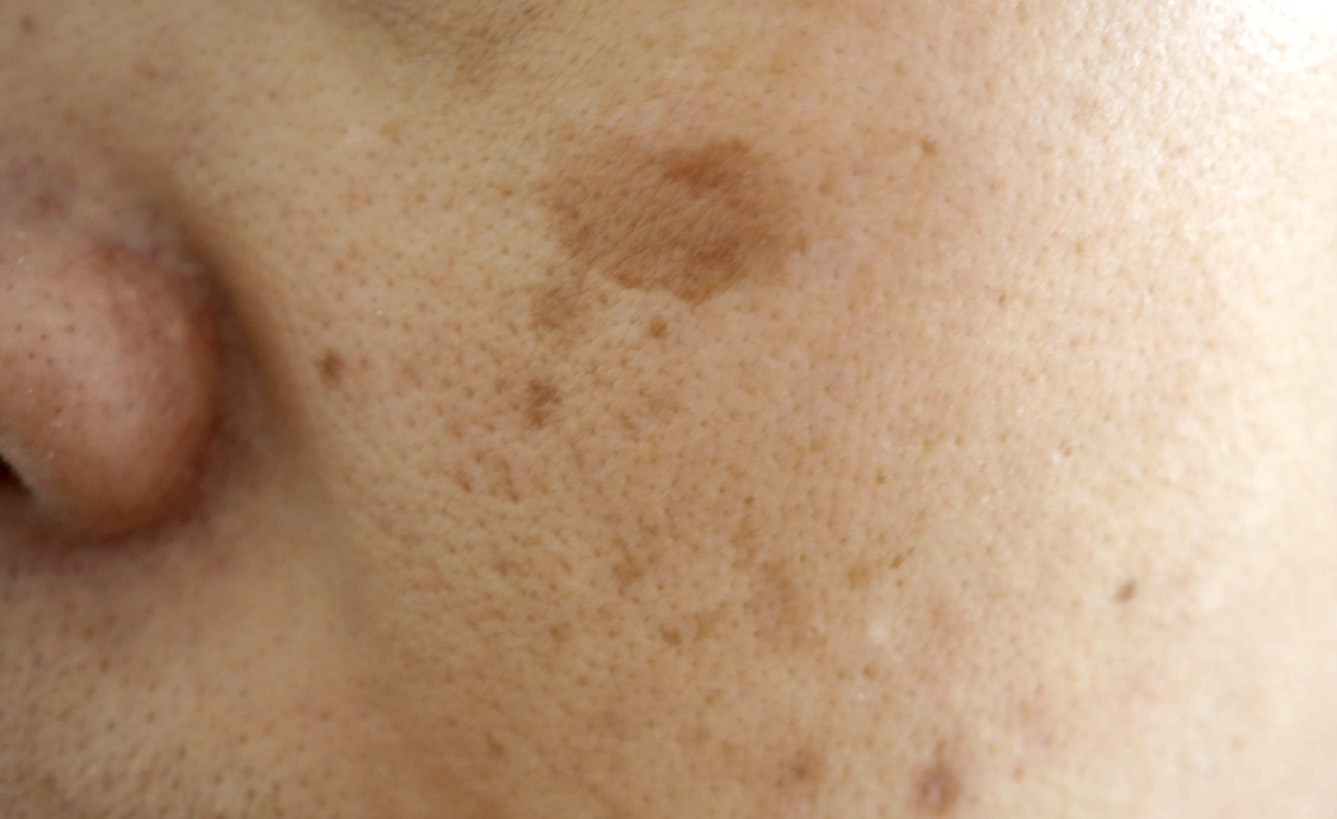
For most patients the two terms describe the same lesion. Solar lentigines are the medical diagnosis underlying most facial age spots, and they respond well to laser once confirmed benign.
Age spots vs freckles
Freckles begin in childhood and fluctuate with sun, whereas true age spots appear later and persist. Both are superficial and laser-responsive, but the clinical history guides the number of sessions required. Our freckles removal guide covers this in detail.
Age spots vs melasma
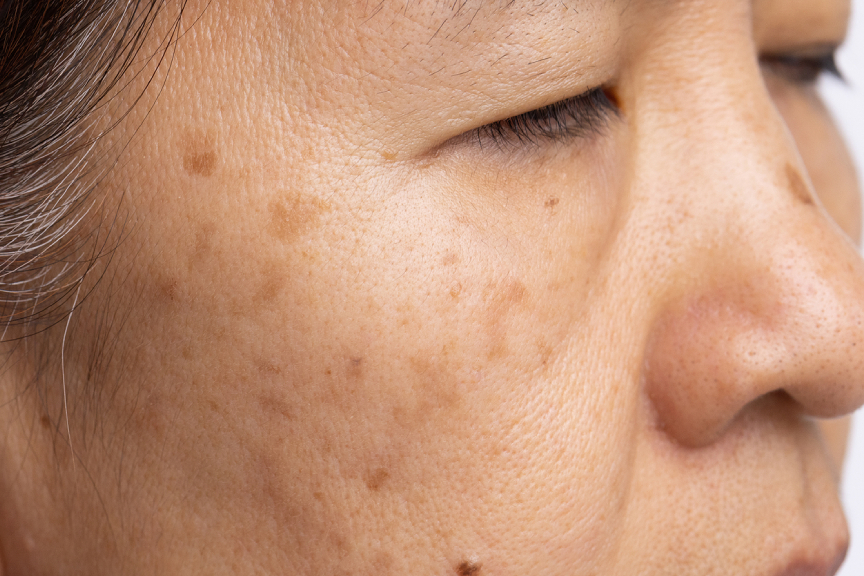
This distinction carries the greatest clinical consequence. Melasma forms symmetrical patches with blended borders and is driven by hormones as well as sun. If melasma was treated with aggressive laser settings, can cause rebound darkening. Where the marks are patchy and symmetrical across both cheeks, consult our melasma treatment guide before booking any laser.
When a brown spot may not be cosmetic
A brown spot that is new in later life, enlarging, irregular in border, showing several colours, or different from the patient’s other spots warrants medical assessment before cosmetic treatment. Learn more on our skin cancer page. This assessment is quick and can exclude skin cancer.
Laser options for age spots
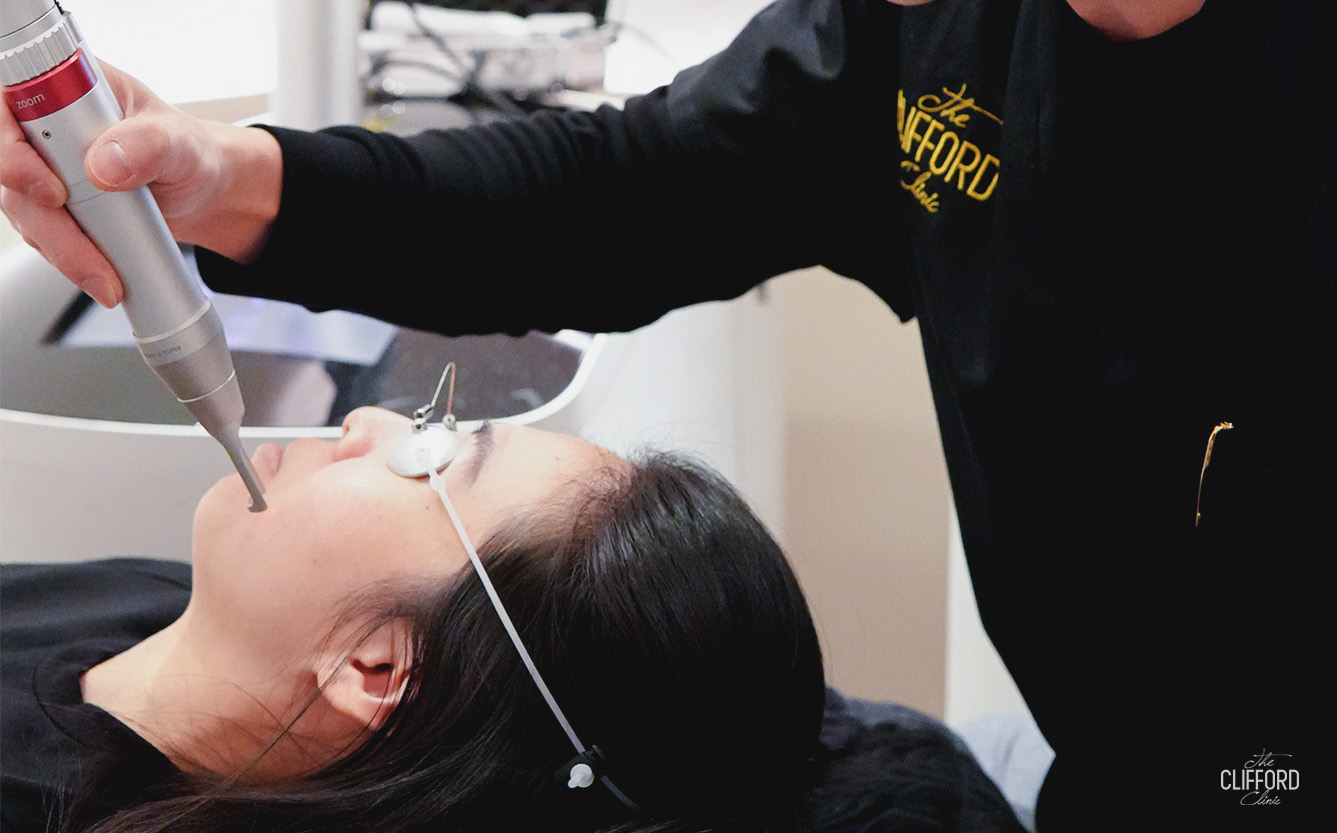
For confirmed sun spots and freckles, Pico laser and Q-switched laser are the mainstays. Picosecond systems fragment pigment with less heat, which suits Asian skin and reduces post-inflammatory pigmentation risk. Raised growths such as seborrheic keratoses are treated by ablative methods rather than pigment laser.
Can skincare fade age spots?
Daily sunscreen prevents new spots and allows very superficial pigment to fade slowly. Ingredients such as vitamin C, niacinamide and gentle pigment inhibitors produce modest, gradual results. Established solar lentigines usually require laser for meaningful clearance, with skincare as support and maintenance.
Preventing new age spots
Broad-spectrum SPF 50 every morning, reapplied outdoors, plus hats and shade, are the foundation. In Singapore year-round ultraviolet exposure makes daily photoprotection a continuous requirement rather than a seasonal one.
Suitable and not suitable
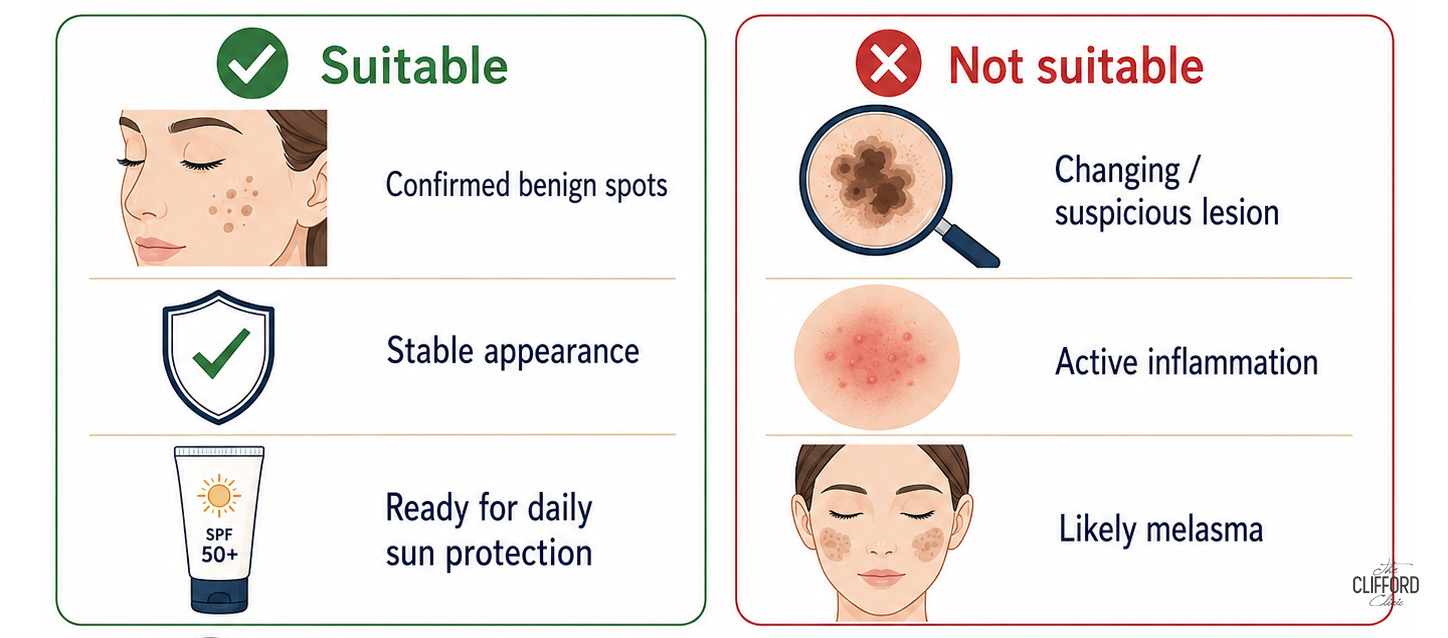
- Suitable:confirmed benign sun spots or freckles, stable in appearance, in a patient ready to maintain sun protection.
- Not suitable:any changing or suspicious lesion before review, active inflammation in the area, or symmetrical patches that are more likely melasma.
Doctor’s perspective. Age spot is a useful everyday term but not a diagnosis. The same phrase can hide a simple sun spot, a patch of melasma and, occasionally, something that needs a biopsy. A short clinical assessment distinguishes the possibilities, after which the appropriate treatment is usually clear and effective.
Why age spots form and persist
Age spots that are true solar lentigines are the visible record of years of ultraviolet exposure. Repeated ultraviolet light damages the DNA of the melanocytes and the surrounding keratinocytes, and these cells continue to produce pigment even during periods without further sun. Under the skin the epidermis over a solar lentigo is thickened, the ridges at its base are elongated and club-shaped, and the dermis shows a build-up of sun-damaged elastic tissue. The dermal fibroblasts in this sun-damaged tissue release signalling molecules that continue to stimulate the melanocytes above them, and an increase in small blood vessels adds further signals that sustain pigment production. Through this self-sustaining process, an established age spot does not resolve spontaneously, and photoprotection after treatment is essential to prevent the same process from generating new spots.
What laser treatment of age spots involves
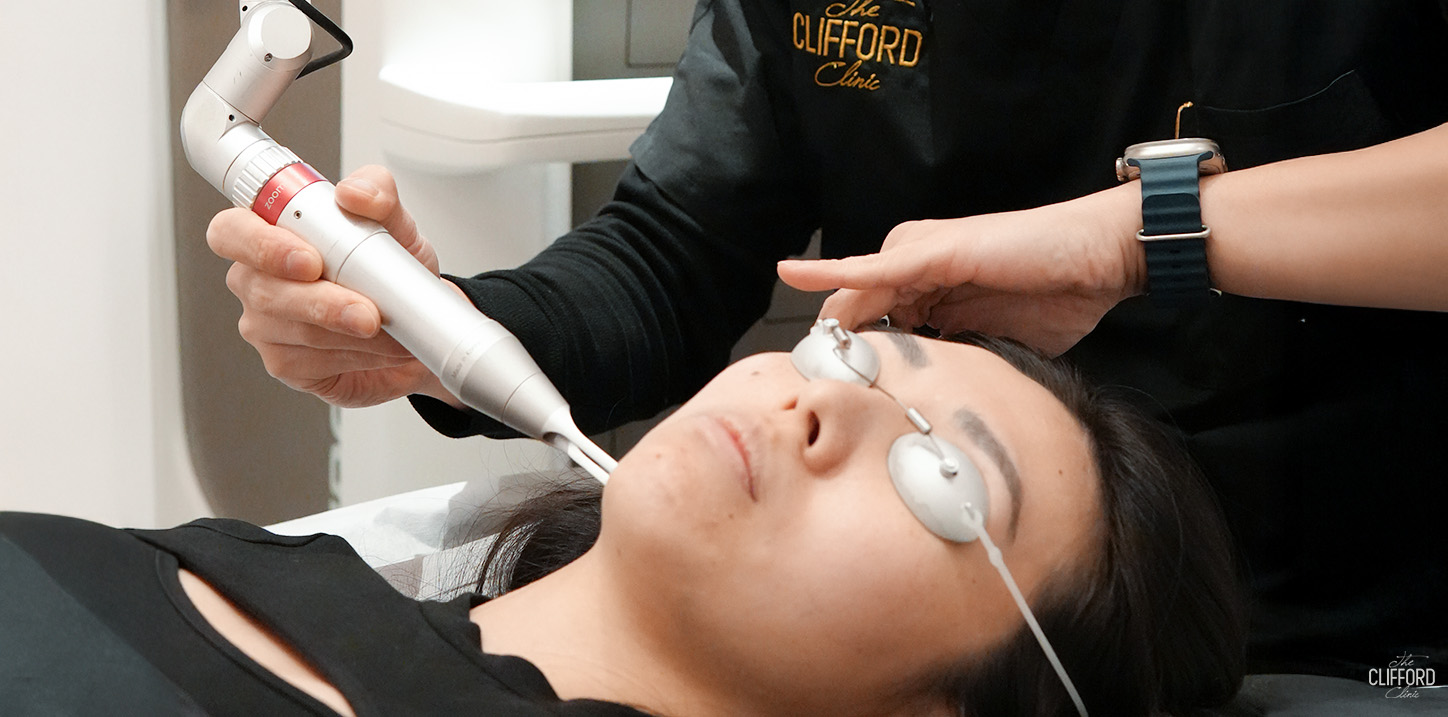
Because the pigment of a confirmed solar lentigo sits in the epidermis, it responds well to a pigment-selective laser. Picosecond lasers fragment the pigment with very short pulses and clear these spots with fewer side effects and a lower risk of post-inflammatory pigmentation than older nanosecond lasers, and are for this reason preferred in Asian skin. The wavelength is chosen for the skin tone and the spot, with a strongly absorbed shorter wavelength suited to lighter skin and a longer wavelength preferred as the skin tone deepens. The intended endpoint during treatment is a gentle, barely visible whitening of the spot rather than an aggressive frost, because a lighter endpoint produces far less post-inflammatory darkening. Most discrete spots respond within one to three sessions, and treated spots do not usually recur, although new spots can appear over time without daily photoprotection.
Matching the laser to an age spot
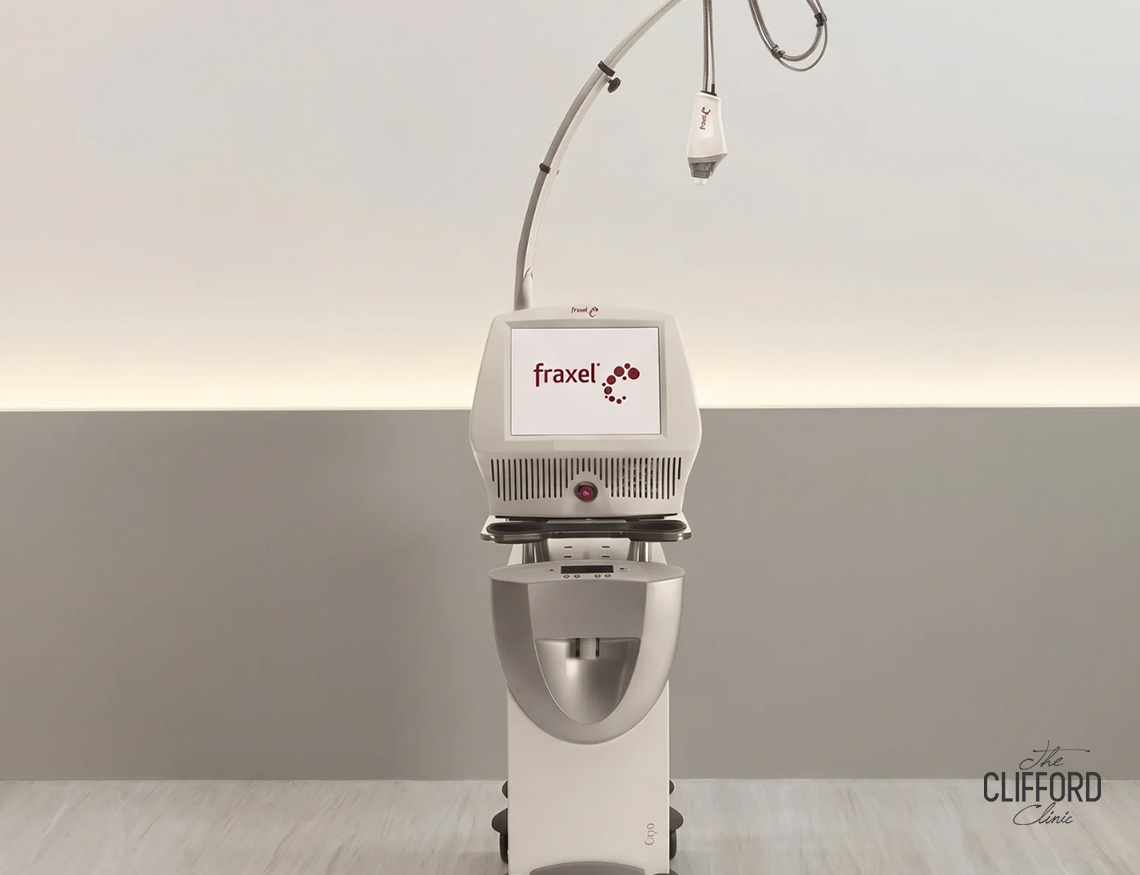
Once a spot is confirmed benign, superficial pigment is cleared with a 532 nm picosecond beam, whereas broad, mottled photodamage across the face may respond better to the non-ablative Fraxel 1927. The choice depends on whether the concern is a few defined spots or a diffuse change in tone, and in every case the endpoint is kept gentle in darker skin.
Frequently asked questions
What causes age spots on the face?
Most are solar lentigines caused by years of ultraviolet exposure. Genetics, hormones and other pigmentary conditions can contribute, which accounts for the variation in appearance.
Can Pico laser remove age spots?
Yes, for confirmed sun spots and freckles. It fragments the pigment with short, low-heat pulses, usually over one to three sessions.
Are age spots the same as sun spots?
Usually yes. Age spots, liver spots and sun spots are common names for solar lentigines. Some age spots are actually freckles or melasma, so accurate diagnosis is essential.
Can age spots come back after treatment?
A treated sun spot does not usually recur in the same place, but new spots form with ongoing sun exposure. Daily photoprotection limits their formation.
Can skincare remove age spots?
Skincare helps prevent new spots and lightens very superficial pigment slowly. Established spots generally require laser for clear results.
When should I worry about a brown spot?
If it is new in later life, enlarging, irregular, multi-coloured, changing, or different from your other spots, have it examined before any cosmetic treatment.
Get your age spots diagnosed

Accurate identification of the lesion is the key to effective treatment. Learn about pigmentation treatment in Singapore, or book at The Clifford Clinic, 50 Raffles Place, #01-01 Singapore Land Tower. Call (65) 6532 2400 or WhatsApp (65) 8318 6332.
Selected References
- Algorithmic approach to the treatment of solar lentigines with picosecond lasers. Lasers in Surgery and Medicine, 2023. https://onlinelibrary.wiley.com/doi/10.1002/lsm.23701.
- Lasers and energy-based devices for treatment of pigmented lesions with histologic and ultrastructural correlation: a systematic review. Dermatologic Surgery, 2026. https://pubmed.ncbi.nlm.nih.gov/40767860.
- A systematic review of picosecond laser in dermatology: evidence and recommendations. Lasers in Surgery and Medicine, 2021. https://onlinelibrary.wiley.com/doi/10.1002/lsm.23244.
- Disorders of hyperpigmentation, part I: pathogenesis and clinical features of common pigmentary disorders. Journal of the American Academy of Dermatology, 2023. https://pubmed.ncbi.nlm.nih.gov/35151757.
- Characteristics of dermal vascularity in melasma and solar lentigo. Photodermatology, Photoimmunology and Photomedicine, 2024. https://onlinelibrary.wiley.com/doi/10.1111/phpp.12953.
- American Academy of Dermatology: hyperpigmentation. https://www.aad.org/public/diseases/a-z/hyperpigmentation-treatment

Author Bio
Dr Gerard Ee

Dr Gerard Ee is the Medical Director of The Clifford Clinic in Singapore. He earned his medical degree from St George's University of London and built his surgical experience across the Singapore General Hospital, National University Hospital, and Mount Sinai Hospital in New York. He holds Membership of the Royal College of Surgeons (Edinburgh) and a Postgraduate Diploma in Dermatology (Cardiff), and is fully accredited in aesthetic procedures including botulinum toxin, fillers, lasers, and light therapies. A strong advocate of minimally invasive, natural-looking results, Dr Ee has published in several medical and scientific journals and presented his research in cities including Taipei, Las Vegas, and London.
See all posts by Dr Gerard Ee »