
Adult Male Acne in Singapore, Why It Persists and What Works
Written by Dr Bernard Ong. Medically reviewed by Dr Gerard Ee Dr Gerard Ee (MBBS, MRCS, Diploma in Practical Dermatology, Cardiff) is the Founder and Medical Director of The Clifford Clinic, with more than 14 years of experience treating acne, and among the first doctors in Singapore to use AGNES and AviClear. This article reflects the clinical approach of The Clifford Clinic, and is for general education only. It does not replace a personal consultation. Last reviewed July 2026.
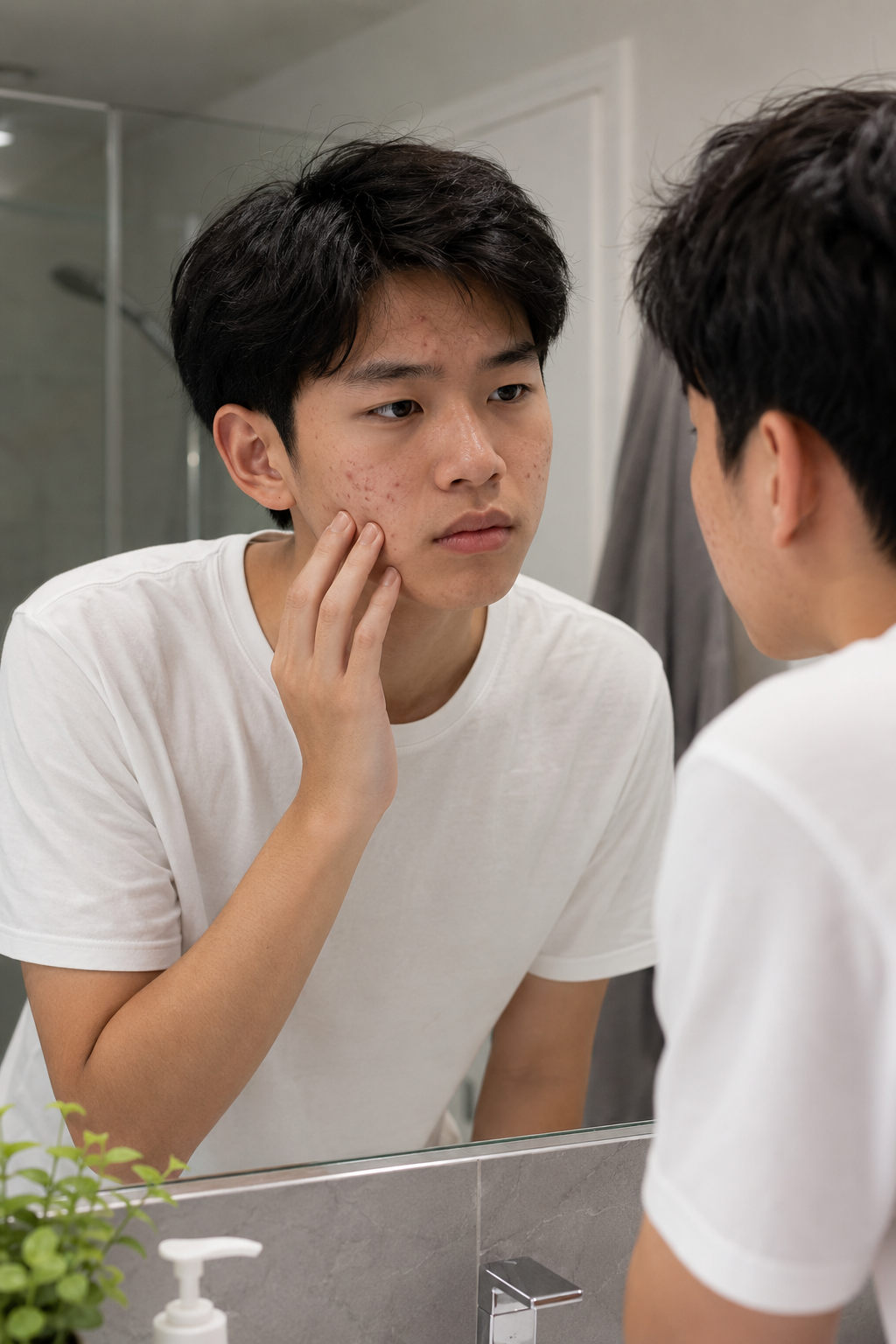
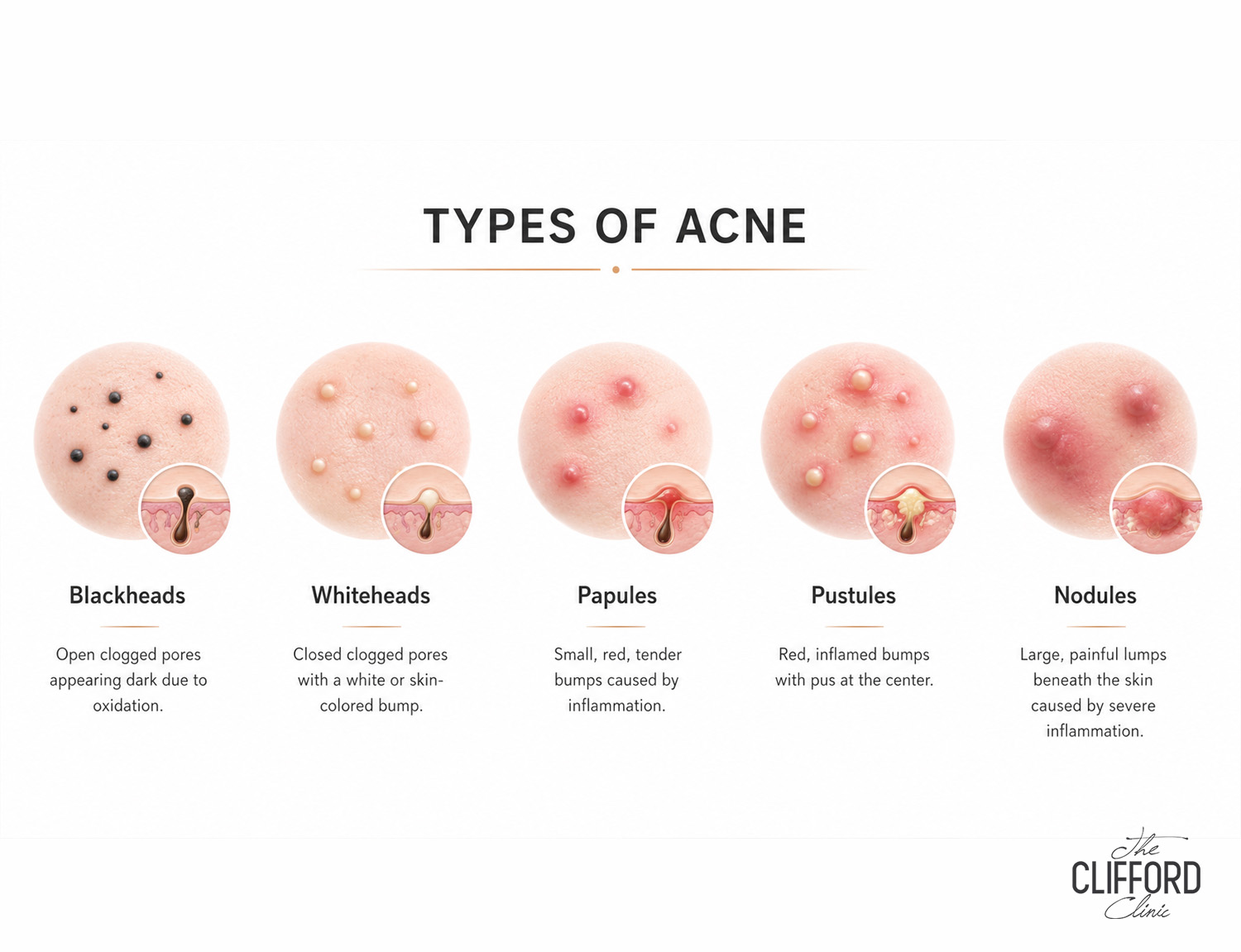
Adult acne is discussed largely in terms of women, and for good reason, since the hormonal pattern in women is common and distinctive. Men also present with adult acne, in a pattern that differs from the female one. Male acne is oilier and deeper, involves the back and chest more often, and is aggravated by shaving, sport and sweat. Presentation is also later, frequently after scarring has begun, which converts a treatable inflammatory problem into a reconstructive one. This article sets out how male adult acne differs, and how it is assessed and treated.
Summary
Male adult acne is typically driven by higher sebum output rather than by a fluctuating hormonal cycle, so treatment is directed principally at sebum production. Medical skincare forms the basis of treatment. Gland-directed treatment suits the oily, relapsing pattern that predominates in men, and truncal involvement warrants specific attention because it scars readily. Shaving technique, training and sweat exposure, and hair product use are modifiable contributors. Hormonal therapy as prescribed in women is not applicable, which narrows the systemic options and increases the relative value of device-based treatment.
The clinical assessment
The examination assesses oiliness, lesion depth and how much of the trunk is involved, since back, shoulder and chest acne is more common and more consequential in men. Recurrence in fixed sites indicates a small number of persistently active glands, whereas diffuse distribution across an oily face indicates generalised sebaceous overactivity. The distinction determines whether gland-directed or field treatment is appropriate. The history covers shaving method and frequency, training schedule and sweat exposure, use of protein supplements including whey, hair products and headwear, and any previous treatment. Scarring is asked about directly, since men frequently present after scars have formed rather than while the acne is active.
Why male acne differs
Androgen levels in men are consistently higher and do not cycle. Because sebaceous glands are androgen-responsive, this produces steadier and often heavier sebum output rather than the premenstrual flares seen in women. Heavier sebum output sustains a more persistently oily field, deeper lesions and greater truncal involvement, as the sebaceous glands of the back and chest are larger and more numerous. Male skin is also thicker, so lesions are seated more deeply and resolve more slowly. The absence of a cyclical pattern removes the hormonal timing on which female treatment is often based, and the therapeutic focus shifts to reducing sebum output and controlling inflammation.
Shaving, sport and sweat
Three practical factors carry greater weight in men. Shaving over inflamed lesions spreads inflammation, causes nicks that can become infected, and mechanically aggravates acne along the jaw and neck. A sharp blade, adequate lubrication and shaving with rather than against the grain all reduce this. Training generates sweat and friction, and remaining in damp clothing after exercise sustains the warm, occluded conditions in which both acne and Malassezia folliculitis proliferate. Whey-based protein supplements warrant review, as milk-derived products carry the clearest supplement association with worsening acne.
Treatment options
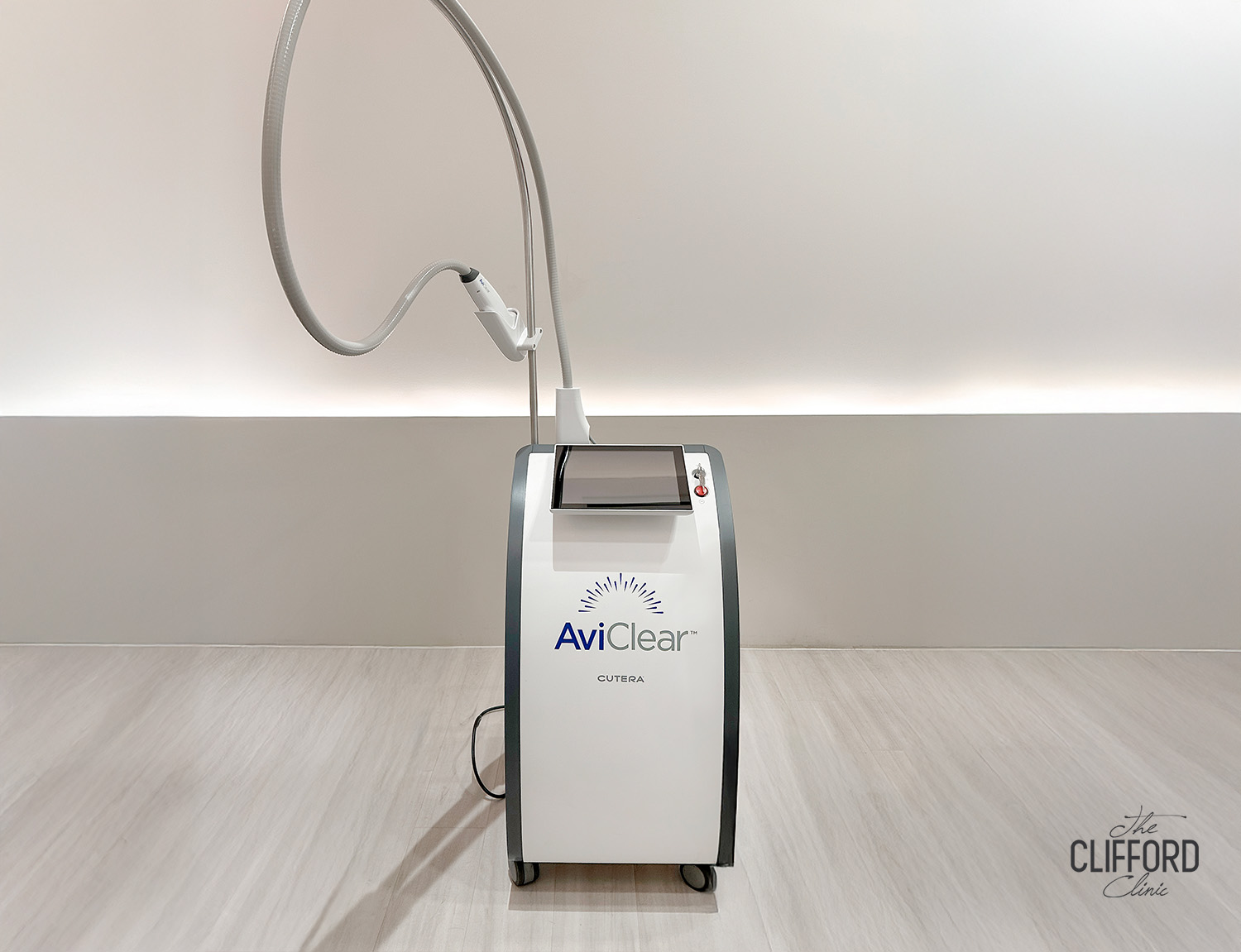
Medical skincare comes first, built on a topical retinoid with benzoyl peroxide for the inflammatory component, using formulations that cover the trunk practically where needed. Gland-directed treatment is frequently the most effective option in men. AGNES is used for the discrete glands that recur in the same sites, AviClear for diffuse oily congestion across a wider area, and gold or platinum photothermal therapy where a lower-intensity option without downtime is preferred. A short antibiotic bridge can settle an inflammatory flare alongside topicals. Isotretinoin is reserved for severe or scarring disease that has not responded to the above.
Truncal acne needs its own attention
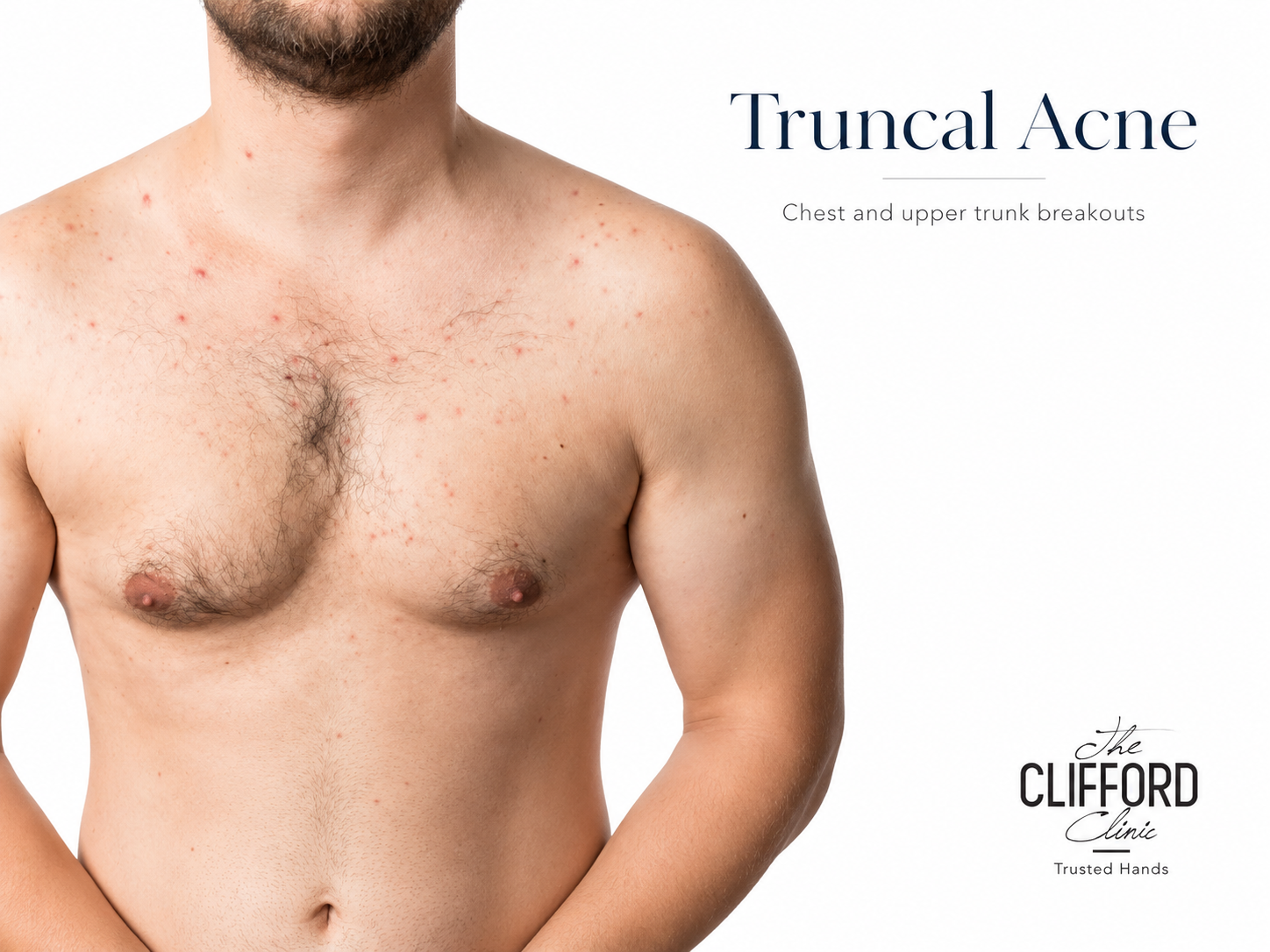
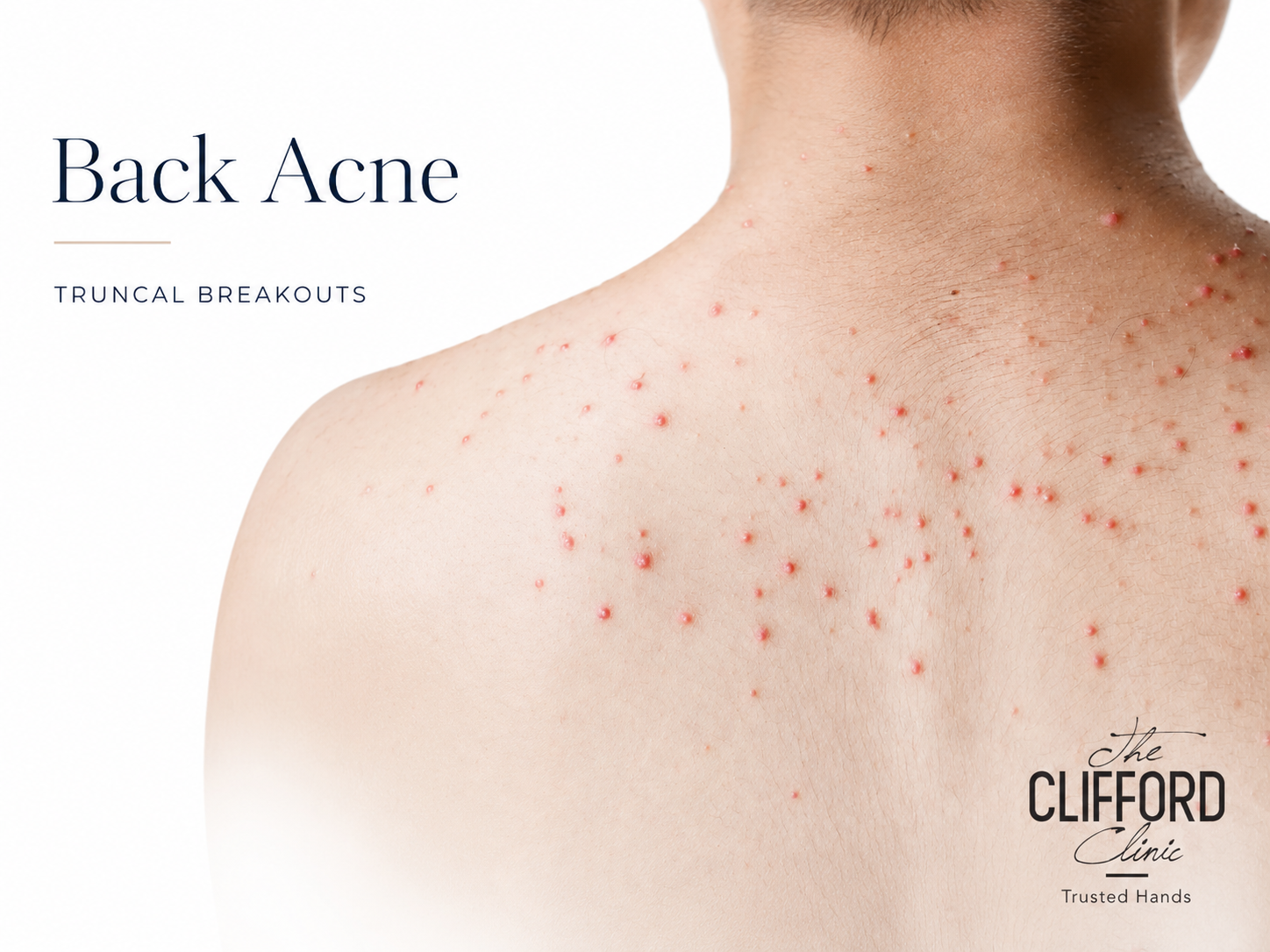
Back, chest and shoulder acne is undertreated in men, partly because the sites are not readily visible and partly because patients assume no effective treatment exists. It warrants treatment in its own right because it scars more readily than facial acne, and in predisposed patients can produce raised hypertrophic or keloid scars that are harder to correct than the depressed scars typical of the face. Benzoyl peroxide washes cover large areas practically, topicals in spreadable formulations reach the mid-back, and oral treatment is used where inflammation is substantial. Rinsing hair before washing the body prevents conditioner residue from tracking down the back.
Treatments that are not indicated
Hormonal therapies used for female acne are not applicable to men and are not prescribed. Itchy, uniform truncal papules are not treated with antibiotics, as that pattern suggests Malassezia folliculitis, a yeast-driven eruption that antibacterial treatment can aggravate by further suppressing competing skin flora. Aggressive scrubbing and mechanical exfoliation of the back are discouraged, as both inflame follicles further. Resurfacing of truncal scars is approached conservatively, particularly where there is any tendency to raised scarring.
Common management errors
The commonest is late presentation, after scars have formed rather than while the acne is still responsive to treatment. The second is managing oily skin by stripping it, with harsh cleansers and no moisturiser, which impairs the skin barrier and worsens inflammation. The third is leaving truncal acne untreated, which is the site where scarring is most likely. The fourth is continued shaving over active inflamed lesions. The fifth is failure to consider whey protein and prolonged periods in damp training clothing as contributors.
What the evidence shows
Sebum production is higher in men and is associated with more persistent and more truncal acne. The 2024 American Academy of Dermatology guidelines make strong recommendations for benzoyl peroxide, topical retinoids and topical antibiotics, with formulations selected for practical coverage of the trunk. Sebum-targeting devices can produce durable reductions in sebum output and inflammatory lesion counts. The 1726 nm wavelength used by AviClear is preferentially absorbed by sebum, allowing the sebaceous gland to be heated selectively while the overlying epidermis is spared. Published follow-up has reported sustained improvement in moderate-to-severe acne at six months. Milk-derived products, including whey supplements, are associated with worsening acne. Malassezia folliculitis is a frequent truncal mimic. In a series of 320 patients clinically diagnosed with acne vulgaris, 28.8 per cent were found to have Malassezia folliculitis, and itchy lesions and upper back involvement were the features that most strongly distinguished it. Oral isotretinoin is effective for severe acne, with a Cochrane review of 31 randomised trials and 3,836 participants supporting its use, although the quality of evidence for most outcomes was low.
Realistic expectations
Truncal acne responds more slowly than facial acne, typically over three months or more, because the skin is thicker and the lesions deeper. Oiliness reduces progressively with gland-directed treatment rather than immediately. Modification of shaving, training and hair product habits forms part of the treatment plan. Existing scars are addressed separately, once the acne itself is controlled.
When to see a doctor
Assessment is advisable where acne is deep or painful, where the back, chest or shoulders are involved, where scarring has begun, where shaving has become difficult, or where over-the-counter products have failed after two months. Male acne is treatable, and the principal cost of delay is scarring rather than lost time.
Why men present later, and what it costs
Men consistently arrive at the clinic later in the course of their acne than women do, and frequently only once scarring has become the concern. Several factors contribute. Acne is culturally framed as a cosmetic rather than a medical concern, truncal disease is not readily visible, and spontaneous resolution is often assumed. The consequence is that the responsive phase of the disease elapses untreated, and the treatment eventually sought is scar repair, which is slower, more costly and rarely complete.
The most effective point at which to treat male acne is while it remains active. Controlling inflammation prevents the scarring that would otherwise require a multi-session programme years later, and the treatments that achieve that control are straightforward. There is no clinical advantage in delay.
Grooming products and the acne map
The distribution of lesions frequently indicates the aggravating factor. Lesions following the hairline and temples frequently correspond to pomades, waxes and styling products, which are occlusive by formulation and migrate with sweat. Lesions along the jaw and neck may reflect shaving technique or a razor kept too long. A band across the forehead suggests a cap or helmet, and lesions beneath bag straps indicate friction. The chest and upper back are exposed to product residue rinsed from the hair, which is why conditioner should be rinsed out before the body is washed.
None of these observations replaces treatment, but correcting them removes a continuing aggravator that would otherwise offset it. Patients are often sceptical until the distribution is demonstrated on their own skin. The correction required is usually a change of product or of sequence rather than anything onerous.
Frequently asked questions
Why do men still get acne as adults?
Male androgen levels are consistently higher and do not cycle, producing steadier and heavier oil production. Sustained sebum output tends to make adult male acne oilier, deeper and more truncal in distribution.
Does shaving make acne worse?
Shaving over inflamed lesions spreads inflammation and causes mechanical irritation along the jaw and neck. A sharp blade, adequate lubrication and shaving with the grain reduce this considerably.
Can whey protein cause acne?
Milk-derived products including whey supplements are the clearest supplement association with worse acne, and are worth reviewing where breakouts began or worsened after such a supplement was started.
How is back acne in men treated?
Benzoyl peroxide washes cover large areas practically, topical retinoids address the follicles, and oral treatment is used for substantial inflammation. Truncal acne warrants prompt treatment because it scars readily.
| Persistent adult acne or bacne? Get it assessed before it scars.
The Clifford Clinic, 50 Raffles Place, Singapore Land Tower. Call (65) 6532 2400 or WhatsApp (65) 8318 6332 to arrange a consultation. |
Related reading
- Best Acne Treatment in Singapore, A Doctor-Led Guide
- Acne Treatment at The Clifford Clinic
- How Our Doctors Choose Your Acne Treatment
- Back Acne (Bacne) Treatment
- AGNES Acne Treatment
- AviClear Acne Treatment
Selected References
- HealthHub Singapore. Acne. https://www.healthhub.sg/a-z/diseases-and-conditions/acne
- American Academy of Dermatology. Guidelines of care for the management of acne vulgaris. https://www.aad.org/member/clinical-quality/guidelines/acne.
- DermNet. Acne vulgaris. https://dermnetnz.org/topics/acne
- Guidelines of care for the management of acne vulgaris. JAAD. https://www.jaad.org/article/S0190-9622(23)03389-3/fulltext
- Paichitrojjana A, Chalermchai T. The prevalence, associated factors and clinical characterisation of Malassezia folliculitis in patients clinically diagnosed with acne vulgaris. Clinical, Cosmetic and Investigational Dermatology. https://pubmed.ncbi.nlm.nih.gov/36531566/.
- Oral isotretinoin for acne. Cochrane Database of Systematic Reviews. https://pubmed.ncbi.nlm.nih.gov/30484286/
- Long-term outcomes of 1726 nm laser treatment for acne. JAAD. https://www.jaad.org/article/S0190-9622(25)02900-7/fulltext
Medical disclaimer: The Clifford Clinic publishes this article as general patient education only. It is not a substitute for an in-person clinical assessment, and the suitability, outcome and risk profile of any treatment differ from patient to patient. Arrange a consultation with one of our doctors before beginning treatment for acne.

Author Bio
Dr Gerard Ee

Dr Gerard Ee is the Medical Director of The Clifford Clinic in Singapore. He earned his medical degree from St George's University of London and built his surgical experience across the Singapore General Hospital, National University Hospital, and Mount Sinai Hospital in New York. He holds Membership of the Royal College of Surgeons (Edinburgh) and a Postgraduate Diploma in Dermatology (Cardiff), and is fully accredited in aesthetic procedures including botulinum toxin, fillers, lasers, and light therapies. A strong advocate of minimally invasive, natural-looking results, Dr Ee has published in several medical and scientific journals and presented his research in cities including Taipei, Las Vegas, and London.
See all posts by Dr Gerard Ee »