




Types of Knee Injections Compared, PRP, Hyaluronic Acid, Conjuran and Steroids
Four intra-articular injections are in routine use for mild to moderate knee osteoarthritis (OA). PRP, hyaluronic acid, Conjuran and steroid injections are all used to treat knee pain, but they act by unrelated mechanisms, differ in how quickly relief appears and how long it lasts, and are suited to different stages of the disease.
This article compares the four types of knee injections with clinical perspective from Dr Gerard Ee at The Clifford Clinic in Singapore.
Why There Is No Single Best Knee Injection
The four treatments are not interchangeable, and they do not address the same problem. Corticosteroid suppresses inflammation within days but does not alter the underlying disease. Hyaluronic acid restores viscosity to joint fluid that has thinned. PRP concentrates the patient’s own platelet growth factors. Conjuran delivers purified DNA fragments intended to support the joint environment. A treatment that settles an inflamed flare is therefore of limited value in a stiff, mechanically dry knee, and the converse holds equally.
Selection therefore depends on matching the injection to the individual knee, the stage of osteoarthritis, the pattern of pain and the patient’s treatment goals. Mismatched selection rarely causes harm, but it commonly produces no useful benefit and delays a more appropriate treatment.
1. PRP (Platelet-Rich Plasma)

An autologous preparation made from the patient’s own blood. A sample of approximately 15 to 30 millilitres is drawn and centrifuged to separate a platelet-rich fraction, in which the platelets are concentrated to roughly three to five times their level in whole blood.
Mechanism: Osteoarthritis pain is driven substantially by low-grade inflammation of the joint lining, not by cartilage loss alone. The growth factors released by concentrated platelets are thought to dampen that inflammatory signalling and to stimulate the cells of the joint lining and cartilage surface. Benefit therefore accrues over weeks rather than immediately.
PRP is indicated in mild to moderate osteoarthritis with earlier-stage cartilage wear, particularly in knees with a reactive or inflammatory character, such as those that swell after activity. It is also selected by patients who prefer a treatment prepared from their own tissue.
A course of three injections at intervals of one to four weeks is typical. Improvement is usually first noticed at four to six weeks, with maximal effect at around three months and benefit commonly reported to about twelve months.
One must note, preparation protocols are not standardised, so the concentration of platelets and white cells differs between clinics and between published studies, which limits direct comparison of results. Response also varies between individuals, and PRP does not reverse established cartilage loss.
2. Hyaluronic Acid (Viscosupplementation)
A gel-like preparation of hyaluronic acid (HA), the molecule that gives healthy joint fluid its thickness and its capacity to absorb load. It is injected into the joint to supplement fluid that has lost those properties.
Mechanism: In osteoarthritis the hyaluronic acid in joint fluid falls in both concentration and molecular size, so the fluid thins and distributes load less effectively. Supplementing it restores viscosity and cushioning for a period, reducing the friction and stiffness that accompany movement. The injected material is itself cleared within days, so any sustained effect is attributed to secondary changes in the joint lining rather than to the gel remaining in place.
It is suitable for Mild to moderate osteoarthritis in which the dominant complaint is mechanical, namely stiffness, a dry or grinding sensation on movement, and discomfort that increases with activity rather than at rest.
Dosing depends on the preparation. High-molecular-weight and cross-linked products are commonly given as a single injection, whereas lower-molecular-weight products are given as three to five injections at weekly intervals. Relief typically develops over four to six weeks and commonly lasts around six months.
It should be highlighted that the evidence base is mixed. Several large meta-analyses report only a small average benefit over placebo injection, although individual patients with a predominantly mechanical presentation may respond well. Relief also fades as the supplemented fluid is cleared, and hyaluronic acid does not regrow cartilage.
3. Conjuran (Polynucleotide Injection)
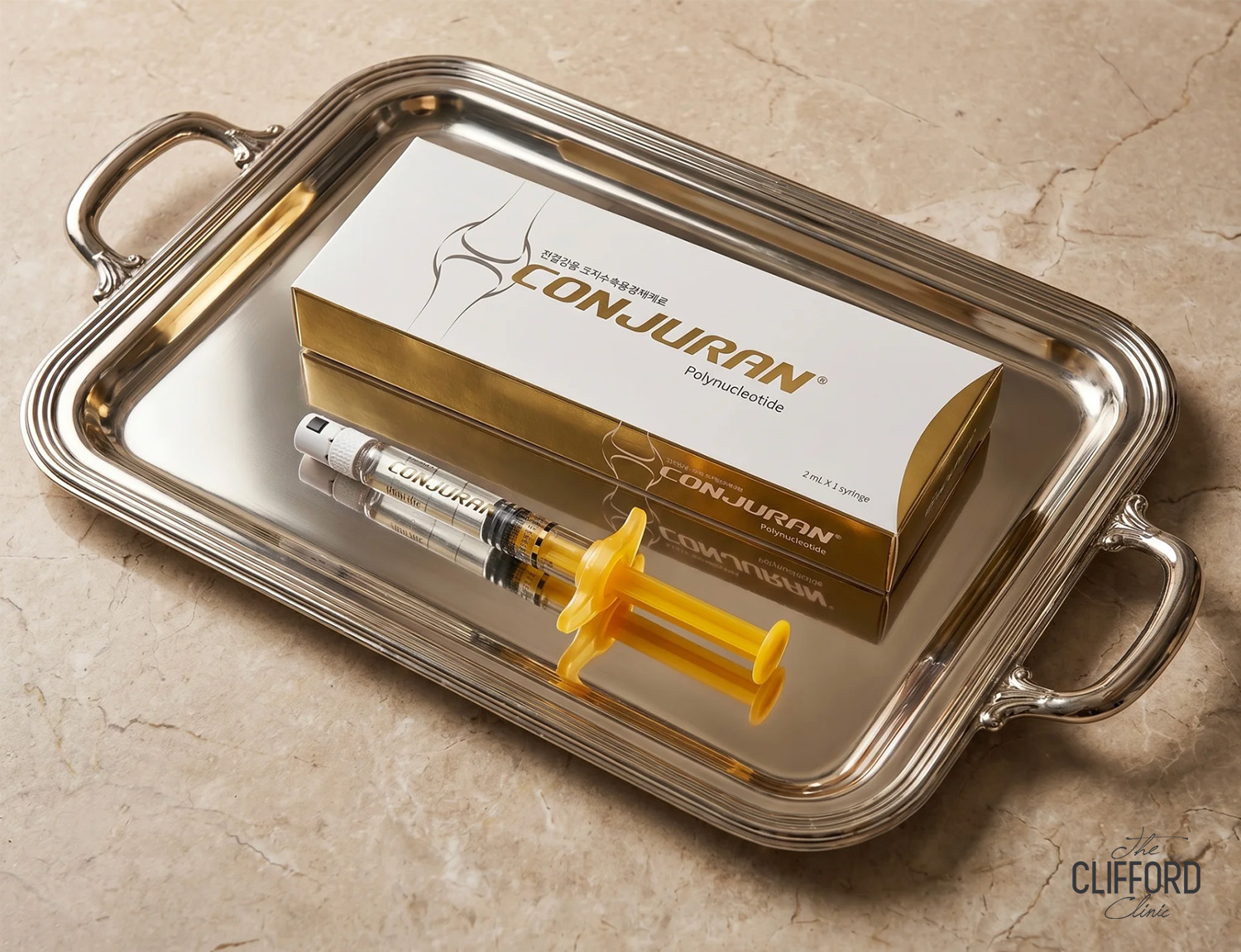
An intra-articular injection whose active component is sodium polynucleotide, a preparation of purified, highly polymerised DNA fragments. Within the joint it forms a viscoelastic gel, and it constitutes a treatment category of its own, distinct from both hyaluronic acid and PRP.
The polynucleotide gel is viscoelastic, so it lubricates the joint surfaces and reduces friction in a manner comparable to hyaluronic acid. It is also proposed to act on the cells of the joint lining, supporting their repair activity and reducing local irritation, although this second mechanism rests on a smaller body of evidence than the physical effect.
It is best suited for Symptomatic knee osteoarthritis with early to moderate cartilage wear, particularly where pain is provoked by activity, in patients seeking a non-surgical option while continuing rehabilitation. It is also considered where hyaluronic acid has produced limited or short-lived benefit.
Commonly given as a course of three injections at intervals of one to two weeks. Improvement develops over the weeks following the final injection, and the course is reviewed at three to six months to decide whether repetition is warranted.
it is worth noting that the published evidence is more limited than for hyaluronic acid or corticosteroid, and response varies between individuals. It has no effect on mechanical problems such as a meniscus tear that catches or locks the knee, which require separate assessment.
4. Steroid (Cortisone) Injections
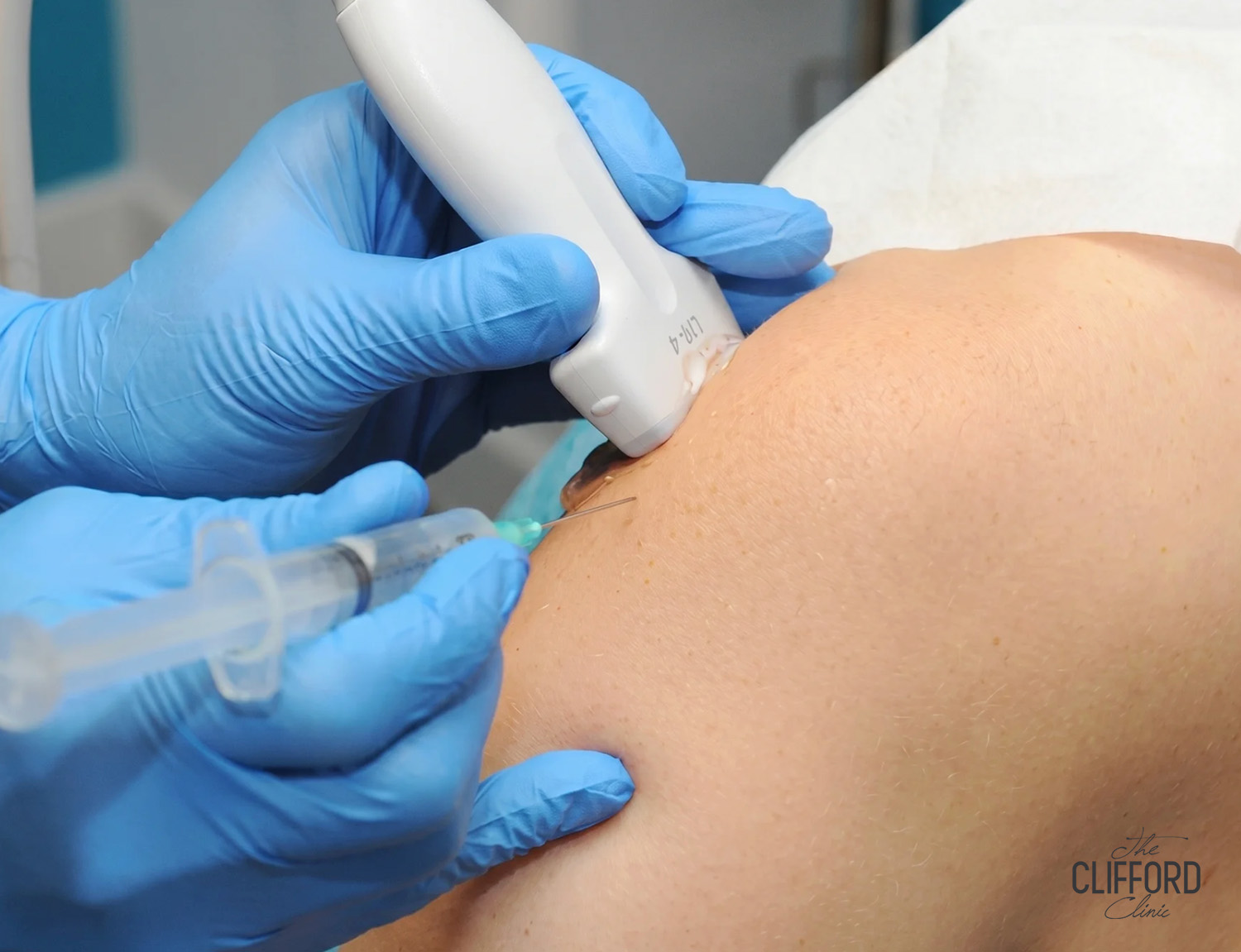
A corticosteroid, a potent anti-inflammatory medication, injected into the joint, usually combined with a local anaesthetic that gives immediate but brief relief. These are not the anabolic steroids used to build muscle.
Corticosteroid suppresses the inflammatory response of the joint lining, reducing the production of inflammatory mediators and the swelling that accompanies a flare. The action is confined to inflammation, so pain falls while the underlying cartilage loss is unchanged.
It is best suited for: Acute inflamed flares of osteoarthritis, in which the knee is swollen, warm and painful at rest and rapid relief is required. A further indication is to create a window of reduced pain in which physiotherapy or a longer-acting injection can be started.
Relief usually begins within one to three days and is largely established within a week. The effect typically lasts between four and twelve weeks. Repeat injections into the same knee are deliberately limited, conventionally to no more than three or four in a year and spaced at least three months apart.
Key limitations include short-lived effects and as the underlying arthritis is unaltered. Repeated injection is a concern in its own right, as frequent corticosteroid into the same joint has been associated with accelerated cartilage loss. Frequency is restricted for that reason.
Knee Injections Compared at a Glance
PRP, Hyaluronic Acid, Conjuran and Steroid Injections Compared
| Feature | PRP | Hyaluronic Acid | Conjuran | Steroid, Cortisone |
|---|---|---|---|---|
| Category | Biological / regenerative | Viscosupplement | Polynucleotide | Anti-inflammatory |
| Main Goal | Modulate joint biology and inflammation | Improve lubrication and cushioning | Support a comfortable joint environment | Rapidly calm inflammation |
| Source | The patient’s own blood | Manufactured HA gel | Sodium polynucleotide | Corticosteroid medication |
| Onset | Gradual, noticeable by 4 to 6 weeks | Gradual, over 4 to 6 weeks | Gradual, over the course of injections | Rapid, within 1 to 3 days |
| Duration | Commonly up to about 12 months | Commonly about 6 months | Variable, reviewed at 3 to 6 months | Short, about 4 to 12 weeks |
| Typical Use | 3 injections, 1 to 4 weeks apart | Single, or 3 to 5 weekly | 3 injections, 1 to 2 weeks apart | Selective, 3 to 4 per year at most |
| Best For | Reactive or inflammatory knee, earlier cartilage wear | Stiff, dry, grinding knee | OA symptoms and cartilage wear | Acute flares |
| Reverses Arthritis? | No | No | No | No |
The figures above are typical ranges rather than guaranteed outcomes. Selection remains a matter of individual assessment.
How Should the Right Injection Be Chosen?
The selection process is the same regardless of which injection is eventually given. It begins with confirming the diagnosis, establishing the pain arises from knee osteoarthritis and not from a meniscus tear, a ligament injury or a source of referred pain such as the hip or lumbar spine. It then considers the stage of arthritis, the pattern of pain (mechanical dryness versus reactive inflammation versus an acute flare), what has already been tried, and the patient’s goals.
Only at that point can a specific injection be recommended. Whichever injection is chosen, it should be paired with a programme of quadriceps strengthening and load management, since the injection reduces pain sufficiently for rehabilitation to proceed but does not substitute for it.
How The Clifford Clinic Matches the Injection to the Patient
At The Clifford Clinic, the choice between PRP, hyaluronic acid, Conjuran and a steroid injection is made through a personalised, stepwise process rather than by default or habit. Dr Gerard Ee and the team match the injection to the individual patient’s osteoarthritis grade, age, weight, activity level and treatment goals.
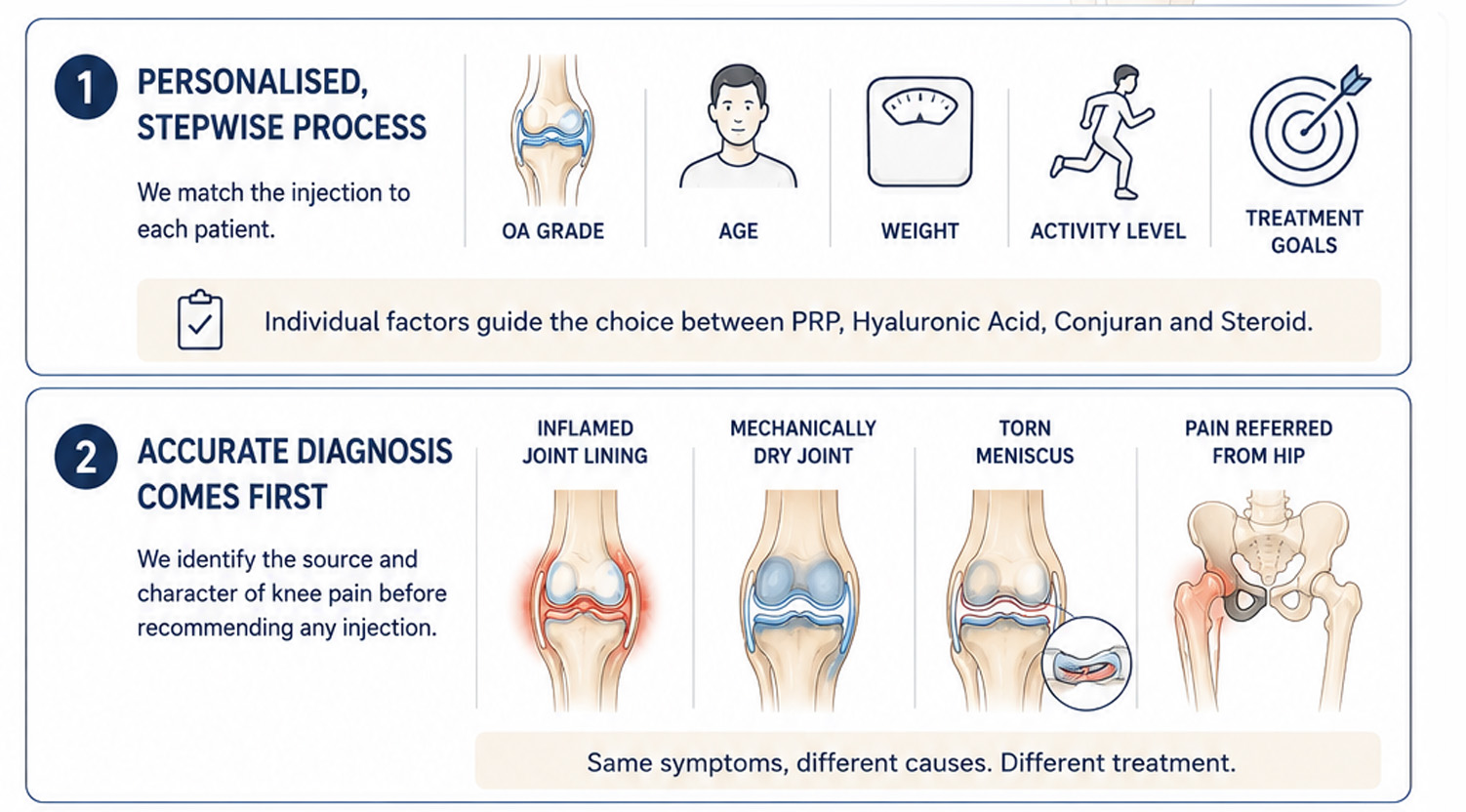
The foundation of that process is accurate diagnosis. The clinic identifies the source and character of the knee pain before recommending any injection, because complaints a patient describes in identical terms may reflect an inflamed joint lining, a mechanically dry joint, a torn meniscus or pain referred from the hip. Each of those responds to a different treatment.
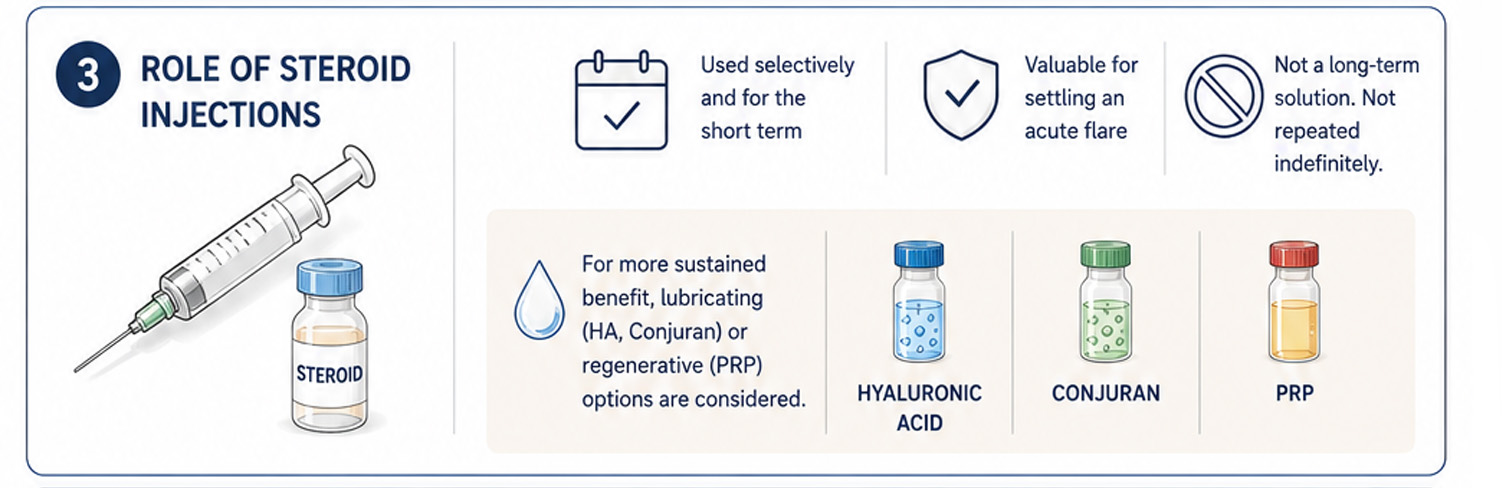
The clinic is also deliberate about the role assigned to steroid injections. Cortisone is used selectively and for the short term, valuable for settling an acute flare, but not a long-term solution and not repeated indefinitely. Where more sustained benefit is required, lubricating or regenerative options are considered instead. Patients are counselled throughout that an injection forms one component of a plan, that responses vary between individuals, and that the objective is to maintain activity and to delay or avoid knee replacement where possible.
Frequently Asked Questions
What is the best type of knee injection for osteoarthritis?
There is no single best injection. The four differ in mechanism, in how quickly they act and in how long the effect lasts. The appropriate choice depends on your diagnosis, the stage of osteoarthritis and your treatment goals.
What is the difference between Conjuran and hyaluronic acid?
Hyaluronic acid is a viscosupplement that replaces a molecule the joint fluid has lost. Conjuran is a polynucleotide preparation of purified DNA fragments which forms a viscoelastic gel and is also proposed to act on the cells of the joint lining. Both improve lubrication, but only Conjuran is credited with the additional effect on the cells of the joint lining, and the evidence for that is less mature.
Which knee injection works fastest?
Steroid (cortisone) injections act fastest, usually within one to three days, but the effect commonly lasts only four to twelve weeks. PRP, hyaluronic acid and Conjuran act gradually over several weeks and are intended to last considerably longer.
Can I have more than one type of knee injection?
Treatment plans can include different injections at different times, depending on how the knee responds. A steroid injection is sometimes used to settle an acute flare before a lubricating or regenerative injection is given. Sequencing of this kind is decided at review with your doctor.
Do any of these injections cure knee osteoarthritis?
None of these injections reverses arthritis or regrows cartilage. They manage symptoms and improve function, and they work best alongside quadriceps strengthening and load management, which remain the foundation of long-term management.
Related Reading
Other guides in The Clifford Clinic knee injection series.
- Treating Mild to Moderate Knee Osteoarthritis Without Surgery
- PRP vs Hyaluronic Acid for Knee Osteoarthritis,Which Is Right for You?
- Steroid (Cortisone) Injections for Knee Pain,Benefits, Risks and Timing
- Conjuran Knee Injections,What to Expect
- Hyaluronic Acid Knee Injections (Viscosupplementation),A Patient’s Guide
- PRP Injections for Knee Osteoarthritis,How They Work and Who They Help.
Clinic treatment pages.
Speak to The Clifford Clinic About Your Knee Pain

If you are unsure which knee injection is appropriate, an assessment that establishes the diagnosis, the stage of osteoarthritis and the pattern of pain will determine which of the four is suitable.
Knee assessments and injections at The Clifford Clinic are carried out by an experienced medical team that includes sports physicians and orthopaedic surgeons, supported by an MOH-approved day surgery facility for procedures that require it. Knee joint injections may also be claimable through MediSave and insurance. The clinic can advise on your eligibility and coverage at consultation.
The Clifford Clinic 50 Raffles Place, #01-01 Singapore Land Tower, Singapore 048623 (Exit B, Raffles Place MRT). Phone (65) 6532 2400. WhatsApp (65) 8318 6332.
About Dr Gerard Ee

Dr Gerard Ee is a physician at The Clifford Clinic whose main specialty is dermatology and aesthetic medicine, and who is also trained in orthopaedic surgery, with an extensive peer-reviewed research record in orthopaedics. His published work spans knee surgery, including studies on total knee arthroplasty and joint line restoration in The Knee and the Journal of Bone and Joint Surgery (British), alongside shoulder, spine and bone-healing research in journals such as Knee Surgery, Sports Traumatology, Arthroscopy and Clinical Orthopaedics and Related Research. This research-informed background underpins the evidence-based, individualised approach to knee care at The Clifford Clinic.
Medical Disclaimer
This article is for general education only and is not a substitute for personalised medical advice. Suitability for any knee injection can only be determined after an in-person assessment by a qualified doctor. Outcomes vary between individuals.

Author Bio
Dr Gerard Ee

Dr Gerard Ee is the Medical Director of The Clifford Clinic in Singapore. He earned his medical degree from St George's University of London and built his surgical experience across the Singapore General Hospital, National University Hospital, and Mount Sinai Hospital in New York. He holds Membership of the Royal College of Surgeons (Edinburgh) and a Postgraduate Diploma in Dermatology (Cardiff), and is fully accredited in aesthetic procedures including botulinum toxin, fillers, lasers, and light therapies. A strong advocate of minimally invasive, natural-looking results, Dr Ee has published in several medical and scientific journals and presented his research in cities including Taipei, Las Vegas, and London.
See all posts by Dr Gerard Ee »