




Singapore: Knee Joint Injection Clinics
Knee pain is one of the most common joint problems in Singapore. Years of walking between MRT stations, climbing HDB stairs, standing at work and old sports injuries slowly load the knee joint. Over time the smooth cartilage can soften and thin, the synovial lining becomes inflamed and the underlying bone reacts. Eventually simple activities like walking to the coffee shop or going down stairs start to hurt.
When that happens, many people begin searching for two things:
- Which are the best knee joint injection clinics with good reviews in Singapore
- How much do knee joint injections such as hyaluronic acid and PRP actually cost
At the same time, patients are hearing more about platelet rich plasma and newer biologic treatments. PRP is now one of the most studied non-surgical options for knee osteoarthritis and is widely used internationally. Yet in Singapore relatively few clinics offer true, properly prepared PRP because it requires specialised equipment, strict protocols and experience with biologic handling.
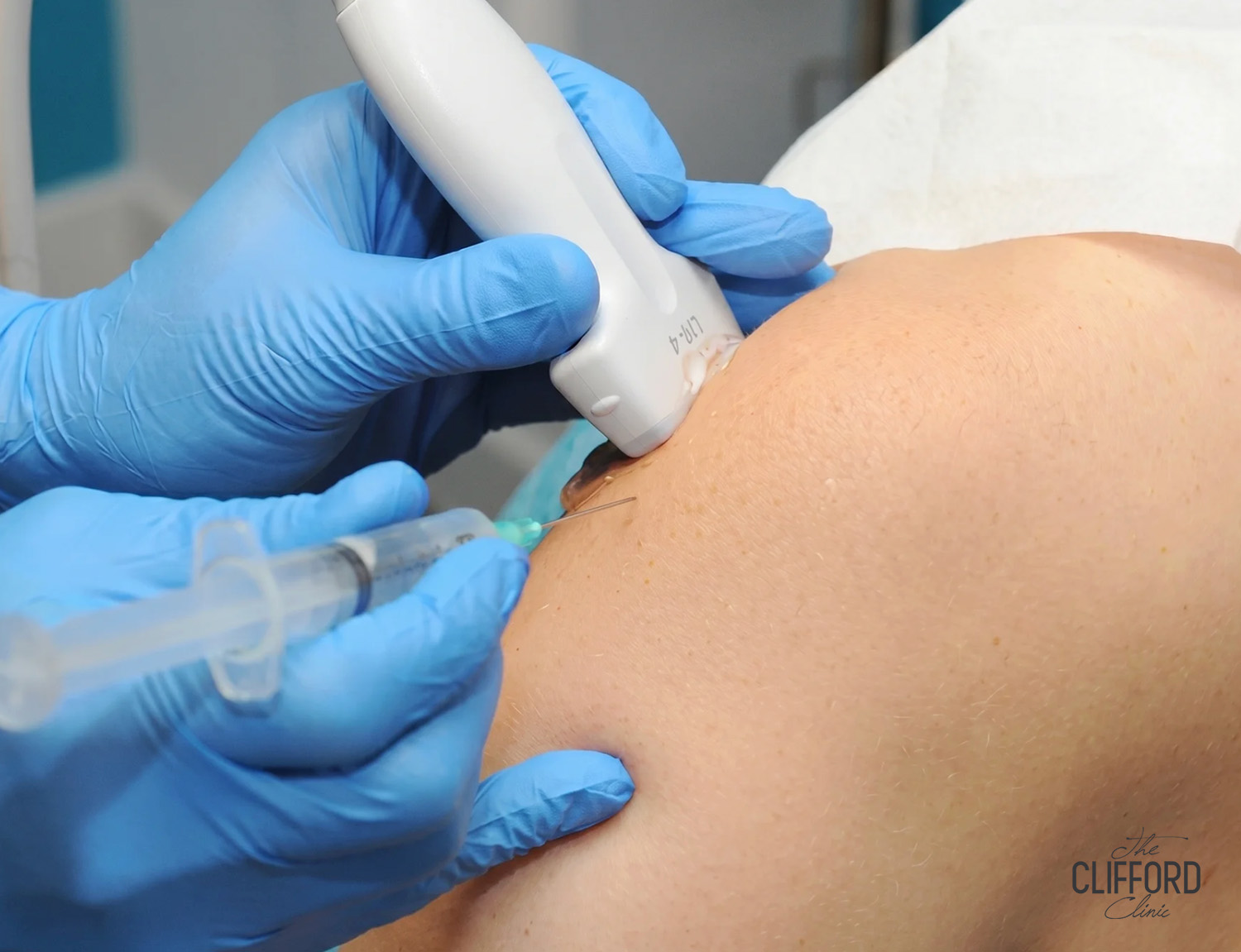
This article answers those questions in detail. It explains how to think about clinic quality, breaks down realistic injection costs and goes deeper into hyaluronic acid, PRP and RegenPRP, GUNA bio scaffold and bone marrow aspirate concentrate. It also shows why clinics led by doctors with peer reviewed knee publications, such as Dr Gerard Ee, are in a stronger position to deliver precise and predictable results.
Why knee research and surgical background matter for injections
A knee injection is not just a quick jab into a random space. The result depends on how well the doctor understands the three dimensional structure and mechanics of the joint
- the medial, lateral and patellofemoral compartments
- the suprapatellar pouch and the anteromedial and anterolateral recesses
- how the joint line shifts with flexion and extension
- where cartilage loss is concentrated on weight bearing radiographs
- the overall mechanical axis of the limb and degree of varus or valgus
A surgeon who has spent years performing knee arthroplasty and arthroscopy and who has published on knee alignment and joint line measurement will naturally have a much more accurate mental map of the joint. That map guides the choice of portal, depth of the needle, angle of entry and decision to aspirate fluid before injecting.
Joint line measurement and the work of Dr Gerard Ee
In the journal Knee, Dr Gerard Ee co authored
Computer Navigation is a Useful Intra Operative Tool for Joint Line Measurement in Total Knee Arthroplasty.
That study examined how accurately surgeons can measure and restore the joint line when they use computer navigation in knee replacement surgery. The joint line is the horizontal plane where the femur meets the tibia. If it is moved too far up or down during surgery it changes ligament tension, patellofemoral tracking, flexion gap balance and the feel of the knee in daily life.
This kind of research forces a surgeon to think in millimetres and degrees. When the same surgeon later looks at a standing long leg X ray to decide on an injection, they are not just seeing the wear, he look at the joint line height, mechanical axis deviation, medial versus lateral loading and patellofemoral alignment. That informs which compartment is the main pain generator and whether injections like hyaluronic acid, PRP or GUNA are likely to help.
Managing complex knees and interpreting unusual anatomy
In Knee Surgery, Sports, Traumatology, Arthroscopy, Dr Ee also co authored
Minimally Invasive Unicondylar Knee Arthroplasty in a Patellectomized Patient
A patellectomized knee behaves very differently from a normal knee. The quadriceps lever arm changes, patellofemoral mechanics are absent and tibiofemoral loading patterns adapt. Managing such cases develops a very deep understanding of how bone, cartilage and soft tissues redistribute forces.
That experience is directly useful when analysing more common problems such as
- early medial compartment osteoarthritis in a slightly bow legged patient
- degenerative medial meniscal tears with patchy chondrosis
- mixed patellofemoral and tibiofemoral wear in a middle aged runner
When that same doctor performs a knee injection, the route, depth and volume are not guessed. They are chosen in line with the underlying biomechanics and pathology.
Main knee joint injection options available in Singapore
Different injections target different mechanisms. The best choice depends on radiographic grade, alignment, age, activity level, metabolic factors and realistic expectations.
Corticosteroid injections
Corticosteroids act as powerful anti inflammatory agents. Inside the joint they
- suppress the arachidonic acid cascade
- reduce prostaglandin and leukotriene synthesis
- down regulate interleukin one, interleukin six and tumour necrosis factor
- stabilise lysosomal membranes in synovial cells
Clinically this reduces synovial thickening and effusion and calms angry and inflamed joints. Corticosteroids are often used when
- the knee is very swollen and warm
- there is a clear inflammatory flare on top of baseline osteoarthritis
- fast relief is needed to allow travel or to restart physiotherapy
Pain relief usually begins within twenty-four to seventy-two hours. Benefit often lasts a few weeks and sometimes longer in milder disease. However repeated, frequent corticosteroid injections can accelerate cartilage breakdown and weaken periarticular soft tissues so most specialists use them carefully, especially in younger or active patients.
In specialist private practice in Singapore, a corticosteroid injection into the knee usually costs about $600 per knee.
Hyaluronic acid viscosupplementation
Hyaluronic acid is a key contributor to the viscoelastic behaviour of synovial fluid. In osteoarthritis, hyaluronic acid strands become shorter and less concentrated, synovial fluid thins and loses its ability to cushion and lubricate.
Exogenous hyaluronic acid injections are designed to
- increase viscosity and elasticity of joint fluid
- improve lubrication under both slow and fast loading
- reduce shear forces on remaining cartilage
- modulate synovial cell activity through CD44 and other receptors
Modern hyaluronic acid formulations may be high molecular weight linear chains or cross linked gels that persist longer in the joint. Relief tends to build slowly over several weeks and can last for months in well selected patients, particularly those with mild to moderate osteoarthritis and preserved joint space.
In reputable clinics in Singapore, hyaluronic acid viscosupplementation typically costs about $1,500 to $1,800 per knee.
Platelet rich plasma and RegenPRP in knee injections
Platelet rich plasma has become one of the most widely studied biologic treatments for knee osteoarthritis. At a basic level, PRP is produced by spinning the patient’s blood in a centrifuge to separate red blood cells and plasma. The aim is to concentrate platelets and their growth factors while minimising components that may drive inflammation, such as neutrophils and high levels of free haemoglobin.
There is no single PRP. Important variables include
- the final platelet concentration relative to baseline (for example three to six times)
- whether leukocytes are included (leukocyte rich) or largely removed (leukocyte poor)
- the presence of red blood cell contamination
- activation method and timing of growth factor release
For knee osteoarthritis, many clinicians now favour leukocyte poor PRP prepared in a closed sterile system with consistent concentration ratios. This gives a high growth factor payload with a lower risk of excessive post injection inflammatory reaction.
Mechanistically, PRP injected into the knee is believed to
- dampen synovial inflammation
- improve anabolic to catabolic balance in chondrocytes
- influence the signalling between cartilage and subchondral bone
- improve subjective pain via changes in joint neurochemistry
Multiple clinical trials and meta analyses have shown that in mild to moderate knee osteoarthritis, PRP can provide superior pain and functional improvement compared with hyaluronic acid alone at six to twelve months in many cohorts.
RegenPRP in our practice
RegenPRP refers to PRP prepared using a standardised, closed kit based system that is designed to produce a reproducible, high quality, leukocyte poor preparation with minimal red cell contamination. The advantages of this style of system include
- a defined and stable platelet concentration factor
- minimal operator variability
- closed circuit processing that reduces contamination risk
- predictable volume and composition for each injection
In our practice, RegenPRP is used as part of a structured protocol for patients with
- Kellgren Lawrence grade 2 or early grade 3 osteoarthritis
- focal cartilage damage with preserved global joint space
- good limb alignment or only mild deformity
- realistic expectations about symptom improvement and joint preservation
Treatment usually involves one to three intra articular injections spaced one to four weeks apart, combined with a strengthening and neuromuscular control programme.
Although PRP is now commonly discussed in guidelines and widely used internationally for knee osteoarthritis, in reality relatively few clinics in Singapore offer true, properly prepared PRP. Many factors contribute to this.
- The equipment and kits are costly and need consistent volume.
- Staff must be trained in sterile biologic handling.
- The doctor has to be comfortable counselling patients about evidence that is supportive but still evolving.
As a result, PRP tends to be concentrated in knee focused and sports medicine practices rather than general clinics. This partly explains why patients who have “tried everything” elsewhere may still not have been offered PRP or RegenPRP until they see a clinic that specialises in joint preservation.
In Singapore private practice, PRP or RegenPRP injections for the knee typically cost between $900 and $2,200 per knee depending on the system used, the number of injections and what is included in the treatment package.
GUNA bio scaffold extracellular matrix injections
GUNA bio scaffold is an injectable based on extracellular matrix components rather than platelets or cells. It provides a structured mixture of collagen fragments, matrix proteins and regulatory molecules intended to support the local tissue environment.
Its proposed actions include
- modulation of pro inflammatory cytokines within the periarticular matrix
- improved hydration and viscoelastic properties of soft tissues
- support for collagen fibre alignment and microarchitecture
- reduction of nociceptive signalling from overloaded capsular and ligamentous structures
GUNA is often chosen for
- early to moderate osteoarthritis
- patients who prefer a biologic option but wish to avoid blood draw
- individuals with substantial periarticular soft tissue pain in addition to intra articular symptoms
In Singapore, GUNA bio scaffold injections usually cost about $1,500 to $2,000 per knee.
Combination injections
Combination protocols such as PRP plus hyaluronic acid attempt to target both mechanical and biological aspects of knee osteoarthritis
- hyaluronic acid improves lubrication and load distribution
- PRP brings a concentrated mix of growth factors to modulate joint biology
In carefully selected patients with moderate osteoarthritis, combination treatment can offer stronger or more sustained symptom relief than either agent alone, especially when combined with weight management and physiotherapy.
Bone marrow aspirate concentrate and other regenerative options
Bone marrow aspirate concentrate is a more advanced biologic option. Bone marrow is aspirated from the iliac crest and processed to concentrate mesenchymal stromal cells, progenitors and growth factors. The concentrate is then injected intra articularly or into focal bone lesions.
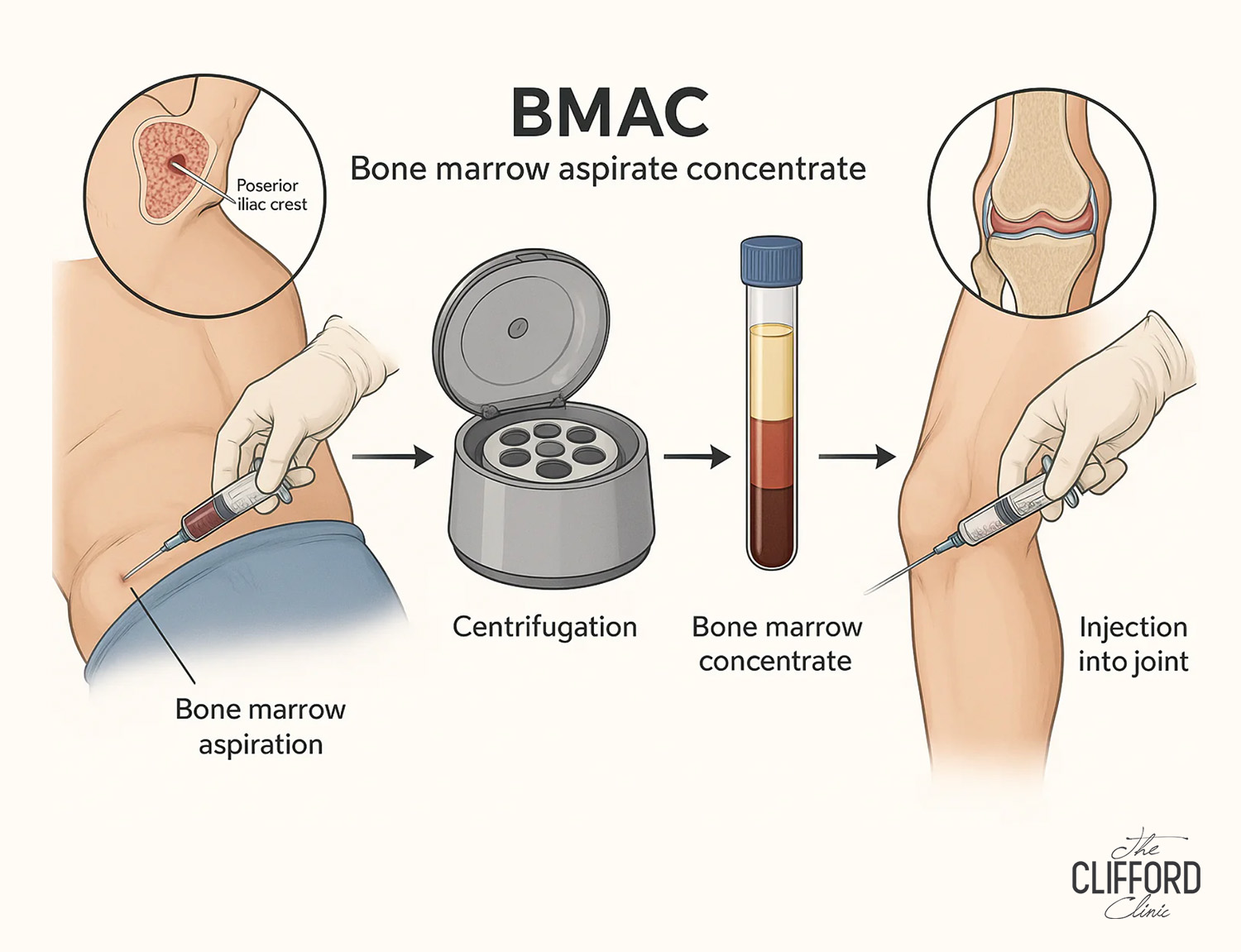
BMAC is believed to influence
- subchondral bone remodelling
- synovial and cartilage signalling
- local inflammatory balance
Because it requires a minor surgical harvest and stricter sterility, BMAC is usually performed in a day surgery setting. Costs are higher and it is commonly reserved for motivated patients who have plateaued with simpler injections but are not yet ready for knee replacement.
Updated cost guide for knee injections in Singapore
A realistic private practice range in Singapore is
- Corticosteroid injection
- about $600 per knee
- Hyaluronic acid viscosupplementation
- about $1,500 to $1,800 per knee
- Platelet rich plasma and RegenPRP
- about $900 to $2,200 per knee
- PRP plus hyaluronic acid combination
- about $1,500 to $2,800 per knee
- GUNA bio scaffold extracellular matrix
- about $1,500 to $2,000 per knee
- Bone marrow aspirate concentrate and similar cell based therapies
- about $4,000 to $9,000 per knee
Exact fees depend on the doctor’s seniority, type of product, whether ultrasound guidance is used, level of sterility and what is included in the overall package.
Clinics that consistently receive good reviews for knee injections tend to share several traits
They are led by knee focused doctors
Orthopaedic or sports medicine specialists who treat knee problems every day and often have research experience, such as Dr Ee’s publications in Knee and Knee Surgery, Sports, Traumatology, Arthroscopy.
They integrate imaging and biomechanics
Weight bearing X rays, sometimes MRI and musculoskeletal ultrasound are interpreted in the context of limb alignment, gait and clinical findings.
They maintain high sterility standards
Biologic injections such as PRP, RegenPRP, GUNA and BMAC are performed in a controlled environment using strict aseptic technique and often ultrasound guidance.
They provide a full joint preservation plan
Injections are combined with targeted strengthening, neuromuscular retraining, weight management advice and activity modification rather than used as stand alone magic bullets.
They are honest about indications and limits
Patients are counselled clearly about what injections can and cannot achieve and about when partial or total knee replacement is the more appropriate path.
Why many patients choose Dr Gerard Ee for knee injections
Patients in Singapore often prefer to see a doctor who can offer both high level non surgical options and, if necessary, advanced surgery. Dr Gerard Ee is in this position.

His research on joint line measurement and complex unicondylar arthroplasty shows a deep understanding of knee mechanics from first principles. That same understanding guides decisions about when to use corticosteroid, when to prefer hyaluronic acid, when to prescribe RegenPRP, when to consider GUNA or BMAC and when to move to surgical solutions.
His clinic has the infrastructure to perform ultrasound guided injections in a controlled setting with immediate access to imaging and close collaboration with physiotherapists. Many patients report that, after a tailored programme including PRP or RegenPRP, they can walk further, manage stairs more confidently and rely less on oral pain medication.
Frequently asked questions about knee injections in Singapore
Which clinic is best for knee joint injections in Singapore
The best clinic is usually one led by a knee focused specialist who understands both surgical and non surgical treatment options and who can offer evidence based injections such as hyaluronic acid, PRP, RegenPRP, GUNA and BMAC in a controlled environment. Clinics where the doctor has published knee research in international journals provide an extra level of reassurance about technical depth.
How much do hyaluronic acid knee injections cost in Singapore
In reputable private clinics in Singapore, hyaluronic acid viscosupplementation typically costs about $1,500 to $1,800 per knee. The fee reflects the brand of hyaluronic acid used, the sterile procedure, any ultrasound guidance and follow up support.
How much does a corticosteroid knee injection cost
A corticosteroid injection into the knee generally costs about $600 per knee in a specialist setting. It is often used for short term relief in a flare of inflammation rather than as a repeated long term solution.
How much does PRP or RegenPRP cost for the knee
PRP and RegenPRP injections usually cost between $900 and $2,200 per knee in Singapore, depending on the system used, how many injections are planned and what is included in the package. RegenPRP prepared in a closed sterile system tends to sit towards the higher end of that range.
Is PRP really effective for knee osteoarthritis
Many good quality studies and meta analyses have shown that PRP can improve pain and function in patients with mild to moderate knee osteoarthritis and that in many comparisons it outperforms hyaluronic acid alone at six to twelve months. Results are best when knees still have some joint space, alignment is acceptable and the PRP is prepared and delivered using high quality, standardised methods.
Why do not all clinics offer PRP for the knee if it is so useful
PRP requires dedicated centrifuge systems, single use kits, trained staff and strict biologic handling protocols. The doctor also needs to be familiar with the evidence and comfortable explaining benefits and limitations. These factors mean that true PRP is more common in knee and sports focused clinics than in general practices. Some clinics may advertise “plasma” injections that are not actually high concentration, leukocyte controlled PRP, so it is important to ask about the system used.
How do I know whether I should choose injections or surgery
Key factors include the radiographic grade of osteoarthritis, how far you can walk, whether you have night pain, the presence of deformity and how much previous non surgical care you have tried. Patients with early or moderate osteoarthritis and acceptable alignment are often good candidates for injections such as hyaluronic acid, PRP, RegenPRP or GUNA. Patients with severe joint space loss, marked varus or valgus and very limited function may be better served by partial or total knee replacement. A knee specialist can guide you after a thorough assessment.
How long does relief from a knee injection last
Corticosteroid injections tend to act quickly but the effect may last only several weeks. Hyaluronic acid and PRP often have a slower onset but can provide relief for several months in suitable patients. Biologic treatments such as GUNA and BMAC may give longer improvement in selected cases. Long term success always depends on continuing strengthening, weight management and sensible load control.
If knee pain is beginning to limit your work, family life or exercise, a consultation with an experienced knee specialist can help you decide whether hyaluronic acid, PRP, RegenPRP, GUNA, BMAC or surgery is the most appropriate next step for your specific knee.

Author Bio
Dr Gerard Ee

Dr Gerard Ee is the Medical Director of The Clifford Clinic in Singapore. He earned his medical degree from St George's University of London and built his surgical experience across the Singapore General Hospital, National University Hospital, and Mount Sinai Hospital in New York. He holds Membership of the Royal College of Surgeons (Edinburgh) and a Postgraduate Diploma in Dermatology (Cardiff), and is fully accredited in aesthetic procedures including botulinum toxin, fillers, lasers, and light therapies. A strong advocate of minimally invasive, natural-looking results, Dr Ee has published in several medical and scientific journals and presented his research in cities including Taipei, Las Vegas, and London.
See all posts by Dr Gerard Ee »