
Pico Laser vs IPL for Pigmentation in Singapore, Which Is Safer for Asian Skin?
Written by Dr Bernard Ong. Medically reviewed by Dr Gerard Ee
Pico laser and intense pulsed light (IPL) both reduce pigmentation, but they act through different mechanisms and are suited to different conditions. Pico laser delivers a single wavelength in ultra-short pulses that fragment pigment by a photomechanical effect with minimal heat. IPL delivers a broad spectrum of light that targets pigment thermally by selective photothermolysis. For superficial sun spots and freckles, both are effective. For melasma and darker Asian skin the distinction is clinically important, as heat-driven treatments carry a higher risk of aggravating pigmentation. Selection between the two is determined by the diagnosis rather than by the device.
How Pico laser and IPL differ mechanistically
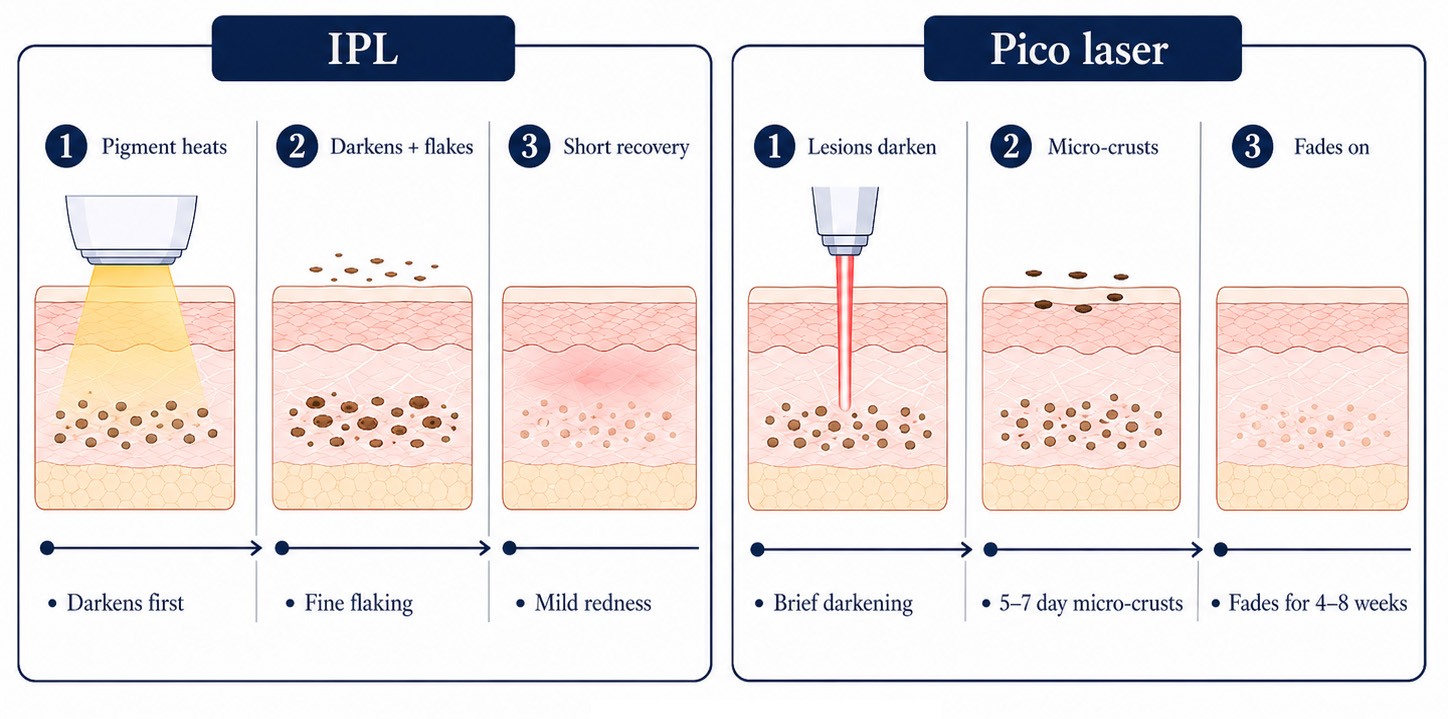
The difference in safety profile follows directly from the two mechanisms of action. IPL is not a laser but a flashlamp, emitting a broad band of wavelengths, usually filtered to a range absorbed by melanin and haemoglobin. The absorbed light is converted to heat, which damages the pigment-containing cells and blood vessels. This process, termed selective photothermolysis, underlies most light-based pigment treatment. IPL is correspondingly versatile, as a single device can address pigment, redness and some features of photoageing within one pass.
Pico laser is a single-wavelength device that delivers pulses of picosecond duration, considerably shorter than the nanosecond pulses of older lasers. At this pulse duration the dominant effect is photoacoustic rather than photothermal. The delivered energy generates rapid pressure waves that fracture melanin into very fine particles, which are subsequently cleared by the immune system and lymphatic drainage. The surrounding skin is subjected to less thermal stress, as substantially less energy is deposited as heat. In melanin-rich skin, residual heat is the principal trigger of post-inflammatory hyperpigmentation (PIH). A treatment that deposits less heat therefore carries an inherent safety advantage.
Comparative evidence for Pico laser and IPL
The two technologies are complementary rather than either being superior across all indications. IPL produces a pronounced reduction of superficial melanin because its wavelengths are strongly absorbed by pigment near the surface, and its strongest results are accordingly seen in discrete sun spots and mixed photoageing. Picosecond lasers achieve skin lightening through photomechanical fragmentation and, with fractional handpieces, through controlled dermal remodelling. In a direct comparison of a 730 nm picosecond laser with a 532 nm Q-switched laser for facial pigmented disorders, the picosecond device produced greater improvement, fewer adverse effects and higher patient satisfaction. The same lower-heat property that favours the picosecond approach in Asian skin also underlies the caution regarding heat-heavy IPL in pigment-prone patients.
Pigmentation types and the technology suited to each
IPL and Pico Laser Compared by Pigmentation Type
| Pigment Type | IPL | Pico Laser |
|---|---|---|
| Discrete Sun Spots Solar Lentigines |
Effective, strong superficial melanin reduction | Effective, precise, low heat |
| Freckles | Effective | Effective, often fewer sessions |
| Mixed Photoageing with Redness | A single device can address pigment and vessels | Effective for pigment, redness requires a vascular device |
| Post-Inflammatory Hyperpigmentation | Caution required, heat may aggravate | Preferred, lower heat |
| Melasma | Higher risk of aggravation and rebound | Low-fluence toning as an adjunct, with continued caution |
| Dermal Pigmentation such as Hori’s Naevus | Limited, superficial reach | 1064 nm reaches dermal pigment |
Asian skin and the risk of post-inflammatory hyperpigmentation
Asian skin falls mainly within Fitzpatrick types three to five, which carry more baseline melanin and more reactive melanocytes. These melanocytes respond to heat or inflammation by increasing pigment production. This is the biological basis of post-inflammatory hyperpigmentation, and it requires that any heat-driven treatment be dosed conservatively in darker skin. IPL delivers substantial thermal energy across a broad area, and aggressive settings or inexperienced technique can therefore induce new pigment rather than remove it. Pico laser offers a wider margin of safety in this skin type, as its effect is concentrated into a photoacoustic pulse with minimal spread of heat. IPL is not thereby rendered unsafe in trained hands, but settings, cooling and case selection assume greater importance.
Melasma and why both modalities require caution
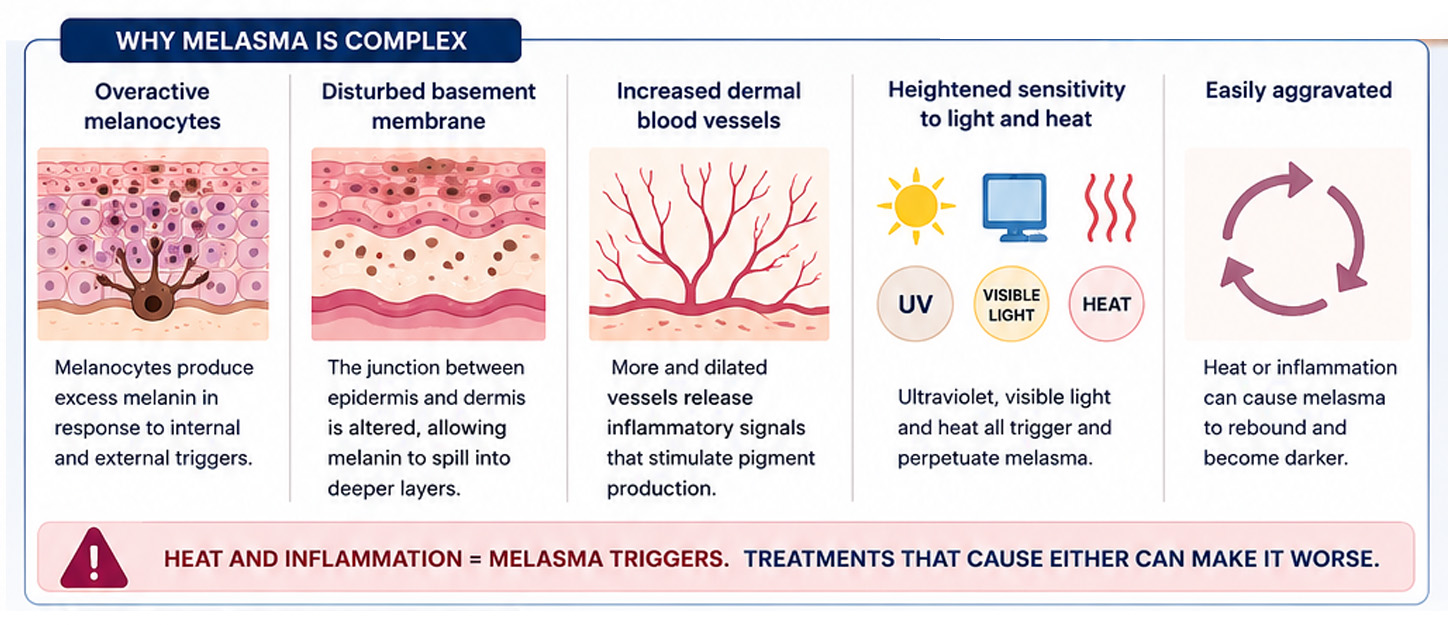
Melasma is not confined to surface pigment. It involves overactive melanocytes, a disturbed basement membrane, increased dermal blood vessels and heightened sensitivity to ultraviolet light, visible light and heat. Treatments that deliver heat or provoke inflammation can cause the condition to rebound darker, as both are established melasma triggers. IPL is the higher-risk option because it is both heat-based and broad in its delivery, and it is often avoided or used with considerable caution in active melasma. Pico laser can be used in melasma only at low-fluence toning settings, and only as an adjunct within a plan built on strict photoprotection and topical therapy. Neither device cures melasma, and both can worsen it if used aggressively. First-line management remains photoprotection that includes cover against visible light, combined with topical agents such as tranexamic acid, with conservative laser toning introduced only afterwards and only where appropriate.
Downtime and recovery
Both treatments involve little downtime relative to ablative procedures. After IPL, heated pigment migrates towards the surface and treated lesions darken, then exfoliate as fine flakes over several days, accompanied by transient redness. After Pico laser, discrete lesions also darken briefly and may form micro-crusts, which typically separate within five to seven days, with residual pigment continuing to fade over the following four to eight weeks. In both cases recovery is short, although the treated skin remains temporarily more vulnerable to ultraviolet light, and daily photoprotection throughout healing is essential to prevent post-inflammatory darkening. Detailed guidance is set out in our Pico laser aftercare guide.
Cost and session planning
IPL sessions are often priced lower individually, and a single IPL device can address several concerns in one pass, an arrangement suited to patients with combined pigment and redness. Pico laser courses may involve fewer sessions for a given pigment result, typically spaced four to six weeks apart, and offer a wider safety margin in darker skin. The more informative comparison is the projected total for a complete plan matched to the diagnosis rather than the single-session price, because pigmentation usually requires a course rather than a single visit. Our Pico laser price guide sets out what a fair quotation should include.
Addressing the vascular component of pigmentation
Both melasma and solar lentigines involve a vascular component in addition to excess pigment. Increased dermal blood vessels and raised levels of vascular growth signals are found within these lesions, and the vasculature interacts with melanocytes to sustain melanin production. IPL targets haemoglobin as well as melanin and can reduce the vascular component along with surface pigment, a dual action that accounts in part for its performance in mixed photoageing. Pico laser targets pigment rather than vessels, and a vascular device or a combination approach may therefore be required where redness or a strong vascular element coexists. In melasma specifically, the vascular contribution explains the value of oral tranexamic acid as an adjunct alongside photoprotection and topical therapy, since it reduces the interaction between blood vessels, inflammation and melanocytes. The most durable results in complex pigmentation are generally obtained by addressing pigment, inflammation and vasculature together rather than by relying on a single device.
Combination and sequential strategies
Pigmentation is frequently managed in stages, because no single technology addresses every mechanism. A common sequence is initial reduction of baseline pigment and stabilisation of the skin with photoprotection and topical agents, followed by introduction of a device suited to the residual pigment, and then maintenance with continued sunscreen and topical therapy. Pre-treatment with pigment-inhibiting topicals before any light or laser session can reduce the melanin load and lower the risk of post-inflammatory hyperpigmentation. After treatment, maintenance topicals sustain clearance and delay recurrence. This is of particular importance in melasma, in which relapse is expected without ongoing care. Sequencing devices across a plan allows each mechanism to contribute while individual sessions remain conservative, for example by using IPL for superficial pigment and a picosecond laser for deeper or resistant pigment.
Which is safer for Asian skin?
The lower-heat profile of Pico laser confers a safety advantage in pigment-prone Asian skin, particularly where melasma or post-inflammatory hyperpigmentation is involved. IPL remains a reasonable and effective choice in experienced hands for discrete, well-defined sun spots on lighter skin, or where redness and general photoageing are to be addressed with a single device. Neither is universally safer. Selection depends on the pigment type, the skin tone and the operator.
Who is suitable and who is not
- May suit IPL:lighter skin with discrete sun spots, combined superficial pigment and redness, general photoageing, no active melasma.
- May suit Pico laser:darker Asian skin, post-inflammatory hyperpigmentation, dermal pigmentation, stabilised melasma requiring cautious toning, and patients who prefer a lower-heat option.
- Not suitable for either without caution.Active untreated melasma, recently tanned skin, active infection or inflammation in the area, and any undiagnosed or changing pigmented lesion, which requires medical review before treatment.
Doctor’s perspective. Patients frequently ask which device is superior, when the determining factor is which mechanism suits their pigment and their skin tone. IPL is a capable and versatile device where the pigment is superficial and the skin type is suitable. For melanin-rich Asian skin, particularly where melasma or post-inflammatory pigment is present, the lower heat of a picosecond laser is generally the safer option. Selection should be determined by the diagnosis rather than by device marketing.
How pigment is treated at The Clifford Clinic
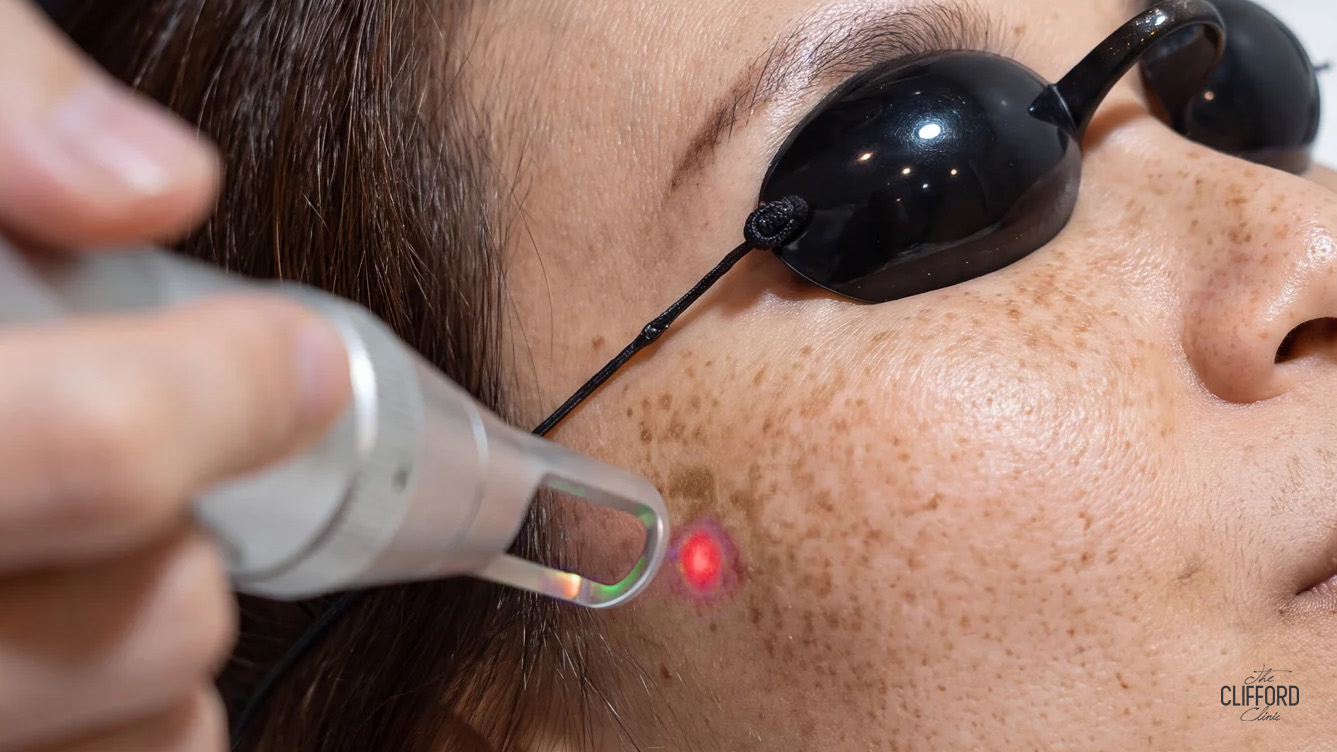
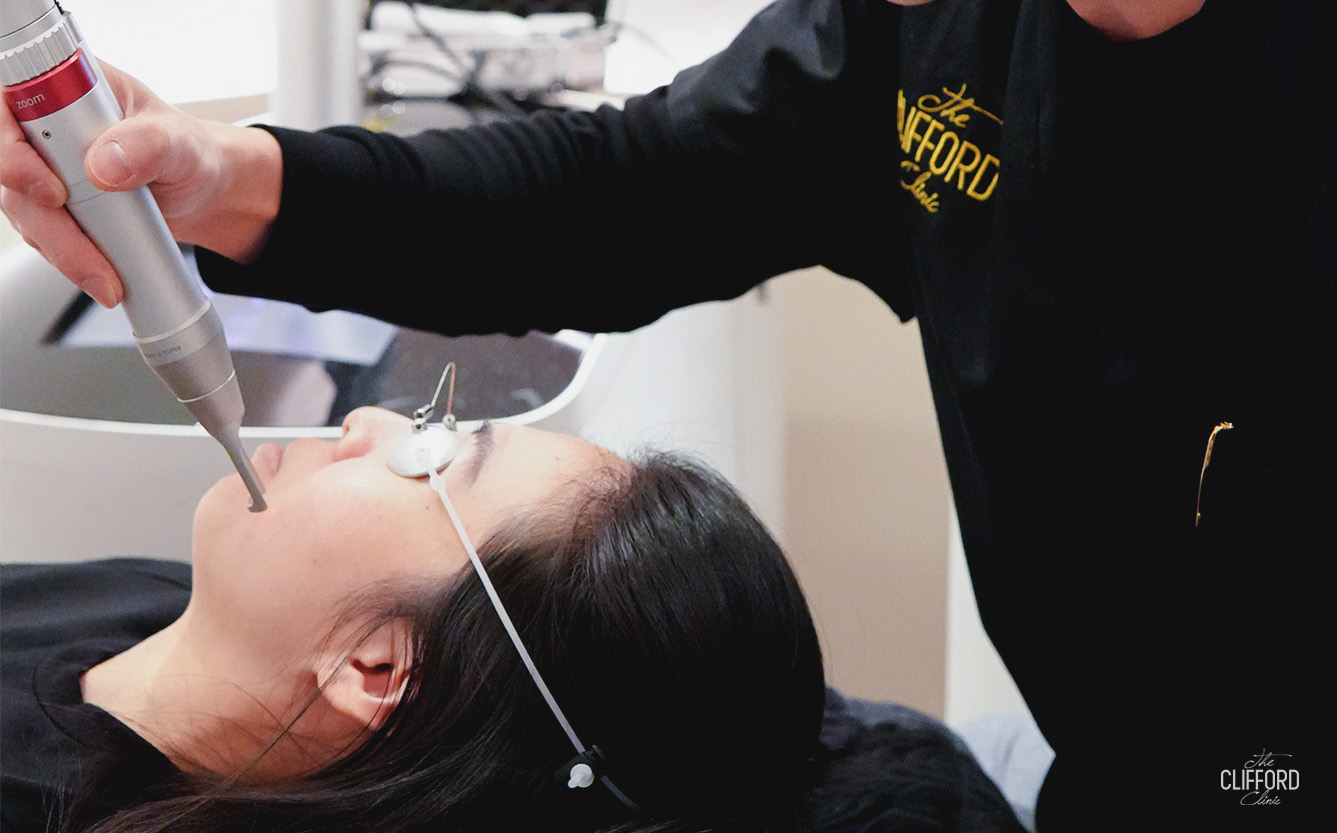
Pigment is treated with picosecond platforms rather than broad-spectrum IPL, with the wavelength matched to the depth of the pigment, from 532 nm for superficial lesions to 1064 nm for dermal pigment. Where a vascular element is present, a 595 nm wavelength can address both pigment and small vessels. This targeted, lower-heat approach is better suited to melanin-rich skin than the broad heating delivered by IPL.
Frequently asked questions
Is Pico laser better than IPL for pigmentation?
Neither device is superior in every case. Pico laser offers a lower-heat, higher-safety margin in darker skin and in melasma or post-inflammatory pigment. IPL is effective and versatile for discrete superficial sun spots and combined photoageing on lighter skin.
Is IPL safe for Asian skin?
IPL can be used safely in Asian skin in experienced hands, with conservative settings and cooling. The risk of post-inflammatory hyperpigmentation is higher in darker skin because IPL delivers heat across a broad area, and case selection and technique are correspondingly important.
Can IPL worsen melasma?
IPL can worsen melasma. It is heat-based, and treatment can cause the condition to rebound darker because heat is an established melasma trigger. Melasma is usually managed first with photoprotection and topical therapy, with IPL avoided or used with considerable caution.
Which is better for freckles?
Both are effective for freckles. IPL strongly reduces superficial melanin, whereas Pico laser fragments pigment with less heat and often in fewer sessions. Selection is determined by the skin tone and by whether redness is also present.
Which has less downtime?
Both involve little downtime. Treated lesions darken and exfoliate over several days with either modality, and then fade over the following weeks. Photoprotection during healing is required with both.
Can Pico and IPL be combined?
In selected cases the two may be used for different components of a patient’s pigmentation across a single treatment plan, for example IPL for superficial pigment and vessels and a picosecond laser for deeper or resistant pigment. This remains a clinical decision based on the diagnosis.
Matching the technology to your pigmentation
The safer choice depends on your pigment type and skin tone, not on the device name. Learn about Pico laser in Singapore and pigmentation treatment in Singapore, or book at The Clifford Clinic, 50 Raffles Place, #01-01 Singapore Land Tower. Call (65) 6532 2400 or WhatsApp (65) 8318 6332.
Selected References
- Comparative study of a 1064 nm fractional picosecond laser versus intense pulsed light in facial rejuvenation. Lasers in Surgery and Medicine, 2026. https://onlinelibrary.wiley.com/doi/10.1002/lsm.70094.
- Comparing the efficacy and safety of a 730 nm picosecond laser with a 532 nm Q-switched Nd:YAG laser for facial pigmented disorders. European Journal of Medical Research, 2026. https://pubmed.ncbi.nlm.nih.gov/41782066.
- Characteristics of dermal vascularity in melasma and solar lentigo. Photodermatology, Photoimmunology and Photomedicine, 2024. https://onlinelibrary.wiley.com/doi/10.1111/phpp.12953.
- DermNet: lasers in dermatology. https://dermnetnz.org/topics/lasers-in-dermatology.

Author Bio
Dr Gerard Ee

Dr Gerard Ee is the Medical Director of The Clifford Clinic in Singapore. He earned his medical degree from St George's University of London and built his surgical experience across the Singapore General Hospital, National University Hospital, and Mount Sinai Hospital in New York. He holds Membership of the Royal College of Surgeons (Edinburgh) and a Postgraduate Diploma in Dermatology (Cardiff), and is fully accredited in aesthetic procedures including botulinum toxin, fillers, lasers, and light therapies. A strong advocate of minimally invasive, natural-looking results, Dr Ee has published in several medical and scientific journals and presented his research in cities including Taipei, Las Vegas, and London.
See all posts by Dr Gerard Ee »