
HBOT for Sports Recovery in Singapore, The 2026 Evidence Guide
| Medically reviewed by The Clifford Clinic clinical team
Reviewer: Dr Gerard Ee, MBBS Practising at The Clifford Clinic, Raffles Place, Singapore Last reviewed: June 2026 How we review: Articles in this hyperbaric oxygen library are written for The Clifford Clinic and reviewed by medical professionals. Reviewers check medical accuracy and ensure claims align with current MOH, UHMS and peer-reviewed guidance. |
Hyperbaric oxygen therapy has moved from a niche hospital treatment into an increasingly common tool in elite sport and in the recovery routines of recreational athletes who train hard. In Singapore in particular, where heat and humidity extract a real recovery cost, the appeal is obvious. The honest question is what HBOT actually delivers, where the 2026 evidence is strongest, which athletes and which injuries benefit most, and when it is worth the cost.
This guide answers those questions with published research rather than marketing. Read alongside our complete guide to hyperbaric oxygen therapy in Singapore, our HBOT vs other recovery and longevity therapies guide, and our HBOT evidence grading guide.
Where HBOT Fits in the Athletic Recovery Stack
The evidence-based recovery stack for athletes is well-characterised. Sleep sits at the top for regenerative and hormonal effects. Massage has strong evidence for reducing delayed-onset muscle soreness at 24 to 72 hours. Cold water immersion (10 to 15 minutes at 5 to 15°C within 24 hours) reduces soreness and improves power recovery. Protein at 20 to 40 g per serving distributed across the day maximises muscle protein synthesis. Carbohydrate at 1.0 to 1.5 g/kg/h in the first six hours optimises glycogen replenishment. Against these fundamentals, HBOT sits as one adjunct with a narrow role in a specific window, and for specific injuries. Our HBOT vs other recovery and longevity therapies guide covers the full comparative view.
What the 2026 Meta-Analysis Shows
The most authoritative source on HBOT for sports recovery is the 2026 systematic review and meta-analysis in Archives of Physical Medicine and Rehabilitation by Luo and colleagues, pooling 10 studies and 299 subjects. HBOT significantly reduced circulating markers of exercise-induced muscle damage, namely creatine phosphokinase (CK), glutamic oxaloacetate transaminase (GOT) and myoglobin (95% CI ‒76.19 to ‒33.11, p < 0.0001). These reductions were observed at both higher pressures (above 2.0 ATA) and lower pressures (at or below 2.0 ATA), and at durations of 60 and 100 minutes.
The most-cited underlying trial is Chen and colleagues’ 2019 RCT in BioMed Research International. In it, 41 athletes with exercise-related muscular injuries showed reductions in CK, GOT and myoglobin by the 10th treatment session, with effects lasting two weeks post-treatment. Chen also reported significant reductions in pain intensity and pain interference via the Brief Pain Inventory (p < 0.001). These are objective biochemical markers, not subjective ratings of soreness, a distinction often collapsed in HBOT marketing.
Who Benefits Most: Populations and Injury Types
The Luo meta-analysis broke the pooled subjects down by athletic level. Both elite athletes and college students showed significant reductions in muscle injury markers, with elite athletes showing numerically stronger effects (95% CI ‒86.28 to ‒32.71, p < 0.0001) than college-level athletes (95% CI ‒82.00 to ‒9.56, p = 0.01). HBOT works across training levels, though the clinical significance is likely greatest for elite competitors facing rapid competitive-turnaround pressure.
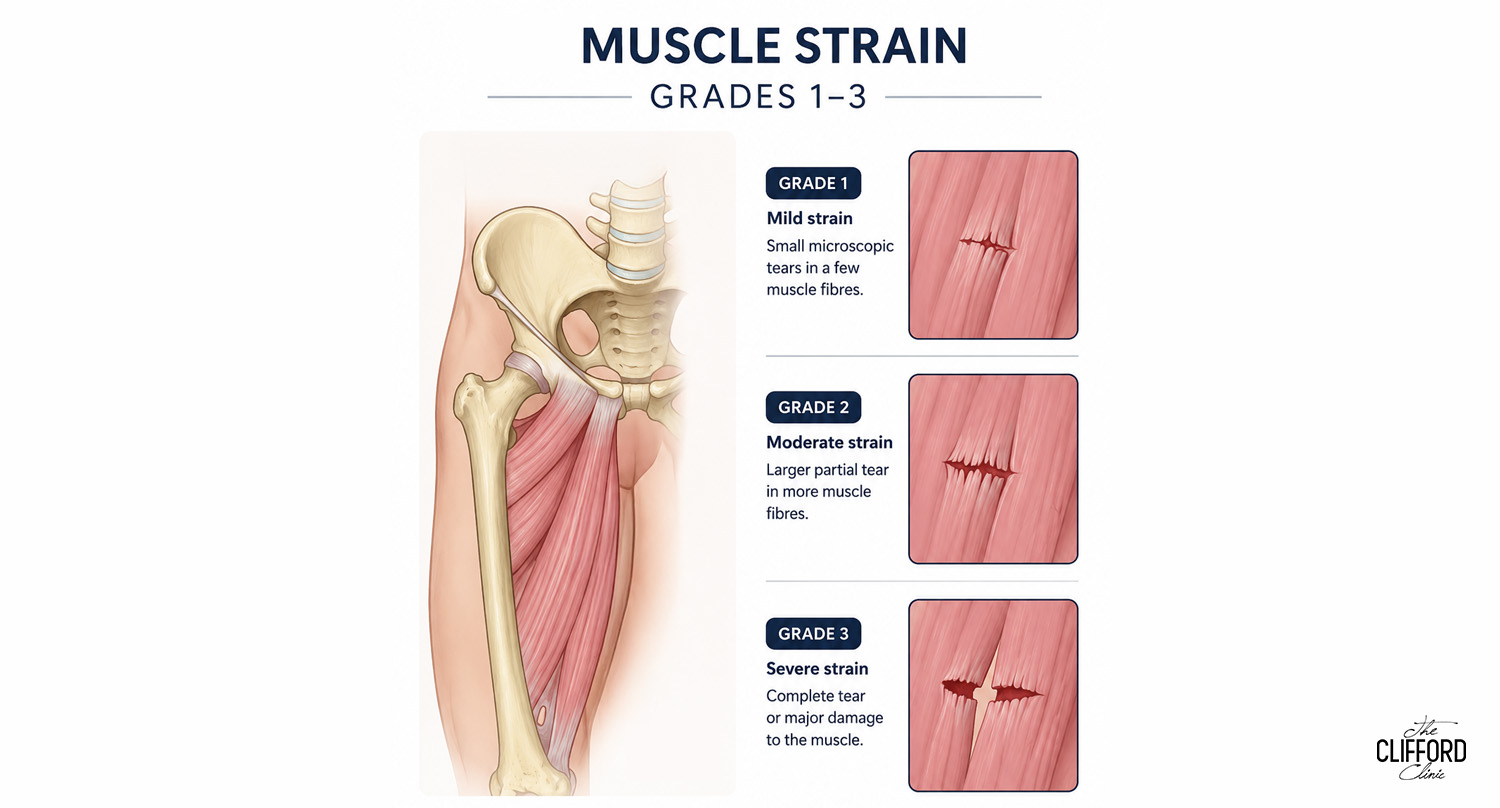
Muscular strains, the most common injury type in high-competition sport, show the strongest evidence of response, along with muscle contusion recovery. The mechanism, characterised in animal models (Yamamoto 2020, Oyaizu 2018) at 2.5 ATA for 60 to 120 minutes daily, involves raised tissue nitric oxide, VEGF and bFGF, angiogenesis over 3 to 7 days, and macrophage / satellite cell activation via the IL-6/STAT3 pathway. This dual role, reduced inflammation with accelerated regeneration, is why HBOT works for muscle tissue but not for the different biology of tendon or ligament.
The evidence for other sports injuries is mixed or absent. Studies have not shown substantial benefit for ankle sprains, acute knee ligament injuries (ACL, MCL), or tendon injuries. Athletes with those injuries should look to standard sports medicine, namely physiotherapy, structured rehabilitation, appropriate imaging and surgical input where indicated. HBOT’s practical value is highest for athletes needing compressed rehabilitation timelines, namely elite competitors under high training loads, athletes managing multi-week tournaments, or professionals whose income depends on a fast return. The Moghadam 2020 review in Medicine and Science in Sports and Exercise notes that sporting injuries are typically treated over 3 to 10 sessions. For a broader comparative view, see our HBOT vs other recovery and longevity therapies guide.
HBOT and Subsequent Performance
One particularly clean study shows post-exercise HBOT improves subsequent performance. Mihailovic and colleagues’ 2023 RCT in Research Quarterly for Exercise and Sport used HBOT at 97% oxygen and 1.3 ATA for 75 minutes in 12 trained cyclists. Power output was significantly higher after HBOT versus passive recovery (314.5 ± 19.3 W versus 307.5 ± 19.0 W, p = 0.005), with improved heart rate variability indices and reduced rating of perceived exertion after maximal effort. The pressure in that study of 1.3 ATA is below what the wider hyperbaric medicine literature considers therapeutic. Read it as a narrow recovery exception, not a challenge to the ‘pressure is the dose’ principle.
Where HBOT Underperforms
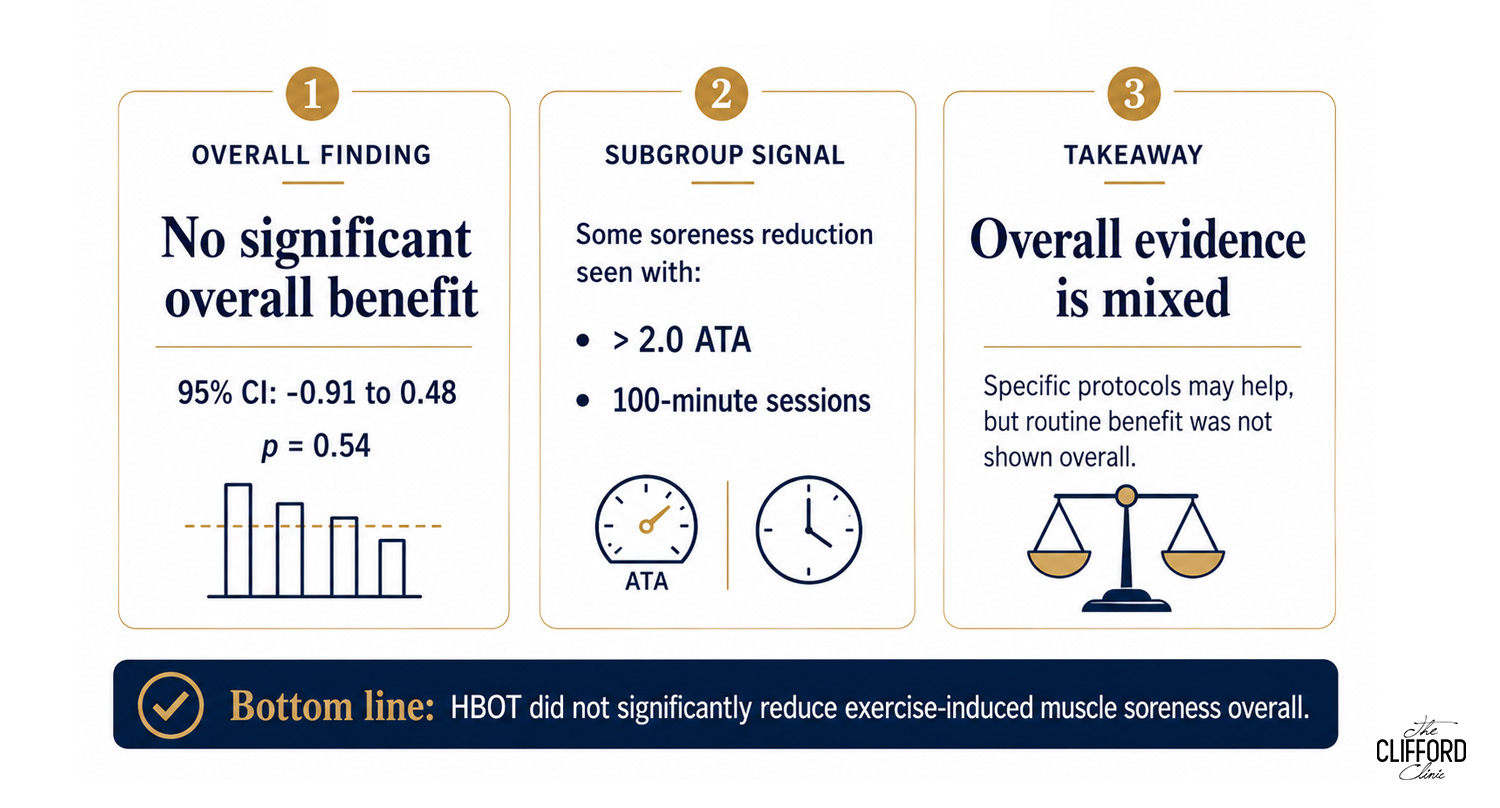
Across all included studies, a 2026 meta-analysis shows HBOT did not provide significant benefit for exercise-induced muscle soreness overall (95% CI ‒0.91 to 0.48, p = 0.54). Subgroup analyses did show soreness reduction with specific protocols (above 2.0 ATA and 100-minute duration), but the overall picture is mixed.
Pre-exercise HBOT has not shown a significant effect on subsequent performance. The Huang 2021 meta-analysis in Frontiers in Physiology, looking at pre-exercise, post-exercise, and intra-exercise HBOT, found no reliable pre-exercise benefit. Šet and Lenasi’s 2023 review in the Journal of Strength and Conditioning Research cautioned about placebo effects and variable evidence quality. The honest translation. HBOT’s sports evidence is strongest for reducing biochemical muscle-damage markers in muscular strain and contusion, weaker for perceived soreness in general, and does not support pre-exercise use as a performance ergogenic.
HBOT Effectiveness by Injury Type
The table below applies the evidence-grading framework to sports injuries and recovery goals.
HBOT for Sports Recovery and Injury Use Cases
| Injury / Use Case | Evidence Tier | How We Talk About It |
|---|---|---|
| Muscular Strain / Exercise-Induced Muscle Damage | Supported | CK/GOT/myoglobin reductions, 95% CI ‒76.19 to ‒33.11, p < 0.0001. |
| Muscle Contusion Recovery | Supported | Angiogenesis and satellite cell activation, strong mechanism data. |
| Post-Competition Recovery, High Load | Supported | Improved subsequent performance, Mihailovic 2023 cycling RCT. |
| Elite Athletes, Subgroup | Supported | 95% CI ‒86.28 to ‒32.71, p < 0.0001, strongest effect size. |
| College / Recreational Athletes, Subgroup | Supported | 95% CI ‒82.00 to ‒9.56, p = 0.01, smaller but still significant. |
| Subjective Muscle Soreness Overall | Emerging | Not significant overall, p = 0.54. Benefit only in > 2.0 ATA / 100-min subgroups. |
| Ankle Sprain | Wellness | Not supported by current studies; standard sports medicine leads. |
| Acute Knee Ligament Injury, ACL / MCL | Wellness | Not supported by current studies; surgical / rehabilitation care leads. |
| Tendon Injury / Tendinopathy | Wellness | Not supported by current studies; standard tendinopathy care leads. |
| Pre-Exercise Performance Boost | Wellness | Huang 2021 meta-analysis found no reliable effect. |
Optimal Protocols and When HBOT Makes Sense
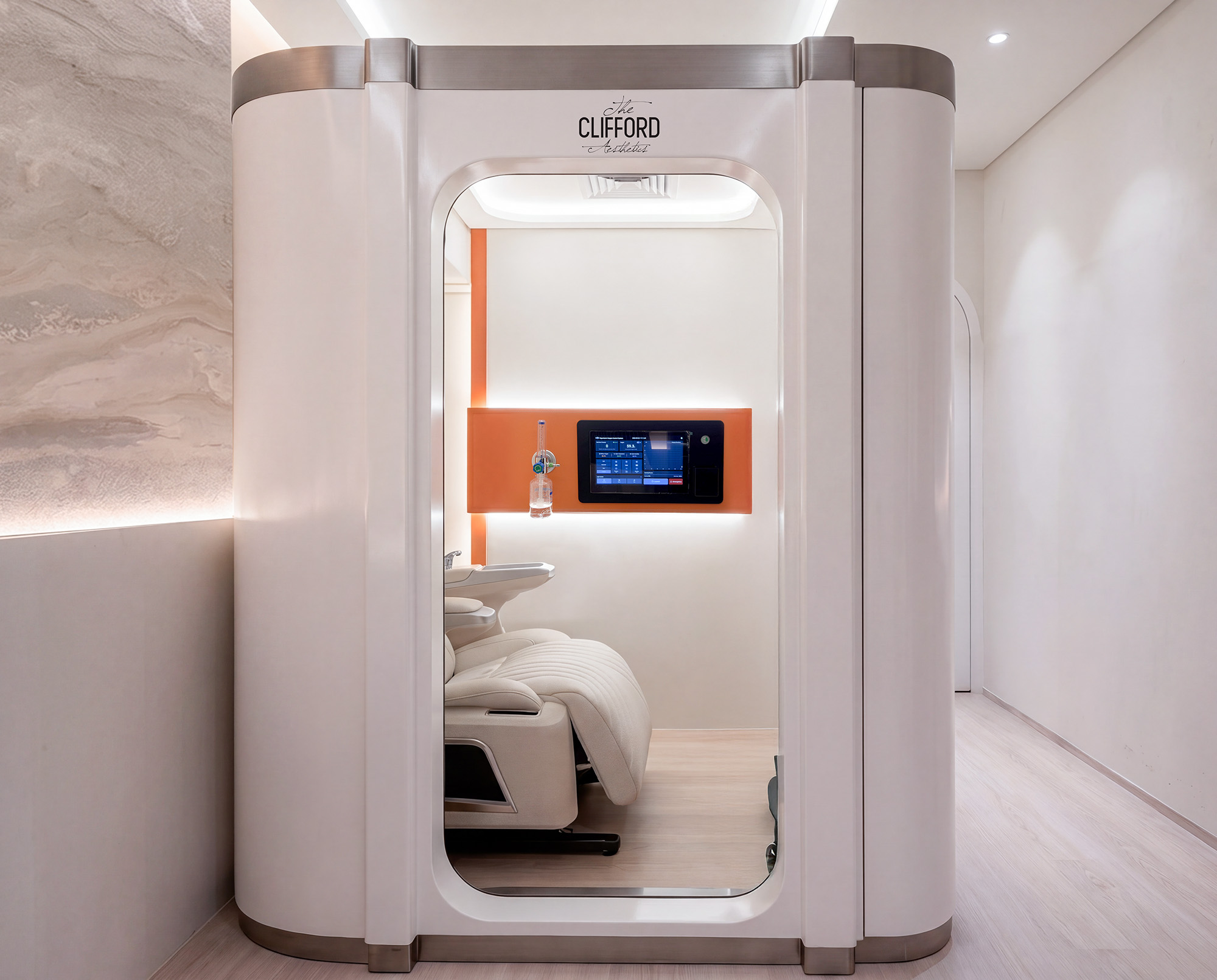
The most effective HBOT protocols share several features. Pressure runs between 2.0 and 2.8 ATA (where the Luo meta-analysis found the strongest signals). Sessions run 60 to 100 minutes, with 100-minute sessions producing stronger soreness effects in subgroups. Frequency is daily or near-daily across 5 to 10 days in the injury-recovery context, or 3 to 10 sessions total for a focused course. Timing is post-exercise, with effects on biochemical markers persisting for approximately two weeks after treatment completion. At The Clifford Clinic, sessions run on a hard-shell chamber at a therapeutic 2.0 ATA. Our HBOT cost in Singapore guide lists the current package rates.
For most Singapore athletes most of the time, the highest-leverage recovery investments are the fundamentals, namely consistent 9 to 10 hours of quality sleep, protein at 1.4 to 2.0 g/kg/day, appropriate post-exercise carbohydrate, and disciplined training load management.
HBOT enters as an adjunct in specific circumstances that fit the evidence, namely recovery from a muscular strain or contusion where accelerating tissue healing has real value, the final block before a competition with expected high muscle-damage load, multi-event tournaments where cumulative load and recovery time both matter, and post-competition recovery from very high race loads. One caution. Chronic use of interventions that suppress the training-adaptation inflammatory response may blunt some adaptation (as documented for cold water immersion). Whether HBOT carries the same risk is not fully characterised, but the theoretical concern applies, which is why the clinic uses HBOT for defined blocks around specific goals rather than as a permanent daily practice.
| MediSave and MediShield Life note
Sports recovery and athletic performance are not MOH-recognised HBOT indications, so sessions for these goals are paid out of pocket at every HBOT provider in Singapore. This reflects MOH’s evidence-based scheme design, not any one clinic’s pricing. |
The Clifford Clinic Perspective
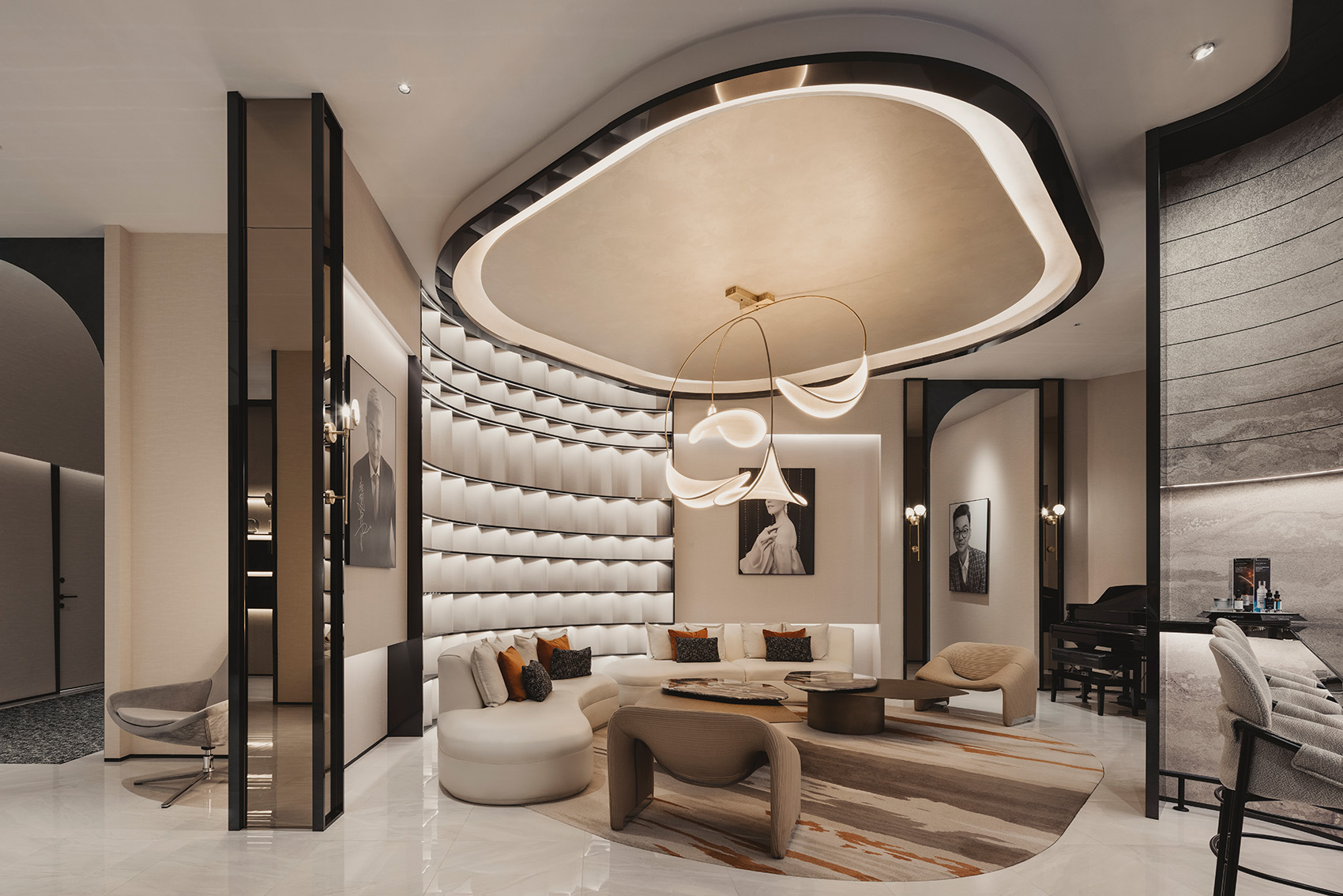
The Clifford Clinic’s clinical team sees a specific and disciplined role for HBOT in sports recovery, no more, no less. The team is confident in three things. Objective muscle damage markers (CK, GOT, myoglobin) come down meaningfully with a properly delivered course, consistent with the Luo meta-analysis and Chen 2019 RCT, in both elite and college-level athletes. Post-exercise performance recovery is improved in the specific context Mihailovic studied. And athletes on a completed course consistently report better deep sleep and better tolerance of heavy training blocks.
The team is equally direct about what HBOT is not. It is not a reliable fix for subjective soreness overall (p = 0.54). It is not a pre-exercise performance boost (Huang 2021). And it does not have research support for ankle sprains, knee ligament injuries or tendon injuries, different tissue biology from the muscular strains where HBOT genuinely helps. A patient walking in with an ACL tear or a torn Achilles tendon will be told at consultation that HBOT is not the appropriate tool.
Where the clinic adds value is in delivering HBOT the way the research protocols describe, for the injuries and goals where the evidence supports it, namely a hard-shell chamber at a therapeutic 2.0 ATA, sessions of 60 to 90 minutes, doctor-led screening at a Raffles Place location that makes a focused block of near-daily sessions logistically realistic for working athletes, and integration with objective performance measurement, namely VO2 max and lactate threshold testing, so that response can be tracked against measurable markers. Across four years and more than 200 patients, the pattern is consistent. HBOT works well when matched to the right injury at the right point in the season, and disappoints when used as a generic performance product.
Frequently Asked Questions
Does HBOT actually improve muscle recovery?
Yes, on objective biochemical markers of muscle damage. The 2026 Luo meta-analysis (10 studies, 299 subjects) confirmed significant reductions in CK, GOT and myoglobin (95% CI ‒76.19 to ‒33.11, p < 0.0001). Subjective soreness overall is a weaker signal (p = 0.54), improved only with specific protocols.
Does HBOT work equally well for elite and recreational athletes?
Both benefit, though elite athletes show numerically stronger effects (95% CI ‒86.28 to ‒32.71, p < 0.0001) than college-level athletes (95% CI ‒82.00 to ‒9.56, p = 0.01). The underlying physiology is the same, though the clinical significance is often greater for elite competitors under time-pressure to return.
Which specific injuries respond best to HBOT?
Muscular strains and exercise-induced muscle damage have the strongest evidence. Muscle contusion recovery follows the same mechanism. Post-competition recovery from high-load events also fits. This is muscle-tissue specific.
Can HBOT help with an ankle sprain, ACL tear or Achilles tendon injury?
No. Current studies do not show substantial benefit for ligamentous or tendon injuries. These have different tissue biology from muscular strain. Standard sports medicine, namely physiotherapy, rehabilitation, imaging, and surgical input where indicated, is the appropriate pathway.
What pressure and duration is optimal for sports recovery?
The evidence supports 2.0 to 2.8 ATA for 60 to 100 minutes per session, with 100-minute sessions producing stronger soreness reduction in subgroup analyses. The Clifford Clinic uses a hard-shell 2.0 ATA chamber.
Should I do HBOT before training or competition?
No. Pre-exercise HBOT has not been shown to improve performance. The Huang 2021 meta-analysis found no reliable pre-exercise effect. HBOT for sports is best used post-exercise or around recovery from injury.
How does HBOT compare to sleep and massage for recovery?
Sleep, massage, cold water immersion, protein and carbohydrate all sit in the established recovery evidence tier. HBOT sits in the supported tier for specific outcomes (muscle damage markers, subsequent performance in muscle-injury contexts) and emerging for general soreness. For most athletes, the fundamentals matter more than any adjunct.
Can HBOT replace ice baths or cold water immersion?
No. They address different biology. Cold water immersion at 10 to 15 minutes at 5 to 15°C within 24 hours of exercise has strong evidence for reducing soreness and improving power recovery. The two are separate tools.
How many HBOT sessions are typical for athletes?
Injury-recovery protocols in the research use daily or near-daily sessions across 5 to 10 days. Focused pre-competition or post-competition blocks may use 3 to 10 sessions. The clinician sets the protocol based on the goal and injury.
Is HBOT worth the cost compared to other recovery tools?
For most athletes most of the time, no. Sleep, protein, carbohydrate and training load management deliver more per dollar. HBOT earns its cost in specific contexts, namely muscular strain recovery, key competitions, multi-event tournaments, or high-load blocks, all with an objective muscle injury or elevated damage markers rather than just soreness.
Will MediSave or MediShield Life cover HBOT for sports use?
No. Sports recovery is not an MOH-recognised HBOT indication and is paid out of pocket at every provider in Singapore.
Where should Singapore athletes get HBOT?
A doctor-led private clinic with a hard-shell chamber at a therapeutic pressure and supervision is appropriate for elective sports recovery. Wellness centres running soft-shell mild chambers are a different product.
Key Research References
- Luo X, Yu Y, Zhang S, Qi F. Effects of Hyperbaric Oxygen Therapy on Exercise-Induced Muscle Injury and Soreness: A Systematic Review and Meta-Analysis. Archives of Physical Medicine and Rehabilitation, 2026.
- Chen CY, Chou WY, Ko JY, Lee MS, Wu RW. Early Recovery of Exercise-Related Muscular Injury by HBOT. BioMed Research International, 2019.
- Moghadam N, Hieda M, Ramey L, Levine BD, Guilliod R. Hyperbaric Oxygen Therapy in Sports Musculoskeletal Injuries. Medicine and Science in Sports and Exercise, 2020.
- Yamamoto N, Oyaizu T, Enomoto M, et al. VEGF and bFGF Induction by Nitric Oxide Is Associated With Hyperbaric Oxygen-Induced Angiogenesis and Muscle Regeneration. Scientific Reports, 2020.
- Oyaizu T, Enomoto M, Yamamoto N, et al. Hyperbaric Oxygen Reduces Inflammation, Oxygenates Injured Muscle, and Regenerates Skeletal Muscle via Macrophage and Satellite Cell Activation. Scientific Reports, 2018.
- Mihailovic T, Bouzigon R, Bouillod A, Grevillot J, Ravier G. Post-Exercise Hyperbaric Oxygenation Improves Recovery for Subsequent Performance. Research Quarterly for Exercise and Sport, 2023.
- Huang X, Wang R, Zhang Z, Wang G, Gao B. Effects of Pre-, Post- And Intra-Exercise Hyperbaric Oxygen Therapy on Performance and Recovery: A Systematic Review and Meta-Analysis. Frontiers in Physiology, 2021.
- Šet V, Lenasi H. Does Hyperbaric Oxygenation Improve Athletic Performance? Journal of Strength and Conditioning Research, 2023.
- Undersea and Hyperbaric Medical Society. Hyperbaric Oxygen Therapy Indications, 13th Edition.
- Kirby JP et al. Essentials of Hyperbaric Oxygen Therapy: 2019 Review. Missouri Medicine.
- World Anti-Doping Agency. Prohibited List (current edition).
To plan an evidence-based HBOT sports recovery block matched to your specific injury or training or competition timeline, book a consultation at The Clifford Clinic.

Author Bio
Dr Gerard Ee

Dr Gerard Ee is the Medical Director of The Clifford Clinic in Singapore. He earned his medical degree from St George's University of London and built his surgical experience across the Singapore General Hospital, National University Hospital, and Mount Sinai Hospital in New York. He holds Membership of the Royal College of Surgeons (Edinburgh) and a Postgraduate Diploma in Dermatology (Cardiff), and is fully accredited in aesthetic procedures including botulinum toxin, fillers, lasers, and light therapies. A strong advocate of minimally invasive, natural-looking results, Dr Ee has published in several medical and scientific journals and presented his research in cities including Taipei, Las Vegas, and London.
See all posts by Dr Gerard Ee »