
Freckles Removal Singapore, Pico Laser, Q-Switched Laser and Recurrence
Written by Dr Bernard Ong. Medically reviewed by Dr Gerard Ee
Freckles are small brown spots caused by increased melanin in sun-exposed skin, and they respond well to pigment lasers such as Pico laser and Q-switched laser. Most patients in Singapore achieve clear lightening over a short course of sessions. Because freckles recur with continued sun exposure, daily sunscreen forms part of every treatment plan. Accurate diagnosis is the essential first step, as freckles are readily mistaken for sun spots or melasma.
What are freckles?
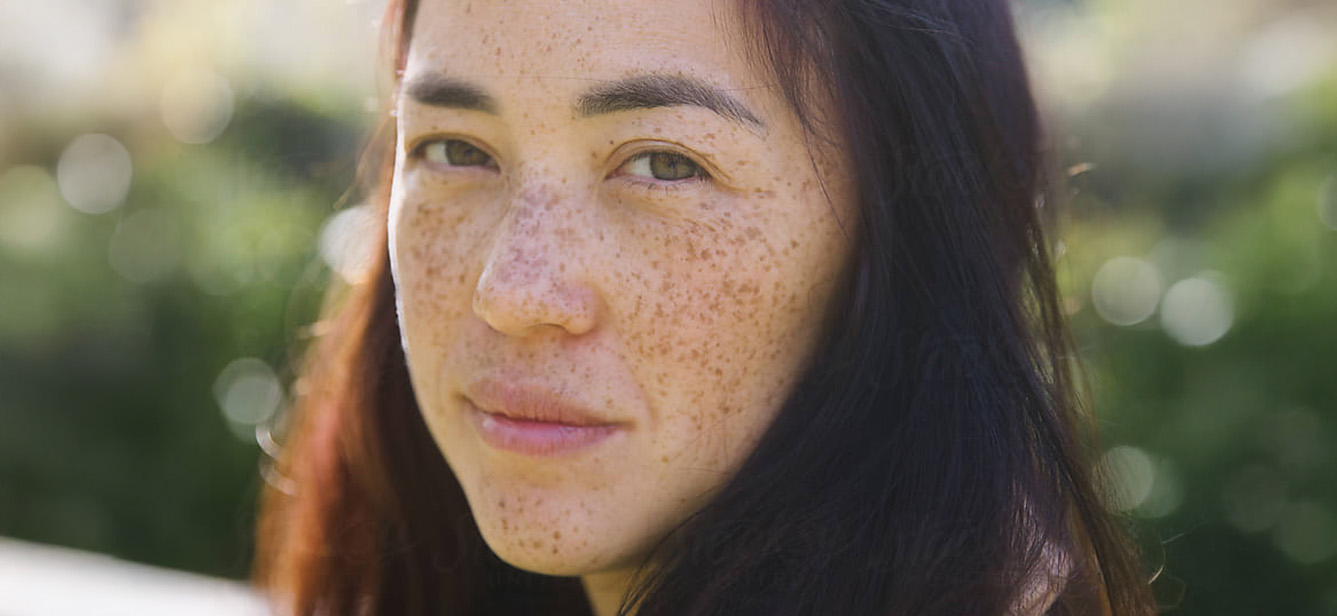
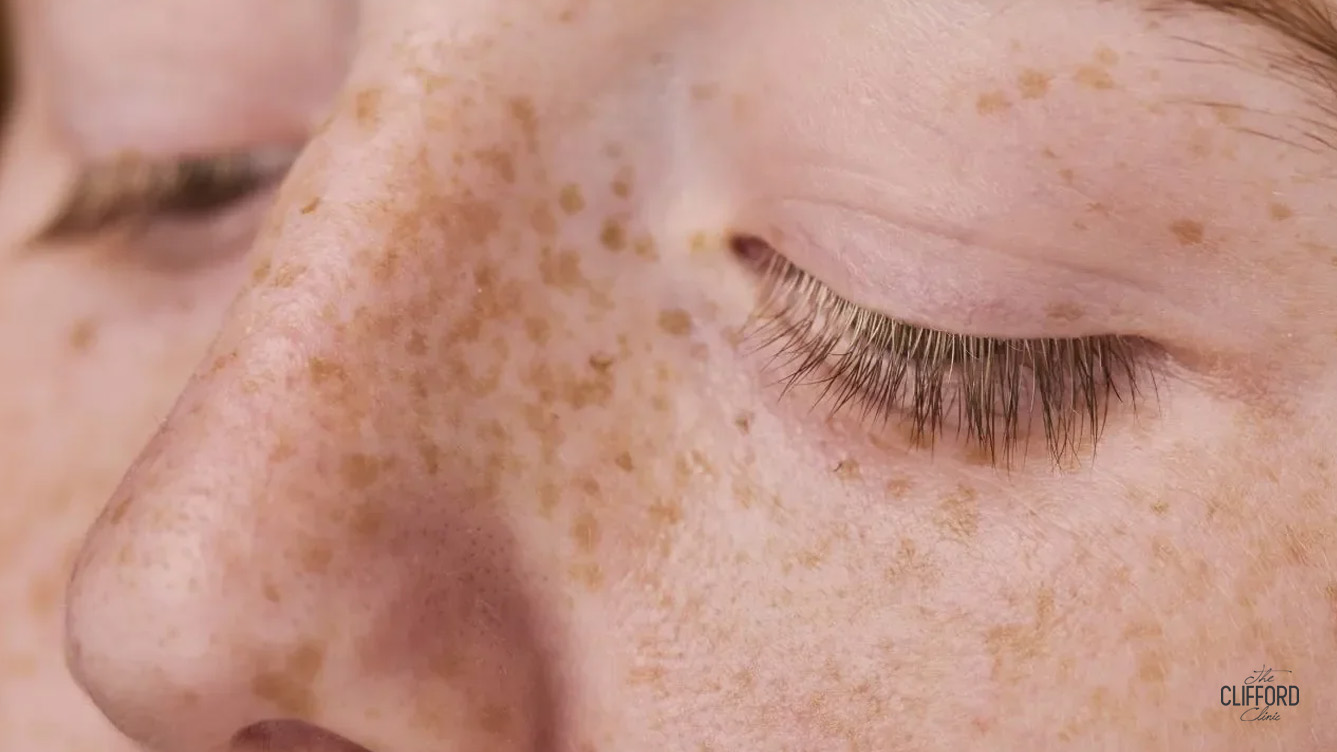
Freckles, known medically as ephelides, are flat, light-brown macules that typically emerge in childhood, most often in fair skin and in individuals with a genetic predisposition. They develop when ultraviolet light stimulates melanocytes in the basal layer of the epidermis to produce excess melanin. Unlike sun spots, freckles characteristically darken during periods of sun exposure and fade partially when it is withdrawn. Because the pigment lies superficially within the epidermis, it is readily reached and cleared by laser treatment.
Why freckles become more visible in Singapore
Singapore’s location near the equator produces intense ultraviolet exposure throughout the year. Asian skin carries reactive melanocytes that respond rapidly to this exposure. Cumulative ultraviolet dose also accrues from everyday sources, including the daily commute, outdoor activity, and time spent near windows, through which ultraviolet A readily passes. These factors explain why freckles frequently appear darker in Singapore than in a temperate climate.
Freckles vs sun spots vs melasma
Freckles, Sun Spots and Melasma Compared
| Feature | Freckles, Ephelides | Sun Spots, Solar Lentigines | Melasma |
|---|---|---|---|
| Onset | Childhood | Adulthood, usually after the forties | Adulthood, often linked to hormones |
| Size and Border | Small, scattered, well-defined | Larger, well-defined single spots | Symmetrical patches with soft, blended borders |
| Behaviour with Sun | Darken in sun, fade partially without it | Persist and accumulate | Fluctuate with sun, heat and hormones |
| Depth | Superficial epidermal | Epidermal | Epidermal, dermal or mixed |
| Laser Response | Good, usually a short course | Good | Cautious, relapse-prone |
Where the diagnosis is uncertain, see our guide to pigmentation types in Singapore.
Can Pico laser remove freckles?
The Pico laser delivers ultra-short pulses that fragment melanin through a photomechanical effect, producing less thermal spread than older lasers. The fragmented pigment is then cleared gradually by the body’s immune cells over the following weeks. Treated freckles typically darken briefly and may form fine crusts before flaking and lightening. Because the pigment is superficial, most patients require only a short course.
Q-switched laser for freckles
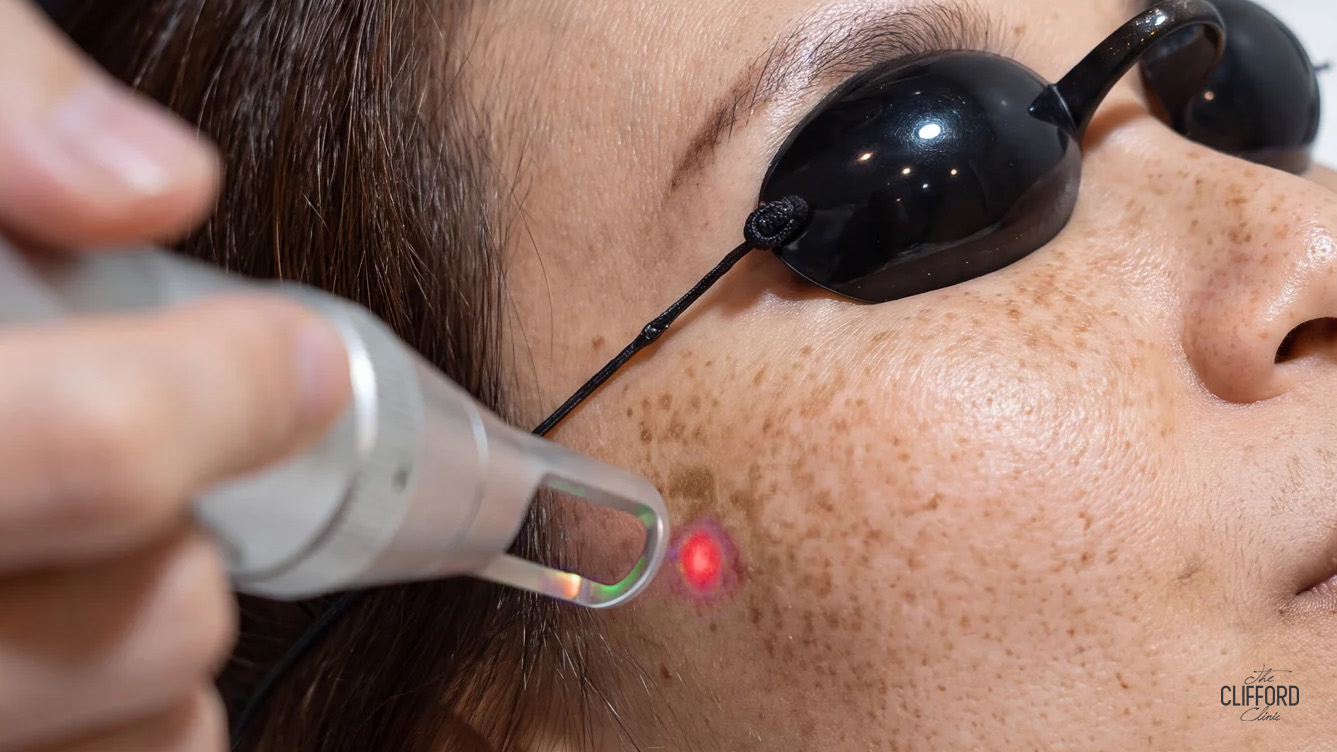
The Q-switched neodymium YAG laser also treats freckles effectively and has a long clinical track record. It delivers nanosecond pulses and acts principally through a photothermal effect. It remains effective and is often more affordable. Because it transfers more heat to the skin than a picosecond laser, conservative settings are selected for Asian skin to reduce the risk of post-inflammatory hyperpigmentation.
Why freckles may return
Laser removes the pigment already present. It does not, however, alter the underlying genetic tendency to freckle, nor does it prevent future ultraviolet exposure. Without daily photoprotection, new freckles form in the same predisposed skin. This reflects the biology of ephelides rather than a failure of treatment. Patients who maintain consistent photoprotection retain their results considerably longer.
Aftercare after freckles laser
Use a gentle cleanser and moisturiser, apply broad-spectrum SPF 50 every morning, leave crusts to flake naturally, and avoid heat, saunas and active skincare for approximately one week. Full details are in our Pico laser aftercare guide.
How many sessions are usually needed?
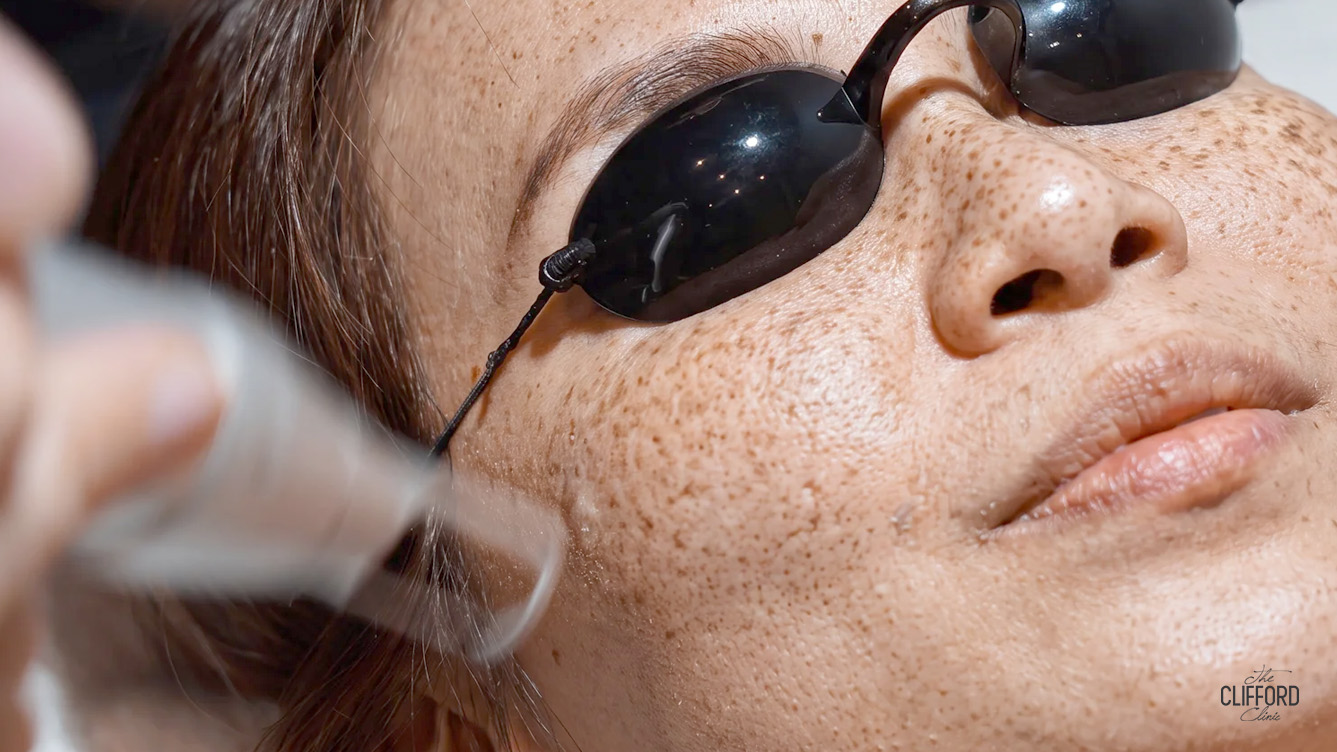
Discrete freckles often lighten noticeably within one to three sessions, spaced approximately three to four weeks apart. Denser or mixed pigmentation may require additional sessions. A reliable estimate is given after clinical examination of the skin, not beforehand.
Suitable and not suitable
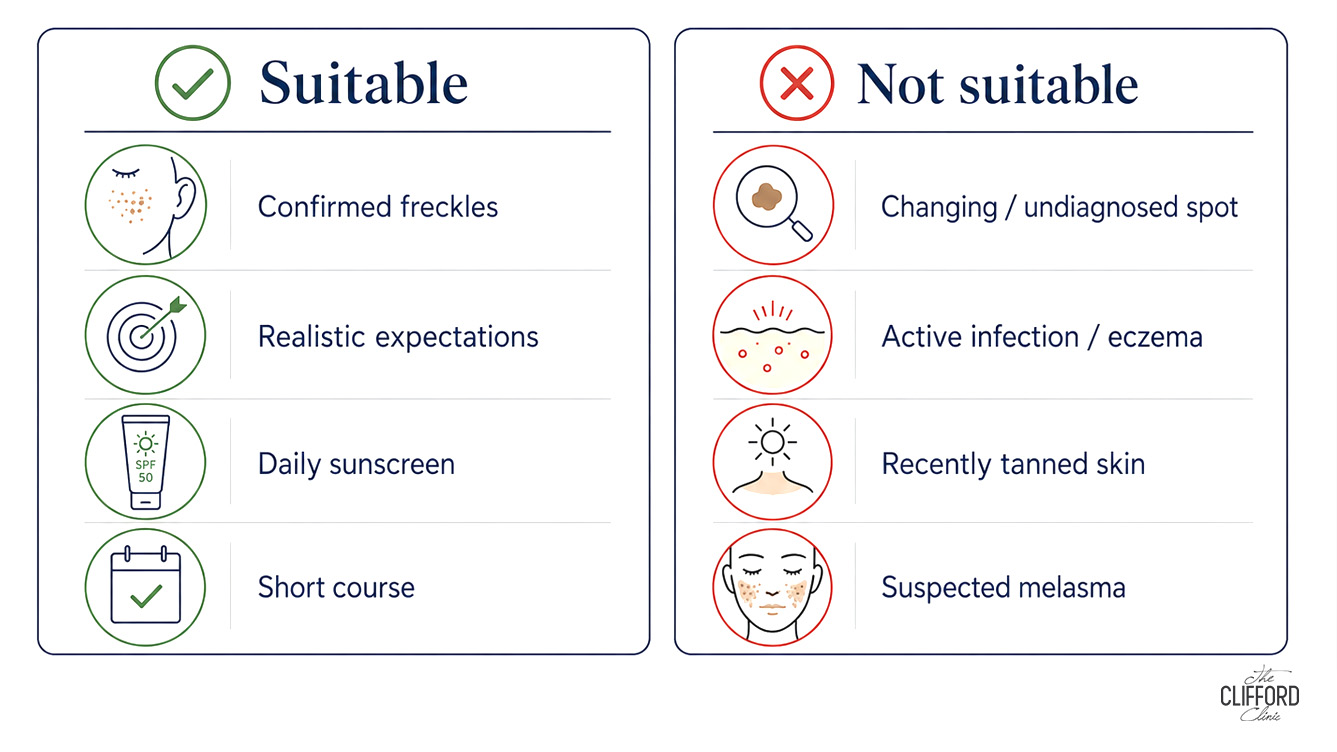
- Suitable:confirmed freckles, realistic expectations, willingness to use daily sunscreen and complete a short course.
- Not suitable:an undiagnosed or changing spot that needs medical review, active skin infection or eczema in the area, recently tanned skin, or suspected melasma that needs a different, more cautious plan.
Doctor’s perspective. Freckles are among the most rewarding pigmentary conditions to treat, because the pigment is superficial and clears cleanly. The factor patients most often underestimate is maintenance. Laser clears the pigment already present, whereas daily photoprotection prevents the formation of new freckles. Durable results depend on addressing both. Where laser alone is relied upon, the freckles gradually recur.
The wavelength that suits freckles
Freckles lie superficially in the skin, they respond best to a strongly absorbed 532 nm picosecond beam that clears surface pigment efficiently. In darker skin a longer 1064 nm wavelength or a gentler endpoint may be chosen to protect against post-inflammatory darkening. Because freckles reflect an ongoing tendency, the wavelength clears current pigmentation while daily sun protection prevent the formation of new pigmentation.
Frequently asked questions
Can freckles be removed permanently?
Existing freckles can be cleared, but the tendency to form new ones remains in predisposed skin. Consistent daily photoprotection maintains clear skin over the long term.
Is Pico laser good for freckles?
Yes. Its short pulse duration fragments superficial pigment efficiently with minimal heat, which suits Asian skin. Most patients require only a short course.
How many laser sessions are needed for freckles?
Commonly one to three for discrete freckles, with more for denser pigmentation. The exact number depends on pigment density and individual skin response.
Will freckles come back after laser?
They can, mainly with ongoing sun exposure, because laser does not remove the underlying genetic tendency. Daily photoprotection substantially reduces recurrence.
Are freckles the same as sun spots?
No. Freckles appear in childhood and fluctuate with sun exposure. Sun spots, by contrast, appear later in life from cumulative sun damage and are more persistent. Their treatment overlaps, but the conditions differ.
Can freckles be treated on Asian skin?
Yes. With appropriate wavelengths and conservative settings, treatment is safe. Picosecond lasers provide a wider safety margin against post-inflammatory pigmentation in Fitzpatrick III to V skin.
Book a freckles assessment

Accurate diagnosis and a short, well-planned course of treatment give the best outcome. Learn about pigmentation treatment in Singapore, or book at The Clifford Clinic, 50 Raffles Place, #01-01 Singapore Land Tower. Call (65) 6532 2400 or WhatsApp (65) 8318 6332.
Selected References
- Comparing the efficacy and safety of a 730 nm picosecond laser with a 532 nm Q-switched Nd:YAG laser for facial pigmented disorders. European Journal of Medical Research, 2026. https://pubmed.ncbi.nlm.nih.gov/41782066
- Disorders of hyperpigmentation, part I: pathogenesis and clinical features of common pigmentary disorders. Journal of the American Academy of Dermatology, 2023. https://pubmed.ncbi.nlm.nih.gov/35151757
- American Academy of Dermatology: hyperpigmentation. https://www.aad.org/public/diseases/a-z/hyperpigmentation-treatment