


Ear Keloid Removal in Singapore, What Works After Piercing
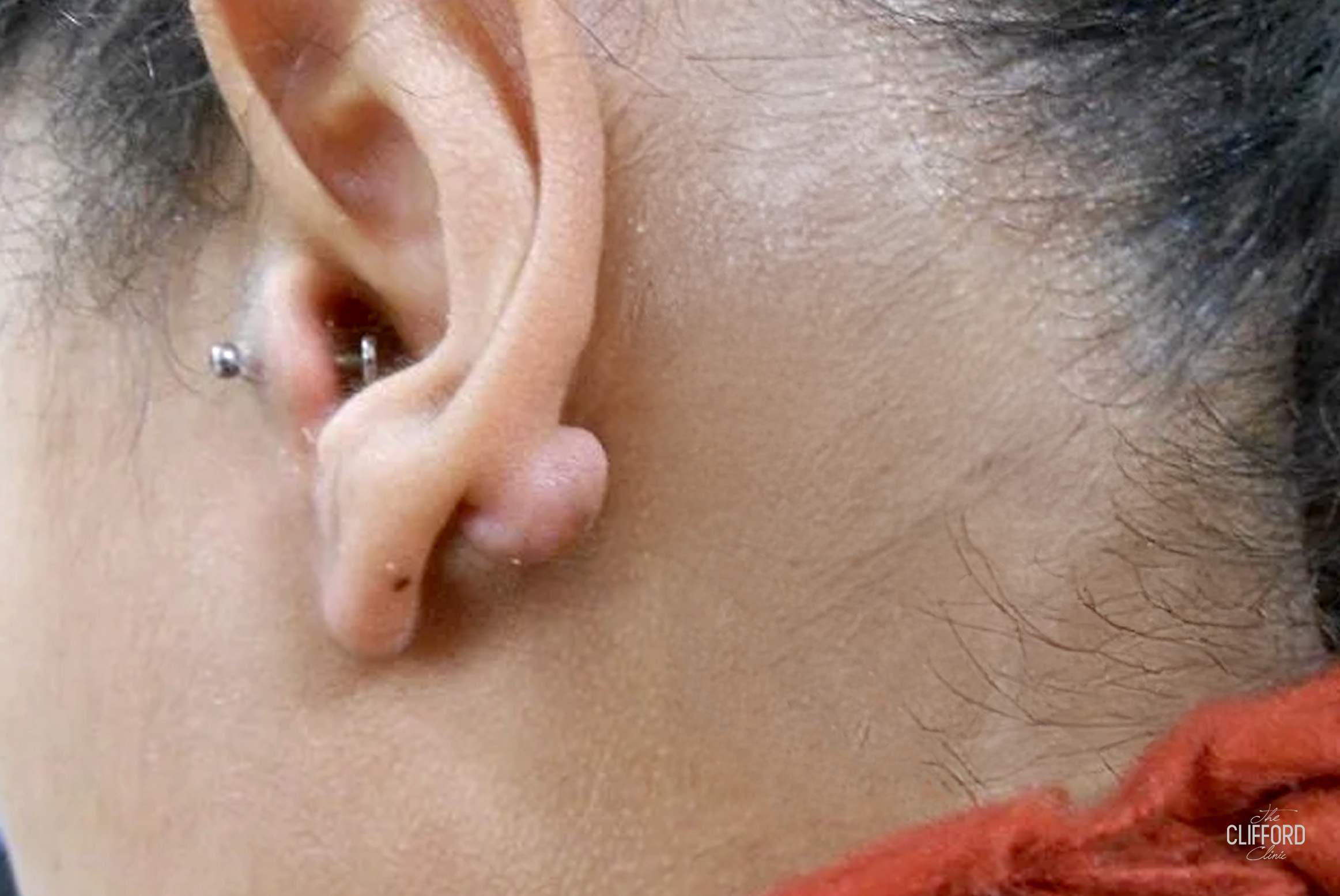
The earlobe is one of the most common places a keloid appears, and an ear piercing is one of the most common triggers. What begins as a small firm bump at a piercing site can grow, over months or years, into a smooth rounded lump that dwarfs the original hole. Ear keloids are rarely dangerous, but they are conspicuous, sometimes itchy or tender, and prone to returning after removal.
Ear keloids are among the most treatable, because the ear allows a treatment impossible elsewhere on the body, the pressure earring, and because the earlobe is a low tension site that tends to respond well [12]. This guide sits within our wider keloid scar treatment Singapore resource.
Why Ears Are Keloid Hotspots
Keloids form when scar tissue keeps growing beyond the original wound. The earlobe is vulnerable because piercings create a full thickness skin wound, infected or irritated piercings prolong inflammation, and cartilage piercings higher on the ear heal slowly. Keloids also run in families and are considerably more common in darker skin tones, which makes ear keloid consultations frequent in Singapore. The ear is one of the most common sites treated in keloid radiotherapy series [10][12].
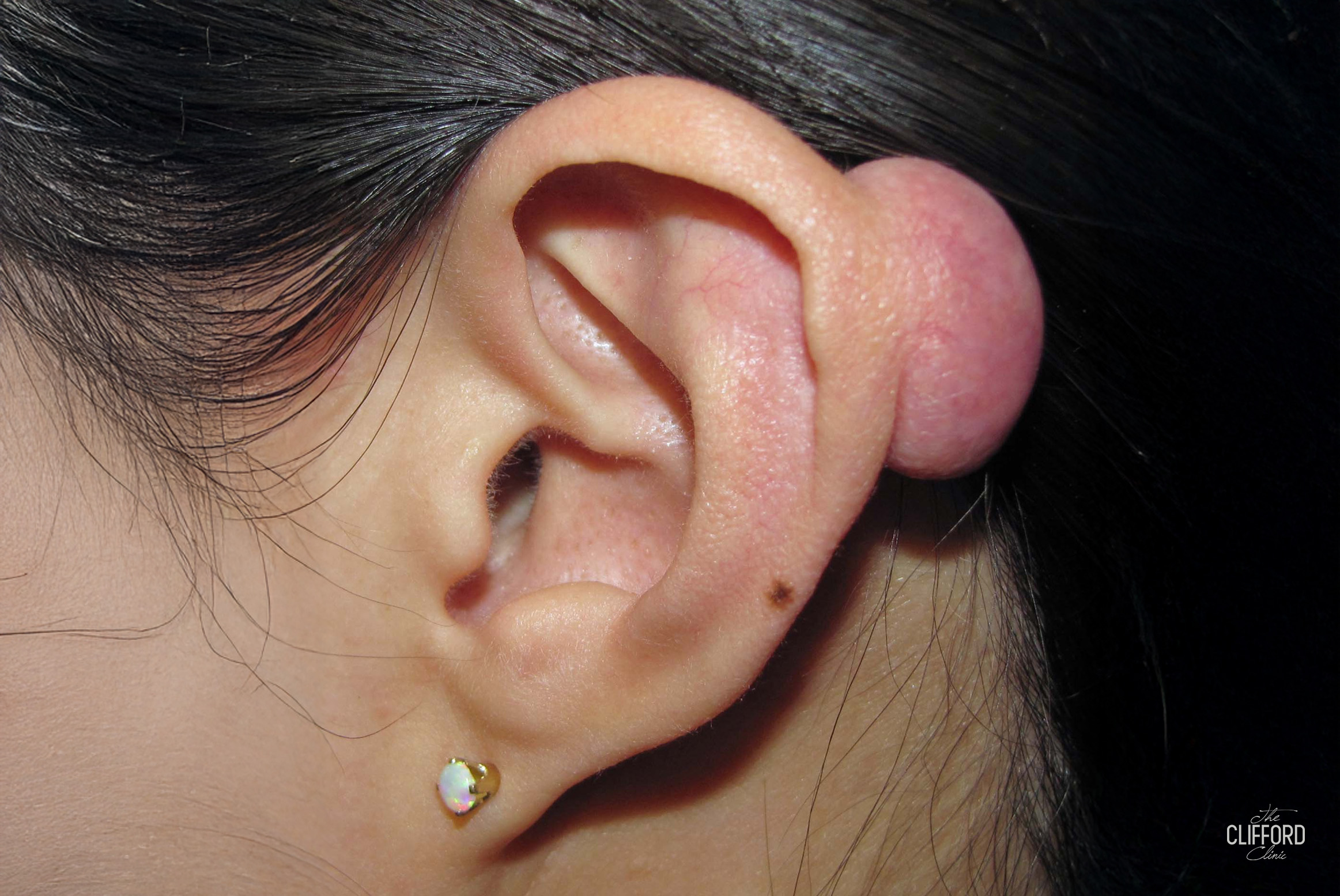
An ear keloid may appear within months of a piercing or emerge a year or more later. It usually starts as a small firm nodule around the piercing tract and enlarges slowly. Unlike an irritation bump, which tends to settle with good aftercare, a true keloid keeps growing beyond the piercing site and does not resolve on its own.
Ear Keloid Treatment Options
Steroid Injections as First Line
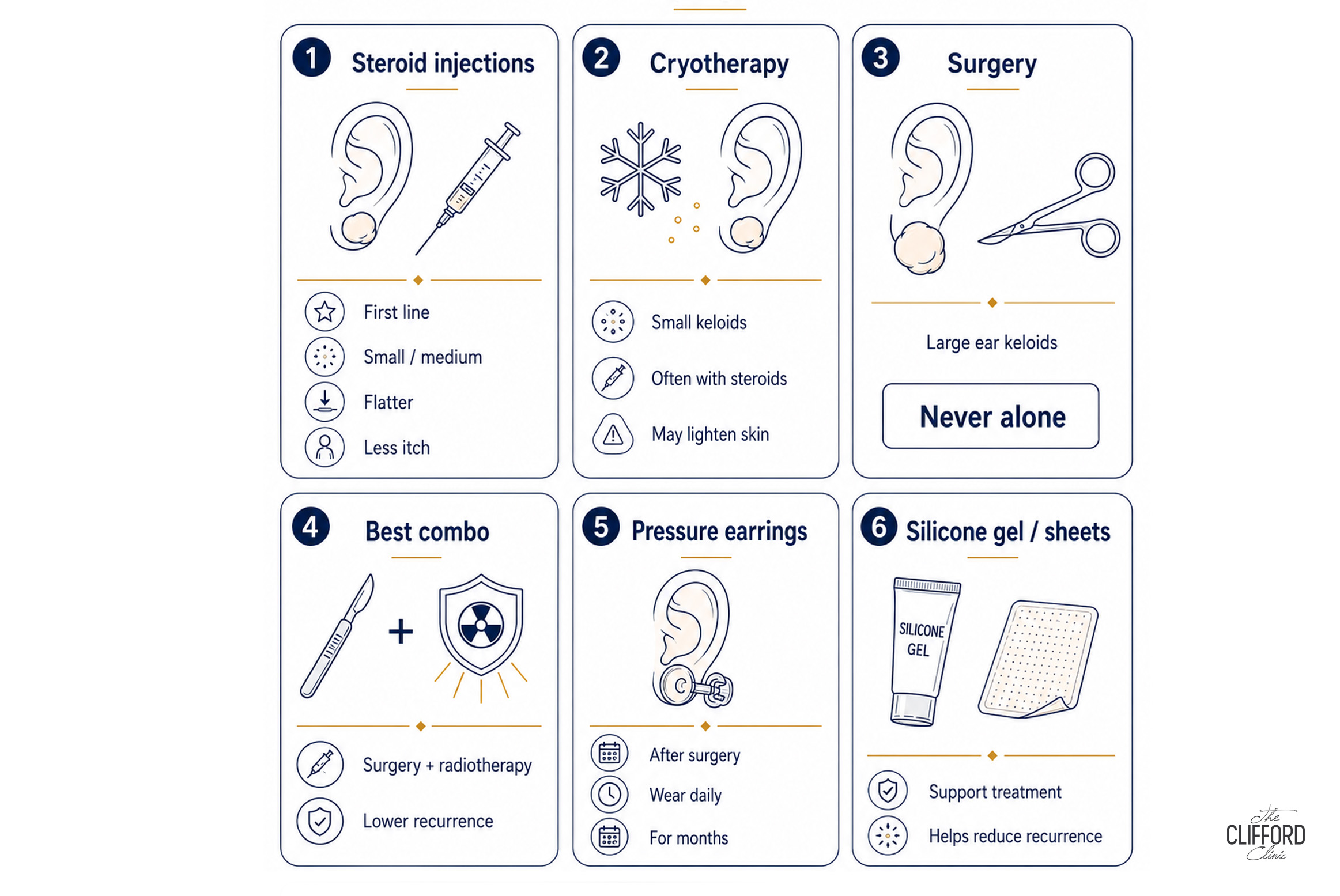
For small and medium earlobe keloids, intralesional corticosteroid injections are typically first line. Triamcinolone is injected into the keloid to soften, flatten and shrink it and to relieve itch, by calming the inflammation that drives scar overgrowth. Over a monthly course, most keloids shrink, with strong evidence for reduced volume, pain and itch [2][5]. Early treatment responds best [2]. See our full guide to steroid injections for keloids.
Cryotherapy for Small Ear Keloids
Controlled freezing works best on small keloids and often works alongside steroid injections, softening the scar so the medicine spreads more evenly. Several sessions are usually needed. The main trade off is permanent skin lightening at the treated spot, which is more visible on darker skin tones.
Surgical Removal, Never Alone
Ear keloids, especially larger pedunculated ones that hang from the lobe, are often surgically removed. Surgery gives the fastest cosmetic improvement, but excision alone almost always recurs, and the new wound can produce an even larger keloid [2][10]. For this reason it should always be paired with recurrence prevention planned before the first incision.
The most effective specialist combination is surgery followed by immediate low dose radiotherapy, which achieves high local control and recurs far less often than surgery alone [10][11]. Large studies of postoperative radiotherapy report excellent long-term control with no radiation induced cancers observed, and note that starting treatment early after surgery and treating low tension sites such as the earlobe both favour success [12]. More on this in our keloid recurrence guide.
Pressure Earrings, the Ear’s Special Advantage
The earlobe permits a uniquely practical anti-recurrence tool, the pressure earring. Worn after surgical removal, it applies continuous pressure that reduces blood flow to the scar tissue and suppresses regrowth. It is typically worn for most of the day over several months, and results depend on wearing it consistently. Modern pressure earrings are more discreet than most patients expect.
Silicone Gel and Sheeting
Silicone is a low risk supporting treatment. Applied consistently for months, it helps flatten scars and reduce recurrence after other treatments, though it will not remove an established ear keloid on its own. See our silicone gel sheets guide.
What Ear Keloid Removal Costs in Singapore
Cost depends on keloid size, whether treatment is injection-based or surgical, and the number of sessions or the adjuvant plan required. Small ear keloids treated with injections are the most affordable starting point, while surgical removal with pressure earrings, silicone or radiotherapy costs more. We provide an individual estimate at consultation. See our keloid treatment cost in Singapore guide.
A Realistic Ear Keloid Treatment Journey
A typical pathway begins with confirming the lump is a keloid rather than an irritation bump, cyst or granuloma. Smaller keloids follow a course of monthly steroid injections, sometimes with cryotherapy. Larger or unresponsive keloids need surgery combined with pre planned recurrence prevention, whether steroid injections into the wound, pressure earrings, silicone, or radiotherapy in selected cases. Scheduled reviews continue for at least a year, because recurrence can be delayed. Improvement shows as the keloid becoming softer, flatter and paler with less itch, while renewed growth, pain or skin breakdown deserve prompt review.
Can I Re Pierce My Ear After a Keloid?
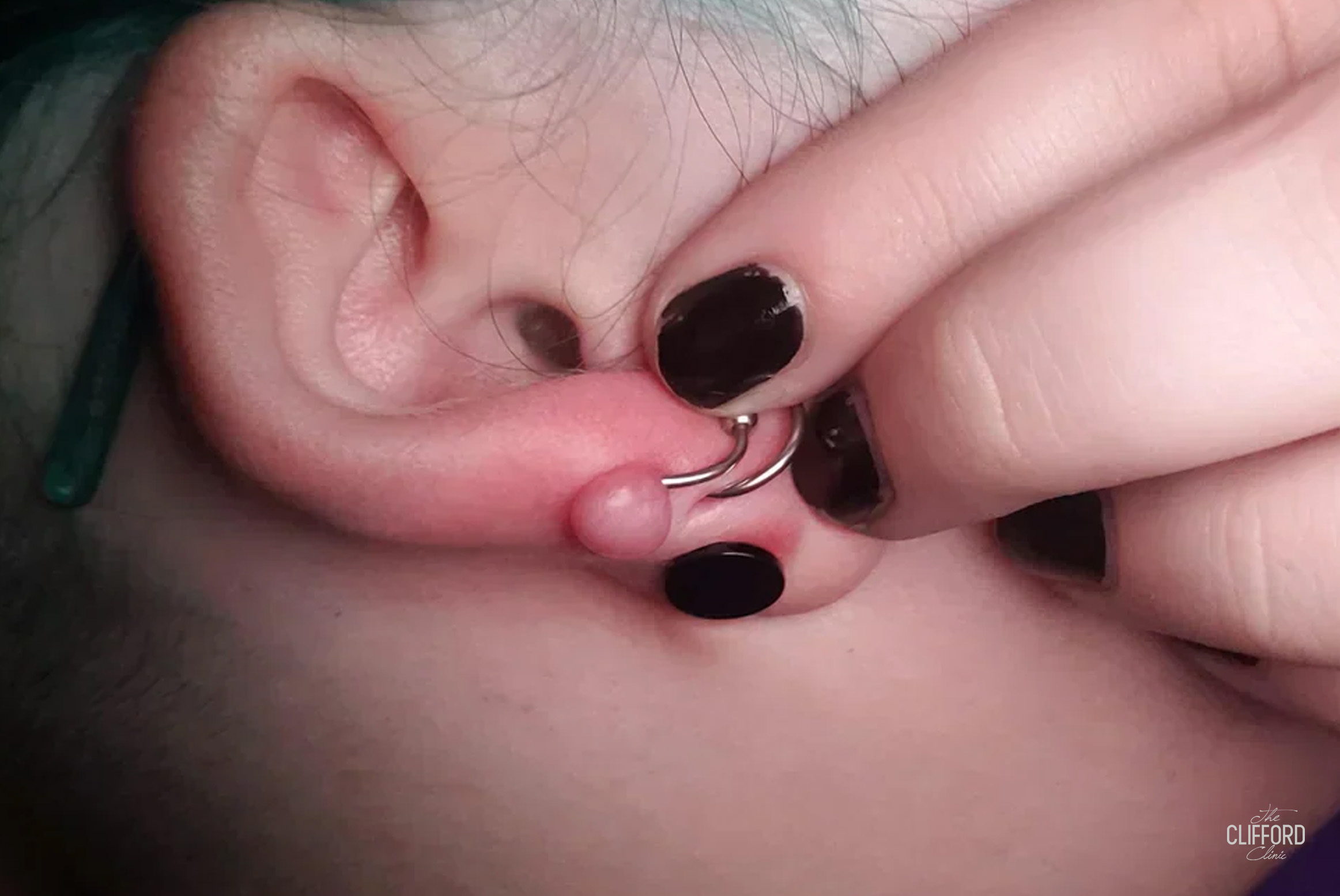
An ear that has already formed one keloid is prone to another, and a new piercing is a fresh wound and a genuine keloid risk. Many doctors advise against re-piercing, particularly with a strong family history or multiple keloids. If you do proceed, do it with medical guidance and immediate preventive measures such as pressure, silicone and early review, accepting that risk cannot be eliminated.
Frequently Asked Questions
Do ear keloids go away on their own?
No. Keloids do not resolve without treatment. Small irritation bumps after piercing can settle on their own, but a true keloid persists and typically enlarges.
What is the best treatment for an ear keloid?
It depends on size. Small keloids often respond to steroid injections, sometimes with cryotherapy. Larger keloids usually need surgical removal combined with recurrence prevention such as pressure earrings, injections or radiotherapy. Surgery alone almost always recurs [2][10].
How much does ear keloid removal cost in Singapore?
It depends on size and whether treatment is injection based or surgical. Injections are the most affordable starting point. We give an individual estimate at consultation.
Can ear keloids come back after treatment?
Yes. Surgery alone recurs frequently, while surgery with immediate radiotherapy achieves high local control, especially at a low tension site like the earlobe [11][12]. Combination therapy and follow up reduce the risk.
Are ear keloids cancerous?
No. Keloids are benign scar tissue overgrowths. Any lump that ulcerates, bleeds or changes rapidly should still be examined to confirm the diagnosis.
The Clifford Clinic Approach

Over more than 16 years of treating keloid scars, The Clifford Clinic has found that steroid injections alone almost always fail. Our signature approach combines V Beam pulsed dye laser, botulinum toxin and steroid injections, supported by silicone, each acting on a different part of the keloid to prevent recurrence. Few centres offer V Beam for keloids, yet in our experience it is central to keeping them from returning, and it is safe on darker skin tones, so patients across Singapore’s skin types can benefit. We never remove a keloid by surgery alone. For large or stubborn keloids, surgery combined with radiotherapy is very effective. We treat young keloids early, and choose pigment safe, skin tone aware treatment from the start. You can read more about our clinic at cliffordclinic.com.
Medically reviewed content. This article is educational and does not replace a consultation. To have an ear keloid assessed in Singapore, contact The Clifford Clinic.
Related Guides
Keloid scar treatment in Singapore, the complete guide
Steroid injections for keloids
Laser treatment for keloid scars
References
- Laser Therapy of Traumatic and Surgical Scars and an Algorithm for Their Treatment. Lasers in Surgery and Medicine. 2020.
- Management of Keloids and Hypertrophic Scars. American Family Physician. 2024.
- Laser Therapy for Treating Hypertrophic and Keloid Scars. The Cochrane Database of Systematic Reviews. 2022.
- Treatment Response of Keloidal and Hypertrophic Sternotomy Scars, Comparison Among Intralesional Corticosteroid, 5 Fluorouracil and 585 nm Pulsed Dye Laser. Archives of Dermatology. 2002.
- 5. Efficacy and Safety of Glucocorticoid Based Therapies in the Management of Keloids, a Systematic Review and Meta Analysis. Frontiers in Medicine. 2025.