


Phimosis Singapore – Tight Foreskin, When Circumcision Is Needed and Alternatives
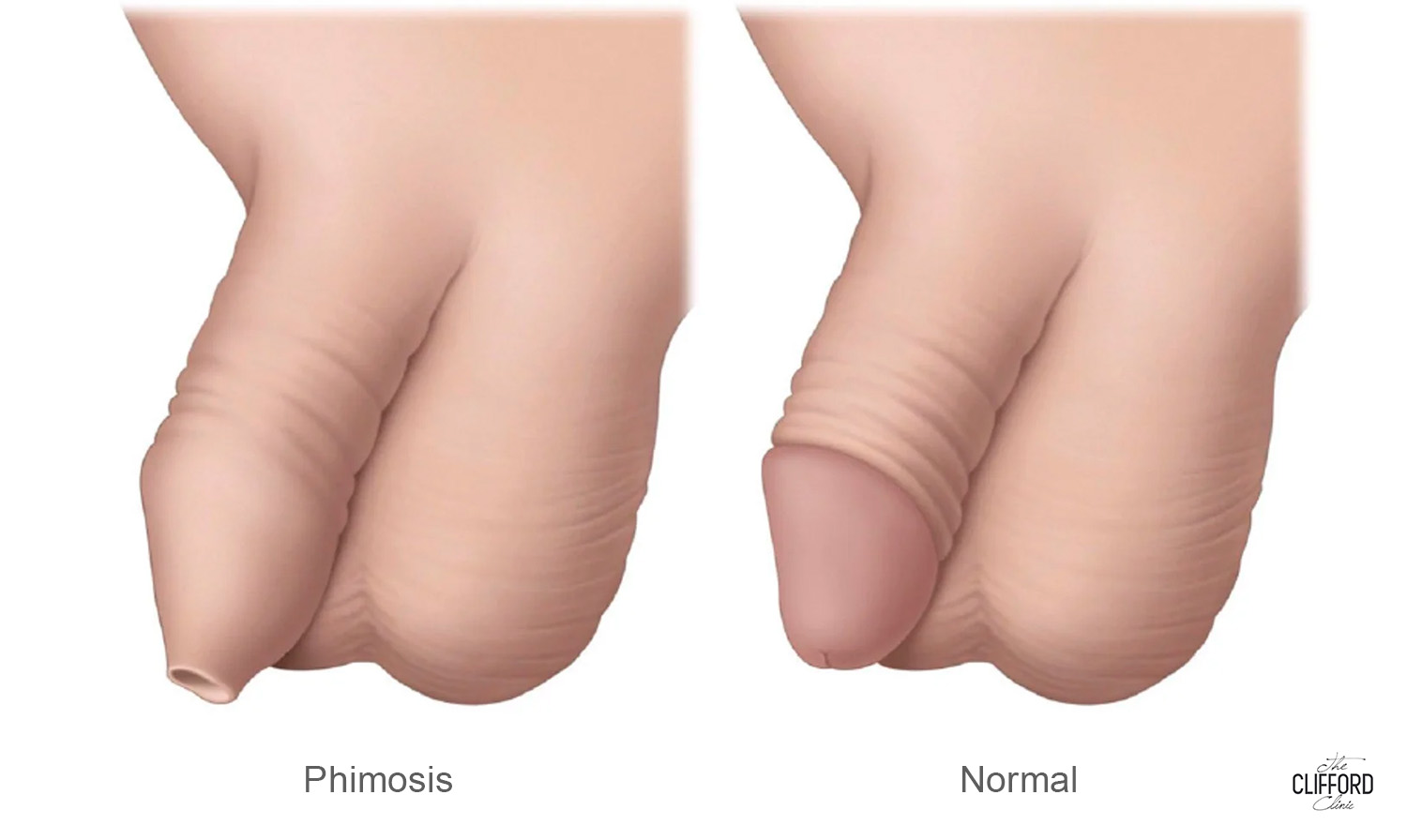
Phimosis is a medical condition where the foreskin is unable to retract over the head of the penis. In young boys, this is often normal and resolves with time, so it does not necessarily require surgery. In older children and adults, phimosis can cause discomfort, hygiene difficulties, and recurrent foreskin infections, and it may require treatment. Phimosis is the most common medical reason for adult circumcision, accounting for around 52.5 per cent of adult procedures in one large study.
Topical steroid creams can help in milder cases, but in reality, the response is often incomplete, and recurrence is common due to inability to commit to regular usage of the creams. Circumcision is reserved for cases that fail to respond, scar, or recur. A tight foreskin is a medical indication, which makes circumcision MediSave and insurance claimable. For the complete overview, see our Circumcision Singapore guide.
What is phimosis?
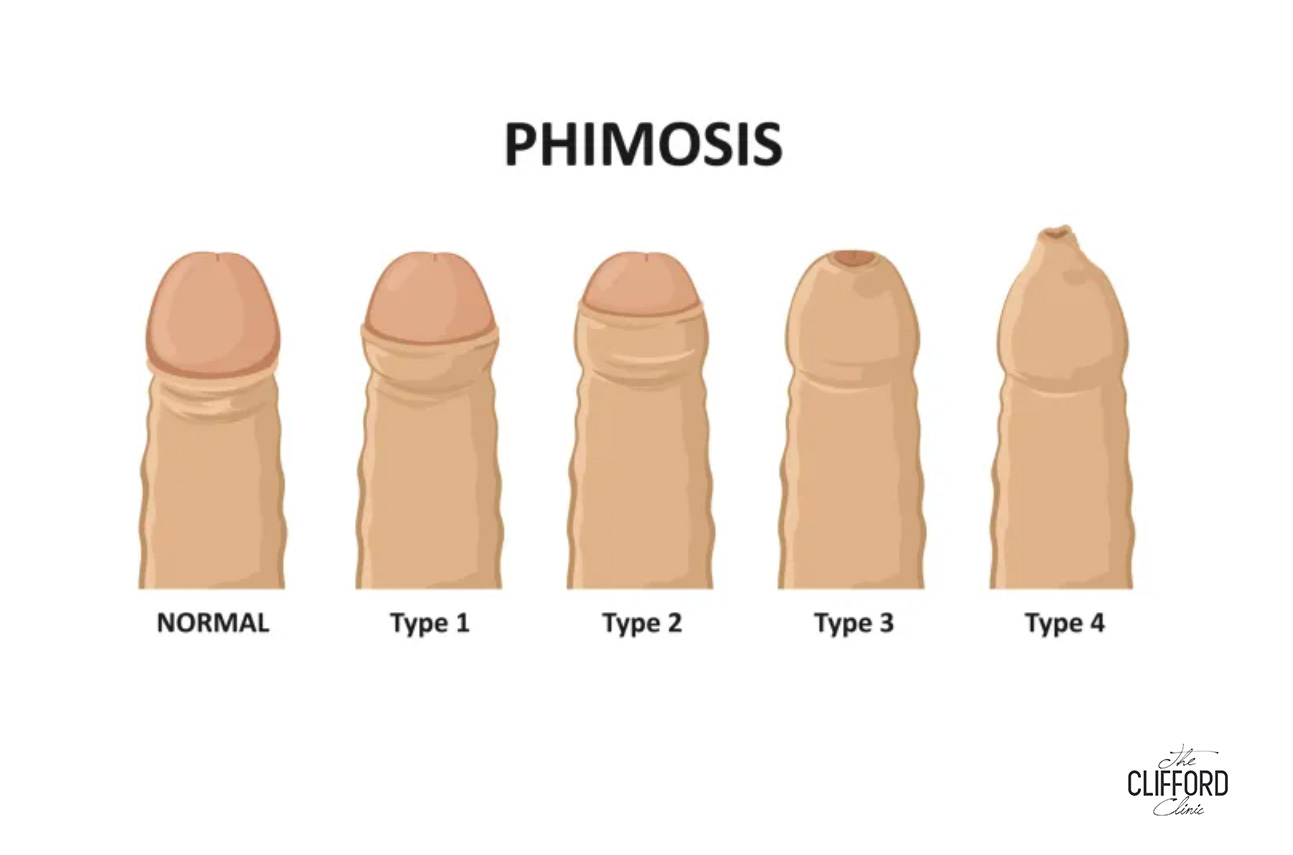
Phimosis is the medical term for a tight foreskin that cannot be pulled back over the head of the penis. It can be present from childhood or develop later in life. Two broad situations often get confused. The first is a foreskin that is simply still developing and not yet retractable, which is common and normal in young boys. The second is a foreskin that has become tight due to scarring, inflammation, or skin conditions, which is more likely to require treatment.
Physiological versus pathological phimosis
Phimosis can be classified as physiological or pathological, and the difference matters a great deal. Physiological phimosis is common in young children and typically resolves spontaneously by adolescence as the foreskin naturally separates from the glans. Pathological phimosis develops when the foreskin becomes tight due to recurrent foreskin infections, inflammation, or scarring conditions, and it often persists or first appears in the teenage years or adulthood. One important cause of pathological phimosis is balanitis xerotica obliterans, also known as lichen sclerosus, a scarring skin condition that requires surgery.
Conditions commonly seen
The Clifford Surgery and its Urology Department commonly assess phimosis along with related conditions, including recurrent balanitis, balanoposthitis, a history of paraphimosis, a tight frenulum, and hygiene difficulty caused by a foreskin that does not retract. Published data attribute about 2.6 percent of adult circumcisions to balanitis, 3.8 percent to balanoposthitis, and 6.8 percent to phimosis with either condition. These problems often overlap, and several of them point toward circumcision when conservative measures have not worked. Because a tight foreskin and recurrent foreskin infection are medical indications, treatment in these cases is usually MediSave and insurance claimable.
Normal childhood foreskin development
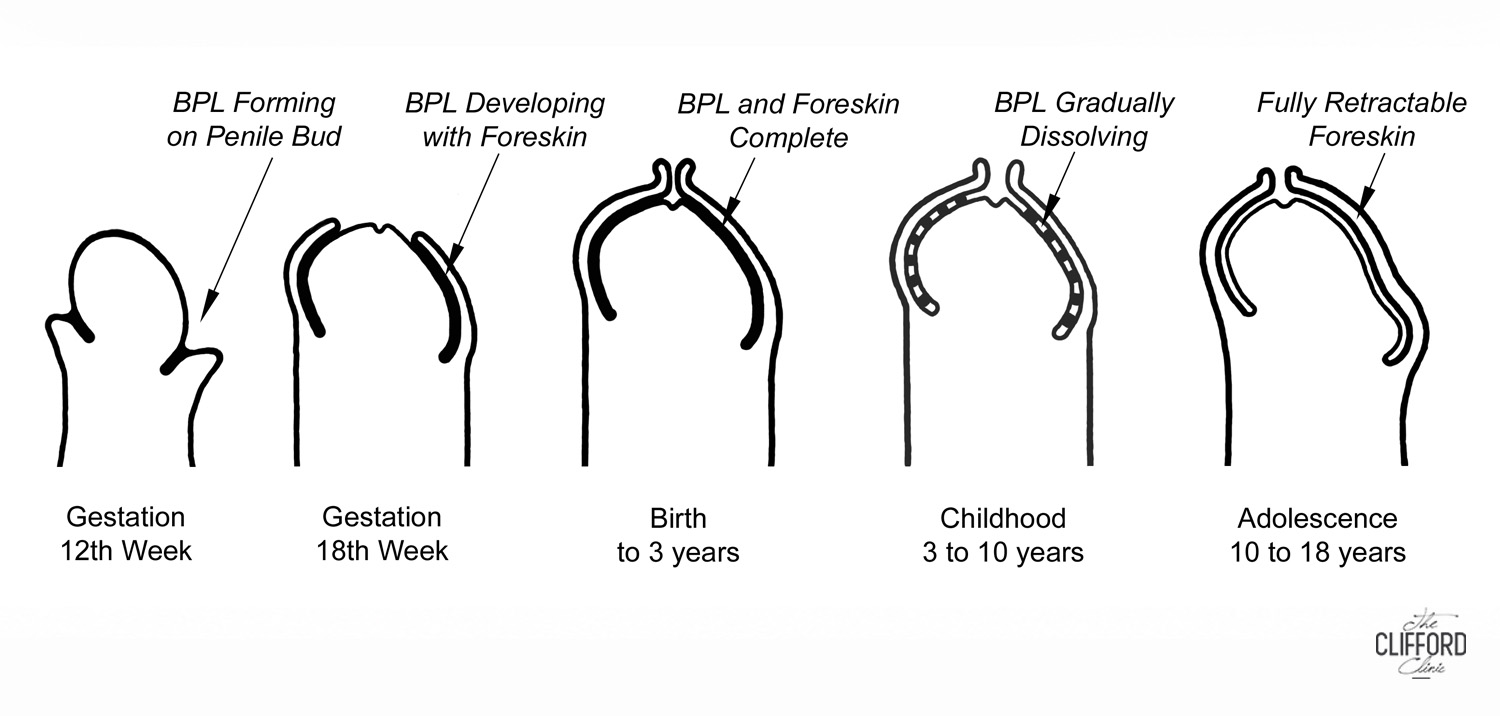
In babies and young boys, the foreskin is usually attached to the head of the penis and does not retract. This is called physiological non-retractability of the foreskin, and it is a stage of normal development. Over the years, the foreskin gradually separates and becomes retractable, often by adolescence, though the timing varies from child to child. The important practical point for parents is never to force the foreskin back, because forcing can cause pain, tears, scarring, and even paraphimosis. Patience and normal hygiene are usually all that is needed at this stage.
Pathological phimosis in detail
Pathological phimosis is a tight foreskin caused by scarring or disease rather than normal development. Signs that point toward this include a visible scarred ring at the tip, ballooning during urination, painful erections, bleeding, candidiasis, or repeated foreskin infections, and it can increase susceptibility to sexually transmitted infections. This type of phimosis is less likely to resolve on its own and requires active treatment, with most requiring surgery.
Recurrent balanitis
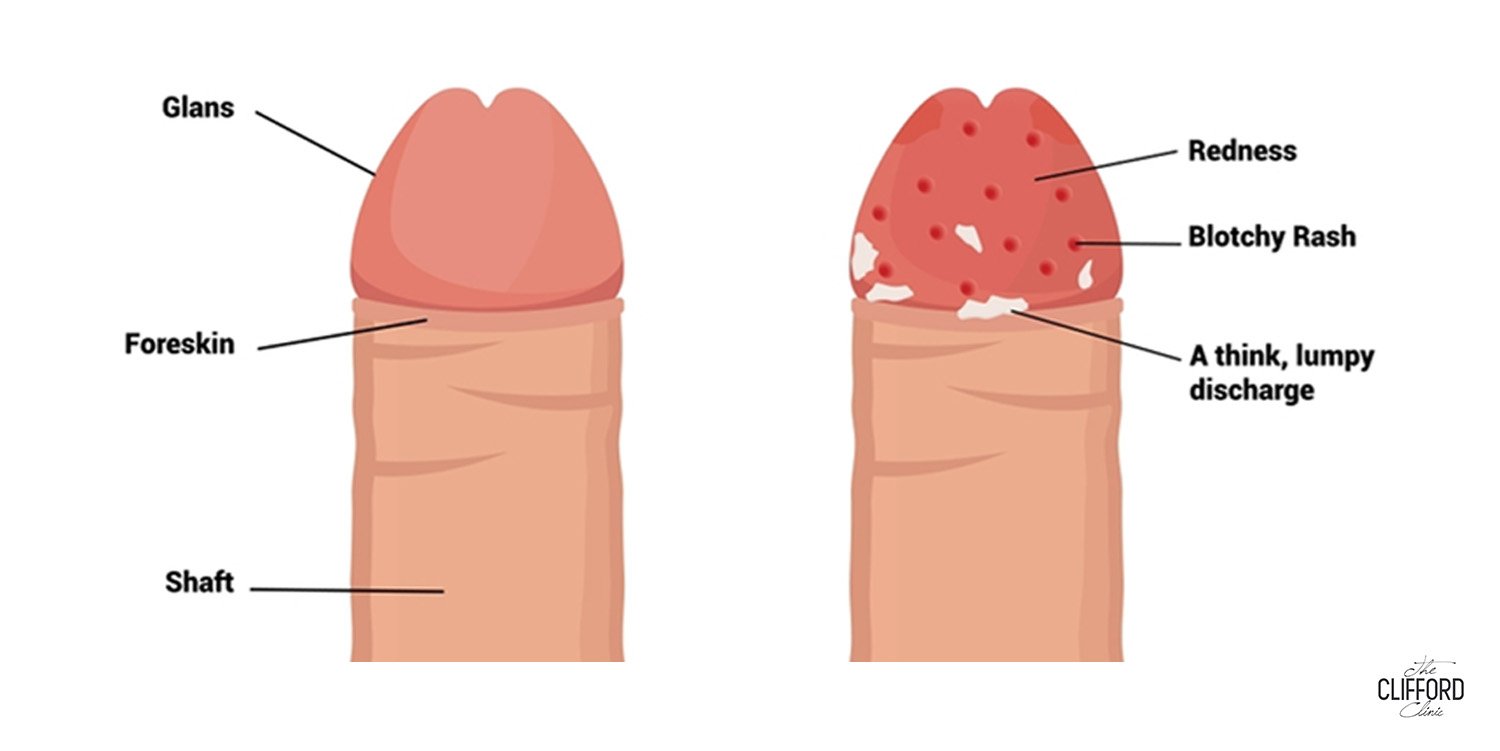
Balanitis is inflammation of the glans penis, while balanoposthitis involves both the glans and the prepuce. When these keep coming back, they can both cause and worsen phimosis, creating a cycle of tightness and foreskin infection. Recurrent balanitis is one of the more common reasons adults and older children are eventually advised to consider circumcision, because removing the foreskin removes the warm, moist space where infection recurs. Before that step, a doctor will look at hygiene, treat the active infection, and consider whether conservative measures can break the cycle.
Paraphimosis as an urgent issue
Paraphimosis is different from phimosis and is more dangerous. It happens when a retracted foreskin becomes trapped behind the head of the penis and cannot be returned to its normal position.
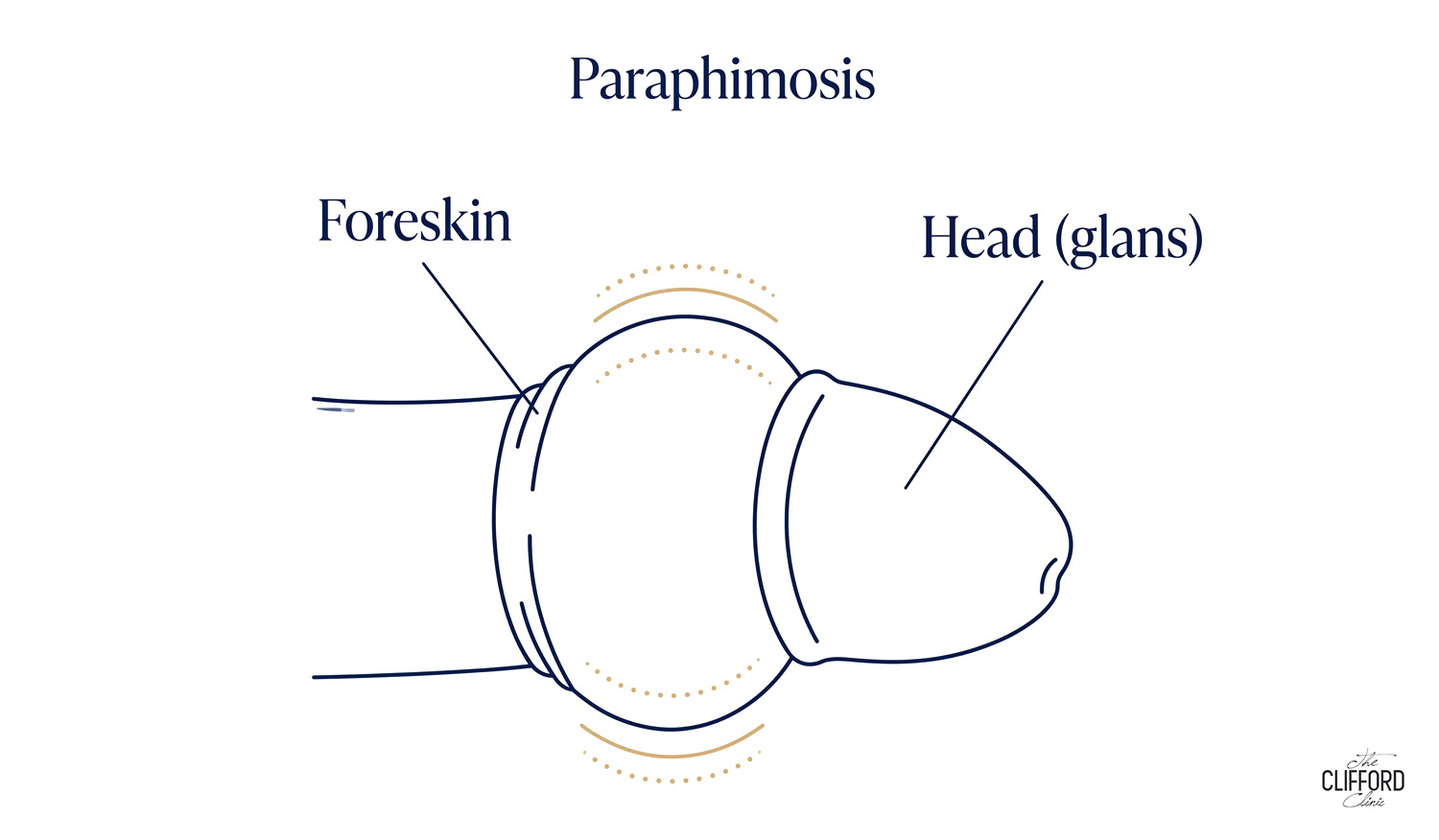
This creates a tight, constricting band that causes swelling of the distal penis and acute discomfort. The trapped foreskin can restrict blood flow, which makes it a medical emergency that needs prompt care. If this happens, do not wait. Seek medical attention immediately. While paraphimosis first requires emergency reduction, recurrent episodes or an inability to reduce the foreskin may make circumcision the right longer-term solution.
Topical treatment where appropriate
Surgery is not the only option for phimosis. In many cases, especially milder ones, a topical steroid cream applied to the foreskin over several weeks, combined with gentle stretching as advised by a doctor, can loosen the foreskin and improve retraction. In practice, however, results are often disappointing. Many patients respond poorly or relapse, frequently because the cream is not applied consistently. It is also not suitable when there is heavy scarring such as lichen sclerosus. Even so, it is a reasonable first step for many patients and is worth discussing before committing to an operation.
How phimosis is diagnosed
Diagnosis is straightforward and based mainly on a careful history and examination. The doctor asks about symptoms such as tightness, pain, ballooning during urination, recurrent foreskin infection, and any difficulty with hygiene or sex, and how long they have been present. The examination checks whether the foreskin retracts, whether there is a scarred or tight ring at the tip, and whether the skin looks healthy or inflamed. In children, the key judgement is whether the findings reflect normal development or a genuine problem. Most cases do not require special tests, and the assessment itself is sufficient to make the diagnosis and points to the right management.
When circumcision is recommended
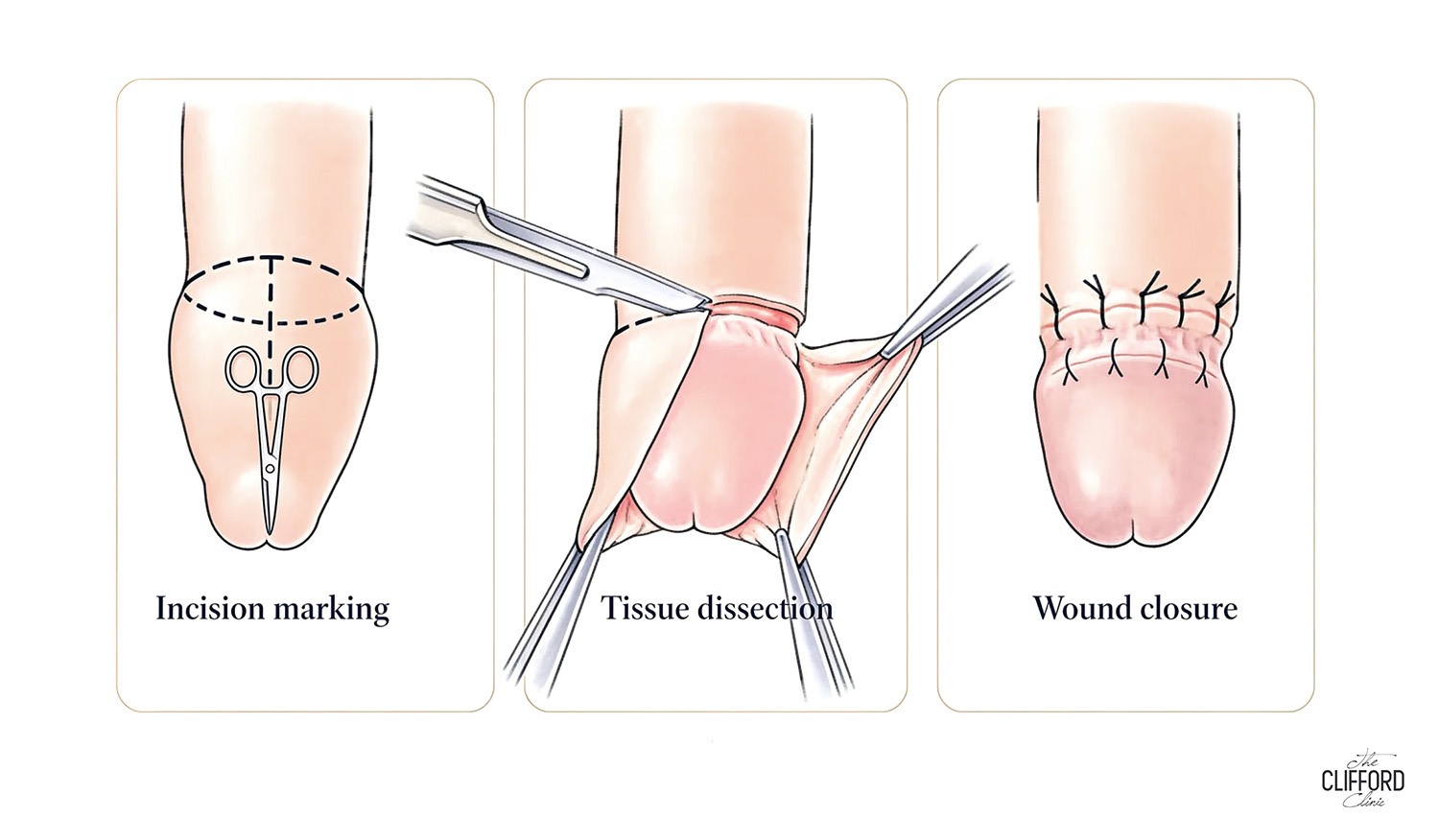
Circumcision becomes the reasonable choice when conservative measures have not worked, when there is significant scarring such as lichen sclerosus, when infections keep returning, or when symptoms are interfering with daily life or sexual function. It is also considered after an episode of paraphimosis to prevent recurrence. There are situations where the right move is to pause and evaluate first rather than operate, such as suspicious penile skin lesions or congenital penile abnormalities, which should be assessed by a Urologist.
When the Urology Department should assess
A urologist is a specialist in the male urinary and reproductive system and is well suited to assess complex or persistent cases. The Clifford Surgery has its own Urology Department led by Dr Nathaniel Heah, while Dr Law Zhi Wei handles the consultation, procedure, and aftercare for circumcision. Consider specialist input when there is recurrent foreskin infection, heavy scarring, a history of paraphimosis, an underlying skin condition, a suspicious lesion, or uncertainty about the diagnosis.
Decision guide
Phimosis Situations and Suggested Next Steps
| Situation | Suggested Approach |
|---|---|
| Young Boy, No Symptoms, Foreskin Not Yet Retractable | Usually normal, review over time |
| Mild Tightness in an Older Child or Adult | Consider a topical steroid cream and review |
| Scarred, Tight Foreskin with Recurrent Foreskin Infection | Assessment, likely candidate for circumcision |
| Foreskin Trapped Behind the Head, Swelling | Urgent care, possible paraphimosis |
| Suspicious Skin Lesion or Unusual Anatomy | Urologist review |
A note from the clinic
“Tight foreskin does not always mean surgery. In children it is frequently normal and resolves by adolescence, and in adults a cream and good hygiene can sometimes solve it. We assess each case and recommend circumcision when it is genuinely required. If a suspicious lesion is observed, a Urologist will evaluate first before surgery.”
Frequently asked questions
What is phimosis?
Phimosis is a tight foreskin that cannot be retracted over the head of the penis, from either congenital or acquired narrowing. It can be a normal stage in young boys or a treatable problem in older children and adults.
Is tight foreskin normal in children?
Often yes. Physiological phimosis is common in young boys and usually resolves by adolescence. Forcing the foreskin back should be avoided.
Can phimosis go away without circumcision?
Yes, in many cases. Childhood phimosis often resolves naturally, and milder adult cases can improve with a topical steroid cream and gentle care.
What is the difference between physiological and pathological phimosis?
Physiological phimosis is normal developmental tightness that resolves with time, while pathological phimosis results from scarring, infection, or conditions such as lichen sclerosus and often needs treatment.
When is circumcision needed for phimosis?
When conservative measures fail, when there is significant scarring, or when infections keep returning or symptoms interfere with daily life or sex.
Is phimosis a medical indication for MediSave and insurance?
Yes. A tight foreskin is a recognised medical indication, which generally makes circumcision MediSave claimable and insurance claimable.
What is paraphimosis?
Paraphimosis is when a retracted foreskin becomes trapped behind the head of the penis and cannot return, causing swelling. It is a medical emergency that needs prompt reduction.
Should I force the foreskin back?
No. Forcing can cause pain, tears, scarring, and paraphimosis. Retraction should happen gently and only as the foreskin naturally allows.
Can a GP treat phimosis?
A GP can assess simple cases, advise on creams and hygiene, and refer complex cases to a urologist or a Day Surgery Centre with a Urology Department.
When should I see a urologist?
See a urologist for suspicious penile lesions or an uncertain diagnosis.
Book an assessment
If you or your child has a tight foreskin, a consultation will tell you whether it is normal, whether a cream can help, or whether circumcision is the right step. You will get a clear plan rather than a rushed decision.
Book a consultation at The Clifford Surgery
Related guides
- Circumcision Singapore, the complete guide
- Circumcision cost in Singapore
- Adult circumcision in Singapore
- Child circumcision age guide
Medical review box

This article is written by Dr Law Zhi Wei of The Clifford Surgery. Dr Law is a Singapore-trained doctor with more than five years of surgical posting experience. He graduated from the National University of Singapore with an MBBS and holds Membership of the Royal College of Surgeons of Edinburgh, a Graduate Diploma in Family Medicine, and a Postgraduate Diploma in Practical Dermatology from Cardiff University. He trained in the Urology Department at the Singapore General Hospital, where he performed hundreds of circumcisions, and completed rotations in urology, general surgery, and paediatric surgery at KK Women’s and Children’s Hospital, Singapore General Hospital, Sengkang General Hospital and Changi General Hospital. He has personally performed more than 500 circumcisions across the conventional, laser-assisted, Shang Ring, and ZSR Stapler techniques, and he handles the consultation, the procedure, and the aftercare for each patient, supported by the dedicated Urology Department led by Dr Nathaniel Heah. Dr Law is also a published urology researcher, with peer-reviewed work in journals including the Journal of Urology, BJU International, the Asian Journal of Urology, and European Urology Supplements. The Clifford Surgery operates a sterile surgical theatre as a Ministry of Health-accredited Day Surgery Centre. It is a CPF and MediSave accredited, CDA-approved medical institution. We assist with hospital insurance claims where there is a medical indication. This content is general information and not a substitute for a personal consultation. Last updated June 2026.
Dr Law Zhi Wei profile, https://cliffordclinic.com/dr-law-zhi-wei/
Dr Nathaniel Heah profile, https://cliffordclinic.com/dr-nathaniel-heah/
Clinical research and publications, https://cliffordclinic.com/clinical-research/
References
- National University Hospital, Phimosis and circumcision in children. https://www.nuh.com.sg/health-resources/diseases-and-conditions/phimosis-circumcision-children
- National University Hospital, Services for Circumcision. https://www.nuh.com.sg/care-at-nuh/services/department-of-urology/services-for-circumcision
Medical evidence references
- Friedman B, Khoury J, Petersiel N, et al. Pros and Cons of Circumcision, An Evidence-Based Overview. Clinical Microbiology and Infection. 2016. https://pubmed.ncbi.nlm.nih.gov/27497811
- Nabavizadeh B, Li KD, Hakam N, et al. Incidence of Circumcision Among Insured Adults in the United States. PLoS One. 2022. https://pubmed.ncbi.nlm.nih.gov/36251658