


Adult Circumcision Singapore – What Men Should Know Before Surgery
Quick answer
Adult circumcision in Singapore is a common day surgery for men, usually performed under local anaesthesia with or without light sedation, with most patients going home the same day. Men choose it for a tight foreskin, recurrent foreskin infections, hygiene difficulty, discomfort, or personal preference, and there is no age at which it becomes too late. At The Clifford Surgery, a Ministry of Health-accredited Day Surgery Centre with its own Urology Department. The self-pay fee is S$1,888 before GST. Most men take around five to seven days of hospitalisation leave, with light exercise after about a week and strenuous activity avoided for about four to six weeks. Pain during the procedure is minimal once the anaesthesia takes effect, and most men describe the experience as uneventful. For the complete overview, see our Circumcision Singapore guide.
Is 25 too old for circumcision?
No. There is no upper age limit for circumcision. Men in their twenties, thirties, forties, and beyond are circumcised safely every year.
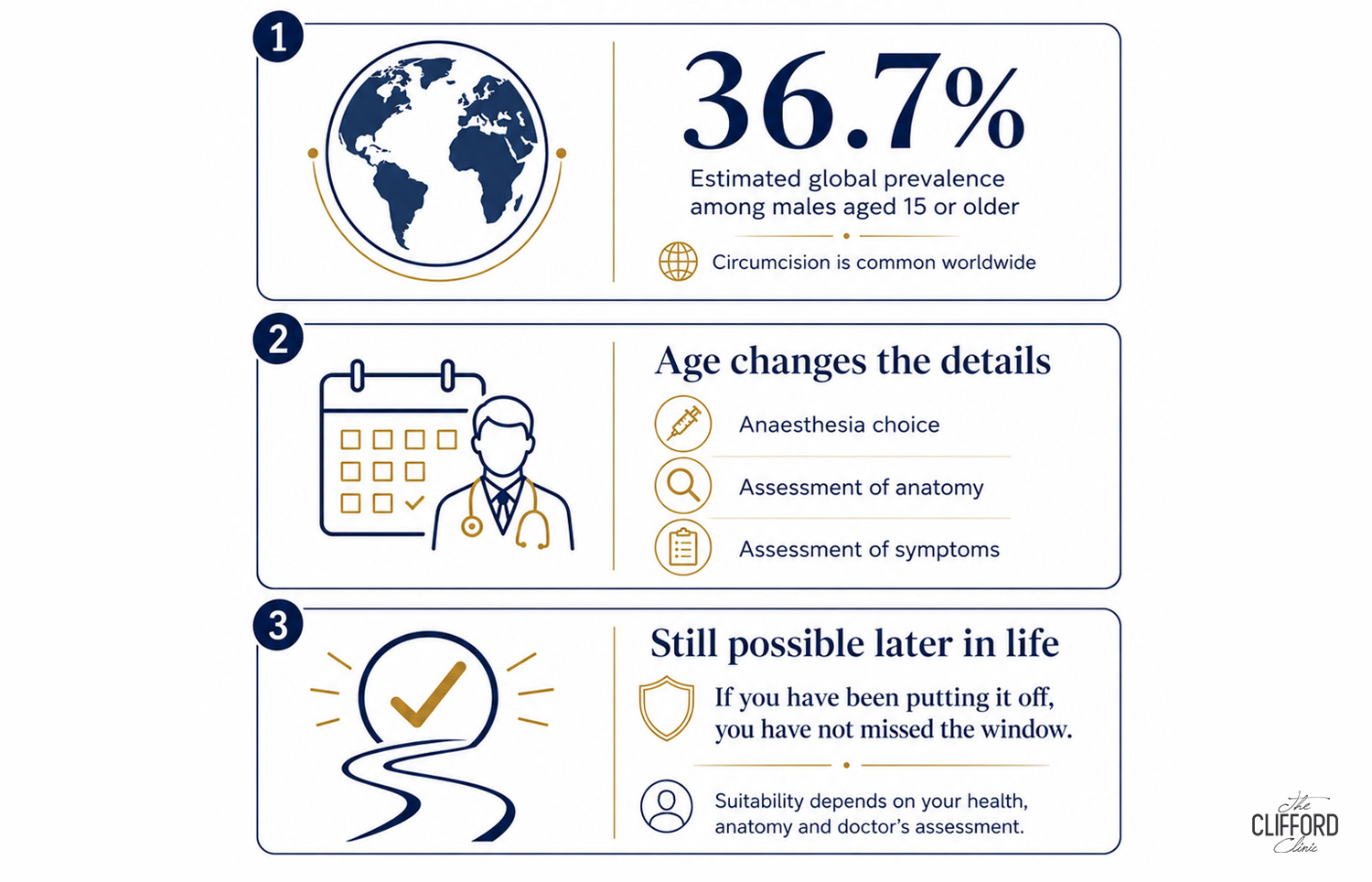
Globally, the prevalence of circumcision among males aged 15 or older is estimated at around 36.7 percent, which shows how common the procedure is worldwide. What changes with age is not whether you can have it done, but the details around it, such as anaesthesia choice and the specific assessment of your anatomy and symptoms. If you have been putting it off because you think you have missed the window, you have not.
Why adult men choose circumcision
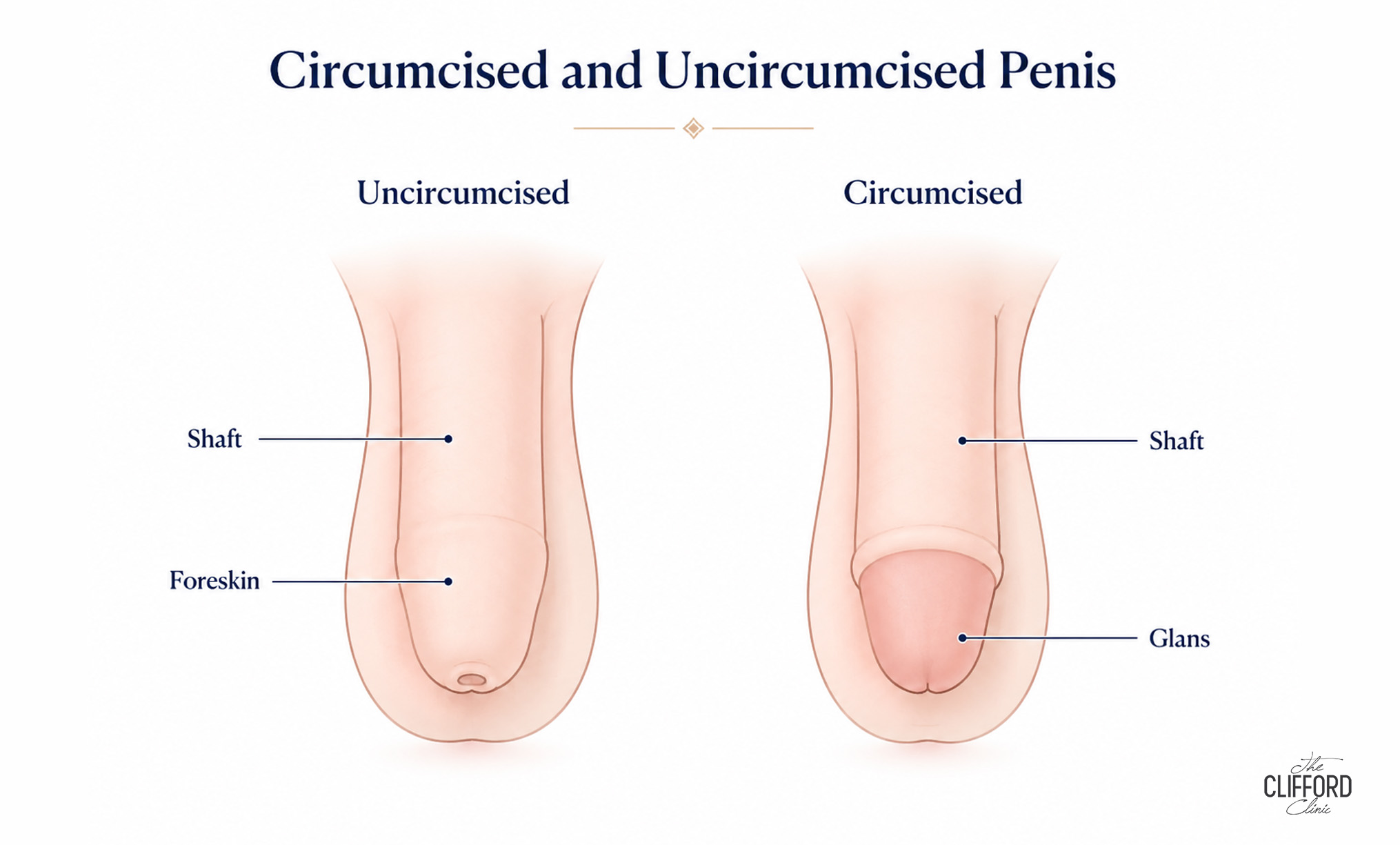
Adult men come for a range of reasons, and most are entirely practical. A tight foreskin (phimosis) is the most common medical reason, accounting for around 52.5 percent of adult circumcisions in one large study. A tight foreskin that cannot retract comfortably can cause pain, hygiene difficulties, and problems during sex. Recurrent infections of the glans or foreskin (balanitis or balanoposthitis) are another frequent reason for circumcision. Some men have ongoing hygiene difficulties, a tight frenulum, or persistent discomfort that becomes intolerable. Others choose circumcision for personal preference, appearance, or hygiene.
Medical evidence men often ask about
Two evidence questions come up often, and the research is reassuring. First, high-quality evidence strongly supports that adult circumcision does not harm male sexual function or satisfaction. Second, three landmark randomised controlled trials in Africa showed that voluntary medical male circumcision reduced the risk of female-to-male HIV transmission by approximately 60 percent, which led the World Health Organisation to recognise it as a key HIV prevention intervention. This HIV evidence is strongest for heterosexual transmission in high-prevalence settings, and its relevance varies by individual circumstances.
What happens at the consultation

The first visit is an assessment by Dr Law Zhi Wei, who has personally performed more than 500 circumcisions across the conventional, laser-assisted, Shang Ring, and ZSR Stapler techniques. He takes a history, examines the area, and works out whether circumcision is the right answer for you. A discussion about technique and anaesthesia will be done during the consultation. Dr Law Zhi Wei would also discuss the recovery with you and provide hospitalisation leave for the surgery if required. After the consultation, you will be informed about the cost, including what MediSave and insurance can cover. The consultation is charged at S$100 before GST and is waived if you proceed with surgery.
Suitability assessment
Suitability means making sure the procedure is safe and appropriate for you. The doctor checks your general health, any conditions that affect healing or bleeding, current medications, and the state of the foreskin and surrounding skin.
Patients taking blood thinners such as aspirin, clopidogrel, warfarin, or direct oral anticoagulants require careful planning, since these affect bleeding risk. If there is an active foreskin infection, it is usually better to treat it first. Certain findings, such as suspicious penile lesions or congenital penile abnormalities, would require a urologist’s assessment.
Technique options for adults
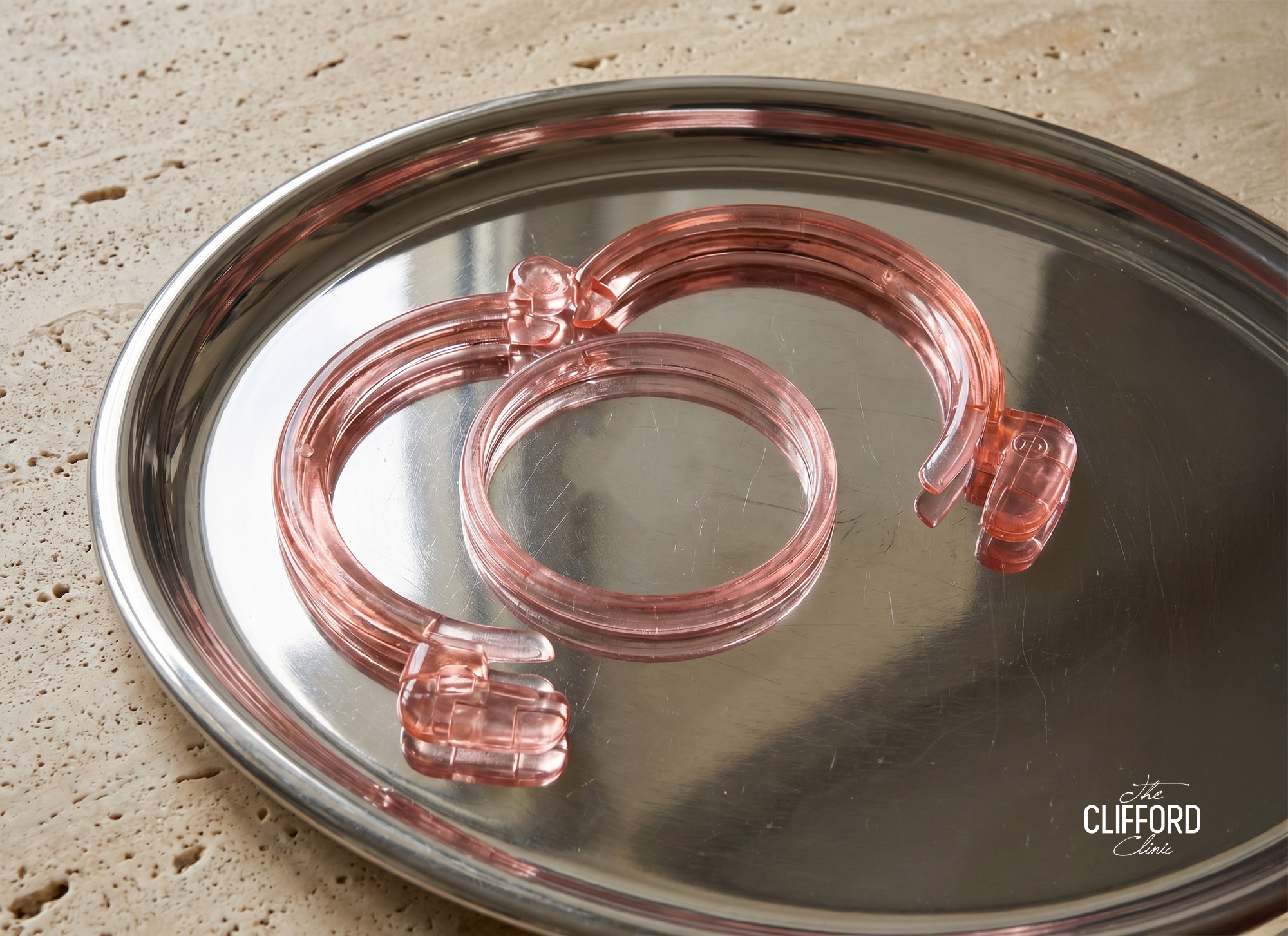
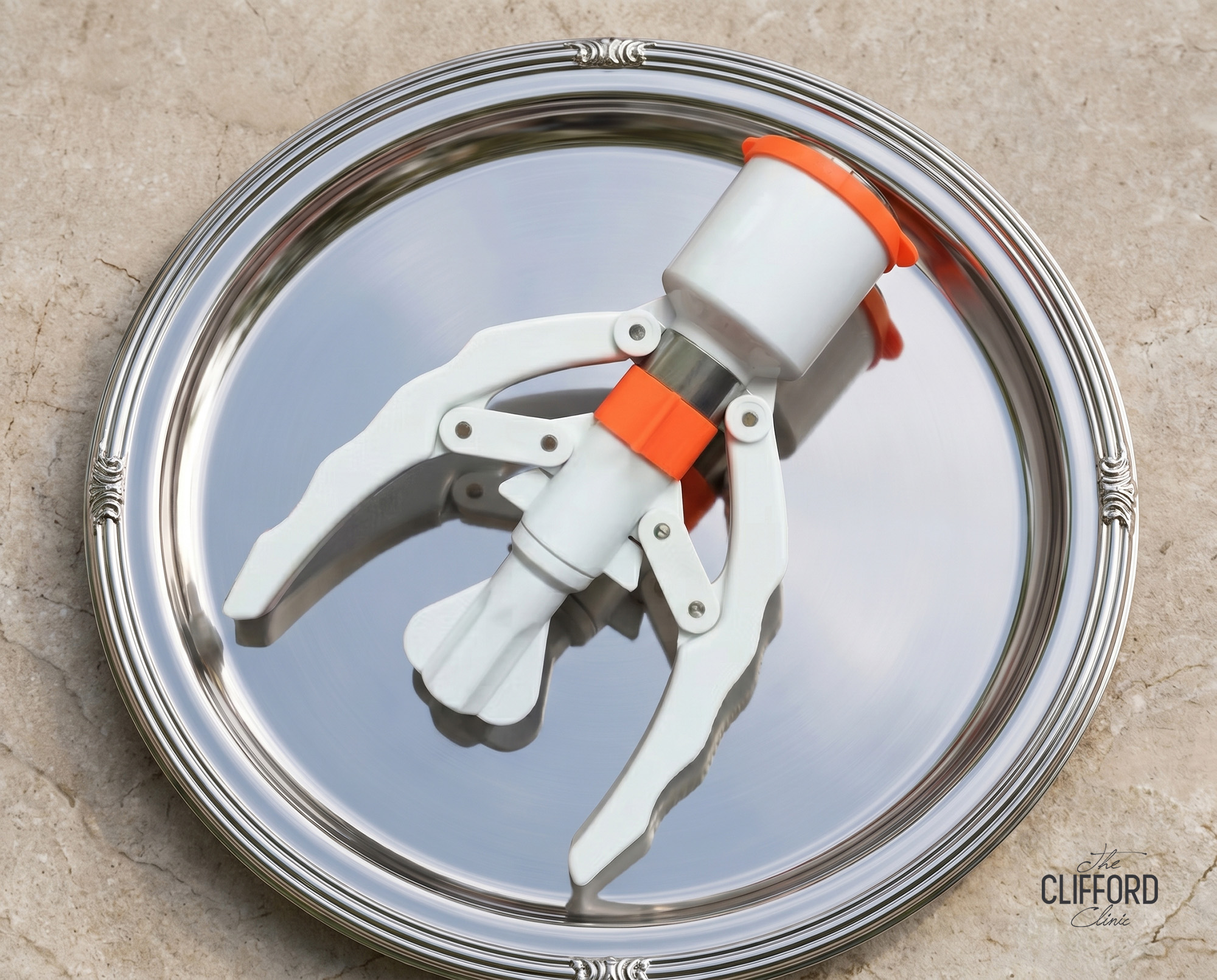
The Clifford Surgery offers the full range of techniques, including conventional surgical circumcision, stapler or ZSR circumcision, the Shang Ring, laser, and diathermy. There is no single preferred technique. After assessment, the doctor selects a method that fits your anatomy, your reason for surgery, and your recovery needs. Conventional surgery closes the wound with dissolvable stitches and handles complex or scarred anatomy well. Device-assisted methods such as the Shang Ring and stapler circumcision avoid traditional stitching, are quick to perform, and give a neat cosmetic result. A Cochrane review of 18 randomised trials found no severe adverse events with either device-based or conventional approaches.
Local anaesthesia versus sedation
For most adults, a layered anaesthesia combining numbing cream and local anaesthesia is sufficient. Once the numbing cream has taken effect, a ring block and a dorsal penile nerve block are performed to fully numb the area. After this, the procedure itself should not be painful. Some men prefer additional light sedation to feel more relaxed, and an anaesthetist is available for sedation cases where needed. At The Clifford Surgery, sedation is an additional S$1,500. The local anaesthetic typically wears off after about six to eight hours. Therefore, a painkiller the evening after surgery is recommended.
Recovery and work leave
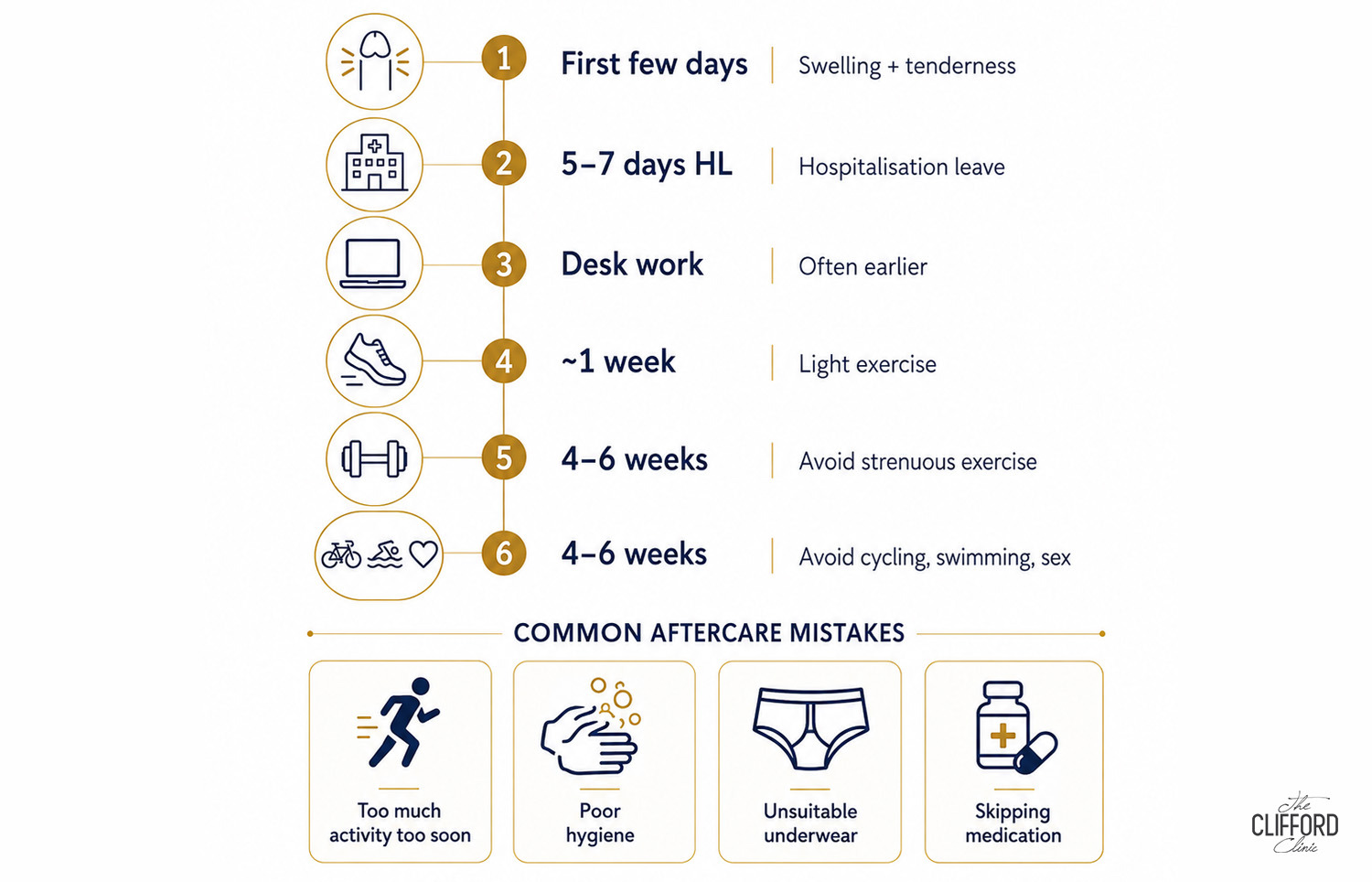
Recovery is manageable for most men. Expect some swelling and tenderness in the first few days, settling over the following weeks. The Clifford Surgery usually provides around five to seven days of hospitalisation leave, and desk-based work is often resumable sooner. Light exercise can typically resume after about a week, while strenuous exercise, cycling, swimming, and sexual activity are usually avoided for about four to six weeks. The most common aftercare mistakes are resuming strenuous or sexual activity too early, poor hygiene, wearing tight or unsuitable underwear, and not taking the prescribed painkillers and anti-inflammatories.
Cost in brief
At The Clifford Surgery, the self-pay fee is S$1,888 before GST. The consultation is S$100 before GST and is waived if you proceed. Follow-up is included, while medication is charged separately. Light sedation, where chosen, adds S$1,500. Circumcision is MediSave claimable and insurance claimable when there is a medical indication such as a tight foreskin. For MediSave, you generally pay first and the clinic processes the refund afterwards, and the team can support insurance pre-authorisation.
Privacy and discretion
Our clinic treats circumcision with utmost discretion, a respectful environment and confidential consultations. The most common fear men mention is pain, and the reality is that the procedure is not painful once the anaesthesia is working.
Decision guide
A note from the clinic
“The fear we hear most often is pain, so we explain early that once the nerve block is in, the procedure should not hurt. Most men tell us afterwards that it was far more uneventful than they imagined and that they wish they had come in sooner.”
Frequently asked questions
Is 25 too old for circumcision?
No. There is no upper age limit. Adults of any age can be circumcised safely after a suitability assessment, and circumcision is common across adult life worldwide.
Can adults get circumcised safely?
Yes. Adult circumcision is a routine day surgery with a strong safety record, and a Cochrane review of 18 trials reported no severe adverse events with either conventional or device-based methods.
Why do adult men choose circumcision?
Common reasons include a tight foreskin, which is the most frequent medical indication, recurrent foreskin infections, hygiene difficulty, a tight frenulum, discomfort, and personal preference.
Does circumcision affect sexual function?
High-quality evidence indicates that adult circumcision does not harm male sexual function or satisfaction.
Is adult circumcision painful?
Pain during the procedure is minimal once the anaesthesia takes effect. In the first few days afterwards, most adults report a pain level of around 3 to 4 out of 10, well managed with painkillers.
How long does adult circumcision take?
The actual procedure is often around ten to fifteen minutes with a sutureless technique, while the full visit, which includes preparation and recovery, takes a few hours.
How many days of MC do I need?
The Clifford Surgery usually provides around five to seven days of hospitalisation leave, depending on your job. Desk-based work is often resumable sooner.
When can I exercise again?
Light exercise can usually resume after about a week, with strenuous exercise avoided for about four to six weeks.
How much does it cost?
The consultation is S$100 before GST, waived if you proceed. The self-pay fee is S$1,888 before GST. Medication is charged separately, follow-up is included, and sedation requires an additional S$1,500
Is the consultation confidential?
Yes. Consultations are private and confidential, and you can raise any concern without embarrassment.
Book a confidential consultation

If you are an adult considering circumcision, a confidential consultation is the simplest way to get clear answers about suitability, technique, anaesthesia, cost, and recovery. You can ask about medical leave, MediSave, insurance, and privacy too, so you know exactly what to expect.
Book a consultation at The Clifford Surgery
Related guides
Medical review box

This article is written by Dr Law Zhi Wei of The Clifford Surgery. Dr Law is a Singapore-trained doctor with more than five years of surgical posting experience. He graduated from the National University of Singapore with an MBBS and holds Membership of the Royal College of Surgeons of Edinburgh, a Graduate Diploma in Family Medicine, and a Postgraduate Diploma in Practical Dermatology from Cardiff University. He trained in the Urology Department at the Singapore General Hospital, where he performed hundreds of circumcisions, and completed rotations in urology, general surgery, and paediatric surgery at KK Women’s and Children’s Hospital, Singapore General Hospital, Sengkang General Hospital and Changi General Hospital. He has personally performed more than 500 circumcisions across the conventional, laser-assisted, Shang Ring, and ZSR Stapler techniques, and he handles the consultation, the procedure, and the aftercare for each patient, supported by the dedicated Urology Department led by Dr Nathaniel Heah. Dr Law is also a published urology researcher, with peer-reviewed work in journals including the Journal of Urology, BJU International, the Asian Journal of Urology, and European Urology Supplements. The Clifford Surgery operates a sterile surgical theatre as a Ministry of Health-accredited Day Surgery Centre. It is a CPF and MediSave accredited, CDA-approved medical institution. We assist with hospital insurance claims where there is a medical indication. This content is general information and not a substitute for a personal consultation. Last updated June 2026.
Dr Law Zhi Wei profile, https://cliffordclinic.com/dr-law-zhi-wei/
Dr Nathaniel Heah profile, https://cliffordclinic.com/dr-nathaniel-heah/
Clinical research and publications, https://cliffordclinic.com/clinical-research/
References
- National University Hospital, Services for Circumcision. https://www.nuh.com.sg/care-at-nuh/services/department-of-urology/services-for-circumcision
- Ministry of Health Singapore, TOSP SH808P bill information. https://www.moh.gov.sg/managing-expenses/bills-and-fee-benchmarks/cost-financing/tosp-sh808pmore-than-6m-bill-information/
Medical evidence references
- Hohlfeld A, Ebrahim S, Shaik MZ, Kredo T. Circumcision Devices Versus Standard Surgical Techniques in Adolescent and Adult Male Circumcisions. The Cochrane Database of Systematic Reviews. 2021. https://www.cochranelibrary.com/cdsr/doi/10.1002/14651858.CD012250.pub2/full
- Friedman B, Khoury J, Petersiel N, et al. Pros and Cons of Circumcision, An Evidence-Based Overview. Clinical Microbiology and Infection. 2016. https://pubmed.ncbi.nlm.nih.gov/27497811
- Nabavizadeh B, Li KD, Hakam N, et al. Incidence of Circumcision Among Insured Adults in the United States. PLoS One. 2022. https://pubmed.ncbi.nlm.nih.gov/36251658
- Hohlfeld AS, Ebrahim S, Zaki Shaik M, Kredo T. Circumcision Devices Versus Standard Surgical Techniques in Adolescent and Adult Male Circumcisions, A Cochrane Review. BJU International. 2022. https://pubmed.ncbi.nlm.nih.gov/34587354