

Breast Augmentation With Implants in Singapore
Breast augmentation is a surgical procedure that increases or restores breast volume using implants or, in selected cases, fat transfer. Implant planning is dimensional rather than cosmetic. Chest width, breast tissue thickness, implant diameter and projection, incision route and the plane the implant sits in each constrain the others, so the plan is built from measurements rather than from a target cup size. Suitability, risks, costs and long-term follow-up should be established with a registered doctor experienced in breast implant surgery before any decision is made.
Breast augmentation in Singapore at a glance
Breast Augmentation Procedure Summary
| Item | Details |
|---|---|
| Procedure | Breast augmentation, augmentation mammoplasty, with implants |
| Purpose | Increase or restore breast volume, and improve symmetry |
| Anaesthesia | General anaesthesia administered by an accredited anaesthetist |
| Surgical Setting | The Clifford Surgery, an MOH-accredited day surgery centre |
| Procedure Duration | Approximately one to two hours |
| Discharge | Same day, after monitoring in recovery |
| Initial Recovery | Light activities within days. Most desk work within about a week |
| Return to Exercise | Staged. Strenuous upper-body exercise is typically deferred for four to six weeks |
| Follow-Up | Scheduled reviews at one week, one month and three months, then long-term monitoring for as long as the implants are in place |
| Device Lifespan | Not a lifetime device. The US FDA states that the likelihood of removal or replacement increases the longer an implant is in place |
| Cost | S$15,000 all-in, Motiva Ergonomix, ‘Ergo 1’, or S$18,000 all-in, Premium Motiva JOY / Ergonomix2, ‘Ergo 2’, before GST. See cost section |
Clinic-specific rows must be verified by the operating surgeon before publication.
What is the difference between breast augmentation and breast implants?
Breast augmentation names the goal, which is surgery to increase or restore breast size. Implants are one way of reaching it. Fat grafting, which transfers the patient’s own fat, is another. A breast lift (mastopexy) repositions the breast and removes excess skin but adds no volume of its own, so a breast that has both lost volume and descended needs two operations rather than a choice between them. That combination is common after pregnancy or significant weight loss. The comparison section below and our detailed guide to implants versus fat transfer versus breast lift explain how these options differ.
Who may be suitable for breast implant surgery?
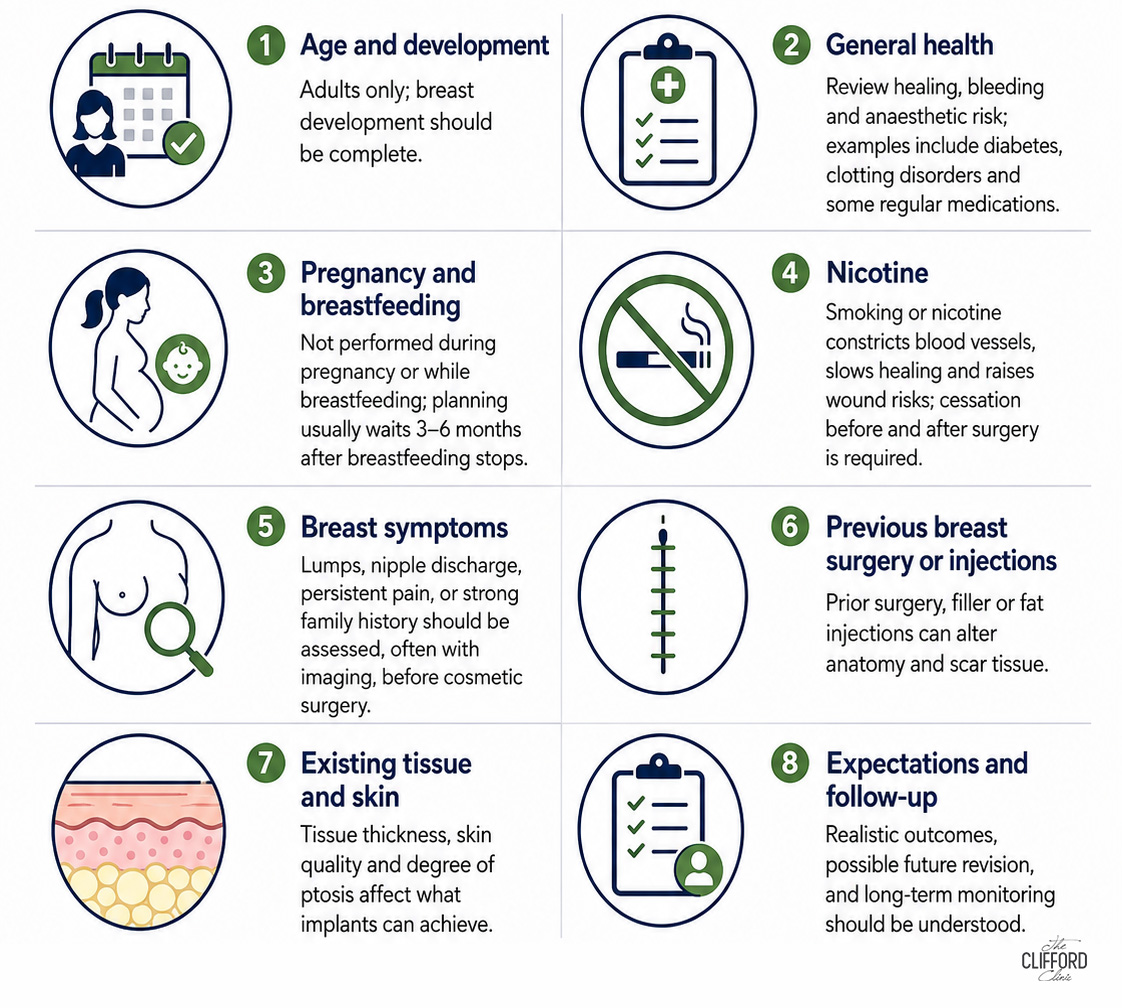
Breast implant surgery is an elective operation for adults, and suitability is determined by individual medical assessment rather than by general good health. The consultation examines the following.
- Age and development.Surgery is offered only to adults whose breast development is complete, because an implant sized to a breast that is still changing will not match it later.
- General health.Conditions affecting healing, bleeding or anaesthetic safety are reviewed first, since diabetes, clotting disorders and some regular medications raise the risk of infection and haematoma.
- Pregnancy and breastfeeding.Surgery is not performed during pregnancy or while breastfeeding. After a recent pregnancy, planning usually waits until breast volume and skin have settled, commonly three to six months after breastfeeding stops.
- Nicotine constricts the small vessels that supply healing tissue, which slows wound closure and raises the risk of the incision breaking down. Cessation before and after surgery is required.
- Breast symptoms.A lump, nipple discharge, persistent pain or a strong family history is assessed, and often imaged, before any cosmetic operation is planned, so that an implant is never placed over an undiagnosed breast problem.
- Previous breast surgery or injections.Earlier procedures, including filler or fat injections, leave scar tissue and altered anatomy that change where a pocket can safely be made.
- Existing tissue and skin.Tissue thickness, skin quality and the degree of droop (ptosis) determine what implants can and cannot achieve.
- Patients should understand realistic outcomes, the possibility of future revision, and the need for long-term monitoring.
What breast implants can and cannot correct
Implants can increase overall volume, restore upper-pole fullness lost after pregnancy or weight change, and improve certain asymmetries. They do not lift a breast that has descended. Where there is notable ptosis, a larger implant adds weight to skin that is already stretched, so the breast sits low again within a year or two and the nipple stays low on the mound. A mastopexy, alone or combined with an implant, is the operation that addresses that.
Types of breast implants
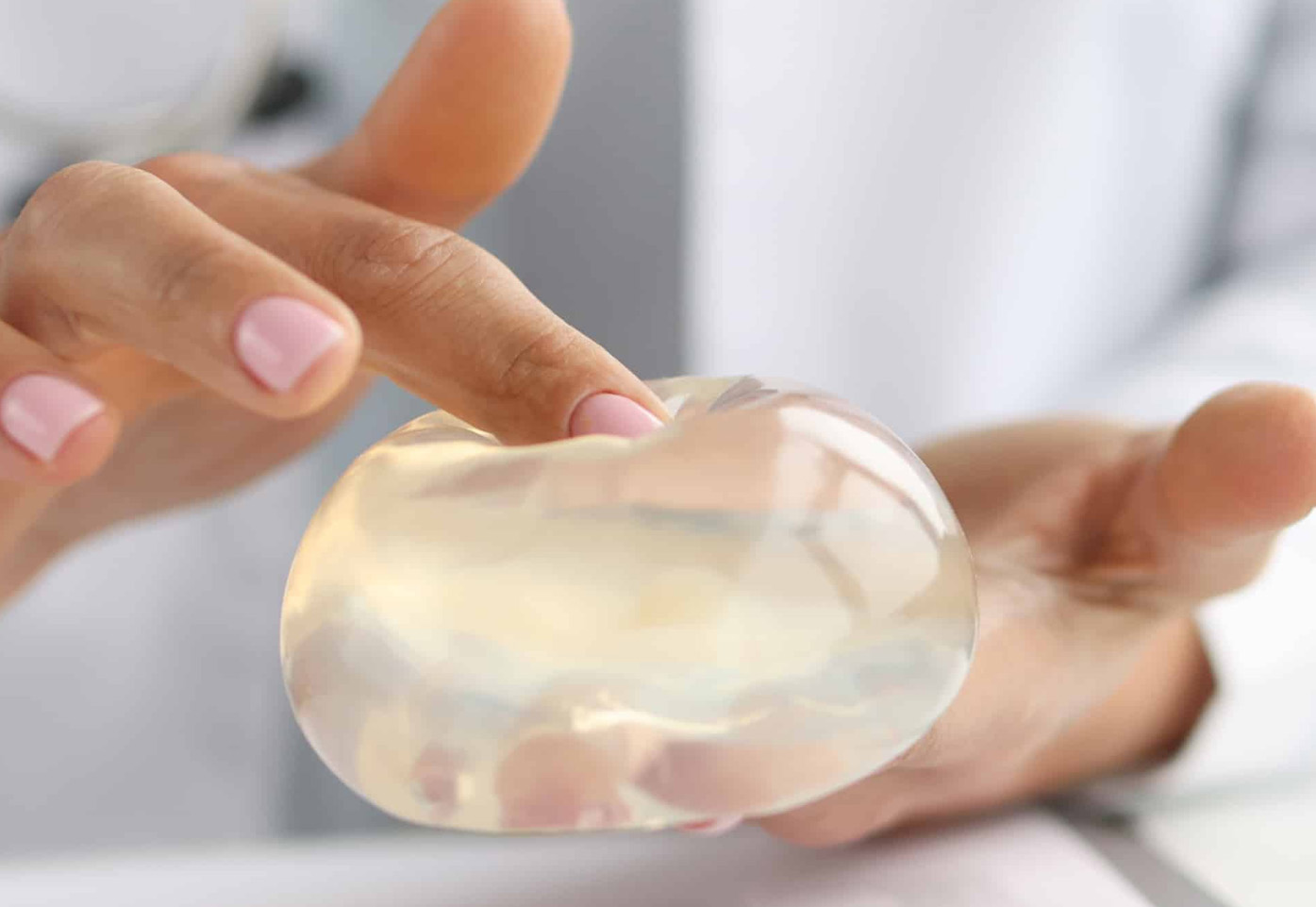
Implants differ across several independent characteristics, and no single implant is universally best, safest or most natural. The US FDA notes that implants vary by fill material, size, shell, surface and shape. Each of the characteristics below is chosen separately, which is why two implants of the same volume can behave quite differently in the same patient.
- Fill, either cohesive silicone or saline.Most implants used in Singapore are cohesive silicone gel, which holds its shape and feels closer to breast tissue than fluid does. Saline implants are less commonly used here, although a saline rupture is easier to detect because the breast visibly deflates.
- Shape, either round or anatomical (teardrop).Round implants give fuller upper-pole volume. Anatomical implants mimic a natural slope but can rotate within the pocket, which distorts the breast and may need revision to correct. Some modern gels are designed to behave round when lying down and teardrop when upright.
- Surface, either smooth or textured.Texturing was designed to grip the surrounding tissue and hold an anatomical implant in position. Regulators including Singapore’s Health Sciences Authority (HSA) have since noted a stronger association between textured implants and breast implant-associated anaplastic large cell lymphoma (BIA-ALCL), a rare cancer of the immune system discussed in the safety section below.
- Gel cohesivity.Firmer, more form-stable gels hold their shape and resist rippling. Softer gels move more naturally but show surface irregularity more readily in thin tissue.
- Profile and dimensions.For any volume, implants come in different diameters and projections (low, moderate, high). Matching diameter to the patient’s breast-base width is central to a natural result, because an implant wider than the breast base pushes tissue towards the armpit and leaves a visible edge.
- Implant systems available at Clifford are Motiva Ergonomix and Motiva Ergonomix2, the latter as part of the Premium JOY programme.
Read the full guide to types of breast implants.
Motiva breast implants at Clifford Clinic
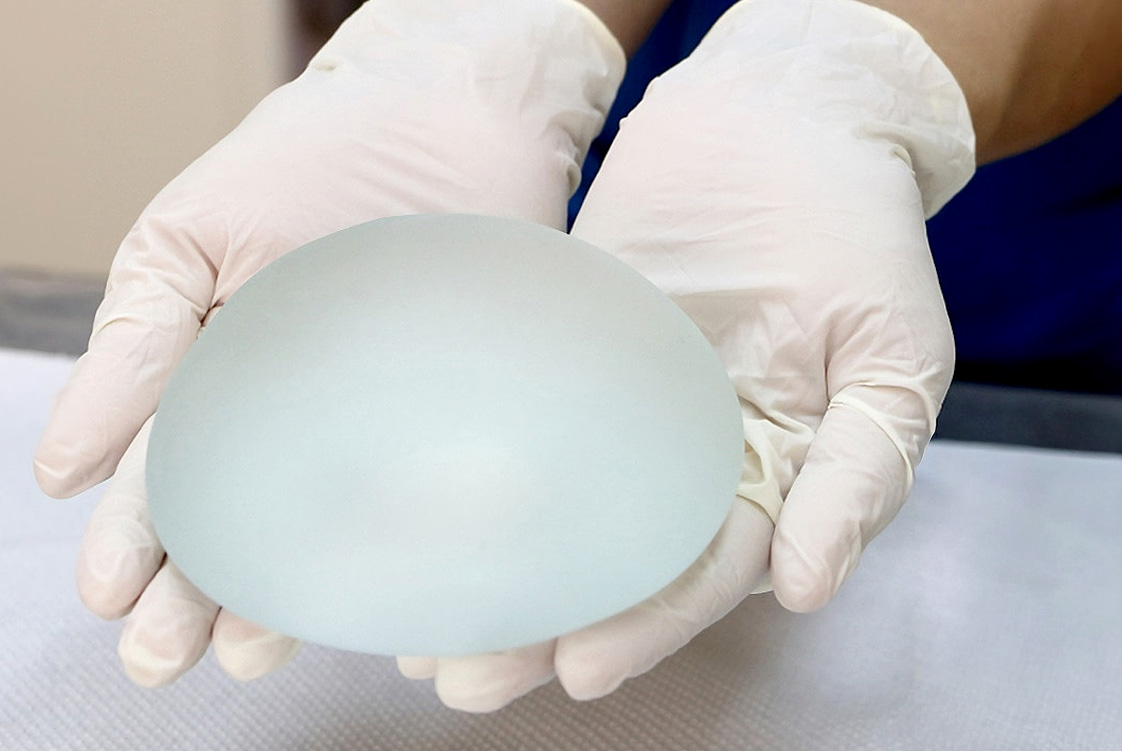
The Clifford Clinic offers two Motiva options. Motiva Ergonomix costs S$15,000 all-in, and the Premium Motiva JOY programme, built around the Ergonomix2 implant, costs S$18,000 all-in. Ergonomix uses a gel designed to move with posture, sitting rounder lying down and more teardrop upright. Ergonomix2 is the newer generation, engineered for greater softness and compressibility so that it can be inserted through a smaller incision. Preservé is a surgical approach that minimises tissue dissection, not a separate implant. Across the range the shell and gel are bonded into a single body (TrueMonobloc) beneath a low-friction surface (SmoothSilk), a coloured barrier layer (BluSeal) lets the surgeon confirm the shell is intact before it is implanted, and gel firmness is chosen from the ProgressiveGel options. Optional Q Inside (Qid) radio-frequency identification stores the implant’s model and serial number in the device itself, so those details can be read years later without surgery. Either Qid-enabled or Qid-free implants can be chosen at Clifford, and the clinic completes Motiva warranty registration on every patient’s behalf.
Manufacturer technology claims describe design intent. They do not eliminate the risks common to all breast implants, including rupture, capsular contracture and the possible need for future surgery. No brand or model removes the need for long-term monitoring. Read the full guide to Motiva breast implants in Singapore.
How breast implant size and profile are selected
A requested cup size is a starting point for discussion, not a surgical plan. Cup sizes vary between bra brands and do not translate reliably into implant volume, which is measured in millilitres. Selection rests on six factors.
- Chest and breast-base width, which set the range of implant diameters that will sit within the breast footprint rather than beyond it.
- Existing tissue thickness, measured as a skin pinch at the upper pole, which determines how visible or palpable the implant edge will be.
- Skin envelope and nipple position, which decide whether added volume alone will produce the intended shape or whether a lift is also needed.
- The relationship between diameter, projection and volume, since one volume can be delivered as a wide, low implant or as a narrower, more projecting one, and the two look quite different on the same chest.
- Lifestyle, posture and exercise habits, which matter most for patients who train the upper body, where an implant under the muscle may move visibly on contraction.
- Any asymmetry between the two breasts, which is present to some degree in most patients and is usually addressed with two different implant volumes rather than by matching them.
Sizing at Clifford combines physical measurement with 4D imaging simulation, which renders the projected result on a scan of the patient’s own torso rather than on a model. A surgeon may advise against a requested size where tissue coverage, skin quality or the likely degree of long-term stretch make it unwise. The detailed guide sets out how implant size and profile are chosen.
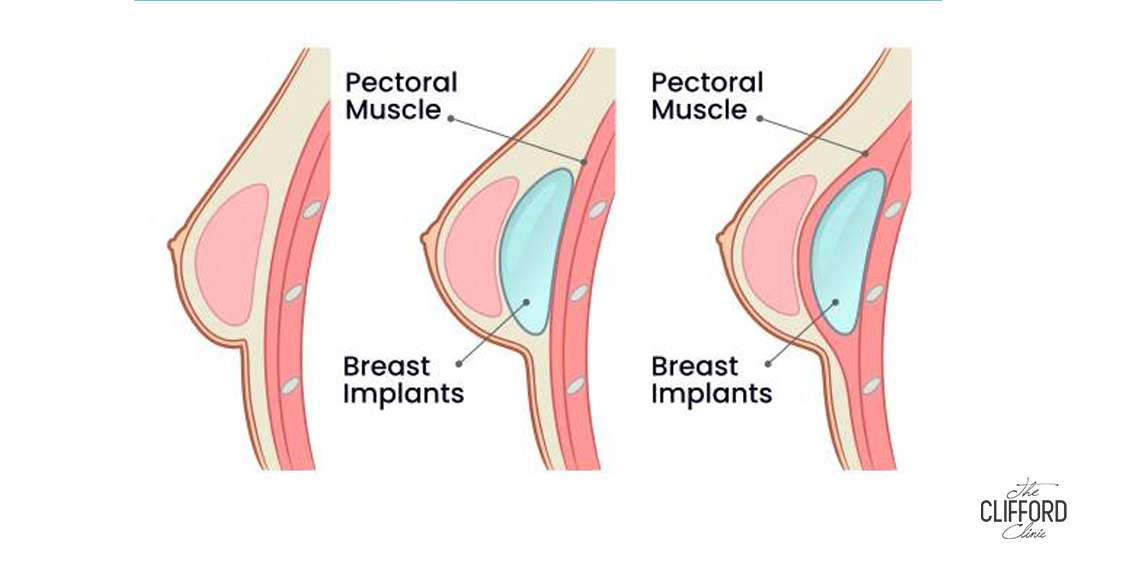
Where are breast implants placed?
Implant placement (the “pocket”) and the incision route are two separate decisions, and either can be varied without changing the other. Four placement planes are used.
- Subglandular (above the muscle).The implant sits behind the breast gland and in front of the pectoral muscle. This can suit patients with adequate tissue thickness. In thin tissue the implant edge is more likely to be visible or to ripple, because only skin and gland cover it.
- The implant sits beneath the fascia, the fibrous sheet covering the pectoral muscle, but above the muscle itself. This adds a thin extra layer of cover without the muscle movement that subpectoral placement can produce.
- Subpectoral (under the muscle).The implant sits partly beneath the pectoral muscle, which adds soft-tissue coverage in slimmer patients and softens the upper edge. The trade-off is animation deformity, a visible shift of the implant when the muscle contracts.
- Dual plane.The upper part of the implant sits under muscle while the lower pole sits under gland, which combines coverage above with natural expansion below. It is the most widely used arrangement in modern practice, and it produces less animation than full subpectoral placement.
Each plane carries trade-offs, and the recommendation follows from tissue thickness, breast shape and the implant chosen rather than from preference. The detailed guide covers placement, incisions and scars.
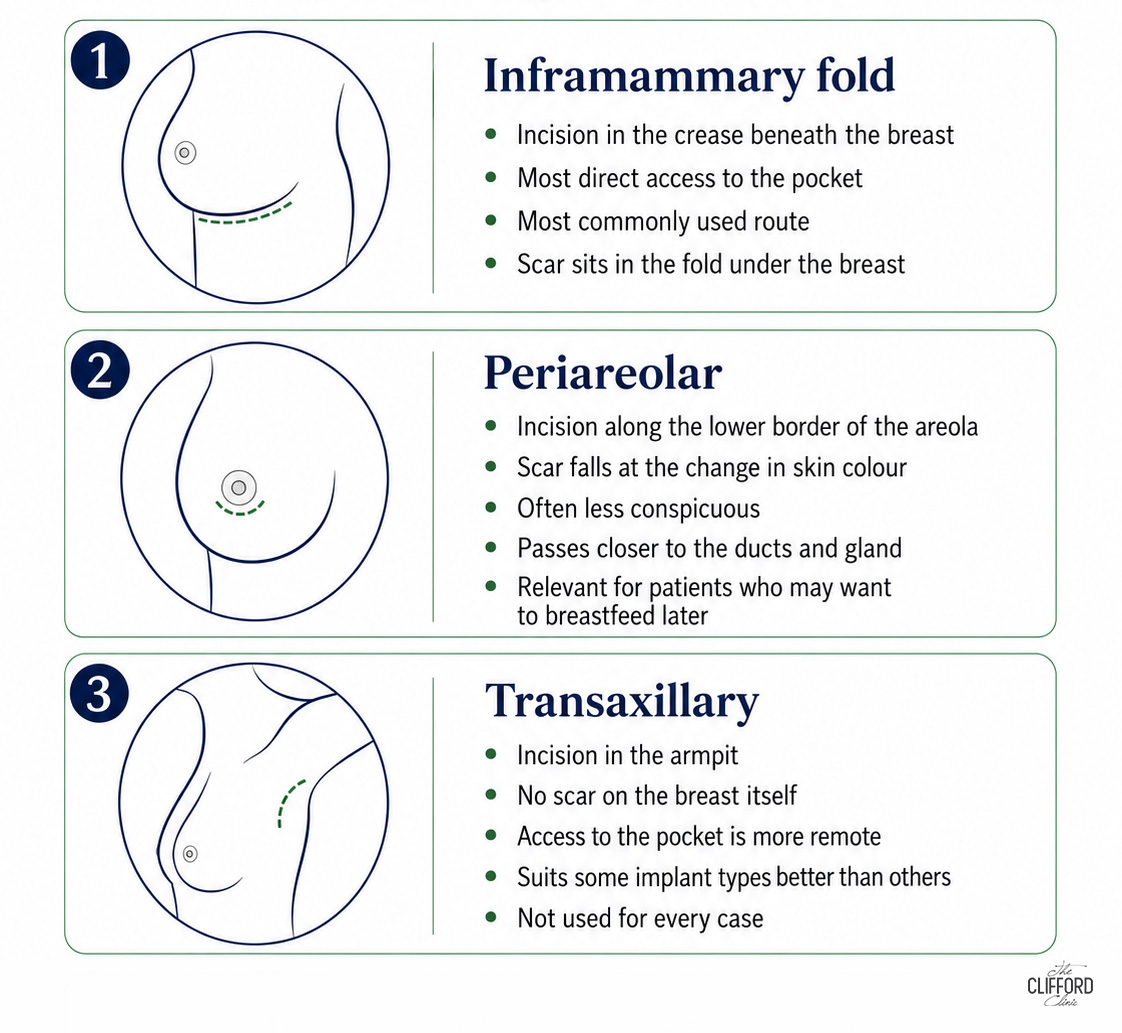
Where are breast implant incisions made?
- Inframammary fold.The incision is made in the crease beneath the breast. It gives the most direct access to the pocket and is the most commonly used route, and the scar sits in the fold where the breast rests over it.
- The incision follows the lower border of the areola, so the scar falls at the change in skin colour and is often less conspicuous. It passes closer to the ducts and gland, which is relevant to patients who may want to breastfeed later.
- The incision is made in the armpit, leaving no scar on the breast itself. Access to the pocket is more remote, so the route suits some implant types better than others and is not used for every case.
No incision is scarless. Scar quality depends on closure technique, individual healing tendency and scar care in the months afterwards. Most incisions settle to a fine pale line, but a scar typically looks its worst between one and three months, reddening before it fades, and continues to mature for a year or more. Patients with a history of thickened or keloid scars should say so at planning, because it changes both the incision chosen and the aftercare.
What happens during the consultation?
A Clifford consultation for breast augmentation begins with a medical and surgical history, followed by examination of the breasts and chest wall. Measurements are taken, including breast-base width and tissue thickness, and skin quality, symmetry and nipple position are assessed. Goals, size and shape are then discussed and an implant selected against those measurements. Screening questions cover breast symptoms, and imaging is arranged where clinically indicated. The consultation closes with a full explanation of risks, costs, recovery and long-term monitoring. There is no obligation to commit to surgery at or after the consultation, and patients are free to take whatever time they need to decide.
What happens during breast implant surgery?
Surgery is performed at The Clifford Surgery, an MOH-accredited day surgery centre, under general anaesthesia administered by an accredited anaesthetist. The surgeon makes the planned incision, creates the implant pocket in the agreed plane, inserts and positions the implant, checks symmetry, and closes the incision in layers. The procedure takes approximately one to two hours. Patients are monitored in recovery and, in most cases, discharged the same day with a support garment, medication and written aftercare instructions. Follow-up reviews are scheduled at one week, one month and three months.
How to prepare for breast augmentation surgery
Preparation starts weeks before the operation. Smoking should stop at least four weeks beforehand, and medications and supplements that affect bleeding are reviewed and adjusted on the surgeon’s instruction. Pre-operative tests are completed through the clinic’s standard work-up, arranged in-clinic, and any indicated breast imaging is done before, not after, elective surgery. Practical preparation matters as much as the medical work-up. An adult needs to accompany the patient home and stay the first night, front-fastening clothing and a back-sleeping arrangement with elevation are prepared in advance, daily items are moved within easy reach, and the recovery window booked off work should be realistic rather than optimistic. Fasting instructions before anaesthesia are followed exactly. Patients who prepare in this way generally report an easier first fortnight, and the full detail is in our recovery guide.
Breast augmentation recovery timeline
Recovery varies between individuals and instructions are surgeon-specific. A typical pattern is as follows.
- Surgery day to 48 hours.Tightness, swelling and discomfort are managed with medication, and rest with limited arm movement is advised.
- Days 3 to 7. Discomfort eases and light daily activities resume. Many patients with desk-based jobs return to work within about a week.
- Weeks 2 to 4. Swelling subsides, and walking and lower-body activity resume. Driving is possible once arm movement is comfortable and sedating medication has stopped.
- Weeks 4 to 6. Exercise returns progressively, with strenuous upper-body training usually the last to resume.
- Following months.Swelling settles fully and the implants soften and drop into position, a change often described as the implants settling. Scars mature over 12 months or more.
Support garments, sleeping position, scar care and warning symptoms (increasing pain, swelling, redness, fever, or a sudden change in breast shape) are covered in the full recovery timeline guide.
How long do breast implants last?
Breast implants are not routinely replaced merely because a set number of years has passed, but they are not lifetime devices either. The US FDA states that the likelihood of needing removal or replacement increases the longer implants are in place. Additional surgery may eventually be required for rupture, capsular contracture, malposition, new symptoms or a change in preference. An implant is therefore monitored rather than given an expiry date, and follow-up continues for as long as it is in place, guided by symptoms, examination, implant type and imaging recommendations.
Risks and possible complications
All surgery carries risk. The early risks of breast implant surgery are those of any operation, namely infection, bleeding and haematoma, seroma, poor wound healing and thickened scarring, and the risks of anaesthesia. Changes in nipple or breast sensation may be temporary or permanent. Implant-related problems appear later and include asymmetry, malposition or displacement, rippling or palpable implant edges, capsular contracture (tightening of the scar capsule around the implant), and rupture, which in silicone implants can occur without any symptom. Any of these may lead to revision surgery. Two rarer conditions are also recognised, namely BIA-ALCL and other rarely reported malignancies arising in the capsule. Some patients also attribute systemic symptoms to their implants, a group of complaints sometimes called breast implant illness. Absolute risk figures depend on implant type, surface and study population, and current references are reviewed at consultation. Read the full guide to breast implant safety, risks and monitoring.
BIA-ALCL and implant surface
BIA-ALCL is a lymphoma of the immune system that develops in the scar capsule around an implant rather than in breast tissue, so it is not a form of breast cancer. Regulators including the HSA and the US FDA note a stronger association with textured-surface implants than with smooth ones. The most common presentation is late swelling caused by a fluid collection around the implant, or pain or a mass, typically several years after surgery. Those symptoms warrant prompt assessment rather than watchful waiting, because the condition is usually curable when the implant and capsule are removed early. Current regulatory guidance does not recommend removing implants from patients who have no symptoms.
Breast implant rupture and imaging
Silicone implant rupture can occur without symptoms, a pattern known as silent rupture, and physical examination alone may not detect it, because cohesive gel that escapes the shell is usually held inside the surrounding capsule. Magnetic resonance imaging (MRI) is highly accurate for detecting rupture, and the FDA accepts ultrasound as a screening alternative in patients without symptoms, with MRI where the result is unclear or symptoms are present. The FDA currently suggests first imaging 5 to 6 years after silicone implant surgery and every 2 to 3 years thereafter. The precise surveillance plan is set with the operating surgeon.
Breastfeeding, pregnancy and mammograms
- Many women breastfeed successfully after augmentation, but no surgeon can guarantee future milk supply, and none can be guaranteed in a woman who has never had surgery either. Incisions near the areola pass closer to the ducts, so the route is chosen with any plan to breastfeed in mind.
- Pregnancy does not typically damage an implant, but it changes the natural breast tissue around it. Glandular tissue enlarges and then shrinks back after feeding stops, so the breast may sit differently afterwards and some patients later consider revision or a lift.
- Breast cancer screening remains both possible and important after augmentation. The FDA advises telling the mammography facility about the implants in advance, so that additional displacement views, which move the implant aside to expose more breast tissue, or other imaging can be arranged.
Read the full guide to breastfeeding, pregnancy and mammograms after implants.
Breast implants versus fat transfer versus breast lift
Breast Augmentation Options Compared
| Consideration | Implants | Fat Transfer | Breast Lift |
|---|---|---|---|
| Main Purpose | Adds defined volume | Adds selected volume using the patient’s fat | Repositions and reshapes |
| Volume Predictability | Generally more controllable | Limited by donor fat and fat retention | Does not primarily add volume |
| Additional Surgical Site | Breast | Breast plus liposuction donor sites | Breast |
| Implant-Related Risks | Yes, including rupture and capsular contracture | None | None unless combined with implants |
| Scarring | Depends on incision route | Small access and liposuction incisions | More extensive breast scars |
| Possible Future Procedures | Monitoring, with possible revision | Further grafting sessions possible | Occasional revision |
Read the detailed comparison of implants vs fat transfer vs breast lift.
Breast implant cost in Singapore
Figures in this section are the clinic’s confirmed prices and are quoted before GST. Breast augmentation at The Clifford Clinic is an all-inclusive S$15,000 with Motiva Ergonomix implants or S$18,000 for the Premium Motiva JOY programme with Ergonomix2 implants. The difference reflects the implant generation and programme inclusions, not a difference in surgical care.
The all-in price covers the whole surgical episode. It includes Dr Naidu’s surgical fee, the pair of Motiva implants, and the day surgery facility at The Clifford Surgery with every consumable, disposable and piece of surgical equipment used. It also covers the anaesthetist’s services, including the ultrasound-guided nerve block used for longer-lasting pain control, together with medications, support garments and the scheduled reviews (one week, one month, three months). The only addition is GST. Patients should ask at consultation how costs would be handled if revision surgery or complication management were ever needed. Purely cosmetic breast augmentation is generally self-funded and not claimable under MediSave or insurance. When comparing quotations between clinics, patients should compare inclusions, namely implant model, anaesthesia provision, facility licensing and follow-up, rather than the headline number alone. Read the full guide to breast implant cost in Singapore.
How to choose a breast augmentation surgeon in Singapore
No clinic can properly claim to provide the best surgeon, so the assessment that matters is of objective factors. Seven are worth checking.
- Registration status with the Singapore Medical Council, and specialist registration where applicable, both of which are publicly searchable.
- Specific experience with breast implant surgery, including revision surgery, since a surgeon who does not take on revisions may not be the one available if a problem arises.
- Surgery performed in a licensed facility with an accredited anaesthetist present, rather than under sedation in a treatment room.
- Implant traceability, meaning documented brand, model and serial numbers together with warranty registration, so the exact device can be identified years later if it needs attention.
- Willingness to explain risks, alternatives and the possibility of future surgery rather than benefits alone.
- Clear complication management and follow-up arrangements, including who to contact out of hours and what is charged for.
- A consultation that measures the patient’s anatomy rather than simply agreeing to a requested size.
About the Clifford surgeon and surgical team
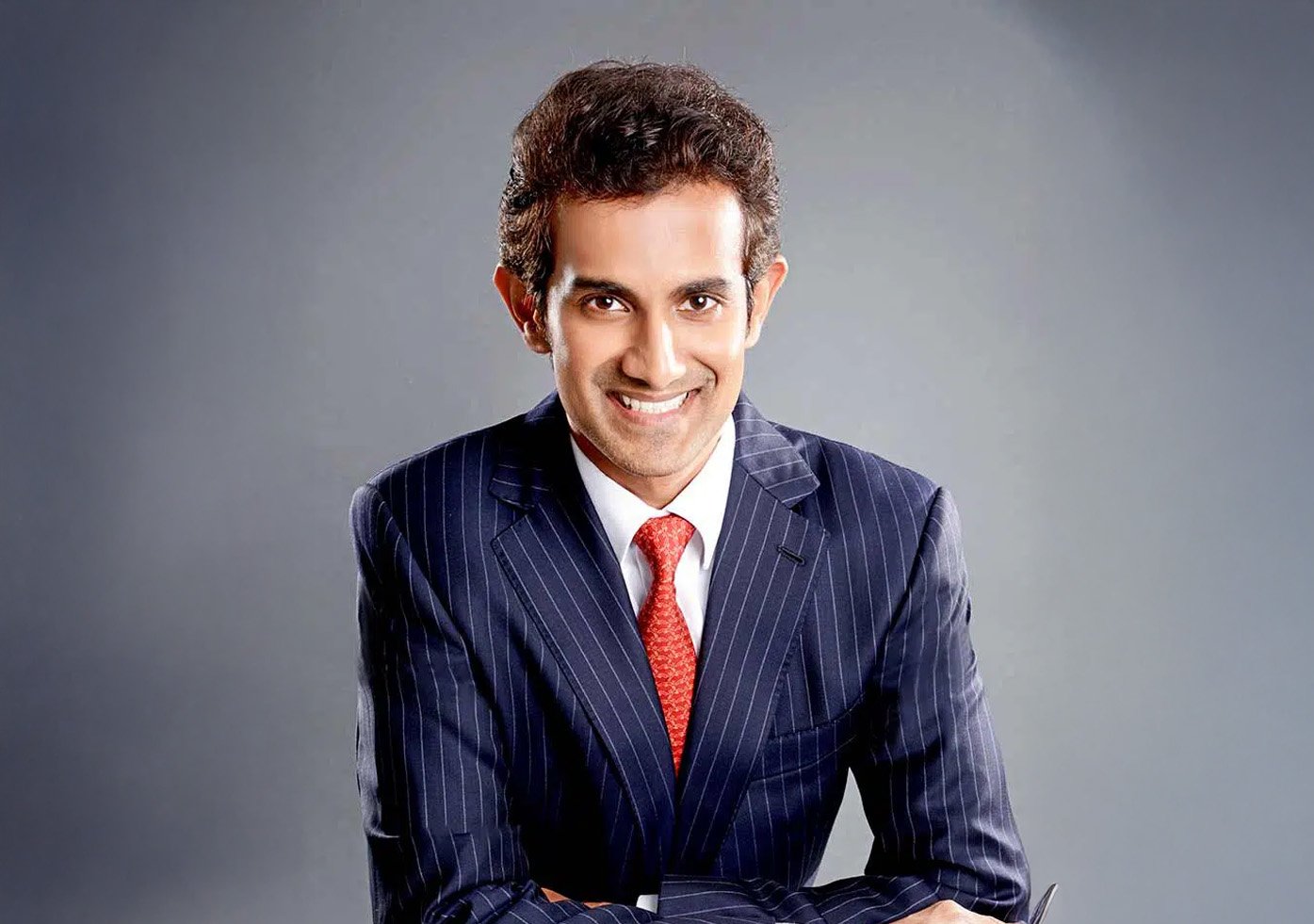
Breast augmentation at The Clifford Clinic is performed by Dr Shenthilkumar Naidu, MBBS (National University of Singapore, 1998), FRCS (Edinburgh, 2002), a Ministry of Health-accredited Consultant Plastic Surgeon with more than two decades of plastic surgery experience and over 500 breast augmentation procedures performed. He completed advanced specialty training in Plastic and Reconstructive Surgery at the National University Hospital, followed by a Health Manpower Development Programme fellowship at Hanyang University Hospital in Seoul, and his practice draws on both Singaporean and Korean surgical technique. He previously served as Consultant Plastic Surgeon at Tan Tock Seng Hospital, was a visiting consultant to Gleneagles and Mount Elizabeth Hospitals, and taught at the NUS Faculty of Medicine. In 2016 he became the first plastic surgeon in Singapore to use Motiva breast implants, and he is a Motiva-certified surgeon. His research has been published in peer-reviewed journals including Plastic and Reconstructive Surgery. He is a member of the Singapore Association of Plastic Surgeons and the International Society of Aesthetic Plastic Surgery (ISAPS), and a fellow of the Academy of Medicine, Singapore. He has been interviewed on SPH Media’s MONEY FM 89.3 on plastic surgery trends. Motiva’s own Southeast Asia network lists him among the first plastic surgeons it selected to work with its implants. Surgery takes place at The Clifford Surgery, an MOH-accredited day surgery centre, with anaesthesia administered by an accredited anaesthetist. Implant planning uses measurements together with 4D imaging simulation, and every patient receives an implant card recording the device fitted, with Motiva warranty registration completed by the clinic and a structured follow-up schedule. Read the full profile of Dr Shenthilkumar Naidu.
Frequently asked questions
How much do breast implants cost in Singapore?
Published Singapore market ranges are roughly S$10,000 to S$18,000, with inclusions varying widely between clinics. At The Clifford Clinic, breast augmentation is an all-inclusive S$15,000 with Motiva Ergonomix implants or S$18,000 for the Premium Motiva JOY programme with Ergonomix2. Both prices are quoted before GST.
What is the difference between breast augmentation and a boob job?
“Boob job” is an informal term for breast augmentation, the same procedure, known medically as augmentation mammoplasty.
Which implant type feels most natural?
No type is most natural for everyone. Feel depends on gel cohesivity, implant size relative to existing tissue, placement plane and tissue thickness, which is why selection is individualised.
Is it better to place implants over or under the muscle?
Neither is universally better. Thinner tissue generally favours more coverage, from subpectoral or dual plane placement, whereas adequate tissue may allow subglandular or subfascial placement. The trade-offs are assessed at consultation.
Where will the scar be?
In the breast fold, around the lower areola, or in the armpit, depending on the incision chosen. All incisions leave a scar, and most mature to a fine line over months.
How painful is recovery?
Most patients describe tightness and soreness controlled with oral medication for the first days, easing over one to two weeks. Discomfort varies with placement plane and individual factors.
When can I return to work and exercise?
Many desk-based patients return within about a week. Exercise resumes in stages, with strenuous upper-body training usually last, at around four to six weeks and at the surgeon’s guidance.
Do breast implants have to be replaced every ten years?
No. Implants are not routinely replaced at a fixed anniversary, but they are not lifetime devices either. Replacement or removal is considered for rupture, contracture, malposition, symptoms or changed preferences.
Can I breastfeed after having implants?
Many women can, but no surgeon can guarantee milk supply for any individual, with or without implants. Incision and placement choices are discussed at planning where future breastfeeding matters.
Can I have a mammogram with breast implants?
Yes. The mammography facility should be told about the implants, and additional views or other imaging may be used. Screening remains important.
What is capsular contracture?
Tightening of the natural scar capsule around an implant, which can make the breast feel firm, look distorted or become uncomfortable. Treatment ranges from monitoring to revision surgery.
What are the symptoms of implant rupture?
Possible change in shape or size, firmness or discomfort, or no symptoms at all with silicone implants, which is why imaging surveillance is discussed.
What is BIA-ALCL?
A rare lymphoma associated with breast implants, more strongly with textured surfaces, usually presenting as late swelling, pain or a mass. It is treatable, particularly when detected early, and new or persistent changes warrant review.
Can breast implants be removed or replaced later?
Yes. Implants can be exchanged, or removed with or without replacement, and sometimes a lift or fat grafting is combined. See removal, replacement and revision.
Medical references and review information
Author: The Clifford Clinic editorial team · Medically reviewed by Dr Gerard Ee · First published August 2026 · Last medically reviewed August 2026
References:
- US FDA, Risks and Complications of Breast Implants (implants are not lifetime devices, silent rupture, screening recommendations).
- US FDA, Breast Implants, What to Know (fill, size, shell, surface, shape, and mammography advice).
- Health Sciences Authority (Singapore), Risk of Breast Implant-Associated Anaplastic Large Cell Lymphoma (BIA-ALCL).
- S. FDA, Breast Implants (patient information and screening recommendations) · HSA Singapore, breast implant advisories · Ministry of Health Singapore, private healthcare regulation · Motiva (Establishment Labs) product and warranty information · Tebbetts, Plastic and Reconstructive Surgery (2006) · Sforza et al., Aesthetic Surgery Journal (2018) · Aitzetmüller-Klietz et al., Journal of Clinical Medicine (2023) · Randquist et al., Aesthetic Surgery Journal (2023).
Editorial policy: this page is reviewed at least annually and updated when regulatory guidance changes. Corrections may be sent to thecliffordclinic@gmail.com.
Explore the full breast implant series
Considering breast augmentation? Visit the main Breast implants at The Clifford Clinic service page to book a consultation, or continue with the rest of this series.
Breast Implant Cost in Singapore · Types of Breast Implants · Motiva Breast Implants in Singapore · Breast Implant Size and Profile · Breast Implant Placement, Incisions and Scars · Breast Augmentation Recovery Timeline · Breast Implant Safety and Monitoring · Breast Implants vs Fat Transfer vs Breast Lift · Breast Implant Removal and Revision · Breast Implants, Pregnancy, Breastfeeding and Mammograms.
Author Bio
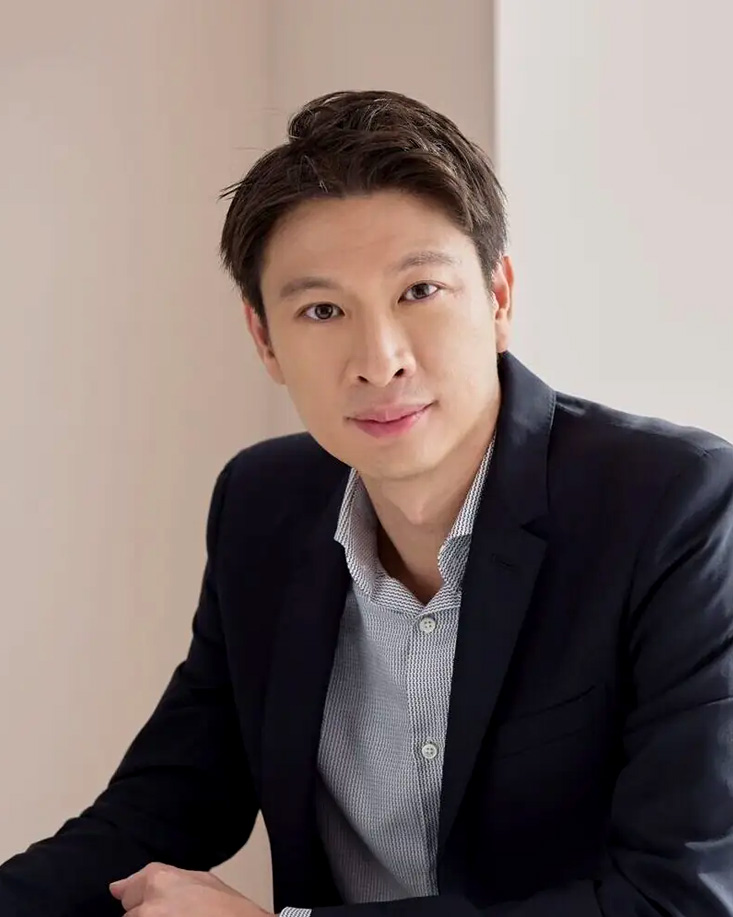
Dr Gerard Ee

Dr Gerard Ee is the Medical Director of The Clifford Clinic in Singapore. He earned his medical degree from St George's University of London and built his surgical experience across the Singapore General Hospital, National University Hospital, and Mount Sinai Hospital in New York. He holds Membership of the Royal College of Surgeons (Edinburgh) and a Postgraduate Diploma in Dermatology (Cardiff), and is fully accredited in aesthetic procedures including botulinum toxin, fillers, lasers, and light therapies. A strong advocate of minimally invasive, natural-looking results, Dr Ee has published in several medical and scientific journals and presented his research in cities including Taipei, Las Vegas, and London.
See all posts by Dr Gerard Ee »