



How Common Is Circumcision in Singapore – The Statistics
Most men in Singapore are not circumcised. There is no official national registry, so any single national figure quoted online should be treated with caution, but the practice is concentrated in specific communities rather than spread evenly across the population. Globally, around 36.7 percent of males aged 15 and over are circumcised, so Singapore sits below the world average. Within Singapore, the practice is common in Muslim families and in some other communities, and it is uncommon among the Chinese majority except where there is a medical reason. Among adults who do have the procedure, a tight foreskin is the leading medical indication, accounting for around 52.5 percent of adult circumcisions in one large study. For the complete overview, see our Circumcision Singapore guide.
The short answer for Singapore
Circumcision in Singapore is a minority practice overall, concentrated by religion and culture, with a smaller stream of medically driven cases across all communities.
Singapore does not publish a routine national circumcision prevalence statistic in the way it publishes birth rates or vaccination coverage. Figures that circulate online, including a commonly repeated rate of around 14.9 percent, are estimates rather than official counts, and they are frequently quoted without a traceable source.
What can be stated with confidence is the pattern, rather than a precise percentage. The practice is heavily weighted toward communities where it is a religious or cultural norm, it is usually performed in childhood rather than infancy in Singapore, and adult cases are driven mainly by medical need.

Global prevalence, around 36.7 percent
The global figure gives useful context. The estimated prevalence of circumcision among males aged 15 and older is around 36.7 percent worldwide. Roughly one in three men globally is circumcised, which makes it one of the most commonly performed procedures in the world.
That number is a weighted global average and hides enormous variation. It is driven upward by near-universal practice in Muslim-majority countries, by very high rates in the United States for historical reasons, and by public health circumcision programmes in parts of sub-Saharan Africa. It is pulled downward by low rates across most of Europe, East Asia and Latin America.
Rates by region across Asia
Asia illustrates the variation better than any global average can, and the regional pattern is the most useful comparison for Singapore.
In Muslim-majority countries such as Indonesia and Malaysia, prevalence exceeds 90 percent, driven by religious tradition. South Korea is a striking outlier with a rate of roughly 75 to 80 percent among younger males, despite having no religious basis for the practice, largely a legacy of American influence in the twentieth century. Japan and Thailand sit at the other end, typically below 10 percent, because circumcision is not a widespread tradition in either.
In India, the rate varies sharply by community, common among Muslims, who make up roughly 13 percent of the population, and rare among the Hindu majority at around 1 to 2 percent unless there is a medical indication.
Singapore, with its mixed population, reflects this community-by-community pattern in miniature rather than following any single national norm.
What drives circumcision in Singapore
Three indications account for most procedures, and they overlap.
Religious and cultural practice is the most common indication. Circumcision is widely observed in Muslim families, where it is commonly performed during childhood rather than in infancy, which is why Singapore sees a distinct clustering of childhood cases around the school holidays. Our guide to sunat in Singapore covers this in detail.
Medical indications are the second most common reason for circumcision. A tight foreskin that cannot be retracted, recurrent foreskin infections, and difficulty with hygiene leading to repeated problems are the common clinical indications. These occur across every community.
Personal preference is the third and smallest indication. These include men who choose the procedure for hygiene, comfort or appearance without a specific medical problem.
Hospital volumes, what the KKH numbers show
Data from the public system gives a more concrete picture than prevalence estimates.
KK Women’s and Children’s Hospital performs around 1,100 to 1,200 childhood circumcisions a year, using the carbon dioxide laser for almost all of them. That single figure tells you two useful things. First, childhood circumcision is a routine, high-volume activity in Singapore rather than a rarity. Second, the public system carries a substantial share of it.
Adult volumes are harder to pin down because they are spread across restructured hospitals, private hospitals, day surgery centres and clinics, with no central publication. National University Hospital provides adult circumcision through its urology department as a day surgery, and private providers make up the remainder.

Adult circumcision, why phimosis leads
Among adults, the reason for the procedure is better documented than the overall rate.
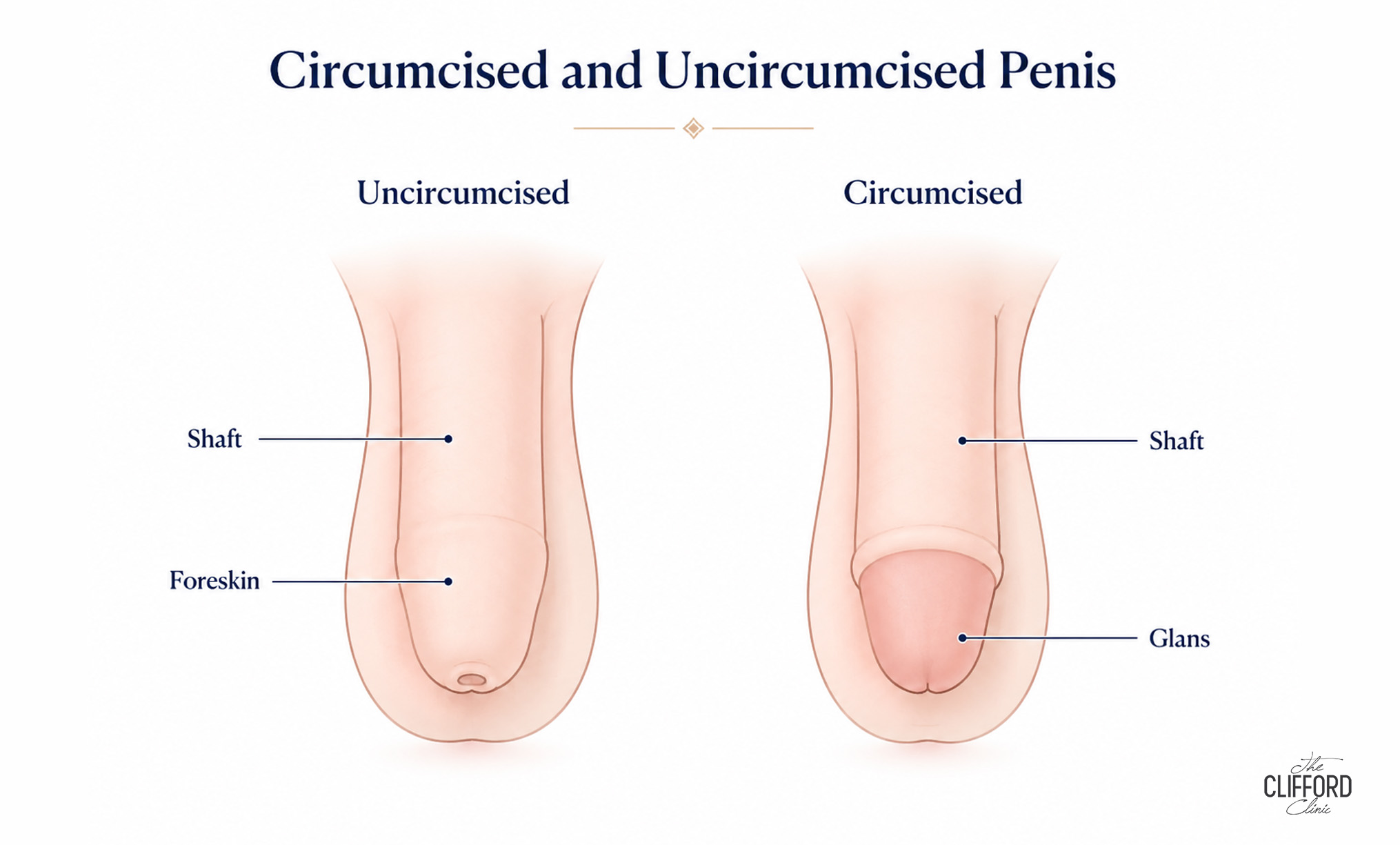
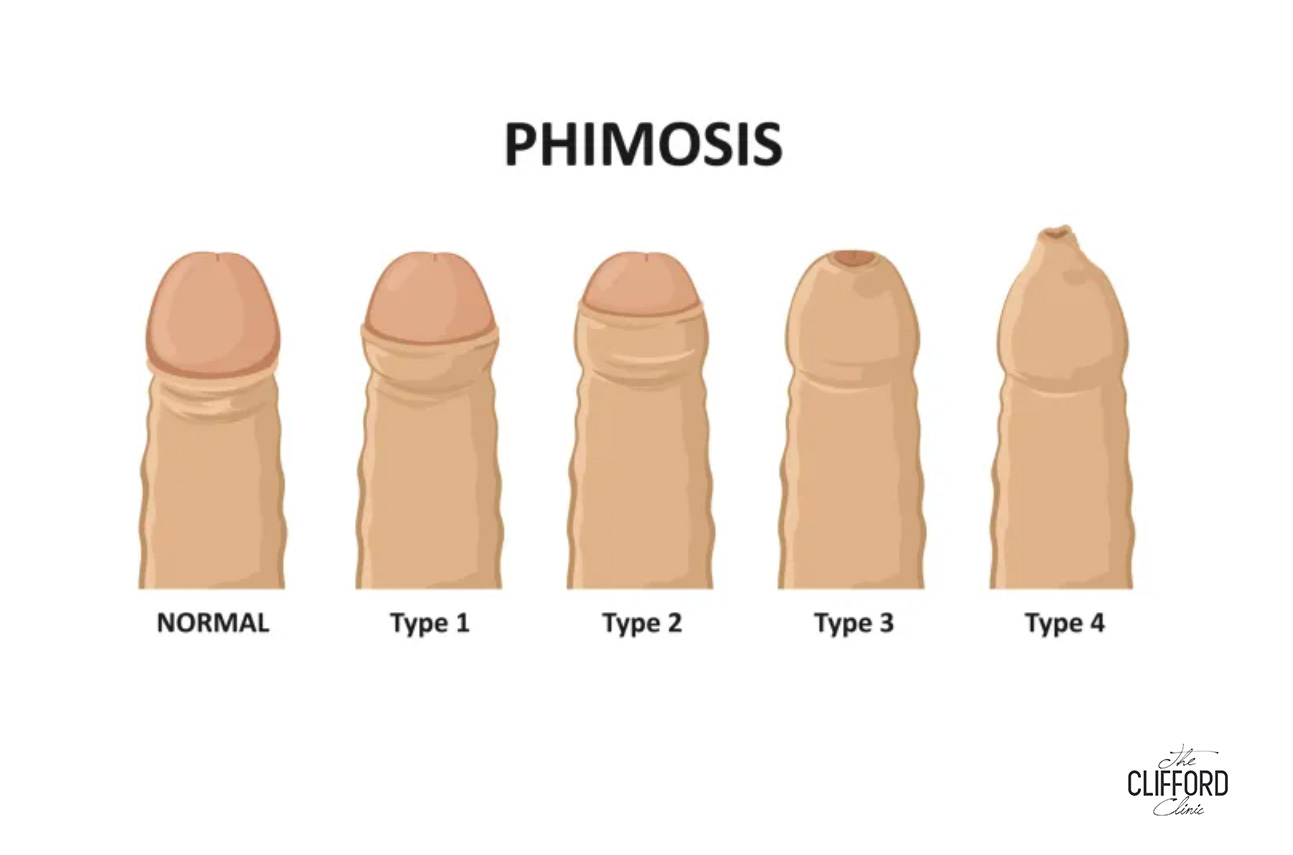
A large study of insured adults found that phimosis, a tight foreskin that cannot be retracted, accounted for around 52.5 percent of adult circumcisions, making it the single leading medical indication. Recurrent balanitis, which is inflammation of the head of the penis, and balanoposthitis, which involves the foreskin as well, account for a further meaningful share.
This matters practically as well as statistically. Because a tight foreskin is a recognised medical indication, a majority of adult patients do have a qualifying clinical reason, which is what makes MediSave and insurance relevant in their cases. Our phimosis guide explains the condition, and our MediSave and insurance guide explains the funding.
Safety statistics worth knowing
Prevalence answers how many. Safety answers how risky it is.
A Cochrane review of 18 randomised trials, covering 3,472 participants, reported no severe adverse events with either device-based or conventional surgical circumcision. In practical terms, problems tend to be minor and manageable rather than serious.
Infection rates in proper medical settings generally range from about 0.5 to 5 percent. Locally, KK Women’s and Children’s Hospital reports that no complications occur in more than 97.5 percent of its procedures, with bleeding after the procedure, the commonest problem, occurring in 1.82 percent of cases.
Many men also ask whether circumcision affects sexual function. A 2025 meta-analysis of more than 14,000 men found that circumcision does not reduce sexual satisfaction, and was associated with small improvements on average, with the authors noting variation between the included studies.
What the numbers do not tell you
Statistics describe populations. They do not decide individual cases.
A low national rate is not an argument against circumcision when there is a genuine medical problem such as a scarred, non-retractile foreskin. A high rate in another country is not an argument for it when there is no symptom at all. Prevalence figures also say nothing about timing, technique or who performed the procedure, which are the variables that determine an individual outcome.
The clinically useful question is not how many men are circumcised, but whether this particular foreskin is causing this particular person a problem. That is answered by examination, not by percentages.
Frequently asked questions
Are most people in Singapore circumcised?
No. Circumcision is a minority practice in Singapore overall, concentrated in specific religious and cultural communities, with additional cases driven by medical need.
What is the circumcision rate in Singapore?
There is no official national registry figure. Estimates circulate online but are rarely traceable to a primary source, so they should be treated with caution.
What is the global circumcision rate?
Around 36.7 percent of males aged 15 and over worldwide are circumcised, which is roughly one in three.
Which countries in Asia have the highest rates?
Indonesia and Malaysia exceed 90 percent, driven by religious tradition. South Korea is around 75 to 80 percent among younger males. Japan and Thailand are typically below 10 percent.
How many childhood circumcisions are done in Singapore each year?
KK Women’s and Children’s Hospital alone performs around 1,100 to 1,200 a year, with additional procedures carried out at other hospitals and private providers.
What is the most common medical reason in adults?
A tight foreskin. One large study found phimosis accounted for around 52.5 percent of adult circumcisions.
How common are complications?
Serious complications are uncommon. A Cochrane review of 18 trials reported no severe adverse events, and KKH reports no complications in over 97.5 percent of its procedures.
Does circumcision affect sexual function?
A 2025 meta-analysis of more than 14,000 men found no reduction in sexual satisfaction, with small improvements on average.
Is circumcision becoming more or less common?
Globally the picture is mixed, with public health programmes raising rates in some regions and elective infant circumcision declining in others. Singapore has no published trend series.
Why do the figures I find online disagree?
Because most countries lack a registry, so published figures are modelled estimates using different methods, age ranges and definitions.
Sources and how to read them
Where a figure in this article comes from a peer-reviewed study, it is listed under medical evidence references below with a link to the source. Where it comes from a Singapore institution, such as hospital volumes and complication rates, it is listed under references.
Two cautions are worth carrying into any further reading. First, prevalence estimates vary by the age range they cover, so a figure for males aged 15 and over is not comparable with one covering all males including infants. Second, a national figure can conceal very large differences between communities within that country, which is particularly relevant in a multicultural population.

If you would like the clinical picture rather than the statistical one, our complete circumcision guide covers the reasons, methods, costs and recovery in full. And if a foreskin problem is what brought you to this page, you can book a consultation at The Clifford Surgery for a personal assessment.
Related guides
- Circumcision Singapore, the complete guide
- Adult circumcision in Singapore
- Muslim circumcision, sunat in Singapore
- Phimosis and tight foreskin
- Circumcision and sexual health
Medical review box
This article is written by Dr Law Zhi Wei of The Clifford Surgery. Dr Law is a Singapore-trained doctor with more than five years of surgical posting experience. He graduated from the National University of Singapore with an MBBS and holds Membership of the Royal College of Surgeons of Edinburgh, a Graduate Diploma in Family Medicine, and a Postgraduate Diploma in Practical Dermatology from Cardiff University. He trained in the Urology Department at Singapore General Hospital, where he performed hundreds of circumcisions, and completed rotations in urology, general surgery, and paediatric surgery at KK Women’s and Children’s Hospital, Sengkang General Hospital, and Changi General Hospital. He has personally performed more than 500 circumcisions across the conventional, laser-assisted, Shang Ring, and ZSR Stapler techniques, and is a published urology researcher with peer-reviewed work in journals including the Journal of Urology, BJU International, the Asian Journal of Urology, and European Urology Supplements. He handles the consultation, the procedure, and the aftercare for each patient, supported by the dedicated Urology Department led by Dr Nathaniel Heah. The Clifford Surgery operates a sterile surgical theatre as a Ministry of Health-accredited Day Surgery Centre. It is a CPF and MediSave accredited, CDA-approved medical institution. We assist with hospital insurance claims where there is a medical indication. This content is general information and not a substitute for a personal consultation.
Dr Law Zhi Wei profile, https://cliffordclinic.com/dr-law-zhi-wei/
Clinical research and publications, https://cliffordclinic.com/clinical-research/
References
- KK Women’s and Children’s Hospital, Laser circumcision outcomes. https://www.kkh.com.sg/about-kkh/who-we-are/clinical-outcomes/laser-circumcision-outcomes
- National University Hospital, Services for Circumcision. https://www.nuh.com.sg/care-at-nuh/services/department-of-urology/services-for-circumcision
- SingHealth, Circumcision for children. https://www.singhealth.com.sg/symptoms-treatments/circumcision-children-surgeries
Medical evidence references
- Hohlfeld A, Ebrahim S, Shaik MZ, Kredo T. Circumcision Devices Versus Standard Surgical Techniques in Adolescent and Adult Male Circumcisions. The Cochrane Database of Systematic Reviews. 2021. https://www.cochranelibrary.com/cdsr/doi/10.1002/14651858.CD012250.pub2/full
- Friedman B, Khoury J, Petersiel N, et al. Pros and Cons of Circumcision, An Evidence-Based Overview. Clinical Microbiology and Infection. 2016. https://pubmed.ncbi.nlm.nih.gov/27497811
- Nabavizadeh B, Li KD, Hakam N, et al. Incidence of Circumcision Among Insured Adults in the United States. PLoS One. 2022. https://pubmed.ncbi.nlm.nih.gov/36251658
- Karaahmet AY, Laleh SS. The Influence of Circumcision on Male Sexual Function, a Meta-analysis of Satisfaction, Erectile Function, and Dyspareunia. Journal of Sex and Marital Therapy. 2025. https://doi.org/10.1080/0092623X.2025.2499141

Author Bio
Dr Gerard Ee

Dr Gerard Ee is the Medical Director of The Clifford Clinic in Singapore. He earned his medical degree from St George's University of London and built his surgical experience across the Singapore General Hospital, National University Hospital, and Mount Sinai Hospital in New York. He holds Membership of the Royal College of Surgeons (Edinburgh) and a Postgraduate Diploma in Dermatology (Cardiff), and is fully accredited in aesthetic procedures including botulinum toxin, fillers, lasers, and light therapies. A strong advocate of minimally invasive, natural-looking results, Dr Ee has published in several medical and scientific journals and presented his research in cities including Taipei, Las Vegas, and London.
See all posts by Dr Gerard Ee »